
REVIEW · WALKING TOURS
Cali: Walking Tour of the 11 Neighborhoods of Commune 20
Cali looks different from above. This four-hour outing combines a ride on the MIO cable car with a guided walk through parts of Commune 20, where art, salsa, local stories, and community action meet. I like the way the tour uses public transport as part of the experience rather than simply taking you from one sightseeing stop to another, and I especially like the chance to hear directly about the changes made by people living in the area.
The guides are another strong point. Miguel is praised for his historical knowledge and friendly manner, while Jorge, Juan Carlos, William, Pablo, and Juan have also helped create relaxed, welcoming visits. The main consideration is physical: you walk about 3 kilometers, including steep inclines, and the tour is not suitable for children under 10, pregnant women, or people with mobility impairments.
In This Review
- Key points to know before you go
- Why this Commune 20 tour feels different from a standard city walk
- Starting at Terminal MIO Cañaveralejo
- Seeing Cali from the MIO cable car
- Cañaveralejo station and the story of transportation
- Tierra Blanca and Cali’s salsa tradition
- Lleras Camargo and the importance of green spaces
- Brisas de Mayo and local myths
- Walking through the 11 neighborhoods of Commune 20
- The local drink and the small details that add value
- How the guides shape the experience
- Is the $65 price fair?
- Who should book this walk?
- My verdict on the Commune 20 experience
- FAQ
- Where does the tour meet?
- How long does the tour last?
- Is the MIO cable car included?
- Which languages are available?
- How far do you walk?
- What should I bring?
- Is food included?
Key points to know before you go
- The MIO cable car is part of the sightseeing: You get broad views over Cali while traveling toward Commune 20.
- Four thematic stations shape the route: Cañaveralejo focuses on transportation, Tierra Blanca on salsa, Lleras Camargo on green spaces, and Brisas de Mayo on myths and legends.
- Commune 20 is presented through local voices: The tour explains how residents worked toward positive change in their neighborhoods.
- Street art is a major feature: You can see graffiti and murals by artists with different styles and backgrounds.
- The walking is real exercise: The route covers about 3 kilometers and includes steep sections.
- The $65 price includes useful extras: You get a local guide, MIO cable car admission, a typical drink, and medical assistance insurance.
Why this Commune 20 tour feels different from a standard city walk
Many city tours move from one famous building to the next. This one follows a more local rhythm. You meet at the Terminal MIO Cañaveralejo station, board the cable car, and use the journey itself to understand how Cali connects with the hills and neighborhoods around it.
The destination is not treated as a backdrop for photographs. Your guide explains why residents of these districts sought positive change and how community action helped shape the area. That gives the walk a useful sense of purpose. You are not only looking at painted walls. You are hearing why public spaces, local identity, and neighborhood pride matter.
I also like that the tour does not reduce Commune 20 to one subject. You get transportation history, salsa, public green spaces, local legends, and street art. That mix helps you see the area as a living community rather than a single tourist attraction.
The tour is offered in English or Spanish. If you speak Spanish, you may appreciate the chance to hear local stories in their original language. If you do not, the English option makes the history and cultural background easier to follow.
More Walking Tours in Cali
- The Cali Street Food Walking Tour
★ 5.0 · 81 reviews - Cali: Walking tour of the historic center
★ 5.0 · 69 reviews - Afro Walking Tour. The colors of Cali.
★ 5.0 · 61 reviews
Starting at Terminal MIO Cañaveralejo
Your guide meets you at the main door of the station on Fifth Street. This is an important detail because a large transit station can have several entrances, and the meeting point is specific. Give yourself enough time to locate the main door rather than arriving at the last minute and trying to spot a guide in a crowd.
The opening minutes are practical but meaningful. You begin by using the MIO system, Cali’s urban transport network, instead of being driven straight into the neighborhood. That puts transportation at the center of the story from the start.
The tour includes admission to the MIO cable car, so you do not need to arrange that separately. The total activity lasts four hours, and the stated return point is the same Cañaveralejo station, with arrival planned for 7:00 PM.
Seeing Cali from the MIO cable car
The cable car ride gives you a change of scale. From street level, Cali can feel like a collection of separate districts. From above, you can take in the city in one broad view and see how the built-up areas rise toward the hills.
Bring your phone or camera, but do not spend the whole ride staring at a screen. The panoramic views are one of the clearest reasons to choose this tour. The guide may also use the journey to explain what you are seeing, so keep some attention on the commentary.
The cable car portion is not just a transfer. It creates a physical link between the transport story at Cañaveralejo and the community-focused walk in Commune 20. That connection adds value to the ticket. You are paying for a guided cultural experience that includes transport, rather than paying for a separate cable car ride and a separate neighborhood walk.
The cable car returns you to the meeting station at the end. That makes the route easier to manage, since you finish where you started rather than needing to find your way back from an unfamiliar part of Cali.
Cañaveralejo station and the story of transportation
The first thematic stop is Cañaveralejo. Here, the focus is transportation history. This may sound like a modest subject, but it helps explain why the cable car matters to the communities on the route.
A transport system changes more than commuting time. It can affect access to work, education, public services, and other parts of the city. The guide uses this station to place the MIO cable car within a wider local story.
For you, this stop provides useful context before the walking begins. Instead of simply enjoying a ride above Cali, you start thinking about how transport connects neighborhoods and supports change.
A completely different kind of day:
- A day to enjoy nature and have an adventure in the Jordan river
★ 5.0 · 469 reviews - Cali: City Tour | Guided tour around the city
★ 5.0 · 287 reviews - Shared Tour of the Historical and Cultural Center of Cali
★ 5.0 · 211 reviews - Street Food Tour
★ 5.0 · 157 reviews
Tierra Blanca and Cali’s salsa tradition
At Tierra Blanca, the subject turns to salsa. Cali is closely linked with this music and dance tradition, and the stop gives your guide a chance to explain its local importance.
Do not expect this to be a full salsa class unless your guide specifically offers one. The supplied details describe a cultural explanation, not a dance lesson. The value is in understanding how salsa fits into the identity of the city and the people who live here.
This is also where the tour’s range becomes clear. One stop deals with transport infrastructure, while another turns to music and social life. That variety keeps the four-hour outing from feeling like one long lecture about a single topic.
Lleras Camargo and the importance of green spaces
The next thematic station is Lleras Camargo, where you stop to see green spaces. The pause offers a change from buildings, roads, slopes, and painted walls.
Green areas can tell you something about how a neighborhood is used and cared for. They give people room to gather, rest, and meet. Your guide connects this stop with the wider story of community action and positive change.
This section may appeal to you if you enjoy seeing ordinary public places rather than checking off famous landmarks. It is not presented as a grand park visit. Instead, it shows how even smaller shared spaces can matter to residents.
Brisas de Mayo and local myths
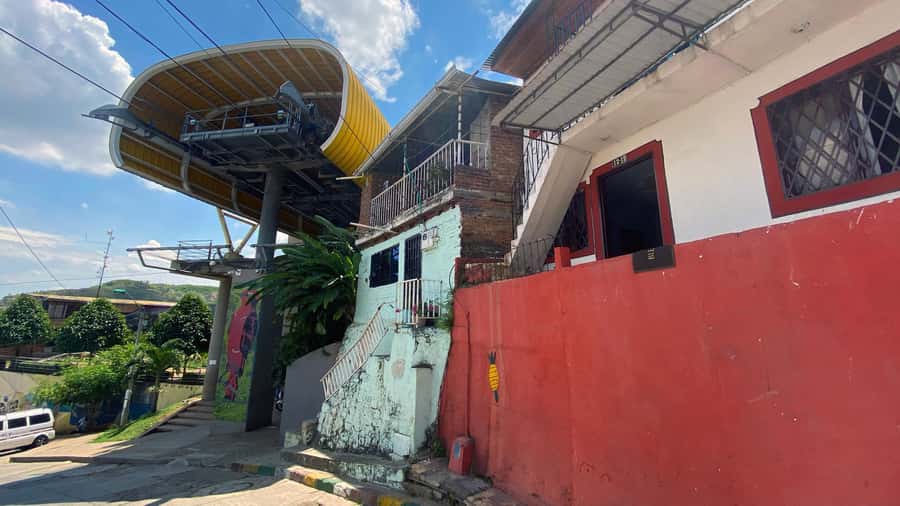
At Brisas de Mayo, the theme shifts again, this time to local myths and legends. This is one of the more personal parts of the tour because stories like these often explain how a community sees itself.
A legend does not need to be treated as a factual historical record to be useful. It can reveal local fears, humor, beliefs, and ways of passing stories from one generation to another. Your guide gives you a different way to understand the neighborhood, beyond dates and public projects.
For many people, this will be the most memorable stop. The transport and community history provide structure, while myths and legends add a more human, informal layer.
Walking through the 11 neighborhoods of Commune 20
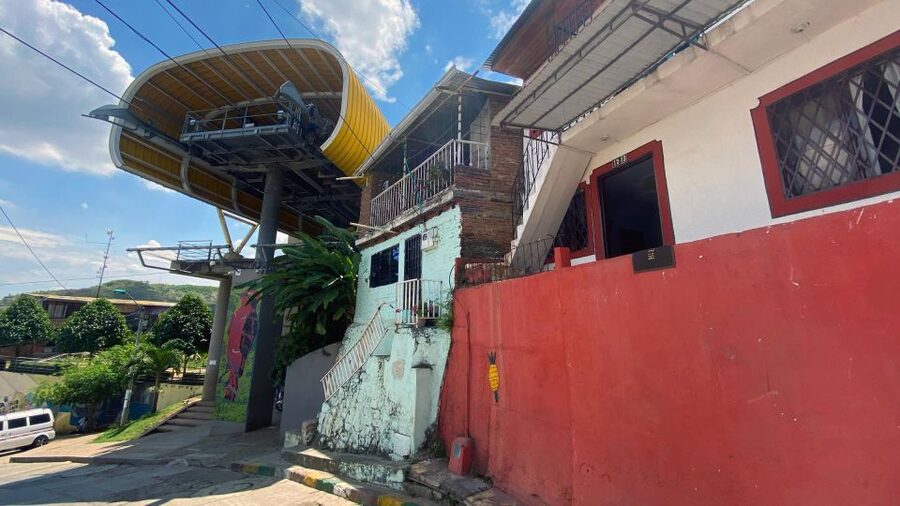
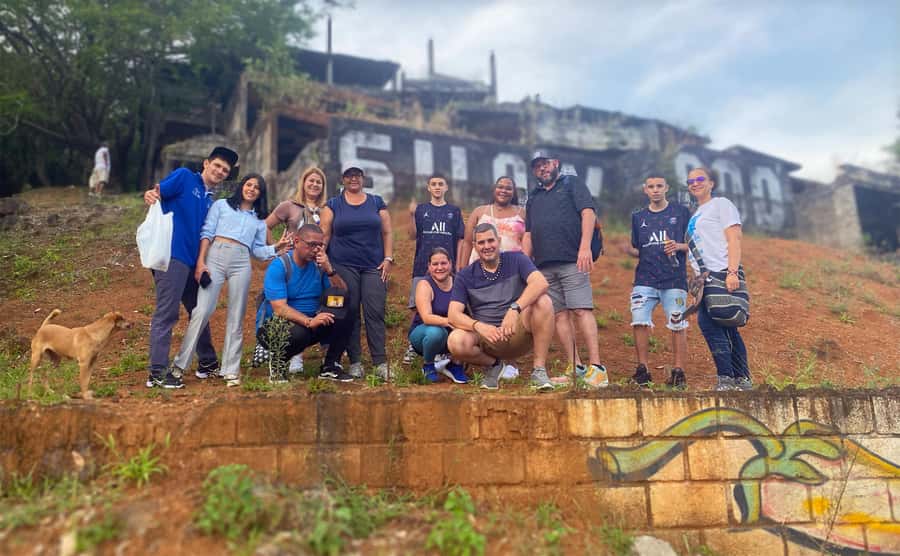
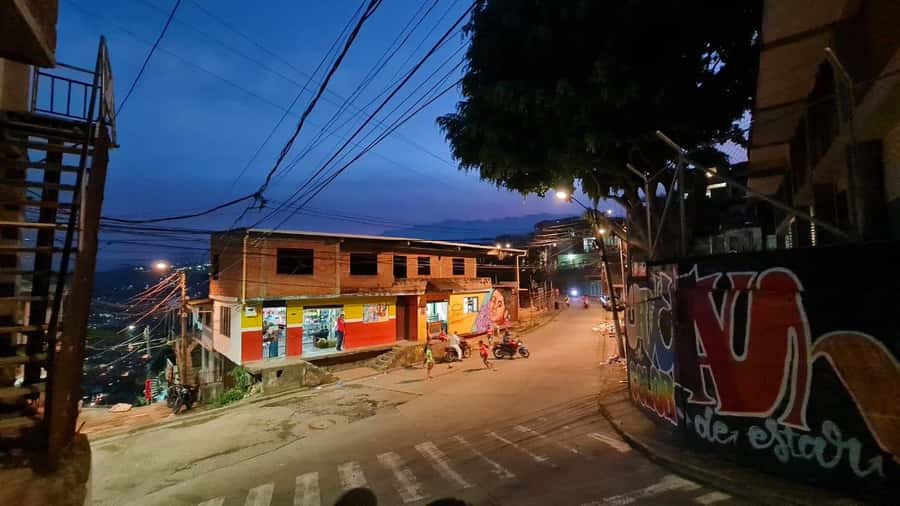
The walking portion takes place in and around Siloe and parts of the 11 neighborhoods associated with Commune 20. You should expect a guided neighborhood experience, not a polished sightseeing district built only for visitors.
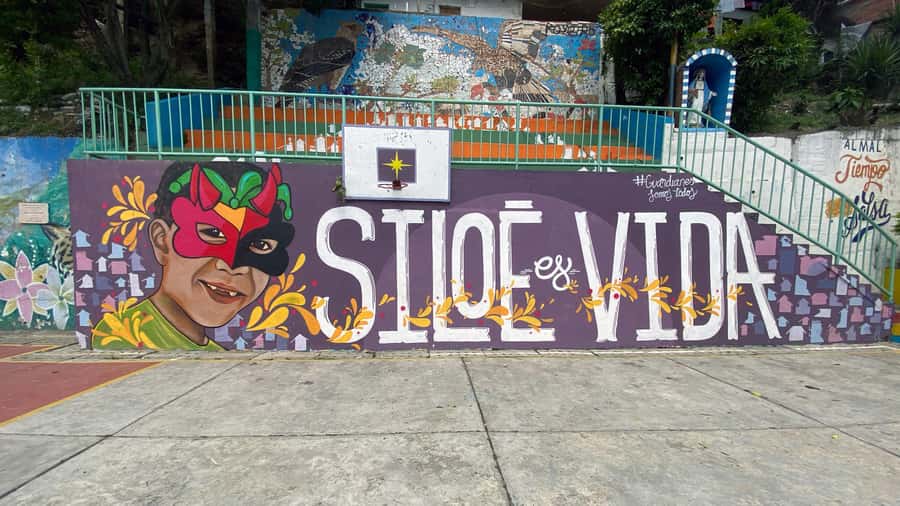
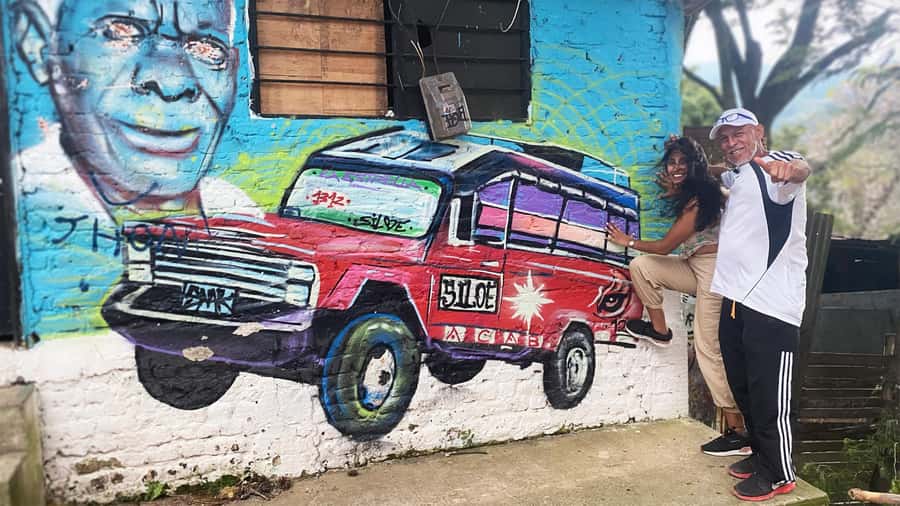
The main visual draw is the street art and graffiti. The tour gives you a chance to see work by diverse artists, and the guide can explain the local meaning behind the art where relevant. Murals and graffiti often change, so the exact pieces you see may vary. The broader value is seeing how art is used to express identity and pride in public space.
The walk covers around 3 kilometers. That distance is manageable for many people, but the route is not necessarily flat. A verified account specifically warns about steep inclines, and that is the most useful physical advice here. Wear shoes with a good grip and choose clothing that lets you walk comfortably.
You may also meet local people along the way. The tour description and guest feedback point to contact with residents as part of the experience, which can make the visit feel less staged. Still, you should approach the neighborhood with respect. Listen to your guide, ask before photographing people, and remember that this is someone’s home, not a theme park.
The local drink and the small details that add value
A typical local drink is included during the walk. The drink is a simple addition, but it gives you a direct taste of Cali rather than another generic bottled refreshment.
Because the specific drink is not named, you should treat it as a small culinary surprise rather than book the tour for a particular beverage. If you have allergies or dietary concerns, ask your guide what it contains before drinking it.
Cash is listed among the recommended items to bring. You may not need it for the included drink or cable car admission, but it is sensible for personal purchases along the route. Dinner is not included, so plan to eat before or after the tour.
How the guides shape the experience
The strongest pattern in the feedback is the praise for the guides. Miguel is repeatedly singled out for his knowledge of local history, friendly attitude, and ability to keep the experience relaxed. Other guide pairings include Miguel and Jorge, Miguel and Juan Carlos, Miguel and William, Miguel and Pablo, and Juan.
That range tells you that the exact style may depend on who leads your departure. Still, the comments consistently point to guides who are welcoming, flexible, and able to offer choices about what to see. One account describes the tour as friendly and safe throughout, despite having received warnings beforehand. That is a personal experience, not a guarantee, but it suggests that a good guide has an important role in helping you feel at ease.
I appreciate the mention of flexibility. A neighborhood walk works best when the guide can respond to the group, spend more time where interest is high, and explain what is happening around you. The guides appear to be a major part of what you are buying for $65.
Is the $65 price fair?
At $65 per person, this is not the cheapest way to spend four hours in Cali. The price becomes easier to justify when you count what is included: a live local guide, MIO cable car admission, a typical drink, and medical assistance insurance.
You are also paying for interpretation. A cable car ride by itself gives you views, but not the background about transportation, salsa, community action, green spaces, and local legends. A self-guided walk might cost less, but it would not provide the same organized introduction to Commune 20.
The value depends on your interests. If you want museums, colonial buildings, or a restaurant-focused tour, this may not be the best use of your money. If you want local stories, public art, and a guided look at how residents have shaped their neighborhoods, the price is more reasonable.
The small group size is not provided, so I would not assume an intimate private-tour setting. The guide-led format is clear, but the exact group experience can vary.
Who should book this walk?
This tour suits adults and older children who enjoy active sightseeing and do not mind walking uphill. It is especially good for you if you want to understand Cali through community stories rather than only through major attractions.
It also suits visitors who like mixing transport, views, art, and culture in one outing. The cable car gives you a memorable way to reach the area, while the walk slows things down and lets you focus on details.
You should think twice if steep inclines are difficult, if you need step-free access, or if you prefer a relaxed vehicle tour. The activity is not suitable for children under 10, pregnant women, or people with mobility impairments. It runs rain or shine, so you need to be prepared for changing weather.
Bring comfortable shoes, comfortable clothes, and cash. Since dinner is not included and the tour finishes around 7:00 PM, check your evening plans before booking.
My verdict on the Commune 20 experience
I would recommend this tour to you if your idea of a good city outing includes local voices, public art, and a bit of exercise. Its best features are the combination of the MIO cable car and neighborhood walking, plus guides such as Miguel who appear to bring warmth and strong local knowledge to the route.
The tour is not a soft, polished ride. You walk about 3 kilometers, face steep sections, and visit working neighborhoods rather than a purpose-built attraction. That is precisely its appeal, but it also sets clear limits.
Book it if you want a fuller picture of Cali and are ready to meet the city on foot. Skip it if you need easy access, dislike hills, or want an activity centered mainly on food or formal monuments.
FAQ
Where does the tour meet?
The meeting point is the main door of the Terminal MIO Cañaveralejo station on Fifth Street.
How long does the tour last?
The activity lasts four hours. The planned return is to Terminal MIO Cañaveralejo at 7:00 PM.
Is the MIO cable car included?
Yes. Admission to the MIO cable car is included in the tour price.
Which languages are available?
The tour is offered with a live guide in English or Spanish.
How far do you walk?
You walk approximately 3 kilometers. The route can include steep inclines.
What should I bring?
Bring comfortable shoes, comfortable clothing, and cash. The tour takes place rain or shine.
Is food included?
A typical local drink is included, but dinner is not.
Just added in Cali
- Trekking to Pico de Loro★ 4.5 · 14 reviews
- Private Transfer from Cali Airport (CLO)★ 5.0 · 4 reviews
- Trekking & Rivering Reserve Pericos★ 5.0 · 5 reviews
- Transportes y Traslados desde Cali★ 5.0 · 1 review
- Sugar Cane Hacienda El Paraiso & Nature Day Tour★ 4.0 · 6 reviews
- CITY TOUR OF CALI | Discover with local experts Cali★ 5.0 · 2 reviews
- Friday Night Street Salsa and Bar Crawl in Cali, Colombia★ 4.5 · 24 reviews
- Saturday Night Bar Crawl in Cali, Colombia★ 5.0 · 20 reviews
Walking Tours, compared.
Historic Center and Getsemaní Shared Walking Tour
Read our review →
Private Walking Tour in Cartagena Walled City & Getsemaní
Read our review →
Graffiti Tour: a fascinating walk through a street art City
Read our review →

Medellin Historic Walking Tour with Expert Guide
Read our review →
Bogotá Tour: Monserrate, Food, City Walk & Botero Museum
Read our review →Browse the lists this tour appears in