
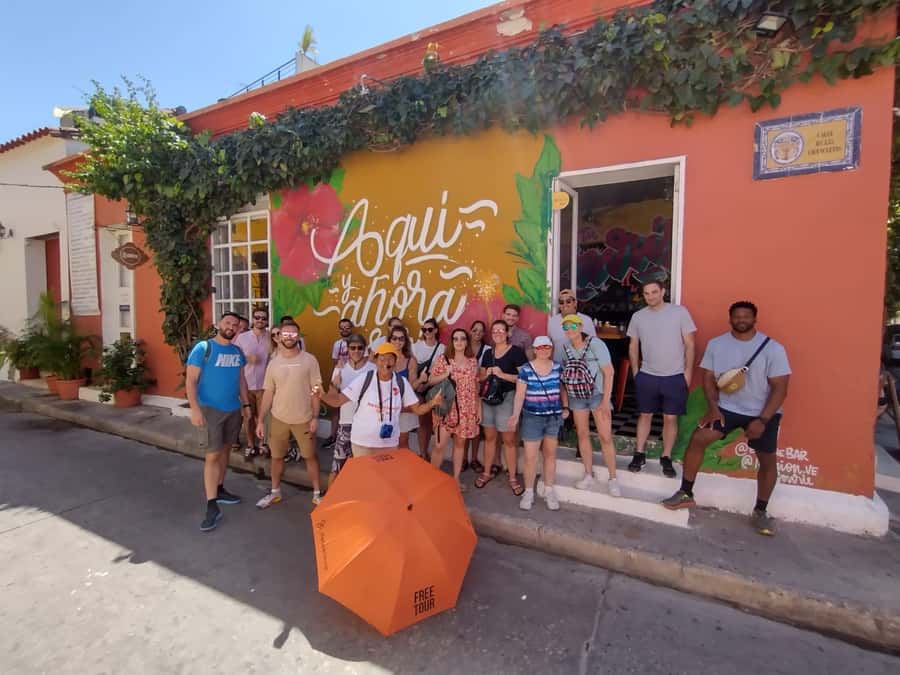
REVIEW · GETSEMANÍ WALKING TOURS
Cartagena: Historic Center and Getsemaní Shared Walking Tour
Cartagena’s streets tell more than one story. This $12 shared walking tour links the Walled City with Getsemaní, covering conquest, colonial trade, independence, slavery, local music, and daily life in 150 minutes. I like the way it combines major landmarks with human stories, and I especially like the shift from grand stone defenses to Getsemaní’s street art, dance, and neighborhood character. The main drawback is the heat: much of the route is outdoors, so afternoon participants need water, sunscreen, and comfortable clothes.
I also like the range of guides assigned to the tour. Names praised in recent feedback include Álvaro David, Daniela, Dani, Legacy, Robert, Ingrid, Liz, and Rebeca. Their styles differ, but the strongest pattern is clear: lively storytelling, pride in Cartagena, useful restaurant advice, and plenty of chances to ask questions or even dance. The tour is a good first look, though it moves quickly and does not include extended interior visits to every museum or church.
In This Review
- Key points to know before you go
- Starting beneath the Clock Tower
- From Pedro de Heredia to the Portal de los Dulces
- Plaza de la Aduana and the business of empire
- San Pedro Claver and the moral questions of Cartagena
- Bastions, pirates, and the walls of Cartagena
- Plaza Bolívar and a pause among the trees
- Getsemaní, where the city changes its voice
- What the guides add to the experience
- Heat, pace, and practical comfort
- Is $12 a fair price?
- Who should book this walk?
- Should you book the Cartagena walking tour?
- FAQ
- Where does the tour begin?
- How long does the tour last?
- Which areas does the tour visit?
- What languages are available?
- Is the tour wheelchair accessible?
- Is hotel pickup included?
- Are food and drinks included?
- Is a separate tip expected at the end?
- What should I bring?
Key points to know before you go
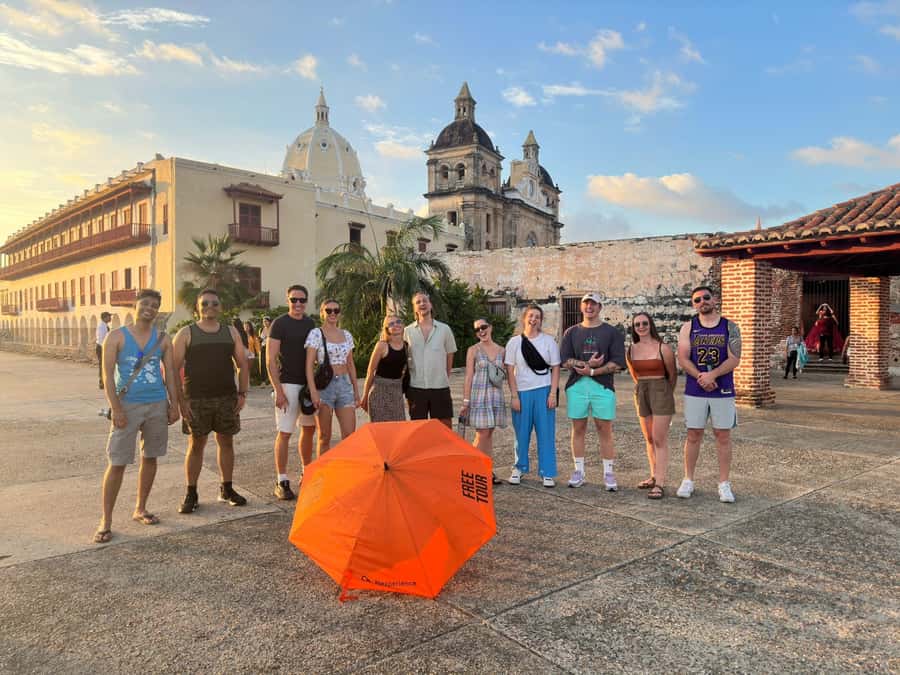
- Two very different neighborhoods in 150 minutes: You begin in the historic center and finish in Getsemaní, so the tour gives you both Cartagena’s fortified colonial core and its more expressive modern street life.
- A serious look at slavery and colonial trade: The route follows places tied to enslavement, commerce, and the Afro-Caribbean story of the city.
- Guides bring the history to life: Daniela and Dani are praised for adding traditional dances, while Legacy, Robert, Álvaro David, Ingrid, Liz, and Rebeca are noted for clear explanations and practical local advice.
- Look for animals in Centennial Park: Sloths, squirrels, and iguanas may appear in this shady green part of the route.
- Music closes the walk: The final stretch through Callejón Ancho and Calle San Juan brings salsa and African champeta into the story.
- The orange umbrella is your landmark: Meet at Plaza Cervantes, also called Camellón de los Mártires, in front of the Clock Tower.
Starting beneath the Clock Tower
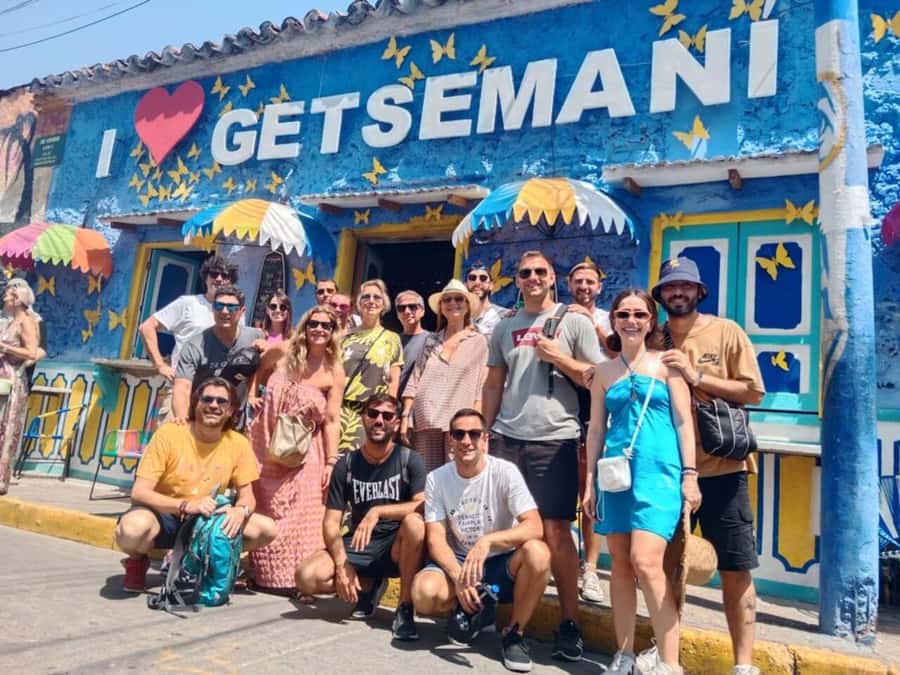
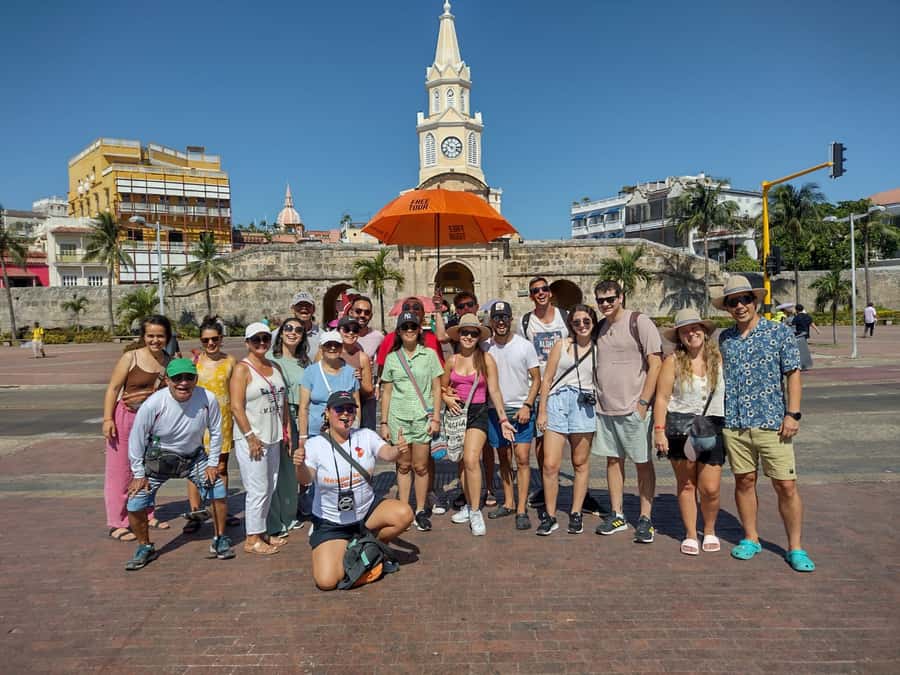
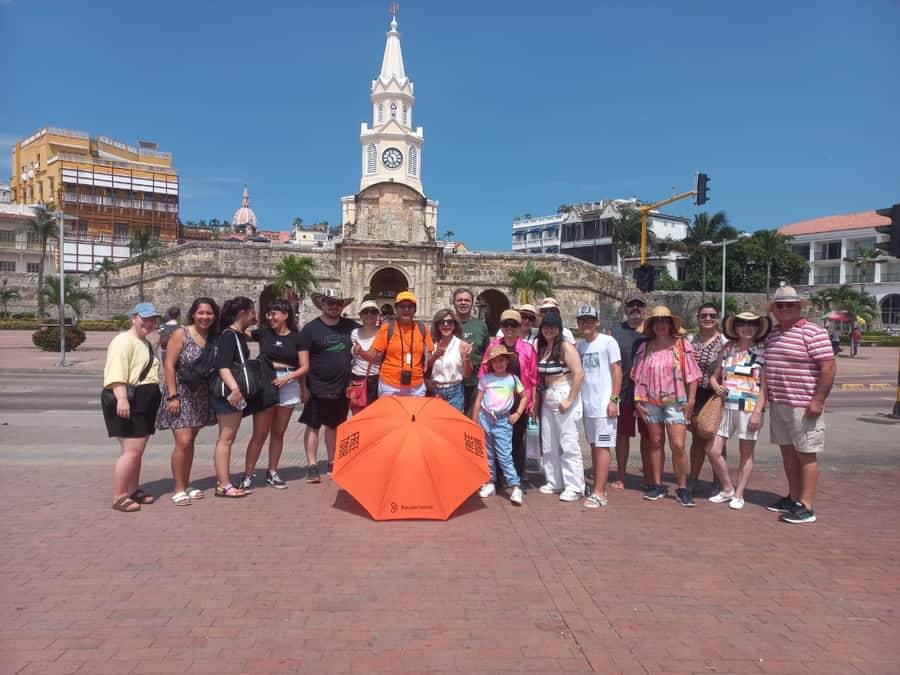
The meeting point is easy to find. Plaza Cervantes, also known as Camellón de los Mártires, sits directly in front of Cartagena’s Clock Tower. Look for the orange umbrella.
This is a useful place to begin because you are standing at the threshold of the Walled City. The Clock Tower, known as Cartagena’s Golden Key, marks the entrance into the old center. Before the group heads through the arch, the guide introduces the Indigenous people who lived here before and during the arrival of the Spanish.
That opening matters. Cartagena’s story did not begin with colonial buildings, Spanish soldiers, or famous pirates. Starting with the Indigenous presence gives the tour a wider frame and reminds you that the city’s first chapter predates European rule.
The route then enters Plaza del Ecuador, once associated with the Plaza del Esclavo. From there, the guide explains part of the old route used in the enslavement and sale of human beings. Streets such as Porto Carrero and Candilejo become more than attractive old lanes. They become places where the economic machinery of colonial Cartagena is discussed directly.
This is one of the tour’s strongest features. Cartagena’s beauty can make it easy to admire balconies and church towers without thinking about who built the city and who suffered inside its economy. The guide connects architecture to power, trade, forced labor, and resistance.
More History Tours in Cartagena
- Historic Center & Getsemaní Shared Tour in Cartagena
★ 5.0 · 620 reviews - San Basilio de Palenque History Tour
★ 5.0 · 301 reviews - Cartagena: Cultural tour Bazurto Market Adventure
★ 5.0 · 200 reviews
From Pedro de Heredia to the Portal de los Dulces
Pedro de Heredia, the Spanish founder of Cartagena, enters the story early. His presence helps the guide explain the conquest and the formation of the colonial city, but the route does not leave the story at the level of famous men.
At the Portal de los Dulces, the focus shifts to women and family traditions. The site is presented as a symbol of female economic activity during the era of slavery. The descendants of those women continue selling sweets and preserving food traditions today.
This is a small stop with a large point. You see how history survives through ordinary work, recipes, and commerce, not only through forts and official monuments. The sweets also offer a welcome break from military and political history.
The guide may also connect Cartagena’s traditions to Gabriel García Márquez, the Colombian Nobel Prize winner. His writing, including One Hundred Years of Solitude, helps explain the city’s mixture of memory, myth, family stories, and the supernatural. The tour does not treat literature as a separate subject. Instead, it shows how Gabo’s way of seeing the Caribbean fits the streets around you.
Plaza de la Aduana and the business of empire
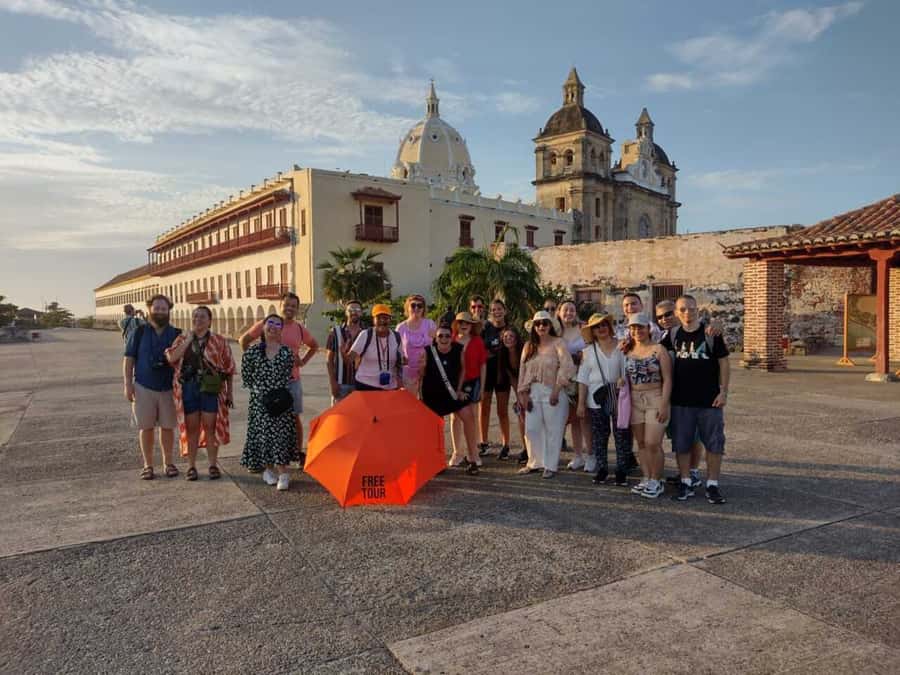
The walk continues to Plaza de la Aduana, one of the key commercial spaces in the old city. This was where merchandise was handled, including enslaved people, and the guide explains why the square played such an important part in Cartagena’s colonial economy.
You also see notable buildings such as the Municipal Hall. The value here is not simply in taking another photograph of a grand facade. It is in understanding how administration, customs, money, and forced labor worked together.
The tour then points out several cultural institutions:
- The Museum of Modern Art, connected with Caribbean and Latin American art from the 1950s onward.
- The Gold Museum, with Indigenous objects from the Colombian Caribbean.
- The Emerald Museum, focused on the stones for which Colombia is famous.
These places are introduced from the outside or as part of the wider city story. Your ticket does not include museum entry, and the walk does not promise a full museum visit. If one catches your interest, make a note and return later with more time.
That approach suits a first-day orientation. You learn what each place means, then decide where to spend your own afternoon. It is less useful if you want detailed object-by-object museum interpretation.
San Pedro Claver and the moral questions of Cartagena
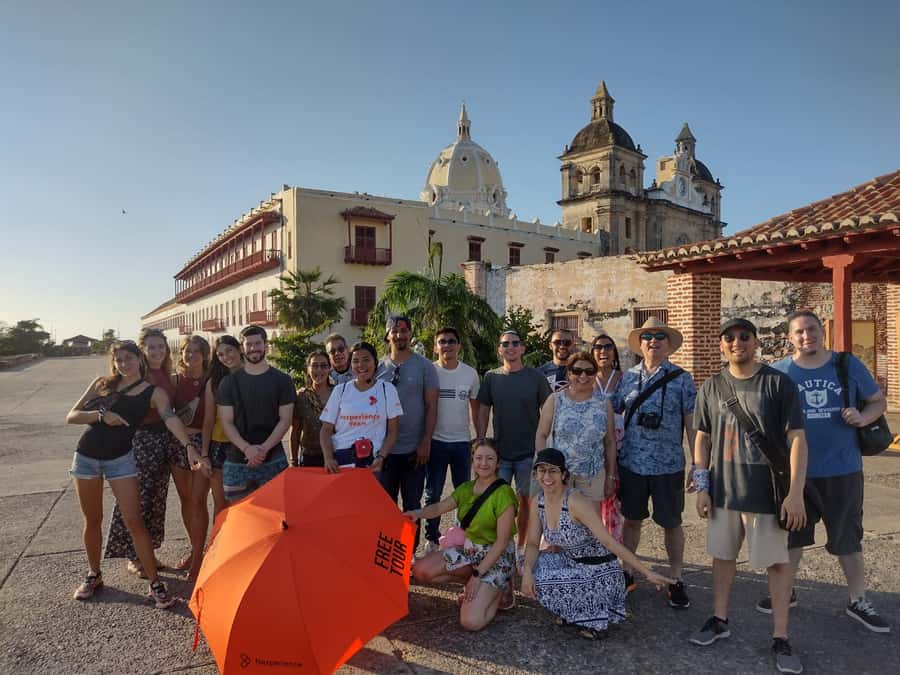
Religion takes center stage at the Church and Museum-Monastery of San Pedro Claver. San Pedro Claver is remembered as the Slave of the Slaves because of his work with enslaved Africans arriving in Cartagena.
The stop brings a personal face to a painful period. The church and monastery also serve as the headquarters of Human Rights, which links the city’s past to present-day questions about dignity and justice.
I appreciate this part of the route because it keeps Cartagena’s colonial beauty from becoming a simple postcard. The architecture is impressive, but the guide also asks you to think about the people who passed through these buildings and the unequal system that shaped the city.
The quality of this section depends partly on the guide’s approach. Recent guides such as Dani, Daniela, Legacy, and Ingrid have been praised for explaining history with energy while allowing questions. Rory’s detailed feedback especially highlights the value of treating colonization and the transatlantic slave trade with care and respect.
More Walking Tours in Cartagena
- Private Walking Tour in Cartagena Walled City & Getsemaní
★ 5.0 · 1,357 reviews - Cartagena: Walled City and Getsemani Shared Walking Tour
★ 4.5 · 352 reviews - Playa Morena Beach Club Whith Lunch And Walking tour of fort San Fernando
★ 5.0 · 218 reviews - Historic and Movie Bike or Walking Tour
★ 5.0 · 189 reviews
Bastions, pirates, and the walls of Cartagena
At San Ignacio Bastion, the guide explains Cartagena’s defensive system. The bastion was built to protect the Bay of Souls from pirate attacks, and it gives you a concrete example of Spanish military planning.
This is where pirate stories become more useful than simple adventure tales. Corsairs, attacks, cannons, walls, and strategic positions all make more sense when you are standing beside the structure built to stop them.
The tour explains the history behind Cartagena’s walls and the methods used to defend the port. You will not receive a full military engineering course, but you will understand why this city needed such heavy fortifications and how the walls shaped its growth.
Expect some sun and uneven walking surfaces in this part of the route. The group may pause in shaded areas when possible. Robert has been praised for keeping groups out of the hottest sun, and other guides have made a point of finding shade while continuing the explanation. Still, do not count on shade at every stop.
Plaza Bolívar and a pause among the trees
The walk reaches Plaza Bolívar, named for Simón Bolívar, the leading figure associated with Colombian independence. This is a natural place to pause, take in the surroundings, and let the story move from colonial rule toward independence and the new social order that followed.
The tour then heads to Centennial Park, one of Cartagena’s important green spaces. It occupies the site of a former railway station and preserves an area of tropical dry forest. The trees provide welcome shade, especially during a hot afternoon walk.
Centennial Park also adds a touch of nature. You might see sloths, squirrels, and iguanas. The animal sightings are not guaranteed, but they are a memorable change from stone walls and plazas. One recent account even refers to the park as the city’s zoo, though it is better understood as an urban green space where wildlife can be spotted.
This stop helps you see Cartagena as more than a collection of monuments. The city has heat, trees, animals, traffic, residents, music, and daily routines. The park gives the group a chance to cool down before the final neighborhood.
Getsemaní, where the city changes its voice
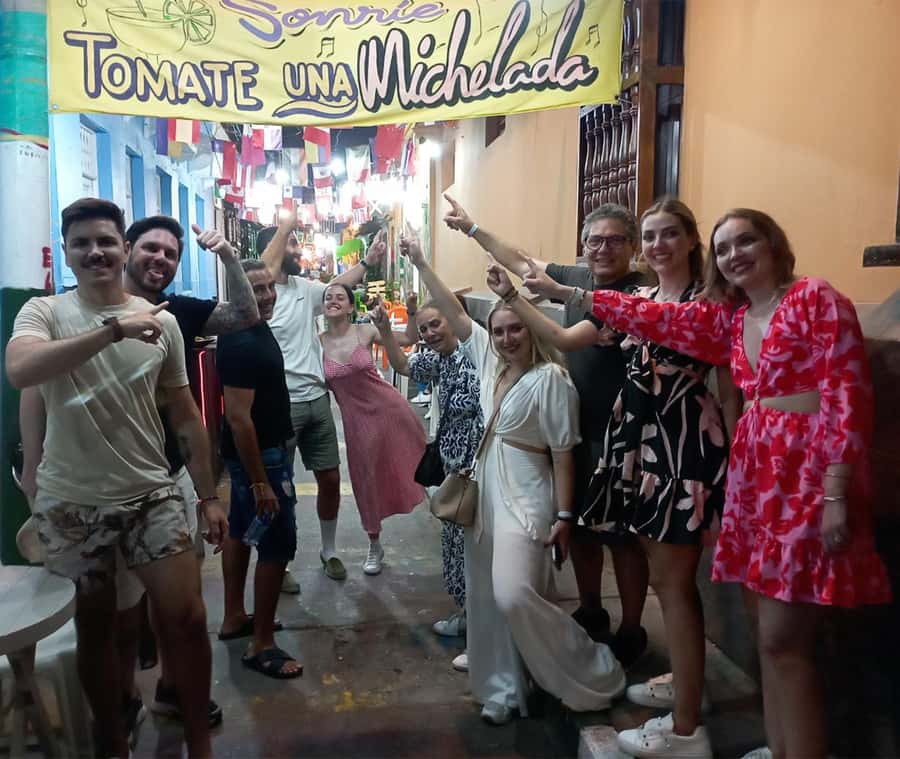
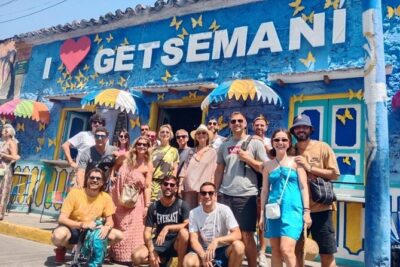
The final hour focuses on Getsemaní. The mood changes quickly. The Walled City presents colonial power through plazas, churches, defensive walls, and official buildings. Getsemaní brings forward neighborhood identity, street art, music, color, and social life.
One of the most memorable corridors features umbrellas, graffiti, and distinctive architecture. The umbrellas serve as a form of advertising, but they also create a playful canopy above the street. Graffiti adds local voices and visual energy, while the buildings show how the area has developed its own look.
The guide explains Getsemaní’s place in Cartagena’s changing social order. This is not just a photo stop. You hear about the people, customs, and cultural influences that give the neighborhood its character.
The route passes through Callejón Ancho before ending on Calle San Juan. Here, salsa and African champeta provide the soundtrack. Both styles help explain Cartagena’s Caribbean and African connections, and the music makes the final section more participatory.
Several guides add dancing to the walk. Dani and Daniela have taught traditional dances, and one guide got the group dancing three times. You should not expect a formal dance class, but you may be asked to join in. If that sounds fun, this tour has more personality than a standard monument walk.
What the guides add to the experience
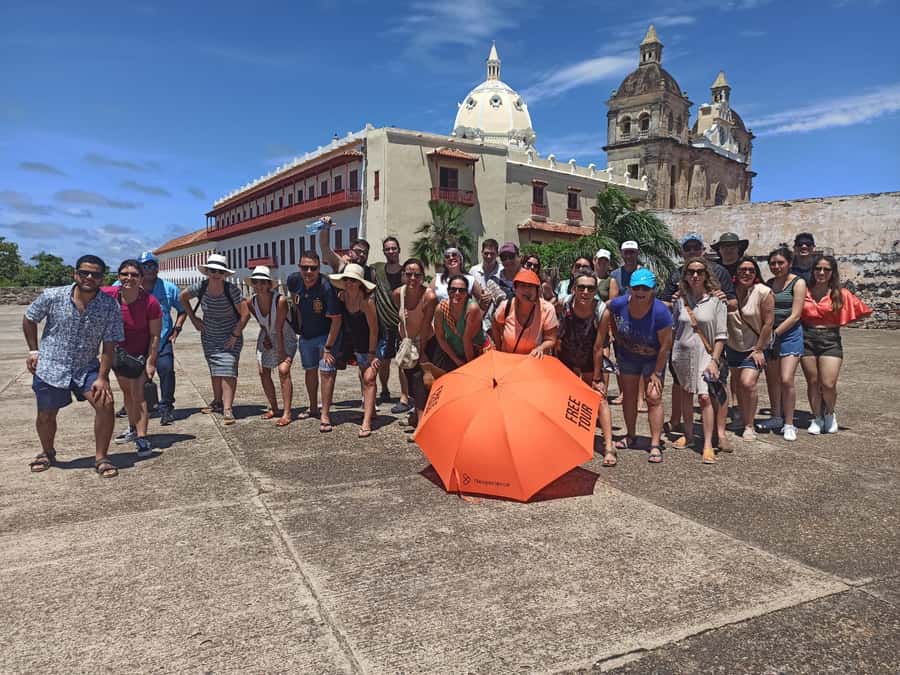
The guide can make or break any walking tour, and the people assigned here have received unusually strong praise. Álvaro David is described as passionate and clear, with practical advice about restaurants, food, and typical street-vendor prices.
Legacy is repeatedly praised for energy, humor, and the ability to explain a large amount of history without making the walk feel stiff. Daniela and Dani are also noted for Colombian pride, audience interaction, and dance demonstrations. Robert is praised for useful food and drink recommendations, shade management, and follow-up advice after the walk.
Ingrid, Liz, and Rebeca bring their own strengths. Ingrid is noted for patiently answering questions about both history and current life. Liz has been praised for helping people decide what to visit next. Rebeca has led Spanish-language tours and explained Colombian history in a light, friendly way.
English and Spanish are available. English ability appears strong overall, but one participant found that a guide sometimes spoke too quickly. That is a fair point for anyone who depends on clear English narration. If you have trouble following, ask the guide to slow down. A good guide can adjust.
Heat, pace, and practical comfort
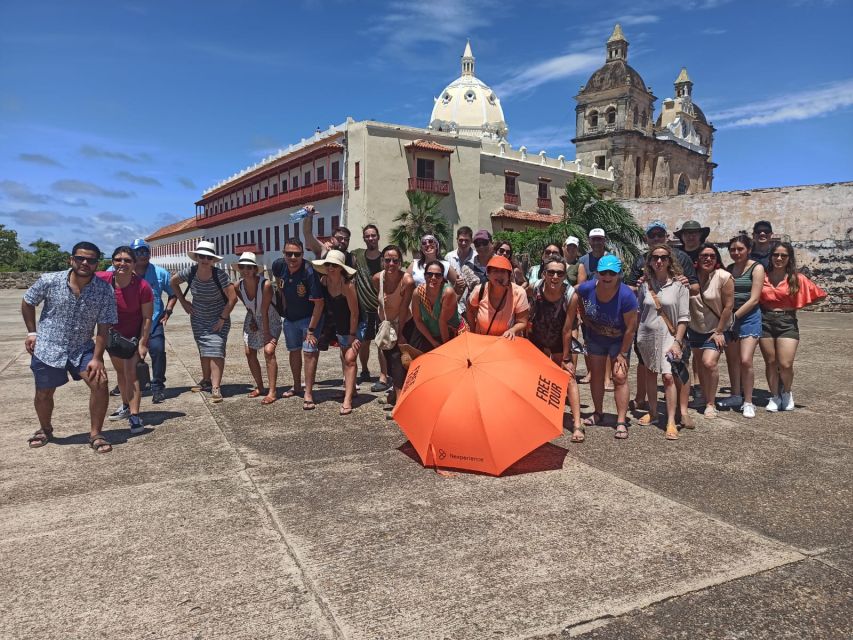
The walk lasts 150 minutes, with about two hours in the historic center and one hour in Getsemaní. That is a useful amount of time for orientation, but it is still a long period on foot in Cartagena’s tropical climate.
Wear comfortable walking shoes, light and comfortable clothes, sunscreen, and clothing suited to the weather. Bring water. This is not optional advice. Several positive accounts still point out the heat, and one person specifically recommends carrying plenty of water.
Late afternoon timing can help with the sun, but it does not remove the heat. Rain is also possible. One person found a rainy day made the experience less enjoyable, while still praising the guide and recommending the tour. A weather change can affect your comfort more than the content.
The tour is wheelchair accessible, though the route includes streets, plazas, and historic areas. If you use a wheelchair, confirm current route conditions when booking, since old-city surfaces and crowd movement can affect ease of travel.
No hotel pickup or drop-off is included. Food and drinks are also not included. The meeting point is central and easy to identify, but you need to arrange your own way there.
Is $12 a fair price?
Yes. At $12 per person, this is strong value if you want context before exploring on your own. You receive 150 minutes with a live English- or Spanish-speaking guide, a route through two major areas, and practical orientation for the rest of your stay.
The tip is already paid as part of the booking. That is worth understanding because this operates in the style of a free walking tour, but you are not expected to make a separate tip payment at the end. The price also lets you test your interest in Cartagena’s museums, churches, food, music, and neighborhoods before paying for additional visits.
The tradeoff is depth. You see many places, but you do not get extended interior time at every attraction. Think of this as a city introduction with history, not a specialist tour of one church, museum, or fort.
Who should book this walk?
I would choose this tour early in a Cartagena stay. It gives you a map in your head, explains why the city looks the way it does, and provides ideas for restaurants, drinks, museums, and later walks.
It suits first-time visitors, history fans, families, and anyone who wants more than pretty streets. A parent brought a two-year-old and found the guide attentive to the child’s needs, though you should still consider the heat and two-and-a-half-hour duration.
It is also a good fit if you want culture presented with some humor and movement. Dancing, music, street art, animals, legends, and food traditions keep the route varied.
I would think twice if you dislike group walks, hot weather, or audience participation. You may also prefer a private guide if you want to set your own pace or spend a long time inside museums.
Should you book the Cartagena walking tour?
Book it if you want an affordable, lively introduction to Cartagena’s Walled City and Getsemaní. The strongest reasons are the thoughtful treatment of conquest and slavery, the shift from colonial monuments to Afro-Caribbean culture, and the guides’ practical local advice.
Choose an early start if you are sensitive to heat, bring water and sunscreen, and leave time after the tour to revisit the places that interest you most. At $12, it is an easy first step into Cartagena, especially with guides such as Legacy, Dani, Daniela, Robert, Álvaro David, Ingrid, Liz, and Rebeca bringing different personalities to the same strong route.
FAQ
Where does the tour begin?
It begins at Plaza Cervantes, also called Camellón de los Mártires, in front of Cartagena’s Clock Tower. Look for the orange umbrella.
How long does the tour last?
The experience lasts 150 minutes. The historic center portion takes about two hours, followed by about one hour in Getsemaní.
Which areas does the tour visit?
The route visits Cartagena’s Historic Center, also called the Walled City, and the Getsemaní neighborhood.
What languages are available?
Live guiding is available in English and Spanish.
Is the tour wheelchair accessible?
Yes, the activity is listed as wheelchair accessible.
Is hotel pickup included?
No. Hotel pickup and drop-off are not included, so you need to reach the meeting point yourself.
Are food and drinks included?
No. Food and drinks are not included.
Is a separate tip expected at the end?
The booking includes the tip. The experience follows the format of a free walking tour, but the tip is already paid.
What should I bring?
Bring comfortable shoes, sunscreen, comfortable clothes, weather-appropriate clothing, and plenty of water for the walk.
More Getsemani Walks
- Cartagena Antigua & Barrio Getsemani group with audio system
★ 5.0 · 658 reviews - Getsemani neighborhood in group: art and culture with Audio System
★ 5.0 · 447 reviews - Cartagena Private Tour of the Walled City & Getsemani
★ 5.0 · 227 reviews - Street Food Tour in Cartagena Walled City and Getsemani
★ 4.5 · 137 reviews
Just added in Cartagena
- Private History Photography Tour★ 5.0 · 17 reviews
- Self-Guided Audio Tour: Pirate Tales in Cartagena★ 3.0 · 2 reviews
- Paue Island Tour in the Rosary Islands★ 5.0 · 1 review
- Totumo Volcano★ 3.5 · 15 reviews
- Party without limits! Cartagena; VIP Party.★ 4.5 · 32 reviews
- Paragliding Experience in Cartagena★ 5.0 · 8 reviews
- Palmarito Beach★ 3.5 · 4 reviews
- Tour cultural to san Basilio de Palenque from cartagena★ 5.0 · 45 reviews
Getsemaní Walking Tours, compared.
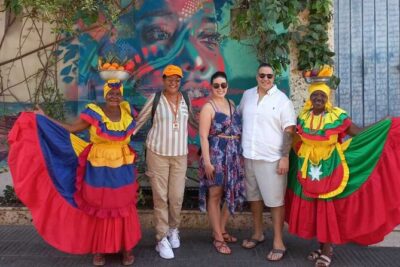
Private Walking Tour in Cartagena Walled City & Getsemaní
Read our review →
Cartagena Antigua & Barrio Getsemani group with audio system
Read our review →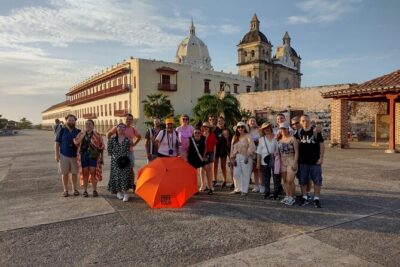
Historic Center & Getsemaní Shared Tour in Cartagena
Read our review →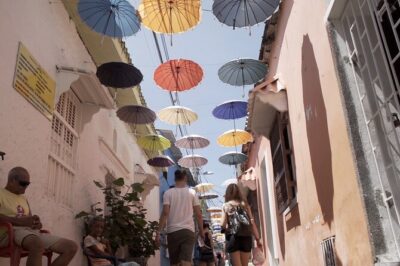
Getsemani neighborhood in group: art and culture with Audio System
Read our review →
Cartagena Private Tour of the Walled City & Getsemani
Read our review →
Street Food Tour in Cartagena Walled City and Getsemani
Read our review →
Private Walking Tour in Walled City and Getsemani Cartagena
Read our review →Browse the lists this tour appears in