
REVIEW · WALLED CITY AND SAN FELIPE TOURS
Private Walking Tour in Cartagena Walled City & Getsemaní
Cartagena reveals itself one street at a time. This private walk links the Walled City’s forts, churches, squares, and colonial buildings with Getsemaní’s murals, music, and local character. I especially like the one-guide format, which lets you ask questions and adjust the pace, and the route’s mix of major sights with everyday street life. The main caution is heat: the walk can last close to three hours, and one port pickup took place far from the cruise terminal on foot, so transport planning matters.
You begin near Camellón de los Mártires and finish in Getsemaní, normally around Plaza del Pozo or another place you choose within the Walled City. Guides such as William, Álvaro, Legaxy, Karen, Ingrid, Dimas, Mercedes, and Elis have been praised for their warmth, local insight, patience, and flexibility. Book an early start if you can, since Cartagena gets hot quickly.
In This Review
- Key points before you book
- Starting at Camellón de los Mártires
- The Clock Tower and the old enslavement route
- Portal de los Dulces and the hard story beneath the sweets
- Plaza de la Aduana and Cartagena’s trade networks
- San Pedro Claver and the religious center of the city
- Bastions, pirates, and the Palace of the Inquisition
- Independence at Plaza de la Proclamación
- Cathedral of Santa Catalina de Alejandría
- Centennial Park and a change of scenery
- Street art, coffee, music, and local names
- Plaza de la Trinidad and the heart of Getsemaní
- How the private format changes the experience
- Timing, price, and what you actually receive
- Who should book this walk?
- Should you book it?
- FAQ
- How long does the private walking tour last?
- How much does the tour cost?
- Is this a private tour?
- Where does the tour start?
- Where does the tour finish?
- Is transportation included?
- Is bottled water included?
- Are museum admissions included?
- Can I cancel for a full refund?
Key points before you book
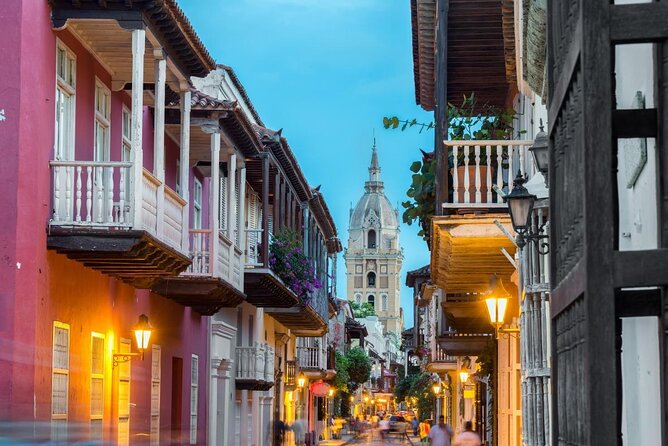
- A private route through two different Cartagenas: See the formal colonial Walled City, then follow the music, murals, food, and street life of Getsemaní.
- History with a human face: The walk covers Indigenous roots, Spanish rule, slavery, religion, piracy, the Inquisition, and independence.
- A guide who can shape the day: Ask for more architecture, politics, food, coffee, photography, emeralds, or local culture rather than simply following a fixed script.
- A useful first-day orientation: The route gives you a map of central Cartagena and ideas for restaurants, bars, shops, and later sightseeing.
- Good value for a private experience: At $49 per person, the cost is reasonable for solo visitors and small groups who want personal attention and included transport support.
- Expect a warm, active outing: Comfortable shoes, sun protection, and water are important, even though bottled water is listed as included.
Starting at Camellón de los Mártires
The tour begins at Cl. 29 #8b-124 in El Centro, near Camellón de los Mártires, also called Plaza de Cervantes. This is a smart starting place because it gives you a quick sense of Cartagena’s layout before the route moves into the denser streets of the old center.
Your certified local guide provides an introduction and sets the tone for the walk. The opening conversation covers the Indigenous people who lived in the region before Spanish conquest and shows how Cartagena’s identity grew from Indigenous, African, Spanish, and Caribbean influences.
That early context matters. Without it, the colorful balconies and grand churches can look like a pretty collection of buildings. With it, you begin to see Cartagena as a place shaped by conquest, forced migration, faith, trade, resistance, and independence.
More Walking Tours in Cartagena
- Cartagena: Historic Center and Getsemaní Shared Walking Tour
★ 4.9 · 2,716 reviews - Cartagena: Walled City and Getsemani Shared Walking Tour
★ 4.5 · 352 reviews - Playa Morena Beach Club Whith Lunch And Walking tour of fort San Fernando
★ 5.0 · 218 reviews
The Clock Tower and the old enslavement route
The next stop is the Monumento Torre del Reloj, Cartagena’s famous Clock Tower. Locals often call it the city’s Golden Key because it marks the main entrance to the Walled City.
From here, the route moves through Plaza del Ecuador, formerly known as Plaza del Esclavo, and along Porto Carrero and Candilejo streets. This part of the walk introduces the old enslavement route. It is an important section, but it is not light sightseeing. Cartagena’s beauty sits beside a painful past, and a good guide helps you hold both facts at once.
You also encounter Pedro de Heredia, the city’s founder. The monument gives your guide a chance to explain the Spanish foundation of Cartagena and how the colonial city grew around trade, military defense, and the harbor.
Portal de los Dulces and the hard story beneath the sweets
Portal de los Dulces is one of the most enjoyable food-related stops, but it carries serious historical weight. The arcades now shelter stalls selling coconut candies, tamarind balls, guava sweets, and other Caribbean treats.
The area is also tied to the former slave market. The tour connects the site with the women who sold sweets during the era of slavery and with descendants who continue those traditions today. That connection makes the stop more meaningful than a quick sugar break.
You may want to buy something here, but purchases are not part of the tour price. One solo participant felt uncomfortable when drinks and purchases seemed to appear on the bill without clear consent. The company disputed that account and said there were no required extra charges. My practical advice is simple: ask the price before accepting food, coffee, or anything from a shop, and make clear what you do or do not want to buy.
Plaza de la Aduana and Cartagena’s trade networks
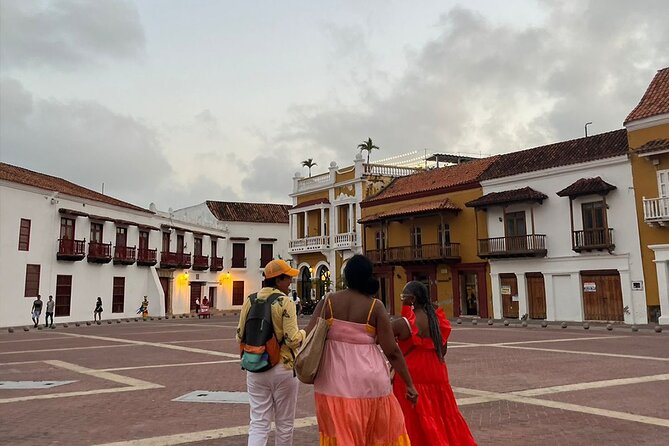
Plaza de la Aduana was the center of colonial trade. It was also connected to the trafficking of enslaved people, another reminder that Cartagena’s wealth was built through both commerce and exploitation.
The square is surrounded by handsome colonial facades and important civic buildings, including the Municipal Hall. It is a good place to pause and understand how power worked in the old city. Trade, government, religion, and military control were all packed into a small area.
The tour passes the Museum of Modern Art, which displays Caribbean and Latin American works from the 1950s onward. It also points out the Gold Museum, with Indigenous objects from Colombia’s Caribbean region, and the Emerald Museum, devoted to Colombian emeralds.
These museums may be seen from the outside unless you arrange otherwise. The listed tour price does not include unspecified admissions, so ask your guide if you want time inside. With only two to three hours for the entire walk, a museum visit could also mean skipping another section.
More Walled City and San Felipe tours:
- Cartagena: Guided Tour, with La Popa Convent, and San Felipe
★ 4.4 · 599 reviews - Walled City, San Felipe Castle & Popa Convent Cartagena City Tour
★ 5.0 · 391 reviews - Cartagena: BILINGUAL CITYTOUR + SAN FELIPE CASTLE & Old city
★ 4.2 · 387 reviews - Cartagena Private Tour of the Walled City & Getsemani
★ 5.0 · 227 reviews
San Pedro Claver and the religious center of the city
Plaza de San Pedro Claver brings the focus to religion and human rights. The church and monastery carry the name of Pedro Claver, a Jesuit known as the Slave of the Slaves because of his work with enslaved Africans arriving in Cartagena.
The tour uses the architecture of the church and museum-monastery to explain the city’s religious traditions. The complex also houses the headquarters of human rights activity, linking Cartagena’s colonial past with present-day concerns about dignity and justice.
This is a useful stop for visitors who want more than military stories and pirate tales. Cartagena’s churches were not simply decorative buildings. They were centers of care, authority, education, and social life.
Bastions, pirates, and the Palace of the Inquisition
At Baluarte de San Ignacio, you see part of the defensive system built to protect Cartagena from pirate attacks. The bastion faced the Bay of Souls, and your guide explains how the walls and military structures helped defend the city.
The fortifications are much easier to understand with a guide. On your own, you can admire the stonework and views, but it is harder to see how the bastions fit into Spain’s wider defense strategy in the Caribbean.
The Palace of the Inquisition adds a darker chapter. Built in the early 17th century, it once housed the Holy Office of the Inquisition. Suspected heretics and people accused of witchcraft or blasphemy were interrogated and tried here.
The building’s graceful balconies and courtyard contrast sharply with the torture devices and grim stories inside. The tour description allows about ten minutes at this stop, so you should not expect a full museum visit. If the Inquisition interests you, ask whether you can return later with more time.
Independence at Plaza de la Proclamación
Plaza de la Proclamación marks Cartagena’s declaration of independence from Spain on November 11, 1811. Cartagena was the first city in Colombia to make that declaration.
The plaza is surrounded by colonial buildings, including the Archbishop’s Palace. Your guide connects the square’s architecture with the city’s revolutionary period and explains why the date remains important in Cartagena.
This short stop works best as part of the larger story. You have already heard about conquest, trade, forced labor, and military defense. Here, the city’s struggle for self-rule brings those earlier subjects toward a political turning point.
Cathedral of Santa Catalina de Alejandría
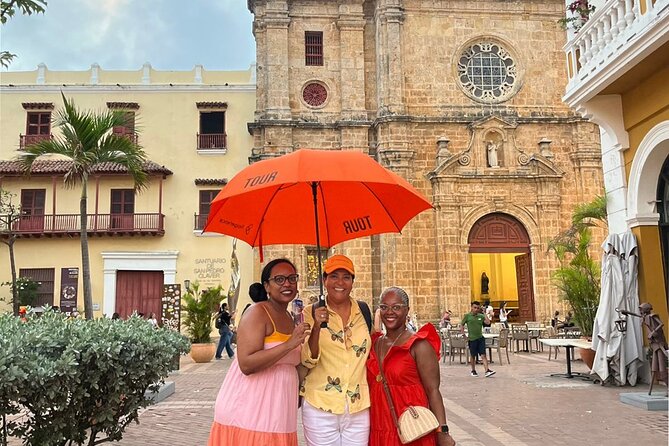
The Cathedral of Santa Catalina de Alejandría was built between 1577 and 1612. Its bell tower and stone facade are among the most recognizable sights in the Walled City.
Inside, you may see religious art, old altars, and traces of the cathedral’s long role in Cartagena’s spiritual and social life. The tour allows about ten minutes here, so the amount of interior access may depend on services, opening conditions, and the group’s pace.
I like this stop because it helps you read the city’s architecture. The cathedral is not an isolated monument. It belongs to a city where churches, government buildings, defensive walls, and commercial arcades were built close together.
Centennial Park and a change of scenery
Centennial Park offers a welcome break from stone streets and bright sun. The park occupies the site of a former railway station and preserves part of Cartagena’s tropical dry forest.
The tour points out sloths, squirrels, and iguanas. You may not see every animal on every visit, but the park’s shade and trees provide a useful pause during a warm walking route.
This section also shows how the city’s natural setting remains part of daily life. Cartagena is not only forts and balconies. It has pockets of greenery where residents gather and where wildlife shares the city with people.
Street art, coffee, music, and local names
Near Cl. de San Juan #25-25, the conversation shifts toward modern Cartagena. The guide may discuss graffiti, coffee, Blas de Lezo, Gabriel García Márquez, Mister Black, and Joe Arroyo.
That range is one of the tour’s strengths. Blas de Lezo connects to military history, García Márquez to literature, and Joe Arroyo and Mister Black to Colombian music. Graffiti adds the voice of the present.
The private format is particularly useful here. If you care about music, ask for more on salsa and champeta. If coffee interests you, request a tasting or a recommendation. A few participants enjoyed coffee, coconut sweets, and an artisanal coffee tasting along the way, but these extras should be treated as optional rather than guaranteed inclusions.
Plaza de la Trinidad and the heart of Getsemaní
The route enters Getsemaní through Callejón Ancho and continues toward Plaza de la Trinidad. The church and plaza are central to the neighborhood’s identity.
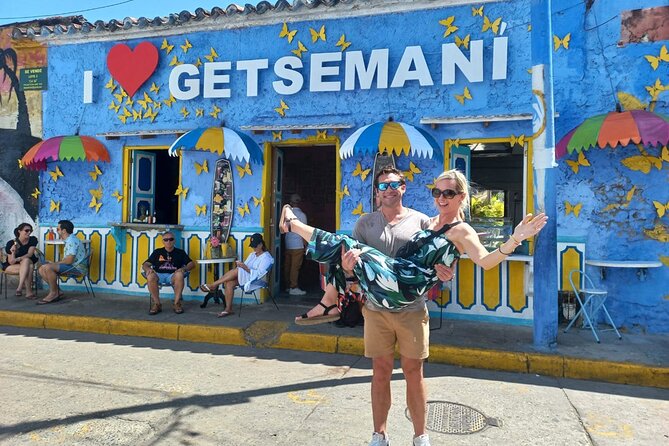
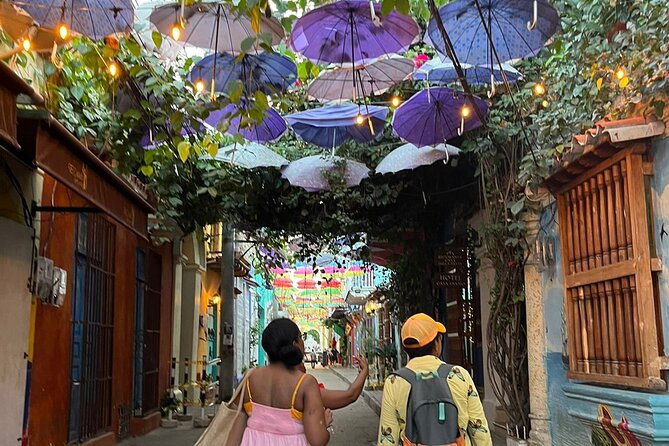
Here the sound changes. Salsa and African champeta spill into the streets, and the area feels less formal than the Walled City. Getsemaní has colonial architecture, but its character comes from residents, street artists, small businesses, music, and public life.
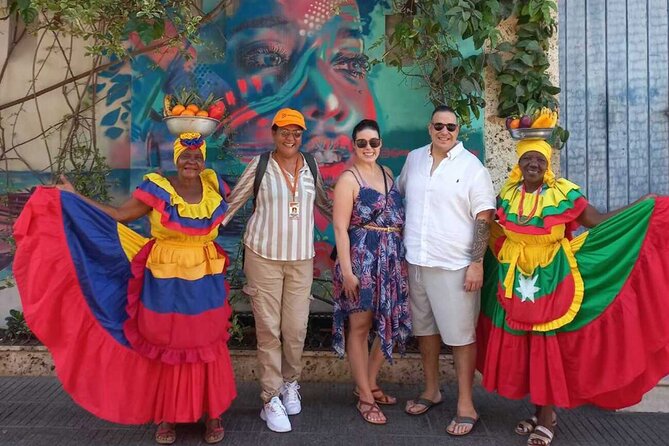
You will see graffiti, colorful umbrellas, local traditions, folklore, and people using the street as an extension of home. This is often the part of the walk that gives visitors the clearest sense of modern Cartagena.
The route normally finishes around Plaza del Pozo in Getsemaní, but your guide can end elsewhere within the Walled City. That flexibility is useful if you want to continue to a restaurant, bar, or another planned activity.
How the private format changes the experience
A private tour means only your group participates. That makes a real difference in a city where narrow lanes, heat, noise, and frequent photo stops can make a large group awkward.
You can ask your guide to slow down, spend more time on history, or move faster through subjects that do not interest you. Guides have also adapted for older members of a group, poor weather, and special interests. One guide offered an arm to an older participant in the rain, while another changed a planned coffee stop to a local beer after being asked.
The strongest praise has gone to William, Álvaro, and Legaxy, with Karen, Ingrid, Elis, Dimas, and Mercedes also receiving warm recommendations. Guide assignments can change, so a requested name may not be guaranteed. Still, the repeated praise for guide personality, local connections, storytelling, photography, and restaurant advice is a strong reason to choose a private walk over a large coach excursion.
Timing, price, and what you actually receive
The price is $49 per person for about two to three hours. For a solo visitor, that is not the cheapest way to see Cartagena, but it can be good value if you want a personal introduction, historical explanation, and help getting oriented.
For a couple or small group, the cost becomes easier to justify because the guide’s attention is shared only with your party. A cruise passenger may also find the included private transportation useful, especially when the pickup is arranged from the port.
The tour lists bottled water, private transportation, a tour guide, and hotel pickup as included. Anything not specifically listed is excluded. That means museum admission, food, drinks, shopping, and other personal expenses should be confirmed before you accept them.
The official start is in El Centro, while the end is in Getsemaní. Some participants were picked up at the cruise port and driven to the Walled City. If you are sailing in for the day, confirm the exact pickup point and allow time for the return journey. The walk itself is not close to the cruise terminal.
Who should book this walk?
I would choose this tour for a first visit, especially if you want the city’s main story before exploring on your own. It also suits solo visitors who prefer company and guidance, couples who want a flexible pace, and families or small groups with mixed interests.
It is a good match for anyone who wants both colonial landmarks and present-day culture. You get churches, forts, independence history, slavery history, street art, music, sweets, coffee suggestions, and Getsemaní in one outing.
I would be less inclined to book it if you prefer silent, independent wandering or want long museum visits. The route covers many stops, so most are brief. You will see a lot, but you may need to return later for the Palace of the Inquisition, Gold Museum, Modern Art Museum, or Emerald Museum.
Wear comfortable shoes and light clothing. Start early if possible, use the private format to set your interests at the beginning, and keep your own spending clear at any shop or café.
Should you book it?
Yes, if you want an efficient and personal first look at Cartagena. The route covers the Walled City and Getsemaní, and the best guides turn buildings and streets into stories you can remember.
Book it for the guide, flexibility, and broad range of subjects, not for a slow museum tour. If you are arriving by cruise ship, confirm transportation details. If you want deeper time at the museums, plan a return visit. At $49 per person, it is strongest for solo visitors and small groups who value personal attention and a clear introduction to the city.
Free cancellation is available if you cancel at least 24 hours before the start time. The experience is provided by NEXPERIENCE and has a 4.9 rating from 1,357 reviews, with 99 percent of customers recommending it.
FAQ
How long does the private walking tour last?
The tour lasts approximately two to three hours.
How much does the tour cost?
The listed price is $49 per person.
Is this a private tour?
Yes. Only the person or group that books participates.
Where does the tour start?
It starts at Cl. 29 #8b-124 in El Centro, Cartagena de Indias, near Camellón de los Mártires.
Where does the tour finish?
It normally ends at Plaza del Pozo in Getsemaní. The guide can finish at another location within the Walled City if you prefer.
Is transportation included?
Private transportation and hotel pickup are listed as included. Some participants were picked up from the cruise port and driven to the Walled City.
Is bottled water included?
Yes. Bottled water is listed among the included services.
Are museum admissions included?
The tour information lists the stops as free of charge, but anything not specifically included is excluded. Ask your guide about admission if you want to enter a museum.
Can I cancel for a full refund?
Yes. You can cancel for a full refund up to 24 hours before the experience start time. Cancellations or changes made less than 24 hours in advance are not accepted for a refund.
More Getsemani Walks
- Cartagena Antigua & Barrio Getsemani group with audio system
★ 5.0 · 658 reviews - Historic Center & Getsemaní Shared Tour in Cartagena
★ 5.0 · 620 reviews - Getsemani neighborhood in group: art and culture with Audio System
★ 5.0 · 447 reviews - Street Food Tour in Cartagena Walled City and Getsemani
★ 4.5 · 137 reviews
Just added in Cartagena
- Private History Photography Tour★ 5.0 · 17 reviews
- Self-Guided Audio Tour: Pirate Tales in Cartagena★ 3.0 · 2 reviews
- Paue Island Tour in the Rosary Islands★ 5.0 · 1 review
- Totumo Volcano★ 3.5 · 15 reviews
- Palmarito Beach★ 3.5 · 4 reviews
- Party without limits! Cartagena; VIP Party.★ 4.5 · 32 reviews
- Paragliding Experience in Cartagena★ 5.0 · 8 reviews
- Tour cultural to san Basilio de Palenque from cartagena★ 5.0 · 45 reviews
Walled City and San Felipe Tours, compared.
Guided Tour, with La Popa Convent, and San Felipe
Read our review →
Walled City, San Felipe Castle & Popa Convent Cartagena City Tour
Read our review →
BILINGUAL CITYTOUR + SAN FELIPE CASTLE & Old city
Read our review →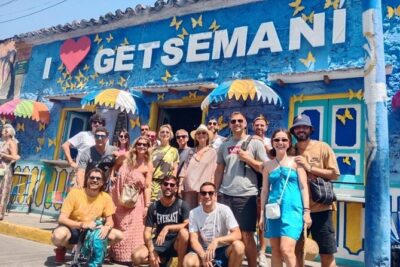
Cartagena Private Tour of the Walled City & Getsemani
Read our review →
City Tour Castillo San Felipe & Convento de La Popa
Read our review →
Street Food Tour in Cartagena Walled City and Getsemani
Read our review →
Private Walking Tour in Walled City and Getsemani Cartagena
Read our review →Browse the lists this tour appears in