
REVIEW · WALLED CITY AND SAN FELIPE TOURS
Cartagena Private Tour of the Walled City & Getsemani
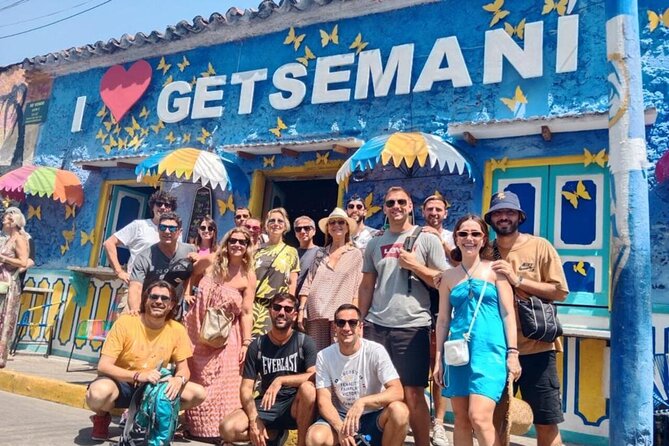
Cartagena reveals itself one colorful corner at a time. This private walk links the Walled City with Getsemaní, pairing colonial landmarks with graffiti, music, local food, and stories about the people who shaped the city. I especially like the private format, which lets your guide adjust the pace, answer questions, and pause for photos. I also like the blend of major sights and everyday neighborhood life. The main concern is the heat: with many stops and plenty of walking, a morning start and a bottle of water are wise.
At about $50 per person, this is a strong buy if you want context rather than a quick photo stop. Guides such as William, Alvaro, Dimas, Mercedes, Evelyn, Camilo, and Legaxy have been praised for clear explanations, patience, and useful food and sightseeing advice. Still, the tour can feel long in Cartagena’s midday sun, and one account described an early finish and an attempt to invite extra people into a private booking.
In This Review
- Key points to know before booking
- Starting beneath the Clock Tower
- From customs to slavery and modern art
- San Pedro Claver and the city’s moral questions
- Bastions, pirates, and the walls
- Independence at Plaza de Bolívar
- Calle de San Juan brings the city into the present
- Legends and local industry on Calle de la Sierpe
- Fried food and neighborhood memory at Plaza de la Trinidad
- Trades and customs on Calle del Guerrero
- Animals and Afro-Caribbean history in Centennial Park
- The Martyrs, umbrellas, and Getsemaní’s visual side
- Calle del Pozo and the final stories
- What the $50 price really buys you
- Who should book this Cartagena walk
- Should you book it?
- FAQ
- How long does the private Cartagena tour last?
- How much does the tour cost?
- Is this a private tour?
- Where does the tour start?
- Where does the tour finish?
- Are entrance tickets included?
- What areas does the route visit?
- Is food included?
- Are service animals allowed?
- What is the cancellation policy?
Key points to know before booking
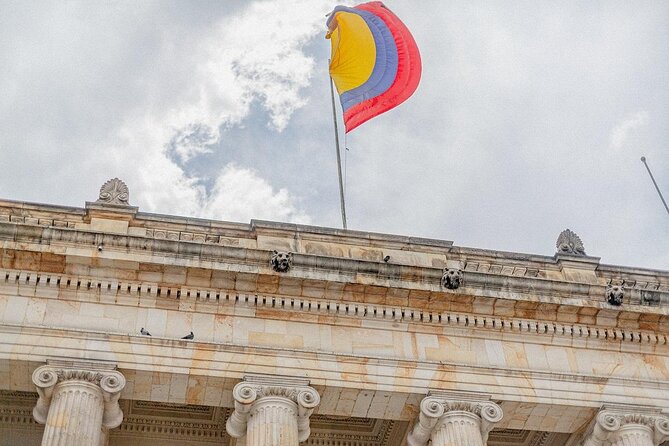
- Two sides of Cartagena: Connect the grand plazas and defenses of the Walled City with the art, food, and neighborhood life of Getsemaní.
- A private guide makes a difference: Guides have adjusted walking speed, added art stops, helped with photos, and tailored the route to personal interests.
- History is told in layers: The walk moves from Indigenous life and Spanish conquest to slavery, independence, piracy, music, and modern street art.
- Local tastes are part of the route: Expect a tasting of fried foods in Plaza de la Trinidad, with some tours also including sweets, drinks, lemonade, or boli.
- Plan for heat and street sellers: Water, light clothing, sun protection, and a little patience will make the walk easier.
- The route is photo-friendly: Umbrella streets, murals, colorful facades, plazas, statues, and possible animals in Centennial Park fill the camera roll.
Starting beneath the Clock Tower
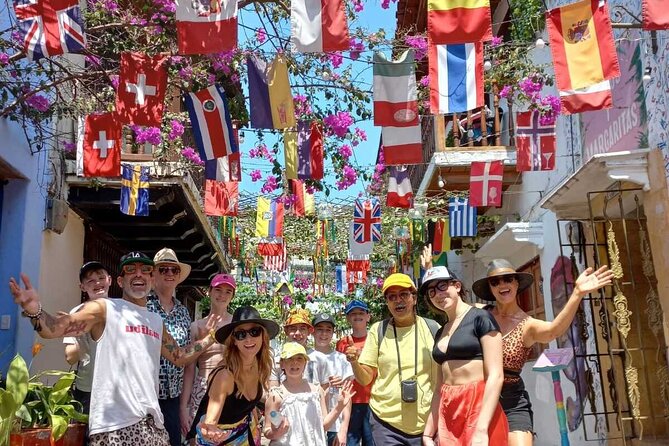
The meeting point is listed at Cl. 32 #841 in La Matuna, near Cartagena’s historic center. The first stop is Torre del Reloj, the famous clock tower and one of the most recognizable entrances to the old city.
This opening is not just a photo opportunity. Your guide sets the timeline by discussing the Indigenous people who lived here before Spanish conquest, then explaining the arrival and expansion of the Spanish empire. That early framing matters. It keeps Cartagena from looking like a pretty collection of balconies and churches without showing who lived here, who gained power, and who paid the price.
The stop is scheduled for about 10 minutes. Since no admission fee is required, the focus is conversation and orientation. Use this moment to tell your guide what interests you most. If you care about architecture, ask for more buildings. If you prefer music, food, or street art, say so early. Guides have tailored walks around personal interests.
More Walled City and San Felipe tours:
- Private Walking Tour in Cartagena Walled City & Getsemaní
★ 5.0 · 1,357 reviews - Cartagena: Guided Tour, with La Popa Convent, and San Felipe
★ 4.4 · 599 reviews - Walled City, San Felipe Castle & Popa Convent Cartagena City Tour
★ 5.0 · 391 reviews
From customs to slavery and modern art
At Plaza de la Aduana, the story turns to the mechanics of conquest, slavery, and San Basilio de Palenque. This is an important section of the walk because Cartagena’s colonial wealth cannot be separated from forced labor and the movement of enslaved Africans through the port.
The route then reaches the Museo de Arte Moderno Cartagena. The museum receives roughly 10 minutes, so you should not expect a full museum visit or a detailed examination of its collection. Instead, your guide explains its history and places modern art within Cartagena’s broader cultural life.
That short stop helps connect the past with the present. The city’s creative identity is not limited to formal galleries. It continues in murals, music, dance, neighborhood symbols, and the public art you will see later in Getsemaní.
San Pedro Claver and the city’s moral questions
Plaza de San Pedro Claver gives the tour another serious turn. San Pedro Claver is presented as a defender of enslaved people, and the guide discusses his opposition to the cruelty of the Spanish empire.
This is one of the places where a live guide adds value. A plaque or brief guidebook entry can give you names and dates, but a person can explain how the plaza fits into Cartagena’s social and religious story. The subject is difficult, yet it belongs in any honest introduction to the city.
The stop is brief, about 10 minutes. If names are hard to follow, ask your guide to write them down or repeat them. One useful piece of advice from the tour feedback was to request important names in writing, since unfamiliar Spanish names can blur together during a fast historical explanation.
Bastions, pirates, and the walls
At Baluarte de San Ignacio, you get the military chapter. Cartagena was attacked and besieged by pirates and corsairs, and the guide explains why the walls and bastions were built.
This is where the old city’s defensive design begins to make sense. The fortifications were not decorative backdrops. They protected a major colonial port and controlled access to the settlement. The stop also gives you a chance to appreciate the physical scale of the defensive system without paying for a separate attraction.
The route later finishes near the Santa Bárbara Bastion, described as part of the defense protecting the only road from the mainland into the city. The published end point is Calle de San Juan in Getsemaní, so confirm the exact finishing spot with your guide if you need a particular taxi pickup or hotel route.
More Getsemani walks:
- Cartagena: Historic Center and Getsemaní Shared Walking Tour
★ 4.9 · 2,716 reviews - Cartagena Antigua & Barrio Getsemani group with audio system
★ 5.0 · 658 reviews - Historic Center & Getsemaní Shared Tour in Cartagena
★ 5.0 · 620 reviews - Getsemani neighborhood in group: art and culture with Audio System
★ 5.0 · 447 reviews
Independence at Plaza de Bolívar
Plaza de Bolívar shifts the focus from conquest to Colombia’s independence and Cartagena’s own role in that struggle. It is a useful change of pace after the discussions of colonial rule and military defense.
The plaza is also a good place to pause and look around. Your guide may point out the relationship between public space, monuments, and political memory. The scheduled explanation lasts about 10 minutes, but the private setup means you can ask for more detail if independence is a major interest.
The route does not treat Cartagena as a museum sealed in the past. That becomes clear as you move toward Calle de San Juan, where art, champeta, salsa, graffiti, and daily life take center stage.
Calle de San Juan brings the city into the present
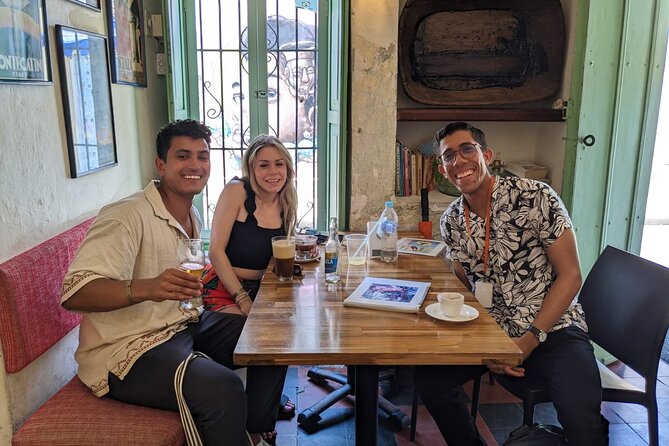
Calle de San Juan is one of the more contemporary parts of the walk. Here you hear about the role of art and music in Cartagena, including champeta and salsa dancing. You also see some of the city’s street art and the colorful streets that make Getsemaní so popular.
I like this transition because it shows culture as something people do, not just something displayed behind glass. Music, dance, and graffiti give the neighborhood a living voice. The guide can also help you read the images instead of treating them as simple decoration.
This is a good section for photographers. Guides have been praised for waiting patiently while people take pictures and for adding more art stops after noticing a guest’s interest. If you want extra time for murals, say so. A private tour is most useful when you communicate what you want.
Legends and local industry on Calle de la Sierpe
Calle de la Sierpe adds legends, graffiti, and a glimpse of neighborhood commerce. The route passes the Lemaitre soap and perfume store, where the guide discusses the industrial side of Getsemaní.
That detail is easy to miss on a standard sightseeing walk. Most visitors notice the painted walls and bright facades, but the soap and perfume business points to another side of the neighborhood, one tied to work, production, and local enterprise.
The stop lasts about 15 minutes. You may find the street more interesting when you look beyond the most photographed walls. Ask how the area’s older trades relate to its current identity, especially if you want a better sense of Getsemaní beyond its nightlife reputation.
Fried food and neighborhood memory at Plaza de la Trinidad
Plaza de la Trinidad is one of the social centers of the route. Here, the tour includes a tasting of fried foods while your guide explains the church, the square, and its role during attacks by pirates and corsairs.
The food stop gives the history a practical, tasty pause. Some tour accounts also describe local sweets, beer, lemonade, and boli, a frozen treat. These extras may vary by guide or day, so think of them as possible additions rather than guaranteed inclusions.
The square also introduces Pedro Romero and Father Omaña, along with the Maria Mulata graffiti. You get politics, religion, neighborhood identity, and public art in one place. It is a good example of the tour’s overall approach: major events are explained beside ordinary streets and local symbols.
Bring small cash for optional snacks and tips. Also expect sellers in busy parts of Cartagena. A polite no, gracias is enough when you do not want to buy something.
Trades and customs on Calle del Guerrero
Calle del Guerrero focuses on Cartagena’s trades and customs. This may sound less dramatic than fortifications or independence, but it can be one of the most useful sections for anyone who wants to understand how a city works day to day.
A guide who lives close to the community can add personal details and point out connections you might miss alone. Several guides have been praised for knowing people along the route and for making useful recommendations for restaurants, coffee, shopping, and later activities.
The timing is about 15 minutes. Because the tour includes many stops, do not expect a long conversation at every location. If you want to linger, use the private format to ask your guide to shorten a less important stop.
Animals and Afro-Caribbean history in Centennial Park
Centennial Park brings together nature, independence, and the history of Getsemaní’s mulatto and brown residents. Your guide discusses the independence of Cartagena and the role these communities played in the neighborhood.
You might also see sloths, iguanas, monkeys, and birds. These sightings are not guaranteed, and the wording rightly leaves room for surprise. Still, the park adds a welcome change from stone streets and walls. One particularly memorable account described seeing a sloth with her baby in the trees.
This is another place where the heat can catch up with you. The walk may feel easy at the start and tiring later, especially for families or anyone who needs frequent rest. Guides have adjusted the pace for older visitors and people who needed breaks, which is a real benefit of booking privately.
The Martyrs, umbrellas, and Getsemaní’s visual side
At Camellón de los Mártires, the guide introduces the meeting area, statues, busts, and Los Pegasos. This section connects the public monuments with Cartagena’s independence story.
Then comes Calle de Las Sombrillas, the umbrella alley. It is built for photographs, and you will likely want time to frame the colors, signs, facades, and overhead decorations. If you are a serious picture taker, tell your guide before the walk begins. One guest specifically appreciated having a patient guide who did not rush repeated photo stops.
The umbrella alley is attractive, but it is also a short visual stop rather than a major historical site. Its value comes from the atmosphere and the chance to see how public decoration shapes the neighborhood.
Calle del Pozo and the final stories
Calle del Pozo closes the route with the Getsemaní anthem and the square’s importance during pirate and corsair attacks. It is a fitting finish because the walk has moved from conquest and defense to community identity.
By this point, you should have a clearer sense of why Getsemaní feels different from the formal plazas of the Walled City. The route has shown you art, food, music, old trades, public memory, and the people who made the district what it is.
The tour takes about two to three hours, although the listed stops add up to longer than a brisk two-hour walk. In practice, some explanations may be compressed, and the final length will depend on your pace, questions, photos, and any added tastings. One person reported a scheduled three-hour walk ending at 11:30 instead, though the heat made the earlier return acceptable.
What the $50 price really buys you
At $50 per person, the price is fair for a private walking experience that covers both the Walled City and Getsemaní. The value is not in paid admissions, since the listed stops are free. You are paying for a guide’s time, local interpretation, route planning, language skills, and ability to adjust the experience to your group.
The strongest value comes when you are new to Cartagena. A good guide can explain what you are seeing, recommend where to eat and drink, help you understand local customs, and point out places worth returning to later. Several guides have also helped with photos and restaurant suggestions, which adds practical value beyond the scheduled walk.
The rating is 4.9 from 227 ratings, and 98 percent of people recommend the experience. Praise centers on the guides’ warmth, clear English, patience, and ability to customize the walk. Alvaro is frequently singled out, while William, Dimas, Mercedes, Evelyn, Camilo, Legaxy, and Robert also receive strong praise.
The private promise matters. One negative account described a guide asking other couples if they wanted to join, despite a two-person private booking. That is not the normal picture presented by the available feedback, but it is worth confirming that your group will remain private at the start.
Who should book this Cartagena walk
I would choose this tour for a first visit, especially if you want a broad introduction in one morning or afternoon. It suits couples, families, solo visitors, friends, and business groups because the guide can adapt the pace and emphasis.
It is also a good fit if you care about street art, local food, history, photography, or neighborhood culture. English-language guiding has been praised, and Alvaro has been described as offering tours in Spanish, English, and French.
I would hesitate if you dislike walking in heat, want long visits inside museums, or prefer a tightly timed historical lecture. This is a street-level orientation with many short stops. You will see a lot, but you will not study each site at length.
Book early if your schedule is fixed. The experience is booked an average of 32 days ahead. Choose an early start when possible, since the sun can make the route harder later in the day. Bring water, allow time for photos, and keep a little money for snacks and tips.
Should you book it?
Yes, if you want an easy first look at Cartagena that joins its monuments to real neighborhood life. The strongest reason to book is the combination of a private guide, a wide route, local tastings, and practical advice for the rest of your stay.
I would book it with two expectations: this is a walking tour in a hot city, and the exact personality of the experience depends on your assigned guide. Ask for Alvaro, William, Dimas, Mercedes, Evelyn, Camilo, or another available guide if you have a preference, then state your interests clearly.
Free cancellation is available up to 24 hours before the start time. Changes or cancellations inside that window are not refunded, and poor weather may lead to a new date or a full refund. Service animals are allowed, public transportation is nearby, and most people can participate.
FAQ
How long does the private Cartagena tour last?
The experience lasts approximately two to three hours. The actual timing can vary with walking speed, questions, photographs, tastings, weather, and any extra stops.
How much does the tour cost?
The listed price is $50 per person.
Is this a private tour?
Yes. Only your group is supposed to participate in the private activity.
Where does the tour start?
It starts at Cl. 32 #841 in La Matuna, Cartagena de Indias, Bolívar, Colombia.
Where does the tour finish?
The end point is listed on Calle de San Juan in Getsemaní, near the Santa Bárbara Bastion. The bastion formed part of the defensive system protecting the mainland access road.
Are entrance tickets included?
The listed stops have free admission, so no paid entry ticket is required for those locations.
What areas does the route visit?
The route covers parts of Cartagena’s Walled City and Getsemaní, including Torre del Reloj, Plaza de la Aduana, Plaza de Bolívar, Plaza de la Trinidad, Centennial Park, Calle de Las Sombrillas, and Calle del Pozo.
Is food included?
The route includes a tasting of fried foods at Plaza de la Trinidad. Some accounts also describe sweets, drinks, lemonade, or boli, but those extras may depend on the guide or day.
Are service animals allowed?
Yes, service animals are allowed.
What is the cancellation policy?
You can cancel at least 24 hours before the start time for a full refund. Cancellations or changes made less than 24 hours before the experience are not accepted and are not refunded. If poor weather causes the tour to be canceled, you will be offered another date or a full refund.
Just added in Cartagena
- Self-Guided Audio Tour: Pirate Tales in Cartagena★ 3.0 · 2 reviews
- Private History Photography Tour★ 5.0 · 17 reviews
- Paue Island Tour in the Rosary Islands★ 5.0 · 1 review
- Totumo Volcano★ 3.5 · 15 reviews
- Palmarito Beach★ 3.5 · 4 reviews
- Party without limits! Cartagena; VIP Party.★ 4.5 · 32 reviews
- Paragliding Experience in Cartagena★ 5.0 · 8 reviews
- Tour cultural to san Basilio de Palenque from cartagena★ 5.0 · 45 reviews
Walled City and San Felipe Tours, compared.
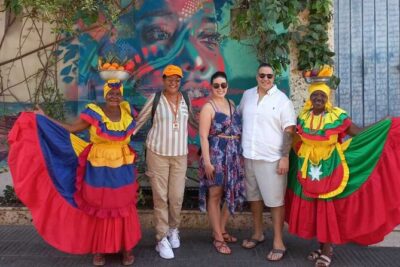
Private Walking Tour in Cartagena Walled City & Getsemaní
Read our review →
Guided Tour, with La Popa Convent, and San Felipe
Read our review →
Walled City, San Felipe Castle & Popa Convent Cartagena City Tour
Read our review →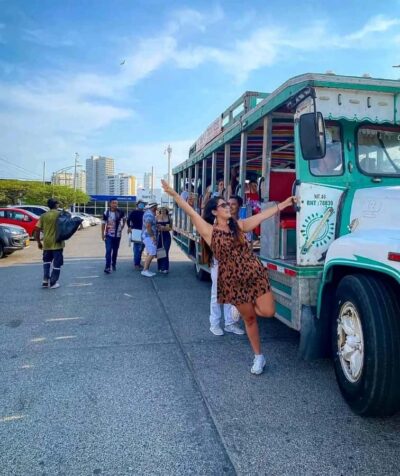
BILINGUAL CITYTOUR + SAN FELIPE CASTLE & Old city
Read our review →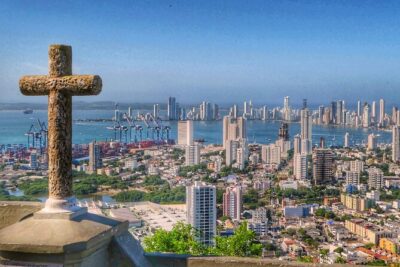
City Tour Castillo San Felipe & Convento de La Popa
Read our review →
Street Food Tour in Cartagena Walled City and Getsemani
Read our review →
Private Walking Tour in Walled City and Getsemani Cartagena
Read our review →Browse the lists this tour appears in