
REVIEW · WALKING TOURS
A Pearl In The Caribbean-walking tour in English
Santa Marta’s old center rewards curious walkers. This two-hour English tour connects Tairona gold, colonial buildings, local legends, food advice, and everyday street life in a compact route through the historic center. I like the way it moves beyond monuments, especially with its stories about pirate attacks, religious customs, and local superstitions. I also like the final fruit tasting, which gives you a small but memorable taste of the Colombian Caribbean.
The price is excellent at $16 per person, especially since museum admission, a local guide, and a fruit tasting are included. The main consideration is the heat. You will walk for two hours through central Santa Marta, so bring water, wear light clothing, and expect some stops to be in open public squares rather than shaded interiors.
In This Review
- Key Points At A Glance
- Why This Short Walk Works Well
- Starting At Casa de la Aduana And The Tairona Gold Museum
- Simón Bolívar Square And Colombia’s Independence Story
- San Francisco Square And The City’s Everyday Economy
- Cathedral Square, Religion, Architecture, And Ghost Stories
- Food Advice In The Historic Center
- Parque de los Novios And Santa Marta After Dark
- The Juice Plaza And A Taste Of Caribbean Fruit
- The Guide’s Style And English Ability
- Price, Pace, And Practical Value
- Should You Book This Santa Marta Walk?
- FAQ
- Where does the walking tour begin?
- Where does the tour finish?
- How long does the tour last?
- Is the tour offered in English?
- What is included in the price?
- Are water and juice included?
- Does the tour include a meal?
- What should I know about meeting the guide?
Key Points At A Glance
- Begin with Tairona gold: Enter the free Casa de la Aduana, also called the Tairona Gold Museum, to see pre-Hispanic and modern Indigenous art.
- Hear Santa Marta’s stranger stories: The Cathedral square brings out tales of religious customs, local superstition, and spooky city folklore.
- See daily life, not only monuments: San Francisco square offers a look at street commerce and the Colombian idea of rebusque, making a living through resourcefulness.
- Get useful food and nightlife advice: The guide recommends local dishes, restaurants, and places to spend an evening around Parque de los Novios.
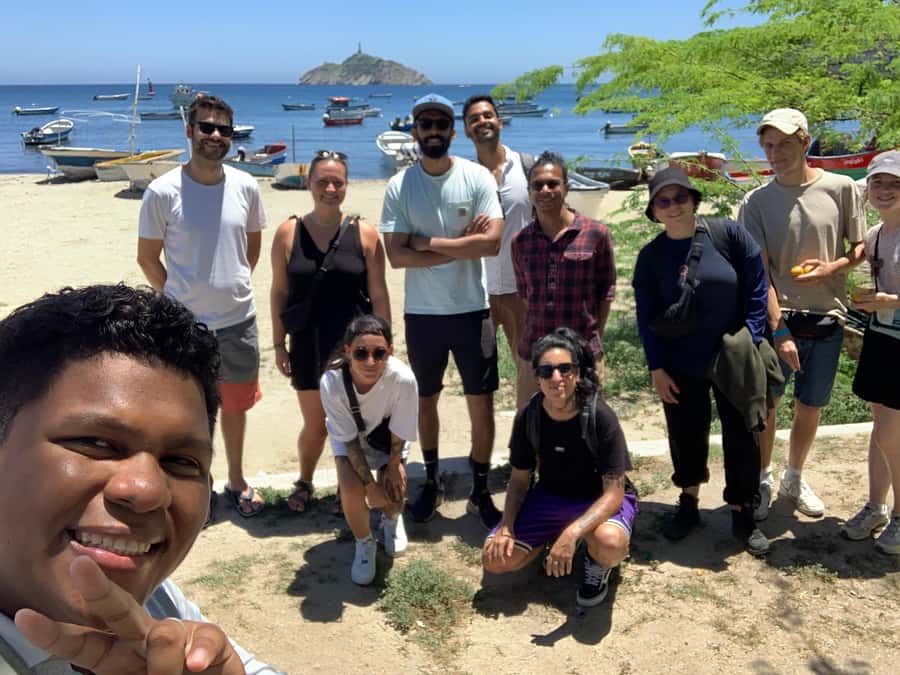
- Finish with Caribbean fruit: A tasting at the juice plaza introduces fruits you may not recognize and gives the walk a pleasant, edible ending.
- Meet at a clear landmark: The starting point is the white Spanish colonial building facing Simón Bolívar square and the bay.
Why This Short Walk Works Well
Santa Marta can be easy to underestimate. Many people use it as a base for Tayrona National Park, Minca, or the coast, then spend little time in the center. This walk makes the old town easier to read.
The route is not just a string of photo stops. It links several layers of the city: Indigenous societies before Spanish rule, the independence period, Catholic traditions, colonial architecture, commerce, food, nightlife, and modern local identity. That range gives you useful context before you set off on your own.
The guide, Javier, is the central strength of the experience. He is also called Javi in the feedback, and one visitor refers to him as Xavier, but the supplied information identifies the guide as Javier. His style is friendly, funny, and story-led. He explains difficult subjects in clear English and welcomes questions.
I would choose this tour early in a Santa Marta stay. The food suggestions, safety advice, and recommendations for places to eat or drink can help shape the rest of your time in town. Several people specifically appreciated being shown local places rather than only the obvious tourist sights.
There is also a useful sense of balance in the storytelling. Javier presents Santa Marta with affection, but he does not polish away its darker episodes. That makes the tour feel more like an introduction to a real city than a sales pitch.
More Walking Tours in Santa Marta:
- 4-Day Walking Tour to Lost City of Sierra Nevada
★ 5.0 · 136 reviews - Walking tour of the magical city of Cartagena.
★ 5.0 · 46 reviews - Santa Marta: Guided Walking Food Experience
★ 4.8 · 33 reviews
Starting At Casa de la Aduana And The Tairona Gold Museum
The meeting point is Casa de la Aduana, a white Spanish colonial building in the historic center. It sits in front of Simón Bolívar square, facing the bay of Santa Marta, so it should be reasonably straightforward to locate.
Look for the guide wearing tour-guide accreditation and carrying a black backpack. You should also make sure the phone number on your booking works with WhatsApp, since tour information is sent there.
The building houses the Tairona Gold Museum, also known as Tayrona del Oro Museum. Admission is included, which gives the $16 price extra value. You are not paying separately to enter the first major stop.
Inside, the focus is on pre-Hispanic pieces, gold objects, and modern Indigenous art. The museum provides the setting for a discussion of who the Tairona were and what happened to them. The description uses the word extinct, but the broader presentation also includes modern Indigenous art, an important reminder that Indigenous culture did not simply disappear from the region.
This stop is especially useful if you are new to the northern Colombian Caribbean. Gold objects can be impressive on their own, but they mean more when you understand the society that made them. I would pay attention to the connections between objects, belief, craftsmanship, and social life rather than treating the museum as a quick display case.
The museum also gives you a break from the sun at the start of the walk. Still, the exact amount of time spent indoors is not specified, so you should not expect a long museum lecture or a full-day archaeological visit. This is a compact city tour, and the museum is one part of a wider story.
Simón Bolívar Square And Colombia’s Independence Story
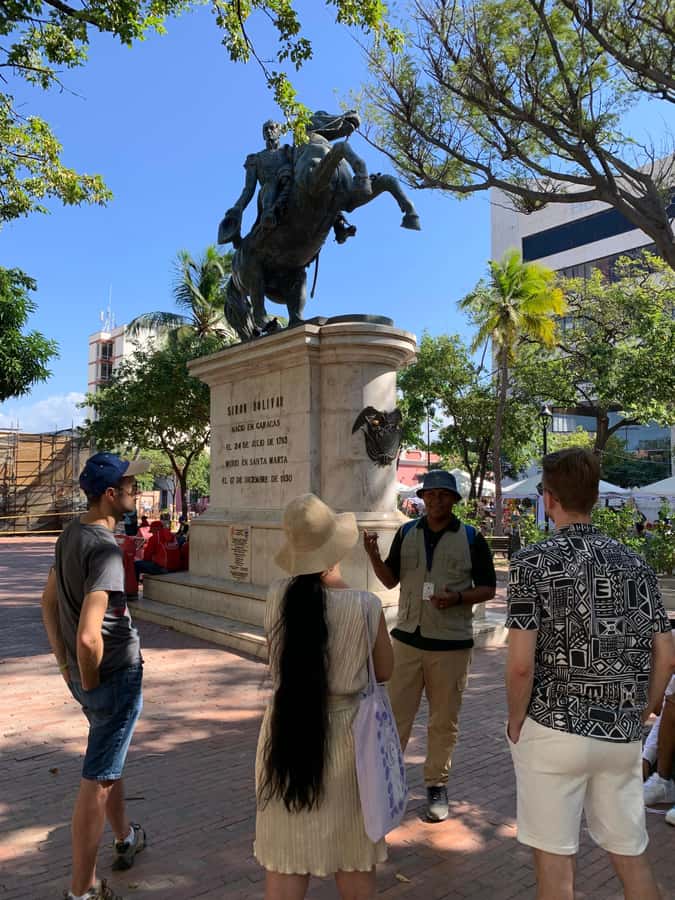
From Casa de la Aduana, the walk turns to Simón Bolívar square. The name will sound familiar because plazas named for Bolívar appear across Colombia. Here, the guide uses the square to explain how Santa Marta connects with the country’s independence story.
This section brings together several subjects: pre-Hispanic history, independence, architecture, and sculptures. The value is in seeing those subjects in one physical place. Instead of learning Colombian history as a list of dates, you can connect it to the buildings and public spaces around you.
The tour description suggests that this part feels like moving through different eras. That is a fair expectation, as long as you understand the scale. You are walking through a historic center, not visiting a large formal museum about independence.
I like this stop because it helps you notice details you might otherwise pass without thought. A sculpture, façade, or public square can look decorative until someone explains why it is there. Javier’s storytelling style appears to work well here, since he is praised for turning historical facts into anecdotes and entertaining stories.
If you have already read a great deal about Bolívar and Colombian independence, this may feel familiar. For most first-time visitors, though, it supplies a helpful base for understanding Santa Marta’s place in national history.
San Francisco Square And The City’s Everyday Economy
San Francisco square shows a different side of the center. Here, you can observe daily life and the local economy, described through the Colombian expression rebusque. The word refers to the inventive ways people make a living, and it gives the stop a practical social angle.
This is not a polished monument-only visit. The square lets you see how people use central public spaces and how commerce fits into city life. That makes it one of the more grounded parts of the route.
The stop also leads into stories about pirate attacks and their connection with Catholic religion in the Caribbean. Those subjects may sound like separate topics, but in an old Caribbean city they help explain the fears, customs, and institutions that shaped local life.
You may find this section particularly rewarding if you want to understand Santa Marta beyond its beaches. It does not promise a major attraction or a grand view. Its appeal is the chance to see the ordinary workings of the city while hearing how older events still shape local stories.
The tradeoff is that street life changes from day to day. Your experience will depend on the time of the walk and what is happening in the square. That is part of the point, but it also means this stop is less predictable than a museum.
More things to do in Santa Marta:
- Hike for 4 days to the Lost City, Santa Marta
★ 5.0 · 3,308 reviews - Lost City – Ciudad Perdida Colombia
★ 5.0 · 1,203 reviews - Sailing to Tayrona with Luis and his team: Unique!
★ 4.5 · 448 reviews - Santa Marta: Sailboat day tour to Tayrona Park
★ 4.5 · 352 reviews
Cathedral Square, Religion, Architecture, And Ghost Stories
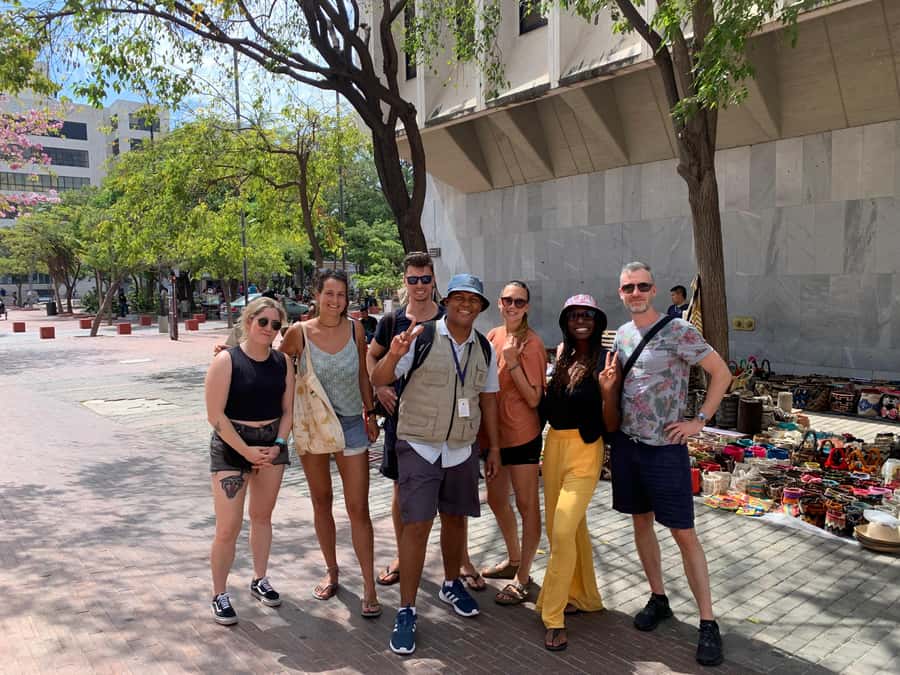
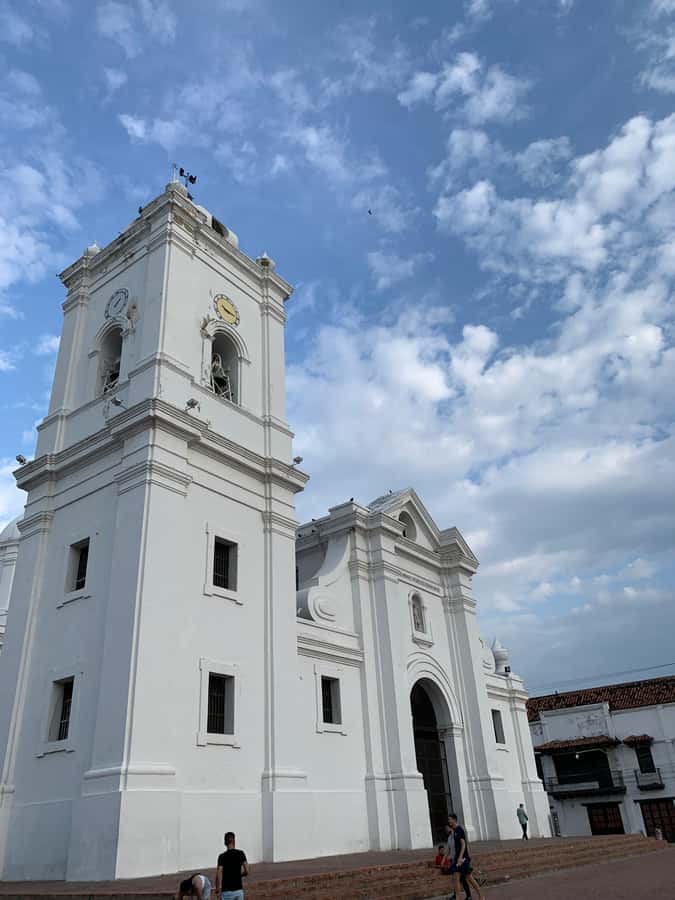
The Cathedral square is one of the tour’s richest stops for atmosphere. The church is described as the mother of all churches in Colombia, and the guide uses it to discuss religious customs in Santa Marta along with the city’s spooky superstitions.
The subject matter gives Javier room to move from official religion to popular belief. You may hear how formal Catholic traditions sit alongside stories passed through families and neighborhoods. That mix is often more revealing than a simple architectural explanation.
The square also brings together Arab, colonial, and Renaissance influences. Bring your camera, since the architecture is one of the clearest visual highlights of the walk. The description does not promise entry into the cathedral, so you should think of this as an exterior and square-based visit unless the guide says otherwise.
I like the balance here. You get architecture to look at, history to place it in context, and local folklore to keep the stop lively. One visitor particularly enjoyed the chisme, or local gossip, and superstitions woven into the historical account. That kind of detail can make a familiar church square feel less formal and more connected to local memory.
This stop may not suit you if you want only strictly documented facts. Superstitions are part of the experience, but they are presented as local beliefs and stories, not as proven events. Go with curiosity, and keep your sense of humor.
Food Advice In The Historic Center
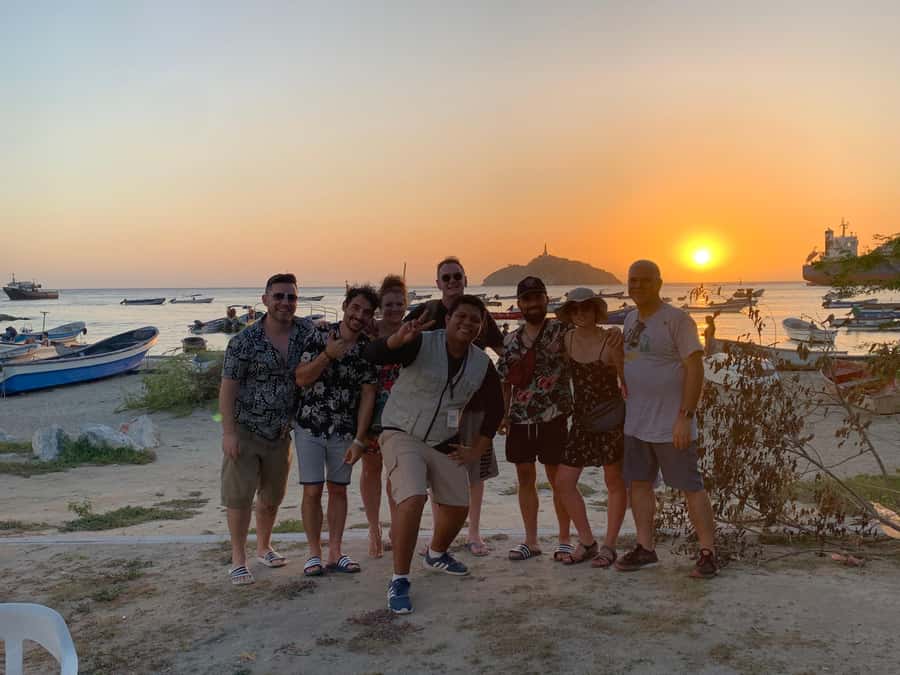
The Cathedral area is also where the guide offers suggestions for typical Santa Marta dishes and restaurants. This is a practical benefit that can easily save you from choosing a meal at random.
The information supplied does not name particular dishes or restaurants, so I would ask Javier for current recommendations during the tour. He is praised for offering useful food advice and for pointing people toward established local vendors and businesses.
That personal exchange is important. Restaurant conditions, menus, and opening hours can change, while a local guide can explain what is worth trying during your dates. You can also ask which foods are best for lunch, which places work for a relaxed evening, and where to find a drink after the walk.
The tour does not include a meal. This is an advice stop, not a restaurant crawl. You pay for the guide’s explanations and the fruit tasting later, while any meal, juice, or other purchase is your responsibility.
Parque de los Novios And Santa Marta After Dark
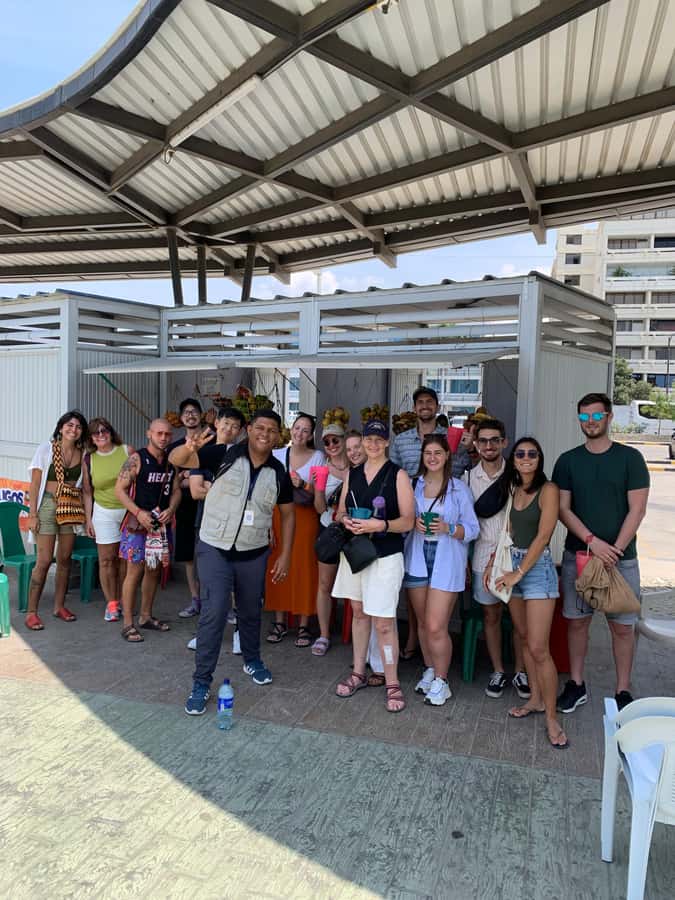
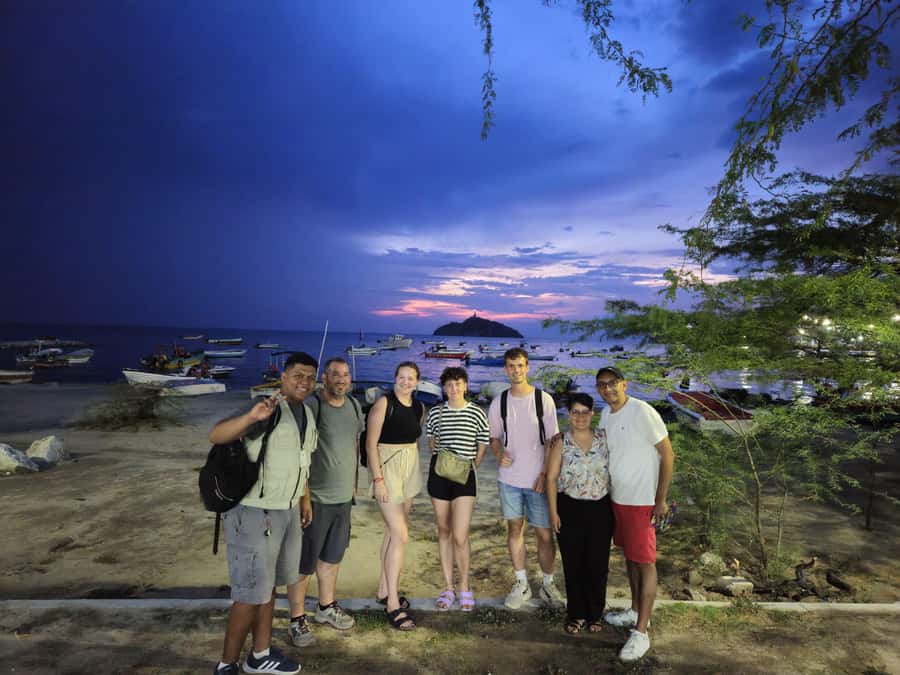
After the historical and religious stops, the route shifts toward contemporary city life at Parque de los Novios, known as the Lovers’ Park. This is the downtown spot associated with nightlife, romance, and meeting friends.
The guide explains how the area works as an evening destination. If you are planning a night out, this gives you a useful sense of where to begin. You can ask for recommendations that fit your mood, although the supplied details do not identify specific venues or promise entrance to any of them.
The park is a good reminder that Santa Marta is not only a daytime historic center. Its public spaces change character after sunset, and the tour helps you see that shift. It is suitable for couples, friends, and solo visitors who want to understand the social side of downtown.
Timing matters here. The itinerary mentions sunset, but the activity information only guarantees a two-hour duration and says to check available starting times. A late afternoon departure is likely to make the transition to evening more relevant, but you should confirm the start time when booking rather than assume the tour ends after dark.
The Juice Plaza And A Taste Of Caribbean Fruit
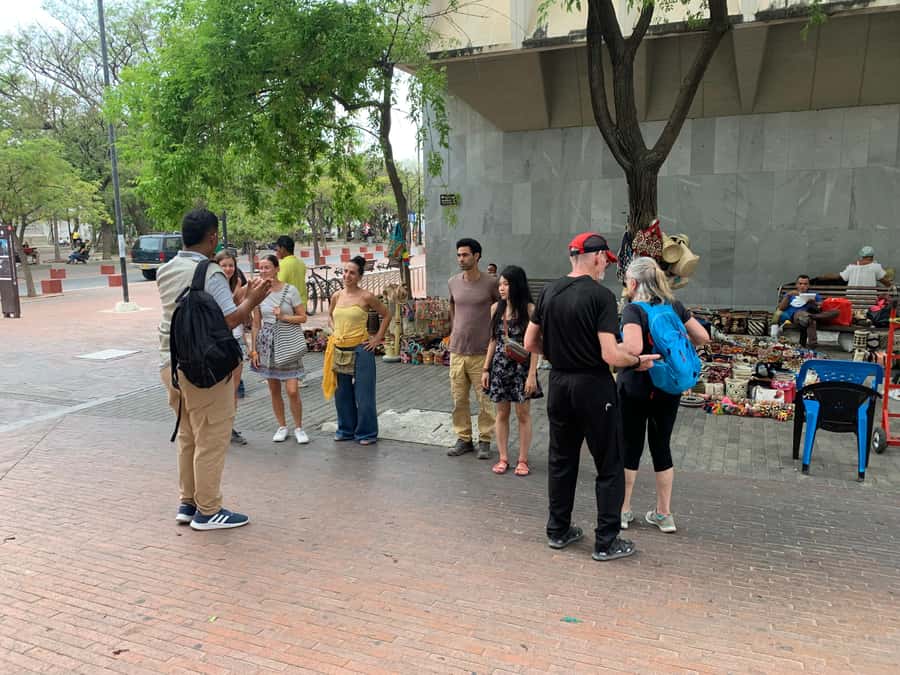
The walk finishes at the Plazoleta de Jugos Santa Marta, the juice plaza. This is more than a quick drink stop. Javier gives a small explanation of typical fruits from Colombia’s Caribbean coast, then lets you taste one.
The exact fruit is not fixed in the information provided. That is part of the fun. You may encounter something unfamiliar, and the guide encourages you to try it for yourself rather than relying on a description.
The tasting is included, but juice is not. You can buy a fresh, natural juice if you want one, but the cost is separate. Water and any other item not named in the description are also excluded.
This is a smart ending. After two hours of history, architecture, and public squares, fruit gives you a direct sensory connection to the region. One person particularly enjoyed sitting by the fruit stalls to ask questions and sample the produce. Another recommended lulo with orange juice, though that combination is an individual suggestion rather than a formal part of the tour.
The final stop may also be a pleasant place to cool down. Still, bring your own water. The description specifically says water is not included, and Santa Marta’s heat can make a short walk feel longer than expected.
The Guide’s Style And English Ability
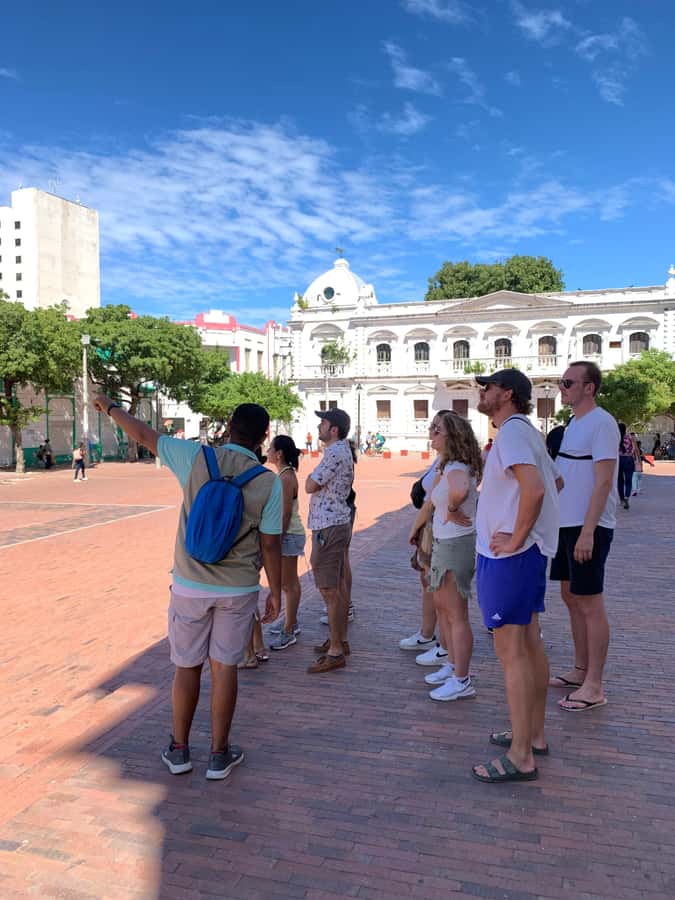
Javier’s approach is consistently described as warm, patient, funny, and clear. He is a local of Santa Marta, and his affection for the city comes through in the way he connects history with food, folklore, and daily life.
His English is reported as very good, and the activity is offered only in English. That makes the tour a clear choice for English-speaking visitors, but not for anyone looking for Spanish or another language.
I would use the question time well. Ask about places to eat, safety, nightlife, local customs, and what else to see around Santa Marta. The guide is described as happy to answer questions, and the strongest benefit of a small city walk often comes from this informal exchange.
The tone is not stiff or academic. It is entertaining and conversational. That will suit you if you learn best through stories and examples. If you want a highly formal lecture packed with dates, you may find the storytelling style less structured than expected.
Price, Pace, And Practical Value
At $16 per person, this is a strong-value introduction to Santa Marta. The fee includes the English-speaking local guide, entry to the Tairona Gold Museum, and fruit tasting. Those inclusions cover the main paid elements named for the experience.
You still need to budget for water, juice, meals, and anything else you buy during or after the walk. The tour itself is only two hours, so it is best viewed as a well-priced orientation rather than a full city program.
The route is on foot and includes several public squares. Wear comfortable shoes and bring sun protection. A camera is worthwhile at the cathedral and historic buildings, while a working WhatsApp number is important for receiving tour information.
Free cancellation is available up to 24 hours before the start for a full refund. You can also reserve now and pay later, which helps if your Santa Marta plans are still changing.
The tour suits first-time visitors, history fans, food-minded visitors, and anyone who wants local recommendations early in a stay. It is also a good choice if you have only a short window in town. It may be less suitable if you dislike walking in hot weather, want a Spanish-language guide, or expect extensive museum time.
Should You Book This Santa Marta Walk?
I would book it, especially near the beginning of your stay. The route gives you a useful map of central Santa Marta, but its real strength is the connection between formal history and lived culture.
Choose it for Javier’s clear English, lively stories, local food advice, religious folklore, and the unusual fruit finish. Skip it only if you want a long archaeological tour, a meal included in the price, or a ride between sights.
For $16, you receive a friendly introduction to the city’s past and present, plus several ideas for what to do after the two hours end. That is a sensible investment before exploring Santa Marta on your own.
FAQ
Where does the walking tour begin?
It begins at Museo del Oro Tairona, also called Casa de la Aduana, in Santa Marta’s historic center. The building is opposite Simón Bolívar square, facing the bay, and has a white Spanish colonial façade.
Where does the tour finish?
The walk ends at Plazoleta de Jugos Santa Marta, also known as the juice plaza.
How long does the tour last?
The tour lasts two hours. Starting times vary, so you need to check availability for the date you want.
Is the tour offered in English?
Yes. This walking tour is available only in English, with a live English-speaking guide.
What is included in the price?
The $16 price includes entrance to the Tairona Gold Museum, a local guide, and a fruit tasting.
Are water and juice included?
No. Water, juice, and anything else not specifically listed are not included. You can buy a natural juice at the final stop if you wish.
Does the tour include a meal?
No. The guide gives recommendations for typical dishes and restaurants, but food is not included.
What should I know about meeting the guide?
The guide will be wearing tour-guide accreditation and carrying a black backpack. Make sure the phone number on your reservation works with WhatsApp so you can receive tour information.
Just added in Santa Marta
- 4 Rosario Islands Adventure with entrance to the oceanarium included★ 3.5 · 3 reviews
- Full Day At the best Vip Beach Club in Tierra Bomba★ 5.0 · 4 reviews
- Monkey Volunteer Work in Wildlife Reserve Near Cartagena★ 5.0 · 3 reviews
- The Native Expedition – Sierra Nevada (2 days Discovering Chorrerón waterfall)★ 5.0 · 7 reviews
- UTV Safari in a Wildlife-Filled Nature Reserve Near Cartagena★ 5.0 · 36 reviews
- Surf Lessons For All Levels★ 5.0 · 1 review
- Playa Blanca Barú Tour with Lunch and hotel pick up★ 3.0 · 8 reviews
- Tour Isla del Encanto Cartagena★ 3.5 · 4 reviews
Walking Tours, compared.
Historic Center and Getsemaní Shared Walking Tour
Read our review →
Private Walking Tour in Cartagena Walled City & Getsemaní
Read our review →
Graffiti Tour: a fascinating walk through a street art City
Read our review →
Medellin Historic Walking Tour with Expert Guide
Read our review →
Bogotá Tour: Monserrate, Food, City Walk & Botero Museum
Read our review →Browse the lists this tour appears in