
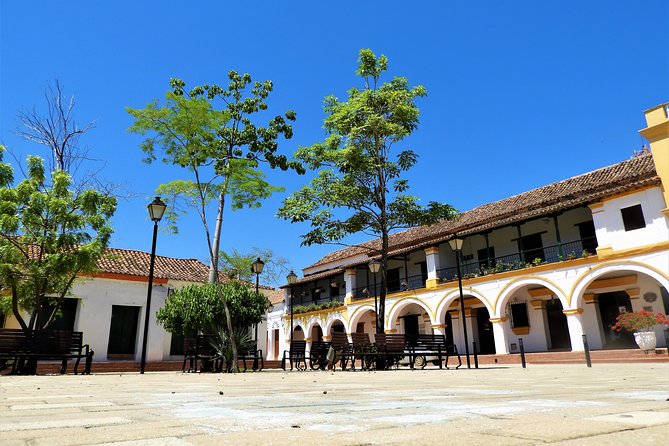
REVIEW · HISTORICAL TOURS
Private Half Day Cultural Tour of Historic Mompox
Mompox rewards those who slow down. This private four-hour tour brings the UNESCO-listed town’s churches, riverfront, colonial houses, and independence stories into one well-planned walk. I especially like the one-on-one format, which lets you stop for questions, and the chance to hear local stories from guide Carlos, whose friendly, clear explanations earn high marks. I also like the low $25 price, especially when shared by a small group.
The main drawback is the pace. Twenty stops are packed into roughly four hours, and several church interiors or historic buildings may not be open every day. Mompox is hot, too, so I would consider using a motorcycle taxi or tuk-tuk for some stretches, a practical tip that has made this tour easier for past participants.
In This Review
- Key points to know before booking
- Why this four-hour tour works in Mompox
- Casa de la Cultura starts the story indoors
- Freedom Square and San Carlos reveal a political past
- San Juan de Dios and San Francisco show two church styles
- Plaza San Francisco brings the river into view
- Plaza del Moral connects poetry, customs, and Bolívar
- The Immaculate Conception anchors the founding square
- La Sierpe and Bolívar’s stone add legends to the walk
- San Agustín preserves Mompox’s sacred center
- Tres Cruces and Santa Bárbara offer the best photo moments
- The cemetery and Santo Domingo show everyday Mompox
- Pinillos College and Bolívar Park finish the route
- What the $25 price really includes
- Who should book this Mompox experience?
- Should you book it?
- FAQ
- How long does the cultural tour last?
- Is hotel pickup available?
- Is private transportation included?
- Are entrance fees included?
- Is food included?
- Can I cancel for a full refund?
Key points to know before booking
- Twenty historic stops in about four hours: Expect a brisk route through Mompox’s old center, with time for churches, squares, monuments, and colonial streets.
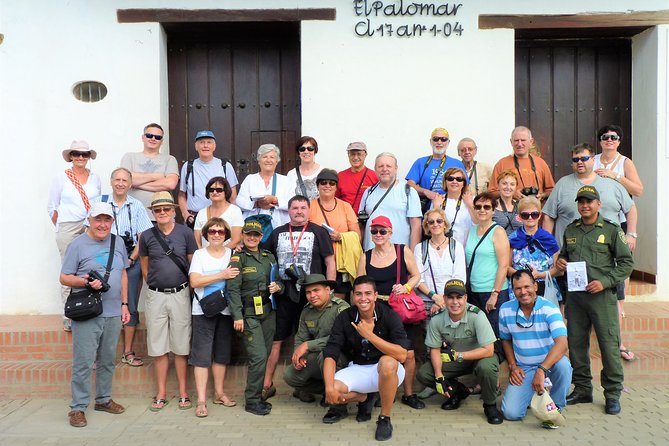
- Carlos is the guide to request: His explanations cover local customs, independence, architecture, geography, and everyday life, with plenty of anecdotes.
- Private means flexible: You can ask for breaks, spend more time at a favorite church, or move along when a site is closed.
- The Magdalena River is part of the story: Several stops explain how the river shaped Mompox’s trade and connection to Simón Bolívar.
- Budget price, modest extras: The $25 fee includes water and a biosecurity kit, but not private transport, food, or two small entrance fees.
- Plan around opening days: San Carlos Municipal Palace is accessible Monday through Friday, and church access is not guaranteed every day.
Why this four-hour tour works in Mompox
Mompox is not a place you understand by ticking off one grand monument. Its character comes from the way churches, shaded plazas, old homes, river roads, workshops, legends, and daily routines fit together. A guide helps connect those pieces.
This experience is private, so you are not tied to a fixed group pace. That matters in Mompox, where a small detail can be worth a pause: a carved wooden pulpit, a colonial cistern, a filigree tool, or a story attached to a particular doorway.
The route is almost entirely about the historic center and is mainly explored on foot. The schedule allows only brief visits at many stops, often 10 or 15 minutes. I would treat the four hours as a guided orientation with meaningful stops, not as a slow museum day.
The tour has a 4.7 out of 5 rating from 10 reviews, and 90 percent of customers recommend it. The praise centers on Carlos, described as punctual, friendly, attentive, and strong at explaining Mompox’s past in a lively way. He does more than recite dates. His talks connect local events with wider Colombian history, religious traditions, cultural customs, and the city’s river setting.
More History Tours in Santa Marta
- Historic Center Bike Tour
★ 5.0 · 108 reviews - Trekking History and Indigenous Heritage in Minca + Cacao & Coffee + Waterfall
★ 4.9 · 63 reviews - Santa Marta A Historical & Street food Experience
★ 4.7 · 41 reviews
Casa de la Cultura starts the story indoors
The Casa de la Cultura Historia de Mompox is a restored 18th-century house built around the traditional Sevillian plan. You will see a central patio, galleries, a gazebo, a backyard, and a cistern, all useful clues to how colonial homes were designed for shade, air, and household work.
Two permanent rooms give the tour an early historical anchor. The Malibú Room contains pre-Columbian pieces linked to the Indigenous Malibú culture, who lived in the Mompox area before Spanish conquest. A second room focuses on colonial Momposina culture, with clothing, weapons, publications, portraits, and tools used in filigree work.
Admission costs 3,000 Colombian pesos per person and is not included. It is a small extra, but bring cash or confirm the preferred payment method before setting out. I like beginning here because it prevents the tour from becoming only a parade of churches. You first see the people and objects behind the city’s buildings.
Freedom Square and San Carlos reveal a political past
Freedom Square sits in front of the former San Carlos Convent. Its bronze French-made monument to freedom comes with explanatory plaques about Mompox’s role in independence.
The nearby Palacio Municipal de San Carlos began as a convent in 1643. The Society of Jesus lived here after arriving in the city, and the building also housed a school for science. It now serves as the municipal mayor’s office while retaining its colonial features.
Access to the municipal building is enabled Monday through Friday. If your tour falls on a weekend, you should expect an exterior explanation rather than an interior visit. That is one reason the private format helps. Your guide can adjust the emphasis instead of leaving you waiting outside with nothing to do.
These two stops are short, but they give useful context. Mompox was not simply a quiet colonial outpost. Its religious institutions, schools, wealthy families, and river connections helped give it a larger role in regional affairs.
San Juan de Dios and San Francisco show two church styles
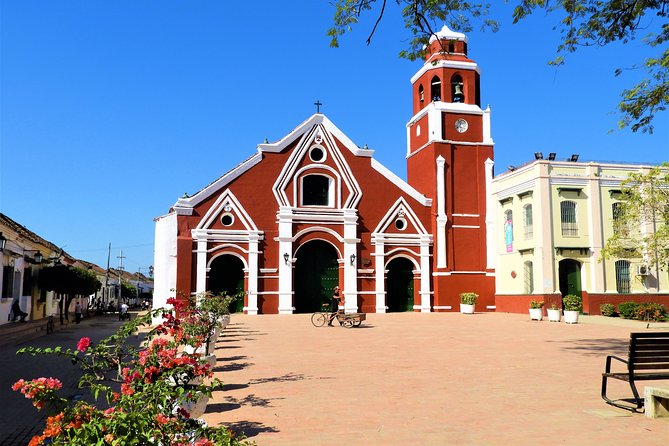
The Church of San Juan de Dios dates to 1545. Its most distinctive feature is the bell tower, shaped with Doric and Corinthian details. The guide explains the architecture from outside, with interior access depending on the day.
The Church of San Francisco was built in 1580 by the Franciscan order. Look for its sharply pointed central pediment, unusual broken-line design, and distinctive apse. The church faces Plaza San Francisco and the Magdalena River, so this stop combines architecture with a strong sense of place.
The schedule gives each church only about 10 minutes. That will suit you if you want a clear introduction, but not if you prefer long periods for quiet observation or photography. Church access can change, so I would not book this tour expecting every interior to be open.
More History Tours in Caribbean Coast:
- Cartagena: Historic Center and Getsemaní Shared Walking Tour
★ 4.9 · 2,716 reviews - Shared Tour of the Historic Candelaria in Bogotá
★ 5.0 · 1,551 reviews - Pablo Escobar Tour : Museum, History and Beer
★ 5.0 · 867 reviews - Historic Center & Getsemaní Shared Tour in Cartagena
★ 5.0 · 620 reviews
Plaza San Francisco brings the river into view
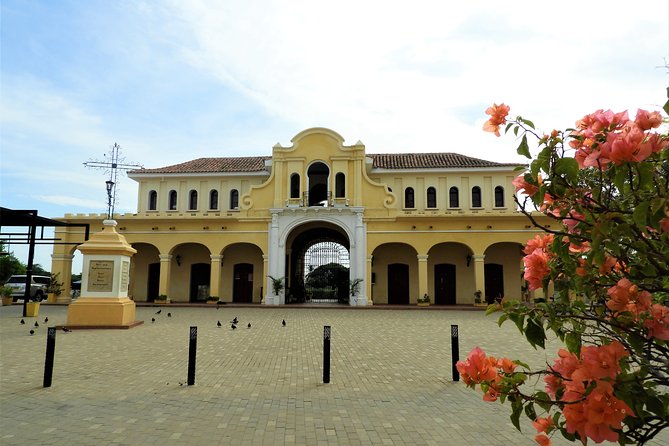
Plaza San Francisco is a large square with the Sucre Monument and the Filigree Monument. From the riverfront, Carlos explains the importance of the Magdalena River during the colonial period.
This is one of the tour’s most useful transitions. Instead of seeing the river as background scenery, you learn why it mattered to Mompox’s growth and connection with the outside world. The square also helps explain why local crafts, trade, and movement developed as they did.
If you are using a camera, this is a good place to pause. You have the square, church facade, monuments, and river in one setting. The tour includes water, which is welcome in Mompox’s heat, but lunch, snacks, and drinks beyond water are not included.
Plaza del Moral connects poetry, customs, and Bolívar
At Plaza del Moral, the route follows Calle de la Albarrada and introduces several different parts of Mompox’s past. You will hear about the house of Candelario Obeso, the Black poet associated with Momposina poetry and a complicated personal story.
The old Customs Building recalls the period when colonial taxes were collected. Nearby Puerto del Moral marks the place where Simón Bolívar disembarked during his first arrival in Mompox.
This is a good example of why a guide adds value. A quick walk through the street would show attractive old buildings, but not necessarily explain the links among poetry, trade, taxation, and independence. Carlos’s style is described as conversational, with anecdotes and answers to questions rather than a dry lecture.
The Immaculate Conception anchors the founding square
The Church of the Immaculate Conception was built in 1540 and is the largest and oldest church in Mompox. Its current appearance is largely Neoclassical, following a restoration in 1931. Inside, you may see traditional Holy Week images and hear about the building’s architectural style and religious details.
The church sits beside Plaza Real de la Concepción, also called the Founding Plaza. This is the center of the old town and one of the most photogenic parts of the route.
The former market building faces the square. You can browse local crafts such as filigree, cabinetmaking, basketry, and textiles. A terrace provides a view over Mompox and the Magdalena River. The market stop is especially useful if you want to connect the town’s historic identity with goods still made and sold locally.
Do not assume the market visit is only for shopping. Even if you buy nothing, the building and terrace help you see how the town’s public life was organized.
La Sierpe and Bolívar’s stone add legends to the walk
Callejón de La Sierpe is a narrow Andalusian-style lane lined with colonial and Republican houses. At its meeting with Calle de la Albarrada, you will see Casa de los Ángeles and hear the Legend of the Three Christs.
Mompox’s stories are not separate from its religious life. The legend shows how Catholic belief and oral tradition have shaped the town’s identity. This is a short stop, but it may be one of the most memorable if you enjoy local tales more than formal monuments.
La Piedra de Bolívar then shifts the focus back to independence. The monument recalls Simón Bolívar’s relationship with Mompox and the support he received from wealthy Creole families during the independence struggle. Carlos gives more detail about the local process and Bolívar’s visits.
I appreciate this mixture of documented events and oral stories. It gives the walk more character, though you should listen for the difference between historical record and legend.
San Agustín preserves Mompox’s sacred center
The Basilica of San Agustín, also called the Basilica Minor of the Miraculous Christ of Mompox, dates to 1606. Inside is the Miraculous Christ, one of the city’s most important religious images.
You may also see a Holy Sepulcher made in France in 1880, along with elaborate woodwork in the pulpit, altarpiece, and coffered ceiling. The church is located on the Callejón de San Agustín, a setting that adds to the sense of an old religious quarter.
The stop is scheduled for about 15 minutes. That is enough for a guided explanation and a look around, but the amount of time inside can depend on church activity and access. Dress respectfully, keep your voice low, and be ready for a change of plan if the doors are closed.
Tres Cruces and Santa Bárbara offer the best photo moments
The Callejón de las Tres Cruces leads past the Portales de la Marquesa, houses dating from around 1700. These buildings reflect the wealth of the Marquises of Santa Coa and Torre Hoyos, whose families held important local estates and titles.
The street runs close to the river and is described as one of the prettiest in town. I would save room on your phone for this section. Colonial facades, river proximity, and narrow streets make it a natural place for photos.
At the southern end of the historic center, Plaza de Santa Bárbara is broad and leafy. It hosts the traditional Mompox Jazz Festival and faces the Church of Santa Bárbara, the city’s best-known example of Baroque architecture.
The church was built in 1613 and is notable for its unusual combination of Catholic and non-Catholic elements. Its Salomonic balustrade balcony is described as unique in the Americas. You can hear the church’s building story and its associated legend from the guide.
The tower costs 3,000 Colombian pesos per person. If open, climbing it gives you a panoramic view of Mompox. This is one extra I would gladly pay for, but the tour price does not include it.
The cemetery and Santo Domingo show everyday Mompox
The Municipal Cemetery of Mompox, also called the Rosario Cemetery, was built in 1831. Its architecture, symbols, vegetation, and quiet atmosphere make it one of the more unusual stops on the route.
Carlos explains the elements and meanings found inside. You should approach this as a cultural site, not simply a sightseeing stop. Move quietly and respect the people who use the cemetery today.
Plaza de Santo Domingo de Guzmán offers a different mood. Residents gather here to talk and share time, and the square contains a monument to the Nazarene. The Church of Santo Domingo is the second-oldest church in Mompox, dating to 1544.
Inside, you may see the Virgin of the Rosary, the city’s patron saint, and a carefully crafted wooden altarpiece. The paired square and church stop helps you see how religious buildings remain tied to ordinary social life.
Pinillos College and Bolívar Park finish the route
The National Pinillos College was completed in 1809 as a school for science. Its double rectangular form reflects Sevillian architecture, and its history gives you another view of education in Mompox.
Interior access is not simply included. The building may request a contribution or donation to help with maintenance. Consider carrying a little Colombian cash if you hope to enter, while understanding that access and contribution arrangements can vary.
The final stop is Bolívar Park, created in 1910. Its bronze monument to Simón Bolívar was made by Italian sculptor Pietro Tenerani. The square is the city’s social center, where you can see everyday work, local crafts, and ordinary routines.
Ending here is sensible. After all the monuments and churches, you finish with present-day Mompox rather than leaving with the impression that the town is only a preserved museum.
What the $25 price really includes
At $25 per person, this is strong value for a private four-hour experience, especially if you want context rather than a self-guided stroll. The fee includes a guide, hotel pickup at an agreed time, water, and a biosecurity kit.
You need to budget for a few extras:
- Casa de la Cultura: 3,000 Colombian pesos per person
- Santa Bárbara tower: 3,000 Colombian pesos per person
- National Pinillos College: a requested maintenance contribution
- Private transportation: not included
- Lunch, snacks, and drinks beyond water: not included
- Bicycle use: not included
The biggest practical issue is transportation. Pickup is offered, but private transportation during the route is not included. Some people have found the full walking route hot or longer than necessary and preferred a motorcycle taxi or tuk-tuk. Another assessment is that the route can be completed in about three hours, so you should discuss the pace and transport plan at the start.
Who should book this Mompox experience?
I would choose this tour if you have only one day or a short stay and want a clear introduction to the old city. It suits history fans, architecture lovers, photographers, and anyone who wants local explanations instead of relying on plaques.
The private setup is useful for couples, families, and small groups with different interests. You can ask more questions, take a break, or spend extra time at a church or market. It also works well for people who want English-language guiding.
I would be more cautious if you dislike heat, walking, or quick stops. The route covers a lot, and not every site will be open on every day. Ask about a tuk-tuk or motorcycle taxi before starting if you want to save energy.
Confirmation arrives when you book. Service animals are allowed, and the activity is near public transportation. Most people can take part, but the supplied information does not promise full access at every historic building.
Free cancellation is available up to 24 hours before the start time. Poor weather or failure to meet the minimum number of participants can lead to a different date, a different experience, or a full refund.
Should you book it?
Book this tour if you want Mompox explained as a living town, not just photographed as an old one. The strongest reason is Carlos’s guiding style, which brings together architecture, independence, religion, local customs, and memorable stories.
The best value comes from using the private format well. Tell the guide if you want more churches, more photography, more river history, or a shorter route with transport. If you do that, the tour can give you a useful and personal first look at Mompox for a modest price.
FAQ
How long does the cultural tour last?
The tour lasts approximately four hours, though some past assessments found that the route can be completed in about three hours depending on pace and transport.
Is hotel pickup available?
Yes. Pickup is generally arranged at your hotel reception at the agreed time.
Is private transportation included?
No. Private transportation is not included. You can ask about using a motorcycle taxi or tuk-tuk, especially if you prefer not to walk the entire route in the heat.
Are entrance fees included?
No. Casa de la Cultura costs 3,000 Colombian pesos per person, and the Santa Bárbara church tower also costs 3,000 Colombian pesos per person. The National Pinillos College may request a maintenance contribution.
Is food included?
No. Lunch, snacks, and drinks other than the included water are not provided.
Can I cancel for a full refund?
Yes, if you cancel at least 24 hours before the experience starts. Cancellations or changes made less than 24 hours in advance are not accepted for a refund.
Just added in Caribbean Coast
- 4 Rosario Islands Adventure with entrance to the oceanarium included★ 3.5 · 3 reviews
- Full Day At the best Vip Beach Club in Tierra Bomba★ 5.0 · 4 reviews
- Monkey Volunteer Work in Wildlife Reserve Near Cartagena★ 5.0 · 3 reviews
- The Native Expedition – Sierra Nevada (2 days Discovering Chorrerón waterfall)★ 5.0 · 7 reviews
- UTV Safari in a Wildlife-Filled Nature Reserve Near Cartagena★ 5.0 · 36 reviews
- Playa Blanca Barú Tour with Lunch and hotel pick up★ 3.0 · 8 reviews
- Surf Lessons For All Levels★ 5.0 · 1 review
- Palomino Tour from Santa Marta with Tubing, Breakfast and Lunch★ 3.5 · 4 reviews
Historical Tours, compared.
Historic Center and Getsemaní Shared Walking Tour
Read our review →
Shared Tour of the Historic Candelaria in Bogotá
Read our review →
Historic Center & Getsemaní Shared Tour in Cartagena
Read our review →
Shared Tour Historic Center of Medellin with Audio System
Read our review →
Medellín Essential: history & local life on E-bike
Read our review →
Medellin Historic Walking Tour with Expert Guide
Read our review →
Bogota Shared Gastronomy Tour in the Historic Center
Read our review →Browse the lists this tour appears in