
REVIEW · WALKING TOURS
Cartagena Walking Tour
Cartagena rewards anyone willing to walk. This private tour makes the city easier to read, linking colonial squares, pirate-era walls, and modern street life in about two hours. I like the clear route through the Walled City and Getsemaní, and I like that guides such as Rafael, Alvaro, Jhon, Henri, and Andris have been praised for answering questions and adjusting the pace. The main drawback is the tight schedule: fourteen stops in roughly two hours means some places receive only a quick explanation.
I also like the early start option. At 8 a.m., the streets can be quieter and cooler, which helps with photographs and walking comfort. The other consideration is cruise-day traffic. If you are coming from a ship, the taxi ride to the Clock Tower meeting point can take far longer than expected when several ships arrive together.
In This Review
- Key points at a glance
- A useful first walk through Cartagena
- Meeting the guide at the Clock Tower
- From Pedro de Heredia to the Portal de los Dulces
- Trade and public power at Plaza de la Aduana
- Art, gold, emeralds, and San Pedro Claver
- Bastions, pirates, and Plaza Bolívar
- Plaza de la Proclamación and sights you do not enter
- Getsemaní, where the mood changes
- Centennial Park and the last streets
- How much do you really see in two hours?
- Price, comfort, and cruise-day timing
- Who should book this Cartagena walk?
- Should you book it?
- FAQ
- How long does the Cartagena Walking Tour last?
- Where does the tour start?
- Where does the tour finish?
- Is the tour private?
- What is included in the price?
- Are museum entrance tickets included?
- What should I wear?
- Can I cancel for a full refund?
Key points at a glance
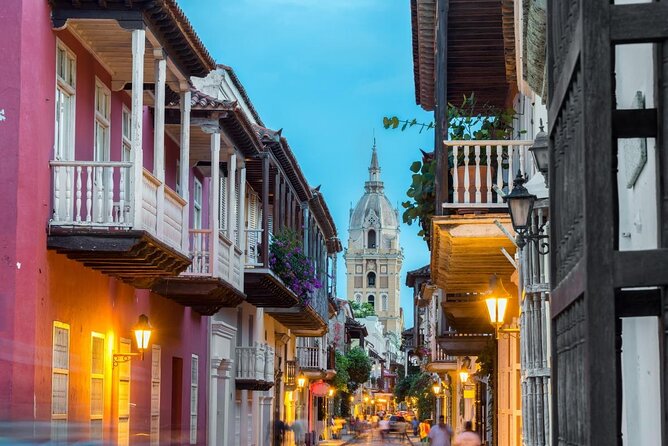
- Fourteen stops in about two hours: The route covers the Walled City, major plazas, sections of the fortifications, and Getsemaní.
- Private format: The experience is designed for you and your party, with a stated maximum of 15 people.
- History with a human angle: Expect discussion of Indigenous communities, enslavement, African influence, religion, independence, music, and city life today.
- Getsemaní adds a modern contrast: Murals, umbrellas, salsa, champeta, cafés, and local customs give the final part of the walk a different feel.
- Excellent guide feedback: Rafael is repeatedly praised for patience and personal attention, while Alvaro, Jhon, Henri, and Andris are also singled out for strong guiding.
- Plan for heat and traffic: Wear comfortable clothes, carry water, and allow extra time if you are arriving from a cruise ship.
A useful first walk through Cartagena
At $74 per person, this is not the cheapest way to see Cartagena. It can still be good value if you want context rather than a simple stroll past colorful buildings. A private guide can explain why a square matters, point out details you would miss, and shape the pace around your group.
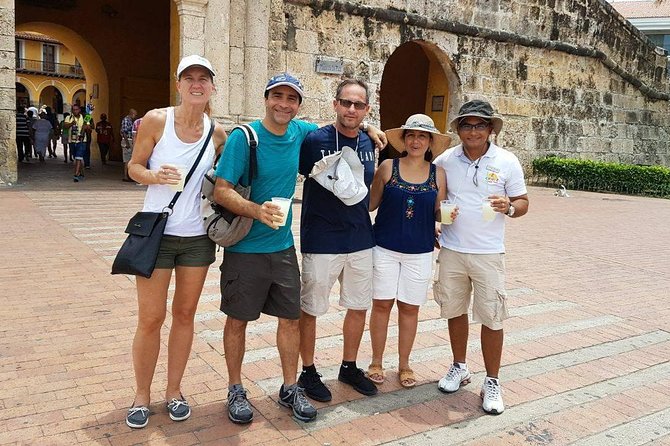
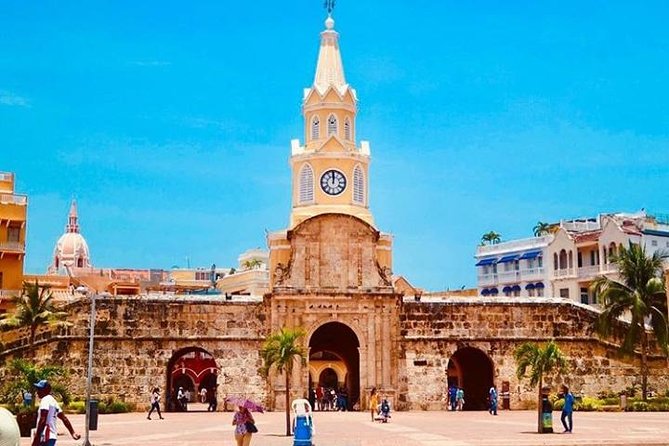
The route begins at the Monumento Torre del Reloj, also called the Clock Tower, at Boca del Puente in El Centro. From there, you move through the old center before reaching Getsemaní. Bottled water and a local guide are included, but food, drinks, and admission to museums or other attractions are not.
The tour has a strong reputation, with a 4.8 rating and 96 percent of customers recommending it. That praise centers on the guides’ clear explanations, friendliness, patience, and ability to answer questions. Rafael receives especially warm attention. One useful detail is that he took a guest to a park to see sloths after being asked about them, and he was also willing to pause while someone shopped.
This is still a fast-moving walk. Each listed stop is short, often about 5 or 10 minutes. You should think of it as an orientation tour, not a museum visit or a slow architectural study.
More Walking Tours in Cartagena
- Cartagena: Historic Center and Getsemaní Shared Walking Tour
★ 4.9 · 2,716 reviews - Private Walking Tour in Cartagena Walled City & Getsemaní
★ 5.0 · 1,357 reviews - Cartagena: Walled City and Getsemani Shared Walking Tour
★ 4.5 · 352 reviews
Meeting the guide at the Clock Tower
The Clock Tower is a practical starting point because it is one of Cartagena’s clearest landmarks. Your guide checks the reservation, helps you get oriented, and introduces the city’s geography before the walk begins.
The first nearby stop is Camellón de los Mártires, also known as Plaza de Cervantes. Here, the focus turns to the Indigenous people who lived in the area before and during the arrival of the Spanish. That opening matters because it keeps Cartagena’s story from beginning only with European buildings and colonial power.
The guide then brings you to the Torre del Reloj, known as Cartagena’s Golden Key. You enter Plaza del Ecuador, formerly linked to the Plaza del Esclavo, and hear about the route connected with enslavement through Porto Carrero and Candilejo streets.
This early section sets the tone. The tour is not only about pretty façades. It addresses conquest, slavery, trade, religion, military defense, and the mixture of Indigenous, African, Caribbean, and European influences that shaped the city.
From Pedro de Heredia to the Portal de los Dulces
At the Monumento a Pedro de Heredia, the conversation includes the city’s founder and a literary connection involving Miguel de Cervantes. You also hear more about slave markets and the Portal de los Dulces, a place where history and present-day tradition meet.
The Portal de los Dulces is one of the more distinctive stops. It represents women’s work during the era of slavery, while descendants continue related traditions today. The sweets sold here are part of Cartagena’s recognizable local culture, not just a convenient snack stop.
You will not have food included, and the tour does not promise a tasting. If you want to buy something, the guide may be able to point out the location, but you should treat that as extra time and extra cost.
This portion can feel compressed. Ten minutes is enough for a sharp explanation and a few photographs, but not for a long conversation about every historical detail. If you enjoy asking questions, use the private format to tell your guide what interests you most.
Trade and public power at Plaza de la Aduana
Plaza de la Aduana brings you to the business side of old Cartagena. The guide explains how merchandise was handled here, including the trade in enslaved people, and points out important buildings such as the Municipal Hall.
This is a good reminder that the city’s impressive architecture was connected to commerce and control. The square was not simply a gathering place. It was part of the machinery that made Cartagena a major port.
I find this kind of stop useful because it connects the grand buildings to ordinary economic activity. You are not just hearing dates and names. You are learning why the square existed and how it helped shape the city.
A completely different kind of day:
- Cartagena Island Hopping: 5-Stop Rosario Islands Tour with Lunch
★ 4.5 · 4,903 reviews - Cartagena: Rosario Islands Catamaran with Lunch and Snorkel
★ 4.5 · 2,479 reviews - Full-Day Rosario Islands Including Barú, Bocachica & Playa Blanca
★ 4.0 · 1,729 reviews - Tour De Palenque, Road to Emancipation.
★ 5.0 · 1,678 reviews
Art, gold, emeralds, and San Pedro Claver
The next section introduces three cultural institutions: the Museo de Arte Moderno Cartagena, the Gold Museum, and the Emerald Museum. The modern art museum presents Caribbean and Latin American art from the 1950s onward. The Gold Museum focuses on Indigenous pieces from the Colombian Caribbean, while the Emerald Museum presents the prized green stones associated with Colombia.
The important practical point is that these places are discussed from the outside or within the route, but entrance tickets are not included. You should not assume you will have time to visit their galleries during the two-hour walk.
If one museum interests you, this tour helps you decide where to return later. That is a better use of the tour than trying to force a full museum visit into a route already packed with stops.
At Plaza de San Pedro Claver, the subject turns to religion and social action. You see the church, monastery, and museum named for San Pedro Claver, known here as the Slave of the Slaves. The complex also serves as a headquarters connected with human rights.
This is one of the route’s strongest historical contrasts. Cartagena’s religious buildings are beautiful, but the guide also places them within the difficult story of enslavement and moral resistance.
Bastions, pirates, and Plaza Bolívar
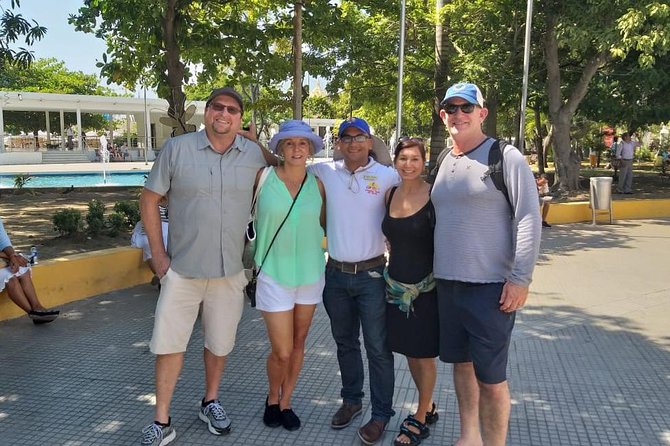
At the Baluarte de San Ignacio, you learn how Cartagena defended the Bay of Souls from pirate attacks. The bastions are not decorative walls. They show the military planning behind the city’s survival and its importance to Spanish colonial power.
The discussion of pirates and corsairs continues toward Plaza Bolívar. This is where military strategy, independence, and public memory meet. The square honors Simón Bolívar, the figure associated with independence from Spanish rule.
A short pause here may be welcome, especially on a hot day. Cartagena’s heat can make even a two-hour walk tiring, and one person described the tour as physically hot while praising Rafael for finding shade and cooler places. That is a useful clue: the guide’s choices can matter as much as the route itself.
Plaza de la Proclamación and sights you do not enter
Plaza de la Proclamación gathers several major points of interest, including the Palace of the Inquisition, the passage connected with the country’s beauty queens, and the Gold Museum. The guide explains their place in the city rather than including interior visits.
This distinction is easy to miss when planning. If you want to see the Palace of the Inquisition or a museum inside, plan separate time and budget. The walking tour gives you an introduction, not admission.
The stop works well as a visual summary of Cartagena. Colonial institutions, public ceremony, art, and national identity all appear close together. You get a sense of how compact the old center is, while also seeing why a guide helps sort out the layers.
Getsemaní, where the mood changes
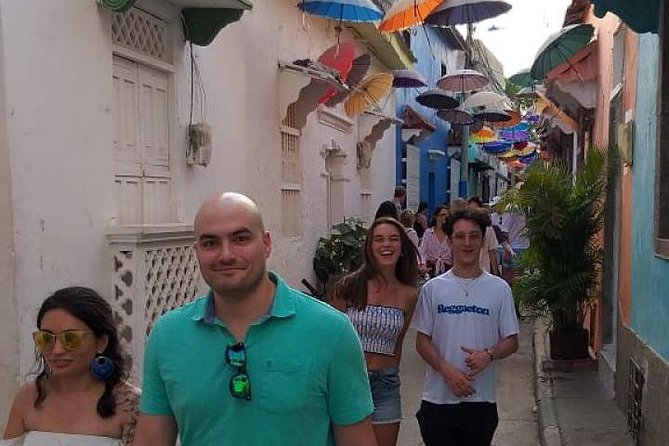
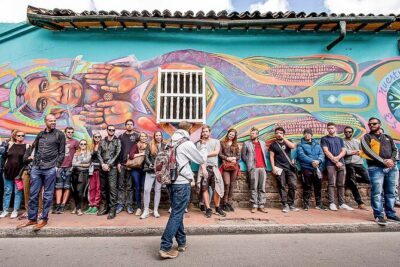
The walk then crosses into Barrio Getsemaní, one of the route’s most colorful sections. Here the focus shifts from colonial power to neighborhood culture: graffiti, music, folklore, trade, architecture, umbrellas, and local customs.
You may find this part more immediately lively than the formal plazas. The murals and umbrella-covered corridors provide good photo opportunities, but the guide’s explanation is what gives them meaning. Instead of treating the neighborhood as a backdrop, the tour connects its art and music with Cartagena’s wider Caribbean identity.
Getsemaní is also where the route feels most contemporary. The old city’s military walls and church façades give way to street art, cafés, music, and daily commerce. If you want a short introduction to both historic Cartagena and its present-day character, this contrast is a major reason to book.
Centennial Park and the last streets
Parque Centenario offers a brief green pause. The park is described as one of Cartagena’s important lungs, with shade from tropical dry forest and a former railway station nearby. You might see sloths, squirrels, and iguanas here. Rafael has taken a guest to the park specifically to see sloths, though sightings should not be treated as guaranteed.
This is a welcome break after the stone streets and direct sun. The stop is only about five minutes, so it is more of a look and a breath than a full nature visit.
On Calle de San Juan, the topics broaden again. Expect references to graffiti, coffee, Blas de Lezo, Gabriel García Márquez, Mister Black, and Joe Arroyo. These names connect military history, literature, music, and modern Colombian popular culture.
The final stop is Plaza de la Trinidad, reached through Callejón Ancho and Calle San Juan. The church and square are tied to the sounds of salsa and African champeta. Ending here gives the route a sense of movement from Indigenous and colonial history toward living Afro-Caribbean culture.
How much do you really see in two hours?
You cover a lot for the time. The tour passes through the main Walled City squares, several important streets, a bastion, museum areas, and Getsemaní. It is a strong first look, especially if Cartagena is new to you.
The tradeoff is depth. Fourteen stops in approximately two hours means the guide must keep moving. You will hear a useful explanation at each place, but you will not study every monument at length.
The private setup helps. Guides have been praised for changing the pace to suit the group, answering many questions, and making the route personal. Jhon was praised for clear English and for starting at 8 a.m., when the town was quieter and cooler. Andris was praised for giving thorough answers. Those details suggest that your experience may depend greatly on the individual guide and on how actively you ask questions.
Price, comfort, and cruise-day timing
At $74 per person, the price makes the most sense for a small party that values personal attention. If you are traveling with friends or family, the cost buys a local guide’s interpretation rather than just transportation or entry tickets.
The tour includes bottled water, but you should still dress for walking and heat. Comfortable sports clothes are suggested, and the route includes streets, plazas, and open areas with limited shade. Service animals are allowed, and most people can participate.
Cruise passengers need the most careful planning. The meeting point is in the historic center, not at the port. When multiple ships arrive, taxi queues and traffic can be severe. One group arrived more than an hour late after leaving the ship with what seemed like enough time, then had to abandon the tour because the ship’s departure was too early.
If you are on a ship, allow a generous buffer and confirm that the tour end time works with your all-aboard time. Joining a tour already in progress may be possible, but it is not a safe plan when traffic is heavy.
Free cancellation is available up to 24 hours before the start time for a full refund. Cancellations or changes made inside that window are not refunded or accepted.
Who should book this Cartagena walk?
I would choose this tour for a first visit, a short stay, or a day when you want to understand the city before exploring on your own. It suits couples, families, and friends who prefer questions and conversation over a large coach tour.
It is also a good fit if you want both the Walled City and Getsemaní in one outing. Many short city walks focus only on colonial architecture. This one gives equal attention to enslavement, African influence, local music, street art, and modern culture.
I would hesitate if you want long museum visits, a food tour, or a slow photography walk. Tickets are not included, food and drinks are extra, and the schedule is brisk.
Should you book it?
Book it if you want a well-organized introduction to Cartagena with a local guide who can explain what you are seeing. The strongest value comes from the private format, the range of subjects, and the route’s shift from colonial plazas to Getsemaní’s music and street art.
Choose an early start if available, especially for cooler walking and clearer photographs. If you are arriving by cruise ship, build in a large traffic buffer. With those limits understood, this is a practical and highly praised way to get your bearings fast and see why Cartagena is more than a pretty Caribbean old town.
FAQ
How long does the Cartagena Walking Tour last?
The tour lasts approximately two hours.
Where does the tour start?
It starts at the Monumento Torre del Reloj, also called the Clock Tower, at Boca del Puente in El Centro, Cartagena de Indias.
Where does the tour finish?
The activity ends back at the meeting point.
Is the tour private?
The tour is described as private for you and your party, with a maximum of 15 travelers.
What is included in the price?
Bottled water and a local tour guide are included.
Are museum entrance tickets included?
No. Entrance tickets to places such as the Palace of the Inquisition and museums are not included.
What should I wear?
Comfortable sports clothes are suggested. Since this is a walking tour in Cartagena, practical walking clothing is a sensible choice.
Can I cancel for a full refund?
Yes. You can cancel at least 24 hours before the experience start time for a full refund. Changes or cancellations made less than 24 hours before the start are not accepted or refunded.
Just added in Cartagena
- Private History Photography Tour★ 5.0 · 17 reviews
- Self-Guided Audio Tour: Pirate Tales in Cartagena★ 3.0 · 2 reviews
- Paue Island Tour in the Rosary Islands★ 5.0 · 1 review
- Totumo Volcano★ 3.5 · 15 reviews
- Party without limits! Cartagena; VIP Party.★ 4.5 · 32 reviews
- Paragliding Experience in Cartagena★ 5.0 · 8 reviews
- Palmarito Beach★ 3.5 · 4 reviews
- Tour cultural to san Basilio de Palenque from cartagena★ 5.0 · 45 reviews
Walking Tours, compared.
Historic Center and Getsemaní Shared Walking Tour
Read our review →
Private Walking Tour in Cartagena Walled City & Getsemaní
Read our review →
Graffiti Tour: a fascinating walk through a street art City
Read our review →

Medellin Historic Walking Tour with Expert Guide
Read our review →
Bogotá Tour: Monserrate, Food, City Walk & Botero Museum
Read our review →Browse the lists this tour appears in