
REVIEW · SAN BASILIO DE PALENQUE HERITAGE TOURS
Palenque history and culture
Freedom has a hometown in Colombia. This six-hour trip from Cartagena takes you to San Basilio de Palenque, the first free town in colonial America, where African language, food, music, dance, healing practices, and oral traditions remain part of daily culture. I like the combination of a professional guide and a native Palenque guide, and I like that lunch, transportation, water, and several local visits are included. My main concern is communication and pickup coordination, since one reported booking involved a changed meeting point and confusion about hotel pickup.
For $130 per person, this is not a cheap half-day outing. Still, I think the price can make sense if you want a cultural experience rather than another Cartagena sightseeing loop. The six-hour schedule includes roughly 50 kilometers of road travel each way, so you should be comfortable spending a good part of the day in an air-conditioned bus.
In This Review
- Key points to know before booking
- Why San Basilio de Palenque matters
- The road from Cartagena to Palenque
- Entering San Basilio de Palenque
- Benko Bioho Square and the story of resistance
- Traditional medicine with the town’s naturopathic doctor
- Food, music, dance, and oral tradition
- The Palenque letters and final stops
- What $130 includes, and what it does not
- Communication and pickup deserve attention
- Who should book this Palenque experience?
- Should you book it?
- FAQ
- Where does the tour start?
- What time does the tour begin?
- How long does the experience last?
- Does the tour provide hotel pickup?
- Does the tour return to Cartagena?
- How do you travel to San Basilio de Palenque?
- Is lunch included?
- Who guides the visit in Palenque?
- What is included in the cultural visit?
- How many people can join the tour?
- Can I cancel for a full refund?
- Are service animals allowed?
- Is the tour suitable for most people?
Key points to know before booking
- San Basilio de Palenque was founded by escaped Africans seeking freedom, and its free status was formally recognized in 1691.
- A native Palenque guide leads the town visit, adding local knowledge about language, food, music, dance, medicine, and oral tradition.
- The experience includes lunch and transportation, along with bottled water and visits to Benko Bioho Square, a local naturopathic doctor, and the Palenque letters.
- The group can reach 30 people, so the quality of the day depends partly on how well the guides manage a larger party.
- Pickup details need careful checking, especially if your hotel is outside the listed pickup area in Bocagrande.
- The tour has a bilingual guide, according to the provider’s response to a communication complaint, but you should still confirm your language needs before departure.
Why San Basilio de Palenque matters
San Basilio de Palenque is not simply a village added to a day-trip schedule. It represents a major chapter in the history of African resistance in the Americas.
During the colonial period, Africans who escaped slavery formed independent communities away from Spanish control. San Basilio de Palenque became one of those communities, and its free status was decreed in 1691. The town is recognized as Cultural and Intangible Heritage of Humanity because of this history and the traditions that continue there.
The town lies near the Canal del Dique, about 50 kilometers from Cartagena. It has roughly 4,200 residents and borders Malagana, San Pablo Norte, and Palenquito. It is administratively a corregimiento, so it does not have full economic or administrative autonomy. That detail matters because you are visiting a living community, not a purpose-built historical attraction.
I think the value of this tour comes from seeing how freedom shaped culture over time. The story is not limited to a monument or a museum display. It appears in the language people speak, the food they prepare, the music they perform, and the ways local knowledge is passed from one generation to the next.
More History Tours in Cartagena
- Cartagena: Historic Center and Getsemaní Shared Walking Tour
★ 4.9 · 2,716 reviews - Historic Center & Getsemaní Shared Tour in Cartagena
★ 5.0 · 620 reviews - San Basilio de Palenque History Tour
★ 5.0 · 301 reviews
The road from Cartagena to Palenque
The tour begins at 8:00 a.m. in the Bocagrande area of Cartagena, with hotel pickup offered within the service area. Transportation is by air-conditioned bus, and the tour returns to the original meeting point at the end of the day.
The distance is not extreme, but the trip takes time. The entire experience lasts about six hours, and the transfer to and from Palenque is included in that total. You should think of this as a focused cultural excursion, not a leisurely full-day visit with hours to wander.
An air-conditioned vehicle is useful in the heat, especially when you are leaving Cartagena for a place where some activities take place outdoors. Bottled water is also included. I would still treat the early start seriously and arrive ready to leave on time.
Pickup is the part that needs the most attention. One reported booking involved a hotel outside the company’s pickup area, followed by instructions to meet at the Clock Tower. After arrival, the meeting point changed because police would not allow the bus to park there. The company explained that communication was handled by different staff members and that passengers were contacted by message.
That explanation may be reasonable, but the practical lesson is simple: confirm your exact pickup point, the name of the person meeting you, and the backup location before the morning of departure. If you are staying outside the central Cartagena service area, do not assume hotel pickup is included.
Entering San Basilio de Palenque
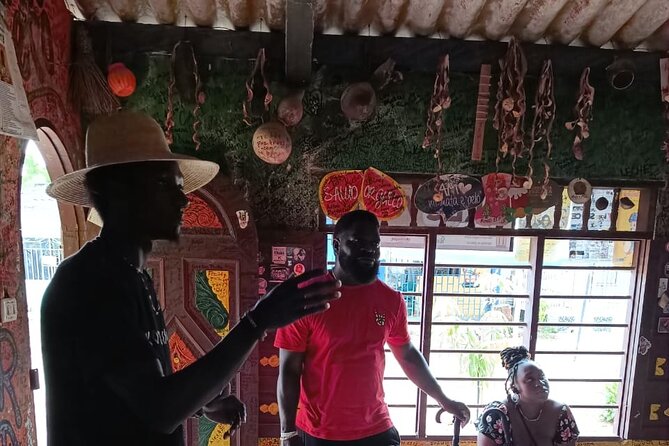
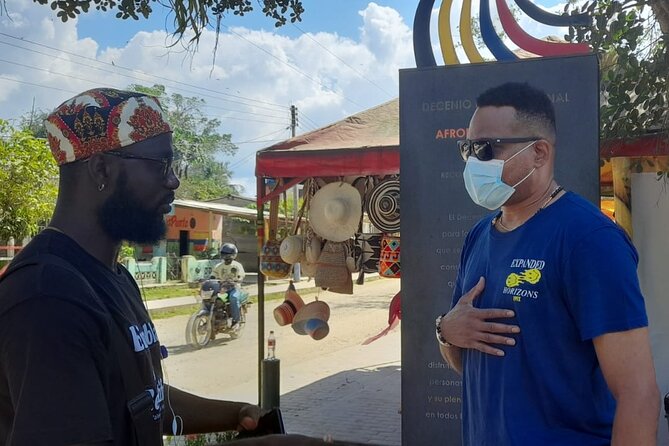
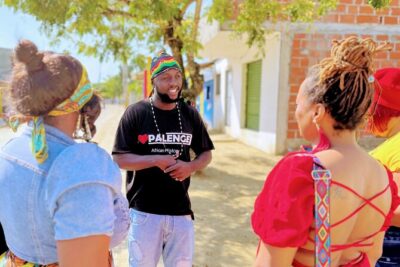
The most important part of the day begins when you arrive in San Basilio de Palenque and meet the native guide. The local guide is meant to explain the town from an insider’s point of view, rather than offering only a standard historical talk.
You can expect attention to several connected parts of Palenque culture:
- The Palenque language
- Traditional food
- Dance and music
- Oral tradition
- Local medical practices
- The history of African customs preserved in the town
The language is especially important. San Basilio de Palenque is known for preserving a language connected to the African origins of its community. The tour information does not specify how much of the language lesson is conducted in English or Spanish, so I would confirm that before booking if you do not speak Spanish.
The company says the tour guide is bilingual. That helps, but the local guide’s role may be different from that of the person managing transportation and translating the day. A short message asking who will guide in your language is sensible.
The town visit was described as the strongest part of the experience in the available feedback. That makes sense. The local setting gives the history a human scale, and the guide can connect broad themes to places, customs, and people in the community.
Benko Bioho Square and the story of resistance
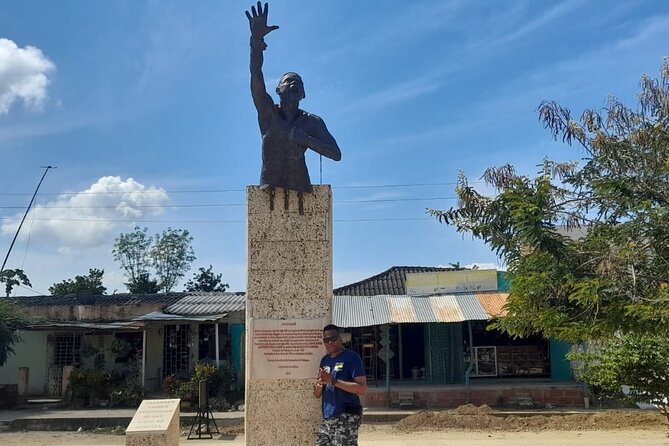
A stop at Benko Bioho Square is included. The square honors Benko Bioho, the African leader associated with resistance and the establishment of free communities in the region.
The provided details do not specify how long you spend at the square or exactly what objects you will see there. You should expect it to function as an important historical point during the town tour, with the guide explaining its connection to Palenque’s past.
This is the kind of stop that becomes more meaningful when you already understand the larger story. Palenque’s history is not just about escape from slavery. It is also about organizing an autonomous community, protecting traditions, and maintaining identity under pressure.
I would pay close attention here, since the square links the town’s present-day cultural practices with the struggle that made the community possible. It is also a useful moment to ask the guide questions about how the history is remembered locally.
More San Basilio de Palenque heritage visits:
- Tour De Palenque, Road to Emancipation.
★ 5.0 · 1,678 reviews - Freedom Tour of Palenque
★ 5.0 · 467 reviews - Cartagena: Palenque´s tour, dance show, lunch, pick-Up inclu
★ 4.7 · 182 reviews - Tour a san Basilio de Palenque desde cartagena
★ 5.0 · 123 reviews
Traditional medicine with the town’s naturopathic doctor
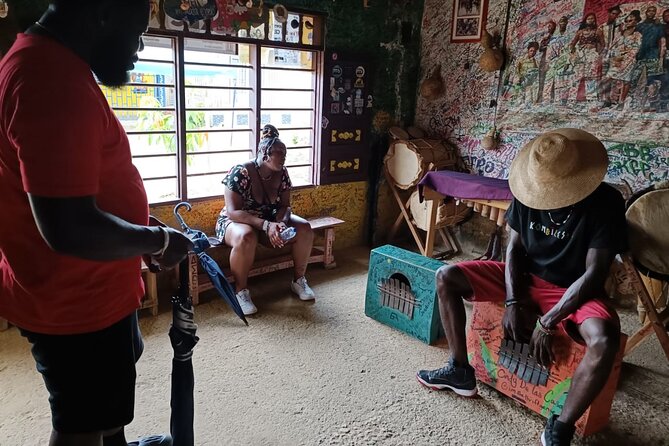
The tour includes a visit to the town’s naturopathic doctor. This gives you a look at local healing practices and the medical knowledge preserved within the community.
The information does not state the doctor’s name, the length of the visit, or whether demonstrations or treatments are provided. You should view this as an educational stop, not a medical appointment. Do not assume that remedies are available for purchase or that the visit replaces professional medical care.
Still, I see real value in this part of the day. Medical traditions often carry stories about plants, family teaching, and practical survival. A local approach to healing can show how knowledge is maintained outside formal institutions.
The visit also broadens the tour beyond music and dance. Palenque culture is not a performance added for an audience. It includes systems of knowledge that affect daily life.
Food, music, dance, and oral tradition
A typical lunch is included, though the exact menu is not provided. That means you should not book this tour expecting a specific dish. Instead, treat lunch as a chance to try food connected to the local community while keeping your expectations flexible.
Food is one of the clearest ways a cultural visit becomes personal. Ingredients, preparation, and shared meals can tell you things that a lecture cannot. If you have allergies or dietary restrictions, ask the provider before departure because the available information does not explain how special diets are handled.
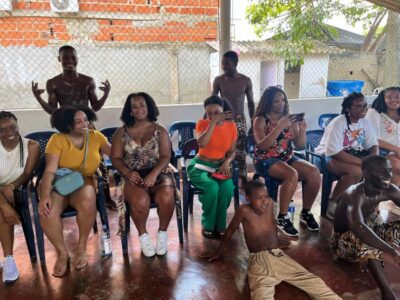
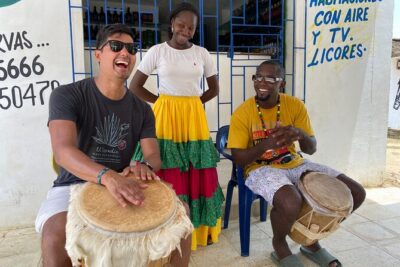
Music and dance are also part of the cultural program. The description says the native guide will teach you about both, along with oral tradition. It does not promise a formal show, a dance lesson, or a fixed performance schedule. You may receive explanations, see local expressions of these traditions, or take part in a cultural presentation, but the exact format should be confirmed.
That uncertainty is not automatically a flaw. A tightly scripted performance can be easy to understand but may show only one carefully prepared version of local culture. A town visit guided by someone from Palenque can offer a more direct connection, though the experience may vary with the guide and group.
The Palenque letters and final stops
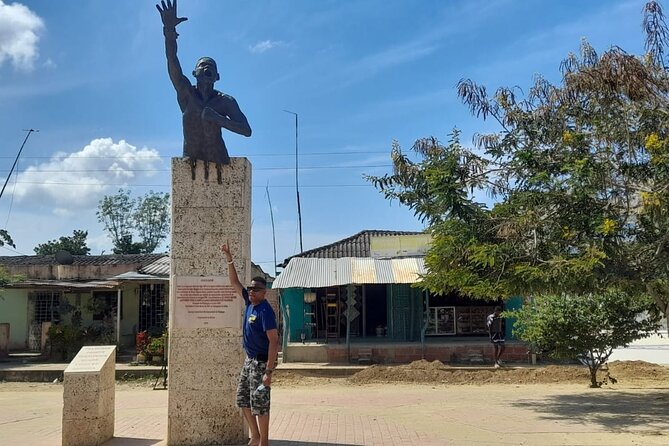
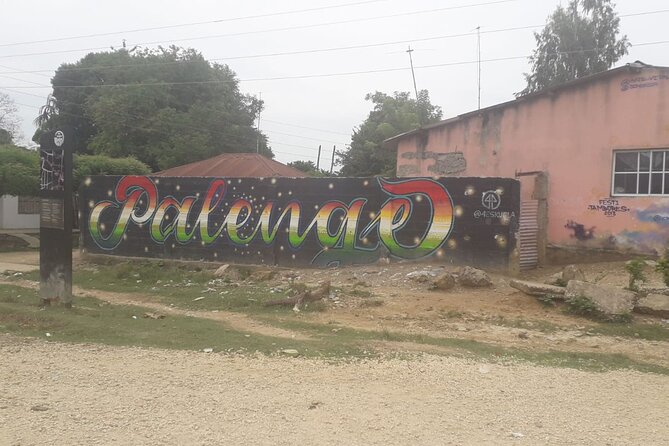
A stop at the letters of Palenque is included. These large public letters are a straightforward place for photographs and a clear marker that you have reached the community.
The letters are not the reason to make the trip, but they provide a useful closing point after learning about the town. You can take a photo, remember the name, and connect the image with the cultural context you have just heard.
The tour also includes time for moving between locations. Since the total duration is about six hours, these transfers matter. You will not have unlimited free time in the town, and the schedule may feel full if the group is close to the maximum size of 30 people.
I would use free moments to ask questions rather than trying to cover every street. The main benefit is the explanation of the community and its traditions, not independent sightseeing.
What $130 includes, and what it does not
The $130 price includes several costs that can add up on a private visit:
- Hotel pickup within the service area
- Roundtrip transportation in an air-conditioned bus
- Bottled water
- A native-guided town tour
- Benko Bioho Square
- A visit to the local naturopathic doctor
- Typical lunch
- The Palenque letters
Admission to the town is listed as free, so you are mainly paying for transport, guiding, coordination, and the included meal and visits.
I consider the price fair for someone who values organized access and local interpretation. Reaching Palenque independently may look cheaper at first, but the tour handles the long roundtrip transfer and connects you with a native guide. The value is less about admission fees and more about context.
The price is harder to justify if you want only a quick photo stop or a short introduction to the town. Cartagena offers many less expensive ways to spend six hours. This tour earns its cost only if the history and cultural teaching are central to your plans.
Group size also affects value. With a maximum of 30 people, the bus may be practical, but personal conversation with the guide could be limited. If you prefer a quiet, flexible visit, a smaller private arrangement may suit you better, though that option is not described here.
Communication and pickup deserve attention
The only detailed negative account focused on the tour company rather than the visit to Palenque itself. The complaint involved refusal to pick up at a hotel outside the service area, a changed meeting point near the Clock Tower, and difficulty communicating in English.
The provider responded that the hotel was outside the pickup zone, police restrictions prevented parking at the Clock Tower, staff members handled different parts of the communication, and the guide was bilingual.
I would not ignore this issue. Transportation problems can sour an otherwise worthwhile day, especially when the departure is early. Before booking, send a clear message with your hotel name, preferred language, phone number, and exact meeting point. Ask for the final location in writing and keep the message available on your phone.
The tour offers a mobile ticket, and confirmation is received at booking. Service animals are allowed, and most people can participate. The available information does not describe vehicle boarding assistance, restroom stops, or detailed accessibility arrangements, so ask directly if those points affect your plans.
Who should book this Palenque experience?
I think this tour suits you if you want to understand Cartagena’s African heritage beyond the city center. It is especially useful for anyone interested in language, food, music, traditional healing, and the ways a community preserves its identity.
It also works well if you prefer having transport and guiding arranged in advance. The included lunch and water reduce the number of details you must manage during a six-hour outing.
You may want to skip it if you dislike long road transfers, organized group schedules, or uncertain meeting instructions. The tour is not designed as a relaxed beach day or a free-form village walk. It is a structured introduction to one specific community.
The experience may also be less satisfying if you need a fully English-language program and do not confirm that detail first. The provider says a bilingual guide is available, but the local guide’s role and translation arrangements should be clear before you go.
Should you book it?
I would book this tour if San Basilio de Palenque is a priority and you want local interpretation rather than simply arriving, taking photos, and leaving. The town visit, native guide, Benko Bioho Square, naturopathic doctor, lunch, and cultural explanations give the day a clear purpose.
I would book only after confirming pickup in writing. For $130, the organized transport and local guiding provide reasonable value, but the experience depends heavily on good communication. If you handle that detail in advance, this can be a meaningful way to connect Cartagena with the African history and living traditions of the surrounding region.
FAQ
Where does the tour start?
The listed starting area is Bocagrande in Cartagena, in the Bolívar region of Colombia.
What time does the tour begin?
The tour starts at 8:00 a.m.
How long does the experience last?
The tour lasts approximately six hours, including the time needed to travel between locations.
Does the tour provide hotel pickup?
Hotel pickup is included within the provider’s service area. If your hotel is outside that area, you may be asked to meet the group at another location.
Does the tour return to Cartagena?
Yes. The activity ends back at the original meeting point.
How do you travel to San Basilio de Palenque?
Roundtrip transportation is provided in an air-conditioned bus.
Is lunch included?
Yes. A typical lunch is included in the tour price.
Who guides the visit in Palenque?
The town visit is accompanied by a native guide from Palenque. The provider also says the tour guide is bilingual.
What is included in the cultural visit?
The experience includes teaching about the town’s language, medical practices, dance, music, and oral tradition. It also includes Benko Bioho Square, the town’s naturopathic doctor, and the letters of Palenque.
How many people can join the tour?
The maximum group size is 30 people.
Can I cancel for a full refund?
Yes. You can cancel at least 24 hours before the scheduled start time for a full refund. Changes or cancellations made less than 24 hours before departure are not accepted for a refund.
Are service animals allowed?
Yes. Service animals are allowed on the tour.
Is the tour suitable for most people?
The available information says most people can participate. Specific accessibility details are not provided, so you should contact the provider if you need special assistance.
Just added in Cartagena
- Private History Photography Tour★ 5.0 · 17 reviews
- Self-Guided Audio Tour: Pirate Tales in Cartagena★ 3.0 · 2 reviews
- Paue Island Tour in the Rosary Islands★ 5.0 · 1 review
- Totumo Volcano★ 3.5 · 15 reviews
- Palmarito Beach★ 3.5 · 4 reviews
- Party without limits! Cartagena; VIP Party.★ 4.5 · 32 reviews
- Paragliding Experience in Cartagena★ 5.0 · 8 reviews
- Tour cultural to san Basilio de Palenque from cartagena★ 5.0 · 45 reviews
San Basilio de Palenque Heritage Tours, compared.

Palenque´s tour, dance show, lunch, pick-Up inclu
Read our review →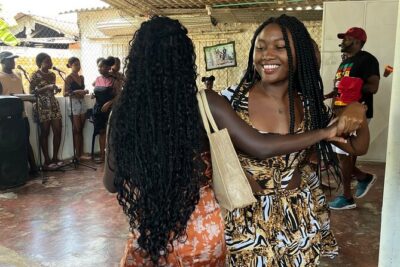
Tour a san Basilio de Palenque desde cartagena
Read our review →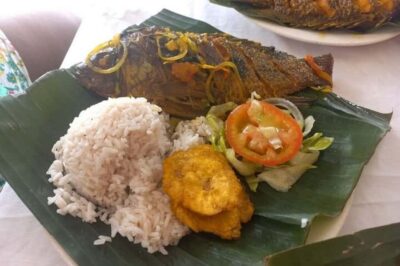
Visit Palenque with natives : history, culture and ancestral legacy
Read our review →Browse the lists this tour appears in