
REVIEW · WALKING TOURS
Comuna 4 Walking Tour Medellin
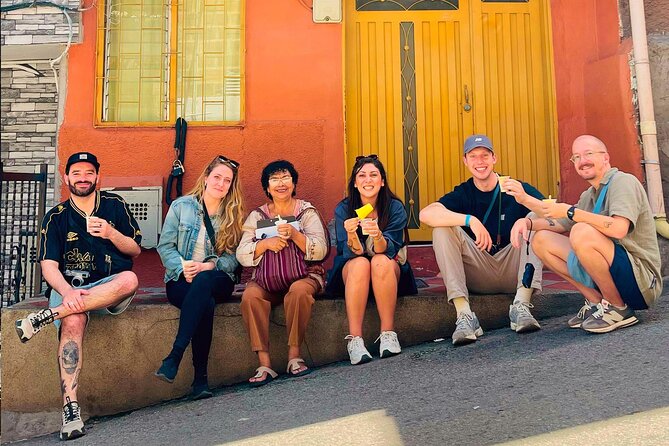
Medellín’s most important stories are not always polished. This small-group Comuna 4 tour offers two things I especially like: a local community leader adds personal memories, and the route explains both the city’s progress and its unfinished work. The main consideration is that the subject matter can be heavy, with poverty, displacement, public health, and housing struggles at the center.
The three-and-a-half-hour walk costs $35 per person, a fair price for a bilingual guide, a community ambassador, and a snack. Toto and Gladys receive particular praise for their warmth and passion, though you should choose this experience for honest social history, not colorful photo stops or a light sightseeing stroll.
In This Review
- Key points about the Comuna 4 experience
- Why Moravia makes a different Medellín tour
- At Estación Metro Caribe, the story begins
- Morro de Moravia and the cost of transformation
- Health care, street vending, and daily survival
- Football, education, and Colombia’s strata system
- Street empanadas and a neighborhood football field
- Moravia Cultural Center and community-built progress
- What the $35 price really covers
- Practical details before you book
- Should you book the Comuna 4 walking tour?
- FAQ
- How long does the Comuna 4 Walking Tour last?
- How much does the tour cost?
- Where does the tour start?
- Where does the tour end?
- What is included in the price?
- Is hotel pickup included?
- How large is the tour group?
- Can I cancel for a full refund?
Key points about the Comuna 4 experience
- Moravia grew from an illegal settlement in the 1960s: The opening talk sets the neighborhood within Medellín’s rapid urban growth.
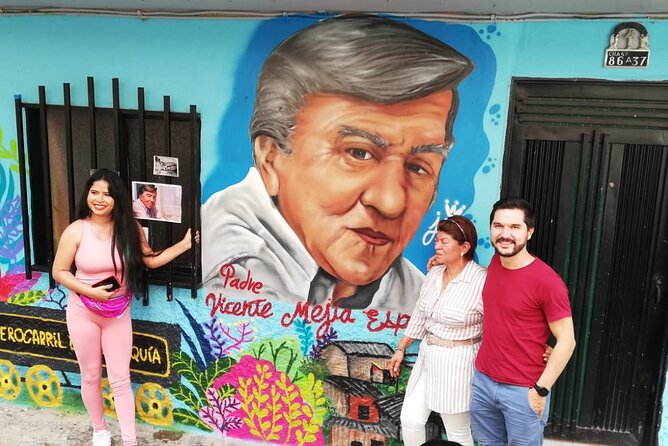
- Gladys brings first-hand experience: As one of the area’s early residents, she can connect public history with personal memory.
- The Morro de Moravia reveals an unfinished story: You learn about families resisting government relocation plans for more than a decade.
- The tour goes beyond murals: Discussions cover health care, welfare, education, social class, football, and housing.
- The group is limited to eight people: That makes conversation with the guide and ambassador easier.
- A local snack is included: Tiny street empanadas provide a simple, tasty break during the walk.
Why Moravia makes a different Medellín tour
Comuna 4 is not presented as a quick burst of color and photo opportunities. The focus is Moravia, a neighborhood shaped by migration, informal housing, public policy, and community action.
The story begins at Estación Metro Caribe, where the guide and community ambassador meet you. From there, you get the basic history of Barrio Moravia, including its origins in the 1960s as an illegal neighborhood. This opening also introduces one version of Medellín’s transformation, the familiar account of a city that has worked hard to improve public life and create new opportunities.
That account matters, but this tour does not stop there. Its purpose is to show what the success story can leave out. People may hear about Medellín’s changes and assume that old problems simply disappeared. Moravia makes clear that change is more uneven. Families may gain access to new services while still facing housing pressure, relocation threats, and limited economic choices.
I like that the tour asks you to hold two ideas at once. Medellín has changed in meaningful ways, and many residents have paid a high price or remained excluded from those gains. That balance gives the walk more value than a simple before-and-after story.
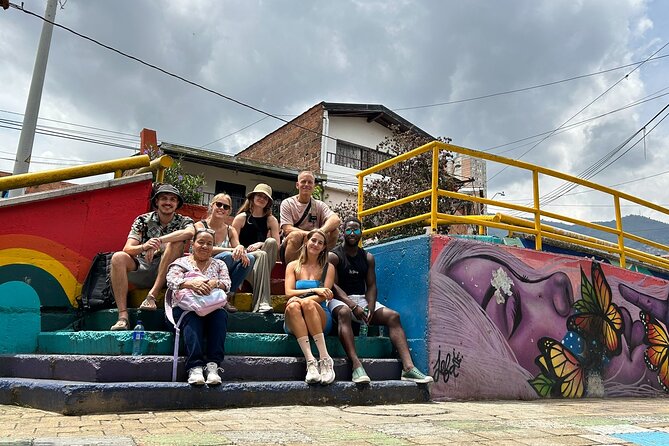
The tour is capped at eight people. That is a useful detail here. The subject matter calls for questions, and a small group gives you a better chance to hear the community ambassador rather than simply follow a guide through the streets.
More Walking Tours in Medellin
- Medellin Historic Walking Tour with Expert Guide
★ 5.0 · 399 reviews - Medellin Historic Walking Tour
★ 4.9 · 86 reviews - 2-Hours Street Art Walking Tour in Medellin Comuna 13
★ 5.0 · 54 reviews
At Estación Metro Caribe, the story begins
The meeting point is listed at Barrio Transformation Tour, on Avenida Regional near Calle 78 in Castilla. The activity begins and ends at the meeting point, with no hotel pickup or drop-off.
Your first 30 minutes establish the setting. The guide explains Moravia’s origins and gives historical context for the neighborhood. You also meet the community ambassador, whose role is more than ceremonial. This person helps connect the broad explanation to life inside the community.
That division of roles is one of the strongest parts of the experience. A professional bilingual guide can organize the history and explain difficult subjects clearly. A local resident can add the details that formal accounts often miss.
The walk begins with a lesson in how cities grow. Moravia’s origins as an illegal settlement in the 1960s point to the pressures that push people toward informal neighborhoods. The tour does not treat the area as a problem to be looked at from the outside. Instead, it asks you to consider the decisions, needs, and public systems that shaped it.
If you are hoping to begin with a dramatic viewpoint or a major landmark, this may feel understated. The payoff comes from listening and asking questions.
Morro de Moravia and the cost of transformation
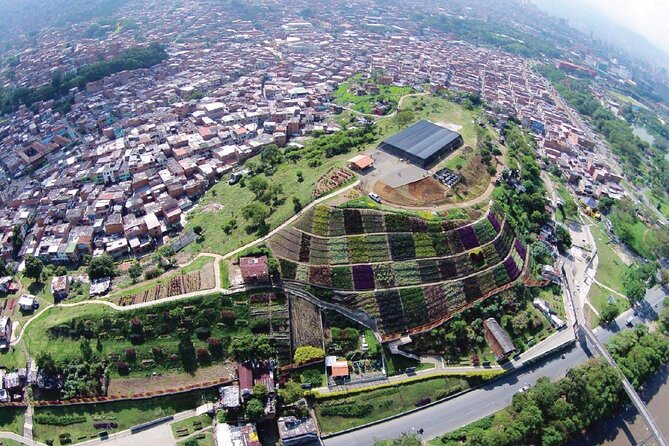
The 45-minute visit to Morro de Moravia is the emotional center of the walk. Here, the tour presents La Resistencia de Moravia, the side of Medellín’s transformation that is less comfortable.
You learn why hundreds of families have resisted a government relocation plan for more than a decade. The important point is not simply that a relocation plan exists. It is that a neighborhood is made up of people with homes, relationships, memories, and daily routines, so moving families can never be treated as a purely technical solution.
Gladys is especially important here. She is described as one of the first residents of Moravia, and her own experience gives the history a human scale. Listening to someone who lived through the area’s development changes the tone of the visit. You are no longer dealing only with dates, policies, and urban planning.
The subject can be uncomfortable. The tour deals with overcrowding and the continuing challenges faced by the community. It is not designed to make hardship look picturesque. I appreciate that restraint. The point is not to collect dramatic images. It is to understand why a community can show both progress and serious strain at the same time.
You may also hear about improvements, including projects such as a garden run by women and La Casa de Todos. These examples matter because they show residents building solutions, not merely waiting for public help. They also prevent the tour from becoming a one-note account of suffering.
Health care, street vending, and daily survival
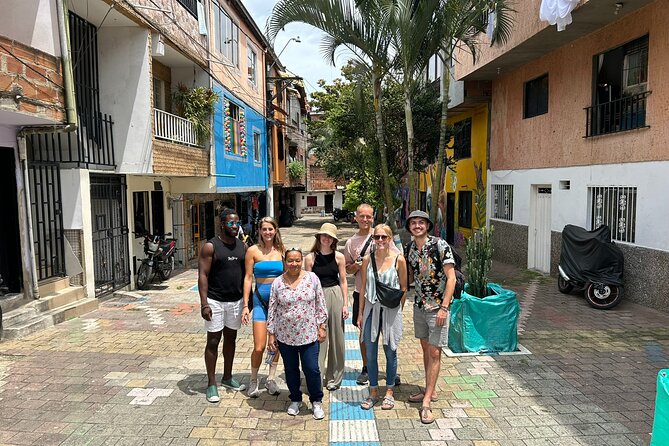
At Centro de Salud Moravia El Bosque, the group takes a quieter break for a 30-minute discussion of Colombia’s health care and welfare system. This is a useful change of pace after the Morro de Moravia.
The guide explains why so many people work as street vendors and how a welfare system can exist while almost half of Colombians still lack access to it. That question connects public policy to what you see on the streets. Street vending is not treated as background scenery or a colorful detail. It becomes part of a larger conversation about work, security, and access to services.
This stop rewards curiosity. If you have wondered why informal commerce is so common, the explanation here gives you a better frame. It also helps you avoid a common mistake in city sightseeing: assuming that visible economic activity tells you everything about people’s choices.
The stop includes time to sit and talk, which is welcome during a 3.5-hour walking route. Still, you should expect a serious discussion rather than a fast-moving attraction. The experience works best for you if you enjoy learning through conversation.
A completely different kind of day:
- Medellin: Comuna 13 Graffiti Tour, Cable Car & Street Food
★ 4.8 · 9,046 reviews - Comuna 13 Graffiti Tour with Street Food
★ 5.0 · 7,503 reviews - Museo Pablo Escobar
★ 5.0 · 7,242 reviews - Guatapé Tour: Piedra del Peñol with Boat Tour, Breakfast, Lunch
★ 5.0 · 7,035 reviews
Football, education, and Colombia’s strata system
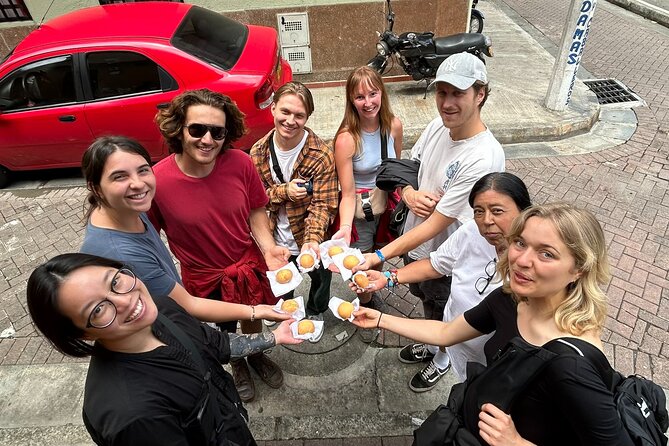
At Cigarreria La Plaquita, a 10-minute stop looks at graffiti dedicated to Medellín’s major football teams. The art provides a natural opening for a discussion of football’s place in Colombian society.
This is a short stop, but it adds useful cultural context. Football can express neighborhood identity, loyalty, rivalry, and belonging. The tour uses those markings to show how public walls can carry social meaning.
The route then pauses in the shade of the trees in front of Fundación Oasis Urbano. The supplied schedule does not give a time for this stop, but it does explain its purpose: education and Colombia’s strata system.
Strata are part of everyday life in Colombia, and the subject can be confusing if you only encounter the term on a bill, an address, or a housing reference. Here, the guide places it within a broader discussion of education and social class. That makes the system easier to understand as part of how services and neighborhoods are organized.
This section may feel more like a classroom conversation than sightseeing. For me, that is a strength. You leave with tools for reading the city, rather than just a collection of images.
Street empanadas and a neighborhood football field
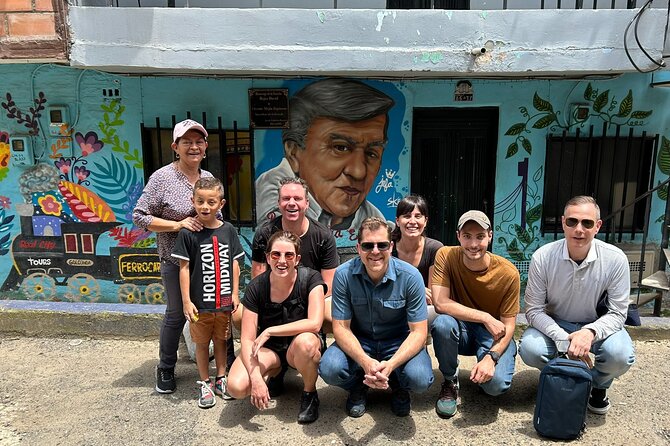
At E.I. Fe y Alegría, Luis Amigó, the group stops for what is described as the city’s tiniest and most delicious street empanadas. The snack is included in the price.
A small food stop can make a walking tour feel more connected to ordinary life. You are not being served a formal meal or given a staged cultural demonstration. Instead, the empanada is a quick taste of something sold locally, with 10 minutes set aside to enjoy it.
Keep your expectations realistic. This is a snack, not lunch. If you need a full meal, plan accordingly before or after the tour, though the provided details do not specify nearby dining options.
At the neighborhood synthetic football pitch, another 10-minute stop introduces a local ambassador and her story of resilience, resistance, and hope. The field gives you a look at a shared community space, while the conversation returns to the people who keep the neighborhood going.
The combination of food and football helps keep the tour from becoming too abstract. You hear about systems and policies, then see how community life continues through food, sport, and shared places.
Moravia Cultural Center and community-built progress
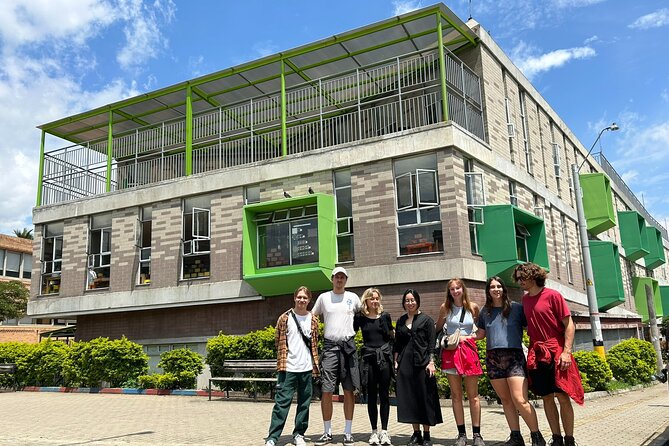
The final major stop is Moravia Cultural Center, visited with the community ambassador. The 30-minute visit focuses on how the community built this infrastructure.
That detail is central to the whole experience. The cultural center is not simply a building to photograph. It represents what can happen when residents organize around a common need and create something useful for future generations.
The tour’s most hopeful moments come from this kind of example. Moravia is not reduced to its problems. You see resistance, but also creativity, cooperation, and pride. The route shows that community action can exist alongside government programs, and sometimes develops because residents feel official plans do not meet their needs.
The cultural center also brings the earlier topics together. Education, public welfare, housing, youth activities, and local identity all connect in a place like this. You get a clearer sense of why community infrastructure matters.
The experience ends back at the meeting point. Since no hotel transfer is included, you will need to arrange your own way to the start and back to your accommodation.
What the $35 price really covers
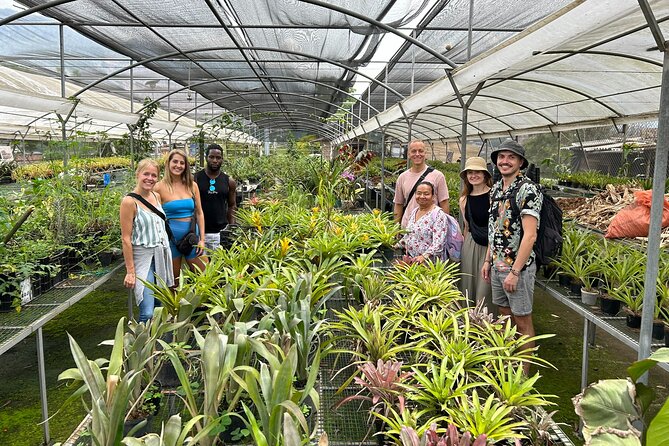
At $35, this is not the cheapest way to spend three and a half hours in Medellín. But the price includes more than a standard walk led by a guide. You receive a professional bilingual guide, a local community leader, and a snack, with a maximum of eight people.
The community ambassador is the key value. A guide can explain Moravia’s history, but a resident can speak from lived experience. The presence of people such as Toto and Gladys has been singled out for warmth, compassion, and passion. That personal connection is difficult to replace with a self-guided visit.
The price also supports a more thoughtful kind of tourism. The tour brings you into a neighborhood through local voices and community spaces, rather than treating Moravia as a backdrop. The available information does not explain exactly how the fee is divided, so I would not claim that every dollar goes directly to local projects. Still, the format gives local participation a central role.
For value, compare it with what you want from a city tour. If you want a quick overview and major sights, another option may suit you better. If you want context about Medellín’s social changes and the people affected by them, $35 is reasonable.
Practical details before you book
The tour lasts approximately three hours and 30 minutes. You should be ready for a walking experience with several stops, including periods of standing and time outdoors. The information provided does not specify the exact distance, terrain, or weather arrangements, so ask the operator if those details matter to you.
The meeting point is near public transportation, and the activity ends where it begins. Service animals are allowed, and most people can participate. The group limit of eight is helpful for conversation, especially when the ambassador is sharing personal stories.
Confirmation is provided at booking. Free cancellation is available if you cancel at least 24 hours before the local start time. Cancellations or changes made inside that window are not accepted for a refund.
This is not a tour for someone who wants a carefully polished version of Medellín. You will hear about overcrowding, limited welfare access, relocation, and the hard work of building a stable community. The tone is compassionate, but the facts are not softened.
It is a strong choice if you are interested in urban change, Colombian society, social policy, football culture, or community organizing. It may be less suitable if you have limited walking time or want a relaxed food-and-photo outing.
Should you book the Comuna 4 walking tour?
I would book this tour if you want to understand Medellín through the people who live with its changes every day. Toto’s guiding and Gladys’s personal connection appear to be major strengths, and the small group makes their stories easier to hear.
Book it for the conversation at Morro de Moravia, the explanation of health care and welfare access, the local football culture, and the community-built cultural center. Do not book it expecting the same type of experience as a colorful, highly photographed city attraction.
The strongest reason to go is simple: Moravia gives you a fuller picture of Medellín. You see improvement, but you also see resistance, pressure, and unfinished work. At $35, that honest perspective is a good use of an afternoon.
FAQ
How long does the Comuna 4 Walking Tour last?
The experience lasts approximately three hours and 30 minutes.
How much does the tour cost?
The price is $35 per person.
Where does the tour start?
It starts at Barrio Transformation Tour, Avenida Regional near Calle 78, in Castilla, Medellín.
Where does the tour end?
The activity ends back at the meeting point.
What is included in the price?
The price includes a local community leader, a professional bilingual tour guide, and a snack.
Is hotel pickup included?
No. Hotel pickup and drop-off are not included.
How large is the tour group?
The maximum group size is eight people.
Can I cancel for a full refund?
Yes, if you cancel at least 24 hours before the experience begins. Cancellations or changes made less than 24 hours before the start time are not accepted for a refund.
Just added in Medellin
- Tour Peñol-Guatape privado: con desayuno, almuerzo y bote★ 5.0 · 1 review
- Silletero Tour – From Medellín★ 5.0 · 1 review
- Tour Medellín: Commune13 and Pablo Escobar + Rooftop★ 5.0 · 2 reviews
- Tour Medellín: Pablo Escobar and Commune 13★ 5.0 · 3 reviews
- Medellin: Tour Pablo Escobar Privado Con Guia Local★ 5.0 · 1 review
- Tour Guatapé – Piedra del Peñol with departure from Medellín★ 5.0 · 24 reviews
- Tour Guatapé: luxury yacht to the stone of Peñol.★ 5.0 · 2 reviews
- Tour Guatapé con visita a Granja de las Llamas y las Alpacas★ 3.5 · 11 reviews
Walking Tours, compared.
Historic Center and Getsemaní Shared Walking Tour
Read our review →
Private Walking Tour in Cartagena Walled City & Getsemaní
Read our review →
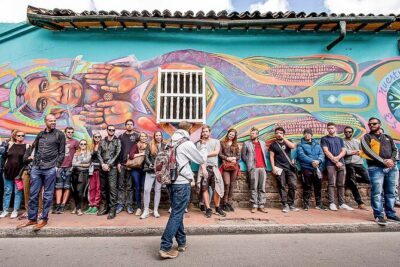
Graffiti Tour: a fascinating walk through a street art City
Read our review →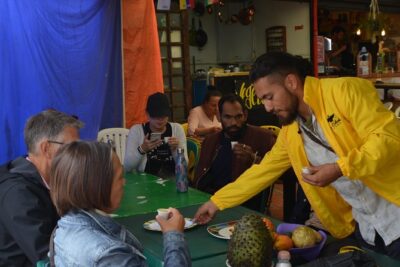
Medellin Historic Walking Tour with Expert Guide
Read our review →
Bogotá Tour: Monserrate, Food, City Walk & Botero Museum
Read our review →Browse the lists this tour appears in