
REVIEW · WALKING TOURS
Complete Walking Tour in Bogota’s Downtown
Bogotá reveals itself one block at a time. This 150-minute walking tour links the Gold Museum area with Bolívar Square, La Candelaria, Chorro de Quevedo, and La Concordia Market, while explaining El Dorado, Spanish colonization, the 1948 Bogotazo, urban art, and local food. I like the clear historical route, and I like that the fruit tasting adds a real local flavor instead of ending with another church façade. The main drawback is a reported meeting-point problem, so you should confirm the start details carefully.
I also like the range of languages: English, Spanish, and German. The strongest comments praise the guide’s interesting historical details and varied city walk, but one Puerto Rican customer reported not being collected at the agreed place. In this case, the published meeting point is in front of the Gold Museum, where you should look for a dark blue umbrella marked Walking Tours.
In This Review
- Key points to know before booking
- A short walk with a large Bogotá story
- Meeting the guide near the Gold Museum
- Bolívar Square and the center of power
- La Candelaria, where old walls meet street art
- Chorro de Quevedo and Bogotá’s origin story
- La Concordia Market and the fruit tasting
- How the history fits together
- What the $25 price really buys you
- Languages, accessibility, and practical planning
- Who will get the most from this walk
- Should you book the Bogotá downtown walking tour?
- FAQ
- How long does the Bogotá downtown walking tour last?
- How much does the tour cost?
- Where does the tour meet?
- How will I identify the guide?
- Which languages are available?
- Is fruit tasting included?
- Is lunch included?
- Is hotel pickup or drop-off provided?
- What should I bring?
- Can I cancel for a refund?
- Can I reserve now and pay later?
- Is the tour wheelchair accessible?
Key points to know before booking
- El Dorado starts the story: You learn how the famous golden legend connects to Colombia’s Indigenous past and the country’s celebrated goldwork.
- The route covers Bogotá’s essential center: Bolívar Square, La Candelaria, Chorro de Quevedo, and La Concordia Market all fit into one compact walk.
- History comes with street-level context: The guide explains the 1948 Bogotazo while you walk along Carrera 7ma, one of the city’s key central roads.
- Food is part of the experience: Colombian exotic fruits and the traditional drink Chicha give the tour a taste beyond sightseeing.
- The cost is reasonable for a guided introduction: At $25 per person, you are paying for a bilingual or multilingual guide and a fruit tasting, not transportation or lunch.
- Bring rain protection: Bogotá’s weather can change quickly, and an umbrella is specifically recommended.
A short walk with a large Bogotá story
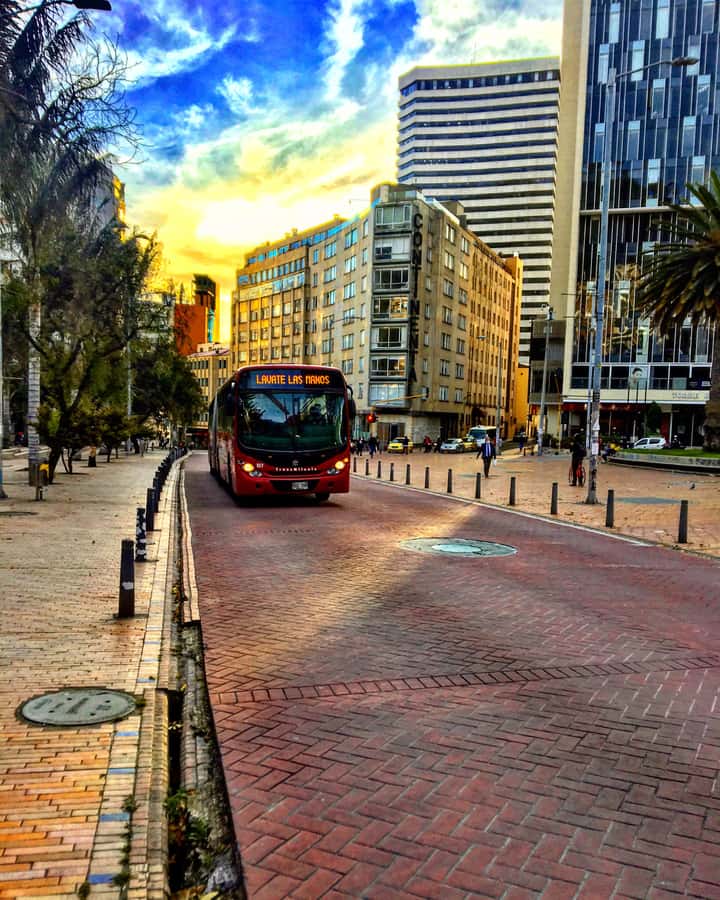
Bogotá can feel like several cities packed into one center. Colonial streets, government buildings, street art, old religious traditions, informal commerce, and modern city life all sit within walking distance of one another.
That contrast is the main reason to choose this tour. You are not simply taken from one photo stop to the next. The route uses landmarks to explain how Bogotá developed, from pre-Columbian beliefs to Spanish colonization, independence-era government, political violence, and present-day neighborhood culture.
The tour lasts 150 minutes, long enough to give you an outline of the city without consuming an entire day. I see it as a good first-day activity, especially if you want a guide to help you get your bearings before exploring Bogotá on your own.
The pace includes guided walks, short visits, photo stops, free time, and food tasting. That variety helps, although you should expect a genuine walking tour rather than a relaxed café crawl. Comfortable shoes are sensible, and an umbrella belongs in your day bag.
More Walking Tours in Bogota
- Bogotá: Guided La Candelaria Walking Tour
★ 4.8 · 1,229 reviews - Graffiti Tour: a fascinating walk through a street art City
★ 5.0 · 1,074 reviews - Walking Tour in La Candelaria Bogotá
★ 5.0 · 859 reviews
Meeting the guide near the Gold Museum
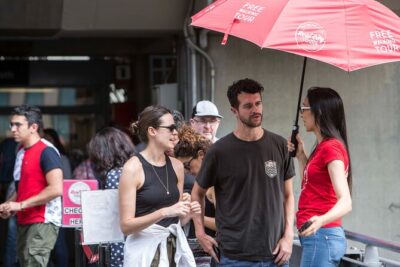
The official meeting point is in front of the Gold Museum at Trabajo Colp Sede Lido. Look for a Wontrip Tours guide holding a dark blue umbrella with Walking Tours written on it.
This detail matters. One customer reported that the guide did not appear at the agreed meeting location, so I would not arrive at the last second. Give yourself time to identify the guide and, if needed, clarify the exact meeting point before the scheduled start.
The Gold Museum setting also makes sense for the subject of the walk. The opening discussion covers El Dorado and the immense collection of golden pieces associated with Colombia. The tour does not list entry to the museum itself, so you should not assume that museum admission is part of the $25 price. Still, beginning nearby gives the historical introduction a natural setting.
The El Dorado story is useful because it corrects a common misunderstanding. The legend has long captured European imagination, but the tour places it within Colombia’s Indigenous traditions and the Spanish search for wealth. That helps you see gold not just as treasure, but as a part of belief, ceremony, conquest, and national identity.
Bolívar Square and the center of power
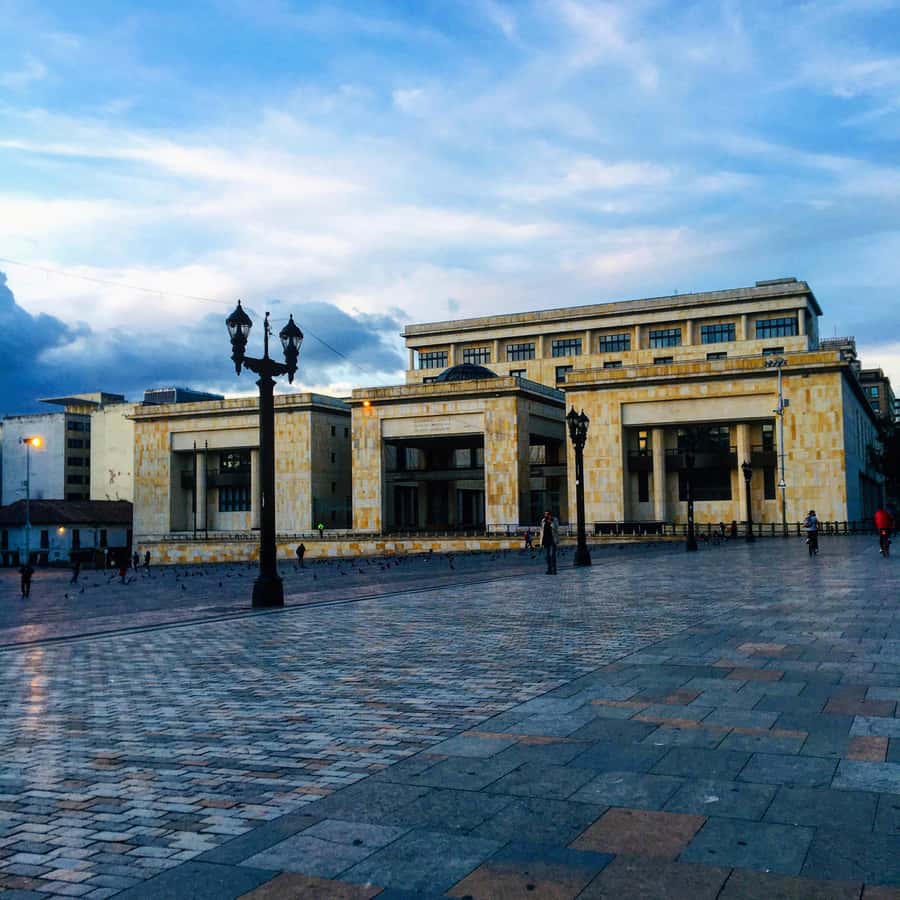
The walk then reaches Bolívar Square, the main square of Bogotá. You have about 35 minutes here for a guided visit, photographs, sightseeing, and some shopping.
This is one of the strongest parts of the route because the square gives you a clear view of the city’s public and political center. Important government buildings surround it, and the guide can explain how the space relates to Bogotá’s development and national life.
A square like this works best with context. On your own, you might admire the buildings and take pictures. With the guide, you can connect the architecture to colonization, the founding of Bogotá, and the political events that shaped modern Colombia.
The schedule also allows time for shopping, though this is not presented as a dedicated shopping tour. Think of it as a chance to browse rather than a promise of a major market visit. If you want long, unhurried photographs, keep an eye on the clock. The route has several more stops ahead.
La Candelaria, where old walls meet street art
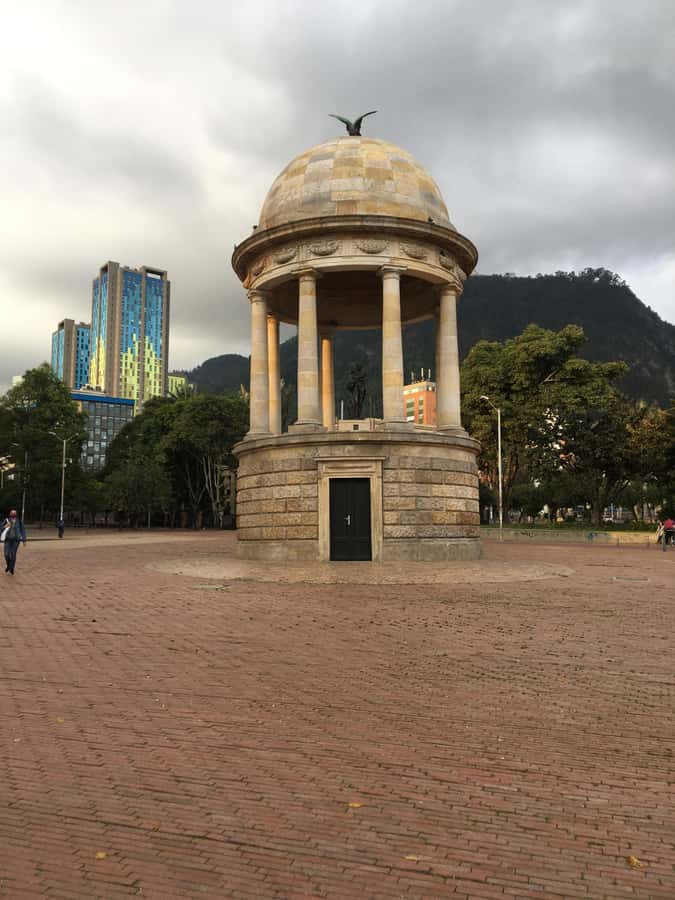
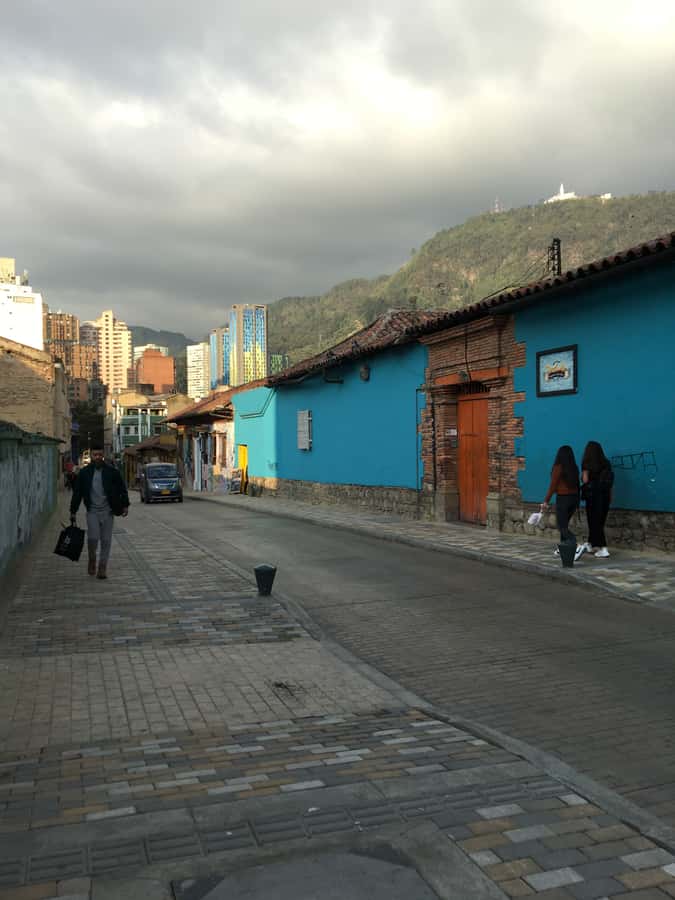
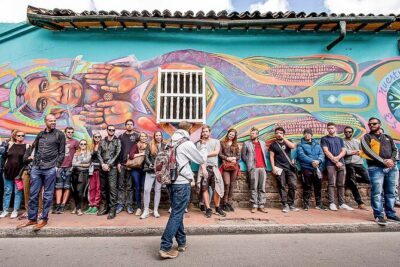
From Bolívar Square, the tour moves into La Candelaria for about an hour. This colonial neighborhood is known for old architecture, narrow streets, and a strong connection to Bogotá’s artistic life.
The hour here is generous compared with the other stops. You will have time for photographs, guided sightseeing, and a gradual walk through the district. The appeal is the mix of physical details and social history. Old buildings show the city’s colonial foundations, while urban art points toward newer forms of expression.
The guide also introduces Chicha, a traditional drink with roots reaching back to pre-Columbian times. This is an important detail because food and drink can explain a culture in a way a plaque cannot. Chicha connects the present city to earlier communities and gives you a local reference point to notice after the tour.
Do not expect a full meal here. Lunch is not included, and the tasting included in the experience comes later at La Concordia Market. Chicha is part of the cultural explanation, not a substitute for lunch.
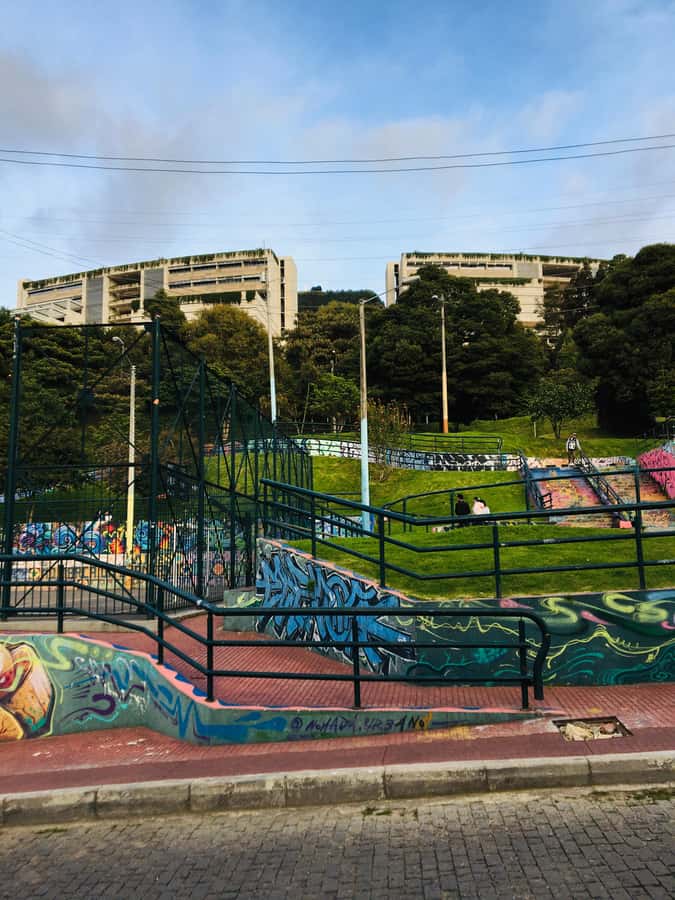
La Candelaria is also where Bogotá’s contrasts become most obvious. Colonial architecture and urban art share the same streets. That combination is one reason this tour works better than a route focused only on grand buildings. You get a sense of how the neighborhood functions as a living part of the city, not just a preserved historic quarter.
A completely different kind of day:
- Bogotá Bike Tour
★ 5.0 · 3,329 reviews - Bogota: Bicycle City Tour
★ 4.9 · 2,156 reviews - Zipaquirá: Salt Cathedral Group Tour with Pickup
★ 4.8 · 1,606 reviews - La Candelaria, Monserrate and Museums Bogotá Private City Tour
★ 5.0 · 1,567 reviews
Chorro de Quevedo and Bogotá’s origin story
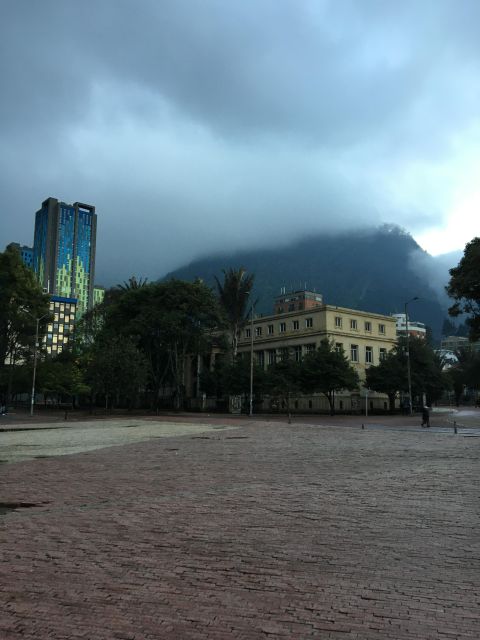
The next stop is Chorro de Quevedo Plaza, with about 25 minutes for a visit, photographs, free time, regional food, and possible street entertainment. The schedule includes dessert, street food, a dance show, and traditional dance, though the supplied details do not guarantee that every performance will take place at every departure.
Chorro de Quevedo is especially useful in a tour about Bogotá’s beginnings. The plaza is tied to the city’s founding story, so it brings the earlier discussion of colonization and Spanish settlement into a more specific place.
This is also a chance to pause. A walking tour with several historical subjects can become a parade of names and dates. A small plaza, local food, and free time give you a change of rhythm. You can take pictures, look around, and absorb the neighborhood instead of listening nonstop.
Keep your expectations practical. The stop lasts only 25 minutes, so you are unlikely to have time for a long meal or extended browsing. If a dance presentation is available, it adds color and movement. If not, the plaza still works as a brief break between La Candelaria and the market.
La Concordia Market and the fruit tasting
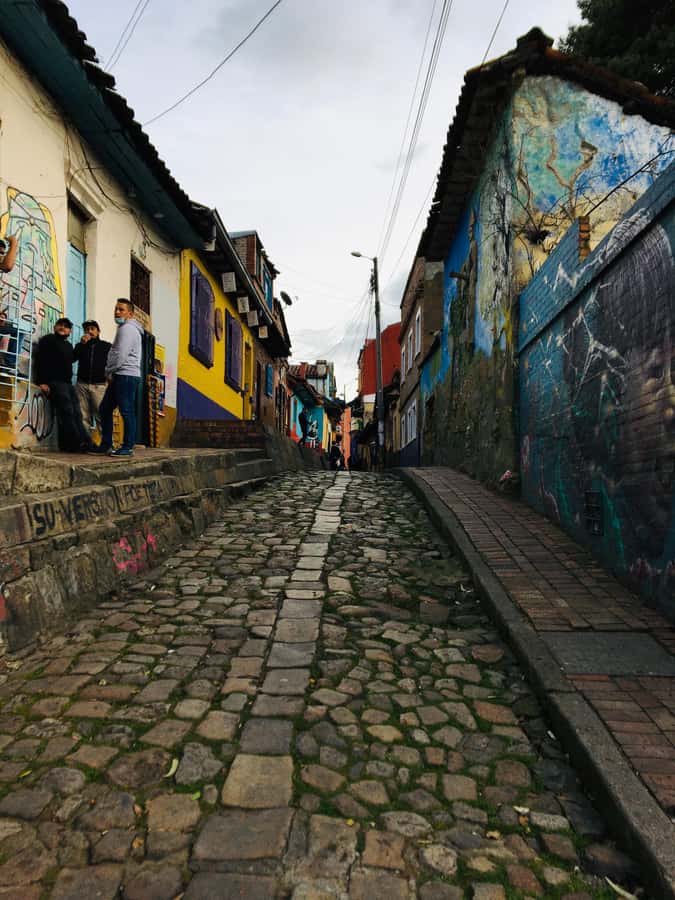
The final stop is La Concordia Market, where you spend about 25 minutes. Here the tour shifts from history and architecture to food, shopping, scenic views on the way, and a tasting of Colombian fruits.
This is one of the most appealing features of the experience. Colombia has a wide selection of fruits that many visitors may not recognize, and a guided tasting gives you a simple way to try them without choosing blindly at a market stall. The tasting is included, which gives the final stop a clear purpose.
I like this ending because it leaves you with something more memorable than a final photograph. You hear about the city’s past, then finish by tasting part of its present-day food culture.
The market visit also gives you free time and a chance to browse. It is not a replacement for a full market tour, and the schedule allows only around 25 minutes. Still, it can help you decide what foods or fruits you want to seek out later during your time in Colombia.
Sunset is listed for La Concordia and La Candelaria. Actual light and timing will depend on the starting time and the season, so do not book solely for a guaranteed sunset view. The route offers scenic views along the way, but the central value is the market visit and fruit tasting.
How the history fits together
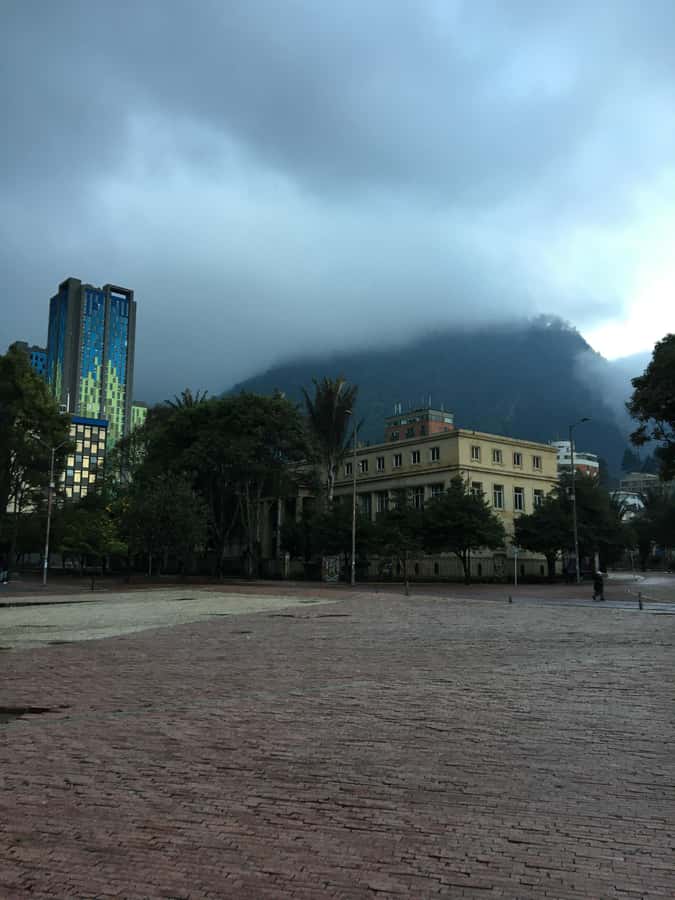
The guide’s main task is to connect separate subjects into one understandable story. The route begins with El Dorado and golden objects, moves through Spanish colonization and Bogotá’s founding, then reaches the emerald trade, political upheaval, government, colonial neighborhoods, Indigenous drink traditions, and modern urban art.
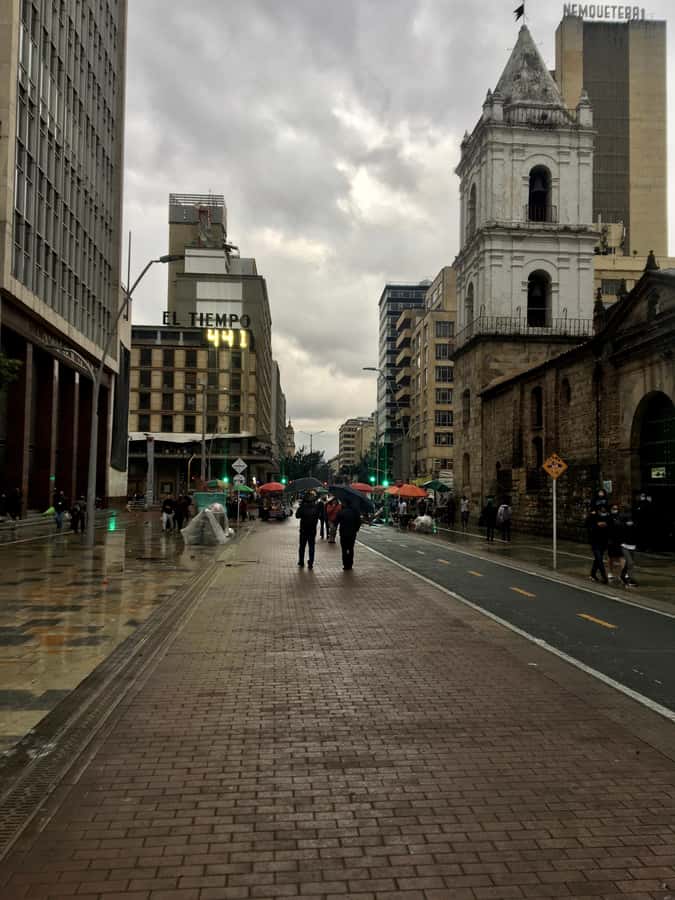
Plaza del Rosario adds a different kind of city lesson. There, you learn about Colombia’s informal emerald market. This subject gives the walk an economic angle. Bogotá is not presented only through official monuments. You also hear about trade that operates outside the polished image of government squares and museums.
The walk along Carrera 7ma introduces El Bogotazo, the 1948 uprising that caused major destruction in Bogotá. This is a serious subject, and it helps explain why the city’s history cannot be reduced to colonial façades and pleasant plazas.
I value this range. A good city walk should explain both beauty and difficulty. Here, the stories include art and food, but also conquest, political violence, informal commerce, and the forces that changed Bogotá.
The historical coverage is broad rather than academic. You will get a useful framework, not a specialist lecture on every period. If you want detailed museum-level treatment of El Dorado, you should allow separate time for the Gold Museum itself.
What the $25 price really buys you
At $25 per person, the tour is priced as an accessible introduction to central Bogotá. The value comes from the guide, the route, the explanations, and the included fruit tasting.
You are not paying for hotel pickup, drop-off, or lunch. That keeps the price lower, but it also means you must reach the Gold Museum area yourself and plan another meal. The walking format avoids transport delays and lets you move through the center at street level.
I consider the cost fair if you want a structured first look at Bogotá. It is less compelling if you already know Bolívar Square and La Candelaria well or prefer to explore without a schedule.
The ability to visit other places outside the planned route adds some flexibility, although the available time remains limited. Ask the guide early if you have a particular nearby interest. Do not count on adding a distant attraction during this 150-minute walk.
Free cancellation up to 24 hours before the start and the option to reserve now and pay later make the booking terms useful for changing plans. Those policies do not solve a meeting-point mix-up, so clear communication at the start still matters.
Languages, accessibility, and practical planning
The tour is offered in English, Spanish, and German. That is a real advantage for mixed-language groups and for anyone who wants historical details explained in a familiar language.
It is listed as wheelchair accessible. Because the route includes walking through streets, plazas, a colonial neighborhood, and a market, you may still want to confirm the practical route details with the provider before booking if you have specific mobility needs.
Bogotá’s weather can change fast. Bring an umbrella, even if the sky looks clear when you leave. A rain shower could make the long walking sections less comfortable, and the umbrella is the one item the tour information specifically recommends.
Since lunch is not included, eat beforehand or plan food after the tour. The fruit tasting is a snack and cultural activity, not a complete meal.
The experience does not include hotel transportation. You need to make your own way to the Gold Museum and return from La Concordia Market or continue exploring from there.
Who will get the most from this walk
I would recommend this tour to first-time visitors who want a broad introduction to Bogotá’s center in one outing. It suits you especially well if you like history, street art, local food, and short stops that keep the pace moving.
It is also a good match for anyone who wants to understand the city’s contrasts. You will see government buildings, colonial streets, local markets, informal trade, traditional drink culture, and urban art within one route.
The tour may be less suitable if you want a slow photography walk, a full food tour, or a detailed visit inside the Gold Museum. It is also not the right choice if you need hotel pickup, since that service is not included.
The available comments give the experience a mixed overall score of 3.9 out of 5. The positive feedback is specific: one German customer described the tour as interesting and varied, while a Swiss customer praised the guide’s historical details and the way the city was presented. The negative feedback concerns meeting-point handling, not the sightseeing content. That distinction is useful when deciding how much the tour’s logistics matter to you.
Should you book the Bogotá downtown walking tour?
Book it if you want a reasonably priced, guided introduction to central Bogotá with history, neighborhood life, and a small food experience. The route covers many of the city’s key downtown subjects without asking you to spend a full day walking.
I especially like the balance between Bolívar Square’s formal power, La Candelaria’s older streets, Chorro de Quevedo’s founding connection, and La Concordia’s market food. The fruit tasting gives the final stop a clear local purpose.
Before booking, make sure the meeting point is clear and arrive early at the Gold Museum with your umbrella. If you want a compact overview and a guide who can explain the city’s past in English, Spanish, or German, $25 is a sensible price. If your priority is museum entry, lunch, private transport, or a long food tasting, choose a different type of tour.
FAQ
How long does the Bogotá downtown walking tour last?
The tour lasts 150 minutes, or two and a half hours.
How much does the tour cost?
The listed price is $25 per person.
Where does the tour meet?
The meeting point is in front of the Gold Museum at Trabajo Colp Sede Lido.
How will I identify the guide?
Look for a Wontrip Tours guide holding a dark blue umbrella marked Walking Tours.
Which languages are available?
The tour is available in English, Spanish, and German.
Is fruit tasting included?
Yes. Colombian fruit tasting at La Concordia Market is included.
Is lunch included?
No. Lunch is not included in the tour price.
Is hotel pickup or drop-off provided?
No. Hotel pickup and drop-off are not included.
What should I bring?
Bring an umbrella because Bogotá’s weather can change quickly and rain is possible.
Can I cancel for a refund?
Yes. You can cancel up to 24 hours in advance for a full refund.
Can I reserve now and pay later?
Yes. The tour offers a reserve-now, pay-later option.
Is the tour wheelchair accessible?
Yes. The activity is listed as wheelchair accessible.
Just added in Bogota
- Tour of Zipaquirá: Visit the Salt Cathedral and the main squares★ 4.5 · 55 reviews
- Catedral de Sal desde Bogotá en Tren★ 5.0 · 5 reviews
- Botanical Garden Bogotá Private Tour (4 Hrs.)★ 5.0 · 13 reviews
- Zipaquirá and Salt Cathedral Muisca Heritage with Guide – Private★ 4.5 · 23 reviews
- Zipaquira Salt Cathedral★ 4.5 · 12 reviews
- LOCAL GUIDE Zipaquirá PRIVATE TOUR – Salt Cathedral and Salt Oven★ 5.0 · 24 reviews
- Zipaquirá Salt Cathedral: An architectural wonder.★ 4.5 · 24 reviews
- Private Zipaquira Salt Cathedral and Guatavita Lagoon Tour from Bogota★ 4.5 · 44 reviews
Walking Tours, compared.
Historic Center and Getsemaní Shared Walking Tour
Read our review →
Private Walking Tour in Cartagena Walled City & Getsemaní
Read our review →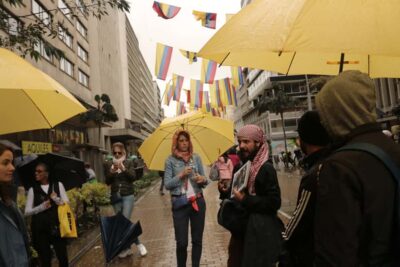
Graffiti Tour: a fascinating walk through a street art City
Read our review →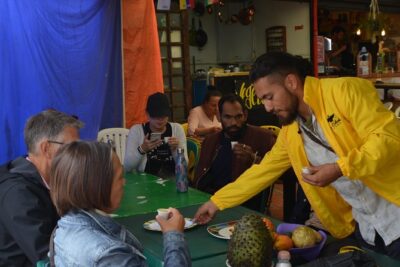
Medellin Historic Walking Tour with Expert Guide
Read our review →
Bogotá Tour: Monserrate, Food, City Walk & Botero Museum
Read our review →Browse the lists this tour appears in