
REVIEW · HISTORICAL TOURS
Zenú Indigenous Heritage Tour in Cartagena
Cartagena has stories beyond its walls. This private, four-and-a-half-hour experience connects the city’s Zenú heritage with living craft traditions. I like the thoughtful pairing of the Museo del Oro Zenú with a women-led weaving workshop, and I like that part of your payment supports local indigenous development groups.
The strongest part is the visit to the 20 de Julio neighborhood, where you learn directly about Zenú identity, hardship, and resilience. The main drawback is the price: at $230 per person, this is costly for a half-day outing, especially since food and drinks beyond the small snack are not included.
The tour also requires a morning commitment, with pickup at 9:00 a.m., and the workshop takes three hours. That longer visit gives the experience substance, but you should wear comfortable shoes, bring sunscreen and a hat, and be ready for a cultural visit rather than a quick sightseeing stop.
In This Review
- Key points to know before booking
- Starting with Zenú gold at the Museo del Oro
- The 20 de Julio workshop is the emotional center
- Learning how caña flecha becomes woven craft
- A small taste of local hospitality
- Why the $230 price may or may not work for you
- Who will get the most from this experience
- Practical details that make the day easier
- What the strongest praise tells you
- Should you book the Zenú Indigenous Heritage Tour?
- FAQ
- How long does the Zenú Indigenous Heritage Tour last?
- Is hotel pickup included?
- Is the tour private?
- Is the tour offered in English?
- What is included in the price?
- Can children join the tour?
Key points to know before booking
- The museum and workshop work as a pair: You first see ancient Zenú goldwork, then learn how present-day Zenú women protect their craft traditions.
- The 20 de Julio visit is the heart of the tour: It takes you beyond Cartagena’s usual visitor zone to a local women-led project.
- You learn the meaning behind the Sombrero Vueltiao: The workshop explains its symbolism, not just its appearance as a famous Colombian hat.
- Caña flecha is part of the lesson: You see how this plant material becomes woven craft and may learn the basic weaving process.
- Your fee supports local groups: Donations go to ASOMAIZ and FEM, two indigenous development organizations.
- This is a private tour: Only your own group participates, with hotel pickup and drop-off included.
Starting with Zenú gold at the Museo del Oro
Your morning begins with hotel pickup in Cartagena at about 9:00 a.m. The operator collects you from hotels and other accommodations, though Manzanillo-area properties may require an added fee. Since pickup is included for most Cartagena addresses, this removes the need to arrange a taxi before breakfast.
The first stop is the Museo del Oro Zenú, where you spend about an hour. The museum displays gold ornaments made by the ancient Zenú, but the value of the visit lies in the explanation. Your Zenú guide interprets the figures, patterns, and symbols so you can connect the objects with the Zenú view of the world.
That context matters. Gold pieces can blur into a collection of attractive objects if you only see them behind glass. With guidance, you get a better sense of how the ornaments expressed ideas, identity, and belief. The museum visit gives you a foundation for understanding the craft work later in the day.
The museum stop is also a sensible first chapter. You begin with the Zenú people’s older artistic traditions, then move toward living traditions practiced by indigenous women today. The transition helps you see that Zenú culture is not limited to archaeology.
One hour is enough for an introduction, but not for a long museum study. If you prefer to spend several hours reading every display, this tour may feel brief. Its purpose is to establish background before the more personal workshop visit.
Admission to the museum is included. You do not need to budget for a separate entry ticket, though the total tour price remains high compared with many standard Cartagena excursions.
More History Tours in Cartagena
- Cartagena: Historic Center and Getsemaní Shared Walking Tour
★ 4.9 · 2,716 reviews - Historic Center & Getsemaní Shared Tour in Cartagena
★ 5.0 · 620 reviews - San Basilio de Palenque History Tour
★ 5.0 · 301 reviews
The 20 de Julio workshop is the emotional center
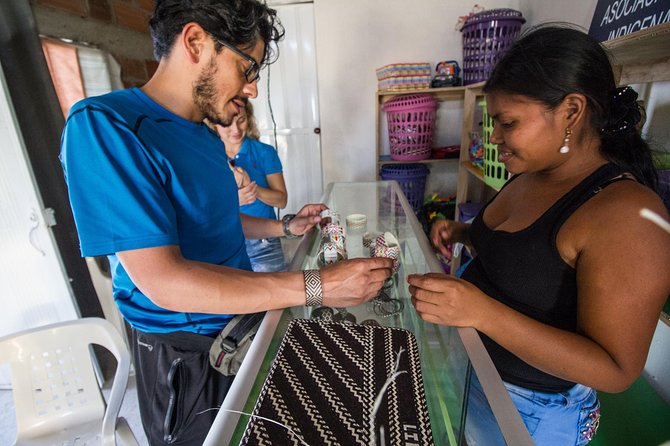
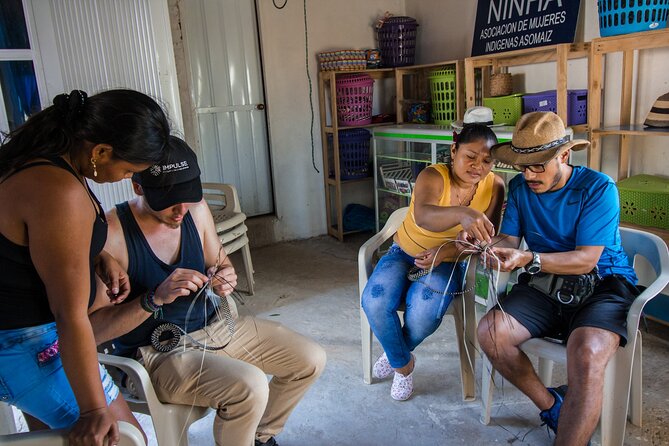
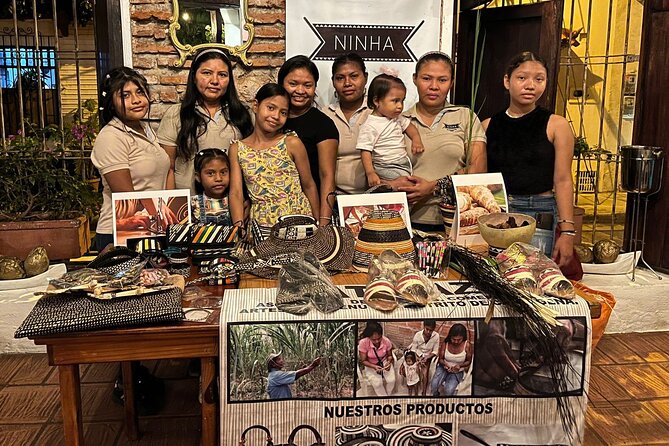
After the museum, you travel to 20 de Julio, a peripheral area of Cartagena outside the usual visitor circuit. The change in setting is important. You are not simply visiting another display room made for sightseeing. You are entering a community project led by indigenous women who use weaving to support their families and keep Zenú traditions alive.
The workshop lasts around three hours, which is much longer than the museum visit. That gives the women time to explain their work, tell the story of the Zenú people, and discuss the problems that have placed their heritage at risk.
I value this kind of pacing. A short craft demonstration can leave you with little more than a photo and a shopping memory. Three hours allows room for conversation and questions. It also gives you time to understand that handmade work requires skill, patience, and a market that respects the people producing it.
The women leading the project are described as resilient, and that is not just a warm word for the brochure. Their work connects family income with cultural survival. You learn how the workshop helps preserve weaving skills while creating practical support for households.
The visit also offers a useful correction to the idea that indigenous culture belongs only to the past. The museum shows ancient objects. The workshop shows people making decisions about how to carry their identity forward today.
You should approach this stop with respect and patience. It is a community-based cultural visit, not a staged performance with a rapid sequence of photo opportunities. The best experience will come from listening carefully and allowing the women to set the pace of the conversation.
Learning how caña flecha becomes woven craft
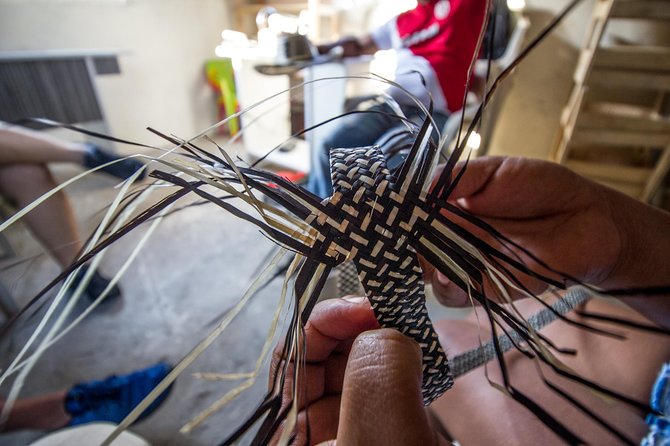
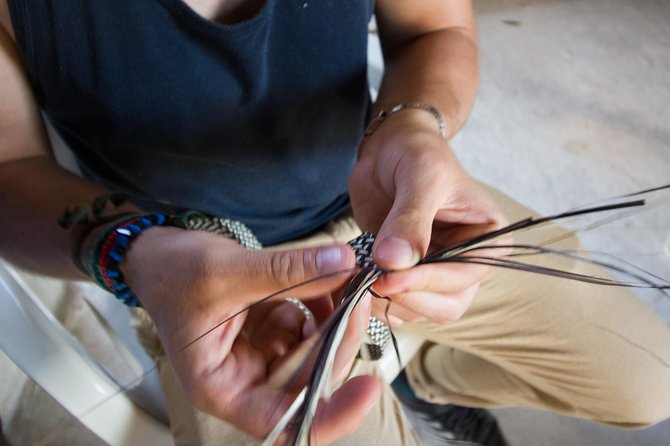
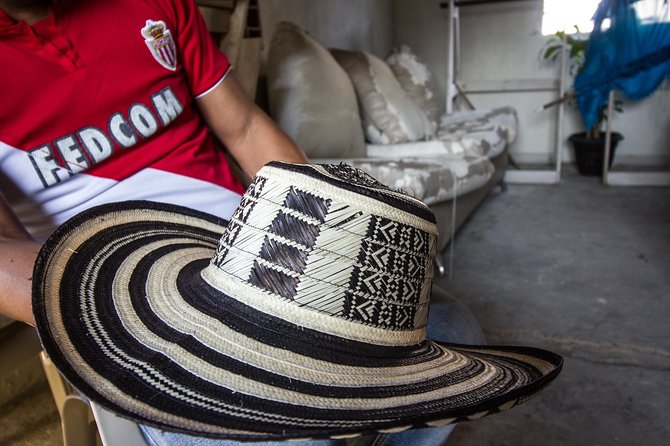
A central lesson is the use of caña flecha, the primary raw material for the woven crafts. You learn how this material is prepared and woven, along with the symbolic meanings connected to the Sombrero Vueltiao.
The hat is widely recognized in Colombia, but recognizing it is not the same as understanding it. The workshop explains why its patterns and form matter to Zenú identity. That makes the hat more than a souvenir or national symbol. It becomes a way to discuss community, memory, and the survival of a craft tradition.
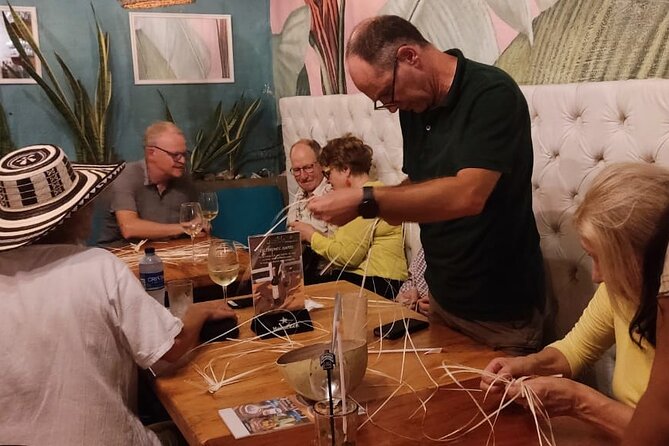
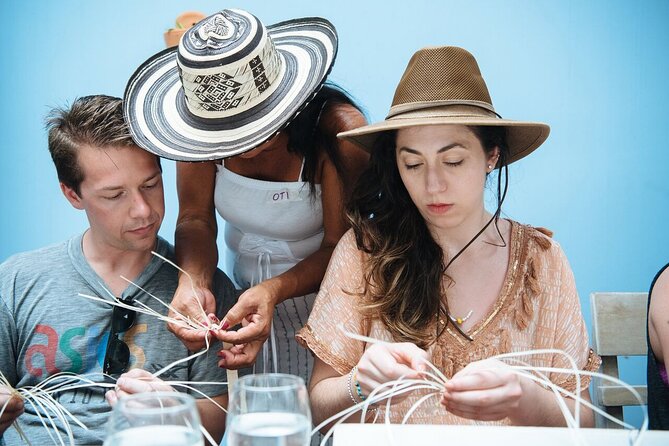
You may also learn how to weave with caña flecha during the workshop. The supplied details do not promise a full finished product or a lengthy hands-on class, so you should think of this as an introduction to the process rather than a formal craft course.
That distinction helps set expectations. You will gain a clearer idea of the work involved, but the focus is cultural education and conversation. If you want to spend an entire day making a basket from raw material, this is not that kind of program.
The weaving lesson is one of the tour’s most useful features because it links the material, the technique, and the social purpose. You see how a plant becomes an object with meaning, and how a traditional skill can help support a family.
A small taste of local hospitality
During the workshop, you receive a traditional maize and coconut beverage and a snack. This is a modest food offering, not a full meal, so you should eat beforehand or plan food later in the day.
The drink adds a simple personal touch to the workshop. It gives you a taste of local food traditions while you listen and watch. Still, the tour information lists food and beverages as not included, so treat the maize and coconut drink and snack as part of the workshop welcome rather than a complete meal service.
The tour ends after roughly four and a half hours, with hotel drop-off included. A morning start means you should have much of the afternoon free for Cartagena’s other sights.
A completely different kind of day:
- Cartagena Island Hopping: 5-Stop Rosario Islands Tour with Lunch
★ 4.5 · 4,903 reviews - Cartagena: Rosario Islands Catamaran with Lunch and Snorkel
★ 4.5 · 2,479 reviews - Full-Day Rosario Islands Including Barú, Bocachica & Playa Blanca
★ 4.0 · 1,729 reviews - Tour De Palenque, Road to Emancipation.
★ 5.0 · 1,678 reviews
Why the $230 price may or may not work for you
At $230 per person, this is not a budget tour. The cost covers private transportation, hotel pickup and drop-off, a guide in English and/or Spanish, museum admission, the workshop visit, donations to ASOMAIZ and FEM, and impulse insurance.
The private format improves the value for some groups. You are not sharing the visit with a large busload, and the schedule can focus on your group’s questions and interests. Families and small groups who want a quieter cultural experience may find that worthwhile.
The donations also give the price a wider purpose. Some of your payment supports local indigenous development organizations, rather than paying only for transport and sightseeing. That does not make the tour inexpensive, but it does make the spending more connected to the community you visit.
Still, you should compare the price with your priorities. If you want several major Cartagena attractions in one day, this tour covers only two main stops. If you want a personal introduction to Zenú culture and a direct look at a living craft project, the cost may feel more justified.
Group discounts are offered, though the exact savings are not provided. If you are traveling with family or friends, ask about the group rate before booking. The private arrangement may also make more sense when several people can share the experience together.
Who will get the most from this experience
I would recommend this tour to you if you want more than colonial streets, beaches, and standard city highlights. It suits people who care about indigenous culture, handmade work, community projects, and the human story behind traditional objects.
It is also a good fit for families with children aged five or older. Children must be accompanied by an adult, and the tour may give them a clearer connection between raw materials, skilled hands, and finished objects. The three-hour workshop could test the patience of very young children, so consider your child’s interest in craft and conversation.
The tour works well for couples, small private groups, and visitors who prefer a guide-led cultural experience. Since it is offered in English, English-speaking participants can follow the explanations without needing to arrange a separate interpreter. The guide may also work in Spanish.
You may want to skip it if your main goal is a relaxed beach morning, a food tour, or a packed list of famous Cartagena sights. You should also think twice if you dislike leaving the central visitor areas or prefer brief stops with lots of movement.
Practical details that make the day easier
Wear comfortable clothes and shoes. The tour lasts about four and a half hours, and the workshop visit takes three of those hours. Sunscreen and a hat or cap are sensible in Cartagena’s heat.
Hotel pickup begins around 9:00 a.m. Enter complete pickup details when booking. Properties in the Manzanillo area carry an additional charge, so contact the operator in advance if you are staying there.
The tour includes insurance, but you must send your passport number to the operator for the policy to take effect. Confirmation arrives at booking, and the experience is suitable for most participants according to the supplied information.
The tour requires good weather. If poor conditions force a cancellation, you receive the choice of a different date or a full refund. You can also cancel for a full refund if you do so at least 24 hours before the local start time. Cancellations or changes made inside that 24-hour window are not refunded or accepted.
Conditions can cause changes to the schedule. The operator says you will be notified ahead of time when possible, but you should avoid arranging an important timed activity immediately after the tour.
What the strongest praise tells you
The museum is a solid introduction, but the women’s workshop receives the strongest praise. That makes sense. Museum displays provide facts and objects, while the workshop connects those objects to present-day people and daily work.
The most valuable part is the chance to see beyond Cartagena’s usual visitor areas and learn what it takes to protect Zenú weaving traditions. You leave with a better appreciation for the labor behind indigenous crafts and the effort required to keep those skills alive.
The experience also succeeds because it avoids treating Zenú culture as a finished chapter. Ancient goldwork matters, but so does the work being done now by women supporting their families and maintaining a threatened heritage.
That balance is the tour’s main strength. You get archaeology, symbolism, materials, technique, and a direct look at cultural continuity in one morning.
Should you book the Zenú Indigenous Heritage Tour?
Book it if you want a private and serious cultural experience with a clear connection to local people. The museum alone would make a pleasant introduction, but the 20 de Julio workshop gives the morning its purpose.
The $230 price is high, so I would choose this tour only if Zenú culture and community-based craft matter to you. Ask about group discounts, confirm the pickup address, send your passport number for insurance, and arrive ready for a long workshop visit.
Skip it if you want the lowest-cost way to see Cartagena or if your schedule is too tight for a four-and-a-half-hour morning. For the right audience, though, this is a thoughtful way to understand the people behind one of Colombia’s best-known crafts.
FAQ
How long does the Zenú Indigenous Heritage Tour last?
The tour lasts approximately four hours and 30 minutes. It begins with pickup around 9:00 a.m. and includes about one hour at the Museo del Oro Zenú and three hours at the 20 de Julio workshop.
Is hotel pickup included?
Yes. Pickup and drop-off are included for Cartagena hotels and accommodations. Hotels in the Manzanillo area require an additional fee, so contact the operator to arrange that service.
Is the tour private?
Yes. Only your group participates in the activity.
Is the tour offered in English?
Yes. The experience is offered in English, and the guide may provide service in English and/or Spanish.
What is included in the price?
The price includes hotel pickup and drop-off, a guide, entry tickets to the listed attractions, donations to ASOMAIZ and FEM, and impulse insurance. Food and beverages beyond the workshop snack and traditional drink, along with optional tips, are not included.
Can children join the tour?
Yes. The minimum age is five years, and children must be accompanied by an adult.
Just added in Cartagena
- Exotic Yacht – Tour through the bay of Cartagena★ 3.7 · 4 reviews
- White Night Boat Party: Dinner Buffet, Dancing and Open Bar★ 4.6 · 3 reviews
- Volcan del Totumo + Playa + Piscina★ 4.7 · 4 reviews
- Enjoy the totumo volcano from cartagena + snack★ 4.0 · 11 reviews
- Private Tour to Tayrona National Park★ 4.0 · 2 reviews
- 18.Transfer (Rafael N-Hotel Decameron Baru Airport) or vice versa★ 5.0 · 1 review
- One-day tour to Playa Blanca by land Popular sector★ 3.0 · 2 reviews
- Full Day Private Activity Mangata Island Kayak and Lunch★ 5.0 · 15 reviews
Historical Tours, compared.
Historic Center and Getsemaní Shared Walking Tour
Read our review →
Shared Tour of the Historic Candelaria in Bogotá
Read our review →
Historic Center & Getsemaní Shared Tour in Cartagena
Read our review →
Shared Tour Historic Center of Medellin with Audio System
Read our review →
Medellín Essential: history & local life on E-bike
Read our review →
Medellin Historic Walking Tour with Expert Guide
Read our review →
Bogota Shared Gastronomy Tour in the Historic Center
Read our review →Browse the lists this tour appears in