
REVIEW · AUDIO TOURS
Self-Guided Audio Tour: the Pearl of America
Santa Marta tells its story on foot. This 40-minute to 1-hour-10-minute audio tour leads you through the old center with Carlos Vives as your guide, connecting plazas, streets, the cathedral, the beach, and local figures such as Rodrigo de Bastidas and Simón Bolívar. I like the freedom to pause, look around, and continue at your own pace. I also like the mix of history, music, and local identity, especially the sections on Tayrona culture and Santa Marta’s pirate attacks.
The main drawback is the technology. The app has been described as somewhat erratic, and two people can have trouble staying at the same point in the narration if each uses a separate device. You will get the best result with one phone and shared earbuds or a small speaker. At $7.49 per person, it is an inexpensive way to get an introduction, but it works best as a flexible orientation walk rather than a full museum-style tour.
In This Review
- Key points to know before you go
- Starting beside the sea at Parque Camellón Rodrigo de Bastidas
- Rodrigo de Bastidas and the city’s beginning
- Bolívar’s final Santa Marta chapter
- Tayrona culture and modern Samario identity
- Pirate attacks and the city’s uneasy coast
- Street names that explain more than directions
- The plaza and cathedral in a short walking route
- Beach, park, and less traditional stops
- Finishing at Casa de Madame Augustine
- Why Carlos Vives makes a difference
- Timing, heat, and how to plan the walk
- Is $7.49 a fair price?
- Who should choose this audio walk?
- Should you book The Pearl of America?
- FAQ
- Where does the tour begin?
- Where does the tour end?
- How long does the audio tour take?
- How much does the experience cost?
- Who narrates the audio tour?
- What is included?
- Do I need to bring my own phone?
- Are admission tickets included?
- Is this a group tour?
- Can I cancel for a full refund?
Key points to know before you go
- Carlos Vives provides the narration, adding a personal connection to Santa Marta and its musical culture.
- The route begins at Parque Camellón Rodrigo de Bastidas and ends at Casa de Madame Augustine.
- Offline maps, tour chapters, and tips are included, useful if your mobile connection is unreliable.
- The walk covers major themes, including Bastidas, Bolívar, Tayrona culture, pirate raids, street names, the cathedral, and local plazas.
- You need your own smartphone and headsets, and admission fees are not included.
- The tour is private for your group, with no scheduled guide walking beside you.
Starting beside the sea at Parque Camellón Rodrigo de Bastidas
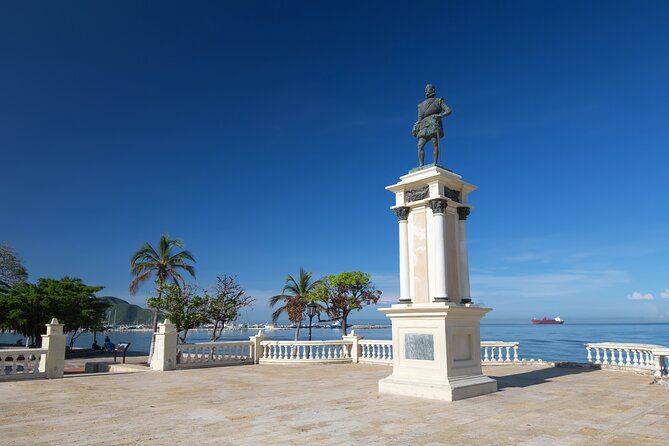
The tour begins at Parque Camellón Rodrigo de Bastidas, on Cl. 15 near the waterfront in central Santa Marta. This is a sensible starting point because it puts you close to the city’s public spaces and maritime setting before the route turns toward the streets and historic buildings.
The first listed stop is Parque de Los Novios, with about five minutes suggested for the stop and no admission fee. Do not rush through it simply because the official timing is short. Use the pause to get oriented, notice the surrounding streets, and let the opening narration establish Santa Marta as more than a beach stop.
The walk appears designed for independent pacing. You can pause the audio while you take photos, stop for a drink, or look more closely at a building. That freedom is the strongest reason to choose this format. A live guide keeps moving, but an audio tour waits for you.
Still, you need to manage the route yourself. The experience does not include a smartphone or headphones, so check your battery before setting out. Download the maps and chapters in advance, then test the audio before leaving the starting point.
More self-guided tours in Santa Marta:
- Walled Cartagena: Group Tour with Live Audio System
★ 5.0 · 1,019 reviews - Cartagena Antigua & Barrio Getsemani group with audio system
★ 5.0 · 658 reviews - Shared Tour Historic Center of Medellin with Audio System
★ 5.0 · 523 reviews
Rodrigo de Bastidas and the city’s beginning
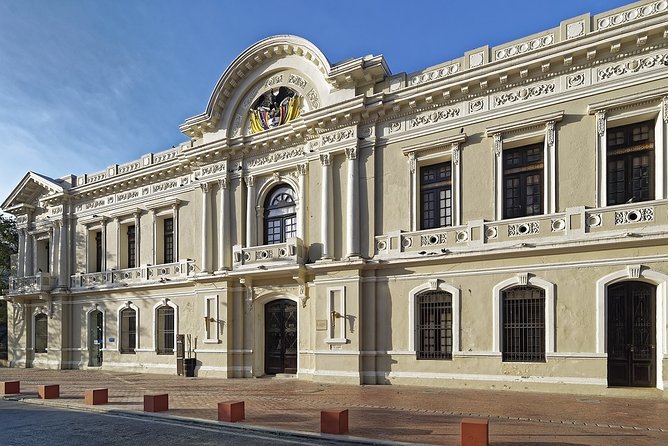
One section explains Rodrigo de Bastidas and his connection with Santa Marta. This gives the walk its historical starting point and helps place the city within the early Spanish period.
The value here is not only the name of a founder. The narration links a person to the streets you are walking through, making the history easier to follow than a list of dates. You are hearing about Bastidas while moving through the city that carries his legacy.
Because this is an audio format, you will not have a guide beside you to answer follow-up questions. If you want a detailed account of colonial administration, architecture, or archaeology, you will need another source. For a short introduction, though, the Bastidas section gives the route a clear beginning.
Bolívar’s final Santa Marta chapter
The tour then turns to Simón Bolívar, known as El Libertador, who spent his final years in Santa Marta. This is one of the route’s most important historical stops because it connects the city with the closing chapter of a major South American life.
Carlos Vives narrates the section, and that matters. His warm voice gives the material a local, human tone rather than making it feel like a dry recording from a history textbook. The narration is one of the tour’s most praised features, and I can see why it works well here. Bolívar’s final years are best understood through a sense of place, not just biography.
Keep your expectations in check. The tour does not promise extensive interior visits or admission to a Bolívar museum. The emphasis is on listening while walking through the city. If you want to spend time inside historic sites, plan separate visits and allow more than the stated tour duration.
Tayrona culture and modern Samario identity
Another chapter looks at Tayrona culture and its relationship to local Samarios, the people of Santa Marta. This is an important addition because it widens the story beyond Spanish settlement and famous military figures.
The subject helps you think about Santa Marta as a place with older cultural roots and a living local identity. It also gives the walk more balance. Without this chapter, the route could feel focused only on conquistadors, independence, churches, and pirates.
The recording is likely to be most useful if you listen with patience and avoid treating the tour as background noise. Pause at suitable points and consider how the narration connects the city’s present-day identity with its earlier cultures. Since the experience is short, this section cannot cover every detail, but it points you toward a more thoughtful way to read Santa Marta.
More things to do in Santa Marta:
- Hike for 4 days to the Lost City, Santa Marta
★ 5.0 · 3,308 reviews - Lost City – Ciudad Perdida Colombia
★ 5.0 · 1,203 reviews - Sailing to Tayrona with Luis and his team: Unique!
★ 4.5 · 448 reviews - Santa Marta: Sailboat day tour to Tayrona Park
★ 4.5 · 352 reviews
Pirate attacks and the city’s uneasy coast
Santa Marta’s coastal position made it important, but it also made it vulnerable. The tour recounts different pirate attacks that reached the city, adding a sharper and more dramatic layer to the walk.
This is the kind of story that works well on foot. You can look toward the water, follow the streets inland, and picture why a coastal settlement attracted both trade and danger. The audio gives the buildings and public spaces a narrative thread, so you are not simply walking from one point to another.
The section also helps explain why Santa Marta’s past was not peaceful or straightforward. The city’s history includes ambition, wealth, conflict, and repeated threats from the sea. The recording format lets you absorb that story without stopping a group for a long lecture.
Street names that explain more than directions
A particularly useful idea is the attention given to Santa Marta’s street names. The narration explains why different streets carry their names, with Carlos Vives guiding you as you follow the route.
This is a practical way to make the city feel less anonymous. Street names often preserve people, events, and local memories that you might otherwise miss. Once you know the reason behind a name, the map becomes more than a set of directions.
This part also shows why an audio walk can be better than a printed route. You are told what to notice at the moment you reach it. The drawback is that you need to stay near the intended location in the app. If the GPS or playback behaves badly, you may need to pause and reset rather than simply follow a guide’s pointing hand.
The plaza and cathedral in a short walking route
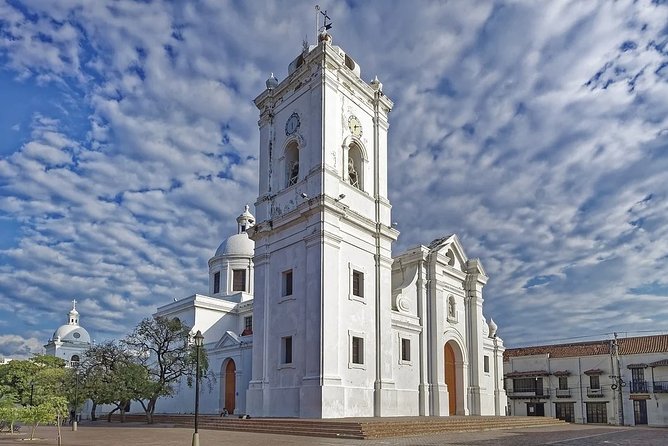
The narration reveals the story of a plaza and the cathedral, two natural anchors in central Santa Marta. These stops should appeal to you if you enjoy architecture, public life, and the way religious buildings shape a city center.
The cathedral section gives the route a strong visual focus. You can listen while examining the building and surrounding square, then pause if you want a closer look. The audio is there to provide context, not to replace the experience of standing in front of the building.
Admission is not included in the tour price, and the information provided does not promise entry to every site along the way. Treat the route as an exterior walking experience unless you confirm separate opening and ticket details for a particular attraction.
One useful suggestion is to pair the walk with nearby museums. The Gold Museum has been noted as offering free admission, making it a sensible addition if you want more historical context without adding much cost. The audio tour can give you the basic city framework, while a museum visit lets you spend longer with objects and exhibits.
Beach, park, and less traditional stops
The route also identifies a beach, a park, and a corporate office among its stops. These descriptions are less specific than the historical sections, so you should not expect every point to be a major monument.
That is not necessarily a weakness. A good city walk includes ordinary places as well as headline attractions. A beach or park can help you see how local life fits around the historic center, while a modern office building may show how the old city continues to function as a living urban area.
At the same time, the short tour cannot give every stop equal weight. Some locations may feel like orientation points rather than destinations worth a long visit. Think of these sections as connectors that keep the walk moving between the better-known historical subjects.
Finishing at Casa de Madame Augustine
The route ends at Casa de Madame Augustine on Cl. 17, near the center. The final narration tells the story behind Madame Augustine and explains what people used to sign during carnaval.
This is an appealing ending because it moves away from the most familiar figures and toward a more local story. The stop sounds like the kind of detail that can make a short tour memorable. It also leaves you with a question about social customs and carnival traditions rather than ending only with a monument.
The stated opening-hours information shows Monday through Sunday from 12:00 AM to 12:30 PM for the listed operating period. Since those hours are unusual, confirm the current details if you expect to enter or visit the house itself. The tour can still end there as a listening stop, but access to an interior should not be assumed.
Why Carlos Vives makes a difference
The narration by Carlos Vives is the tour’s clearest personal touch. His voice brings warmth to the material and expresses affection for Santa Marta, which suits a walk built around local stories and identity.
A famous narrator does not automatically make an audio tour good. Here, the match between voice and place is useful. Vives is not presented as a detached lecturer. His connection to the city gives the route a sense of character, especially when the subject shifts from historical figures to Samario culture and street names.
The audio is also described as well produced. That is encouraging, but you should separate sound quality from app reliability. The recording may be strong while playback still causes trouble. Downloading everything in advance and using one device can reduce the chance of losing your place.
Timing, heat, and how to plan the walk
The estimated duration ranges from 40 minutes to 1 hour 10 minutes. The difference depends on how often you pause, how quickly you walk, and how much time you give each stop.
I would plan for the longer end of that range rather than treating 40 minutes as a promise. Add extra time if you want photos, a museum visit, a drink, or a look inside any attraction. The walk is not long, but Santa Marta’s heat can make even a short route tiring.
Choose a cooler part of the day when possible. A morning outing is especially practical if you want to check the listed Casa de Madame Augustine hours, though you should confirm them first. Comfortable footwear, water, sun protection, and a charged phone are basic but important preparations.
The route is near public transportation, and most people can participate. Service animals are allowed. Since this is a private activity, only your own group takes part, giving you control over pauses and playback rather than requiring you to match a large group.
Is $7.49 a fair price?
At $7.49 per person, this is a low-cost introduction to Santa Marta. The price includes all audio chapters, offline maps, and tips for exploring the city, but not food, a smartphone, headsets, or admission tickets.
The value depends on how you use it. If you want a short, self-paced orientation before exploring on your own, the price is easy to justify. You receive a planned route and local storytelling without paying for a private live guide.
The value is weaker if you expect detailed personal guidance, extensive historical analysis, or guaranteed smooth technology. You may need to troubleshoot the app yourself, and any museum or historic-site admission costs extra. I would treat it as a useful first layer, then choose one or two museums or buildings for a deeper visit.
Who should choose this audio walk?
I would recommend it to independent visitors who dislike rigid schedules and want to control the pace. It is also a good fit for couples, families, or small private groups who want a shared route without joining strangers.
It suits first-time visitors especially well because the subjects cover the city’s main historical signposts. You get Bastidas, Bolívar, Tayrona culture, pirates, street names, the cathedral, and local stories in one compact outing.
You may want another option if you prefer a guide who can answer questions immediately or if app problems frustrate you. Two people using separate devices may fall out of sync, so use one phone and share the audio when possible. That simple adjustment could make the difference between a smooth walk and a stop-start one.
Should you book The Pearl of America?
Book it if you want an inexpensive, flexible introduction to central Santa Marta and like learning through stories while walking. Carlos Vives’ narration, the offline maps, and the mix of famous history with local details give the experience more character than a basic map-based stroll.
Skip it if your priority is entering several attractions, hearing a long scholarly lecture, or having a guide manage every turn. For most independent visitors, though, $7.49 is a reasonable price for a compact city orientation. Start with one device, download the material first, go during cooler hours, and leave time afterward for a museum or a closer look at the places that catch your interest.
FAQ
Where does the tour begin?
It begins at Parque Camellón Rodrigo de Bastidas, Cl. 15 #1, Comuna 2, Santa Marta, Magdalena, Colombia.
Where does the tour end?
It ends at Casa de Madame Augustine, Cl. 17 ##4, Comuna 2, Santa Marta, Magdalena, Colombia.
How long does the audio tour take?
The estimated duration is about 40 minutes to 1 hour 10 minutes.
How much does the experience cost?
The listed price is $7.49 per person.
Who narrates the audio tour?
Carlos Vives narrates the tour.
What is included?
All audio chapters, offline maps, and tips for exploring Santa Marta are included.
Do I need to bring my own phone?
Yes. A smartphone is not included, and you also need to bring your own headsets.
Are admission tickets included?
No. Admission tickets are not included in the tour price.
Is this a group tour?
No. It is a private activity, so only your own group participates.
Can I cancel for a full refund?
Yes, if you cancel at least 24 hours before the experience start time. Cancellations made within 24 hours are not refunded, and changes within that period are not accepted.
Just added in Santa Marta
- Waterfalls, Animal Reserve and Chocolate: Mango Passage★ 5.0 · 2 reviews
- Palomino: Palomino River Tubing and Hiking Tour★ 4.6 · 40 reviews
- Tubing Across Palomino River Including a Hiking Tour★ 5.0 · 14 reviews
- Roundtrip Private Transfer from Santa Marta Airport (SMR)★ 5.0 · 2 reviews
- Hiking To Minca★ 5.0 · 8 reviews
- Tunkeka Indigenous People Cultural Tour★ 5.0 · 2 reviews
- Santa Marta to or from Cartagena Private Transfer★ 5.0 · 5 reviews
- Santa Marta to or from Tayrona Park Private Transfer★ 5.0 · 7 reviews
Audio Tours, compared.
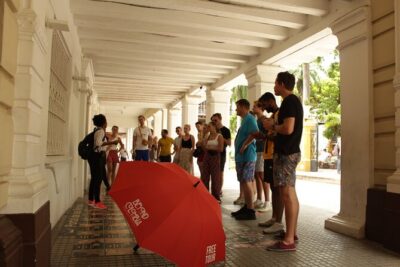
Walled Cartagena: Group Tour with Live Audio System
Read our review →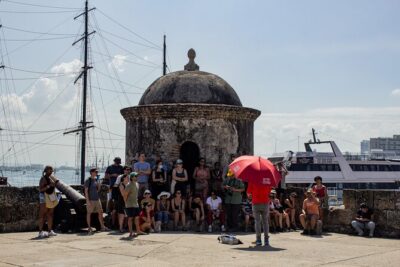
Cartagena Antigua & Barrio Getsemani group with audio system
Read our review →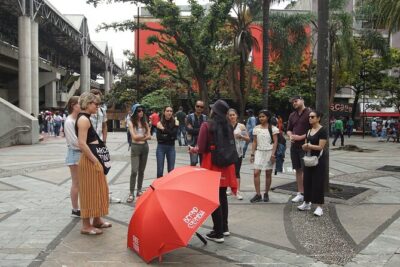
Shared Tour Historic Center of Medellin with Audio System
Read our review →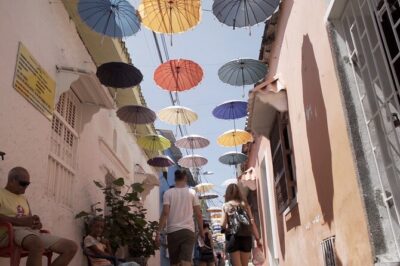
Getsemani neighborhood in group: art and culture with Audio System
Read our review →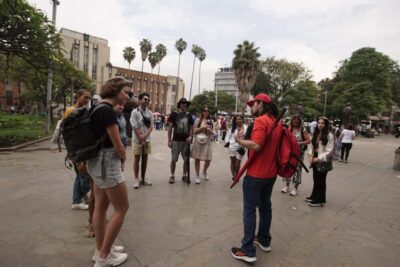
Shared Medellín Downtown Tour with Wireless Audio
Read our review →
Chiva Private Cultural Tour with Audio Guide in Buga
Read our review →
Shared Cartagena Old City Tour with Wireless Audio System
Read our review →
Browse the lists this tour appears in