
REVIEW · AUDIO TOURS
Walled Cartagena: Group Tour with Live Audio System
Cartagena reveals itself one plaza at a time. This $13 walking tour links the Walled City’s main squares, fortifications, churches, streets, and museums in about two hours and 40 minutes. A Spanish-speaking certified guide leads the group, while a live audio system helps you hear the commentary.
I like the clear route through the Santo Domingo neighborhood and Historic Center, and I like the practical local tips, including restaurant, coffee, shopping, and souvenir suggestions. The tour also gives you a useful first look at Cartagena’s past, from colonial trade to slavery and military defense. The main caution is the heat, long periods of standing, and occasional confusion over the meeting point or tour language.
In This Review
- Key points before you book
- A useful first walk through Cartagena’s old center
- Starting at Camellón de los Mártires
- The Clock Tower and Plaza de los Coches
- Customs Square and the colonial center
- St. Peter Claver Square and a harder chapter
- San Ignacio and the city walls
- The Naval Museum and Ladies Street
- Colonial architecture along the old streets
- The Palace of the Inquisition
- Santo Domingo Square and the final bastion
- What the guides and audio system add
- Price, pace, and practical value
- Heat, directions, and the main risks
- Who should book this Cartagena walk?
- Should you book it?
- FAQ
- How long does the Walled Cartagena tour last?
- How much does the experience cost?
- Is the tour private?
- What language is the tour conducted in?
- Is an audio system included?
- Are meals or transportation included?
- Can I cancel for a refund?
Key points before you book
- Twelve stops in one afternoon: You move from Camellón de los Mártires to the Santo Domingo bastion, covering the city’s most important central sights.
- A low price with strong value: At $13 per person, this is an inexpensive way to get historical context before exploring on your own.
- Live audio equipment included: You may bring your hearing aids if you prefer, and the system is meant to make the guide easier to follow.
- Spanish is the stated tour language: The guide is certified and the experience is described as Spanish-language, so confirm the language carefully if you need English.
- Heat is part of the deal: Cartagena’s sun and humidity make shade, water, light clothing, and sensible shoes essential.
- Meeting instructions deserve attention: One booking experience involved difficult directions, a misplaced start, and a missed guide, so check the exact location and identification details before setting out.
A useful first walk through Cartagena’s old center
This is the kind of tour I would choose early in a Cartagena visit. The old center can feel like a delightful maze, with colorful façades, church towers, defensive walls, busy squares, and streets that seem to change character every few steps. A guide helps connect those pieces.
The route is not built around one grand museum visit. Instead, it gives you a broad introduction to the city. You hear about political power at Customs Square, faith and slavery at St. Peter Claver Square, naval defense at the bastions, and daily life along Ladies Street. That range is the tour’s real strength.
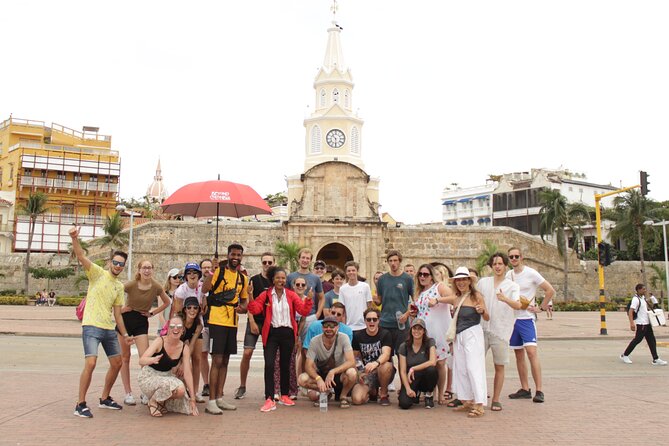
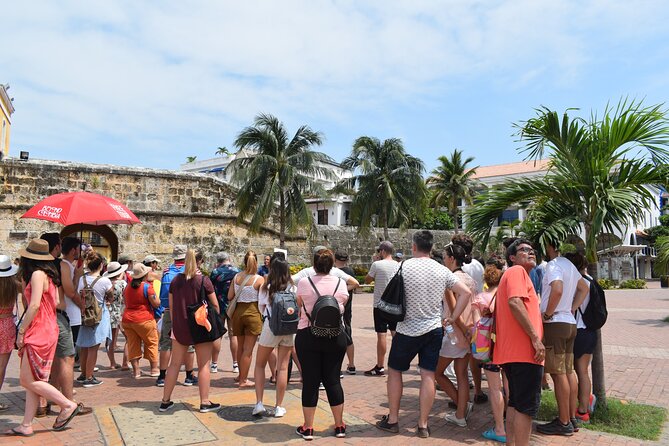
You should also understand the format. This is a shared walking tour, not a private guide hired just for you. The stated maximum is 10 people, although one account described a much larger group. That difference matters. A small group makes it easier to hear, ask questions, and stay close to the guide. If the group is bigger than expected, the audio equipment becomes especially important.
The experience includes a free walking-tour map, local shop recommendations, and possible benefits or discounts with recommended partners. Those extras can be handy, but I would treat them as bonuses rather than reasons to book. The main product is the guided walk and its historical explanation.
More self-guided tours in Cartagena:
- Cartagena Antigua & Barrio Getsemani group with audio system
★ 5.0 · 658 reviews - Getsemani neighborhood in group: art and culture with Audio System
★ 5.0 · 447 reviews - Shared Cartagena Old City Tour with Wireless Audio System
★ 4.4 · 28 reviews
Starting at Camellón de los Mártires
The first stop, Camellón de los Mártires, gives the tour a serious opening. This public space carries political and wartime meaning, and the guide uses it to explain events tied to Cartagena’s past. You also get a broad city view, which helps you orient yourself before entering the tighter streets of the old center.
This is a good place to pay attention to the guide’s storytelling style. The tour aims to provide accurate, objective information, rather than only pointing out pretty buildings. That should appeal to you if you want to understand why Cartagena became so important, not just photograph its balconies.
The stop is free, as are most places along the route. You are not paying for a long list of entrance tickets. You are paying for access to a structured explanation of what you are seeing.
The Clock Tower and Plaza de los Coches
The Torre del Reloj, or Clock Tower, is Cartagena’s best-known landmark and the natural gateway to the Walled City. The planned stop lasts about 13 minutes and includes a climb to the top for a panoramic view, along with an explanation of the tower’s role in the city.
That viewpoint is useful because Cartagena’s old center can be hard to read from street level. From above, you can better understand the compact streets, surrounding walls, and the way the historic center sits within the modern city. If stairs or climbing are difficult for you, this part may require extra care.
Next comes Plaza de los Coches. It is a place to pause and watch the city’s public life while the guide points out the important buildings around the square. The value here is not a single sight. It is learning how a central plaza functioned as part of Cartagena’s commercial and social life.
The supplied route gives each stop roughly 13 minutes. That keeps the walk moving, but it also means the guide cannot spend a long time inside each subject. You will receive a brisk overview rather than a specialist lecture on every building.
Customs Square and the colonial center
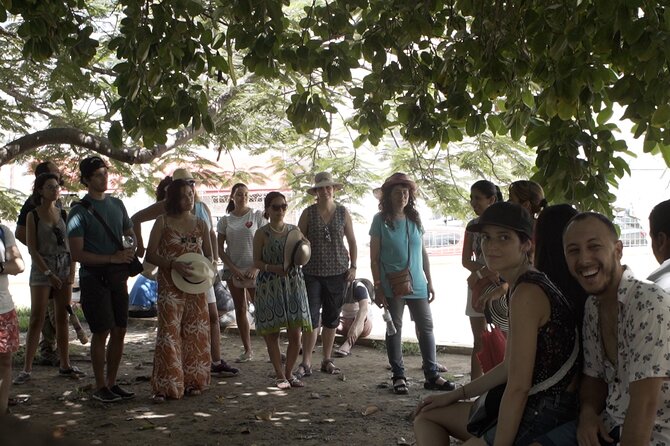
Plaza de la Aduana, or Customs Square, is presented as the administrative heart of the city. Here, the focus turns to colonial architecture and the institutions that controlled trade and government.
This stop helps explain why Cartagena’s buildings are not simply decorative. Their scale, placement, and formal façades reflect the city’s role as a major port and administrative center. You can look at the architecture with more purpose after hearing that context.
An admission ticket is included for this stop, while the other listed stops are free. The tour does not promise long indoor visits at every location, so you should think of the route as an outdoor history walk with selected access rather than a museum-heavy day.
More things to do in Cartagena:
- Cartagena Island Hopping: 5-Stop Rosario Islands Tour with Lunch
★ 4.5 · 4,903 reviews - Cartagena: Historic Center and Getsemaní Shared Walking Tour
★ 4.9 · 2,716 reviews - Cartagena: Rosario Islands Catamaran with Lunch and Snorkel
★ 4.5 · 2,479 reviews - Full-Day Rosario Islands Including Barú, Bocachica & Playa Blanca
★ 4.0 · 1,729 reviews
St. Peter Claver Square and a harder chapter
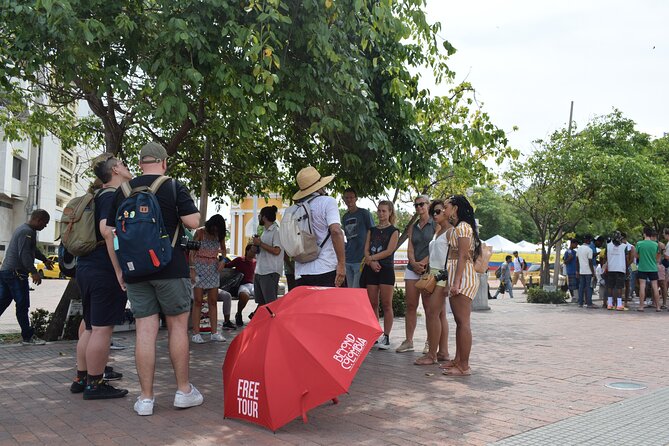
Plaza de San Pedro Claver shifts the tone. The guide discusses slavery in Cartagena and the struggle for equality, making this one of the most important stops for anyone who wants more than a postcard view of the city.
I appreciate that the route includes this subject. Cartagena’s colonial beauty can easily make the past seem polished and harmless. A useful tour should also explain who paid the price for the city’s wealth and power. This stop gives the walk moral and social weight.
The square is described as a place of reflection and respect. You may find the conversation more serious than the earlier stops, but that is appropriate. It also gives you a better frame for understanding the city’s religious and civic spaces.
San Ignacio and the city walls
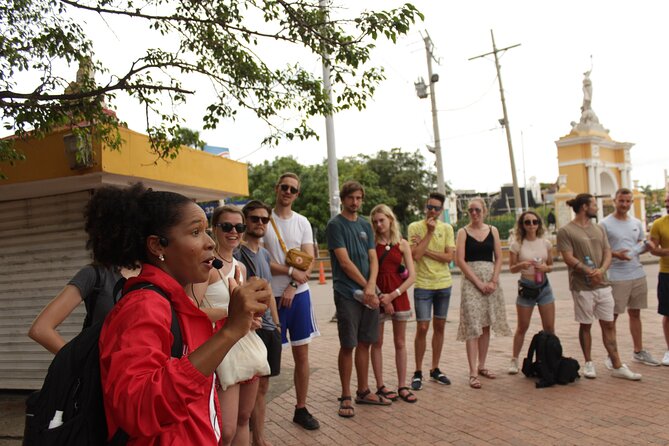
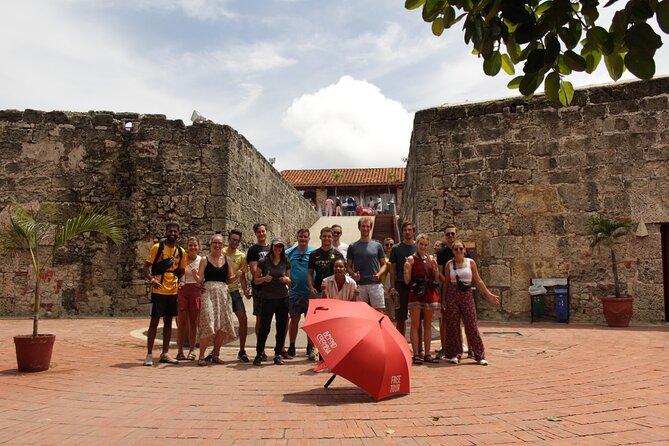
At Baluarte de San Ignacio, the tour climbs part of the fortifications. The guide explains how the bastion helped defend Cartagena, while you get views from the walls.
These military structures are among the city’s most memorable features, but they are even more interesting when you know what they were meant to protect. The walls were not built merely as scenic walkways. They were part of a defensive system tied to Cartagena’s position on the Caribbean coast.
The route later reaches Baluarte de Santo Domingo, where the same idea returns from another angle. You climb again, take in the views, and hear about the stronghold’s defensive role. Seeing two bastions lets you compare parts of the fortifications rather than treating the walls as one undifferentiated attraction.
There is a practical cost. You will spend time standing and walking in direct sun, with some climbing along the way. One account praised the guide Kayla for finding shade, but you should not depend entirely on shaded stops. Bring water, protect your head, and use sunscreen.
The Naval Museum and Ladies Street
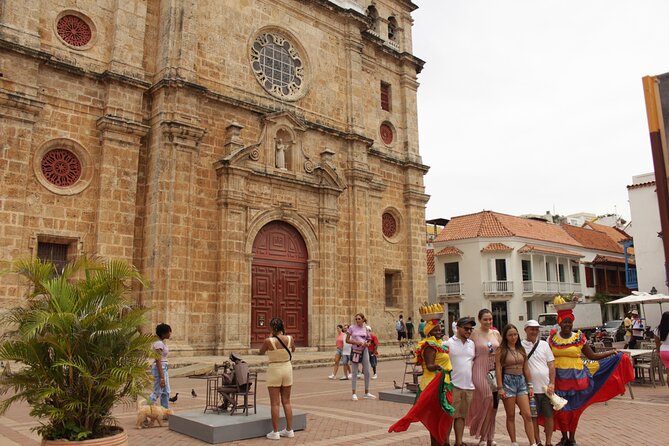
The Museo Naval del Caribe adds an indoor, object-based part to the walk. The guide introduces Cartagena’s naval past and points out maritime artifacts and other objects in the collection.
This stop can help break up the outdoor route, though the available information does not promise a full museum tour or a particular length of time inside. If naval history is a major interest, you may want to plan a separate visit so you can explore at your own pace.
The route then turns onto Calle de las Damas, or Ladies Street, described as one of the city’s oldest streets. Here, the guide focuses on former daily life and the buildings lining the road.
This is where the tour can become more personal. Forts and official squares explain government and war. A street can show how people moved, lived, worked, and built homes. You will also see some of the city’s most attractive architecture, but the guide’s comments are meant to add human detail behind the façades.
Colonial architecture along the old streets
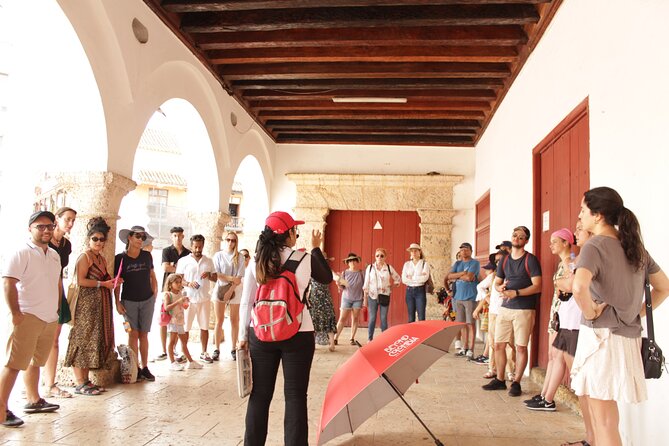
The next street stop provides more examples of Cartagena’s colonial design and explains the different architectural styles found in the city. This may sound similar to the previous stop, but the repetition can be useful. After several examples, you begin to notice patterns in balconies, façades, proportions, and street layouts.
The route details give the location as Cl. 32 #421, while Calle de las Damas is listed at Calle 32 # 3-55. Because the meeting and stop information uses precise street numbers, keep the booking details available on your phone. Cartagena’s old streets can be confusing, and a small error in an address can turn into a hot walk.
The architecture portion suits you if you like buildings but do not want a formal design lecture. The guide keeps the explanation connected to the city’s past and daily life. If you prefer constant movement over standing for stories, this may feel slow.
The Palace of the Inquisition
The Palacio de la Inquisición brings the tour to one of Cartagena’s most gripping historic sites. The guide discusses the Inquisition in the city, and you may visit rooms and dungeons.
This is one of the route’s strongest stops because the building combines an imposing setting with a difficult subject. The rooms and underground spaces give the history a physical presence. You are not only hearing about institutions and punishment in the abstract. You are seeing the spaces connected with that past.
The information provided does not specify the entrance fee separately, so do not assume every interior area is included beyond the tour’s stated admissions. The guide can provide context, but your time will still be limited by the overall schedule.
Santo Domingo Square and the final bastion
Plaza Santo Domingo is described as the center of Cartagena’s social life. The guide points out the sculpture known as The Half-Blood and explains the plaza’s history.
This is a lighter, more public-facing stop after the Inquisition. You can look at the square as a place where history, dining, street activity, and everyday city life meet. The tour’s broad approach works well here because it connects the historic past with the way the center is used now.
The final stop, Baluarte de Santo Domingo, returns to the defensive walls. The climb and views provide a fitting end to a route that has moved through government, religion, architecture, social life, and military history.
By this point, you will have spent close to three hours on foot. The tour is not difficult because of distance alone. The bigger challenge is repeated standing in heat while listening to long explanations. One strong account praised the amount of historical information but noted that the stories could feel lengthy. If you need frequent sitting breaks, plan accordingly.
What the guides and audio system add
Several guides are praised for energy, clear explanations, and useful recommendations. Fernando is described as engaging and helpful with restaurant suggestions. Pedro is praised for making the history fun, while Eddy is noted for connecting the famous sights with the story of Cartagena’s people. Elis is credited with a friendly manner and useful local restaurant advice. Kayla is specifically remembered for seeking shade during the walk.
Those details suggest that the guide can shape the experience a great deal. A good guide turns a sequence of plazas into a connected story. A less effective session may feel like long periods of standing with too little explanation, or explanations that wander away from the main subject.
The live audio system is a sensible feature. It should help you follow the guide in a shared group, especially near busy streets. You may bring your hearing aids if you prefer. Still, an audio device cannot fix every problem. If the guide speaks quickly or has an accent that takes time to understand, you may need to listen closely and stay near the group.
The stated language is Spanish. One booking account described a mix-up involving Spanish-only and English-language groups, with the person receiving incorrect meeting information. If you need English, confirm that point before you leave your hotel and check that you are joining the correct group.
Price, pace, and practical value
At $13, the price is low for nearly three hours of guided sightseeing. You get a certified Spanish-speaking guide, audio equipment, the route through the main historic sites, a map, and local recommendations. For a first orientation, that is good value.
The price needs one qualification. This experience is described as a free walking tour, with the booking fee functioning essentially as a tip. That means you should not expect the same level of personal attention or perfectly controlled timing as you would receive on a private tour. The guide is serving a shared group, and the quality may depend on the person leading your departure.
The cancellation terms are simple: you can receive a full refund if you cancel at least 24 hours before the start time. Cancellations or changes made within 24 hours are not refunded or accepted. Confirmation arrives when you book.
Most people can take part, service animals are allowed, and the meeting area is near public transportation. Private transport, lunch, and tips are not included. Plan to buy food separately, and budget a tip if the guide gives you a useful, well-run walk.
Heat, directions, and the main risks
Cartagena’s weather is the biggest physical issue. The route includes outdoor plazas, streets, walls, and climbs. You need water, sun protection, comfortable walking shoes, and clothing suited to heat and humidity.
The second issue is meeting-point accuracy. One person reported that the directions were hard even for a seasoned taxi driver, then waited in the heat without seeing the guide. Another account described walking for about 25 minutes before the tour properly began, then discovering that the start point differed from the original instructions.
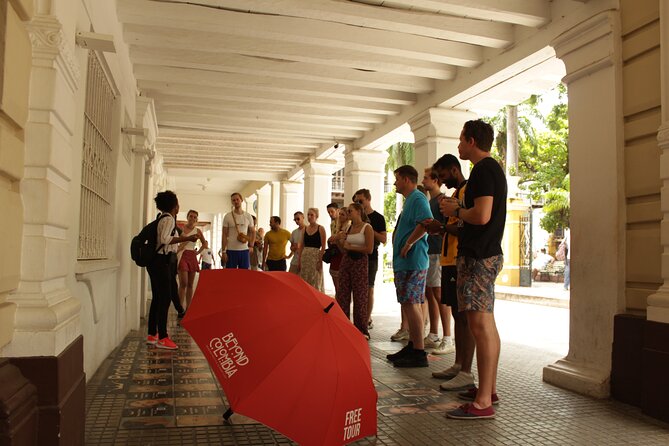
That does not prove every departure will have a problem, but it is enough reason to prepare. Read the exact meeting instructions carefully, allow extra time, and confirm the guide’s identifying feature, including the reported red umbrella. If something seems wrong, contact the provider promptly rather than wandering through the old center in the sun.
The third issue is group management. The advertised limit is 10, but one account described a much larger gathering. Ask at the start if you are in the correct language group and keep the guide’s audio signal in range.
Who should book this Cartagena walk?
I would recommend it to a first-time visitor who wants a quick historical framework before exploring independently. It is also a good fit for anyone who values local restaurant suggestions and prefers a low-cost group experience to a private tour.
You will get the most from it if you enjoy listening to stories about buildings, political events, religion, slavery, naval history, and defense. You should be ready for a brisk route with many short stops rather than long visits at one attraction.
I would be more cautious if you dislike heat, standing, or extended explanations. It may also be a poor choice if you need guaranteed English-language commentary unless that is confirmed before booking. Finally, if you want a quiet, intimate experience, the shared format may not suit you.
Should you book it?
Book this tour if you want broad coverage at a very low price, and if you can handle Cartagena’s heat and a walking-heavy schedule. The best guides, including Fernando, Pedro, Eddy, Elis, and Kayla, appear to make the history lively and practical.
Before booking, confirm the language, meeting point, and group details. Arrive early, carry water, and keep your expectations realistic: this is a budget group walk, not a private deep-history seminar. With those points in mind, it can be a useful and affordable introduction to Cartagena’s Walled City.
FAQ
How long does the Walled Cartagena tour last?
The tour lasts approximately 2 hours and 40 minutes.
How much does the experience cost?
The listed price is $13 per person.
Is the tour private?
No. It is a shared group tour, not an exclusive private experience. The stated maximum is 10 participants.
What language is the tour conducted in?
The included certified guide is Spanish-speaking. One booking experience involved confusion between Spanish and English groups, so confirm the language before attending if English is important to you.
Is an audio system included?
Yes. A live audio system is included, and you may bring your hearing aids if you prefer.
Are meals or transportation included?
No. Lunch, tips, and private transportation are not included. Local recommendations for lunch, coffee, souvenirs, and shops are included.
Can I cancel for a refund?
Yes. You can cancel at least 24 hours before the start time for a full refund. Cancellations or changes made less than 24 hours before the start time are not accepted or refunded.
Just added in Cartagena
- Self-Guided Audio Tour: Pirate Tales in Cartagena★ 3.0 · 2 reviews
- Private History Photography Tour★ 5.0 · 17 reviews
- Paue Island Tour in the Rosary Islands★ 5.0 · 1 review
- Totumo Volcano★ 3.5 · 15 reviews
- Palmarito Beach★ 3.5 · 4 reviews
- Party without limits! Cartagena; VIP Party.★ 4.5 · 32 reviews
- Paragliding Experience in Cartagena★ 5.0 · 8 reviews
- Tour cultural to san Basilio de Palenque from cartagena★ 5.0 · 45 reviews
Audio Tours, compared.
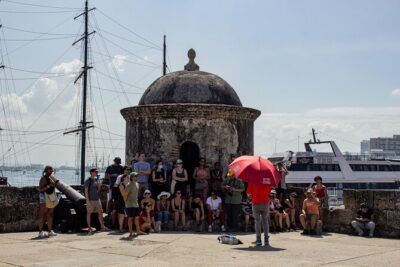
Cartagena Antigua & Barrio Getsemani group with audio system
Read our review →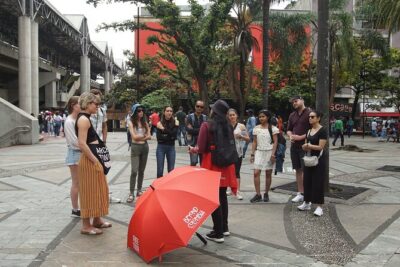
Shared Tour Historic Center of Medellin with Audio System
Read our review →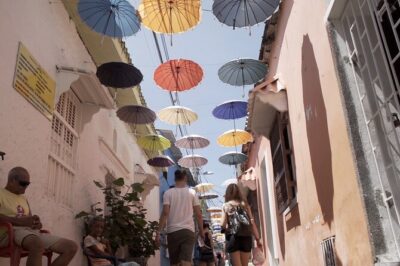
Getsemani neighborhood in group: art and culture with Audio System
Read our review →
Shared Medellín Downtown Tour with Wireless Audio
Read our review →
Chiva Private Cultural Tour with Audio Guide in Buga
Read our review →
Shared Cartagena Old City Tour with Wireless Audio System
Read our review →

Self-Guided Audio Tour – El Dorado Expedition, Part II
Read our review →Browse the lists this tour appears in