
REVIEW · AUDIO TOURS
Shared Medellín Downtown Tour with Wireless Audio
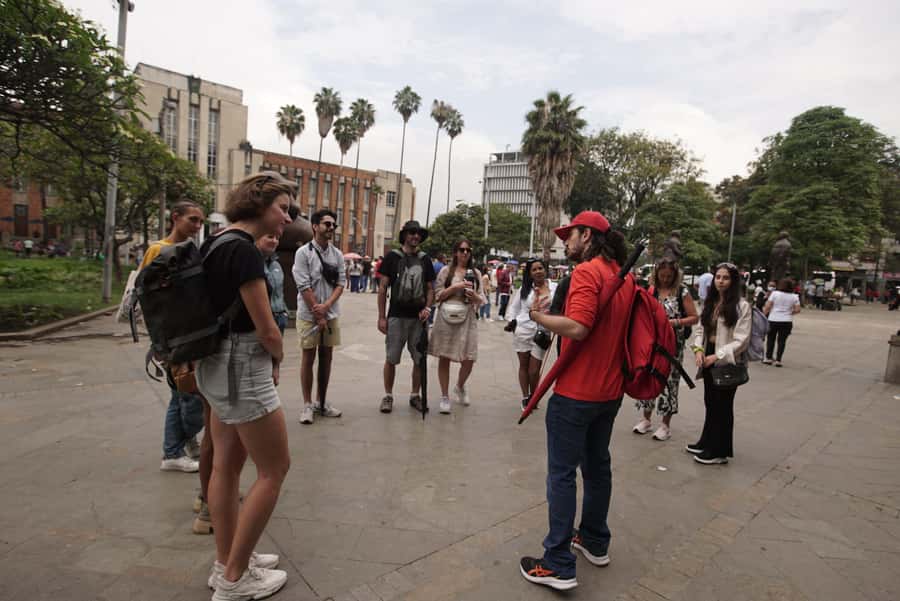
Medellín tells its story on foot. This three-hour downtown walk connects Botero Plaza, Junín Street, La Alpujarra, the railroad, and the Park of Lights while explaining how the city changed after the violence of the 1980s and 1990s. I like the honest focus on both progress and hardship, and I like the wireless audio system, which lets you hear the guide clearly while taking photos. The main catch is the pace: about 8 kilometers of walking is a lot, especially for anyone with mobility limits.
I also appreciate the local point of view. Guides such as Miguel, Santiago, Carolina, Deisy, Daniel, and Sebastian are praised for making the past understandable without reducing Medellín to drug trafficking. Still, the city center can feel uncomfortable in places, with persistent begging and open drug use reported around some streets. That is not a feature of the tour, but you should know the setting before you book.
In This Review
- Key points to know before you go
- Starting beneath Botero’s sculptures
- Crossing Junín Street and the city’s passages
- Understanding Paisa culture beyond the stereotype
- Facing Medellín’s 1980s and 1990s
- La Alpujarra and the railroad story
- What the wireless audio changes
- The pace, group feel, and physical demands
- Is $13 a fair price?
- Practical advice for a better morning or afternoon
- Should you book the downtown walk?
- FAQ
- Where does the Medellín Downtown Tour meet?
- How long does the tour last?
- How far do you walk?
- Is transportation included during the tour?
- What languages are available?
- What does the wireless audio system do?
- Can children use the audio equipment?
- What should I bring?
- Can I cancel the booking?
Key points to know before you go
- Botero Plaza is the starting classroom: Meet at the Museo de Antioquia under the red Beyond Colombia umbrellas, then begin with Fernando Botero’s famous public sculptures and their place in Medellín’s identity.
- The difficult decades are discussed directly: The tour covers the 1980s and 1990s without pretending the city’s violent past did not happen, while also explaining the social work that followed.
- La Alpujarra explains Medellín’s growth: The railroad and government district show how industry, transport, and public institutions helped shape the city.
- Wireless audio helps on noisy streets: You receive an audio device so you can hear the guide while looking around or taking pictures, though the equipment cannot be used by children under 15 or in rain.
- Expect a serious walk: The route covers about 8 kilometers, with stops for explanations and rest, and lasts between 150 minutes and three hours.
- The price is unusually good for the amount of context: At $13 per person, you get a local guide, historic sights, practical recommendations, and the audio system without paying separate entrance fees.
Starting beneath Botero’s sculptures
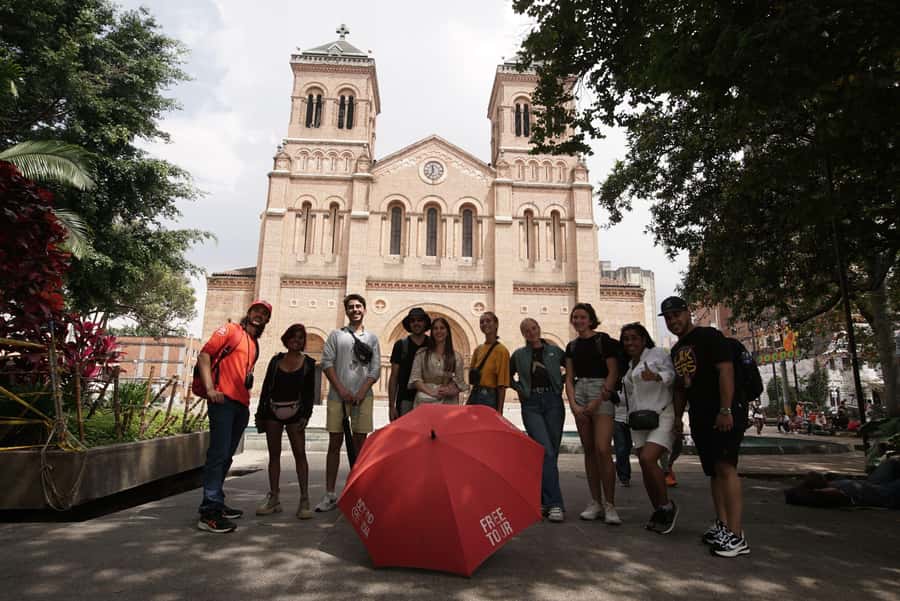
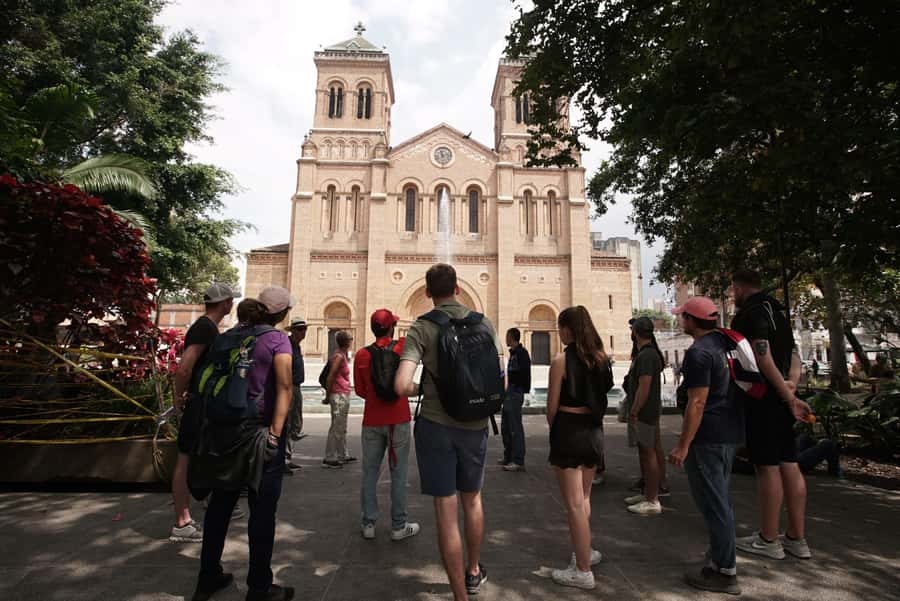
Your meeting point is easy to find: directly in front of the Museo de Antioquia in Botero Plaza, beneath Beyond Colombia’s red umbrellas. Arrive ready to walk, because this is not a drive-by city tour with long stretches on a bus.
Botero Plaza gives the guide a useful opening. Fernando Botero’s large bronze figures are more than photo props. They are a reference point for Medellín, and the art offers a relaxed way into a city story that soon turns more serious. You can look at the sculptures, take pictures, and hear how art fits into the city’s public life.
The tour also brings attention to murals and other public art along the route. One useful feature is the guide’s ability to connect what you see with larger changes in Medellín. Instead of treating each statue, building, or passage as an isolated stop, the walk uses the city center to explain how Paisa culture and local industry helped shape the region.
That local frame matters. Medellín is often presented through a narrow story of cartels and danger. This tour gives that period its proper place, but it also spends time on the people, work, art, and public investment that helped the city move forward.
More self-guided tours in Medellin:
- Shared Tour Historic Center of Medellin with Audio System
★ 5.0 · 523 reviews - Walled Cartagena: Group Tour with Live Audio System
★ 5.0 · 1,019 reviews - Cartagena Antigua & Barrio Getsemani group with audio system
★ 5.0 · 658 reviews
Crossing Junín Street and the city’s passages
From the plaza, the walk moves through downtown passages and across the well-known Junín Street. This is where the audio receivers become useful. City-center streets can be noisy, and you do not need to crowd around the guide to catch every sentence.
I like the freedom this gives you. You can stop briefly to photograph a building or mural without losing the entire explanation. The system is not waterproof, though, so the guide must collect the devices if rain begins. Bring an umbrella or rain cape, and do not count on continuing with the equipment during a shower.
Junín Street helps show the everyday side of central Medellín. The point is not simply to check off a famous avenue. You are walking through the part of the city where commercial life, public spaces, historic buildings, and social problems sit close together.
The route includes resting stops, but you should still treat it as a full walking commitment. Eight kilometers over roughly three hours means a steady pace, with time to listen and take pictures. Wear shoes you would trust for a long city walk, carry water, and dress for changing weather in Medellín’s city of eternal spring.
Understanding Paisa culture beyond the stereotype
A major strength of the tour is its attention to Paisa culture. The Paisas are the people of Antioquia and the surrounding region, and their work ethic, business culture, family life, and regional identity help explain why Medellín became so important in Colombia.
The experience connects local industry with the city’s national role. This is a useful correction to the idea that Medellín is defined only by its recent troubles. The guide explains the economic and cultural pillars that made the city important before turning to the violence that damaged its reputation.
This section depends heavily on the individual guide. Miguel is repeatedly described as passionate about Medellín and able to explain both history and current affairs. Santiago is praised for an easygoing style, strong preparation, and useful tips. Carolina has made a point of checking that people understand when their Spanish is limited. Daniel is noted for answering questions and explaining local sites clearly.
You cannot select a particular guide with certainty, but these comments give you a sense of the standard to expect. The strongest guides appear to do more than repeat a fixed script. They answer questions, adjust the explanation to the group, and add personal observations about their city.
Facing Medellín’s 1980s and 1990s
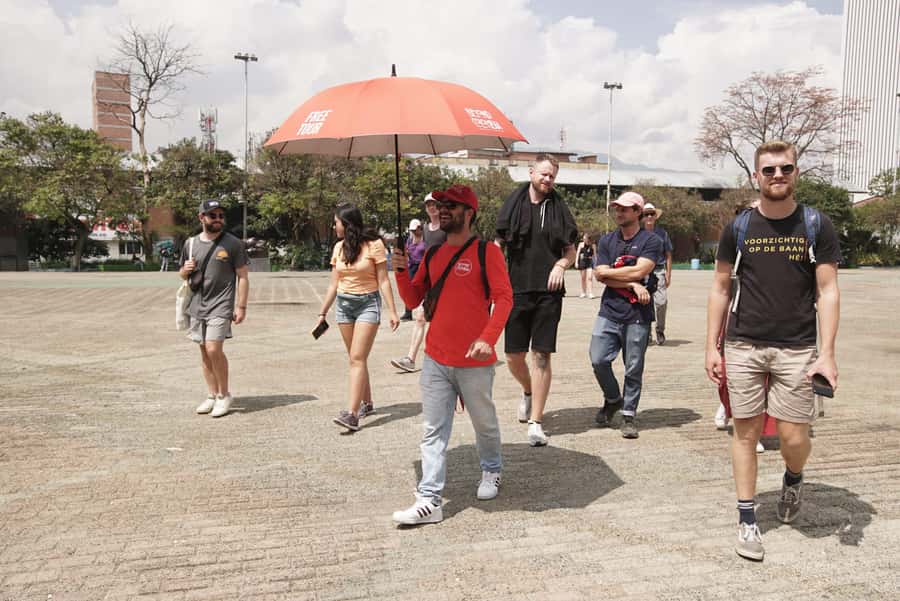
The tour does not avoid Medellín’s darkest chapter. You hear about the violence connected to drug trafficking in the 1980s and 1990s, along with the fear and disruption it caused.
This is important for first-time visitors. You will likely encounter plenty of simplified stories about Medellín, especially those focused on criminals and television dramas. A useful city tour should give you more than a sensational crime narrative. Here, the difficult period is placed within a larger account of social investment, community effort, and institutional change.
The wording promises objectivity and no taking sides. In practice, one detailed account found the tour informative but not entirely free of bias. That is worth keeping in mind. A guide is interpreting the city, not delivering a court transcript. You should listen carefully, ask questions, and remember that a positive account of Medellín’s transformation can still reflect local pride.
I see that as a minor limitation rather than a dealbreaker. The better guides appear willing to discuss ongoing problems while explaining why the city’s progress matters. Daniel, for example, is praised for being positive about the changes underway while remaining open about the challenges. Sebastian is also credited with presenting the past without making the whole tour about narcos.
More things to do in Medellin:
- Medellin: Comuna 13 Graffiti Tour, Cable Car & Street Food
★ 4.8 · 9,046 reviews - Comuna 13 Graffiti Tour with Street Food
★ 5.0 · 7,503 reviews - Museo Pablo Escobar
★ 5.0 · 7,242 reviews - Guatapé Tour: Piedra del Peñol with Boat Tour, Breakfast, Lunch
★ 5.0 · 7,035 reviews
La Alpujarra and the railroad story
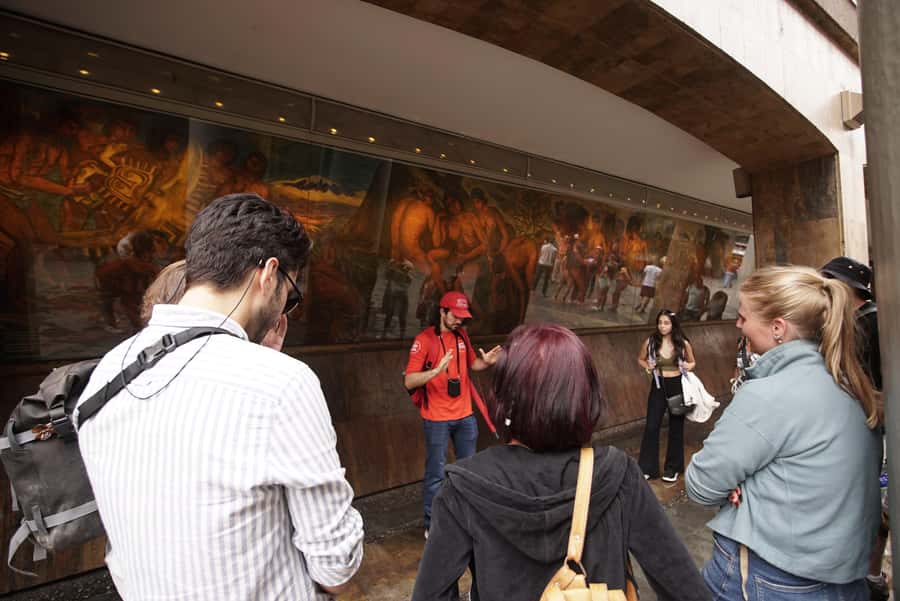
The railroad and La Alpujarra form the tour’s clearest lesson in urban development. These are not random photo stops. They help explain how Medellín grew through transport, trade, industry, and government.
La Alpujarra is connected with the city’s public institutions, while the railroad points to the infrastructure that supported economic expansion. The guide uses these places to show how Medellín became more connected and more important within Colombia.
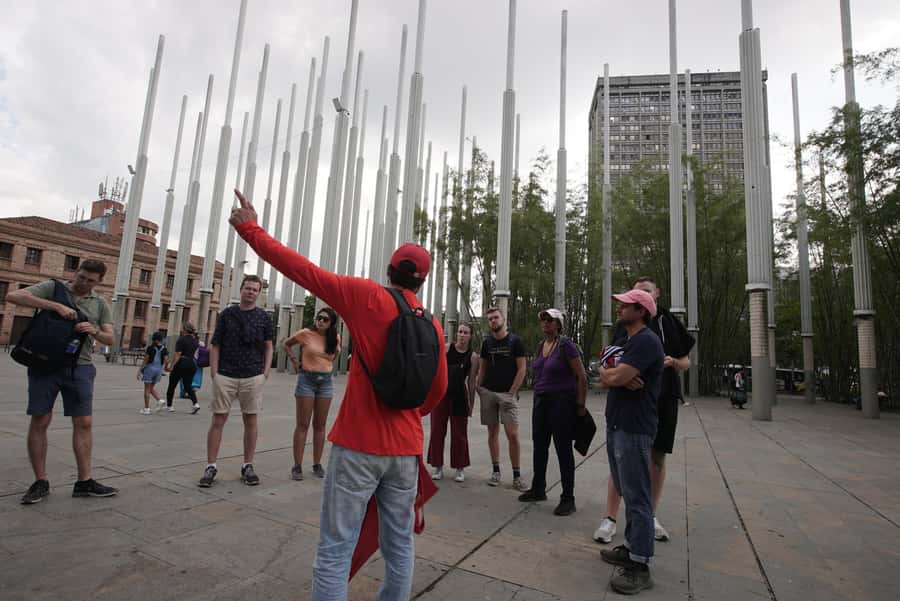
The Park of Lights continues that story. It is described as a tribute to the father of Medellín’s railroads, giving the park a link to the person and system that helped drive the city’s development. The stop works best when you pay attention to the connection between public space and civic memory.
You may find the route more rewarding if you have already seen Medellín’s popular viewpoints or neighborhoods. This experience concentrates on the historic center, where the city’s growth is written into streets, plazas, civic buildings, and transport landmarks. It gives you the background needed to make sense of other parts of the city later.
What the wireless audio changes
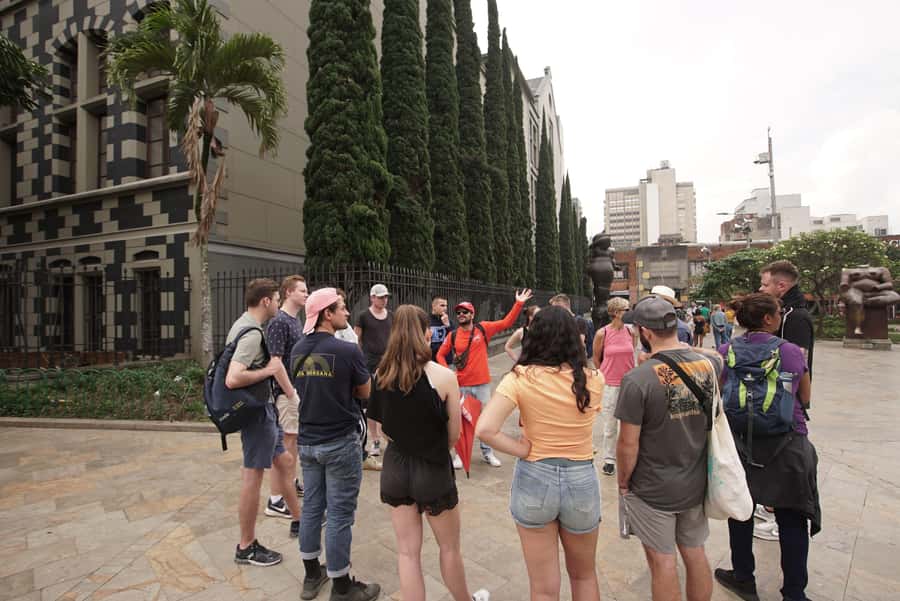
The audio system is a practical feature, not a gimmick. Each person can hear the guide more clearly on crowded streets, and you have some freedom to look around instead of walking shoulder to shoulder with the group.
That is especially useful during explanations of murals, architecture, and public spaces. You can frame a photograph while still following the story. For a walking tour, that small bit of independence makes the experience less tiring.
There are two clear limits. The system is not suitable for children under 15, and it is not waterproof. If rain arrives, the devices must be collected. The operator recommends bringing an umbrella or rainproof coat, and I would take that advice seriously.
The tour is offered in English or Spanish. Several English-speaking guides have been praised for clear explanations, including Alex, Louise’s guide, who handled questions and gave useful advice, and Carolina, who checked in with visitors whose Spanish was limited.
The pace, group feel, and physical demands
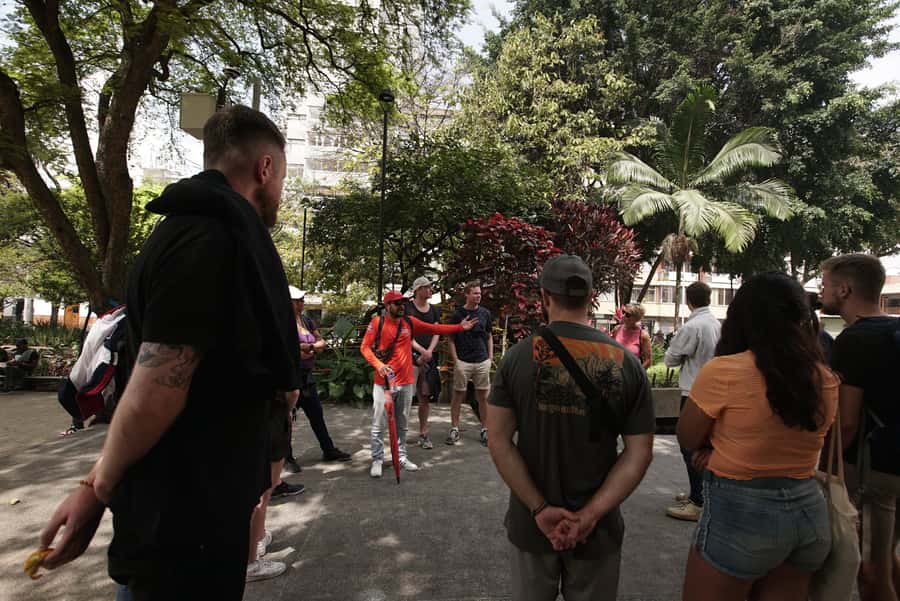
The advertised duration ranges from 150 minutes to three hours. In practical terms, plan for close to three hours, not a quick ninety-minute stroll. The route covers around 8 kilometers and includes listening stops, so you will be moving for much of the experience.
Some groups are small. One account described a group of only five, which allowed Santiago to share plenty of information and give personal attention. Group size can vary, so do not assume every departure will feel intimate.
The tour is not suitable for people with mobility impairments. It also may not suit young children, since the audio equipment has an age restriction and the walking distance is substantial. If you want a slower outing with frequent seating, this is probably not the right choice.
For most able walkers, the route offers a useful first-day introduction. You can learn the city’s layout, note places to return to, and ask about coffee, souvenirs, lunch, and other activities. Guides regularly offer those local recommendations, which increases the value beyond the formal route.
Keep your belongings close. The tour passes through crowded areas, and the operator uses the local phrase don’t give papaya, meaning do not make yourself an easy target. That is simple advice, but it belongs in any downtown Medellín plan.
Is $13 a fair price?
At $13 per person, I consider this strong value. You receive an English or Spanish-speaking guide, a long walking route through key central sights, historical interpretation, local recommendations, and the audio system.
There are no food, drink, souvenir, transport, or entrance costs included. That is not a problem here because the tour does not promise museum access or a meal. It also avoids sudden extra charges by keeping the experience focused on public areas and exterior sightseeing.
You need to pay for your own transport to and from Botero Plaza, but that is easy to factor into your day. The tour does not include transportation during the route, so budget for water and perhaps a snack before or after.
The biggest value is the context. You could walk through Botero Plaza, Junín Street, La Alpujarra, and the Park of Lights on your own. What you would miss is the connection between art, Paisa identity, industry, railroads, conflict, and social change. At this price, that interpretation is the main purchase.
Practical advice for a better morning or afternoon
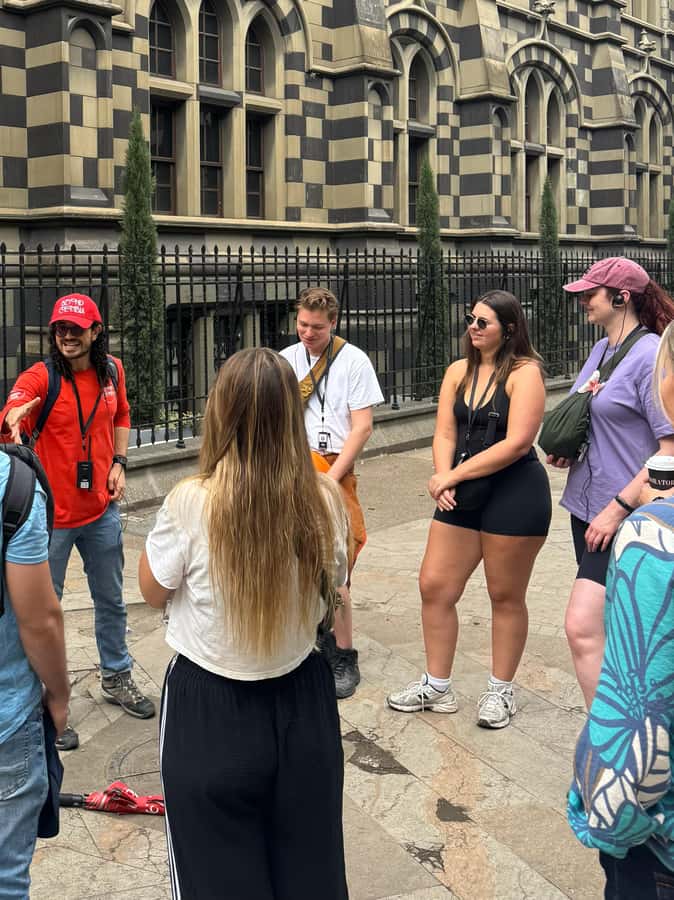
I would schedule this tour early in your Medellín stay. It gives you a map of the center and helps you decide where to spend more time later. Several guides also provide suggestions for coffee, lunch, souvenirs, and other parts of the city.
Wear comfortable shoes and carry water. Bring a camera, but keep it put away when you need both hands in a crowded area. Dress for the weather and carry rain protection, since the equipment has to be returned if rain starts.
Bring an open mind. The tour deals with violence, social problems, public investment, and local pride in the same three-hour conversation. You may not agree with every interpretation, but you will come away with a broader picture than a tour focused only on crime or only on Medellín’s success.
Should you book the downtown walk?
I would book it if you want a serious first look at Medellín, especially if you are interested in how a city changes after a violent period. The route combines major sights with the social and political background that makes them meaningful.
You should skip it if you dislike long walks, need step-free access, or want a museum-heavy tour with indoor breaks. You should also know that downtown can feel confronting in places.
For most first-time visitors who can comfortably walk 8 kilometers, the $13 price is hard to fault. Try to arrive at Botero Plaza with enough time to find the red umbrellas, bring rain protection, and listen for guides such as Miguel, Santiago, Carolina, Deisy, Daniel, or Sebastian. The guide you get will shape the tone, but the subject matter gives this tour real value.
FAQ
Where does the Medellín Downtown Tour meet?
The meeting point is directly in front of the Museo de Antioquia at Botero Plaza. Look for the red Beyond Colombia umbrellas.
How long does the tour last?
The tour lasts approximately 150 minutes to three hours. You should plan for close to three hours because the route includes many walking and listening stops.
How far do you walk?
The route covers about 8 kilometers, with resting stops along the way.
Is transportation included during the tour?
No. The tour is on foot and does not include transportation during the route. You are responsible for getting to and from the meeting point.
What languages are available?
The tour is offered in English and Spanish, with a live guide.
What does the wireless audio system do?
The wireless receivers let you hear the guide clearly on busy streets while giving you more freedom to take pictures and look around.
Can children use the audio equipment?
The wireless audio system is not suitable for children under 15 years old.
What should I bring?
Bring comfortable shoes, water or another drink, a camera, and weather-appropriate clothing. An umbrella or rainproof coat is strongly recommended.
Can I cancel the booking?
You can cancel up to 24 hours in advance for a full refund. You can also reserve now and pay later.
Just added in Medellin
- Tour Peñol-Guatape privado: con desayuno, almuerzo y bote★ 5.0 · 1 review
- Silletero Tour – From Medellín★ 5.0 · 1 review
- Tour Medellín: Commune13 and Pablo Escobar + Rooftop★ 5.0 · 2 reviews
- Tour Medellín: Pablo Escobar and Commune 13★ 5.0 · 3 reviews
- Medellin: Tour Pablo Escobar Privado Con Guia Local★ 5.0 · 1 review
- Tour Guatapé – Piedra del Peñol with departure from Medellín★ 5.0 · 24 reviews
- Tour Guatapé: luxury yacht to the stone of Peñol.★ 5.0 · 2 reviews
- Tour Guatapé con visita a Granja de las Llamas y las Alpacas★ 3.5 · 11 reviews
Audio Tours, compared.
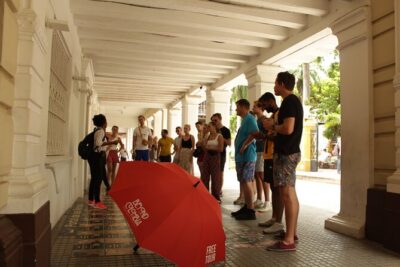
Walled Cartagena: Group Tour with Live Audio System
Read our review →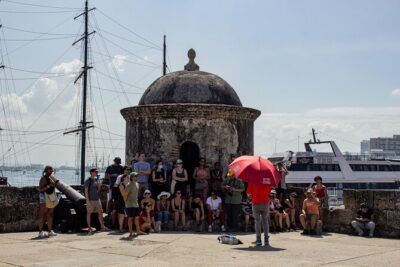
Cartagena Antigua & Barrio Getsemani group with audio system
Read our review →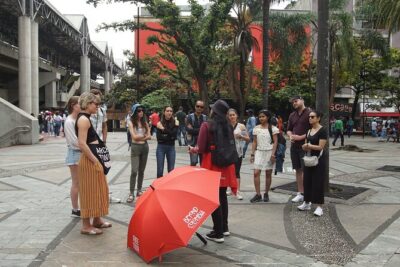
Shared Tour Historic Center of Medellin with Audio System
Read our review →
Getsemani neighborhood in group: art and culture with Audio System
Read our review →
Chiva Private Cultural Tour with Audio Guide in Buga
Read our review →
Shared Cartagena Old City Tour with Wireless Audio System
Read our review →
Self-Guided Audio Tour – El Dorado Expedition, Part II
Read our review →Browse the lists this tour appears in