
REVIEW · STREET FOOD TOURS
Santa Marta Street Food Tour: 7 Tastings with a Local Guide
Come hungry, leave happily full. This three to four-hour food walk gives you a tasty way to understand Santa Marta, from market fruit and mashed green plantains to handmade arepas, specialty coffee, cocadas, and Caribbean patacones. I especially like the generous amount of food and the chance to meet small local vendors, and I also like the small-group feel when numbers are low. The main catch is simple: you walk a lot, sometimes at a good pace, and Santa Marta’s heat can make the final portion tiring.
The tour begins at 9:00 a.m. in Saint Francis Square and returns there at the end. At $39 per person, it offers seven food and drink stops, a bilingual guide, fruit juice, coffee or tea, and enough samples to replace breakfast and lunch. Guides named Álvaro and Paula have earned especially warm praise for their friendly approach and local explanations, though one English-speaking participant found communication difficult with a guide on a particular outing.
In This Review
- What makes this Santa Marta food walk worth considering
- Starting at Saint Francis Square
- Mercado Público: fruit, avocado, and the city’s daily food trade
- Doña Yami’s cayeye and the taste of costeño breakfast
- Doña Ketty’s handmade arepas
- GNAM Café and Colombian coffee beyond a quick cup
- Santa Marta Bay, ocean air, and cocadas
- Mañe Cayón and Caribbean-style patacones
- How much food do you actually get?
- The walking is the tour’s biggest strength and weakness
- Guides, language, and the small-group advantage
- Is $39 a good value?
- Who should book this food tour?
- Should you book the Santa Marta Street Food Tour?
- FAQ
- Where does the Santa Marta Street Food Tour start?
- Where does the tour end?
- How long does the food tour last?
- How many food stops are included?
- What food is included?
- Is coffee included?
- Is alcohol included?
- Can vegans and vegetarians take this tour?
- Is the tour suitable for people with mobility concerns?
- What is the maximum group size?
- What happens if the weather is poor?
- Can I cancel for a full refund?
What makes this Santa Marta food walk worth considering
- Cayeye at Doña Yami’s stand: Try Santa Marta’s beloved mashed green plantain breakfast and learn why it matters in costeño culture.
- A real public-market start: Sample zapote and creamy local avocado while seeing the fruit, fish, meat, and vegetable sections of Mercado Público.
- Handmade arepas at Doña Ketty’s: Watch the preparation and eat the arepas fresh, with the chance of trying arepa con huevo.
- Coffee with a proper tasting angle: GNAM Café uses alternative brewing methods and explains aroma, flavor, and Colombian coffee culture.
- A full meal in small portions: Seven stops add up quickly, so skip breakfast and bring room for fried food, sweets, juice, coffee, and more.
- A walking tour with real mileage: The route can cover about five miles, making it a poor fit if you have mobility concerns or dislike long walks.
Starting at Saint Francis Square
Meet in front of San Francisco Church in the Centro Histórico at 9:00 a.m. The opening ten minutes are used to introduce Santa Marta’s food traditions and set the scene for the morning.
This is a sensible meeting point. You begin in the historic center, then move toward the public market and other food stops on foot. The route is not just a string of tastings in one compact building. It uses the city as part of the meal, which means you see ordinary streets and local commerce along the way.
A small group makes the start more useful. You can ask what a dish is made from, request a slower explanation, or pause for a photo without disappearing into a crowd. The advertised maximum is 30 people, but some outings have been much smaller. One group had only four people, giving the guide plenty of time to share stories.
More Food Tours in Santa Marta
- Santa Marta A Historical & Street food Experience
★ 4.7 · 41 reviews - Santa Marta: Guided Walking Food Experience
★ 4.8 · 33 reviews - Food Tour in Santa Marta Old City Half-Day
★ 5.0 · 13 reviews
Mercado Público: fruit, avocado, and the city’s daily food trade
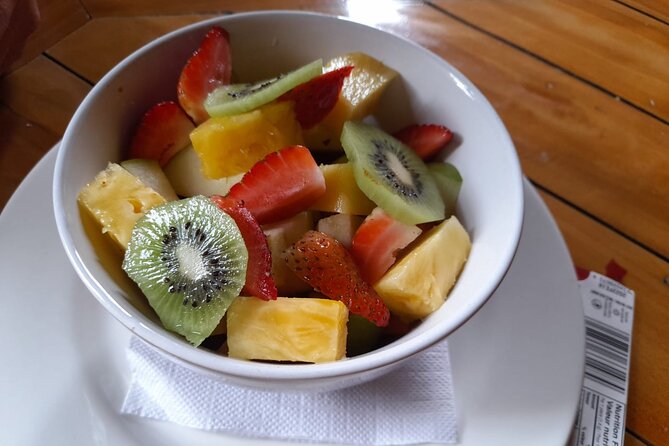
The first major stop is Mercado Público de Santa Marta, where you spend about 45 minutes tasting fresh zapote and creamy local avocado from street vendors. If you have not tried zapote before, this is a good place to encounter it in the setting where it belongs, rather than as an isolated item on a restaurant menu.
The market also gives you a look at Santa Marta’s working food culture. The route can pass fruit and vegetable stalls as well as fish and meat sections, so the visit has more depth than a quick fruit sample. You see the ingredients that feed the city before they appear in cooked dishes.
I like this early stop because it helps you understand the rest of the tour. The food is not presented as a list of exotic bites. You first meet the raw ingredients, then see how local cooks turn simple staples into breakfast, snacks, sweets, and a substantial final dish.
The market may be hot, crowded, or visually intense. That is part of the point, but it also means you should bring water, wear light clothing, and expect a genuine working market rather than a polished food hall.
Doña Yami’s cayeye and the taste of costeño breakfast
At Doña Yami’s stand, you try cayeye, a Caribbean dish made from mashed green plantains. The stop lasts about 45 minutes, giving the guide time to explain why cayeye is closely tied to breakfast and costeño culture.
This is one of the most useful tastings for a first visit to Santa Marta. Plantains appear in many forms across Colombia, but cayeye shows how a basic ingredient becomes a filling local meal. Its appeal is not fancy presentation. It is comfort food, tied to daily routines and regional identity.
The generous portions are worth noting. This is not a tour where you receive one tiny forkful at each stop and then need to find lunch immediately afterward. By this point, along with fruit and juice, you may already feel that breakfast has been handled.
The morning can become demanding if you eat a large breakfast before meeting the guide. I would not. Several dishes still lie ahead, and the final patacones can be a full meal on their own.
Doña Ketty’s handmade arepas
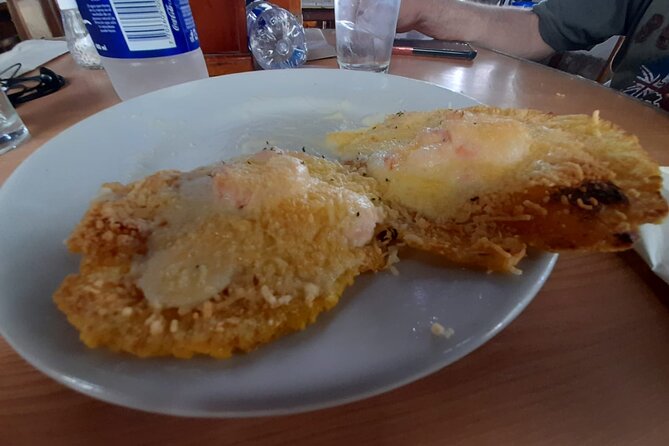
The next stop takes about 30 minutes at Doña Ketty’s street stand, where you watch handmade arepas being prepared and eat them fresh. One particularly appealing possibility is arepa con huevo, which was a favorite dish for one participant.
Arepas are familiar to many visitors, but a fresh handmade version tells you more than a packaged or restaurant version can. You see the care involved in shaping and cooking them, then eat the result close to the source. The stop also gives the tour a human face. You are not only learning names of dishes. You are being introduced to the people who make them.
The guide may also help you understand how arepas fit into local eating habits. Earlier tastings focus on fruit and plantain, while this stop brings in a different texture and preparation style. That variety keeps the food side of the walk interesting.
Doña Ketty’s stand is a street-food setting, so do not expect a long sit-down meal or air-conditioned comfort. You are stopping, tasting, watching, and moving on. For me, that trade-off is worthwhile because it keeps the food connected to everyday Santa Marta.
A completely different kind of day:
- Hike for 4 days to the Lost City, Santa Marta
★ 5.0 · 3,308 reviews - Lost City – Ciudad Perdida Colombia
★ 5.0 · 1,203 reviews - Sailing to Tayrona with Luis and his team: Unique!
★ 4.5 · 448 reviews - Santa Marta: Sailboat day tour to Tayrona Park
★ 4.5 · 352 reviews
GNAM Café and Colombian coffee beyond a quick cup
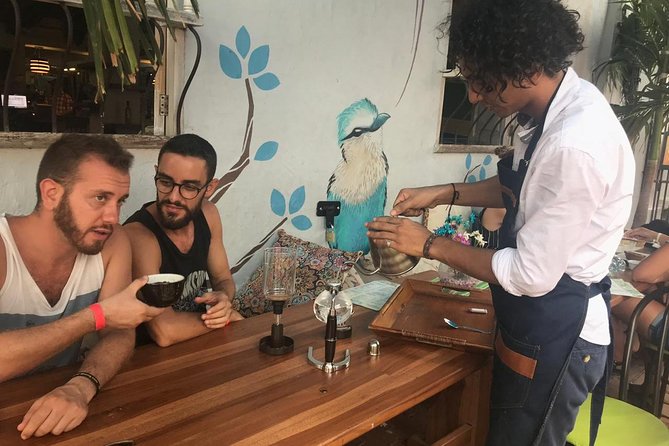
At GNAM Café, you get a 30-minute specialty coffee tasting. A barista prepares Colombian coffee with alternative brewing methods, while the guide and café staff explore aroma, flavor, and the role coffee plays in Colombia.
This is a welcome change of pace after the market and street stands. You can sit down, pay attention to the drink, and notice how brewing changes the cup. The coffee stop also prevents the tour from becoming a march between fried snacks. There is a clear effort to show more than one side of Santa Marta’s food culture.
Coffee and tea are included, and alcohol is not. Some stops may sell alcoholic drinks, but those purchases are extra. One participant described having ice-cold beers during a tour, so availability may vary by outing and personal choice, but you should not count alcohol as part of the $39 price.
If you normally drink coffee, this will likely be one of the strongest stops. If you do not, the tour still includes tea, and the explanation of Colombian coffee culture adds value even if you prefer a non-coffee drink.
Santa Marta Bay, ocean air, and cocadas
The route then heads to Santa Marta Bay for a scenic walk and a tasting of cocadas, traditional coconut sweets sold by local vendors. This 30-minute section gives your feet a short change of rhythm and your eyes a break from market stalls.
Cocadas bring a sweet finish to the middle of the tour. Coconut makes sense here, given the city’s Caribbean setting, and the seaside walk helps connect the food to place. You are not simply eating a dessert indoors. You are enjoying it with ocean views and the coastal atmosphere around Santa Marta Bay.
This is also a practical pause. Food tours need breathing room, especially when the portions are generous. The walk allows some digestion before the final restaurant stop, though it does not remove the need for comfortable shoes.
The bay section is pleasant, but the weather matters. The experience requires good weather, and the combination of sun, heat, and walking can wear you down. Carry water even if the guide can help you find it. One participant specifically found it difficult when a water stop was not offered promptly.
Mañe Cayón and Caribbean-style patacones
The final tasting takes place at Restaurante Mañe Cayón, where you finish with Caribbean-style patacones topped with Santa Marta flavors. This stop lasts about 45 minutes and provides a proper ending after the outdoor markets, street stands, café, and bay walk.
Patacones are green plantains that are flattened and fried, and here they arrive with toppings in a local restaurant setting. The dish gives you a savory finale after the fruit, coffee, and cocadas. It can also be the point when you realize the tour really has provided a meal, not merely a collection of samples.
The progression from street food to a restaurant works well. You start with informal market tastes, then move through specialist and family-run stops before ending at a more comfortable place. That gradual change gives the morning some shape and keeps the final course from feeling like just another roadside bite.
You return to the original meeting point after this stop. Since the tour ends there, you can plan a relaxed afternoon in the historic center without arranging separate transportation back to your hotel.
How much food do you actually get?
Plan on eating a lot. The included tastings cover zapote, avocado, cayeye, handmade arepas, specialty coffee or tea, natural fruit juice, cocadas, and patacones. The exact portion size can vary, but the total is enough to replace breakfast and lunch for many people.
I would treat the tour as a late breakfast and early lunch. Do not arrive after a full meal. Several people have found themselves too full for the last dish, with one person taking it away to eat later.
The food also has useful variety:
- Fresh fruit and avocado
- A mashed green plantain dish
- Handmade arepas, possibly including arepa con huevo
- Fried or savory foods
- Coconut sweets
- Specialty coffee or tea
- Natural fruit juice
- Caribbean-style patacones
Vegetarian and vegan adaptations are possible, but you should state your needs when booking or before the tour begins. The supplied details confirm that the experience can accommodate both diets, not that every standard tasting is already vegan or vegetarian.
The walking is the tour’s biggest strength and weakness
This is a food tour, but it is also a serious walking tour. The route links the historic center, public market, street vendors, café, bay, and restaurant. One participant’s watch recorded about five miles, while several others described the walking as substantial.
That distance is useful if you want to see parts of Santa Marta you might otherwise skip. A guide can make unfamiliar areas feel easier to navigate, and you gain context as you move between food stops. One family found the guide kept them safe and comfortable while walking through areas they would not have visited alone.
Still, this is not the best choice if you have difficulty walking longer distances. Heat adds to the challenge. The pace has sometimes been described as brisk, though guides have also adjusted the route for older family members, allowing them to meet the group at the final stop.
Wear supportive shoes, carry water, and leave space in your morning schedule. If you prefer a short, seated tasting with little movement, choose another activity.
Guides, language, and the small-group advantage
The guide is central to the quality of this tour. Álvaro is praised for being friendly, energetic, and generous with information about Santa Marta’s food and history. Paula is described as warm, patient, and able to let the group enjoy each stop without rushing.
A bilingual local guide is included, but English ability may vary by guide and date. Most experiences have been described as easy to follow, yet one participant found the guide’s English difficult and felt the explanations were less clear. If food stories matter as much to you as the tastings, it is worth confirming the language arrangements when you book.
A smaller group makes a real difference. You can ask questions, take photos, and tell the guide about dietary needs more easily. The maximum group size is 30, so the experience may not always be intimate, but low-demand dates can produce a much smaller outing.
Is $39 a good value?
At $39, the price is fair if you want a meal, a city walk, and local food guidance in one package. Seven stops would cost money on their own, and the tour includes coffee or tea, natural juice, snacks, and the bilingual guide.
The value is strongest when you count the setting and explanation, not just the food. You are visiting a public market, meeting local vendors, walking beside the bay, and learning why cayeye and arepas matter. You also avoid the guesswork of choosing unfamiliar street food on your own.
The price is less attractive if you mainly want a quick tasting. You will spend three to four hours on the route, and much of that time is walking. If you already know Santa Marta well and only want a single meal, you may prefer to spend $39 at a restaurant.
Free cancellation is available if you cancel at least 24 hours before the 9:00 a.m. start. Late cancellations and last-minute changes are not accepted for a refund. Poor weather can lead to a different date or a full refund.
Who should book this food tour?
I would choose this outing if you want your first morning in Santa Marta to cover food, neighborhoods, and local context at once. It suits couples, solo visitors, and families who can manage several hours on foot.
It is also a good choice for curious eaters who want more than familiar restaurant dishes. Zapote, cayeye, cocadas, handmade arepas, and Caribbean patacones give you a broad introduction to the region.
I would hesitate if you have limited mobility, tire quickly in heat, or dislike market environments. The route can be modified in some cases, but you should not book it expecting an easy stroll. Bring water, wear good shoes, and skip breakfast.
Should you book the Santa Marta Street Food Tour?
Book it if you want a substantial food introduction to Santa Marta and enjoy seeing how a city eats in ordinary places. The generous tastings, local stands, market visit, bay walk, and warm guides such as Álvaro and Paula give the morning real character.
Skip it if you want a short, polished culinary class or a mostly seated meal. The walking is the one serious warning, and heat can make the final stretch tough. For most fit visitors who arrive hungry and prepared, $39 buys a full morning of food and useful orientation to Santa Marta.
FAQ
Where does the Santa Marta Street Food Tour start?
It starts at 9:00 a.m. in front of San Francisco Church in Saint Francis Square, Cra. 4, Centro Histórico, Santa Marta.
Where does the tour end?
The tour returns to the original meeting point in Saint Francis Square.
How long does the food tour last?
The experience lasts approximately three to four hours.
How many food stops are included?
The tour includes seven food and beverage stops.
What food is included?
Included tastings feature zapote, local avocado, cayeye, handmade arepas, cocadas, and Caribbean-style patacones. Natural fruit juice is also included.
Is coffee included?
Yes. A specialty Colombian coffee tasting at GNAM Café is included. Tea is also available as an included beverage option.
Is alcohol included?
No. Alcoholic drinks are not included, though they may be available to buy at some stops.
Can vegans and vegetarians take this tour?
Yes. The tour can accommodate vegan and vegetarian diets. You should communicate your dietary needs when booking or before the tour begins.
Is the tour suitable for people with mobility concerns?
The tour involves extensive walking, and some outings have covered about five miles. Most people can participate, but it may not suit you if you have difficulty walking long distances.
What is the maximum group size?
The maximum group size is 30 people. Some outings may be much smaller.
What happens if the weather is poor?
The experience requires good weather. If it is canceled because of poor weather, you will be offered another date or a full refund.
Can I cancel for a full refund?
Yes. You can cancel at least 24 hours before the start time for a full refund. Cancellations or changes made less than 24 hours before the start are not accepted for a refund.
Just added in Santa Marta
- 4 Rosario Islands Adventure with entrance to the oceanarium included★ 3.5 · 3 reviews
- Full Day At the best Vip Beach Club in Tierra Bomba★ 5.0 · 4 reviews
- Monkey Volunteer Work in Wildlife Reserve Near Cartagena★ 5.0 · 3 reviews
- The Native Expedition – Sierra Nevada (2 days Discovering Chorrerón waterfall)★ 5.0 · 7 reviews
- UTV Safari in a Wildlife-Filled Nature Reserve Near Cartagena★ 5.0 · 36 reviews
- Playa Blanca Barú Tour with Lunch and hotel pick up★ 3.0 · 8 reviews
- Surf Lessons For All Levels★ 5.0 · 1 review
- Tour Isla del Encanto Cartagena★ 3.5 · 4 reviews
Street Food Tours, compared.

Comuna 13 Graffiti Tour, Cable Car & Street Food
Read our review →

Rumbero Gastrotour through Medellín and Street Food
Read our review →

Street Food and Poblado Rooftop Tour with a Local
Read our review →
Browse the lists this tour appears in