
REVIEW · AUDIO TOURS
Republican Architecture Self-Guided Audio Tour in Cartagena
Cartagena’s walls tell only part of the story. This self-guided audio walk shifts your attention to the city’s Republican architecture, historic plazas, churches, monuments, and public buildings, with narration available in English. I like the freedom to begin when it suits your day, and I like that the tour includes offline maps and tips for exploring after the final stop. The main drawback is simple: you must bring your own smartphone and headsets, and there is no live guide to answer questions.
At $6.72 per person, this is a low-cost way to add structure to a walk through central Cartagena. The audio chapters are private to your group, so you are not tied to a departure time or a large party. Still, you should allow about 90 minutes, check that your phone is charged, and remember that any museum or other admission fees are not included.
In This Review
- Key points to know before you go
- Why this audio walk adds something new to Cartagena
- Beginning at Teatro Adolfo Mejía, also called Teatro Heredia
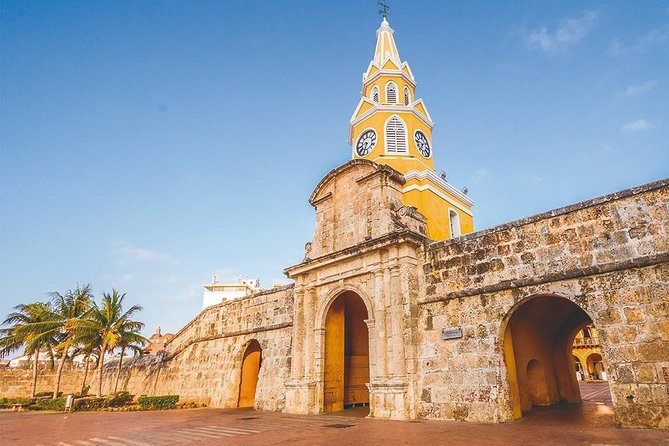
- The tower and the person who built it
- Noli me tangere and Cartagena’s difficult symbols
- November 11 and Cartagena’s proud public memory
- A building and plaza tied to a turning point
- Colonial and Republican details outside the museum
- The final Republican-era chapter
- Gabriel García Márquez and the university headquarters
- How the $6.72 price works for your day
- Who should choose this Cartagena walk?
- Should you book it?
- FAQ
- Where does the audio tour begin?
- Where does the tour finish?
- How long does the experience take?
- What language is available?
- Is the tour self-guided?
- Are maps included?
- Do I need to bring a smartphone and headsets?
- Are admission tickets included?
Key points to know before you go
- A 90-minute walk through Cartagena’s Republican-era details: The route covers theaters, monuments, plazas, churches, university buildings, and historic landmarks.
- Start in the walled city on Calle del Tablón: You begin in El Centro and finish at the Ermita del Cabrero, giving the walk a clear point-to-point shape.
- The Teatro Adolfo Mejía is the opening focus: Also known as Teatro Heredia, it provides an immediate look at Cartagena’s decorative architectural style.
- The narration goes beyond façades: You hear about construction, political memory, literary meaning, and the Republican period in Colombia.
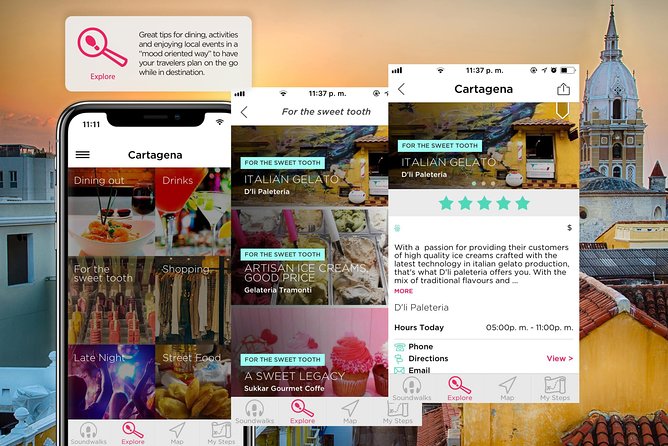
- Offline maps are useful after the tour: The included material is designed to help you continue exploring without relying on a constant data connection.
- Bring your own listening gear: A smartphone and headsets are not supplied, and admission tickets are separate.
Why this audio walk adds something new to Cartagena
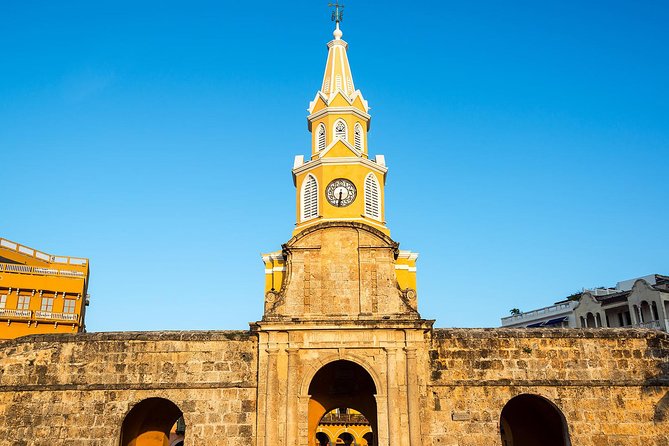
Cartagena is easy to read as a colonial city. You see thick walls, old defensive buildings, narrow lanes, and brightly painted façades. This route asks you to look again, especially at the period when Colombia moved into its Republican era and public buildings took on new roles and styles.
That change is the central value of the experience. Instead of simply pointing out attractive buildings, the narration connects architecture with independence, public memory, literature, education, and local identity. You are not only looking at stone, plaster, columns, and ornament. You are being asked why a monument was built and what it came to mean.
The audio format suits a city where you may want to pause often. Cartagena’s heat can make a fixed walking schedule tiring, and independent visitors often prefer to stop for a drink, step into the shade, or photograph a building without holding up a group. You can start any time during the stated operating period, from Monday through Sunday, and the activity is available from midnight through 11:30 p.m.
That broad schedule does not mean every hour is equally pleasant. A daytime walk lets you see architectural details more clearly, while an evening start may feel cooler. Since the tour is self-guided, you choose the pace and the light.
More self-guided tours in Cartagena:
- Walled Cartagena: Group Tour with Live Audio System
★ 5.0 · 1,019 reviews - Cartagena Antigua & Barrio Getsemani group with audio system
★ 5.0 · 658 reviews - Getsemani neighborhood in group: art and culture with Audio System
★ 5.0 · 447 reviews
Beginning at Teatro Adolfo Mejía, also called Teatro Heredia
The first stop places you in front of the Teatro Adolfo Mejía, commonly known as Teatro Heredia. You have about four minutes here to admire the building and its architectural work.
That short time is a useful introduction rather than a full building visit. The route asks you to study the exterior, so you can focus on the details around the façade and understand why this theater matters to Cartagena’s architectural story. The theater gives the walk a strong opening because it is both a functioning cultural landmark and an example of the city’s later architectural development.
The audio should be treated as a viewing guide. Listen first, then look up from your phone. You will get more from the stop if you notice the relationship between the building’s proportions, ornament, and surrounding public space instead of rushing to the next chapter.
Admission is listed as free for this stop, but the experience does not promise entry into the theater. That distinction matters. If you hope to see the interior, you would need to make separate arrangements, and the tour price does not cover admission to attractions.
The tower and the person who built it
One stop focuses on a tower through the voice of its creator. The narration explains how the tower was built, giving you a rare chance to hear the construction story from the person responsible for the work.
The supplied details do not identify the tower by name, so you should follow the location shown on the audio map rather than trying to plan around a particular landmark. The appeal is the change in viewpoint. Many city walks describe old buildings from the outside, while this chapter brings in the builder’s own account.
For anyone interested in architecture, this may be one of the most useful sections. Construction decisions can reveal how a building came together, what problems had to be solved, and how an architectural idea became a physical structure. The stop also breaks up the focus on grand public history with a more personal account of making a building.
Because the audio is self-guided, you can replay this chapter if the details move too quickly. You can also pause before moving on, which is helpful when the site is crowded or when you want time to take photographs.
Noli me tangere and Cartagena’s difficult symbols
The Noli me tangere stop gives the tour a literary and symbolic turn. You learn what the phrase means, how it relates to Cartagena, and why the monument carries a darker story for local people.
This is a valuable reminder that public art is not always decorative. A monument can hold pride, grief, warning, memory, or disagreement at the same time. The route appears to treat this work as something to interpret, not just photograph.
You should give this chapter your full attention. The phrase itself has a meaning that is important to the stop, and the explanation connects language with local symbolism. The darker account also keeps the tour from becoming a simple parade of pretty façades.
The information provided does not specify the monument’s exact location or the full story behind it. For that reason, the offline map is especially important here. Open the map before you set out, and keep your headphones available so you can match the narration with the correct site.
More things to do in Cartagena:
- Cartagena Island Hopping: 5-Stop Rosario Islands Tour with Lunch
★ 4.5 · 4,903 reviews - Cartagena: Historic Center and Getsemaní Shared Walking Tour
★ 4.9 · 2,716 reviews - Cartagena: Rosario Islands Catamaran with Lunch and Snorkel
★ 4.5 · 2,479 reviews - Full-Day Rosario Islands Including Barú, Bocachica & Playa Blanca
★ 4.0 · 1,729 reviews
November 11 and Cartagena’s proud public memory
A later stop brings you to a park linked with November 11, 1811. This date is identified as an important moment in Cartagena’s past, and the park carries that memory into public space.
The stop is about more than a date to memorize. Parks and plazas show how a city chooses to remember its political turning points. You may notice that the route repeatedly links architecture with civic identity, and this chapter makes that connection clear.
The walk does not ask you to sit through a long history lesson. Instead, it gives the date a physical setting. You can stand in the park, listen to the explanation, and see how a public place becomes part of a city’s story.
The pace should remain manageable here, but do not feel pressured to move on as soon as the narration ends. The route is private to your group, and the flexible format lets you take a short break. Snacks are not included, so this is a sensible point to carry your own water or plan a stop nearby.
A building and plaza tied to a turning point
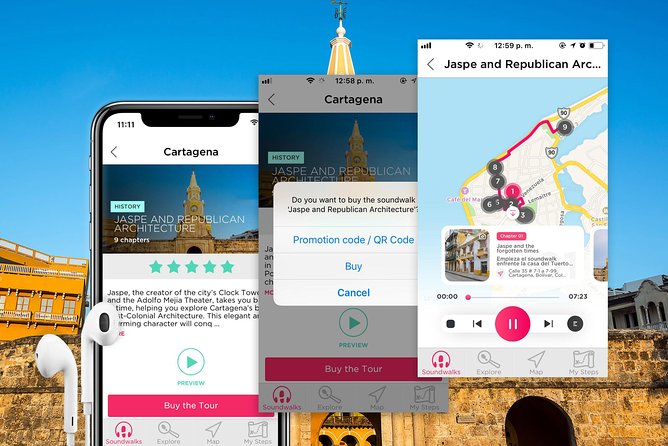
Another chapter centers on a building and plaza that represent an important historical moment in Cartagena. The supplied description does not name the event or provide the building’s title, so the audio itself carries much of the interpretation.
This is a good example of why the route works better for curious walkers than for people seeking a checklist of famous sights. The value lies in the connection between the building, the open space around it, and the event associated with that setting.
Look at the whole scene rather than one façade. Notice how the building meets the plaza, how people use the space, and how the architecture frames movement through the historic center. The audio will give you the historical reason for the stop, while your own observation fills in the physical details.
A possible weakness is that you cannot ask a live guide to repeat or expand on the explanation. If you prefer conversation and spontaneous questions, a guided group walk may suit you better. If you like controlling the pace, the pause and replay options are a fair trade.
Colonial and Republican details outside the museum
The route passes a museum but does not take you inside. Instead, the chapter helps you recognize the building and its architectural details from outside, including features associated with both colonial and Republican architecture.
That choice keeps the activity within its advertised length and avoids adding an admission cost. It also makes the stop practical for a first walk through Cartagena, since you can learn how to compare the periods without committing time to a full museum visit.
You should not expect a museum tour here. The audio is about reading the exterior and understanding the building’s place in the city. If the museum interests you, you can return later with a separate ticket and more time.
I like this arrangement because it respects the difference between seeing a building and visiting an institution. The tour gives you context first. Later, you can decide if the interior is worth adding to your day.
The final Republican-era chapter
The last main stop deals more directly with Republican times in Colombia. This is where the route’s theme comes together. Earlier chapters introduce theaters, towers, monuments, plazas, and mixed architectural periods. The closing explanation gives you a broader frame for understanding them.
The tour is most useful if you pay attention to how the stops differ. Some are linked to construction. Others focus on political memory, literary symbolism, or public identity. Together, they show that Republican architecture is not just a matter of dates or decorative style.
The route finishes at the Ermita del Cabrero, also called Iglesia Nuestra Señora De Las Mercedes, beside Parque Apolo. The end point gives you a definite place to stop rather than returning you to the beginning. That is convenient if your next plan is in the El Cabrero area, though less convenient if you want to finish back in the center.
The church is identified as a final landmark, and the route also includes a church stop elsewhere. The available information does not provide detailed interior access, so expect architectural recognition and explanation rather than a guaranteed visit inside.
Gabriel García Márquez and the university headquarters
At a university headquarters, the narration turns to Gabriel García Márquez, focusing on his life and legacy. This brings literature into a route that has mainly examined buildings and public spaces.
The connection is fitting. Architecture does not exist apart from the people who study, work, write, organize, and remember within it. A university building can represent education and intellectual life, and the García Márquez chapter adds a personal and cultural layer to the walk.
The information does not specify a museum visit or a special interior access arrangement at the university headquarters. Plan to listen from the designated location and examine the building as part of the route.
For readers who know García Márquez’s connection to Colombia, this stop may feel especially meaningful. For those new to his story, it offers a reason to pay attention to the place rather than treating it as another anonymous public building.
How the $6.72 price works for your day
At $6.72 per person, the tour is priced as a small, focused add-on rather than a major excursion. You are paying for the audio chapters, offline maps, and practical tips, not for transport, food, a live guide, or attraction admission.
That can be good value if you already plan to walk around Cartagena. A private experience for your own group at this price gives you independence without the cost of hiring a personal guide. The route can also help you make better use of the rest of your visit by pointing out architecture you might otherwise pass without noticing.
The value is less clear if you want a social activity or a detailed back-and-forth discussion. There is no live guide, and you supply the smartphone and headsets. You should also budget separately for snacks and any admission ticket you choose to buy.
The included offline access is the strongest practical feature. Download or prepare the material before setting out, then use the map and chapters without depending on a steady connection. That is useful in an old city where you may spend much of the walk moving between narrow streets and open plazas.
Who should choose this Cartagena walk?
I would recommend it to independent visitors who enjoy architecture, public history, and flexible sightseeing. It is particularly well suited to people who want more substance than a casual stroll but do not want to commit to a scheduled group.
It also fits repeat visitors to Cartagena. If you have already seen the most famous colonial sights, this route gives you a different question to follow: how did the city change during Republican times, and how do those changes appear in its buildings and monuments?
The format may be less satisfying for someone who wants a live storyteller, detailed interior visits, or a social group atmosphere. The route is private, but private here means your own audio experience, not a personal guide walking beside you.
Most people can participate, and service animals are allowed. The starting point is on Calle del Tablón in El Centro. The finish is at the Ermita del Cabrero, so check the map before you begin and plan your onward route from that neighborhood.
Free cancellation is available if you cancel at least 24 hours before the scheduled start time. Inside that 24-hour window, the amount paid is not refunded, and changes are not accepted.
Should you book it?
Book this audio walk if you want a low-cost, self-directed way to understand Cartagena beyond its best-known colonial images. The strongest reasons are the flexible timing, private format, offline maps, and attention to construction stories, symbols, public memory, and Republican architecture.
Skip it if you need a live guide, included headsets, museum entry, or a return to your starting point. For the right kind of visitor, though, $6.72 buys a useful architectural lens for a 90-minute walk, plus ideas for what to notice during the rest of your time in Cartagena.
FAQ
Where does the audio tour begin?
It begins on Calle del Tablón, Cl. 35, in El Centro, Cartagena.
Where does the tour finish?
The tour ends at the Ermita del Cabrero, also called Iglesia Nuestra Señora De Las Mercedes, beside Parque Apolo.
How long does the experience take?
The estimated duration is about 1 hour and 30 minutes.
What language is available?
The audio tour is offered in English.
Is the tour self-guided?
Yes. It is a private activity for your group, and you follow the audio chapters independently.
Are maps included?
Yes. The experience includes offline maps and tips for exploring Cartagena after the walk.
Do I need to bring a smartphone and headsets?
Yes. A smartphone and headsets are not included.
Are admission tickets included?
No. Admission tickets, along with snacks, are not included. The Teatro Adolfo Mejía stop lists free admission, but the tour does not promise entry to every building or museum.
Just added in Cartagena
- Private History Photography Tour★ 5.0 · 17 reviews
- Self-Guided Audio Tour: Pirate Tales in Cartagena★ 3.0 · 2 reviews
- Paue Island Tour in the Rosary Islands★ 5.0 · 1 review
- Totumo Volcano★ 3.5 · 15 reviews
- Palmarito Beach★ 3.5 · 4 reviews
- Party without limits! Cartagena; VIP Party.★ 4.5 · 32 reviews
- Paragliding Experience in Cartagena★ 5.0 · 8 reviews
- Tour cultural to san Basilio de Palenque from cartagena★ 5.0 · 45 reviews
Audio Tours, compared.
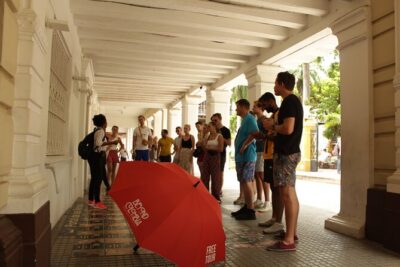
Walled Cartagena: Group Tour with Live Audio System
Read our review →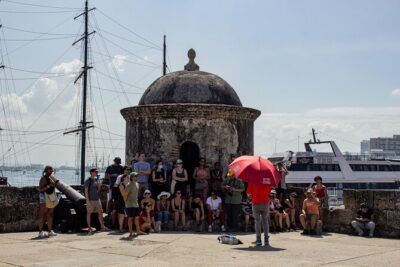
Cartagena Antigua & Barrio Getsemani group with audio system
Read our review →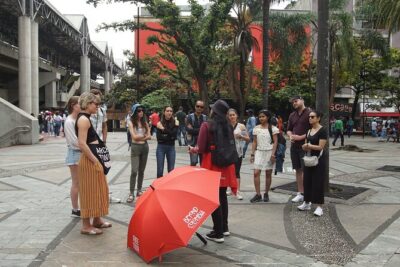
Shared Tour Historic Center of Medellin with Audio System
Read our review →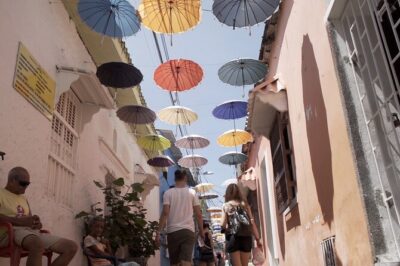
Getsemani neighborhood in group: art and culture with Audio System
Read our review →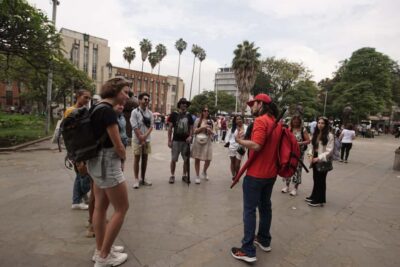
Shared Medellín Downtown Tour with Wireless Audio
Read our review →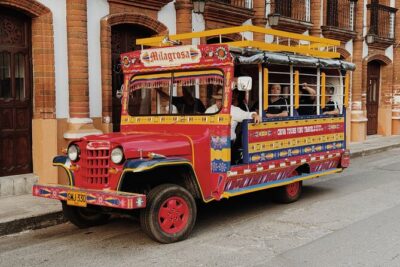
Chiva Private Cultural Tour with Audio Guide in Buga
Read our review →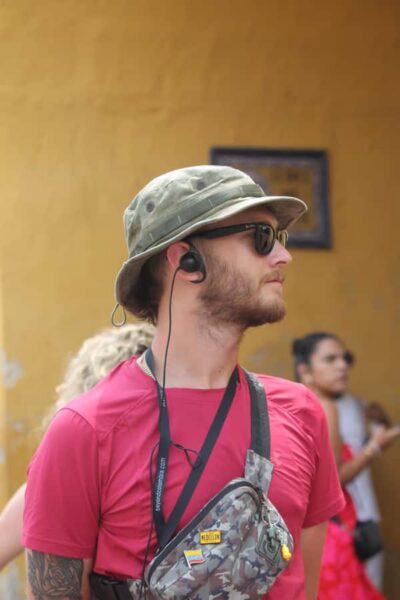
Shared Cartagena Old City Tour with Wireless Audio System
Read our review →
Browse the lists this tour appears in