
REVIEW · HISTORICAL TOURS
Historical tour Bogota
Bogotá’s old center tells a complicated story. This three-hour walk links La Candelaria, La Concordia, and Las Aguas with clear explanations of Indigenous traditions, Spanish rule, independence, political violence, art, food, and daily life. It is a useful first look at the capital, especially if you want context before visiting museums on your own.
I like the route’s range: you move from grand government buildings to a market, a founder’s square, an emerald trading area, and streets tied to Gabriel García Márquez and Fernando Botero. I also like the guides’ practical touch. Paula, Jennifer, Ricardo, Diane, Rodrigo, Carlos, and Diana are praised by name for making the subject easy to follow. The main consideration is pace: three hours on foot can feel long, and the tour runs in bad weather, so bring an umbrella.
In This Review
- Key points at a glance
- Why this Bogotá walk works as an introduction
- From Bolívar Square to the story of the capital
- Teatro Colón and the colonial chapter
- Botero, museums, and the cultural block
- Chorro de Quevedo and Bogotá’s beginnings
- La Concordia Market: a chance to taste the city
- Eje Ambiental, Monserrate, and García Márquez
- Gaitán, the Bogotazo, and Colombia’s harder history
- Rosario Square and the final emerald lesson
- Guide style and what the feedback tells me
- Price, group size, and walking demands
- Who should book this tour?
- Should you book the Bogotá historical tour?
- FAQ
- How long does the historical Bogotá tour last?
- Where does the tour begin?
- Where does the tour end?
- What places are visited during the tour?
- Are food and drinks included?
- Does the tour operate in bad weather?
- How large can the group be?
- How much does the tour cost?
- Can I cancel for a refund?
Key points at a glance
- Eight historic stops in three hours: The route covers Bolívar Square, Teatro Colón, the Banco de la República cultural area, Chorro de Quevedo, La Concordia Market, Eje Ambiental, the Gaitán monument, and Rosario Square.
- A serious look at Colombia’s past: Expect discussion of Indigenous Bogotá, El Dorado, colonization, independence, the Bogotazo, and the violence that followed.
- Local culture, not just monuments: Chicha, Colombian juices, emeralds, gastronomy, architecture, education, and art all enter the conversation.
- Strong guide-led experience: Paula receives special praise for history, politics, and literature, while Jennifer, Ricardo, Diane, Rodrigo, Carlos, and Diana are also singled out for friendly and clear presentations.
- Good first-day value: The listed price is $19.77 per person, with group discounts and a maximum group size of 30.
- Plan for the conditions: The walk covers central Bogotá and requires moderate physical fitness. It is not canceled for rain.
Why this Bogotá walk works as an introduction
A first visit to Bogotá can feel like a pile of disconnected impressions: painted colonial facades, formal plazas, street art, museums, coffee, traffic, and stories about political conflict. This tour gives those pieces a framework.
The route stays in the historic center, where the city’s major chapters sit close together. You begin near Carrera 7 in La Candelaria and finish at Rosario Square on Avenida Jiménez. That makes the walk practical for a first morning or afternoon. By the end, you should know which museums, restaurants, viewpoints, and neighborhoods deserve more of your time.
I especially like the balance between official history and everyday culture. You hear about national leaders and major turning points, then step into a market to consider chicha, fruit drinks, souvenirs, and local trade. You also get useful orientation for Monserrate and recommendations for restaurants, coffee, museums, and money exchange.
This is not a museum-entry tour. Admission to the listed stops is free because the experience is primarily an outdoor walk with commentary. You will see important places from the outside and hear why they matter. If you want long indoor visits to art collections or detailed architectural inspection, you will need to add those separately.
More History Tours in Bogota
- Shared Tour of the Historic Candelaria in Bogotá
★ 5.0 · 1,551 reviews - Bogota Shared Gastronomy Tour in the Historic Center
★ 5.0 · 264 reviews - Bike Tour in Bogota Historical Sites and Fruit Market
★ 5.0 · 171 reviews
From Bolívar Square to the story of the capital
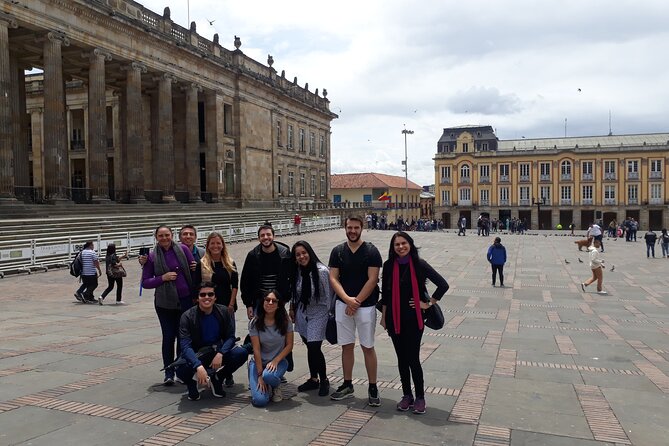
The walk begins at Plaza de Bolívar, the city’s central ceremonial space. Allow about 30 minutes here. This is where the guide sets up the basic story of Bogotá and points out the country’s important buildings.
That opening matters. Instead of rushing straight into a list of dates, the guide can explain how the capital developed and why this square remains a key stage for national life. You will likely spend much of this part looking around, taking photographs, and learning to read the buildings as evidence of political power.
The stop also gives you a chance to ask questions early. If Colombia’s history is new to you, this is the moment to clarify names, periods, and terms before the tour moves into more difficult subjects such as the Bogotazo and political violence.
The square is open and exposed, so keep your phone and other belongings secure while listening. The tour description does not promise entry into the buildings, so think of this as a guided orientation rather than a formal interior visit.
Teatro Colón and the colonial chapter
Next comes Teatro Colón Bogotá, with about 15 minutes to admire the building and discuss the place where Simón Bolívar lived. This is a short stop, but it adds a human scale to the political story.
Rather than treating Bogotá as a collection of anonymous institutions, the guide connects the theater and Bolívar’s residence to people who shaped Colombia. The reference to Bolívar helps bridge the gap between the colonial period and independence, one of the tour’s central themes.
Fifteen minutes is enough for an explanation and a few photographs, but not for an in-depth theater visit. If the building interests you greatly, note the location and investigate a separate visit later. The value here is the connection between architecture, political memory, and the city’s changing identity.
Botero, museums, and the cultural block
The route then reaches the Museos del Banco de la República, where the guide discusses the cultural block of La Candelaria and the life of Fernando Botero. The stop lasts about 15 minutes and takes place from outside the museum.
This is a smart preview for anyone deciding how to spend the rest of a Bogotá visit. You get a sense of the cultural importance of the area and an introduction to Botero, one of Colombia’s best-known artists. The tour does not include museum admission or an indoor gallery visit, so use the stop to decide if you want to return for more time.
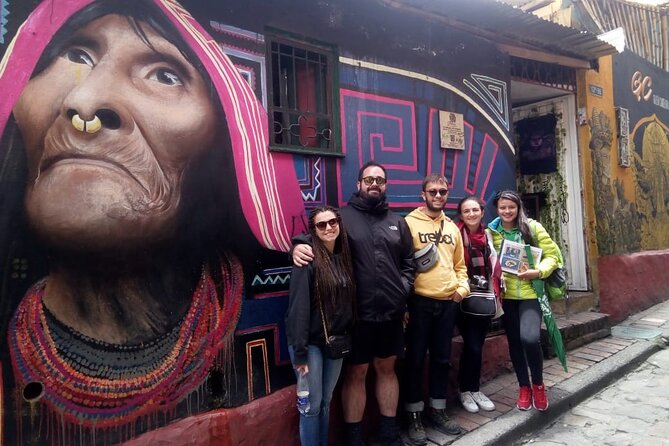
I appreciate that art is not treated as a side note. The tour connects painting and museums with the larger story of Colombian society. That approach gives you more to look for later, whether you visit a Botero collection, another museum, or simply notice how art appears in the streets and public spaces.
A completely different kind of day:
- Bogotá Bike Tour
★ 5.0 · 3,329 reviews - Bogota: Bicycle City Tour
★ 4.9 · 2,156 reviews - Zipaquirá: Salt Cathedral Group Tour with Pickup
★ 4.8 · 1,606 reviews - La Candelaria, Monserrate and Museums Bogotá Private City Tour
★ 5.0 · 1,567 reviews
Chorro de Quevedo and Bogotá’s beginnings
At Plaza del Chorro de Quevedo, the guide explains why the square is associated with the founding of Bogotá. You will spend around 20 minutes here, learning about the site’s place in the city’s origin story and about chicha, the traditional fermented drink of Bogotá.
The chicha discussion is one of the route’s more distinctive details. You learn not only what the drink is, but also why it was prohibited. That turns a beverage into a lesson about culture, authority, and changing ideas of respectable public life.
This square is also a good place to see how the historic center works as a living neighborhood rather than a preserved stage set. You are not only looking at a founding marker. You are hearing how an old custom, a public space, and the modern city remain linked.
The stop has a social side, too. The guide can explain local customs and answer questions about life in Bogotá, which helps keep the tour from becoming a string of dates and famous names.
La Concordia Market: a chance to taste the city
The route moves inside Plaza de Mercado La Concordia for about 20 minutes. Here you can buy a traditional chicha, choose a Colombian fruit juice, or pick up a souvenir. Food and drinks are not included, so bring some Colombian pesos if you want to purchase something.
This is one of the tour’s most useful stops because it gives you a direct choice. You can simply look around and continue, or spend a little extra to try something connected to the story you have just heard. The market also offers a more ordinary setting than the grand plazas and institutional buildings.
I would not treat this as a full food tour. Twenty minutes is brief, and the main purpose is cultural context, not a meal. Still, it is a good opportunity to ask the guide what to try and to get an early sense of Colombian flavors.
If you are buying food, drinks, or souvenirs, keep the group’s timing in mind. The walk continues after the market, and the itinerary has several more stops.
Eje Ambiental, Monserrate, and García Márquez
At Eje Ambiental, the guide points out the view toward Monserrate and explains how to reach the hill. The stop takes about 15 minutes. This is practical information, especially because Monserrate is one of Bogotá’s major outings and requires its own planning.
The guide also identifies a square associated with Gabriel García Márquez’s social meetings. That detail adds a literary thread to the walk. The tour does not focus only on presidents, battles, and political crises. It also considers the writers and artists who shaped Colombia’s public imagination.
You should not expect to visit Monserrate during this tour. The point is orientation and a view, not a hill excursion. If you plan to go later, listen carefully to the directions and recommendations, then set aside separate time.
The García Márquez connection may be especially appealing if you enjoy literature. Even if you do not, it helps show how Bogotá’s plazas and gathering places have served as meeting points for the country’s cultural life.
Gaitán, the Bogotazo, and Colombia’s harder history
The stop at the Jorge Eliécer Gaitán Monument lasts about 20 minutes and moves the tour into some of Colombia’s most painful modern history. You learn who Gaitán was, why he mattered, and how his assassination relates to the Bogotazo and the violence that followed.
This is where the walk becomes more than a pleasant old-town stroll. The guide addresses political conflict directly, giving you background for understanding Colombia beyond tourist clichés. The subject can be difficult, but it is essential for anyone who wants to understand Bogotá’s twentieth-century story.
The quality of the explanation matters greatly here. Paula is praised for her treatment of history and politics, and other guides are described as clear, attentive, and willing to answer questions. The feedback also suggests that guides use pictures and ask the group questions, which can make complicated events easier to follow.
You should allow yourself to listen rather than rush through photographs. This is not a quick landmark stop. It is a central piece of the tour’s purpose, and it helps explain why Colombian history cannot be reduced to colonial buildings, coffee, and colorful streets.
Rosario Square and the final emerald lesson
The final stop is Plazoleta del Rosario, where the guide explains Bogotá’s emerald market. You may see how these stones are sold in an informal setting, and the guide ends with recommendations for restaurants and other places to visit.
This is a fitting finish because emeralds connect commerce, local identity, and the practical side of visiting Bogotá. You are not promised a formal gem demonstration or a purchase, but you may gain useful context for understanding what you see in the center.
Use caution with any shopping decision. The tour provides information, not a guarantee of quality or authenticity for anything you might buy. You can simply observe, ask questions, and save your money for a restaurant or museum.
The ending at Rosario Square is useful for planning. You can finish with a short list of restaurants, museums, coffee spots, and money-changing advice rather than being left at a random corner. The tour ends on Avenida Jiménez, at number 6-71.
Guide style and what the feedback tells me
The strongest pattern in the feedback is the praise for the guides’ presentation. Paula is repeatedly highlighted for simple, interesting explanations and for connecting history with politics and literature. Jennifer receives praise for an informative Spanish-language walk, while Ricardo is noted for being attentive and explaining Bogotá’s story clearly.
Diane is praised for covering much of La Candelaria in a complete route. Rodrigo is described as professional, and Carlos receives strong approval for his explanation of the neighborhood and its surroundings. Diana is also praised for her preparation and understanding of Bogotá’s history and geography.
The best sign here is not one guide’s name alone. It is the consistency of the comments across several guides. The experience seems designed to work through questions, photographs, and conversation rather than a memorized speech delivered at top speed.
Language is worth checking before you book. Some feedback specifically describes Spanish tours, while the supplied tour details do not state a fixed language. If you need English or another language, confirm that at booking.
Price, group size, and walking demands
The listed price is $19.77 per person, with group discounts available. For a three-hour guided introduction to the historic center, that can be good value, especially if you use the final recommendations to choose later museums and meals wisely.
There is one pricing wrinkle. The experience is described as a free tour, yet a price is displayed, and one person chose to pay 50,000 COP at the end. Do not assume how payment works. Check the current booking terms so you know whether the listed amount is the required price, a reservation charge, or part of the operator’s free-tour model.
The group can include up to 30 people. That is not a tiny private walk, so your experience may depend on where you stand and how clearly you can hear. The group limit is still moderate enough for a guide to manage questions, but arrive on time and stay close at street crossings.
You need moderate physical fitness. The walk lasts roughly three hours and includes several neighborhoods, market areas, and public squares. Comfortable shoes are sensible. The tour continues in rain, so carry an umbrella and protect your phone.
The meeting point is Cra. 7 #11-10 in La Candelaria. The walk ends at Rosario Square, at Av. Jimenez de Quesada #6-71. It is near public transportation, and service animals are allowed.
Who should book this tour?
I would choose this walk if you are visiting Bogotá for the first time and want a broad introduction before deciding how to use your remaining days. It suits people who enjoy history, politics, literature, food customs, architecture, and practical local advice in one outing.
It also works well if you have only a short stay. One three-hour route gives you a map of the center and a list of places worth returning to. Families and mixed-interest groups may like the varied subject matter, although everyone should be ready for sustained walking and some serious historical discussion.
You may want something else if you prefer a small private tour, indoor museum visits, or a narrow focus on art, food, or architecture. The group can reach 30 people, the listed stops are mainly viewed from outside, and the tour covers a lot of ground in a limited time.
Free cancellation is available up to 24 hours before the start time. Changes or cancellations made less than 24 hours before the start time are not accepted for a refund.
Should you book the Bogotá historical tour?
Yes, if you want an affordable, story-driven introduction to central Bogotá. The best parts are the route’s variety, the candid treatment of the Bogotazo and political violence, the market stop with chicha, and the practical advice about Monserrate, museums, restaurants, and money exchange.
I would book it early in your stay, preferably when the weather forecast is manageable, while bringing an umbrella anyway. Confirm the language and the exact payment arrangement before booking. If you are comfortable walking for three hours and want Bogotá explained by a local guide rather than seen only through a camera, this is a sensible first step.
FAQ
How long does the historical Bogotá tour last?
The walk lasts approximately three hours.
Where does the tour begin?
It begins at Cra. 7 #11-10 in La Candelaria, Bogotá, Colombia.
Where does the tour end?
The tour ends at Rosario Square, at Av. Jimenez de Quesada #6-71 in La Candelaria.
What places are visited during the tour?
The route includes Plaza de Bolívar, Teatro Colón, the Banco de la República museums area, Plaza del Chorro de Quevedo, La Concordia Market, Eje Ambiental, the Jorge Eliécer Gaitán Monument, and Plazoleta del Rosario.
Are food and drinks included?
No. Drinks, meals, snacks, and purchases are not included. At La Concordia Market, you can buy chicha, a Colombian juice, or a souvenir if you wish.
Does the tour operate in bad weather?
Yes. The tour is not canceled because of bad weather, so you are advised to bring an umbrella.
How large can the group be?
The maximum group size is 30 people. Group discounts are available.
How much does the tour cost?
The listed price is $19.77 per person. Because the experience is also described as a free tour, check the booking terms for the current payment arrangement.
Can I cancel for a refund?
Yes. You can cancel at least 24 hours before the experience start time for a full refund. Cancellations or changes made less than 24 hours before the start time are not accepted.
Just added in Bogota
- Tour of Zipaquirá: Visit the Salt Cathedral and the main squares★ 4.5 · 55 reviews
- Catedral de Sal desde Bogotá en Tren★ 5.0 · 5 reviews
- Zipaquirá and Salt Cathedral Muisca Heritage with Guide – Private★ 4.5 · 23 reviews
- Botanical Garden Bogotá Private Tour (4 Hrs.)★ 5.0 · 13 reviews
- Zipaquira Salt Cathedral★ 4.5 · 12 reviews
- LOCAL GUIDE Zipaquirá PRIVATE TOUR – Salt Cathedral and Salt Oven★ 5.0 · 24 reviews
- Zipaquirá Salt Cathedral: An architectural wonder.★ 4.5 · 24 reviews
- Private Zipaquira Salt Cathedral and Guatavita Lagoon Tour from Bogota★ 4.5 · 44 reviews
Historical Tours, compared.
Historic Center and Getsemaní Shared Walking Tour
Read our review →
Shared Tour of the Historic Candelaria in Bogotá
Read our review →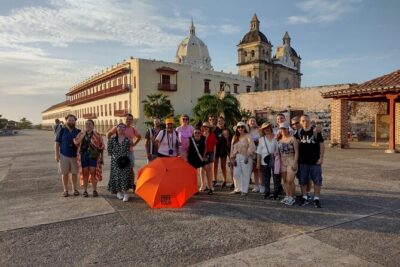
Historic Center & Getsemaní Shared Tour in Cartagena
Read our review →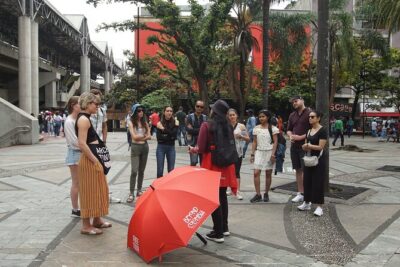
Shared Tour Historic Center of Medellin with Audio System
Read our review →
Medellín Essential: history & local life on E-bike
Read our review →
Medellin Historic Walking Tour with Expert Guide
Read our review →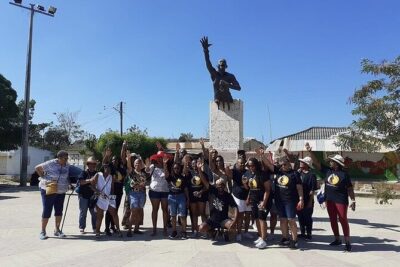
Bogota Shared Gastronomy Tour in the Historic Center
Read our review →Browse the lists this tour appears in