
REVIEW · GETSEMANÍ WALKING TOURS
Historic Walking Tour of the Getsemani Neighborhood
Cartagena’s best stories often hide in side streets. This Getsemaní walk links colorful murals, old houses, small plazas, and local street names with a bilingual guide and photographer. I like the photo-focused format, which gives you more than a standard history talk, and I like the compact route through eight meaningful stops. The main concern is reliability: one published account describes a serious no-show and failed contact on the scheduled day.
You pay $30 per person for roughly 80 minutes to two hours, with a maximum group of 20. That is fair if the guide keeps the history clear and the photographer adds useful images. Still, I would confirm the meeting details before setting out, since the operator’s response to the complaint only apologized for the confusion and did not explain what went wrong.
In This Review
- Key points before you book
- Starting at Centenario Park
- Calle de la Sierpe and the clues in street names
- Calle de San Juan, murals, and artwork for sale
- Plaza del Pozo and the neighborhood’s first well
- Calle de las Chancletas and an early local shop
- Three lanes and the people who shaped Getsemaní
- What the photographer and bilingual guide add
- Is $30 a fair price?
- Timing, group size, and practical comfort
- Who will get the most from this walk?
- Should you book the Getsemaní walking tour?
- FAQ
- Where does the tour begin?
- Where does the tour finish?
- How long does the experience last?
- How much does the tour cost?
- What is included in the price?
- Are admission tickets required at the stops?
- What happens if the weather is poor?
Key points before you book
- Eight Getsemaní stops in one short walk: The route covers Centenario Park, Calle de la Sierpe, Calle de San Juan, Plaza del Pozo, Calle de las Chancletas, and three narrow lanes.
- A photographer is included: You are not simply walking past murals and old façades. The experience is designed to help you capture them.
- Bilingual guiding: The tour is intended for English and Spanish speakers, useful in a neighborhood where names and local stories can be easy to miss.
- Small-to-medium group size: The maximum is 20 people, large enough for a social outing but not a private tour.
- Free cancellation up to 24 hours ahead: Weather or minimum-participant issues may also lead to a new date or a full refund.
- Reliability deserves attention: A reported no-show makes it sensible to verify the start time and meeting point before the day begins.
Starting at Centenario Park
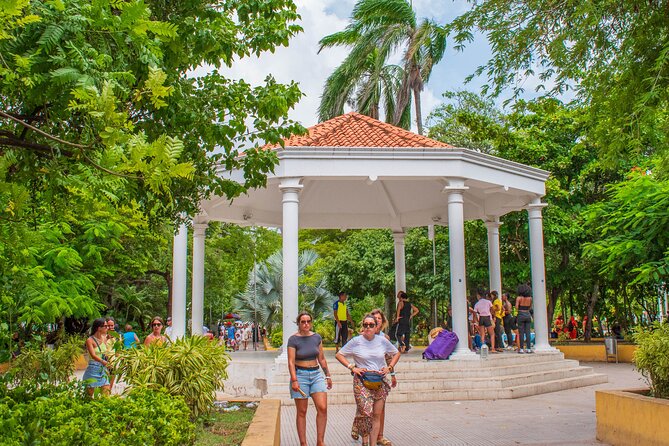
The walk begins at Centenario Park in Getsemaní and ends back at the same meeting point. That simple loop is useful in Cartagena, where a short walk can leave you turned around among walls, plazas, and lanes that look similar at first glance.
The park is the first stop, and the guide explains its place as Cartagena’s first park along with the animals found there. The supplied timing gives this stop about 10 minutes. That is enough for a short introduction, but not enough for a long botanical or architectural lecture.
I see the park as a good opening point because it gives you a sense of place before the route narrows into side streets. Your guide can also set up the larger story of Getsemaní, a neighborhood whose identity is connected to its early residents, public spaces, and street names.
The meeting point is listed as Centenario ParkMedia, Getsemaní. Since a no-show was reported, I would arrive early and keep your booking confirmation available on your phone. The mobile ticket is convenient, but convenience does not replace a clear meeting check.
More History Tours in Cartagena
- Cartagena: Historic Center and Getsemaní Shared Walking Tour
★ 4.9 · 2,716 reviews - Historic Center & Getsemaní Shared Tour in Cartagena
★ 5.0 · 620 reviews - San Basilio de Palenque History Tour
★ 5.0 · 301 reviews
Calle de la Sierpe and the clues in street names
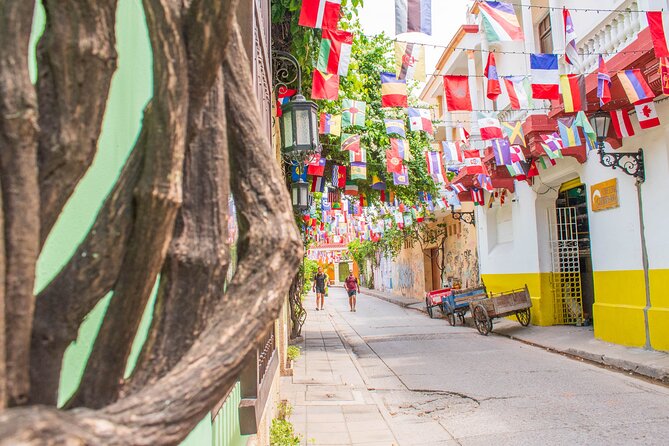
From the park, the group continues to Calle de la Sierpe, translated as the street of the snake. The guide explains how the street received its name. That may sound like a small detail, but it is exactly the kind of local clue that gives a walking tour its value.
You are not only looking at buildings. You are learning how a neighborhood labels itself and remembers its past. A street name can point to an old custom, a local story, or a feature that is no longer obvious. The information supplied here does not give the full explanation, so you should expect the guide to provide the meaning during the stop rather than arrive with a printed account.
The scheduled time is about 10 minutes. That keeps the tour moving, though you may want to take your photograph quickly before the group heads on. If you enjoy street photography, this is a good place to ask the photographer for help with framing or timing.
Calle de San Juan, murals, and artwork for sale
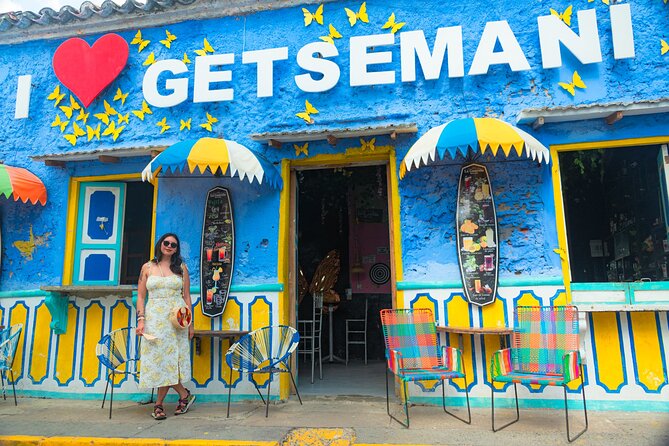
Calle de San Juan is described as the area where the first Getsemaní murals and paintings for sale are located. For many people, this will be the most immediately appealing part of the walk. The artwork gives the neighborhood color and a changing public face, while the guide connects it to the area’s earlier identity.
The word first matters here. The stop is not merely a mural photo break. It points to the beginnings of Getsemaní’s mural tradition, at least as presented by the local guide. You can expect a short explanation, time to photograph the walls, and a chance to look at paintings offered for sale.
I like that this part combines visual appeal with local commerce. A photograph preserves the scene, while a painting may give you a physical reminder of the neighborhood. The tour information does not say whether purchases are part of the ticket, so treat the artwork as an optional viewing opportunity and ask the guide about prices if something catches your eye.
The 10-minute schedule is brief. If you care about photography, avoid spending all your time on the first wall you see. The photographer is included to help you capture the area, so use that support rather than racing through every image alone.
Plaza del Pozo and the neighborhood’s first well
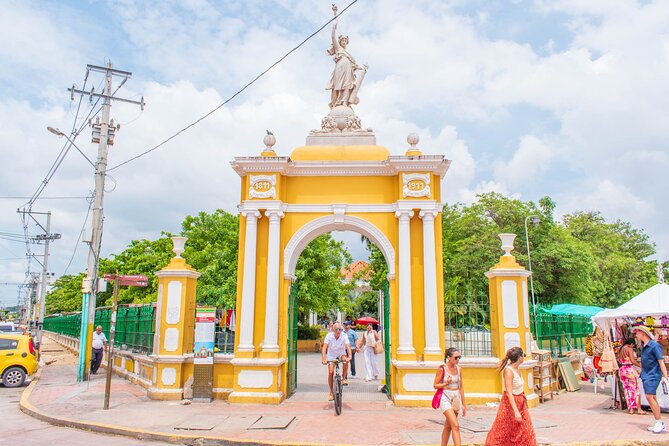
The next stop is Plaza del Pozo, described as the location of the first well in Getsemaní. This gives the route a practical historical detail. Water is not an abstract subject. A well tells you something about how an early neighborhood functioned and where daily life may have centered.
The guide allows about 10 minutes here. That is enough to explain the well’s importance and give you time to photograph the plaza. The stop also breaks up the mural-focused portion of the walk with a more grounded look at basic public infrastructure.
A plaza can be easy to pass without noticing if you are hurrying to the next famous sight. With a guide, you are more likely to pause and ask why this place mattered. That is one of the better reasons to choose a neighborhood walk instead of exploring only Cartagena’s most famous monuments.
Still, the tour description does not promise a long architectural study of the plaza or well. If your main interest is detailed urban history, think of this as a concise introduction rather than a full seminar.
More Walking Tours in Cartagena
- Private Walking Tour in Cartagena Walled City & Getsemaní
★ 5.0 · 1,357 reviews - Cartagena: Walled City and Getsemani Shared Walking Tour
★ 4.5 · 352 reviews - Playa Morena Beach Club Whith Lunch And Walking tour of fort San Fernando
★ 5.0 · 218 reviews - Historic and Movie Bike or Walking Tour
★ 5.0 · 189 reviews
Calle de las Chancletas and an early local shop
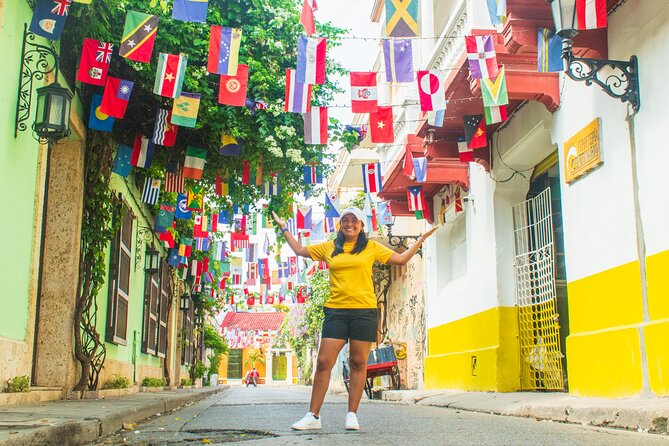
Calle de las Chancletas brings another name-based story. The guide explains why the street has that name and identifies the first store in Getsemaní. This is a useful pairing because it links the physical street with the neighborhood’s commercial past.
The first shop can help you picture Getsemaní as a lived-in community rather than only a pretty part of Cartagena. A commercial detail makes the story more human. It suggests where people obtained goods and how the area served its own residents.
Again, the planned stop lasts around 10 minutes. You will have time for the explanation and photographs, but not an extended shopping visit. The supplied information does not say that the original shop remains open, so do not book this expecting a guaranteed retail stop or a purchase opportunity.
This is also a place where the bilingual guide matters. Street names can lose their force in translation. Hearing the Spanish name and then receiving the explanation in English can help you remember the story after the walk is over.
Three lanes and the people who shaped Getsemaní
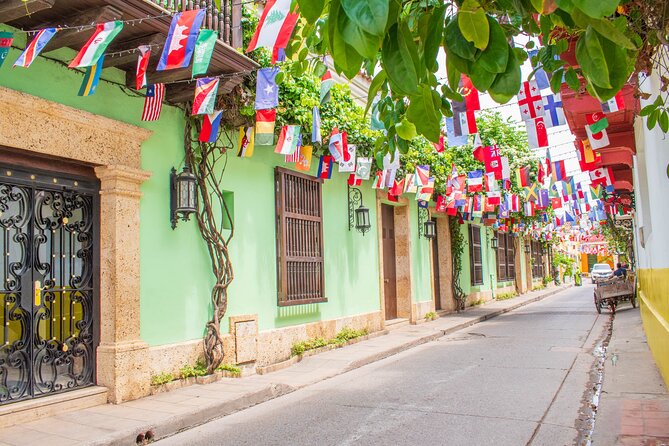
The last three stops are Callejón Ancho, Callejón Angosto, and Calle Del Guerrero. Each receives about 10 minutes, and all three focus on the first residents of Getsemaní.
These narrow lanes appear to be the most concentrated history section of the route. Instead of moving from one unrelated sight to another, the guide uses three connected spaces to discuss the people who established the neighborhood. That focus can help you understand Getsemaní as a community with roots, not simply as a collection of colorful walls.
Callejón Ancho means wide lane, while Callejón Angosto means narrow lane, though the tour information does not provide the full reason for either name. The names themselves suggest how carefully you should watch your footing and your surroundings. A narrow passage is not the place for a large group to spread out, so stay close enough to hear the guide.
Calle Del Guerrero completes the route’s people-centered section. The description again highlights the first residents rather than a single building or attraction. I like this decision. The most useful neighborhood tours make ordinary streets meaningful, and these lanes appear to do that through local settlement stories.
The final section may also be the most challenging for photography. In a lane, you can face tight angles, people passing through, and limited space for the whole group. The included photographer should help, but the tour does not promise a set number of edited images or professional portraits. Consider the photographer an included guide to taking pictures, not a guaranteed private photo session.
What the photographer and bilingual guide add
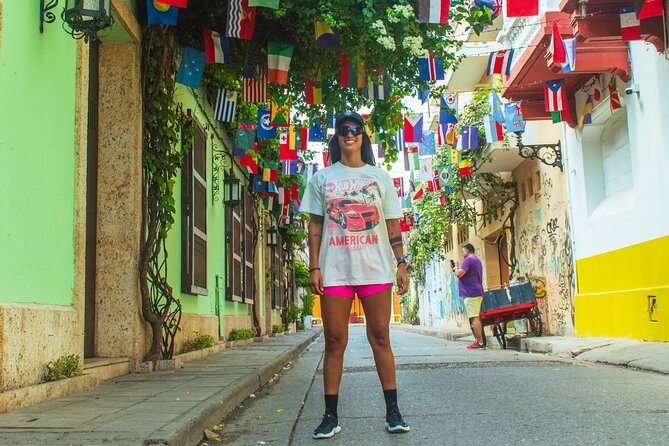
The photographer is the feature that sets this experience apart from a basic walking route. Getsemaní’s murals and colonial houses are easy subjects to photograph, but a picture improves when someone points out the best angle, detail, or moment.
The supplied information does not say how many photographs you receive, whether they are edited, or when they are delivered. Ask about those details before booking if finished images are important to you. The safest expectation is assistance during the walk, not a formal portrait package.
The bilingual guide is equally important. The route depends on explanations of names, early residents, murals, and the first well. Without clear storytelling, several stops could become quick photo pauses. The quality of the experience will depend heavily on how well the guide turns those short stops into a connected story.
Because the group can reach 20 people, stand where you can hear. If you arrive at the back, a 10-minute stop can pass before you catch the main point. A group of 20 is not huge, but it is not intimate either.
Is $30 a fair price?
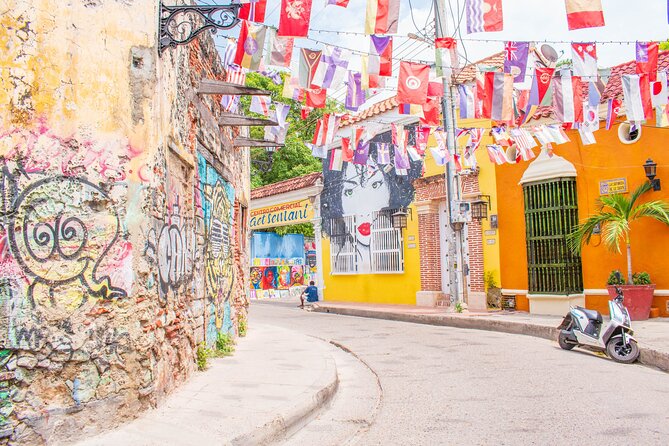
At $30 per person, this tour sits in a reasonable range for a short guided walk that includes both a bilingual guide and a photographer. All eight stops are free public locations, so the price pays for labor, organization, interpretation, and photography help rather than admission tickets.
That distinction matters. You are not buying entry to a museum or a private historic building. You are paying for local context and a guided route through streets you could technically visit on your own. If you value clear explanations and want help making better photographs, the cost can be worthwhile.
The value is weaker if you only want to wander, take your own pictures, and read about Getsemaní independently. The route is also short, with each stop planned for about 10 minutes. You are buying a focused introduction, not a full-day cultural program.
The average booking lead time is 26 days. That suggests you should not assume a same-day place will be available. If your schedule is fixed, reserve ahead, then confirm the starting information before the morning of the walk.
Timing, group size, and practical comfort
The stated duration ranges from 1 hour 20 minutes to two hours. That is a meaningful difference for planning. The route lists eight stops at roughly 10 minutes each, which accounts for about 80 minutes before walking time, questions, and photography are added.
You should allow the full two hours in your schedule. That gives you room for slower movement, explanations, and photographs without needing to leave early.
The experience begins and ends at Centenario Park. It is near public transportation, which makes the meeting point practical, though no specific route or vehicle is provided. Service animals are allowed, and the activity says most people can participate.
The tour requires good weather. If poor weather cancels it, you are offered another date or a full refund. The same applies if the minimum number of participants is not met. Free cancellation is available until 24 hours before the start time. After that point, changes and refunds are not accepted.
One warning deserves more weight than the fine print. A published complaint describes the operator failing to appear at the meeting point and later claiming the group had come back for the party. The customer also reported difficulty reaching both the operator and the booking representative. The provider replied with an apology for the misunderstanding, but no fuller explanation was given.
That does not prove every departure will fail. It does mean I would protect your day by checking the meeting point, arrival time, and contact method in advance. If this walk is scheduled beside a cruise departure, airport transfer, or expensive timed ticket, the reported communication problem becomes more serious.
Who will get the most from this walk?
I would recommend this experience to you if you want a short introduction to Getsemaní, enjoy street photography, and prefer local stories tied to actual streets. The route is especially suited to someone who wants a guided start before exploring more independently.
It also fits a first visit when your time is limited. In less than two hours, you receive a route through a park, several named streets, two plazas or lanes, murals, paintings, and stories about early residents.
You may want another option if you need a guaranteed private guide, a highly detailed history lecture, or confirmed professional photographs delivered afterward. The group can reach 20 people, and the public feedback includes a troubling service failure.
Families and mixed-age groups may find the length manageable because the walk is not an all-day commitment. The activity says most people can participate, but it does not provide detailed information about seating, surfaces, restrooms, or pace. If those needs matter to you, ask before booking.
Should you book the Getsemaní walking tour?
Book it if the combination of street history and photography is the main draw. The route is well chosen on paper: it moves from Centenario Park through murals, a historic well, old commercial stories, and narrow lanes tied to Getsemaní’s first residents. At $30, that is a fair price for a focused guided introduction.
I would not make it the only fixed activity of an important day until you confirm the operator’s arrangements. The no-show complaint is the clearest weakness in the available information, and the provider’s short apology does not remove that concern.
My call: book with a little caution if you want the route and photo help, but verify the departure before relying on it. If clear communication is essential, choose a tour with a stronger service record.
FAQ
Where does the tour begin?
It begins at Centenario ParkMedia in Getsemaní, Cartagena de Indias, Bolívar, Colombia.
Where does the tour finish?
The walk ends back at the meeting point in Centenario Park.
How long does the experience last?
The stated duration is approximately 1 hour 20 minutes to two hours.
How much does the tour cost?
The listed price is $30 per person.
What is included in the price?
A photographer and a bilingual guide are included.
Are admission tickets required at the stops?
The listed stops have free admission, with admission included for Callejón Ancho, Callejón Angosto, and Calle Del Guerrero.
What happens if the weather is poor?
If the experience is canceled because of poor weather, you are offered a different date or a full refund.
More Getsemani Walks
- Cartagena Antigua & Barrio Getsemani group with audio system
★ 5.0 · 658 reviews - Getsemani neighborhood in group: art and culture with Audio System
★ 5.0 · 447 reviews - Cartagena Private Tour of the Walled City & Getsemani
★ 5.0 · 227 reviews - Street Food Tour in Cartagena Walled City and Getsemani
★ 4.5 · 137 reviews
Just added in Cartagena
- Self-Guided Audio Tour: Pirate Tales in Cartagena★ 3.0 · 2 reviews
- Private History Photography Tour★ 5.0 · 17 reviews
- Paue Island Tour in the Rosary Islands★ 5.0 · 1 review
- Totumo Volcano★ 3.5 · 15 reviews
- Palmarito Beach★ 3.5 · 4 reviews
- Party without limits! Cartagena; VIP Party.★ 4.5 · 32 reviews
- Paragliding Experience in Cartagena★ 5.0 · 8 reviews
- Tour cultural to san Basilio de Palenque from cartagena★ 5.0 · 45 reviews
Getsemaní Walking Tours, compared.
Historic Center and Getsemaní Shared Walking Tour
Read our review →
Private Walking Tour in Cartagena Walled City & Getsemaní
Read our review →
Cartagena Antigua & Barrio Getsemani group with audio system
Read our review →
Historic Center & Getsemaní Shared Tour in Cartagena
Read our review →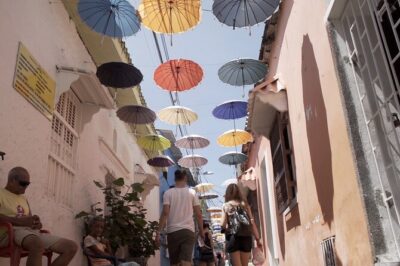
Getsemani neighborhood in group: art and culture with Audio System
Read our review →
Cartagena Private Tour of the Walled City & Getsemani
Read our review →
Street Food Tour in Cartagena Walled City and Getsemani
Read our review →Browse the lists this tour appears in