

REVIEW · HISTORICAL TOURS
Freetour Cartagena and Gethsemane, Caribbean Heritage and Tradition
Cartagena’s best stories begin on foot. This low-cost walking tour links the old city’s major squares, churches, walls, and fortifications with the street life of Getsemaní, giving you a useful first look at the city in two to three hours. I like the route for its strong cultural focus, especially the way it connects Indigenous, Afro-Colombian, and Spanish influences. I also like that it ends in Getsemaní, where Cartagena feels less formal and more personal.
The tour costs $12 per person, a fair price for a small-group experience with a guide and nine stops. The main concern is language consistency. Nancy Paola receives repeated praise for her Spanish-language guiding, warmth, and storytelling, but one serious complaint describes a guide whose English was too limited for a proper tour. If you need fluent English, confirm that before booking.
In This Review
- Key Points to Know Before You Go
- Starting Under Cartagena’s Clock Tower
- Plaza de los Coches and Cartagena’s Mixed Identity
- Plaza de la Aduana and the Port That Made Cartagena Important
- San Pedro Claver: Faith, Slavery, and Moral Conflict
- Baluarte de San Ignacio and the City Walls
- Plaza de Bolívar and the Heart of the Old City
- Santa Catalina Cathedral, the City’s Great Landmark
- Plaza de Santo Domingo and Stories That Linger
- Getsemaní: Resistance, Food, and Everyday Cartagena
- What the $12 Price Really Buys You
- The Guide Makes or Breaks the Experience
- Who Should Book This Cartagena Walk?
- Practical Details for a Smoother Walk
- Should You Book It?
- FAQ
- How much does the Cartagena and Getsemaní tour cost?
- How long does the tour last?
- Where does the tour start?
- Where does the tour end?
- What places are included in the route?
- Is transportation included?
- How many people can join the tour?
- Can I cancel for a full refund?
Key Points to Know Before You Go
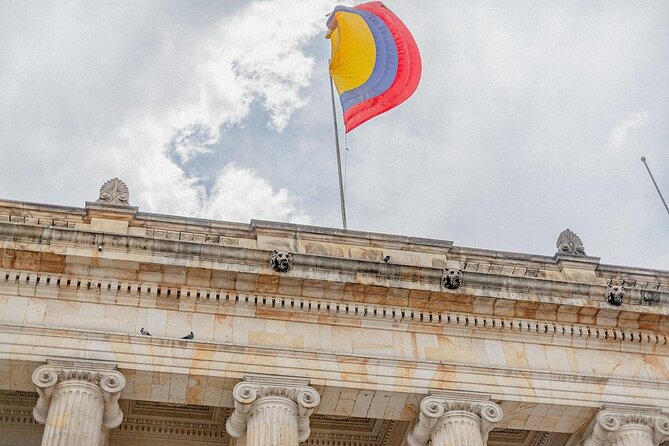
- Torre del Reloj begins the walk: Meet at Cartagena’s famous clock tower, the main entrance to the old city.
- Nine central stops cover a lot of ground: You visit major plazas, the cathedral, a church square, a section of the city walls, and Getsemaní.
- Afro-Caribbean culture gets real attention: The route explains how Indigenous, African, and Spanish traditions shaped Cartagena.
- Getsemaní is the tour’s most local-feeling section: Expect stories about resistance, neighborhood identity, food, customs, walls, and legends.
- The group can include up to 20 people: That is manageable, though less personal than a private walk.
- Language needs checking: Strong praise centers on Nancy Paola, especially in Spanish, while English ability may vary.
Starting Under Cartagena’s Clock Tower
Your meeting point is the Monumento Torre del Reloj at Boca del Puente, at the entrance to El Centro. This is a practical place to begin because the clock tower is one of Cartagena’s easiest landmarks to find, and it immediately puts you inside the old city’s historic core.
The first stop lasts about 10 minutes. That may sound brief, but the clock tower is mainly used to set the scene. You begin with the city’s walls, its old entrance, and the fact that Cartagena de Indias was built as a fortified Caribbean port.
I like this opening because it gives you a clear sense of place before the walk moves into the plazas. You are not starting with a random street corner. You are entering through one of the city’s most recognizable gateways.
The area is near public transportation, though no private transportation is included. You should arrive ready to walk from the start, with comfortable shoes and water. The tour ends in Getsemaní rather than returning to the clock tower, so plan your next stop from that neighborhood.
More History Tours in Cartagena
- Cartagena: Historic Center and Getsemaní Shared Walking Tour
★ 4.9 · 2,716 reviews - Historic Center & Getsemaní Shared Tour in Cartagena
★ 5.0 · 620 reviews - San Basilio de Palenque History Tour
★ 5.0 · 301 reviews
Plaza de los Coches and Cartagena’s Mixed Identity
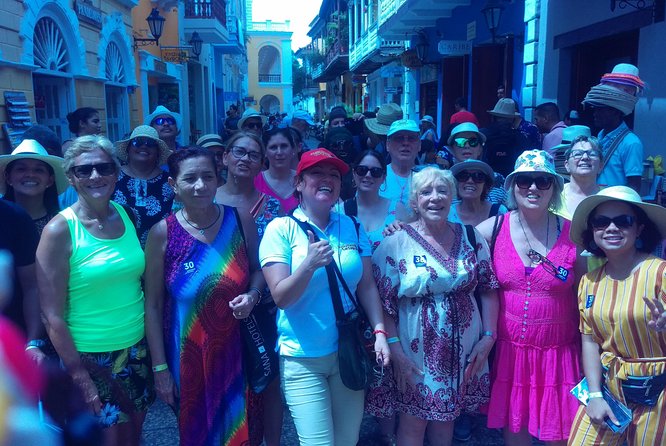
At Plaza de los Coches, the guide uses the square to explain Cartagena’s cultural mixture. The key idea is simple but important: the city cannot be understood through Spanish colonial architecture alone.
The story includes Indigenous, Afro-Colombian, and Spanish influences. That matters because Cartagena’s food, music, language, religion, neighborhoods, and traditions all grew from these overlapping cultures. A good explanation here helps you read the rest of the city with more care.
The stop lasts around 10 minutes, so do not expect a long historical lecture. Instead, think of it as a short introduction to the people and forces that shaped Cartagena. I value this part because it pushes the walk beyond beautiful buildings and dates.
You may also notice that the main historic center can feel polished and heavily visited. This stop helps balance that first impression by pointing toward the people and traditions behind the architecture.
Plaza de la Aduana and the Port That Made Cartagena Important
The next stop is Plaza de la Aduana, a square tied to commerce and Cartagena’s role as the first commercial port of the Spanish Crown. This is where the tour shifts from cultural identity to trade, power, and empire.
The square helps explain why Cartagena grew into such an important city. Its position on the Caribbean made it a key point for movement of goods, people, and wealth. The guide’s job here is to connect commerce with the city’s buildings and public spaces.
I like this stop because it shows that old Cartagena was not built simply for beauty. Its streets and plazas served a practical purpose. Trade shaped the city, and that trade was tied to the colonial system and its harsh social divisions.
You will hear a broad explanation rather than a specialist seminar. The short format keeps the walk moving, but it also means you may want to ask questions if commerce, slavery, or colonial administration interests you.
San Pedro Claver: Faith, Slavery, and Moral Conflict
Plaza de San Pedro Claver introduces one of Cartagena’s most important historical figures. Pedro Claver became known during the colonial period as a defender of enslaved people and is now an official patron of the city.
This stop gives the tour a chance to address a difficult part of Cartagena’s past. The city’s wealth and importance were connected to systems that caused great suffering. A walk that discusses only fortifications and grand churches would give you an incomplete picture.
The square is also one of the city’s most recognizable public spaces. You can expect the guide to connect the church, the plaza, and Pedro Claver’s role to larger questions about religion, colonial society, and human dignity.
I consider this one of the most valuable stops because it adds moral weight to the sightseeing. Cartagena’s past is not just colorful architecture and Caribbean charm. It also includes exploitation, resistance, and people who challenged the order of their time.
A completely different kind of day:
- Cartagena Island Hopping: 5-Stop Rosario Islands Tour with Lunch
★ 4.5 · 4,903 reviews - Cartagena: Rosario Islands Catamaran with Lunch and Snorkel
★ 4.5 · 2,479 reviews - Full-Day Rosario Islands Including Barú, Bocachica & Playa Blanca
★ 4.0 · 1,729 reviews - Tour De Palenque, Road to Emancipation.
★ 5.0 · 1,678 reviews
Baluarte de San Ignacio and the City Walls
At Baluarte de San Ignacio, the route reaches one of the city’s defensive structures. A baluarte is a fortified platform built to help defend the walls and harbor. The stop combines a view with a story about how Cartagena protected itself.
The old fortifications are among the city’s best places to pause. From here, you can better understand why the walls mattered and how the city’s defensive design shaped its identity. The description also points to the site as a good place to watch the sunset, and the nearby fortification areas are useful for seeing Cartagena from a different angle.
You should keep your expectations realistic. This is a short stop of about 10 minutes, not an extended wall walk. Still, a guide can make the stonework more meaningful by explaining its role rather than leaving you to see it as a photo backdrop.
The group size may reach 20 people. That is small enough for a standard walking tour, but you may need to stay close to hear clearly, especially near open areas or busy streets.
Plaza de Bolívar and the Heart of the Old City
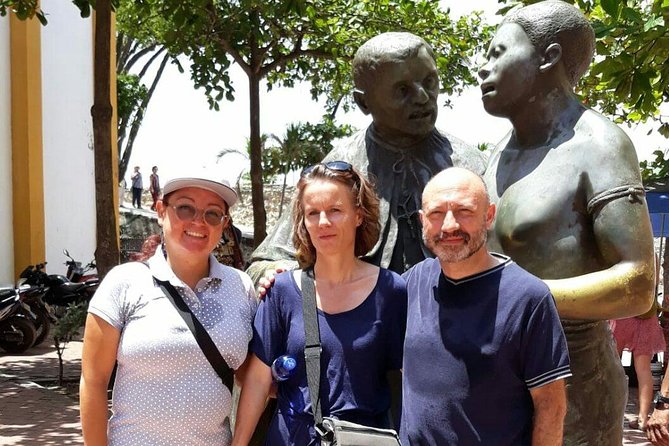
Plaza de Bolívar is presented as one of the main squares to understand. The area includes the Palace associated with Simón Bolívar and the Street of the Concern behind it, giving the guide several ways to discuss political history and public life.
This is a useful point in the walk because you have already heard about trade, faith, slavery, and defense. The plaza lets those themes come together around leadership and national identity.
The stop lasts around 10 minutes. You will not cover every chapter of Bolívar’s life or Colombia’s independence movement, but the square gives you a place to ask focused questions. I would pay attention to how the guide links the space to the Liberator rather than treating the plaza as another quick photograph.
It is also a good reminder that plazas in Cartagena are not merely decorative. They have served as places of authority, ceremony, gathering, and public memory.
Santa Catalina Cathedral, the City’s Great Landmark
The Catedral de Santa Catalina de Alejandría is described as the jewel in the crown of Cartagena. Even from a short exterior visit, the cathedral gives the route a strong architectural centerpiece.
The stop is brief, around 10 minutes, so the exact depth of the explanation may depend on the guide and the questions you ask. You can expect the cathedral to be discussed as an important religious and visual landmark in the old city.
I like having this stop after Plaza de Bolívar because it keeps the route from becoming a string of unrelated squares. The cathedral belongs to the same civic and colonial setting, and its presence helps you see how religious buildings shaped the old city’s public life.
If you want a detailed architectural tour or an extended interior visit, this experience may feel too fast. Its goal is orientation and context, not a long examination of every building.
Plaza de Santo Domingo and Stories That Linger
Plaza de Santo Domingo is one of the most famous and recognizable places on the route. The guide uses the square to share stories and legends, giving the walk a lighter, more atmospheric turn after the heavier discussion of colonial trade and slavery.
The square is also associated with Café del Mar, located by the fortifications. The nearby walls are noted as a good place to observe the city and its sunset. If your schedule allows, this is an area worth revisiting after the tour, especially when you can take more time for the view.
You should remember that the tour itself may not linger for sunset. The stop is about 10 minutes, and the full experience lasts roughly two to three hours. Ask your guide where the best nearby viewpoint is if you want to return later.
I enjoy this part of the route because legends give Cartagena a different tone. Just keep the distinction clear: stories and local folklore are not the same as documented history. A good guide should help you enjoy both without confusing them.
Getsemaní: Resistance, Food, and Everyday Cartagena
The final and longest stop is Barrio Getsemaní, with about 20 minutes devoted to the neighborhood. This is where the tour’s title, Caribbean Heritage and Tradition, makes the most sense.
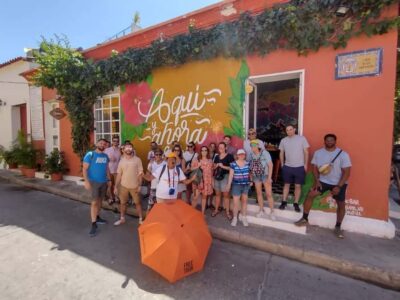
Getsemaní is presented as the real Cartagena, with streets that speak of resistance and walls filled with characters and legends. The guide also brings in taste, tradition, and heritage. That combination matters because Getsemaní is not just a collection of colorful streets. It has its own identity and a strong connection to Cartagena’s working-class and Afro-Caribbean culture.
You will hear stories about the neighborhood and its customs while seeing a side of the city that differs from the formal colonial center. The contrast is one of the best reasons to book this particular route. The old city gives you monumental buildings and official history. Getsemaní gives you neighborhood character.
The 20-minute stop is still short for such a lively area. You may leave wanting more time, which is not a bad result. I would use the final section to note places you want to revisit for food, photographs, or a slower walk.
The endpoint is in Getsemaní at Carrera 9 No. 39-12. Since the tour finishes there, you can continue exploring on your own, provided you have enough time and know where you need to go next.
What the $12 Price Really Buys You
At $12 per person, this is a strong-value introduction to Cartagena. You receive a guided walk lasting about two to three hours and covering nine locations, with no separate admission fees listed for the stops.
The value comes from the connections between places. You are not paying only to be led from one plaza to another. The route ties together culture, trade, religion, defense, political memory, legends, and neighborhood life.
The price does not include private transportation. That should not be a problem for most people because the experience is built as a walking tour, and the start and end points are within central Cartagena. You should budget separately for anything you choose to buy during or after the walk.
The maximum group size is 20. For $12, that is reasonable. If you prefer a quiet, highly tailored experience with long conversations at every stop, a private guide would likely suit you better.
The Guide Makes or Breaks the Experience
Nancy Paola is the guide most strongly associated with the positive side of this experience. She is praised for her enthusiasm, patience, warmth, and ability to explain Cartagena’s architecture, colonial past, class divisions, wars, legends, and natural importance.
Her Spanish guiding receives especially strong praise. One person who was learning Spanish found her patient and encouraging, while several Spanish-language comments describe her as an excellent guide with a strong gift for telling Cartagena’s story.
English is the main point to clarify before you book. One serious complaint describes a guide named Nancy who had very limited English and treated the tour partly as an opportunity to practice the language. A replacement guide was brought in, but the experience still ended early because communication and guiding quality remained poor.
This is not a minor issue if you have only one day in Cartagena. Contact the operator before booking and ask directly who will lead the tour and how fluent that guide is in English. The stated rating is 4.8 out of 5, with 96 percent recommending the experience, but the language concern is specific enough that you should not ignore it.
Who Should Book This Cartagena Walk?
I would recommend this tour to a first-time visitor who wants a broad introduction to central Cartagena without spending much. It suits people who enjoy history, public squares, architecture, local stories, and a final stop in a more neighborhood-focused setting.
It is also a good choice if you want to understand the city’s cultural mixture rather than simply photograph colonial buildings. The focus on Indigenous, African, and Spanish influences gives the walk more substance than a basic landmark checklist.
You should think twice if you need guaranteed fluent English, dislike group tours, or want long visits inside churches and historic buildings. The stop lengths are short, and the tour works best as an overview.
It can also suit Spanish learners. Nancy Paola’s patience and enthusiasm were singled out by someone taking the tour in Spanish while learning the language. Just make sure your own language ability matches the guide’s before you commit.
Practical Details for a Smoother Walk
Confirmation is provided at booking, and free cancellation is available up to 24 hours before the start time. Changes or cancellations made within 24 hours are not accepted for a refund.
The start is at Torre del Reloj, while the finish is in Getsemaní. Check both points carefully so you understand that this is a one-way city walk rather than a loop.
The tour is near public transportation, and most people can participate. Since private transportation is not included, wear shoes suitable for several hours on foot and keep your day flexible after the final stop.
Arrive ready to listen closely. With up to 20 people and several open plazas, standing near the guide will help you hear the explanations. If the guide’s language ability does not match what you booked, address it immediately rather than waiting until the route is over.
Should You Book It?
Book this tour if you want an affordable, story-led introduction to Cartagena that moves from the clock tower through the old city and finishes in Getsemaní. Its best qualities are the cultural context, the attention to Cartagena’s difficult past, the fortification views, and the warm, engaging work associated with Nancy Paola.
I would not book without confirming the language of the assigned guide. For Spanish speakers, Spanish learners, and budget-minded first-time visitors, the tour looks like a very good buy at $12. For English speakers, the value depends almost entirely on receiving a guide who can explain the history clearly.
FAQ
How much does the Cartagena and Getsemaní tour cost?
The tour costs $12 per person.
How long does the tour last?
The walking experience lasts approximately two to three hours.
Where does the tour start?
It starts at the Monumento Torre del Reloj, Boca del Puente, in El Centro, Cartagena de Indias.
Where does the tour end?
It ends in Barrio Getsemaní at Carrera 9 No. 39-12, Cartagena de Indias.
What places are included in the route?
The route includes Torre del Reloj, Plaza de los Coches, Plaza de la Aduana, Plaza de San Pedro Claver, Baluarte de San Ignacio, Plaza de Bolívar, Catedral de Santa Catalina de Alejandría, Plaza de Santo Domingo, and Barrio Getsemaní.
Is transportation included?
No. Private transportation is not included. The experience is a walking tour, and the meeting area is near public transportation.
How many people can join the tour?
The tour can have a maximum of 20 people.
Can I cancel for a full refund?
Yes. You can cancel at least 24 hours before the experience start time for a full refund. Cancellations or changes made less than 24 hours before the start time are not accepted for a refund.
Just added in Cartagena
- Private History Photography Tour★ 5.0 · 17 reviews
- Self-Guided Audio Tour: Pirate Tales in Cartagena★ 3.0 · 2 reviews
- Paue Island Tour in the Rosary Islands★ 5.0 · 1 review
- Totumo Volcano★ 3.5 · 15 reviews
- Palmarito Beach★ 3.5 · 4 reviews
- Party without limits! Cartagena; VIP Party.★ 4.5 · 32 reviews
- Paragliding Experience in Cartagena★ 5.0 · 8 reviews
- Tour cultural to san Basilio de Palenque from cartagena★ 5.0 · 45 reviews
Historical Tours, compared.
Historic Center and Getsemaní Shared Walking Tour
Read our review →
Shared Tour of the Historic Candelaria in Bogotá
Read our review →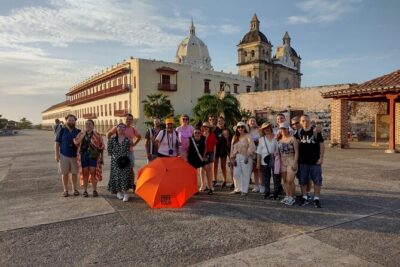
Historic Center & Getsemaní Shared Tour in Cartagena
Read our review →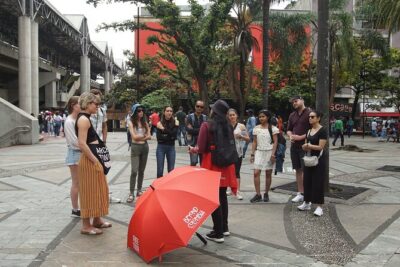
Shared Tour Historic Center of Medellin with Audio System
Read our review →
Medellín Essential: history & local life on E-bike
Read our review →
Medellin Historic Walking Tour with Expert Guide
Read our review →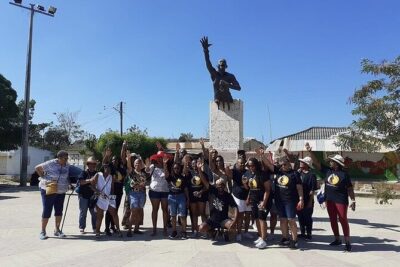
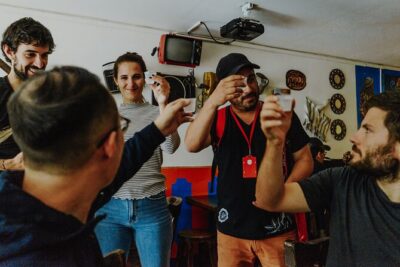
Bogota Shared Gastronomy Tour in the Historic Center
Read our review →Browse the lists this tour appears in