
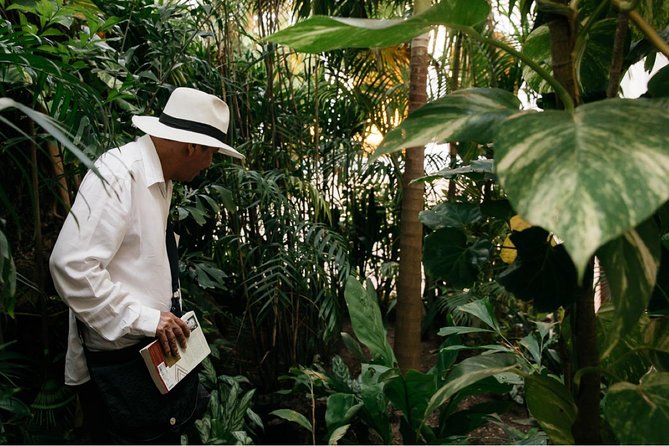
REVIEW · HISTORICAL TOURS
Explore / A Historic Walking Tour
Cartagena’s prettiest streets hide its hardest stories. This three-hour walk links the Centro Historico with nearby Getsemaní, using colonial doors, balconies, plazas, murals, and local stories to make the city easier to understand. I like the small group limit of 15 and the chance to see many central sights without wasting time finding them yourself.
I also like that the tour is in English, with guides such as Ronald Monsalve and Manuel praised for warmth, clear explanations, translation help, and a relaxed pace in the heat. The main concern is serious: the provider, This Is Cartagena, has reportedly stopped working with TripAdvisor, leaving at least one customer without a guide or communication.
The meeting point is Cl. 30 #8b-108 in Getsemaní, and the walk returns there after about three hours. At $55 per person, the price can make sense if you want historical context and a ready-made route, but I would confirm the company’s current operating status before booking.
In This Review
- Key points to know before booking
- Starting among Getsemaní’s colorful streets
- Why a guided route helps in the Centro Historico
- The church plaza and Cartagena’s fight against Spain
- Murals, workshops, and the city beyond monuments
- Centennial Park and the Slave Plaza
- The emerald factory and museum stop
- The guides can shape the whole experience
- Is $55 a fair price for three hours?
- Heat, pace, and practical comfort
- The important warning about booking reliability
- Who will enjoy this walking tour most?
- Should you book the Historic Walking Tour?
- FAQ
- How long does the Historic Walking Tour last?
- Where does the tour begin?
- Where does the tour end?
- How much does the tour cost?
- Is the tour offered in English?
- How many people can join the tour?
- What sights are included?
- Can I cancel for a full refund?
Key points to know before booking
- Start in Getsemaní: The walk begins at Cl. 30 #8b-108 and returns to the same place.
- Three hours on foot: Plan for a substantial walk in Cartagena’s heat, with a moderate fitness level recommended.
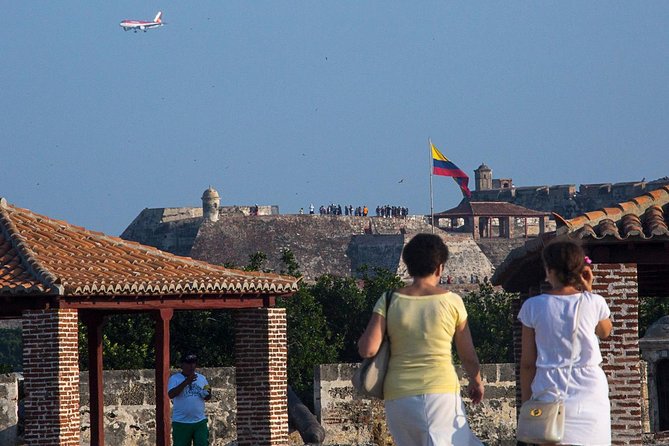
- Main sights in one route: Expect the Centro Historico, church plazas, Centennial Park, the Slave Plaza, murals, an emerald factory and museum, and a furniture-making district.
- English-speaking guide: The tour is offered in English, with translation help available from the guide.
- Small group format: The maximum group size is 15 people, a useful limit in narrow old-city streets.
- Booking caution: A published complaint reports a no-show and failed communication, so verify current availability before paying.
Starting among Getsemaní’s colorful streets
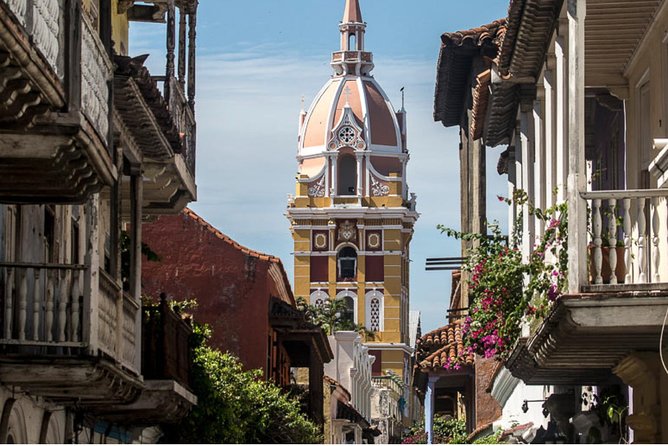
The meeting point at Cl. 30 #8b-108 places you in Getsemaní, a district that gives the tour a useful opening chapter. Instead of beginning with a dry list of dates, you start near streets known for murals, local life, and the city’s changing character.
That matters because Cartagena is not only a postcard of balconies and church towers. Getsemaní helps you see the city as a lived-in place, with working neighborhoods beside major sights. The walk can then connect this everyday setting with the formal colonial center.
You should arrive ready to walk, not simply stand at monuments. The route lasts about three hours and ends back at the meeting point, so you do not need to arrange a separate pickup at the far end.
The tour is listed as a mobile-ticket experience, and confirmation is normally sent at booking. If you book within 10 hours of the start time, confirmation may take longer and depends on availability. That is a small but important reason to avoid leaving this one until the last minute.
More History Tours in Cartagena
- Cartagena: Historic Center and Getsemaní Shared Walking Tour
★ 4.9 · 2,716 reviews - Historic Center & Getsemaní Shared Tour in Cartagena
★ 5.0 · 620 reviews - San Basilio de Palenque History Tour
★ 5.0 · 301 reviews
Why a guided route helps in the Centro Historico
Cartagena’s old center is easy to admire and surprisingly easy to misunderstand. A guide can point out why a church plaza matters, what happened in a particular square, and how social history shaped the elegant streets you are seeing.
The walk is built for people who want more than photographs. The focus is on the stories behind doors and balconies, including the difficult parts of Cartagena’s past. That gives the architecture a human meaning instead of treating every attractive facade as decoration.
I especially like the promise of seeing many highlights in a single outing. If you have only a short stay, a three-hour route can help you get your bearings before you return to favorite areas on your own.
The group cap of 15 is also practical. Cartagena’s old streets can feel tight, and a large crowd makes it harder to hear or ask questions. A group of this size is not private, but it should be easier to follow than a mass tour.
The tradeoff is that a fixed route cannot give every sight the same amount of time. You will see a broad selection rather than spend a long period inside each place. This works best as an orientation walk, not as a specialist museum tour.
The church plaza and Cartagena’s fight against Spain
One of the most meaningful stops is a church plaza connected with the beginning of the revolution against Spain. That detail gives the walk a strong historical anchor.
A plaza can look peaceful today, yet its role in political change may be hard to spot without explanation. This is where a guide adds real value. You get the setting, the event, and the local meaning in one place.
Expect the guide to explain the political and social background rather than merely identify the church. The available description points to stories about both Cartagena’s formal history and its people, which should make this stop more useful than a quick photo pause.
Still, the exact amount of time spent here depends on the guide and the group. If you have a special interest in the independence period, ask questions early. The walk covers several districts and cannot linger everywhere.
Murals, workshops, and the city beyond monuments
The route includes a furniture-making district and murals along the streets. These stops matter because they widen your view of Cartagena beyond forts, churches, and colonial houses.
The furniture district offers a glimpse of working life and local trade. You might find the contrast useful: grand old-city architecture on one side, practical craft and neighborhood activity on the other. It is the kind of detail that helps you understand how a historic center remains part of a real city.
The murals add a visual layer to the walk. They can show how modern Cartagena expresses identity in public space, while the old buildings connect you to earlier centuries. The combination gives the tour a more varied rhythm than a route made only of monuments.
Do not expect every workshop or mural to be presented as a formal attraction. These are parts of the street experience, and their value comes from the guide’s explanation and your attention to the surroundings.
This portion may suit you especially well if you enjoy urban culture and local scenes. If you want only major architectural sights, you may prefer a more narrowly focused colonial tour.
More Walking Tours in Cartagena
- Private Walking Tour in Cartagena Walled City & Getsemaní
★ 5.0 · 1,357 reviews - Cartagena: Walled City and Getsemani Shared Walking Tour
★ 4.5 · 352 reviews - Playa Morena Beach Club Whith Lunch And Walking tour of fort San Fernando
★ 5.0 · 218 reviews - Historic and Movie Bike or Walking Tour
★ 5.0 · 189 reviews
Centennial Park and the Slave Plaza
Centennial Park and the Slave Plaza bring different kinds of history into the same walk. One is a public green space in the middle of the city, while the other points directly toward Cartagena’s role in the transatlantic slave trade.
The Slave Plaza is the sort of stop that should slow the tour down emotionally, even if the walking pace remains steady. Cartagena’s beauty can make it tempting to focus only on colorful streets and old stone. A good explanation of this plaza helps keep the city’s painful past in view.
The description of the walk promises stories that can be fascinating and chilling. That wording is useful: this is not presented as a light sightseeing stroll with history added as decoration. You should be ready for difficult subjects, including slavery, colonial power, and the cost behind the city’s wealth.
Centennial Park provides a change of setting and a chance to reset before continuing. The precise order of stops may vary, but both places add context to the central district.
I would not choose this experience if you want a purely cheerful introduction to Cartagena. I would choose it if you want the beauty explained honestly, with difficult chapters included.
The emerald factory and museum stop
The route also includes an emerald factory and museum. This gives the tour a commercial and cultural angle that many general walking routes might skip.
Emeralds are strongly associated with Colombia, so the stop can help connect Cartagena’s tourist shops with a wider national trade. It may also be useful if you expect to see emeralds for sale during your visit and want more context before making decisions.
The available details do not specify how long you spend inside the factory and museum, or whether a purchase is expected. You should treat it as one part of a larger walking route, not as a dedicated gem-buying excursion.
One useful feature is the guide’s potential role as translator. Ronald Monsalve was praised for helping with translation and for being flexible when the group wanted to visit several shops. That kind of assistance can make a commercial stop less awkward, especially if you do not speak Spanish.
Still, flexibility depends on the guide, the group, and the timing. If shopping is important to you, mention it at the start. If you are not interested, remember that the tour’s main purpose is historical orientation.
The guides can shape the whole experience
The strongest personal feedback centers on the guides. Ronald Monsalve was praised for his historical explanations, good humor, translation help, and willingness to adjust the route for several shop visits. Manuel was described as friendly and able to discuss both city history and social history at a comfortable pace.
Those details tell you what to hope for from the best version of this tour. You want a guide who can move between dates, buildings, local customs, and present-day life without turning the walk into a lecture.
A relaxed pace matters in Cartagena. Three hours outside can be tiring, and moving too quickly would make it hard to listen, take photographs, or notice details. Manuel’s slower approach in the heat is a useful sign of what a considerate guide can do.
At the same time, guide quality is not guaranteed simply because two named guides received strong praise. The experience provider assigns the guide, and the information does not promise a specific person. I would regard the guide as a major part of the value, but also as one variable you cannot fully control.
The English format removes a major barrier for many people. You can ask questions, understand sensitive historical explanations, and get help with translation when needed. That is more useful than simply hearing a memorized route in a language you only partly understand.
Is $55 a fair price for three hours?
At $55 per person, this is not the cheapest way to walk around Cartagena. You can explore many old-city streets independently for little or no cost.
The question is what you are paying for. The fee covers an organized three-hour route, an English-speaking guide, a small group capped at 15, and historical interpretation across several parts of the center. If you value context and want to make efficient use of limited sightseeing time, the price may be reasonable.
I would see better value if you are visiting Cartagena for the first time, have only a short stay, or prefer not to plan a route yourself. You get a starting point, an ending point, and a guide who can connect the main sights.
The value is weaker if you already know the Centro Historico well, speak Spanish comfortably, or prefer to stop for long periods at one museum or monument. The tour does not appear to include a private group, special entry privileges, or a meal.
Admission is stated as included for the walking tour, but the information does not spell out separate paid attractions or shopping costs. I would not assume that every optional purchase or additional activity is included in the $55.
Heat, pace, and practical comfort
You should have a moderate level of physical fitness for this experience. That does not suggest a strenuous hike, but it does mean several hours on foot through city streets.
Cartagena’s heat makes the pace important. Bring water, wear comfortable shoes, and consider choosing a time of day that suits you, though the supplied details do not state the exact departure hour. The walk includes several stops, but it is still a walking tour rather than a vehicle-based sightseeing trip.
The tour requires good weather. If poor weather causes cancellation, you will be offered another date or a full refund. For ordinary cancellation, you can receive a full refund if you cancel at least 24 hours before the start time. Changes or cancellations inside that window are not accepted and are not refunded.
The meeting point is near public transportation, which makes it easier to reach without arranging a private transfer. The tour returns to that same point, a useful detail if you have plans afterward.
The important warning about booking reliability
There is one issue I would not brush aside. A serious complaint reports that This Is Cartagena no longer works with TripAdvisor, that the booked guide did not appear, and that communication failed until a refund was requested.
That report conflicts sharply with the positive accounts of Ronald Monsalve and Manuel. The published rating is 3.8 from four ratings, which is a small sample and not enough to prove consistent performance either way.
My practical advice is simple: confirm that the provider is currently operating and honoring the booking channel before you commit. Keep your confirmation details, check for communication, and avoid assuming that a platform’s old availability means the company is still active there.
This warning does not erase the tour’s good qualities. It does mean reliability should be part of your decision, especially if you have only one day in Cartagena or need a firm schedule for a cruise departure.
Who will enjoy this walking tour most?
I would recommend it most to a first-time visitor who wants a broad introduction to Cartagena’s central districts. You get architecture, political history, slavery, crafts, murals, shopping context, and local stories in a single outing.
It should also suit history-minded people who want the attractive old center placed in a harder, more honest context. The route does not appear to avoid uncomfortable subjects.
The English language makes it a practical choice for people who want to ask questions without struggling through a Spanish explanation. The small group is helpful if you prefer a personal feel but do not need a private guide.
You may want another option if you dislike walking in heat, want extensive time inside museums, need guaranteed access to a particular guide, or are uncomfortable with the provider’s reported communication problem.
Should you book the Historic Walking Tour?
I would book this only after confirming that This Is Cartagena is currently operating and that your reservation is active. Once that concern is settled, the tour offers a sensible three-hour introduction to Cartagena, with a good spread of sights and a welcome focus on social history.
The best reason to choose it is the guide-led interpretation. Ronald Monsalve and Manuel were praised for warmth, humor, translation support, historical detail, and an easy pace. The best reason to hesitate is not the route or the price. It is the uncertainty about booking reliability.
If you want a single walk to help you understand the Centro Historico and Getsemaní, this can be good value at $55. If you can verify the provider before arrival, you will have a more informed basis for saying yes.
FAQ
How long does the Historic Walking Tour last?
The tour lasts approximately three hours.
Where does the tour begin?
It begins at Cl. 30 #8b-108 in Getsemaní, Cartagena de Indias, Bolívar, Colombia.
Where does the tour end?
The activity ends back at the meeting point in Getsemaní.
How much does the tour cost?
The listed price is $55 per person.
Is the tour offered in English?
Yes. The tour is offered in English with an English-speaking guide.
How many people can join the tour?
The maximum group size is 15 people.
What sights are included?
The route includes the Centro Historico, a church plaza linked with the revolution against Spain, a furniture-making district, street murals, an emerald factory and museum, the Slave Plaza, Centennial Park, and additional central sights.
Can I cancel for a full refund?
Yes, if you cancel at least 24 hours before the experience start time. Cancellations made less than 24 hours before the start time are not refunded. If poor weather causes the tour to be canceled, you will be offered another date or a full refund.
Just added in Cartagena
- Private History Photography Tour★ 5.0 · 17 reviews
- Self-Guided Audio Tour: Pirate Tales in Cartagena★ 3.0 · 2 reviews
- Paue Island Tour in the Rosary Islands★ 5.0 · 1 review
- Totumo Volcano★ 3.5 · 15 reviews
- Party without limits! Cartagena; VIP Party.★ 4.5 · 32 reviews
- Paragliding Experience in Cartagena★ 5.0 · 8 reviews
- Palmarito Beach★ 3.5 · 4 reviews
- Tour cultural to san Basilio de Palenque from cartagena★ 5.0 · 45 reviews
Historical Tours, compared.

Historic Center and Getsemaní Shared Walking Tour
Read our review →
Shared Tour of the Historic Candelaria in Bogotá
Read our review →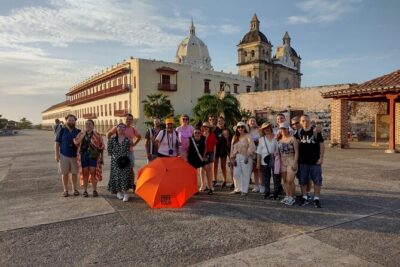
Historic Center & Getsemaní Shared Tour in Cartagena
Read our review →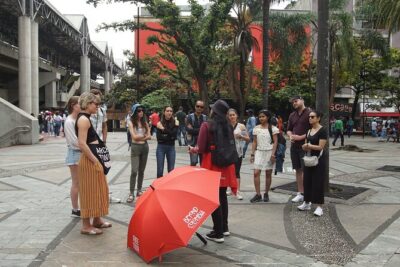
Shared Tour Historic Center of Medellin with Audio System
Read our review →
Medellín Essential: history & local life on E-bike
Read our review →
Medellin Historic Walking Tour with Expert Guide
Read our review →
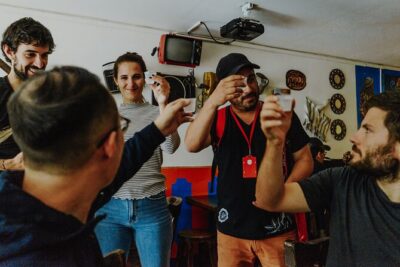
Bogota Shared Gastronomy Tour in the Historic Center
Read our review →Browse the lists this tour appears in