
REVIEW · CACAO AND CHOCOLATE WORKSHOPS
Cacao Experience Tour
Cacao tastes better at its source. This half-day outing from Minca combines a jungle hike, a family cacao farm, Indigenous territory, wildlife, and a waterfall swim. I especially like the chance to see cacao from fruit to drink, and I like that guide Andrés Boh keeps the outing personal with groups limited to 10 people. The main catch is the terrain: parts of the trail are steep, muddy, or scrambly, so this is not a gentle stroll.
The $46 price is fair for a 270-minute experience that includes a bilingual guide, hiking, tastings, and time at the waterfall. I would plan for heat, sweat, and wet shoes. The waterfall can have a strong current, and the guide’s safety instructions are not optional.
In This Review
- The experience in four useful points
- Starting at Minca’s quiet church
- Walking through Tayrona Indigenous territory
- Seeing cacao before it becomes chocolate
- Forest sounds, birds, and useful plant knowledge
- Reaching the waterfall and clay face mask
- What the $46 price delivers
- Timing, flexibility, and practical planning
- Who will enjoy this tour most
- My take on the guides
- Should you book the Cacao Experience Tour?
- FAQ
- Where does the Cacao Experience Tour meet?
- How long does the tour last?
- How much does the tour cost?
- What languages are available?
- Is the tour suitable for a small group?
- What is included in the price?
- Do I need to be fit for the hike?
- Can I cancel the booking?
The experience in four useful points
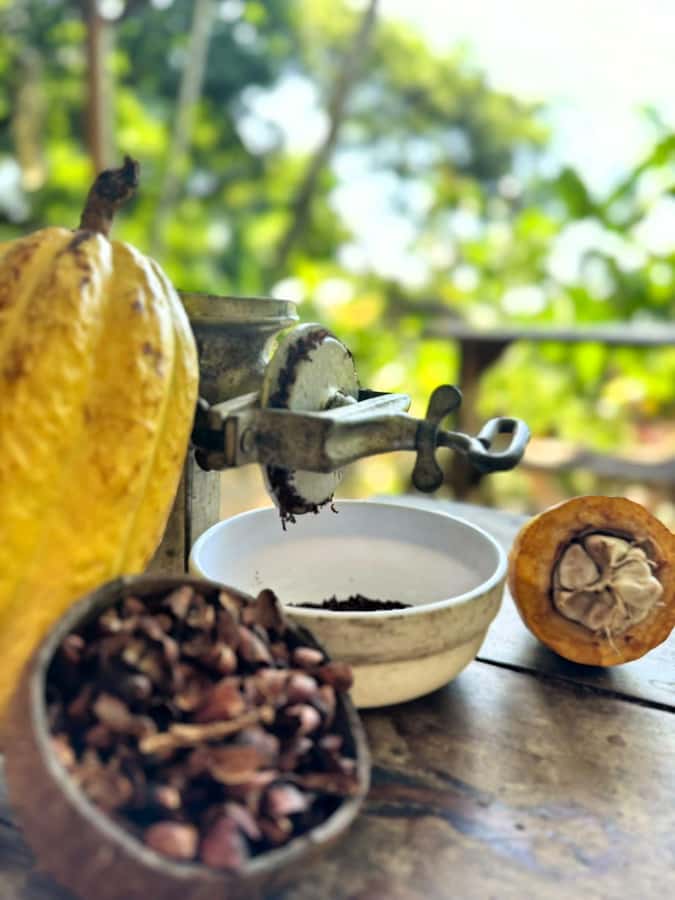
- Cacao in several forms: Taste fresh cacao fruit, dried seeds, drinking chocolate, and other preparations while learning how the bean becomes something you eat.
- A family farm in the Sierra: Spend time at a small home where local customs, cacao, coffee, and family life are part of the experience.
- Jungle walking with a purpose: The route brings explanations about plants, animals, birds, Indigenous customs, and cacao farming rather than being only a viewpoint hike.
- A waterfall finish: Cool off in a natural waterfall and use clay for a simple face mask and photographs.
- Small groups, with one caveat: The stated limit is 10 people, though another group may occasionally be at the farm at the same time.
- A real physical outing: Most of the walk is manageable for a reasonably fit person, but the waterfall section involves a tougher descent and climb back up.
Starting at Minca’s quiet church
The meeting point is the church in Minca. That gives you an easy landmark and puts you in the middle of a small mountain town that feels much calmer than Santa Marta below.
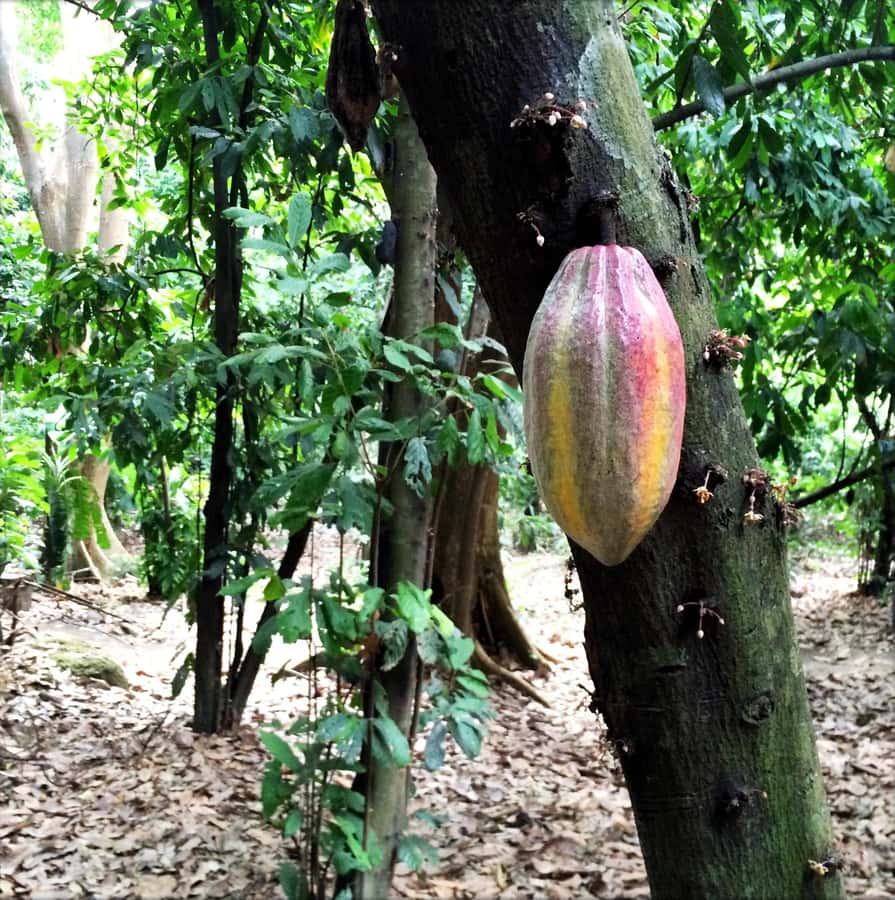
From there, the tour heads toward the forest and the cacao-growing area. The walk is part of the lesson. Andrés or another bilingual guide can point out plants, birds, nests, and signs of local wildlife along the way. Several people have also seen monkeys and many different birds, so keep your eyes up and your phone ready.
This early stretch is valuable because it gives context before you reach the farm. You are not simply shown a finished chocolate bar. You begin to see the kind of climate and forest where cacao grows, along with the plants and animals sharing the same ground.
The guide’s role matters here. Andrés Boh is repeatedly praised for being patient, friendly, flexible, and well informed about Minca’s flora and fauna. Other guides have included Luis and John, both connected with the local setting in different ways. John, for example, had volunteered at the Indigenous cacao farm, which added a personal connection to the route and the people who work there.
A few more options to weigh up in Santa Marta
- Eco-Hike in Minca: Coffee Tour, Waterfall & Chocolate Experience!
★ 5.0 · 140 reviews - Trekking History and Indigenous Heritage in Minca + Cacao & Coffee + Waterfall
★ 4.9 · 63 reviews - Cacao and Coffee Tour
★ 4.5 · 24 reviews
Walking through Tayrona Indigenous territory
The route passes through Tayrona Indigenous territory, a major reason this is more than a standard chocolate tasting. The guide discusses local customs, Indigenous communities, and the place of cacao in the area.
You should approach this part with respect and attention. The attraction is not a staged cultural show. It is a chance to walk through a living setting and learn how the community and its farming traditions connect with the forest.
The trail can change underfoot. One section may feel like a pleasant walk, while another requires careful footing, especially after rain. Expect some mud and a few scrambly moments. A reasonable level of fitness is enough for many people, but you need to be comfortable walking uphill and taking short breaks when needed.
Wear shoes with a firm sole. Sandals may be fine for the final waterfall area, but they are a poor choice for the full route. Bring water, insect protection, and clothes that can get dirty. The tropical heat is part of the setting, not a minor detail.
Seeing cacao before it becomes chocolate
The farm visit is the heart of the outing. Here you learn how cacao moves through several stages, from the fruit growing on the tree to the finished food and drink.
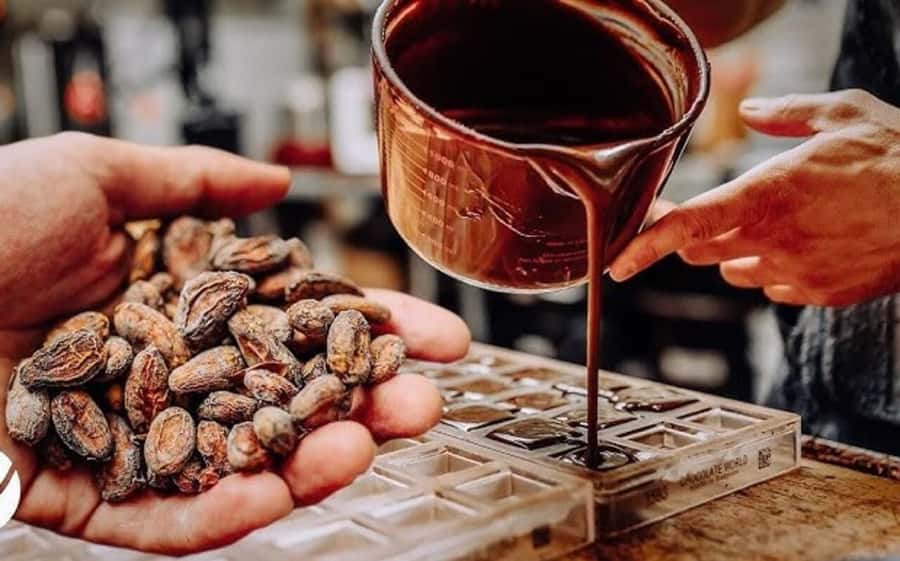
You may taste fresh cacao fruit, dried seeds, and chocolate in different forms. The experience can include making and drinking your own cacao, which helps explain the work behind the familiar sweet flavor. The process is presented in an old-fashioned, hands-on way rather than as a factory tour.
That distinction gives the visit its value. You see that cacao is not automatically sweet straight from the tree. The fruit, seeds, drying process, and preparation each bring different flavors and textures. It is a small lesson in farming, food production, and local tradition all at once.
The family setting adds warmth without turning the stop into a polished tourist production. Time at a small house in the Sierra may include cacao, coffee, and a fresh cinnamon bun. Those details make the stop feel like an invitation into daily life, not just a demonstration arranged for a camera.
Coffee is also part of the story. Minca is known for mountain agriculture, and comparing cacao with coffee gives you a better sense of how local farms use the climate and slopes. If you care about where food comes from, this section alone makes the tour worthwhile.
The farm can be busy if another group arrives at the same time. Although the usual group limit is 10, one outing had around 15 people at the farm because of overlapping tours. That may reduce the quiet, personal feel for part of the visit, so keep your expectations flexible.
Forest sounds, birds, and useful plant knowledge
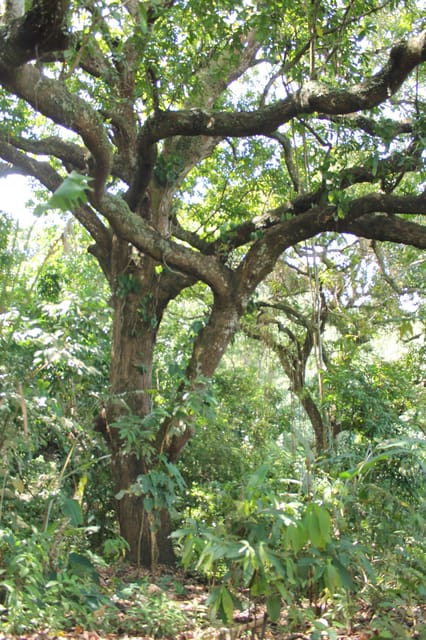
The forest walk is not silent scenery between two scheduled stops. Your guide may explain the uses of local plants, point out healing properties, identify birds, and show nests along the way.
I like this part because it rewards curiosity. You might leave with a better sense of how people read the forest, not just how the forest looks. Bird songs and movement in the canopy can be easy to miss without someone showing you where to look.
Wildlife sightings are never guaranteed. Monkeys and birds have appeared during past outings, but you should treat them as a bonus rather than a promise. The tour is still worthwhile if the animals remain hidden, since the botanical and cultural explanations continue throughout the walk.
The guide also helps set the pace. Andrés has been praised for stopping when people need to catch their breath and for explaining what appears along the trail. That is important on a route where the heat and humidity can make a short hill feel longer than expected.
More things to do in Santa Marta:
- Hike for 4 days to the Lost City, Santa Marta
★ 5.0 · 3,308 reviews - Lost City – Ciudad Perdida Colombia
★ 5.0 · 1,203 reviews - Sailing to Tayrona with Luis and his team: Unique!
★ 4.5 · 448 reviews - Santa Marta: Sailboat day tour to Tayrona Park
★ 4.5 · 352 reviews
Reaching the waterfall and clay face mask
The waterfall is near the farm, so the route does not require a separate long transfer to reach the water. After the cacao visit, you walk to the falls for a swim and a clay experience.
The final section is likely the most demanding part of the outing. The descent to the waterfall can be steep, and the return climb is harder when you are hot and wet. Some trail sections may be muddy, and the rocks can be uneven.
The reward is a cool natural setting where you can wash off the trail, swim, and take photographs. The clay face mask adds a playful touch, but do not confuse it with a spa treatment. This is a muddy jungle stop, and the appeal is the setting and the chance to cool down.
Pay close attention to the water conditions. The safety information warns of strong currents, and the general setting can include slippery ground, wild animals, and poisonous snakes. The guide’s instructions matter. Stay with the group, avoid wandering off, and do not enter the water until the guide indicates that it is suitable.
The waterfall is not simply a photo stop. It gives the tour a satisfying change of pace. You spend the first part learning and walking, then finish with a physical reward. If you prefer a dry, easy cultural tour, this may feel too rough. If you like being outdoors and do not mind getting sweaty, it fits well.
What the $46 price delivers
At $46 per person, the tour offers solid value for a 270-minute outing. The price includes the tour, a personal bilingual guide in English and Spanish, hiking, tastings, and the waterfall swim.
The value comes from the combination. A basic cacao tasting would give you the food lesson, but not the jungle walk, bird watching, Indigenous territory, or waterfall. A standard Minca hike might give you scenery and water, but not the farm connection or the bean-to-cup process.
You are also paying for local interpretation. Without a guide, the cacao fruit and forest plants would be easy to pass without understanding. The bilingual format is useful if you want detailed explanations in English while still connecting with a Spanish-speaking family or community.
The small-group promise improves the value, especially for the forest sections. A group of 10 or fewer lets the guide answer questions and adjust the pace. Just remember that the farm may occasionally have another group present.
The price does not include every possible extension. One guide was flexible enough to add an animal refuge and more waterfalls, but you should not assume those additions are part of the standard four-and-a-half-hour plan. Ask before counting on extra stops.
Timing, flexibility, and practical planning
The duration is 270 minutes, or four and a half hours. Check the available start time when booking, since the exact departure is not fixed in the information provided.
The tour begins at the church in Minca, not Santa Marta. Plan your transport to Minca separately and arrive ready to walk. No transport from Santa Marta is included in the stated package.
Bring:
- Closed shoes with good grip
- Water
- Sun protection
- Insect repellent
- A swimsuit and towel
- A change of clothes
- A waterproof bag for electronics
- Clothes that can handle mud and clay
You do not need to be an athlete, but you should be comfortable with a forest hike that includes a few challenging sections. If you have trouble with steep trails, slippery surfaces, or climbing back uphill after swimming, this is worth considering before booking.
The tour offers free cancellation up to 24 hours before the start for a full refund. You can also reserve now and pay later, which helps if your Colombia plans are still shifting.
Who will enjoy this tour most
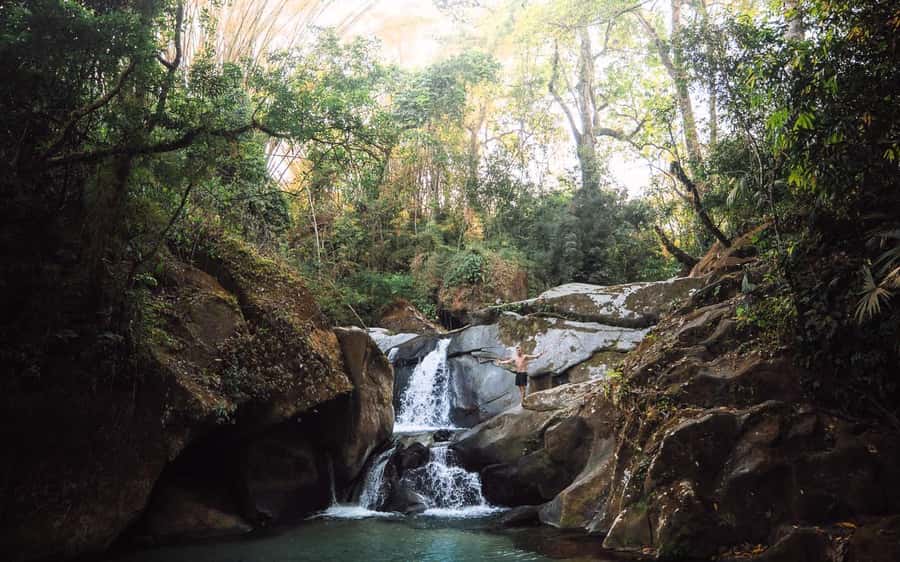
I would choose this experience if you want Minca to be more than a pretty mountain town. It suits people who like food with a story, local guides, forest walking, and a little physical effort.
It is especially good for:
- Couples or friends who want an active half-day
- Families with older children who can manage the trail
- Chocolate and coffee enthusiasts
- Visitors interested in Indigenous customs and rural life
- Bird watchers who enjoy informal forest observation
- People who prefer small groups over large scheduled outings
It may be a poor match if you want a polished farm attraction, a flat path, or a quiet swim with no safety concerns. The route is real countryside. That means mud, uneven ground, insects, changing water conditions, and the possibility of animals in the forest.
The tour also works well early in a Minca stay. The guide can help you understand the plants, farms, and paths around town, and may offer useful local suggestions, including places to eat in Minca.
My take on the guides
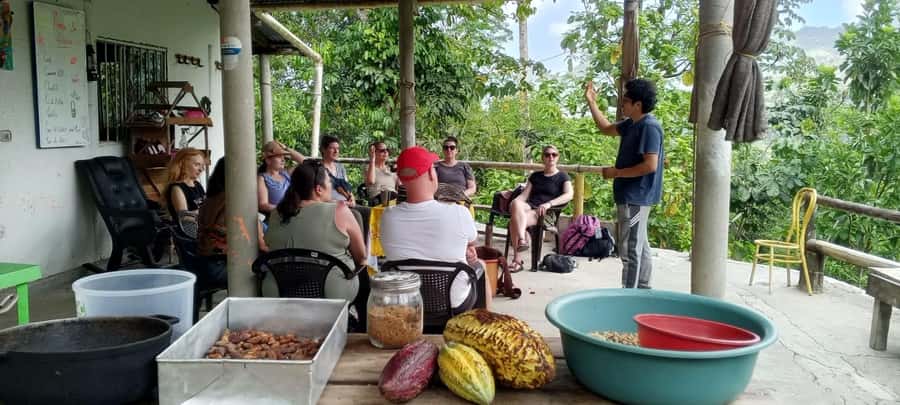
The guiding is one of the strongest parts of this experience. Andrés is described as easygoing, patient, responsive, and flexible. Those qualities matter more here than a rehearsed speech because the pace depends on the group, the trail, and the weather.
A good guide can turn a basic walk into a lesson in cacao, coffee, birds, plants, and local customs. The best moments seem to come when the guide points out something small that you would otherwise miss, then connects it to the wider setting.
The bilingual option is helpful for English and Spanish speakers. Still, guides vary, and the tour is not a formal lecture. Expect conversation, questions, and explanations along the route rather than a highly scripted presentation.
Should you book the Cacao Experience Tour?
I would book it if you want a hands-on look at cacao farming and are happy to work for the waterfall at the end. The family farm, fresh cacao tasting, forest knowledge, and Indigenous setting give the tour a stronger sense of place than a simple chocolate stop.
Choose another activity if you need an easy route or dislike wet, muddy conditions. Also ask about group timing if having a very private farm visit is important to you.
For most active visitors staying in Minca, $46 is a sensible price for the amount packed into four and a half hours. Bring proper shoes, follow Andrés or your guide closely, and treat the waterfall as a natural environment rather than a controlled swimming pool. That approach gives you the best chance of enjoying the cacao, the forest, and the cool water without an unpleasant surprise.
FAQ
Where does the Cacao Experience Tour meet?
The meeting point is the church in Minca, Colombia.
How long does the tour last?
The experience lasts 270 minutes, or four and a half hours.
How much does the tour cost?
The listed price is $46 per person.
What languages are available?
The tour is offered in English and Spanish with a live bilingual guide.
Is the tour suitable for a small group?
Yes. The stated group limit is 10 participants, though another group may occasionally be at the farm at the same time.
What is included in the price?
The price includes the tour, a personal bilingual guide, hiking, cacao and other tastings, and the waterfall swim.
Do I need to be fit for the hike?
You should have a reasonable level of fitness. Most of the route is manageable, but some parts are muddy, scrambly, or steep, especially the descent to the waterfall and the climb back up.
Can I cancel the booking?
You can cancel up to 24 hours in advance for a full refund. The tour also offers a reserve-now-and-pay-later option.
Just added in Santa Marta
- 4 Rosario Islands Adventure with entrance to the oceanarium included★ 3.5 · 3 reviews
- Full Day At the best Vip Beach Club in Tierra Bomba★ 5.0 · 4 reviews
- Monkey Volunteer Work in Wildlife Reserve Near Cartagena★ 5.0 · 3 reviews
- The Native Expedition – Sierra Nevada (2 days Discovering Chorrerón waterfall)★ 5.0 · 7 reviews
- UTV Safari in a Wildlife-Filled Nature Reserve Near Cartagena★ 5.0 · 36 reviews
- Playa Blanca Barú Tour with Lunch and hotel pick up★ 3.0 · 8 reviews
- Surf Lessons For All Levels★ 5.0 · 1 review
- Tour Isla del Encanto Cartagena★ 3.5 · 4 reviews
Cacao and Chocolate Workshops, compared.
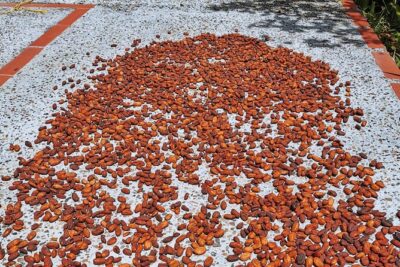
Chocolate Farm Private Tour in Medellin: Real Genuine Experience
Read our review →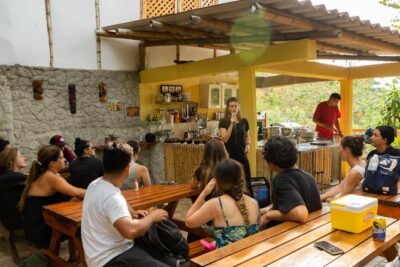
Eco-Hike in Minca: Coffee Tour, Waterfall & Chocolate Experience!
Read our review →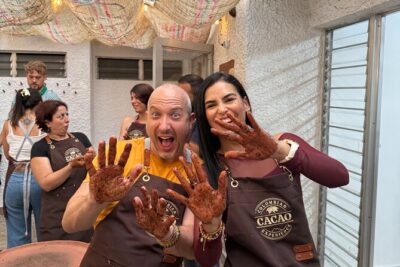
Colombian Cacao Experience | Chocolate Tour | BOOK NOW!
Read our review →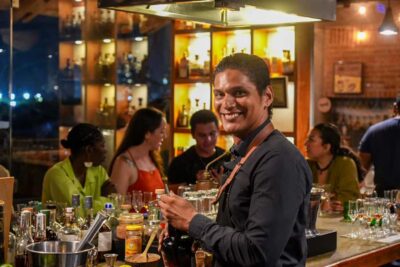
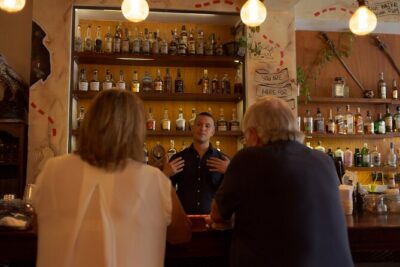
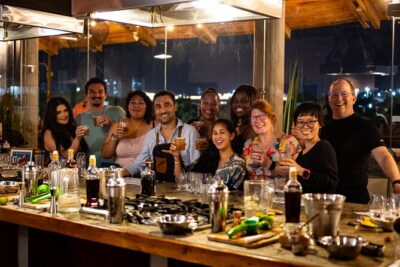
Boutique Rum and Chocolate Tasting at Lunático
Read our review →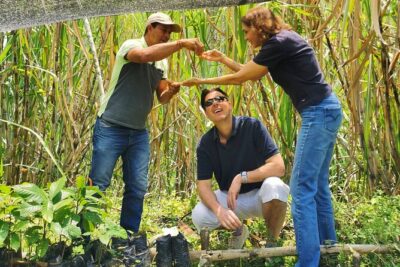
Coffee & Chocolate Private Tour in Medellin: Genuine Experience
Read our review →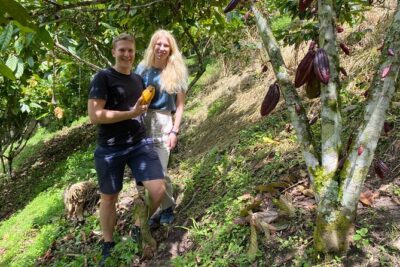
Browse the lists this tour appears in