
REVIEW · WALLED CITY AND SAN FELIPE TOURS
Tour Compartido al Castillo San Felipe de Barajas Cartagena
Cartagena’s stones carry a rebellious story. I love that this Spanish-language walking tour links Getsemaní’s independence movement with the San Felipe de Barajas fortress, rather than treating the castle as an isolated monument. I also like the stop at the Chocolate Museum, where a short tasting adds a local flavor to a history-heavy walk. The main drawback is the pace: you cover about 7 kilometers in 150 minutes, often in Cartagena’s heat, and the castle admission costs extra.
The route is especially strong when guides such as Luis Carlos, Luis Fernando, Ronaldo, and John Serrato bring the history to life with clear explanations and personal stories. You should bring water, comfortable shoes, and perhaps a small snack. One person specifically wished they had packed something to eat, a fair warning for a walk with several stops but no included meal.
In This Review
- Key points to know before you go
- Why this route is better than visiting the castle alone
- Starting at Plaza de la Trinidad in Getsemaní
- Walking from Getsemaní toward the Pedro Heredia Bridge
- The Chocolate Museum stop adds a welcome change of pace
- Arriving at the Hill of San Lázaro
- Entering San Felipe de Barajas and buying the ticket
- The tunnels show how sound became a weapon
- The Battle of Cartagena and the legend of Blas de Lezo
- What the guides do best
- Is $12 a good value?
- Who should book this walk?
- Should you book the San Felipe route?
- FAQ
- Where does the tour begin?
- Where does the tour finish?
- How long does the tour last?
- How far do you walk?
- Is the castle entrance included?
- What language is the tour in?
- Is transportation included?
- What should you bring?
- Who cannot join this activity?
Key points to know before you go
- The route connects two sides of Cartagena: Begin in the working-class, rebellious streets of Getsemaní and finish at the city’s great military fortress.
- The walk covers about 7 kilometers: This is not a short stroll between nearby sights, so shoes and water matter.
- The castle ticket is separate: Pay 33,000 COP per person at the official ticket office or online.
- The tour is in Spanish: Guides including Ronaldo, Luis Carlos, Luis Fernando, and John Serrato have earned especially warm praise for their explanations and friendly manner.
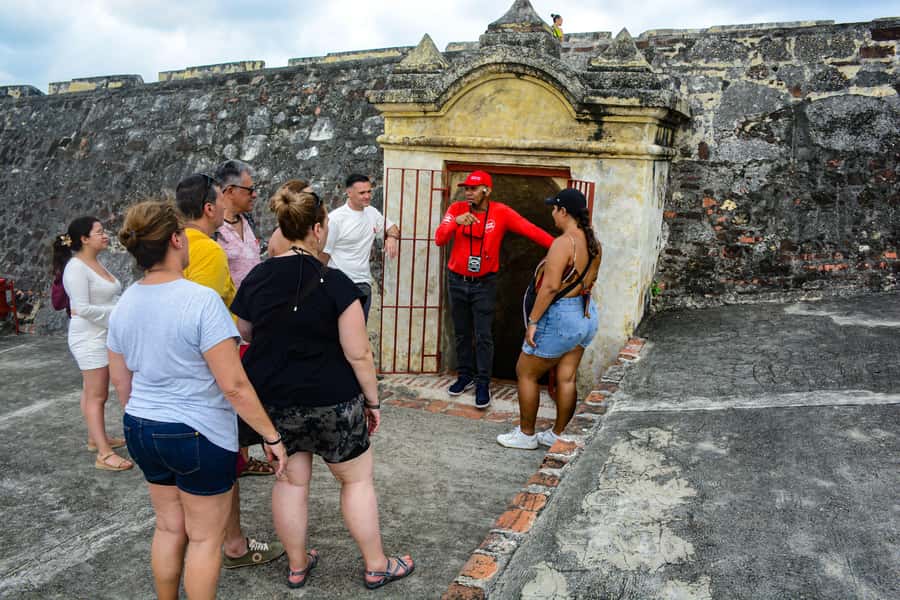
- The fortress tunnels are a major highlight: You learn how sound, hidden passages, and careful design helped defend San Felipe.
- The price is low, but the commitment is real: The $12 fee offers a guided route, local context, and recommendations, but you still need to budget for entry, food, drinks, and getting back to your hotel.
Why this route is better than visiting the castle alone
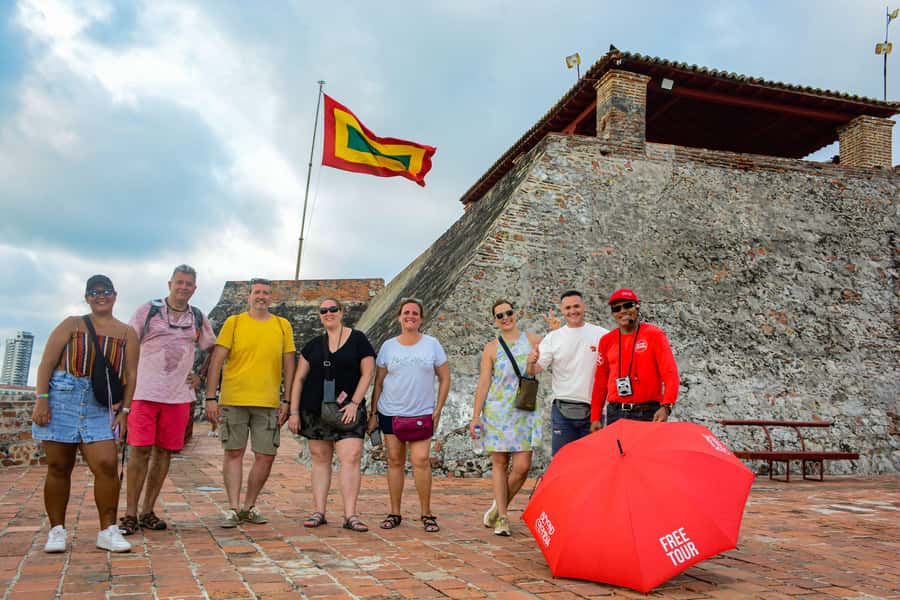
San Felipe de Barajas is easy to recognize. Its broad stone walls rise above Cartagena, and its location on the Hill of San Lázaro gives it command over the city. Yet the fortress makes more sense when you first walk through Getsemaní, the neighborhood that helped push Cartagena toward independence.
That connection is the best idea behind this tour. You start with people, neighborhoods, inequality, music, and resistance. You end with walls, tunnels, military planning, and imperial power. The story moves from the streets to the hill, showing how ordinary residents and professional soldiers formed different parts of Cartagena’s defense.
I would choose this experience if you want more than a quick photo at the castle entrance. The guide helps you understand why Cartagena was so valuable to Spain, why foreign powers tried to take it, and why the city became known as La Heroica. You are not simply walking toward a fortress. You are following the relationship between a city’s population and the structure built to protect it.
The tradeoff is exercise. The route lasts 150 minutes and covers roughly 7 kilometers, with stops to listen to the guide. That is a fair amount of walking for a hot afternoon. If you want a short, slow-paced outing, this may feel demanding.
More Walled City and San Felipe tours:
- Private Walking Tour in Cartagena Walled City & Getsemaní
★ 5.0 · 1,357 reviews - Cartagena: Guided Tour, with La Popa Convent, and San Felipe
★ 4.4 · 599 reviews - Walled City, San Felipe Castle & Popa Convent Cartagena City Tour
★ 5.0 · 391 reviews
Starting at Plaza de la Trinidad in Getsemaní
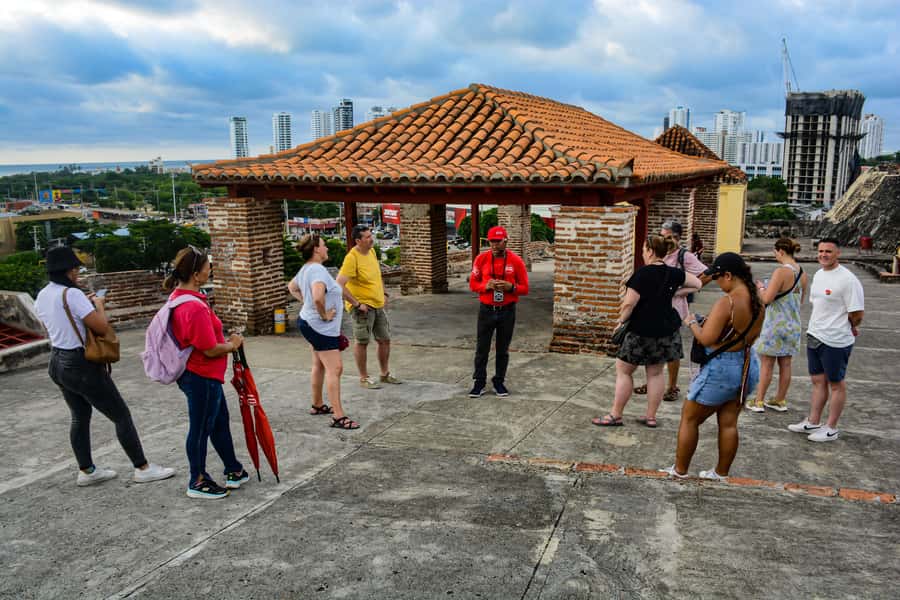
Meet the guide at Plaza de la Trinidad, the social center of Getsemaní. Look for the red umbrellas, which make the meeting point easier to spot in a lively square.
The plaza is a fitting place to begin. Getsemaní was once home to sailors, artisans, freed Afro-descendants, and people living outside the protected world of Cartagena’s Spanish elite. The tour uses this setting to explain how the neighborhood became tied to rebellion and independence.
You will hear how social inequality helped fuel resistance. You will also look at the role of music, street life, murals, and public gathering places in the neighborhood’s identity. This is useful context because Cartagena’s independence was not only a matter of generals and dates. It also grew from communities that had long lived with limits imposed by the colonial order.
The guide’s job here is to connect daily life with larger political change. That can make the opening section feel more personal than a standard monument tour. You get a sense of why Getsemaní remains important, rather than treating it as a colorful backdrop for photographs.
Still, keep your expectations realistic. The information provided does not promise a long stop at every mural or a detailed visit inside individual buildings. This is a walking narrative, not a museum tour of Getsemaní. Stay close to the guide and listen as the group moves through the streets.
Walking from Getsemaní toward the Pedro Heredia Bridge
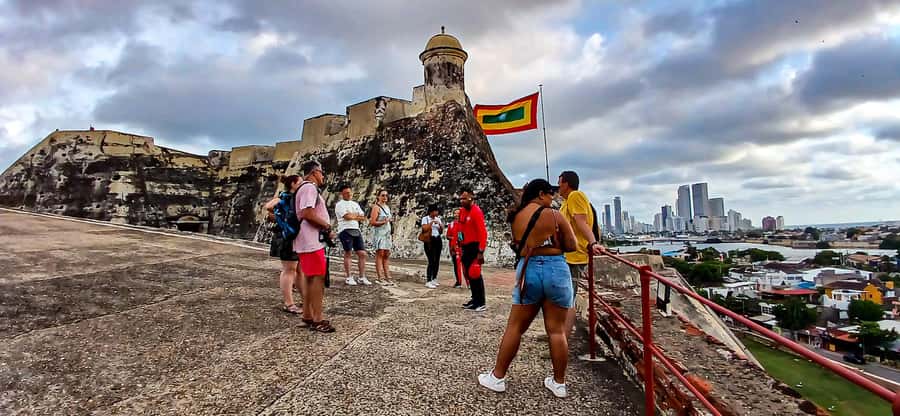
From Plaza de la Trinidad, the group walks toward San Felipe, using the Pedro Heredia Bridge route. The distance gives the guide room to explain how Cartagena developed as a fortified port and why control of the surrounding approaches mattered.
This part of the tour is also where the practical side becomes clear. You are walking the entire way. There is no included vehicle, hotel pickup, or transport during the experience. Rest stops are planned, but you should still wear shoes that can handle several hours on foot.
I like this arrangement for two reasons. First, you see the physical relationship between the old neighborhood and the fortress. Second, the walk lets the guide shift between history and present-day advice. Beyond Colombia includes recommendations for lunch spots, coffee shops, souvenir stores, and other local businesses, along with a map that can provide discounts with selected partners.
Do not expect those benefits to replace your own planning. They are useful extras, but the main value remains the guide and the route. If you are hungry, carry a small snack. Drinks and food are not included, and the advice to bring your own hydration should be taken seriously.
The Chocolate Museum stop adds a welcome change of pace
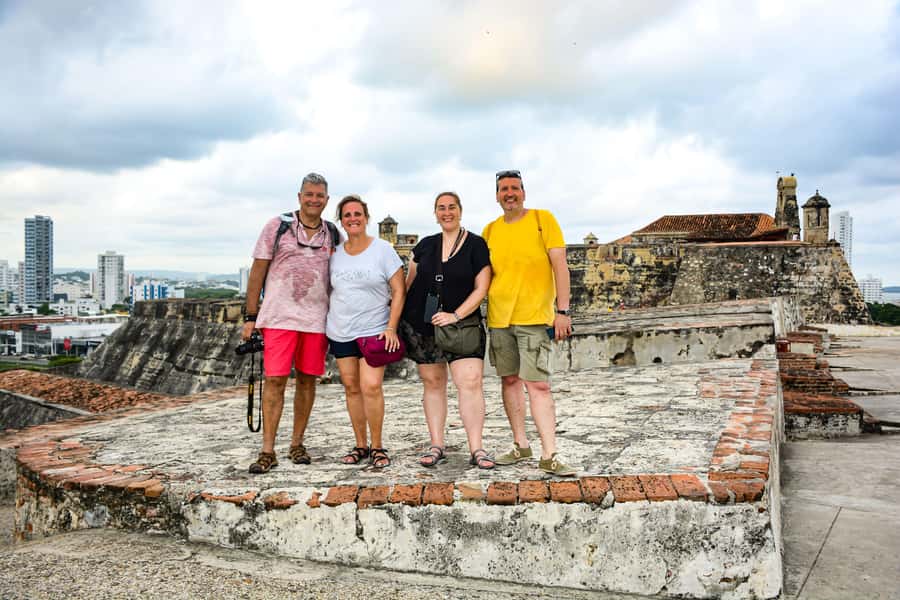
The route includes a visit to the Chocolate Museum for photographs and a tasting stop. After a long stretch of historical explanation, this gives you a brief sensory break and a chance to experience a local product.
It is not presented as a full chocolate workshop or a long guided museum visit, so keep the stop in proportion. Think of it as a short addition to the walk. The tasting may be especially welcome if you have been walking in the heat, though it does not replace lunch or a drink.
This stop also helps vary the rhythm. Getsemaní and San Felipe involve many layers of political and military history. A small food-related pause keeps the experience from becoming a solid block of dates and battles.
More things to do in Cartagena:
- Cartagena Island Hopping: 5-Stop Rosario Islands Tour with Lunch
★ 4.5 · 4,903 reviews - Cartagena: Historic Center and Getsemaní Shared Walking Tour
★ 4.9 · 2,716 reviews - Cartagena: Rosario Islands Catamaran with Lunch and Snorkel
★ 4.5 · 2,479 reviews - Full-Day Rosario Islands Including Barú, Bocachica & Playa Blanca
★ 4.0 · 1,729 reviews
Arriving at the Hill of San Lázaro
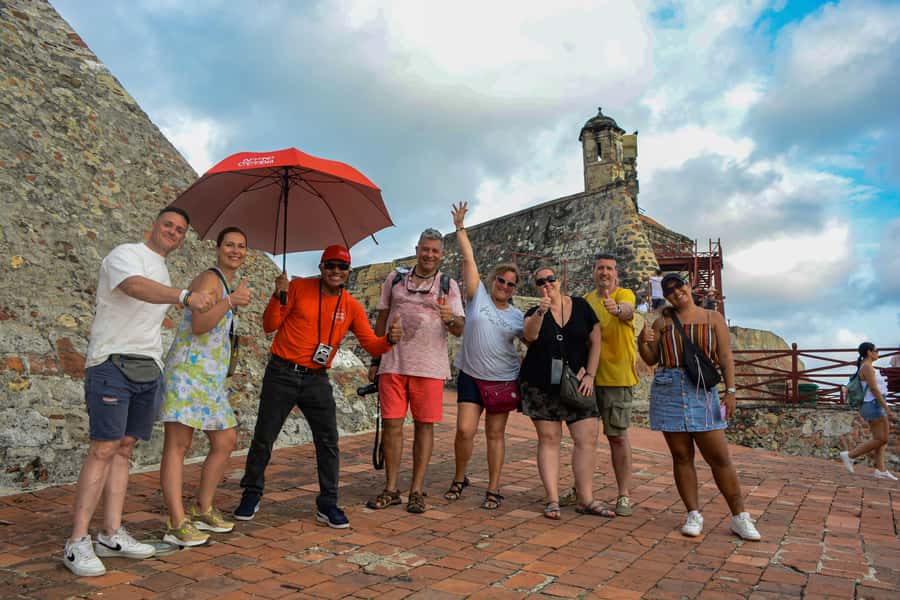
The fortress sits on the Hill of San Lázaro, a location chosen for control and visibility. From here, San Felipe could help protect the approaches to Cartagena and watch the city from above.
The hill is important because it explains the fortress’s purpose better than a ground-level view alone. Once you see the position, the walls are not just massive construction. They are part of a wider defensive plan tied to the city, its roads, and its harbor.
The tour highlights the panoramic views from this area. Bring a camera, but give yourself time to look beyond the usual postcard angle. The view helps you understand why the hill mattered to military planners and why the fortress became one of Cartagena’s defining sights.
The walk uphill may be tiring, particularly after the distance from Getsemaní. That is another reason to use the rest stops wisely. Water is essential, and comfortable clothing is more useful than dressing for a polished city outing.
Entering San Felipe de Barajas and buying the ticket
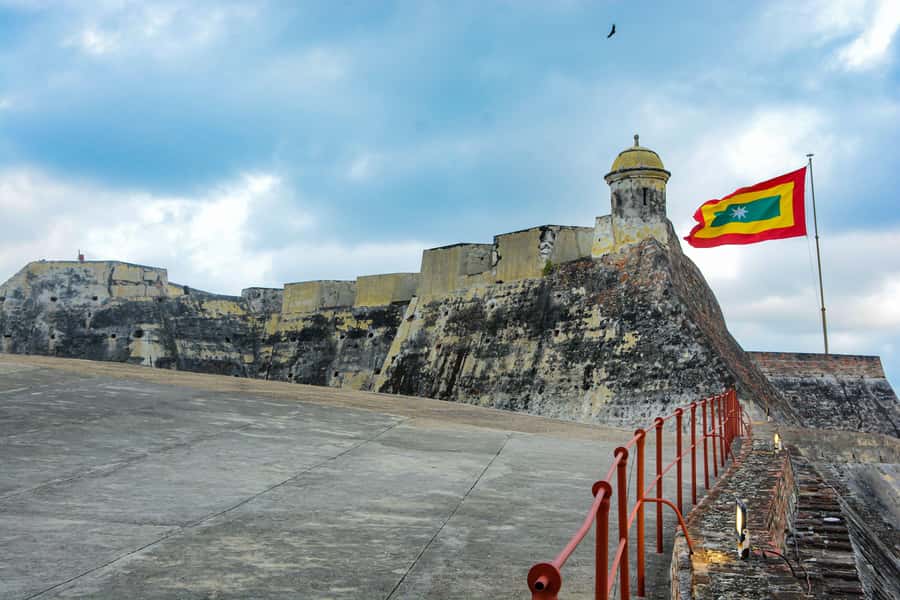
At the fortress entrance, each person buys their own admission ticket. The stated price is 33,000 COP per person, payable at the official ticket office or online. This charge is not part of the $12 tour price.
That extra cost is worth including in your budget before booking. At $12, the guided walk is inexpensive, but the actual outing costs more once you add the castle ticket, drinks, snacks, and any transport you need after the tour. Even so, the combined price remains reasonable if you want historical explanation rather than a self-guided visit.
The guide continues inside the monument, giving context about the design, battles, and defensive methods. Be aware that the available information does not specify exactly how long the group remains inside or how much independent time you receive. Since the full activity lasts 150 minutes, the castle portion shares time with the Getsemaní walk.
That makes this a good introduction to San Felipe, but perhaps not enough for someone who wants to inspect every passage at leisure. If the fortress is one of your top priorities, consider returning on your own after the tour, subject to opening hours and admission rules.
The tunnels show how sound became a weapon
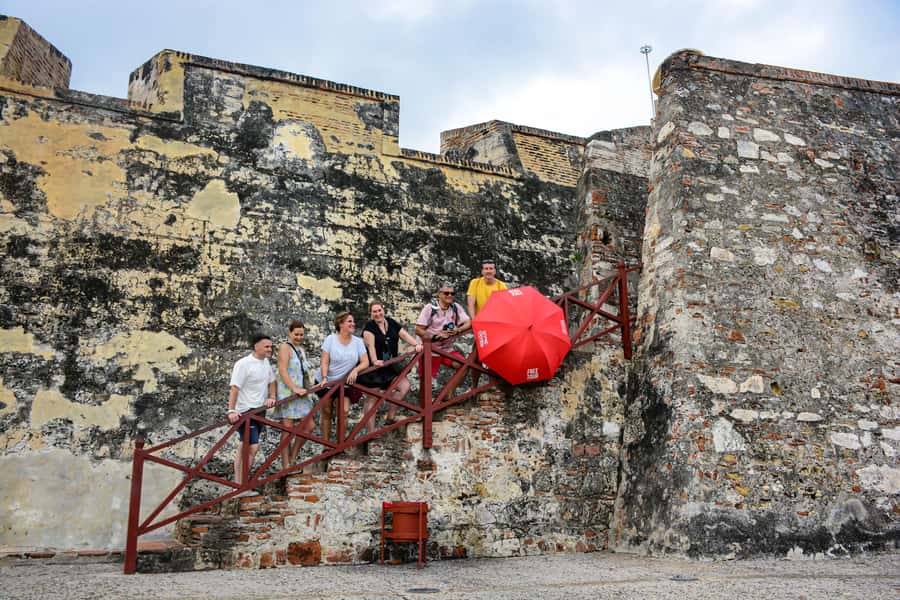
San Felipe’s tunnels are among the most memorable parts of the experience. These strategic passages were used for defense and surveillance, and the guide explains the acoustic system built into the fortress.
According to the tour’s historical account, soldiers could hear enemies walking above while people outside could not hear what was happening inside. In other words, the design turned sound into an early warning system. That detail makes the tunnels easier to understand than simply calling them secret passages.
The tunnels also show the practical thinking behind the fortress. San Felipe was not only a thick shell of stone. Its builders used angles, passages, height, and acoustics to make an attack difficult and to help defenders move or listen without exposing themselves.
Watch your footing and stay with the group. The information provided does not promise a slow technical inspection of every tunnel, and a shared walking tour must keep people together. Still, this section gives you one of the clearest explanations of why the fortress was considered so difficult to capture.
The Battle of Cartagena and the legend of Blas de Lezo
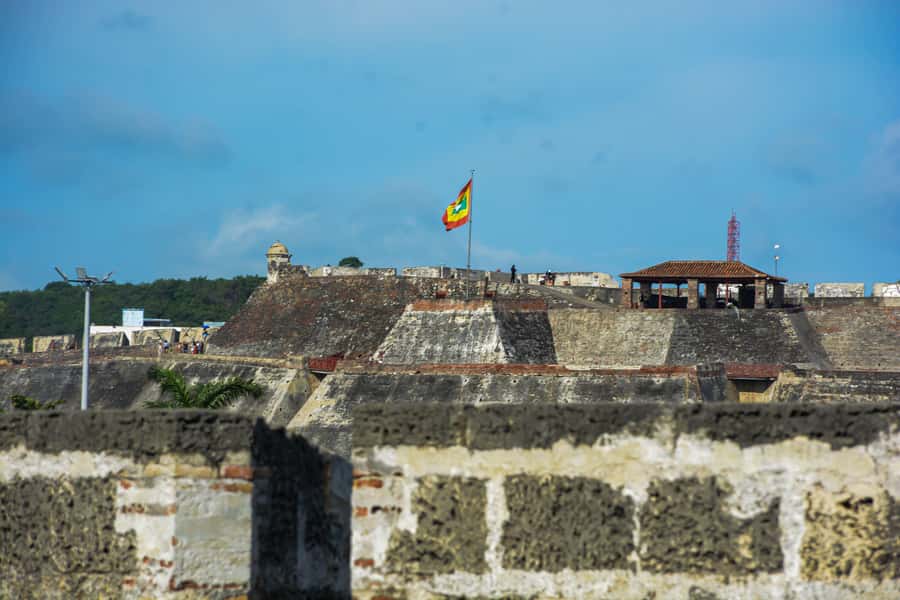
The military story reaches its dramatic point with the British assault on Cartagena. The tour describes a Spanish force of barely 3,000 men defeating more than 25,000 British soldiers.
That imbalance is the detail that makes the battle memorable. It also gives the guide a chance to explain how fortifications, terrain, leadership, and defensive planning mattered as much as troop numbers. San Felipe’s reputation did not come only from its size. It came from how the fortress worked in a wider strategy.
Blas de Lezo receives special attention as a figure of courage and resistance. His role helps turn the battle from an abstract military episode into a story about command under pressure and a city refusing to fall.
As with any short historical tour, you will not get a full military archive in 150 minutes. The value is in the clear framework: foreign empires wanted Cartagena, the city had enormous strategic importance, and San Felipe helped make conquest costly. Guides such as Luis Fernando have been praised for explaining this history clearly, while Luis Carlos has earned similar approval for making the story easy to follow.
What the guides do best
The strongest part of the experience is the human delivery of the history. Ronaldo has been singled out for professional guiding, strong historical explanations, and entertaining anecdotes. Luis Carlos is praised for speaking clearly and explaining the material well. Luis Fernando is noted for his knowledge of Cartagena’s past, and John Serrato for his warm, kind manner.
That range matters because a history walk depends heavily on the guide. A good guide can make a tunnel, street corner, or fortress wall feel connected to real choices and consequences. The comments about clear explanations are particularly important for a Spanish-language tour, where understanding the story matters more than simply following a route.
The activity is conducted in Spanish only. You should have enough Spanish to follow a live explanation, ask questions, and understand safety instructions. This is not the right choice if you need English guidance.
The group is shared, not private. That keeps the price down and may help you meet other people, but it also means the pace and question time are shared with the whole group. If you prefer complete control over stops and timing, hire a private guide instead.
Is $12 a good value?
Yes, with one qualification: think of the price as payment for the walking guide and local orientation, not as a complete castle admission package.
For $12, you receive:
- A Spanish-speaking guide
- A guided and safety-conscious walk from Getsemaní to San Felipe
- Historical context about Cartagena and the fortress
- The Chocolate Museum photo and tasting stop
- Local suggestions for meals, coffee, shopping, and souvenirs
- Access to partner discounts through the tour map
You still pay for the castle, food, drinks, and any transport to or from your hotel. The castle ticket adds 33,000 COP, so make a simple total before booking.
I think the price works best for first-time visitors who want a useful orientation to Cartagena. You receive a neighborhood walk, a fortress visit, and a connected story for less than many private sightseeing options. The value drops if you already know Getsemaní and San Felipe well, or if you want a long, quiet castle visit with time to explore alone.
Who should book this walk?
I would recommend it to adults and older children who enjoy history, can walk several kilometers, and want to understand Cartagena beyond its walls. It suits people who like hearing stories about resistance, social change, military planning, and local culture in one outing.
It is not suitable for children under 10, wheelchair users, or people over 70 according to the activity restrictions. Those limits are important because the route is long, includes uneven historic spaces, and involves walking rather than transport.
Bring water, comfortable shoes, and breathable clothing. Keep friends nearby and belongings even closer in crowded areas. The advice to stay alert is practical, not dramatic: Cartagena rewards curiosity, but you should still look after your possessions.
Cancellation is flexible up to 24 hours before the start for a full refund, and you can reserve without paying immediately. Check the available start times before committing, since the 150-minute duration can shape the rest of your day.
Should you book the San Felipe route?
Book it if you want the castle to make sense. The best feature is the route itself, moving from Getsemaní’s stories of inequality and rebellion to San Felipe’s tunnels, battles, and views from the Hill of San Lázaro.
Skip it if you dislike long walks, need an English guide, or want to spend most of your time inside the fortress. In that case, a direct castle visit may suit you better.
For most active visitors, this is a strong-value introduction to Cartagena’s military and social story. Pack water, budget for the separate 33,000 COP entrance fee, and keep room for a snack. The low price is appealing, but the real reward is the link between the people in the streets and the soldiers behind the walls.
FAQ
Where does the tour begin?
It begins at Plaza de la Trinidad in Getsemaní. Look for the guides carrying red umbrellas.
Where does the tour finish?
The guided route finishes at Castillo San Felipe de Barajas.
How long does the tour last?
The activity lasts 150 minutes.
How far do you walk?
You walk about 7 kilometers, with several stops to listen to the guide.
Is the castle entrance included?
No. Each participant pays 33,000 COP for admission at the official ticket office or buys the ticket online.
What language is the tour in?
The live tour guide speaks Spanish.
Is transportation included?
No. You walk from Getsemaní to the castle, and transportation to or from your hotel is not included.
What should you bring?
Bring comfortable shoes, water, and your preferred form of hydration. A small snack is also sensible because food is not included.
Who cannot join this activity?
The tour is not suitable for children under 10, wheelchair users, or people over 70.
Just added in Cartagena
- Self-Guided Audio Tour: Pirate Tales in Cartagena★ 3.0 · 2 reviews
- Private History Photography Tour★ 5.0 · 17 reviews
- Paue Island Tour in the Rosary Islands★ 5.0 · 1 review
- Totumo Volcano★ 3.5 · 15 reviews
- Palmarito Beach★ 3.5 · 4 reviews
- Party without limits! Cartagena; VIP Party.★ 4.5 · 32 reviews
- Paragliding Experience in Cartagena★ 5.0 · 8 reviews
- Tour cultural to san Basilio de Palenque from cartagena★ 5.0 · 45 reviews
Walled City and San Felipe Tours, compared.
Private Walking Tour in Cartagena Walled City & Getsemaní
Read our review →
Guided Tour, with La Popa Convent, and San Felipe
Read our review →
Walled City, San Felipe Castle & Popa Convent Cartagena City Tour
Read our review →
BILINGUAL CITYTOUR + SAN FELIPE CASTLE & Old city
Read our review →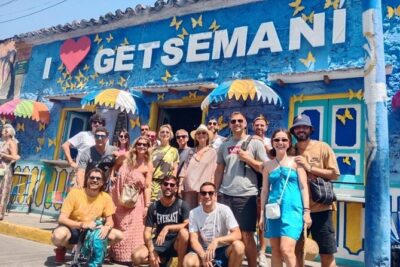
Cartagena Private Tour of the Walled City & Getsemani
Read our review →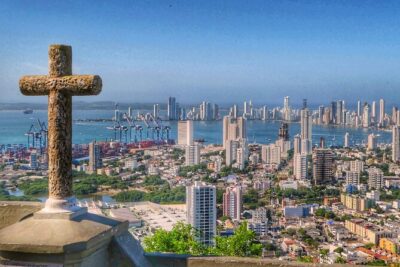
City Tour Castillo San Felipe & Convento de La Popa
Read our review →
Street Food Tour in Cartagena Walled City and Getsemani
Read our review →Browse the lists this tour appears in