
REVIEW · 3-DAY EXPERIENCES
The Magic and Ancestral Guajira-Cabo de la vela & Punta Gallinas-2 nights 3 Days
Wild desert meets the Caribbean here. This three-day trip from Riohacha combines Wayuu culture with huge sea-salt pools, cactus villages, beach dunes, and Colombia’s northernmost point. I like the dinner with a Wayuu family, and I like that meals, hammock lodging, entrance fees, insurance, and air-conditioned transport are included. The main drawback is the rough travel conditions, which can make long drives tiring and uncomfortable.
You should also read the inclusions carefully. A traditional hammock, called a chinchorro, is provided, but a room costs an additional COP 120,000 per person. The community experience costs COP 50,000 per person, and a fuel surcharge may apply. This is an exciting trip for people who value access and local contact more than polished hotels and strict schedules.
In This Review
- Key points to know before you book
- Why this Guajira trip is worth considering
- Salt, cactus, and the road to Cabo de la Vela
- A Wayuu family dinner in Aipiruhu
- Sleeping in a chinchorro near the desert
- Taroa dunes and Colombia’s northern tip
- Mayapo gives the final day a softer finish
- Food, transport, and what the price really covers
- Who will enjoy this trip most?
- Should you book the Guajira route?
- FAQ
- Where does the tour start?
- How long does the experience last?
- What accommodation is included?
- Can I book a private room?
- Are meals included?
- Is transportation from Santa Marta or Palomino included?
- What happens if bad weather cancels the tour?
Key points to know before you book
- A real desert-to-sea route: You visit salt flats, cactus country, Caribbean beaches, giant dunes, and Punta Gallinas in one compact trip.
- Dinner with the Pushaina family: The Aipiruhu visit offers food, language, and family contact in a Wayuu setting.
- Basic sleeping arrangements: Traditional chinchorros are included, while private rooms cost extra.
- Rough roads and packed vehicles: The distance is demanding, and comfort depends heavily on the vehicle and group arrangement.
- Small advertised group size: The tour lists a maximum of six people, so confirm the exact vehicle setup before paying.
- Weather matters: Rain can affect the boat connection and may lead to a new date or a full refund.
Why this Guajira trip is worth considering
La Guajira feels far removed from the Colombia most people picture. This is a dry northern region where salt, sand, cactus, wind, and sea shape daily life. You are not coming for museums or city cafés. You are coming to see how people live at the edge of the continent and to move through a part of Colombia that feels spare and exposed.
The tour begins in Riohacha at 7:30 am and runs for about three days. The price is $244.62 per person. For that amount, you receive air-conditioned transport, admission fees, travel insurance, two breakfasts, three lunches, two dinners, and two nights in a traditional hammock.
That package can offer solid value because food and transport add up quickly in a remote area. Still, you should not read the price as an all-inclusive luxury deal. Some costs are separate, and the standard accommodation is simple. The trip works best when you treat the price as payment for access to a difficult-to-reach region, not for resort comfort.
The tour is advertised for a maximum of six people. That is important because the roads into Cabo de la Vela and Punta Gallinas are rough. A small group should mean more space, easier communication, and fewer delays. Confirm this point directly before departure, especially if you are told the trip is private. One poor experience involved six people packed into a Toyota with little space for bags, food, or water. That is not a minor detail on a trip with long road sections.
More things to do in Santa Marta:
- Hike for 4 days to the Lost City, Santa Marta
★ 5.0 · 3,308 reviews - Lost City – Ciudad Perdida Colombia
★ 5.0 · 1,203 reviews - Sailing to Tayrona with Luis and his team: Unique!
★ 4.5 · 448 reviews
Salt, cactus, and the road to Cabo de la Vela
Your first stop is the Salinas de Manaure, about 30 minutes with admission included. Here you see shallow pools of sea salt, large piles of processed salt, and the work involved in bringing salt from the water. A local person guides the visit and explains the microorganisms and processes connected to production.
This short stop gives the journey a useful beginning. Instead of racing straight toward the beaches, you get a look at an industry tied to the region’s natural conditions. The salt pools also make a strong visual introduction to Guajira. Expect heat and glare, so carry water, protect your head, and keep your camera ready.
The route continues to Cabo de la Vela, where the tour spends about three hours. The village is described as one of the oldest in Colombia and is built with cactus and mud wood. That construction style tells you something about local resources. In this dry country, cactus is not just scenery. It becomes part of the built environment.
At Cabo, you visit the Sugar Pylon, an ancestral mountain, and the Water Eye, a cultural point. The names suggest two different ways of reading the area: one through its physical landforms and the other through its meaning to local people. Your guide should help connect those places to Wayuu culture rather than treating them as quick photo stops.
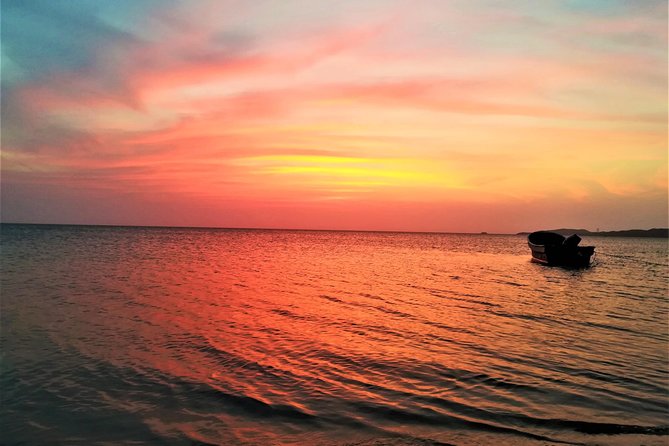
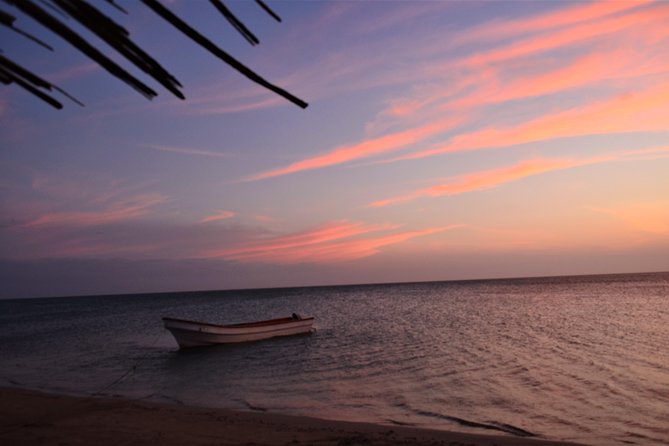
The day ends at the lighthouse, considered the best place in the cape for sunset. This is one of the strongest parts of the route. The view brings together the dry interior, the open coast, and the fading light. The stop is free, but the experience is not polished or staged. You are there for the setting, the wind, and the wide view.
One practical warning: the schedule may move slowly. Departure times have not always been punctual, with delays of about an hour reported on some departures. That can squeeze the sunset stop or shorten time elsewhere. Ask for the day’s plan at the start, and do not arrange a tight evening connection.
A Wayuu family dinner in Aipiruhu
The evening visit to Aipiruhu is one of the most distinctive parts of the trip. You dine with a Wayuu family, learn about the surroundings, hear about ancestral life in the Colombian desert, and meet the Pushaina family.
The planned visit lasts about 90 minutes. It includes traditional food and an introduction to the Wayuu language. That makes it more than a meal in a roadside restaurant. You have a chance to see family life in its own setting and to ask questions directly.
This is also the part of the trip that needs the most respect. A community visit should not feel like a performance arranged only for photographs. Listen carefully, ask before taking pictures, and remember that the family is sharing part of its home and culture with you.
The community experience is listed at COP 50,000 per person, separate from the headline price. Check how that charge will be collected and exactly what it covers. One account describes the dinner as interesting, amusing, and a warm part of the trip. That personal contact is a major reason to choose this tour over a basic transport-only service.
There are also difficult social issues in the region. You may see children asking for money, and there are complaints about informal road tolls. The presence of poverty can be uncomfortable. You should not assume every request is part of the cultural experience, and you may want to ask the operator in advance how the tour handles roadside payments and donations.
Sleeping in a chinchorro near the desert
Two nights of accommodation are included in a traditional hammock, known locally as a chinchorro. This is a genuine part of the regional experience, not simply a cheaper version of a hotel bed. If you like simple lodging and want to stay close to local traditions, it can be a good fit.
If you need a private room, the listed supplement is COP 120,000 per person. Confirm availability before the trip because the accommodation is basic and arrangements can change in remote areas.
Comfort is the biggest question here. One account describes clean and comfortable lodging, while another reports a first accommodation with no water and a second place that was disorganized and short of rooms. Those two descriptions point to the uncertainty of this route. Standards may depend on the night, the property, the group size, and the operator’s planning.
You should pack a small backpack rather than a large suitcase. Excess baggage is not included, and vehicle space can become a problem quickly. Keep water, a change of clothes, sun protection, basic toiletries, and important medication within easy reach. If you swim at the dunes or beaches, use a waterproof bag for electronics.
A completely different kind of day:
- Santa Marta: Sailboat day tour to Tayrona Park
★ 4.5 · 352 reviews - 4-Day Lost City Small-Group Tour in Santa Marta
★ 5.0 · 254 reviews - Full-Day Hiking Tour in Minca with coffee & Cocoa Workshop
★ 4.5 · 189 reviews - MINCA TOUR – Explore waterfalls and discover the origin of coffee and cocoa
★ 4.5 · 166 reviews
Taroa dunes and Colombia’s northern tip
Day two brings the most dramatic scenery. At the Dunas de Taroa, you spend about 90 minutes among large dunes that run down toward virgin beaches and the Caribbean Sea. Sand meeting open water creates the kind of setting that makes this region famous.
The stop is ideal for photos, but it is also physically demanding. Walking on sand takes effort, and the heat can be strong. The route description includes a beach, so you might want to swim, but ask clearly how much time you have before leaving the vehicle. One serious complaint came from poor communication at the dunes, with no clear instruction about when to return or whether there was time to dry after entering the sea.
That problem is easy to prevent if the guide gives a firm meeting time and location. You should ask those questions yourself if instructions are unclear. Remote travel rewards direct communication.
Punta Gallinas follows, with a listed stop of about 30 minutes. This is the northernmost point of Colombia and the northernmost point of South America. The appeal is not a long list of attractions. It is the feeling of reaching a very distant edge of the continent, far from ordinary signs of modern life.
Thirty minutes is enough for a short visit and photographs, but not for a leisurely exploration. The value is symbolic and geographic. You can say you reached the top end of the continent, then take in the quiet surroundings before the long return route.
The vehicle matters enormously on this day. Roads in this part of Guajira are shaky, and the journey can involve long periods of bouncing and jolting. An air-conditioned vehicle helps with the heat, but it does not turn rough tracks into smooth roads. If you have back or knee problems, ask about the transport before booking.
Mayapo gives the final day a softer finish
On day three, the return to Riohacha includes a stop at Mayapo. The beach has blue water, white sand, and a calmer mood. After the harsh desert and rough roads, this can feel like a welcome pause.
The planned visit lasts about 80 minutes. That gives you time to enjoy the shore without turning the final day into another long sightseeing circuit. Mayapo is also a useful reminder that Guajira is not only sand and salt. The coast changes from stark dunes to a more relaxed beach setting.
Because the trip returns to Riohacha, do not plan a tight onward connection unless the operator confirms the arrival time in writing. A late start, road delays, weather, or a change in transport can affect the schedule. One person missed an afternoon flight after the return took longer than expected and faced about $500 in extra costs. The practical lesson is simple: leave a generous buffer before any flight.
Connections from Palomino or Santa Marta are not included. You must arrange those separately, so Riohacha is the logical starting point for this package. If you are coming from another coastal destination, add the cost and time of reaching the meeting point.
Food, transport, and what the price really covers
The tour includes three lunches, two dinners, and two breakfasts. One strong account praised the food as plentiful and described an ample supply of beer. That sounds encouraging, but you should still carry personal snacks and water because the road sections are long and vehicle storage may be limited.
Lobster is not included. Additional lobster, a fuel surcharge, and private boat transport in rainy conditions may cost extra. Ask for the current total before departure so the low advertised price does not become a surprise at the end.
Travel insurance is included, as are entrance tickets to the listed sites. That simplifies the trip and reduces the need to handle payments at each stop. The main service you are buying, however, is local coordination in a remote region. A good driver and clear guide make a major difference.
The operator is Sumaj Feeling Colombia. The experience has a rating of 4 out of 5 from 25 ratings, which suggests a generally positive but not uniform experience. The difference between an excellent trip and a frustrating one appears to rest on timing, vehicle space, accommodation organization, and communication.
The best account describes an entertaining Indigenous driver, lively music in the car, clean accommodation, good food, and a cheerful group atmosphere. A less positive account describes late starts, poor lodging arrangements, an uncomfortable vehicle, and an indifferent driver. You should not ignore either side.
Who will enjoy this trip most?
I would choose this tour if you want remote scenery, Wayuu contact, and a compact route through Cabo de la Vela and Punta Gallinas. It suits people who can handle basic sleeping arrangements, uncertain road conditions, hot weather, and a schedule that may not run like a Swiss train.
It is a good match for photographers, geography enthusiasts, culture-focused visitors, and anyone eager to see a less familiar part of Colombia. The dunes, lighthouse sunset, salt flats, and northern tip give you several memorable settings in only three days.
I would be more cautious if you have a strict flight schedule, serious back or knee problems, or a strong need for private rooms and reliable water. I would also ask detailed questions if you are promised a private tour. The advertised group limit is six, but the vehicle arrangement should be confirmed.
The tour allows service animals, is near public transportation, and says most people can participate. Those points make it broadly accessible in a general sense, but they do not remove the physical demands of rough roads, sand, heat, and hammock accommodation.
Cancellation is free up to 24 hours before the 7:30 am start for a full refund. Changes made inside that 24-hour window are not accepted. Since the trip depends on good weather, a weather cancellation gives you the option of another date or a full refund.
Should you book the Guajira route?
Book it if your priority is wild scenery and direct cultural contact, and you can accept basic conditions. The dinner with the Pushaina family, the salt works, the sunset at Cabo, the Taroa dunes, and the visit to Punta Gallinas make this a powerful three-day route.
Before paying, confirm four things: the exact number of people in the vehicle, the room or hammock arrangement, all extra charges, and the expected return time to Riohacha. If the answers are clear, the $244.62 price can be good value for this remote journey.
Do not book it for luxury, perfect timing, or effortless comfort. For those needs, the rough roads and variable accommodation may overshadow the beauty. For an adventurous visit built around desert, sea, and Wayuu culture, it offers access that would be difficult to arrange alone.
FAQ
Where does the tour start?
The tour starts in Riohacha at 7:30 am.
How long does the experience last?
The experience lasts approximately three days and includes two nights of accommodation.
What accommodation is included?
Traditional hammock accommodation, called a chinchorro, is included for two nights.
Can I book a private room?
A room is listed at an additional COP 120,000 per person. You should confirm availability before departure.
Are meals included?
Yes. The package includes three lunches, two dinners, and two breakfasts.
Is transportation from Santa Marta or Palomino included?
No. Connections from Palomino or Santa Marta are not included.
What happens if bad weather cancels the tour?
You can choose a different date or receive a full refund if poor weather causes the tour to be canceled.
Just added in Santa Marta
- Waterfalls, Animal Reserve and Chocolate: Mango Passage★ 5.0 · 2 reviews
- Palomino: Palomino River Tubing and Hiking Tour★ 4.6 · 40 reviews
- Tubing Across Palomino River Including a Hiking Tour★ 5.0 · 14 reviews
- Roundtrip Private Transfer from Santa Marta Airport (SMR)★ 5.0 · 2 reviews
- Hiking To Minca★ 5.0 · 8 reviews
- Tunkeka Indigenous People Cultural Tour★ 5.0 · 2 reviews
- Santa Marta to or from Cartagena Private Transfer★ 5.0 · 5 reviews
- Santa Marta to or from Tayrona Park Private Transfer★ 5.0 · 7 reviews
3-Day Experiences, compared.
Tour the best of Narino 3 days with accommodation
Read our review →
3 days private mountain tour, nature and culture near Medellin
Read our review →
3 Day Private Tour Authentic Coffee Experience in Colombia
Read our review →
Browse the lists this tour appears in