
REVIEW · CITY TOURS
Pablo Tour (all the places in the city)
Medellín’s dark past is written in ordinary places. This private, four-and-a-half-hour tour connects Pablo Escobar’s former prison, family homes, neighborhood projects, death house, football field, and grave. I like the small private format, which gives you room to ask direct questions, and I like the effort to place Escobar’s crimes within Colombia’s painful history. The main drawback is the narrow focus: this is not a general Medellín city tour, and some stops may feel heavy rather than pleasant.
At $90 per person, the cost makes the most sense for a small group that wants a focused guide and private air-conditioned transport. You get bottled water, fees, and taxes included, but not lunch or WiFi. The six stops are free to enter, so you are paying mainly for transportation, explanation, and the convenience of covering widely separated sites in one outing.
In This Review
- Key points to know before you book
- What this Medellín tour is really about
- La Catedral: a prison built for Pablo Escobar
- Montreal apartments and Escobar’s family life
- Parque La Milagrosa, a neighborhood missing from maps
- Los Olivos Antioquia and Chocó: the house where Escobar died
- Cancha El Dorado and the politics of a football field
- Jardines Montesacro and the Escobar family graves
- How the private format affects the experience
- Is $90 per person a fair price?
- Who should book this experience?
- Final verdict: a focused look at Medellín’s difficult past
- FAQ
- How long does the Pablo Tour last?
- How much does the tour cost?
- Is this a private tour?
- What is included in the price?
- Are entrance tickets included?
- Can I cancel for a full refund?
Key points to know before you book
- Six Escobar-related sites in about four and a half hours: The route covers his prison, family residence, neighborhood, death house, football field, and cemetery.
- Private service for your party only: You can ask questions freely and shape the conversation around the parts of Medellín’s past that interest you.
- The tour treats Escobar as a source of tragedy, not a folk hero: The strongest theme is the damage caused by him and his associates during the late 1980s and early 1990s.
- Every listed stop has free admission: Your $90 goes toward the private vehicle, guide, time, and organization rather than entrance tickets.
- Expect a serious subject: This is best for people who want difficult political and social history, not a light sightseeing outing.
- Cancellation is flexible until 24 hours before departure: After that point, the amount paid is not refunded, and late changes are not accepted.
What this Medellín tour is really about
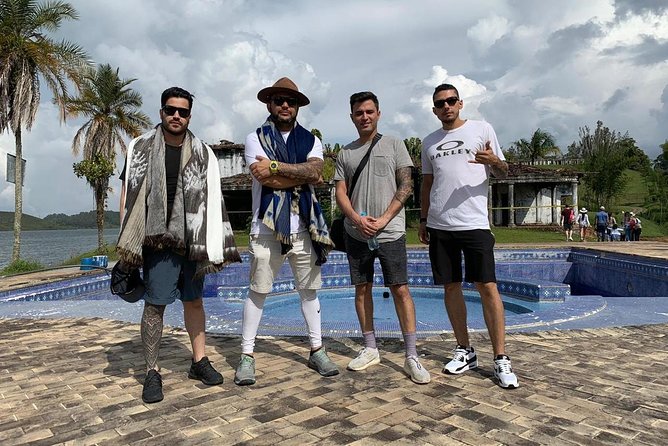
Pablo Escobar remains one of Medellín’s most controversial figures. He was a major drug trafficker who used money, violence, political pressure, and neighborhood projects to build power. That mix is what makes this subject tricky. A tour can easily turn into crime celebrity worship if the guide focuses only on escape stories, wealth, and legend.
This experience takes a broader route. You see the place where Escobar was held, locations tied to his family, a neighborhood connected with his name, a sports field he built, the house where he died, and the cemetery where he and members of his family are buried. The stops help you compare public generosity with private violence.
I especially value the chance to ask questions during a private tour. If you know little about Colombia’s late 1980s and early 1990s, you can ask for the basic timeline. If you already know the broad story, you can ask about the difference between Escobar’s public image and the suffering caused by his organization.
The guide’s commentary is also important because the buildings alone will not explain much. Several stops are ordinary places with little formal interpretation. Your understanding will depend on how well the guide connects each location to Medellín’s past.
More things to do in Medellin:
- Medellin: Comuna 13 Graffiti Tour, Cable Car & Street Food
★ 4.8 · 9,046 reviews - Comuna 13 Graffiti Tour with Street Food
★ 5.0 · 7,503 reviews - Museo Pablo Escobar
★ 5.0 · 7,242 reviews
La Catedral: a prison built for Pablo Escobar
The first stop is La Catedral, the prison Escobar built for himself. That detail tells you much about his influence. This was not simply a standard jail visit. The idea of a powerful criminal arranging the terms of his own confinement gives the stop its force.
You have about 30 minutes here. Since admission is free, the value comes from the explanation and the setting rather than from displays or ticketed exhibits. I would listen closely to how the guide explains the arrangement and why the prison became such a strong symbol of weak state control.
Do not expect a polished museum experience. The stop is best understood as a historical site connected to power, privilege, and the limits of law enforcement. It sets the tone for the rest of the outing.
Because the tour is private, you can ask for clarification if the political background is new to you. That matters here. Without context, La Catedral might sound like a strange prison story. With context, it becomes a clear example of how unusual Escobar’s position had become.
Montreal apartments and Escobar’s family life
The second stop takes you to the Montreal apartments, identified as the place where Escobar’s family lived. You have about 30 minutes, again with no admission charge.
This stop shifts the focus away from prisons and public projects. It looks at the family side of the story, though you should keep expectations realistic. The information provided does not promise an interior visit, a museum, or a preserved collection. You may mainly see the building and hear the guide explain its connection to Escobar’s family.
That limitation is worth noting. If you want dramatic objects, secret rooms, or a large exhibit, this may feel modest. If you want to understand how a notorious figure’s private world was tied to normal residential places, it has more value.
I would use this part of the tour to ask careful questions about the family’s role and daily life. The private setting gives you time to ask without worrying about holding up a large group.
Parque La Milagrosa, a neighborhood missing from maps
Parque La Milagrosa is one of the more unusual stops. It is described as Pablo Escobar’s neighborhood, a place that does not appear on the map under that name but still exists.
You spend about 40 minutes here, the longest stop on the route. That extra time suggests the guide will have more to explain, and it gives you a chance to consider how names and reputations shape a city. A place can remain physically present even when official maps and public language avoid an association.
This is also where the tour’s moral questions become sharper. Escobar funded projects and gained support in some poor communities, but those acts existed alongside intimidation, murder, and drug trafficking. A football field or housing project cannot erase that violence. At the same time, ignoring why some residents remembered his assistance would leave out part of Medellín’s story.
I like this stop because it pushes you past a simple good-versus-evil legend. You can ask how local memory works, who benefits from a public project, and what happens when a neighborhood becomes tied to a criminal figure. The guide’s tone matters greatly here. The best approach is to explain the facts without treating charity as proof of goodness.
More city tours in Medellin:
- City tour Medellin + Comuna 13 + Graffititour Paisa for a day
★ 5.0 · 1,660 reviews - Electric Bike City Tour Medellin With Colombian Coffee and Snack
★ 5.0 · 1,275 reviews - City Tour from Medellín
★ 5.0 · 576 reviews - Medellín: Private City Tour with Metrocable and Comuna 13
★ 4.9 · 330 reviews
Los Olivos Antioquia and Chocó: the house where Escobar died
The fourth stop is in Los Olivos Antioquia and Chocó, at the house where Pablo Escobar died. You have approximately 30 minutes.
This is likely to be one of the most emotionally charged locations on the route. The house connects the wider story to its final scene, giving you a fixed place to discuss the end of Escobar’s life and the events surrounding it.
The tour description does not promise entry into the house, and you should not assume an indoor museum. The value lies in seeing the location and hearing the guide explain its place in Medellín’s history. If you prefer a polished attraction with signs and displays, this may feel bare. If you want to see a real location tied to the story, it should be meaningful.
I would avoid treating this as a crime pilgrimage. The stronger reason to visit is to understand how years of violence ended and how that ending fit into Colombia’s broader struggle with drug cartels, government forces, and communities caught in the middle.
Cancha El Dorado and the politics of a football field
Cancha El Dorado is a football field Escobar built for his neighborhood. The visit lasts about 30 minutes and admission is free.
At first, a sports field may seem less important than a prison or death house. In fact, it helps explain why Escobar’s public image became so complicated. A football field is a direct, visible gift. People can use it every day. That does not make the donor admirable, but it helps explain how criminal power can gain local loyalty.
This is a useful place to ask the guide about the difference between community support and moral approval. Residents may value a project while still suffering from the violence connected to the person who paid for it. Those two facts can exist at the same time.
You may find this stop more interesting if you focus on the social question rather than expecting a major stadium. It is a neighborhood football field, not a ticketed sports attraction. The setting offers a practical example of how public works can be used to build influence.
Jardines Montesacro and the Escobar family graves
The final stop is Cementerio Jardines Montesacro, where Pablo Escobar and members of his family are buried. The visit lasts about 30 minutes.
A cemetery changes the mood again. After seeing places tied to power, family, community favors, and death, you finish with a quiet setting that brings the story back to individual lives. The graves are not just a final photo stop. They give the guide a chance to discuss legacy, family, memory, and the way Medellín continues to deal with Escobar’s name.
Since the cemetery is included without an admission fee, you are again paying for access by private vehicle and interpretation. Be respectful. This is a burial ground, not simply a movie location.
I would consider this the most reflective stop. You can think about the difference between fame and honor. Escobar’s name remains widely known, but notoriety is not the same as respect, and public fascination does not lessen the harm caused by his organization.
How the private format affects the experience
This is a private tour, so only your party participates. That is a major advantage for a subject that often leads to difficult or sensitive questions. You do not have to wait for a large group before asking about politics, family, community projects, or the human cost of the violence.
The format also lets you manage the tone. You may want a basic introduction to Colombian history. You may prefer to focus on the social effects of cartel violence. You can ask for more detail where it matters to you and move on when a subject becomes too uncomfortable.
The air-conditioned vehicle is another practical benefit. Six stops across Medellín and its surrounding areas would be tiring without organized transport. Bottled water is included, along with all fees and taxes. WiFi is not provided, and lunch is not included, so plan around those limits.
The timing deserves a close look. The scheduled stops add up to roughly 190 minutes:
- La Catedral: 30 minutes
- Montreal apartments: 30 minutes
- Parque La Milagrosa: 40 minutes
- Los Olivos: 30 minutes
- Cancha El Dorado: 30 minutes
- Jardines Montesacro: 30 minutes
The full tour lasts about 270 minutes, leaving around 80 minutes for driving and transitions. That is a useful amount of travel time in a city tour covering several locations. You should not expect long, leisurely visits at each stop. This is a moving history lesson, with short stops that build a larger picture.
Is $90 per person a fair price?
At $90 per person, this is not a bargain walking tour. Still, price alone does not tell the full story. The six locations have free admission, but reaching them independently would require planning, transport, and a clear understanding of where each place is.
The private vehicle is the main convenience. You also receive a guide’s commentary, bottled water, and coverage of taxes and fees. For a small group that values privacy and wants to cover all six sites in one half-day, the price can be reasonable.
The value drops if you only want to see one famous location or already know the area well. You are paying for a connected route and interpretation, not for expensive attraction tickets. If your group is larger, the private format may make the per-person cost easier to accept, though the stated rate is still $90 for each person.
I would compare the price with your priorities. If you want Medellín’s museums, cable cars, food, or modern architecture, spend your money on a different outing. If Escobar’s role in the city’s past is your main interest, this tour gives you a concentrated way to study it.
Who should book this experience?
I would recommend it to adults and older teens with a serious interest in Colombian history, organized crime, political violence, and the way communities remember painful events. It also suits first-time visitors who want a private guide rather than a large group.
It is less suitable if you want a cheerful introduction to Medellín. The subject is grim, and the focus remains on one criminal figure for most of the afternoon. You should also be comfortable visiting places connected to death, incarceration, and family grief.
Most people can participate, service animals are allowed, and the tour is near public transportation. Those details make it broadly accessible from a participation standpoint, though the provided information does not describe specific vehicle access or conditions at every stop.
You should also bring questions. The tour promises time for them, and that may be its greatest strength. The more thoughtfully you ask, the less likely the experience is to become a collection of sensational stories.
Final verdict: a focused look at Medellín’s difficult past
Book this tour if you want a private, tightly organized look at six places tied to Pablo Escobar and if you care about the human cost behind the legend. The most valuable parts are the guide’s historical explanation, the chance to ask questions, and the contrast between neighborhood projects and brutal criminal power.
Skip it if you want a broad city tour or a light cultural outing. The $90 price is easiest to justify for a small group that values private transport and focused commentary. You can cancel without a fee up to 24 hours before the start time, which gives you some flexibility while you decide.
FAQ
How long does the Pablo Tour last?
The tour lasts approximately 4 hours and 30 minutes.
How much does the tour cost?
The price is $90 per person.
Is this a private tour?
Yes. Only your party participates in the tour.
What is included in the price?
All fees and taxes, an air-conditioned vehicle, and bottled water are included.
Are entrance tickets included?
The six listed stops have free admission, so no paid entrance tickets are required for those locations.
Can I cancel for a full refund?
Yes. You can cancel at least 24 hours before the experience start time for a full refund. Cancellations or changes made less than 24 hours before departure are not accepted for a refund.
Just added in Medellin
- Walking Tour, Cable Car & Fruit Tasting★ 5.0 · 1 review
- Pablo Escobar and Griselda Blanco Tour★ 5.0 · 1 review
- City tour, Commune 13, Metro Cable, Botero Park and more. Private★ 5.0 · 34 reviews
- comuna 13 tour★ 3.5 · 6 reviews
- 3 days private mountain tour, nature and culture near Medellin★ 5.0 · 22 reviews
- commune thirteen transformation story★ 4.5 · 14 reviews
- fruits tour★ 5.0 · 2 reviews
- Paragliding and hammocks zipline over waterfalls private tour★ 5.0 · 6 reviews
City Tours, compared.
Hike for 4 days to the Lost City, Santa Marta
Read our review →
City tour Medellin + Comuna 13 + Graffititour Paisa for a day
Read our review →
La Candelaria, Monserrate and Museums Bogotá Private City Tour
Read our review →
Private Walking Tour in Cartagena Walled City & Getsemaní
Read our review →
Electric Bike City Tour Medellin With Colombian Coffee and Snack
Read our review →
Graffiti Tour: a fascinating walk through a street art City
Read our review →Browse the lists this tour appears in