
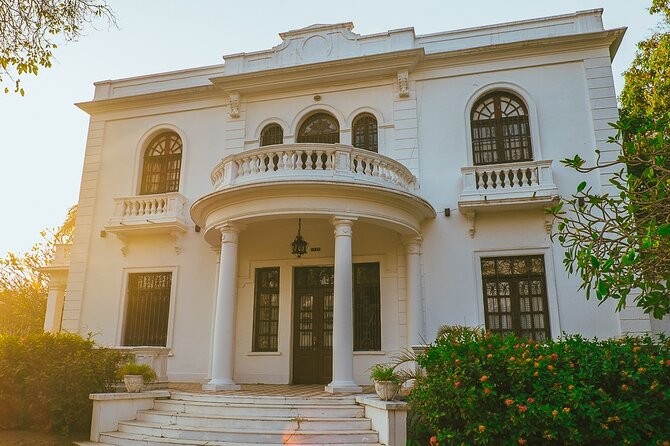
REVIEW · CITY TOURS
City tour of Barranquilla
Barranquilla tells its story in bright, quick stops. This private city tour links the city’s grand hotel, baseball pride, Carnival traditions, riverfront, and football culture in about three to four hours. I like the private transportation, which keeps the day easy in a spread-out city, and I like that admission to the Carnival Museum is included.
The tour also gives you a guide rather than leaving you to piece together Barranquilla on your own. John is described as funny and well informed, while Andrea helped one guest arrange other activities during a stay in the city. The main consideration is the $153 per-person price. That is a serious cost for a half-day outing, especially since most stops are viewed from outside or have no admission charge.
In This Review
- Five details that shape this Barranquilla tour
- A quick city orientation in three to four hours
- Hotel El Prado and Barranquilla’s early tourist era
- Amira de la Rosa Theater and the city’s cultural identity
- Edgar Renteria Stadium and a baseball city
- One hour inside the Barranquilla Carnival Museum
- The old Customs buildings and Barranquilla’s public memory
- The Carnival Foundation’s traditional house
- Gran Malecon and the Magdalena River
- The sports monuments near the river corridor
- Aleta del Tiburon and the pride of Junior
- Is $153 a fair price?
- Who will get the most from this tour?
- Should you book the Barranquilla city tour?
- FAQ
- How long does the Barranquilla city tour last?
- Where does the tour begin?
- Where does the tour end?
- Is transportation included?
- Is the tour private?
- Is the tour offered in English?
- Is admission to the Carnival Museum included?
- What else is included besides transportation and the museum?
- What happens if bad weather cancels the tour?
Five details that shape this Barranquilla tour
- Hotel El Prado: Begin with one of Colombia’s nationally recognized heritage hotels, opened in 1930.
- Carnival Museum: Spend a full hour with exhibits about Colombia’s most important festival, with entry included.
- Edgar Renteria Stadium: See the modern baseball venue named for Barranquilla’s famous Major League player.
- Gran Malecon: Reach the Magdalena Riverfront for views and a look at one of the city’s largest public projects.
- Private, compact format: Your group travels together, with pickup, a guide, soda, and emergency medical insurance included.
A quick city orientation in three to four hours
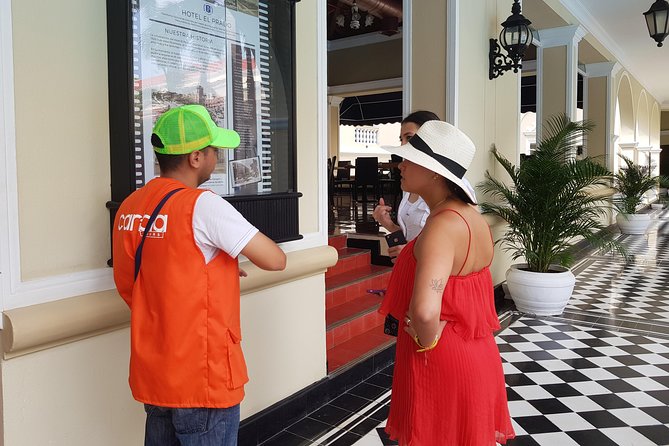
This is not a slow walking tour through one historic quarter. It is a short private drive across several parts of Barranquilla, with brief stops at major landmarks. That format matters because Barranquilla’s points of interest are spread across the city.
You meet at Torres del Atlántico, Cra. 57 #99A-65, in the Riomar area. The tour returns to the same spot, so you do not need to arrange a second pickup or figure out where to end your day. Pickup is offered, but you should confirm the exact arrangement when your booking is accepted.
The guide, private vehicle, and small-group setup give you more flexibility than a large coach outing. If your group has limited time, this is useful. You can ask questions, keep the pace together, and avoid spending the whole morning or afternoon waiting for strangers.
The tradeoff is that the schedule moves quickly. The listed visits include 20 minutes at Hotel El Prado, 40 minutes around Edgar Renteria Stadium, an hour at the Carnival Museum, 20 minutes at Gran Malecon, and 10 minutes at Aleta del Tiburon. Several other landmarks appear as short sightseeing stops rather than full visits.
More Barranquilla trips:
- Gran Malecón, Carnaval Museum and Downtown Barranquilla City Tour 6H
★ 4.5 · 37 reviews - Magdalena River Tour MAGDATOURS
★ 3.5 · 23 reviews - Private Bike Tour of Barranquilla
★ 5.0 · 22 reviews
Hotel El Prado and Barranquilla’s early tourist era
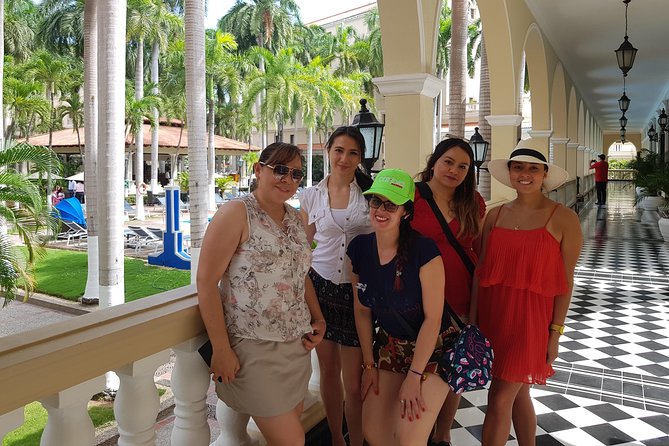
Hotel El Prado is a strong opening stop because it gives you a feel for the city’s old social and architectural ambitions. Construction began in 1927, and the hotel opened in 1930 after work by the Obregón and Parrish families and American architect Burdette Higgins.
The hotel is part of Colombia’s national heritage. It is also described as the first tourist hotel in Latin America, a detail that gives the building more weight than a quick photo stop might suggest. You get about 20 minutes here, enough to look at the exterior and hear why the hotel matters.
I would pay close attention to the guide’s explanation at this point. The building is not simply an old hotel. It reflects Barranquilla’s importance as a commercial and cosmopolitan city during an era when modern tourism was still taking shape in Latin America.
You should not expect a long interior tour or a full architectural study. The admission is free, but the stop is brief, so the value comes from the explanation and the chance to see the site in context.
Amira de la Rosa Theater and the city’s cultural identity
The Amira de la Rosa Theater is another cultural landmark on the route. It honors the playwright and writer who wrote the lyrics of Barranquilla’s anthem. The theater sits where the traditional neighborhoods of El Prado, Montecristo, and Abajo meet.
That location helps connect the city’s formal cultural life with its older neighborhoods. The theater is described as a cultural complex, but the supplied schedule does not list a separate visit length or admission arrangement. Treat it as a sightseeing stop unless your guide tells you otherwise.
For you, the key value here is context. Barranquilla’s identity is not only about beaches, Carnival costumes, or the river. Writers, musicians, performers, and neighborhood traditions also shape the city. The theater gives your guide a natural place to explain that side of Barranquilla.
Edgar Renteria Stadium and a baseball city
Colombia may be better known abroad for football, but Barranquilla has a serious baseball tradition. The Edgar Renteria Stadium was built on the grounds of the former Tomas Arrieta Stadium and honors the Barranquilla player who reached Major League Baseball.
The stadium has support from Major League Baseball and the International Baseball Federation. It can hold up to 12,000 seated spectators in portable stands and was designed to meet MLB standards. Those details make the 40-minute stop worthwhile even if you do not follow baseball closely.
The name Edgar Renteria gives you a useful local connection. Instead of seeing an anonymous sports facility, you see a venue tied to one of the city’s best-known athletes. Ask your guide about the stadium and local baseball if that interests you.
There is no admission charge listed, and the tour does not promise a game or inside access. You are visiting the stadium as a city landmark. That is fine for a general introduction, but dedicated baseball fans may want to seek out a separate match or stadium experience.
More city tours in Barranquilla:
- Private shuttle from Barranquilla Airport to Santa Marta city
★ 5.0 · 19 reviews - Malecón, Carnaval Museum, Downtown Barranquilla City Tour
★ 5.0 · 7 reviews - Salida de Cartagena: City Tour a Barranquilla & Santa Marta
★ 4.2 · 6 reviews - Hike for 4 days to the Lost City, Santa Marta
★ 5.0 · 3,308 reviews
One hour inside the Barranquilla Carnival Museum
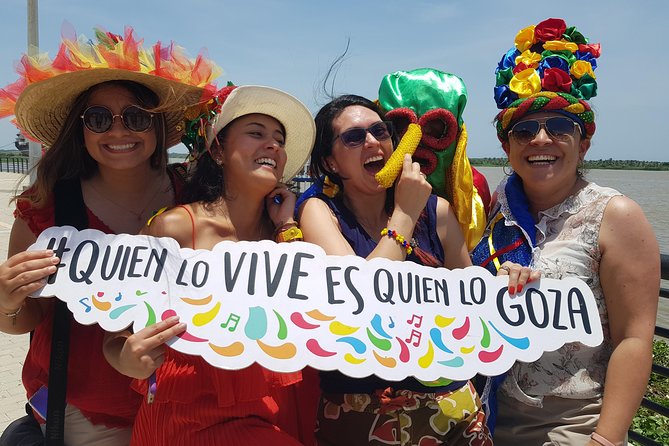
The Carnival Museum is the main ticketed attraction and the most focused cultural stop of the tour. You get about one hour inside an interactive museum devoted to the history of Barranquilla Carnival.
That time allocation is sensible. Carnival is too important to reduce to a quick roadside explanation, and the museum gives you a place to understand its costumes, characters, music, and public traditions. You can connect what you see here with the city’s neighborhoods and the later stop connected to the Carnival Foundation.
The museum visit is also the clearest reason to choose this tour over a basic drive around town. You are not only photographing monuments. You are getting a structured explanation of the festival that Colombia considers its most important.
I would plan to listen closely here and leave room for questions. The tour is offered in English, which helps if you do not speak Spanish. Still, the exact range of exhibits and interactive displays can change, so the guide’s explanation will shape how much you get from the visit.
The old Customs buildings and Barranquilla’s public memory
The route also includes a cultural center made up of several institutions: the Historical Archive of the Atlantic department, the Caribbean Pilot Library, the Caribbean Pilot Children’s Library, and the Hans Federico Neuman Musical Documentation Center.
The complex operates in restored historic buildings, including the old Customs building and the Tram and Montoya stations. Even without a long scheduled visit, this stop points toward an important part of Barranquilla’s story: trade, public records, children’s education, music, and transportation all share space in the city’s cultural life.
This is the kind of stop that benefits from a guide. On your own, you might see old buildings and move on. With context, you can understand why these sites matter and how restoration has given them a new civic role.
The schedule does not provide a stop length or included admission for this complex. You should expect an exterior look or a short stop unless the guide confirms that you will enter.
The Carnival Foundation’s traditional house
In the Abajo neighborhood, you visit a 1929 architectural property that retains its colonial style. The Caridi Mitriani family remodeled it in the 1990s and later handed it to the Barranquilla Carnival Foundation.
It now serves as a base for organizing the festival and a meeting place for participants. That makes it a useful follow-up to the Carnival Museum. At the museum, you learn about the festival as an institution and cultural event. Here, you see a place linked to the people who organize and take part in it.
The house also supports efforts to recover the heritage of the Abajo area through crafts, food, music, and other parts of Barranquilla identity. This is one of the more local-feeling parts of the route because it ties the festival to a traditional neighborhood rather than presenting Carnival as a show detached from daily life.
Again, do not assume a long indoor visit. The information provided does not give a separate duration or admission detail. Your guide can tell you how much time is possible on the day.
Gran Malecon and the Magdalena River
The Gran Malecon is one of Barranquilla’s major urban projects. The completed section described here covers 1.5 kilometers of a planned five-kilometer riverfront view along the Magdalena River.
You get about 20 minutes at the Malecon. That is enough for photographs, a short walk, and an explanation of how the city has been reconnecting with its river. The river is central to Barranquilla’s growth, so this stop adds geography and modern city planning to a tour that otherwise moves between heritage buildings and cultural attractions.
Do not expect to cover the entire riverfront in this time. The stop is a taste, not an extended promenade. If you enjoy public spaces and river views, you may want to return independently after the tour for a longer visit.
A soda is included, which is a small but welcome touch during a warm city outing. The tour also includes emergency medical insurance, adding a practical layer of support, though you should still check the specific terms before booking.
The sports monuments near the river corridor
Another stop is a public monument built in late 2018 for the XXIII Central American and Caribbean Games, hosted by Barranquilla. It sits at a roundabout along the industrial corridor of the Circunvalar near Via 40.
The stop helps show how the city uses large public works and sports events to shape its modern image. You may find the monument more useful as part of a broader explanation than as a destination in itself. The schedule does not give it a separate duration.
The tour also passes a building near Carrera 46 and Via 40 that has high heritage value. Its restoration in 2014 brought Barranquilleros back toward the Magdalena River and turned the site into a recreational space with traditional food.
This pairing is effective. One stop points to recent international sporting events, while the other connects restoration, public gathering, river access, and local cuisine. You get a quick look at how Barranquilla mixes old structures with new civic projects.
Aleta del Tiburon and the pride of Junior
The final named stop is Aleta del Tiburon, also called the Window of Champions. This colorful modern monument honors the major triumphs of Junior, Barranquilla’s football club.
You have about 10 minutes here. That is enough for photographs and a short explanation of the city’s football passion. The monument sits in front of the Magdalena River and has become a recognizable symbol of Junior supporters and Barranquilla’s sporting pride.
The stop is short, but it works well at the end. After baseball, the Central American and Caribbean Games, and the riverfront projects, you finish with football, the sport most closely tied to everyday popular enthusiasm in much of Colombia.
The exact description connects Aleta del Tiburon with the Window of Champions, so you should confirm with the operator which monument your guide will identify on the day. The supplied details treat them as the same final attraction.
Is $153 a fair price?
At $153 per person, this is not a bargain city bus tour. The cost reflects private transportation, a dedicated guide, pickup service, a soft drink, emergency medical insurance, and admission to the Carnival Museum.
The value improves if you are traveling as a small private group and want several major sites covered in one morning or afternoon. You are paying for convenience and interpretation, not a long list of entry tickets. Most stops are free or viewed from outside, so the guide and vehicle are the main parts of the package.
The price may feel high for solo visitors or anyone comfortable using local transportation independently. It may make more sense for people who want an efficient introduction, have limited time, or prefer not to manage routes across the city.
Group discounts are offered, so ask about them before paying. Confirmation arrives within 48 hours and depends on availability. Since the experience is non-refundable and cannot be changed for personal reasons, book only when your schedule is firm.
Who will get the most from this tour?
I would choose this experience if you want a broad first look at Barranquilla rather than a deep visit to one neighborhood. It suits you if you value a private vehicle, an English-speaking guide, and a clear route through cultural, historic, sports, and riverfront sites.
It is also a good fit for groups that want help arranging more activities. Andrea is praised for providing practical support during a stay in Barranquilla, and that kind of local assistance can be useful beyond the scheduled tour.
You may want another option if you prefer long museum visits, extended walking, or time to linger over architecture. The pace is brisk, and several landmarks receive only a quick stop. Most travelers can participate, and the route is near public transportation, but the experience itself is built around private transport.
The tour requires good weather. If poor weather forces cancellation, you are offered another date or a full refund. That is the main protection in an otherwise strict cancellation policy.
Should you book the Barranquilla city tour?
Book it if you want Barranquilla’s main themes in one compact outing: heritage hotels, Carnival, baseball, football, restored civic buildings, and the Magdalena River. I especially like the hour at the Carnival Museum and the private format, which make the tour more than a simple drive-by circuit.
Think carefully about the price before committing. At $153 per person, the tour earns its value through transport, guiding, and time saved, not through a large number of paid admissions. If that convenience matches your priorities, it is a strong introduction, particularly with a guide such as John. If you prefer to explore slowly and spend less, use the route as a planning guide and visit selected sites on your own.
FAQ
How long does the Barranquilla city tour last?
The experience lasts approximately three to four hours.
Where does the tour begin?
The meeting point is Torres del Atlántico, Cra. 57 #99A-65, Riomar, Barranquilla, Atlántico, Colombia.
Where does the tour end?
The activity ends back at the meeting point.
Is transportation included?
Yes. Private transportation is included, and pickup is offered.
Is the tour private?
Yes. Only your group participates in this private activity.
Is the tour offered in English?
Yes. English is one of the offered languages.
Is admission to the Carnival Museum included?
Yes. Entrance to the Carnival Museum is included in the tour price.
What else is included besides transportation and the museum?
The package includes a guide, soda or pop, and emergency medical insurance.
What happens if bad weather cancels the tour?
If poor weather causes cancellation, you are offered a different date or a full refund.
Just added in Barranquilla
- Soccer at the Metropolitan stadium with local fans★ 5.0 · 14 reviews
- Roundtrip Private Transfer from Barranquilla Airport (BAQ)★ 5.0 · 3 reviews
- Private Arrival or Departure Transfer: Ernesto Cortissoz Airport★ 5.0 · 16 reviews
- The center: Charm, Culture and Flavors★ 5.0 · 1 review
- Private transportation service from Barranquilla to Santa Marta★ 5.0 · 1 review
- Private airport pick up barranquilla★ 3.0 · 2 reviews
- El Prado neighborhood of Barranquilla★ 3.5 · 3 reviews
- Food Tour in Barranquilla Downtown 4H★ 4.5 · 15 reviews
City Tours, compared.
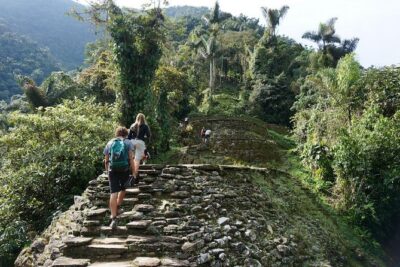
Hike for 4 days to the Lost City, Santa Marta
Read our review →
City tour Medellin + Comuna 13 + Graffititour Paisa for a day
Read our review →
La Candelaria, Monserrate and Museums Bogotá Private City Tour
Read our review →
Private Walking Tour in Cartagena Walled City & Getsemaní
Read our review →
Electric Bike City Tour Medellin With Colombian Coffee and Snack
Read our review →
Graffiti Tour: a fascinating walk through a street art City
Read our review →Browse the lists this tour appears in