
REVIEW · FOOD & DRINK
Cartagena´s African Legacy: 2 hrs on History, Dance & Tasting
Cartagena’s old town tells more than one story. This small-group walking tour links colonial plazas, Afro-Colombian history, local sweets, a turban activity, and Champeta music in about two and a half hours. It gives you a focused way to explore Cartagena’s African legacy without spending half a day traveling to Palenque.
I like the way the tour pairs serious history with hands-on culture. I also like its clear route from Plaza de los Coches to Getsemaní, where the experience ends with music and dance. The main consideration is pace: you cover many stops in a short time, so this works better as an introduction than as a slow, detailed study of every site.
In This Review
- Key points to know before you book
- Why this tour matters in Cartagena
- Starting at Plaza de los Coches
- Trade and colonial power at Plaza de la Aduana
- San Pedro Claver and questions of human rights
- Sea views and naval history at Parque de la Marina
- Difficult subjects at the Palace of the Inquisition
- Plaza de Bolívar brings history into the open
- Sweets, resistance, and the Portal de los Dulces
- San Diego and the old town’s local meeting places
- Getsemaní: Champeta and the most active part of the tour
- What the $60 price includes
- Who will enjoy this cultural walk
- Should you book Cartagena’s African Legacy?
- FAQ
- How long does the tour last?
- What time does the tour start?
- Where does the tour begin?
- Where does the tour end?
- Is transportation included?
- What is included in the price?
- Is the tour offered in English?
- How many people can join the tour?
Key points to know before you book
- A compact Afro-Colombian culture tour: In roughly 2 hours 30 minutes, you move through old-town plazas and finish in Getsemaní with a turban session and Champeta.
- The route follows Cartagena’s colonial core: Stops include Plaza de los Coches, Plaza de la Aduana, Plaza de San Pedro Claver, Parque de la Marina, and Plaza de Bolívar.
- History comes with local flavor: Typical candy is included, along with discussion of how African people used different strategies to escape slavery.
- The final 40 minutes are the most hands-on: Getsemaní is where you learn about Champeta, Cartagena’s best-known music style, and take part in the turban activity.
- A maximum of 15 people keeps the group manageable: You still walk through public streets, but the group size should make it easier to hear the guide.
- The $60 price includes more than a standard walking tour: You are paying for a guided history route plus snacks, a cultural activity, and a music session, but private transportation is not included.
Why this tour matters in Cartagena
Cartagena’s colonial center is often presented through forts, balconies, churches, and Spanish architecture. Those sights matter, but they do not tell the whole story. African people shaped the city’s labor, music, food, religious life, and resistance, and this tour puts that part of Cartagena near the center.
That focus gives the walk a clear purpose. You are not simply moving from one pretty square to another. At each stop, the guide connects public spaces to trade, slavery, faith, resistance, and modern local culture.
I especially like the final shift from history to participation. Instead of ending at a monument, the tour continues into Getsemaní, where you learn about Champeta and take part in a turban session. That ending helps connect Cartagena’s past with living culture in the city today.
The tour is offered in English and begins at 3:00 p.m. The afternoon schedule is useful in practical terms. You spend the first part in the old town and reach Getsemaní later, when the walk can move into a more social setting. Still, Cartagena is warm, so wear light clothing, bring water, and use sun protection.
More Food Tours in Cartagena
- Street Food Tour in Cartagena
★ 5.0 · 1,143 reviews - Cartagena: Guided Street Food Tour with Tastings
★ 4.9 · 833 reviews - Rum and Chocolate Tasting in Cartagena
★ 5.0 · 360 reviews
Starting at Plaza de los Coches
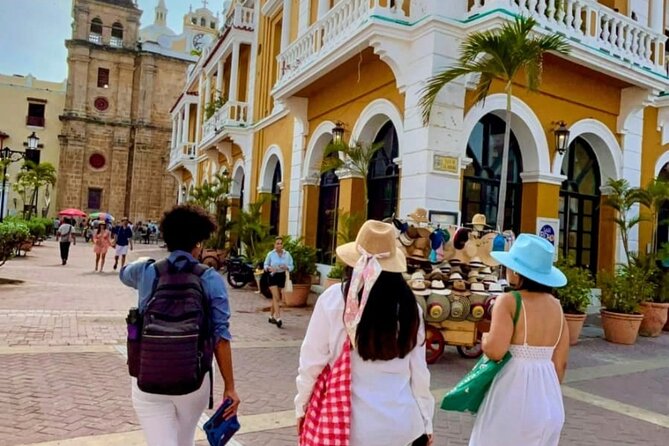
The meeting point is Plaza de los Coches, at Cra. 7 in El Centro. This is a sensible starting place because you are immediately inside Cartagena’s historic core, near a major entrance to the walled city.
The square was once a colonial marketplace. That makes it a useful first lesson: Cartagena’s public spaces were not only decorative gathering places. They were working areas tied to trade, movement, and human lives, including the lives of enslaved Africans.
You spend about 10 minutes here. That is enough for orientation and a short explanation, but not enough for a long discussion of every building around the square. I would arrive a little early so you can find the meeting point without using the tour’s opening minutes to get organized.
Admission is free, and the tour remains on foot. You do not need to budget for entrance fees at this stop.
Trade and colonial power at Plaza de la Aduana
The next stop is Plaza de la Aduana, about 15 minutes. Its importance comes from Cartagena’s role as a trading port during the colonial period.
Here, the guide explains how commerce shaped the city. The surrounding colonial buildings help you picture the administrative side of that system, but the African legacy gives the lesson greater weight. Trade was not an abstract process. It was tied to forced labor, human trafficking, and the movement of goods and people.
This is one of the places where the tour’s subject becomes especially clear. You see grand architecture, then learn about the unequal system that helped support colonial Cartagena.
The stop is short, so listen for the main points and ask questions if the guide allows time. You should not expect a museum-style lecture. This is a walking experience, and its strength comes from connecting several places rather than staying in one building.
San Pedro Claver and questions of human rights
Plaza de San Pedro Claver is the third stop, with about 10 minutes. It is named for the saint associated with serving enslaved people and advocating for their humane treatment.
The plaza offers a chance to consider the difference between charity, religious service, and wider human rights. The tour uses this location to discuss San Pedro Claver’s legacy while keeping the African experience in view.
That balance matters. Cartagena’s story includes people who benefited from slavery, people who resisted it, and people who tried to lessen its cruelty. A good guide can help you hold those parts together without reducing the past to a simple hero story.
Because the stop is brief, you will likely get a concise explanation rather than a full treatment of San Pedro Claver’s life. If this subject interests you, the plaza is also a useful place to note what you would like to explore later on your own.
More History Tours in Cartagena
- Cartagena: Historic Center and Getsemaní Shared Walking Tour
★ 4.9 · 2,716 reviews - Historic Center & Getsemaní Shared Tour in Cartagena
★ 5.0 · 620 reviews - San Basilio de Palenque History Tour
★ 5.0 · 301 reviews - Cartagena: Cultural tour Bazurto Market Adventure
★ 5.0 · 200 reviews
Sea views and naval history at Parque de la Marina

At Parque de la Marina, you spend around 15 minutes near the water. The park provides a change of pace after the denser streets and enclosed plazas of the old town.
You get views toward the sea while learning about the importance of the early Colombian navy institution and its pioneer. The information provided for the tour uses a broad description, so I would treat this as a short historical stop rather than expect a detailed naval museum visit.
The setting is part of the appeal. Cartagena’s waterfront reminds you that the city’s history depended on ships, ports, defense, trade, and forced movement across the Caribbean. The stop also gives you a natural moment to look around, take a breath, and reset before the tour moves back into the historic center.
There is no admission fee listed for the park. As with the rest of the route, you are walking through a public space.
Difficult subjects at the Palace of the Inquisition
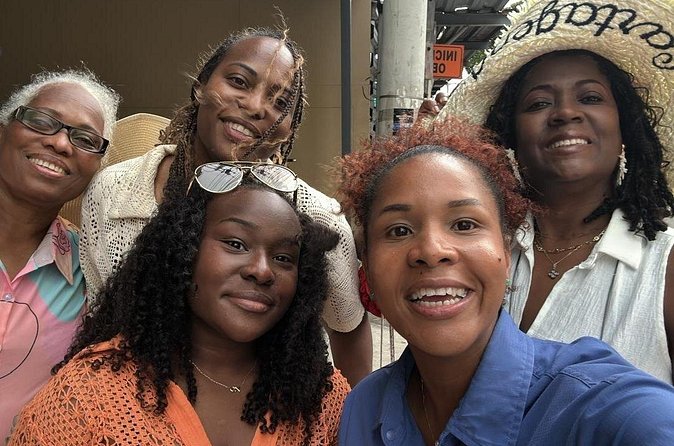
The Palacio de la Inquisición receives about 20 minutes, making it one of the longer history stops. The building now functions as a museum, and the tour introduces the dark history of the Inquisition in Cartagena.
This is a serious part of the walk. The subject may include punishment, religious control, and colonial power, so it is not presented as light sightseeing. The building itself adds force to the discussion because the setting is tied to the institution being explained.
The tour also connects this stop with the first Black president in Colombia. The supplied information does not identify that president, so you should ask the guide for the name and the full context if the subject comes up during your visit.
One practical point: the stop is described as taking place at the Palace of the Inquisition, but no museum admission is included in the tour details. The itinerary lists admission as free, so confirm with the guide whether you are viewing the exterior only or entering without a separate ticket. Do not assume a museum ticket is covered.
Plaza de Bolívar brings history into the open
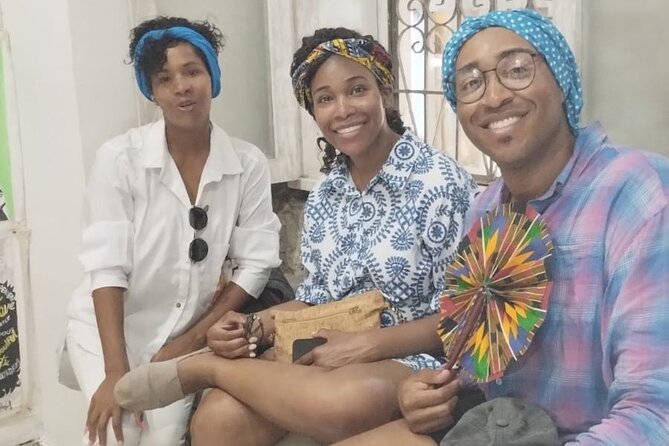
Plaza de Bolívar is another 10-minute stop in the center of the old town. Colonial buildings surround the square, and the guide uses the space to connect Cartagena’s history with music and movement.
This is where the tour begins to shift more clearly toward the performance side of the experience. You may be asked to move to Cartagena’s rhythm, which gives the walk a lighter, more physical moment after discussions of slavery, religion, and colonial power.
I like this change in tone, but it may not suit everyone. If you prefer a quiet historical walk, a rhythm activity in a public square may feel less formal than the earlier stops. If you enjoy cultural participation, it helps keep the experience from becoming a series of lectures.
The stop is short, so think of it as a transition. The main dance and music session comes later in Getsemaní.
Sweets, resistance, and the Portal de los Dulces
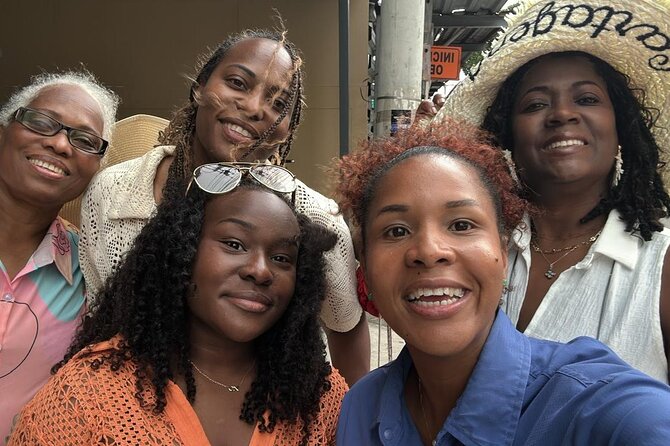
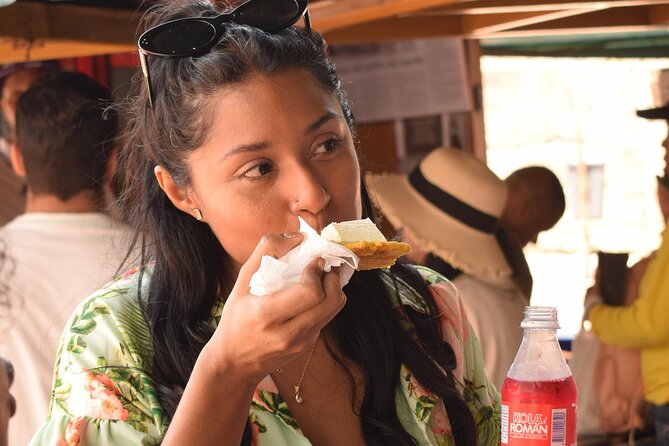
Portal de los Dulces is a small but meaningful stop. You receive typical candy while learning about strategies African people used to escape slavery.
The food is not just a snack added to the booking. It helps show how culture survives through everyday things such as recipes, flavors, and market traditions. At the same time, the discussion of escape and resistance gives the stop historical purpose.
You spend about 10 minutes here, so the tasting is likely simple rather than a full food tour. The included snack does add value to the $60 price, particularly because it ties directly to the subject of the walk.
Keep your expectations in the right place. This is not a meal, and no larger food itinerary is promised. If you want a full taste of Cartagena’s cooking, you will need a separate food experience.
San Diego and the old town’s local meeting places
The route continues through Centro Histórico, including the San Diego area. You spend around 10 minutes among narrow streets, small shops, and historic sites.
San Diego gives you a look at a neighborhood rather than a single monument. The streets are useful for seeing how Cartagena works as a living city, with local meeting places alongside shops and historic buildings.
The description also identifies this area as a place where local people meet. That detail matters because it shifts your attention away from architecture alone. You are encouraged to notice how residents use the center, not just how it appears in photographs.
Again, the time is limited. You get a taste of San Diego, not a full neighborhood walk. If you want to browse boutiques or stop for coffee, plan to return later because the group will continue on schedule.
Getsemaní: Champeta and the most active part of the tour
The final stop is Getsemaní, and the tour spends about 40 minutes here. This is the longest single segment and the point where the experience becomes most hands-on.
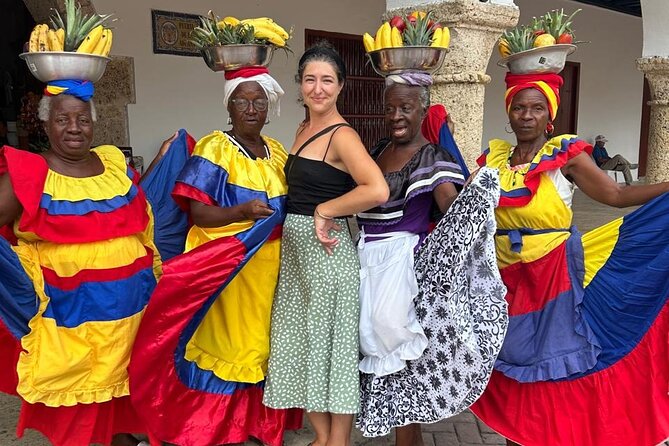
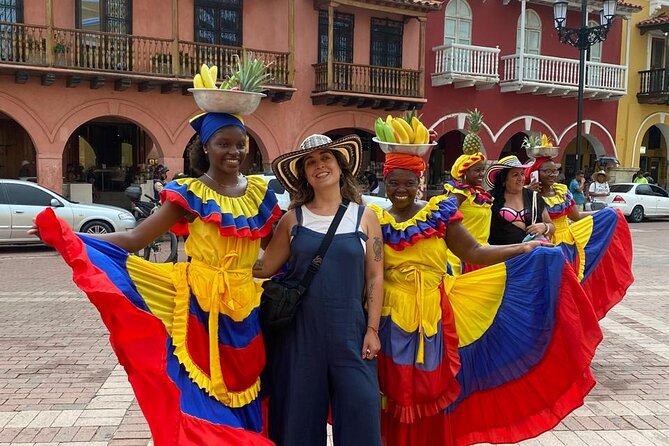
Getsemaní is known for street art, cultural events, and an energetic public life. The tour uses the neighborhood for a turban session and a Champeta session. Champeta is presented as the city’s most typical music, and the activity gives you a direct way to connect with Cartagena’s Afro-Caribbean identity.
The turban session is included, so you do not pay extra for the activity. The provided details do not explain exactly how the session is taught or whether each person creates a particular style, so ask the guide what to expect. The same applies to the Champeta portion. You should expect instruction and participation, but the exact format is not specified.
This ending is a strong choice for the tour. You have spent the earlier hours hearing about African history and resistance. In Getsemaní, the focus turns to present-day expression through clothing, rhythm, and dance.
The tour ends at Calle Adentro, Cl. 30 #9-43, in Getsemaní. The final location is a local place where you learn about Champeta. Since the tour ends there rather than returning to the starting point, you can continue exploring Getsemaní afterward.
What the $60 price includes
At $60 per person, this is not the cheapest way to walk through Cartagena’s old town. You can see many of the plazas without paying an admission fee. The value comes from the guide’s storytelling, the focused Afro-Colombian theme, the included candy, the turban session, and the Champeta activity.
The maximum group size is 15 people. That is not a private tour, but it is more manageable than a large city walk. A smaller group also matters during the dance and turban portions, when you may want to hear instructions and take part without feeling lost in a crowd.
No private transportation is included. That is not a major issue for this route because the stops are connected by walking, but it matters if you have limited mobility, heavy luggage, or a hotel far from the center. The tour starts and ends in different neighborhoods, so plan your onward route from Getsemaní.
The tour is booked an average of 16 days ahead. That suggests you should reserve early if your Cartagena dates are fixed, especially since the group is capped at 15 people.
Who will enjoy this cultural walk
I would recommend this tour to you if you want a short, focused introduction to Cartagena’s African heritage and do not have time for a longer trip to Palenque. One strong reason to choose it is the way it brings several subjects together: colonial trade, slavery, religious history, resistance, sweets, clothing, and music.
It also suits first-time visitors who want more than architecture. The route passes many famous central locations, but the guide’s subject gives them a new frame.
Families and mixed-age groups may appreciate the variety, since the walk includes history, food, movement, and music. Most people can participate, and the tour is near public transportation.
I would hesitate if you want a quiet, slow-paced museum visit or a full academic study of Afro-Colombian history. The schedule is tight, with roughly 10 to 20 minutes at most historical stops. You will hear key ideas, but you will not examine every location in depth.
Guide Daniela receives particularly warm praise for being kind, fun, and able to make the experience feel like a 10 out of 10. Her role matters here because the tour covers painful subjects and then asks you to join in with dance and music. A guide who can handle both sides well is central to the experience.
Should you book Cartagena’s African Legacy?
Book it if you want an efficient, English-language introduction to Cartagena’s African past and present, especially if you cannot set aside half a day for Palenque. The combination of public history, local candy, a turban activity, and Champeta gives you more than a basic plaza walk.
Skip it if you want private transportation, long museum visits, or a return to the original meeting point. You should also be ready for a fairly active afternoon, with walking through the old town and participation in the final cultural session.
For most people, the best reason to book is the ending. History can feel distant when it stays on a plaque or behind a colonial facade. Here, the route finishes with living music and movement in Getsemaní, giving you a more personal sense of how Cartagena’s African identity continues today.
FAQ
How long does the tour last?
The experience lasts approximately 2 hours 30 minutes, although the title describes it as a 2-hour experience.
What time does the tour start?
The tour starts at 3:00 p.m.
Where does the tour begin?
It begins at Plaza de los Coches, Cra. 7, El Centro, Cartagena de Indias.
Where does the tour end?
It ends at Calle Adentro, Cl. 30 #9-43, in Getsemaní.
Is transportation included?
No. Private transportation is not included. The experience follows a walking route through Cartagena’s historic center and Getsemaní.
What is included in the price?
Typical candy, a turban session, and a Champeta session are included.
Is the tour offered in English?
Yes. The tour is offered in English.
How many people can join the tour?
The maximum group size is 15 people.
Just added in Cartagena
- Self-Guided Audio Tour: Pirate Tales in Cartagena★ 3.0 · 2 reviews
- Private History Photography Tour★ 5.0 · 17 reviews
- Paue Island Tour in the Rosary Islands★ 5.0 · 1 review
- Totumo Volcano★ 3.5 · 15 reviews
- Palmarito Beach★ 3.5 · 4 reviews
- Party without limits! Cartagena; VIP Party.★ 4.5 · 32 reviews
- Paragliding Experience in Cartagena★ 5.0 · 8 reviews
- Tour cultural to san Basilio de Palenque from cartagena★ 5.0 · 45 reviews
Food & Drink, compared.

Comuna 13 Graffiti Tour, Cable Car & Street Food
Read our review →
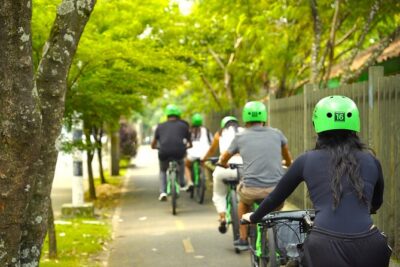
Half Day Bike Tour in Medellin – Local snack, Coffee or Beer
Read our review →
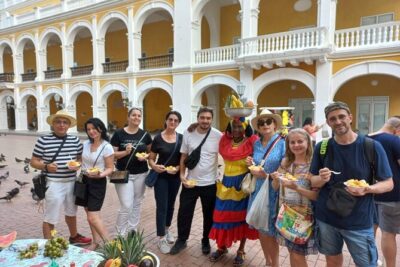

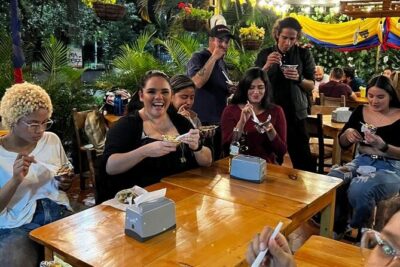
Rumbero Gastrotour through Medellín and Street Food
Read our review →
Browse the lists this tour appears in