
REVIEW · COLOMBIAN COFFEE TOURS
Salento: Coffee Master Roasting, Brewing and Tasting Tour
Coffee gets better when you understand it. This two-hour workshop in Tolima takes you from green bean to finished cup, with hands-on roasting, four pour-over methods, and five specialty coffees to taste. I especially like the chance to roast a 2-kilogram batch under supervision and the small group size, limited to 10 people.
I also like that the owner-led format can feel personal rather than staged. One participant received help using a home coffee machine, while another came away with a better sense of local culture and coffee aroma notes. The main consideration is that the tasting requires focus and a clear palate, so strong perfume, smoking, alcohol, and even a heavy meal right before the session can get in the way.
In This Review
- Key points at a glance
- What this coffee workshop is really about
- Watching green beans change in the drum roaster
- Learning why origin and roast profile matter
- Comparing four pour-over coffee makers
- Tasting five coffees with different processing styles
- A friendly owner-led format near Salento
- Getting there and judging the $52 price
- Who should book this coffee experience
- My verdict on the roasting and brewing session
- FAQ
- How long does the coffee roasting and brewing tour last?
- How much does the tour cost?
- What languages are available?
- How many people are in each group?
- Is transportation to the plantation included?
- What should I do before the coffee tasting?
Key points at a glance
- Roast a 2-kilogram batch: Learn how heat changes green coffee and take part in the roasting process under expert supervision.
- Study four pour-over methods: Compare classic brewing tools and see how small changes affect the cup.
- Taste five specialty coffees: Look for acidity, sweetness, body, and aftertaste across coffees with different processing styles.
- Keep the group small: With no more than 10 people, you should have a fair chance to ask questions and handle the equipment.
- Plan your palate carefully: Eat beforehand, but avoid perfume, smoking, alcohol, strong lotions, and powerful mosquito repellent before the tasting.
What this coffee workshop is really about
This is not a quick farm visit with a sample cup at the end. It is a practical lesson in how coffee changes at every stage, from a hard green seed to a fragrant brewed drink.
The workshop takes place in the Salento area of Tolima and lasts two hours. At $52 per person, the price is more than you would pay for a basic coffee stop, but it covers a guided tasting, roasting instruction, brewing practice, beverages, and the use of specialty coffee and equipment.
I think the value depends on how interested you are in coffee. If you simply want a scenic plantation visit, this may feel too technical. If you already own a coffee maker, enjoy specialty coffee, or want to understand why one cup tastes different from another, the hands-on format makes the fee easier to justify.
The group is limited to 10 people. That matters here. Coffee tasting works best when you can ask why a cup tastes sour, sweet, heavy, or clean, and when you can get close enough to watch the roast and brewing steps. A large crowd would turn this into a demonstration. This smaller format should leave more room for conversation.
More coffee tours in Salento Colombia:
- Salento: Private Cocora Valley, Salento & Coffee Farm Tour
★ 4.9 · 202 reviews - Coffee Tour at Finca El Ocaso Salento: Traditional Spanish Farm
★ 4.8 · 89 reviews - Coffee Tour Salento-Ocaso Farm- English Tour
★ 4.6 · 88 reviews
Watching green beans change in the drum roaster
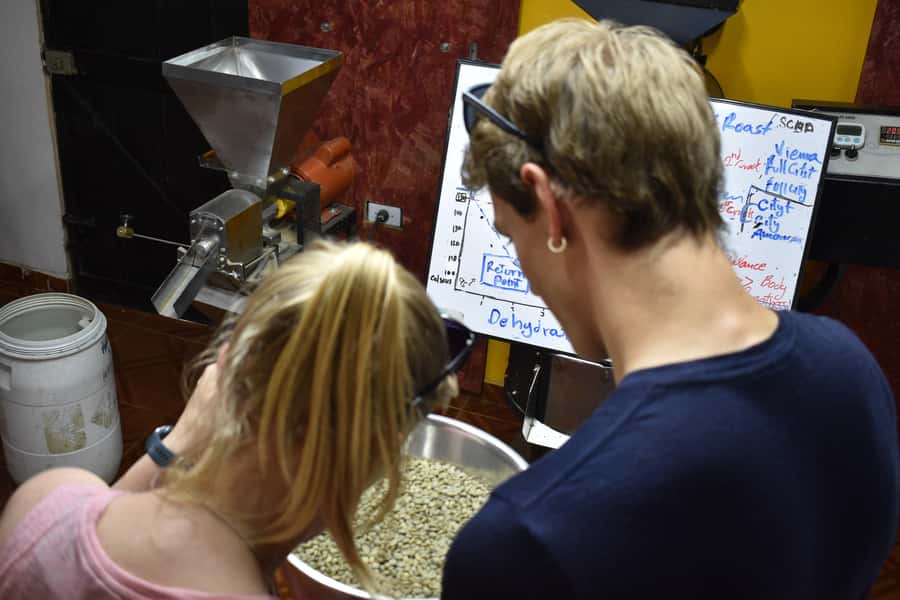
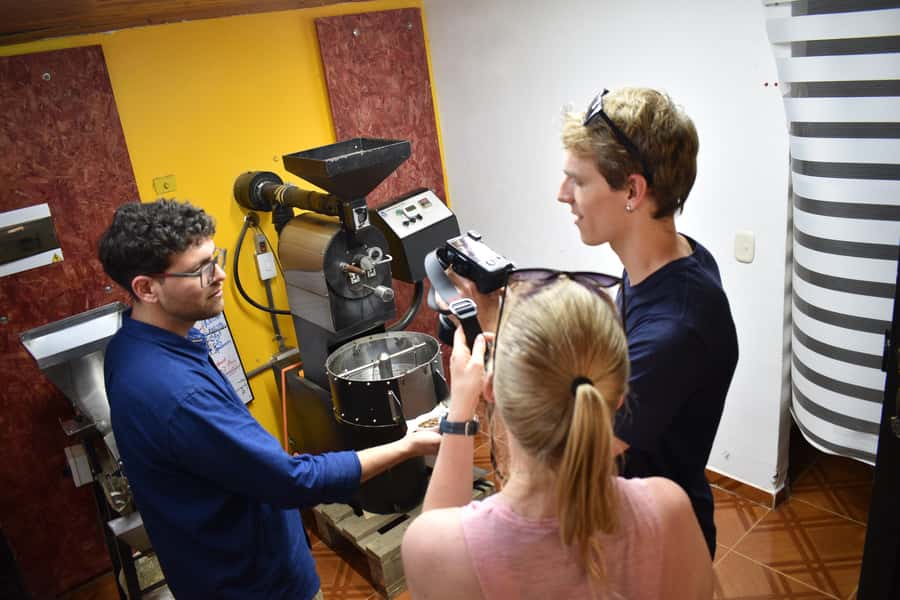
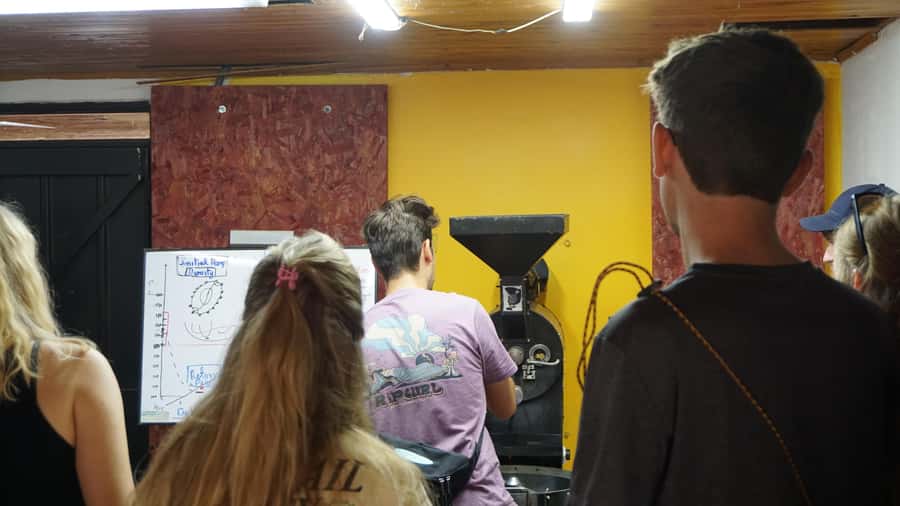
The first main part of the workshop focuses on the drum coffee roaster. An expert technician explains how heat reaches the beans through conduction and convection. Those terms may sound technical, but the practical point is simple: roasting is not just turning up a flame and waiting for brown beans.
You learn how green coffee changes physically and chemically. The beans lose moisture, expand, change color, and develop the aromas and flavors you later notice in the cup. The lesson also covers roasting profiles, which are the planned ways heat is applied over time.
This is useful because roasting can hide or reveal the character of the coffee’s origin. A roast profile affects sweetness, acidity, body, and aroma. The origin still matters, but the roaster has a major say in what reaches your cup.
The best part is that you do not only watch. You get to roast a 2-kilogram batch of specialty coffee with guidance. That is enough coffee to make the process feel real, while still keeping the activity manageable in a small workshop.
You should expect instruction rather than complete freedom at the roaster. This is not the place to experiment without advice. The point is to see how an expert manages the process and to understand the decisions behind the final roast.
For coffee fans, this is likely the most memorable part. Many people buy beans in a bag and never see what happens before brewing. Here, you get a direct look at the work that shapes the cup.
Learning why origin and roast profile matter
The workshop connects roasting to coffee origin. That is an important distinction. Coffee from different areas can show different flavors, but those flavors are also shaped by processing and roast level.
You will hear about the role of the bean’s origin and how a roaster builds a profile around it. This gives you a better way to think about coffee labels. Instead of treating words such as floral, fruity, sweet, or bright as decoration, you can start asking how the bean was grown, processed, roasted, and brewed.
The session does not promise that you will become a professional roaster in two hours. That is a fair limit. Roasting is a craft with many variables, and a short class can give you a working foundation rather than mastery.
Still, the lesson has practical value. Afterward, you should be better prepared to notice when a coffee tastes overly sharp, flat, bitter, or thin. You may also have a clearer idea of what sort of roast you prefer at home.
Comparing four pour-over coffee makers
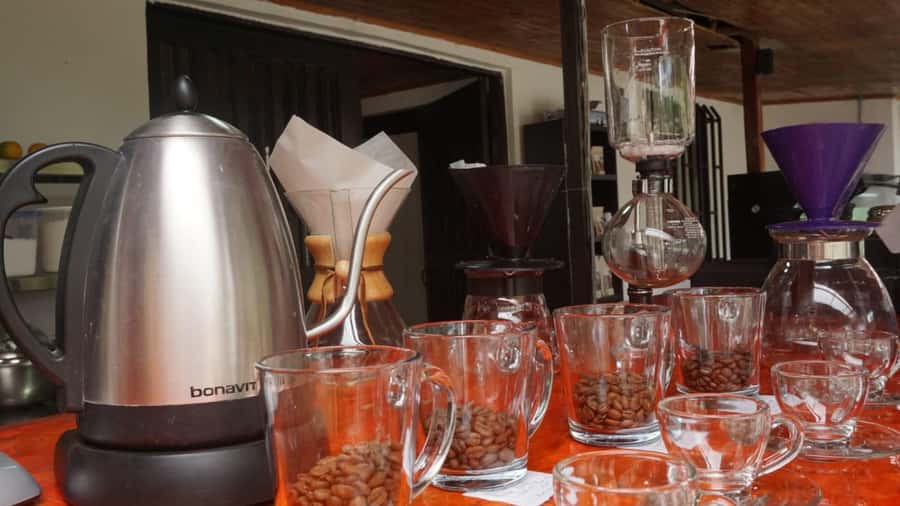
Once the roasting portion is finished, the focus shifts to brewing. You work with four different pour-over coffee makers and learn the basic mechanics behind each method.
The equipment matters because brewing changes the way the same kind of coffee tastes. Water temperature, grind size, pouring speed, contact time, and the shape of the brewer can all affect the final cup. You do not need to memorize every technical detail to get something useful from the class. You simply need to pay attention to how each method changes the result.
This is a genuinely hands-on section. You prepare the coffee yourself instead of sitting back while someone else makes everything. That makes the lesson more useful for anyone who wants to improve their morning routine.
One of the strongest details from the feedback is that the owner helped a participant with a coffee machine used at home. That small moment tells you something about the tone of the class. The instruction can be adapted to your questions, rather than staying locked to a script.
You should ask about your own equipment if you have it. The supplied information does not promise a private lesson for every participant, but the small group and personal teaching style give you a reasonable chance to raise a home-brewing problem.
The brewing segment also helps you see why a recipe is not magic. If your coffee tastes weak, dry, sour, or bitter, the cause may be the grind, water, pouring, or timing. A guided workshop gives you a way to test those possibilities instead of guessing.
More Food Tours in Salento Colombia:
- Salento: Coffee Farm Tour with Tasting
★ 4.9 · 41 reviews - Natural Reserve Barbas Bremen: Tropical Fruit Tasting
★ 5.0 · 1 review - Medellin: Comuna 13 Graffiti Tour, Cable Car & Street Food
★ 4.8 · 9,046 reviews - Comuna 13 Graffiti Tour with Street Food
★ 5.0 · 7,503 reviews
Tasting five coffees with different processing styles
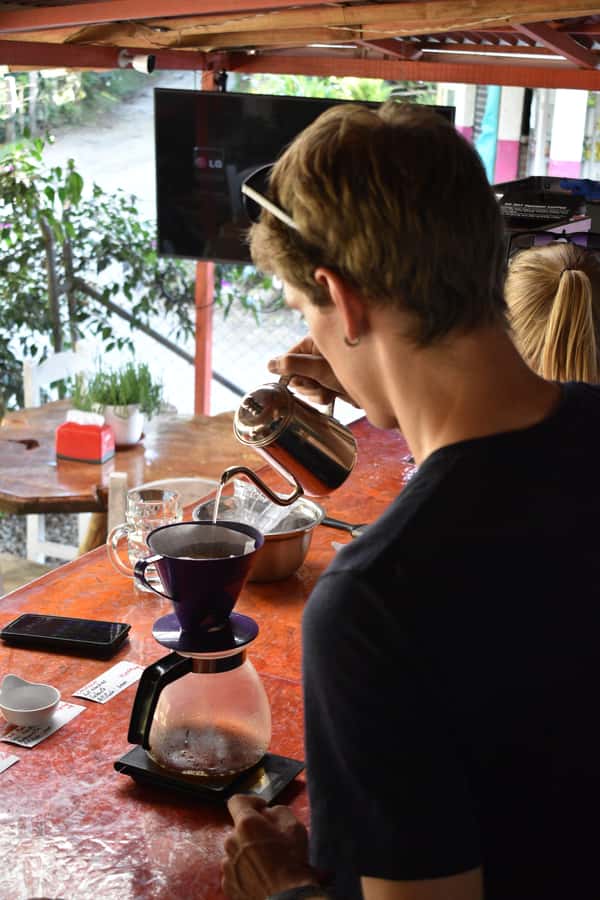
The tasting includes five specialty coffees. You learn about full washed, extended fermentation, and natural processing, three methods that can produce very different results in the cup.
A full washed coffee is generally discussed as a style where the fruit is removed and the bean is cleaned before drying. Natural processing leaves the coffee fruit around the bean during drying. Extended fermentation uses a longer or more controlled fermentation stage. The important point for this class is not memorizing labels. It is learning to connect processing with what you smell and taste.
You are guided to look for four basic traits:
- Acidity: A lively, bright quality that can remind you of fruit or citrus.
- Sweetness: The pleasant sugary quality that gives a coffee balance.
- Body: The weight or texture of the drink in your mouth.
- Aftertaste: The flavors that remain after you swallow.
This vocabulary helps you describe coffee without falling back on I like it or I do not like it. You might prefer a coffee with a lighter body and bright acidity, or one with a heavier mouthfeel and a long finish.
The tasting is not a speed test. Take your time between cups, notice the aroma before sipping, and compare the coffees side by side. You will get more from the session if you focus on differences rather than trying to identify every flavor note perfectly.
The advice about preparation is worth taking seriously. Eat a proper meal before arriving, since tasting several coffees on an empty stomach can be unpleasant. At the same time, avoid strong deodorant, perfume, skin lotion, and heavy mosquito repellent. These smells can interfere with your nose, which is one of your main tools during a coffee tasting.
Smoking and alcohol can also affect smell and taste, so avoid them before the workshop. Chewing gum is not allowed, and neither are alcohol, drugs, or bare feet during the activity.
A friendly owner-led format near Salento
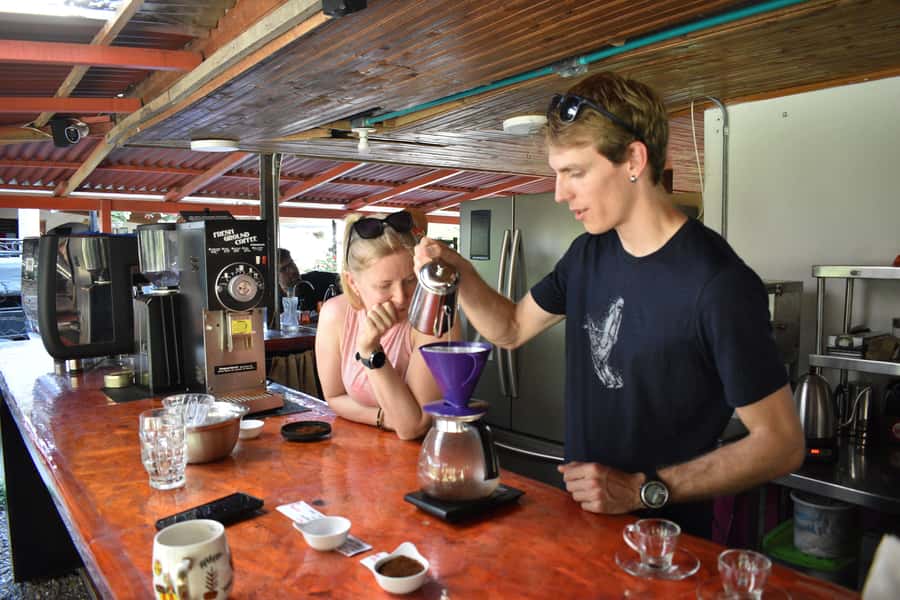
The teaching style appears to be one of the biggest strengths. The owner leads the activity and brings clear enthusiasm to the work. The tone is described as welcoming, relaxed, and fun, with enough technical detail to satisfy people who want more than a casual introduction.
That balance is important. Coffee classes can go wrong in two ways. They can become a lecture packed with terms, or they can stay so light that you learn very little. This workshop aims between those extremes, with explanations followed by actual roasting, brewing, and tasting.
English and Spanish instruction is available. That makes the class more accessible to international visitors, though your exact language arrangement may depend on the group and instructor at your chosen time.
The workshop also gives you a small window into local coffee culture. You are not only learning a recipe for pour-over coffee. You are hearing how origin, processing, roasting, and preparation connect to the work of coffee producers and roasters in Colombia.
Getting there and judging the $52 price
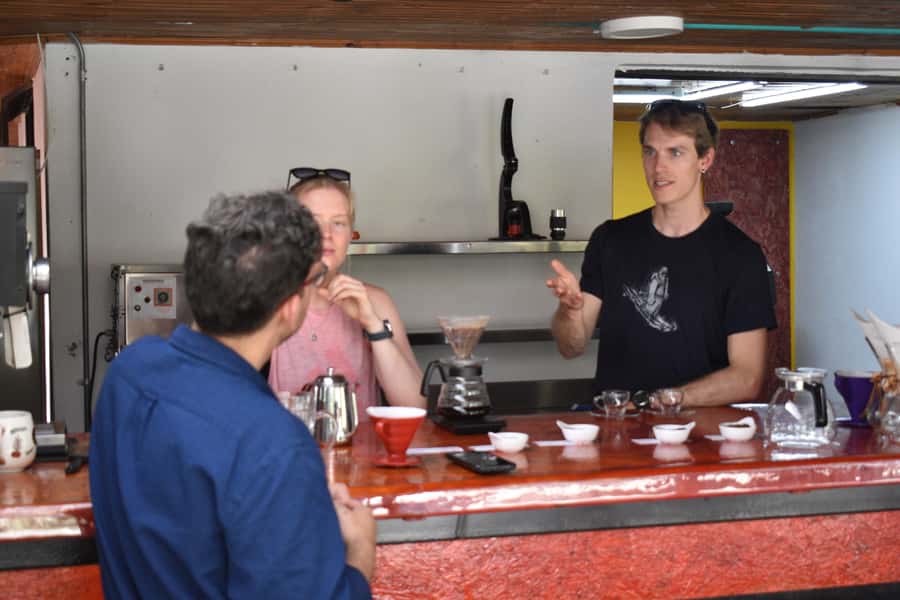
Transportation to the plantation is not included, and meals are not included. One useful point is that the location is described as easy to reach from Salento, so you do not need to pay for a bundled transport tour simply to attend the coffee session.
You should still check the meeting point and transport plan when booking. The supplied details do not provide a specific address or transfer method, so do not assume pickup is included.
At $52, the experience is best judged as a workshop rather than a tasting alone. You are paying for instruction, equipment access, a supervised roast, four brewing methods, five coffees, and a guided tasting. If you purchased only a drink, the price would be high. If you value the lesson and practical skills, it is more reasonable.
The small group also adds value. With a maximum of 10 people, you are not likely to be lost in a crowd, though the amount of direct time you receive will still depend on how many participants want to handle the equipment.
Free cancellation up to 24 hours before the start and reserve-now, pay-later booking make it easier to fit into a changing Colombia itinerary. The duration is fixed at two hours, so it works well as a half-day add-on rather than a full-day outing.
Who should book this coffee experience
I would choose this workshop if you meet one or more of these descriptions:
- You brew coffee at home and want better control over the result.
- You are curious about roasting, not just drinking.
- You enjoy tasting several coffees side by side.
- You want a small-group activity with direct contact with the owner.
- You are visiting Salento and want something more focused than a standard plantation stop.
- You are comfortable with aromas, tasting notes, and a little technical explanation.
It may not suit children under 15, since that is the stated minimum age. It is also not a good choice for anyone with back problems, especially since the activity involves standing or working around equipment, though the exact physical demands are not described.
There is also a confusing accessibility note. The activity is marked wheelchair accessible, but the same information says it is not suitable for wheelchair users. Contact the provider before booking if this affects you. Do not rely on the general accessibility label alone.
My verdict on the roasting and brewing session
I like this tour because it lets you do the work. You roast beans, prepare coffee with several brewers, and taste five examples with guidance. The owner-led approach adds warmth, while the technical content gives the session substance.
Its limits are clear. It is only two hours, transport and meals are not included, and the tasting demands some preparation. You should not expect a full plantation tour or a professional roasting certificate.
Book it if you want to understand what happens between farm, roaster, brewer, and cup. Skip it if your main goal is scenery, a large meal, or a relaxed coffee stop with no instruction. For curious coffee drinkers staying in or near Salento, the combination of practical work, small-group attention, and specialty tasting makes the $52 price a fair buy.
FAQ
How long does the coffee roasting and brewing tour last?
The experience lasts two hours.
How much does the tour cost?
The price is $52 per person.
What languages are available?
Instruction is available in English and Spanish.
How many people are in each group?
The group is limited to 10 participants.
Is transportation to the plantation included?
No. Transportation to the plantation is not included, and meals are also not included.
What should I do before the coffee tasting?
Eat a proper meal before arriving, but avoid strong deodorants, perfumes, skin lotions, and strong mosquito repellents. Try not to smoke or drink alcohol beforehand, since these can affect your sense of smell.
Just added in Salento Colombia
- Tour to Salento and Cocora Valley from Pereira or Armenia★ 5.0 · 2 reviews
- Salento: hike to learn about Birds★ 4.9 · 6 reviews
- Salento: Salento & Cocora Valley Tour★ 5.0 · 11 reviews
- Salento, Cócora + Horseback Riding from Pereira or Armenia★ 5.0 · 1 review
- Salento: Coffee Farm Tour with Tasting★ 4.9 · 41 reviews
- Salento, Cocora Valley & Cocoa Tour from Pereira or Armenia★ 5.0 · 1 review
- Salento, Cocora and Filandia Full Plan from Pereira/Armenia★ 5.0 · 11 reviews
- Salento and Cócora Tour + Coffee Farm from Pereira/Armenia★ 5.0 · 33 reviews
Colombian Coffee Tours, compared.

Half Day Bike Tour in Medellin – Local snack, Coffee or Beer
Read our review →
Half-Day Coffee Tour: From the Seed to the Cup, Farm & roastery
Read our review →
Coffee Tour with Transport, Snacks and Tastings
Read our review →
Electric Bike City Tour Medellin With Colombian Coffee and Snack
Read our review →
Private Coffee Farm Tour in Medellin: Real Authentic Experience
Read our review →
Guatape & Coffee Farm & El Peñol Rock & Quaint Town: Best Combo
Read our review →
Coffee tour in Medellín with tastings and transportation
Read our review →Browse the lists this tour appears in