
REVIEW · MONSERRATE TOURS
La Candelaria and Monserrate Tour: History and Culture
Bogotá opens its story at street level. This private tour ties together the Gold Museum, La Candelaria, Plaza de Bolívar, Botero Museum, and Monserrate, so you get both city history and high mountain views in one day. I especially like the included museum admissions and the local touches, such as Colombian fruit, a typical snack, water, and a bilingual guide.
I also like the flexible pickup, since GoBogotá collects you wherever you choose in Bogotá. Guides such as Milena and Diego have been praised for making the city easy to understand, while Luisa earned special credit for calm driving. The main consideration is the $137.75 price, which is fair for a private five-to-seven-hour outing but high if you only want a short walking tour.
In This Review
- Key points to know before booking
- What this Bogotá tour is really trying to do
- Starting with gold, myth, and the Muisca world
- Walking through La Candelaria’s colonial center
- Plaza de Bolívar and the business of national life
- Botero’s rounded figures and the Banco de la República museums
- Coins, banknotes, and Colombia’s changing economy
- Teatro Colón and the city’s artistic side
- Monserrate at 3,152 meters
- Food, transport, and the private-tour advantage
- What the guide and driver add
- Who should book this experience?
- Should you book the La Candelaria and Monserrate Tour?
- FAQ
- How long does the La Candelaria and Monserrate Tour last?
- What is the tour price?
- Is hotel or location pickup offered?
- Is this a private tour?
- Is the tour offered in English?
- Are museum admissions included?
- Is lunch included?
- How do you reach Monserrate?
- What is the cancellation policy?
Key points to know before booking
- The Gold Museum gives the day a strong cultural start: Its 34,000-plus pieces explain Muisca beliefs, daily life, craft, and the El Dorado legend.
- This is a private tour for your group only: You do not share the vehicle or guide with strangers.
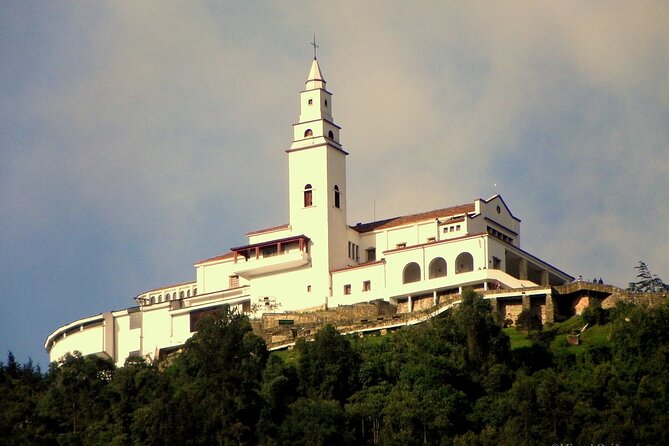
- Monserrate adds Bogotá’s big view: The sanctuary sits at 3,152 meters and takes about two hours of the schedule.
- La Candelaria is explored through several angles: Churches, colonial streets, art, money, politics, theater, and local gathering places all appear.
- Small extras make the day easier: Fruit, a Colombian snack, bottled water, Wi-Fi, medical insurance, and museum tickets are included.
- The schedule can run long: Five to seven hours leaves room for traffic, walking, museum interest, and the mountain visit.
What this Bogotá tour is really trying to do
This experience is not just a ride between famous sights. It links Bogotá’s pre-Columbian past, colonial center, national politics, modern art, and religious life. That range is its main strength.
You begin with objects made long before Spanish rule, walk through streets shaped by colonial power, see works by Fernando Botero and international artists, then rise above the city at Monserrate. It is a lot for one outing, but the subjects fit together well.
The tour is offered in English and uses a professional bilingual guide with an experienced driver. Since only your group participates, you can ask questions and adjust the pace more easily than on a large bus tour. That matters in La Candelaria, where a quick photo stop and a proper look at a museum are very different experiences.
The listed duration is about five to seven hours. That wide range is useful information. A group that moves briskly may finish closer to five hours. A group that lingers in the museums, walks between central sights, or encounters city traffic may need most of the seven.
More History Tours in Bogota
- Shared Tour of the Historic Candelaria in Bogotá
★ 5.0 · 1,551 reviews - Bogota Shared Gastronomy Tour in the Historic Center
★ 5.0 · 264 reviews - Bike Tour in Bogota Historical Sites and Fruit Market
★ 5.0 · 171 reviews
Starting with gold, myth, and the Muisca world
The Museo del Oro is the intellectual heart of the outing. The visit lasts about 45 minutes, and admission is included.
The collection contains more than 34,000 pieces of gold and other materials. The point is not simply to admire glittering objects. The rooms are arranged by theme, helping you connect the workmanship to indigenous daily life, religious ceremonies, and ideas about the world.
The highlight is the Hall of the Offering. A sound and light presentation reveals the Muisca Raft, the object tied to the famous El Dorado story. This is one of those moments where a guide adds real value. Without context, the raft is a striking artifact. With context, it becomes a clue to the beliefs and ceremonies that helped shape one of South America’s most persistent legends.
I like that the museum appears early in the schedule. It gives you a useful frame for everything that follows. Bogotá is not only a Spanish colonial city, and this stop makes that clear before you begin walking through its older streets.
Forty-five minutes is enough for an introduction, but not enough for every room at a slow pace. If gold work, indigenous cultures, or museum displays are your main interest, ask the guide how the time will be handled. The tour covers many sites, so you should not expect a full museum study.
Walking through La Candelaria’s colonial center
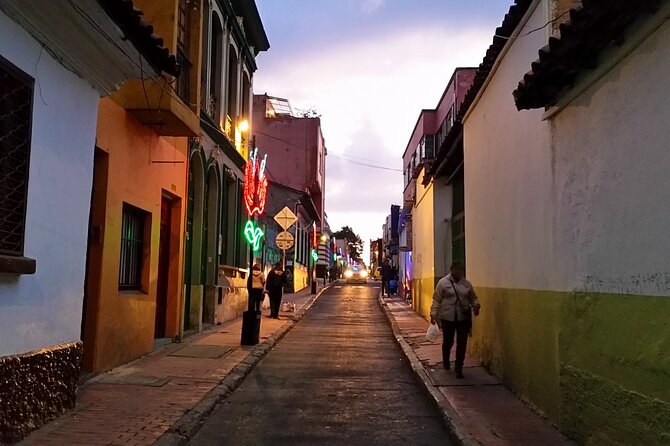
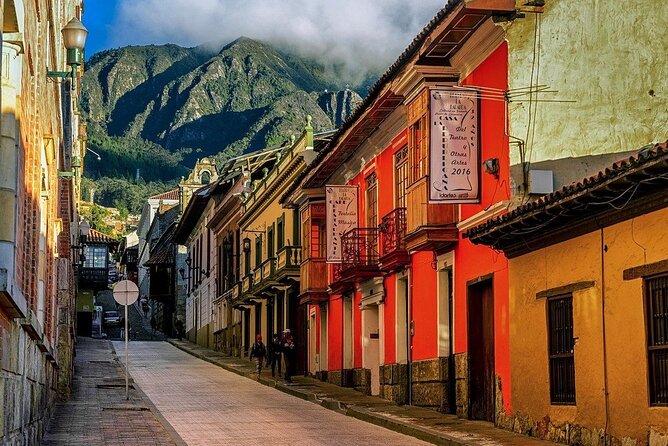
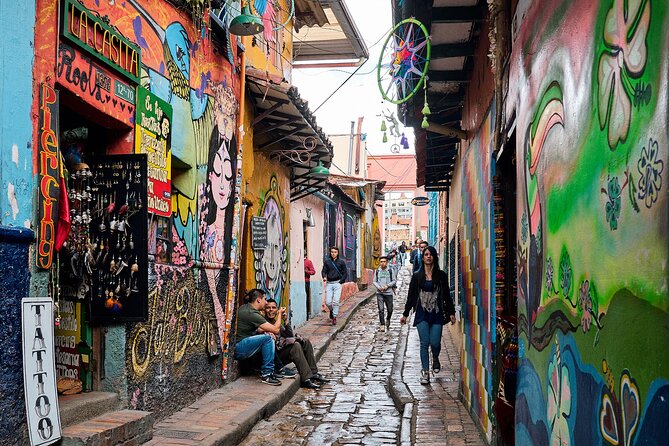
La Candelaria is where the tour becomes a street-level history lesson. The neighborhood brings together old churches, colored façades, narrow streets, museums, plazas, and cultural venues. The route includes several short visits, so comfortable shoes and a moderate level of fitness are sensible.
At Iglesia de Nuestra Señora de la Candelaria, you get about 45 minutes. The church dates from the 17th century and features a baroque façade, gilded altarpieces, and religious artwork. Its importance is not only architectural. It remains a place of devotion for people in Bogotá, and the quiet interior gives the tour a pause after the museum.
Admission is free, but the church is an active religious site. Keep your voice low and follow any instructions in place. The value here comes from seeing a working church, not just checking an old building off a list.
The route also includes Plaza del Chorro de Quevedo, a small square linked to the supposed founding of Bogotá in 1538. Its cobblestones, colonial houses, fountain, and chapel give it a different feel from the large civic plaza nearby. Storytellers, musicians, and artisans may add to the atmosphere, though the exact activity can vary.
This is a good place to pay attention to the guide. The square is compact, and its significance is easy to miss if you only take a photograph. GoBogotá aims to show the city in a local way, and this stop fits that goal better than a quick drive-by.
Plaza de Bolívar and the business of national life
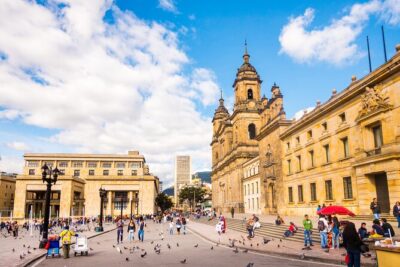
Plaza de Bolívar receives roughly 45 minutes and provides Bogotá’s grand civic setting. A statue of Simón Bolívar anchors the square, which is surrounded by major buildings including the Primada Cathedral, National Capitol, Liévano Palace, and Palace of Justice.
The square has hosted important events and demonstrations. It is not merely an attractive open space. It is where Colombia’s political and public life becomes visible through architecture and daily movement.
I find the contrast with Chorro de Quevedo useful. Chorro is intimate and bohemian. Plaza de Bolívar is broad, formal, and tied to government and national memory. Seeing both helps you understand how La Candelaria shifts from small neighborhood corners to the center of public power.
The square can also be busy and exposed. Your guide can help explain the buildings, but you may have limited time for detailed interior visits because the itinerary moves on to museums and Monserrate. Treat this stop as a civic overview rather than an architectural deep study.
More La Candelaria walks:
- La Candelaria, Monserrate and Museums Bogotá Private City Tour
★ 5.0 · 1,567 reviews - Bogotá: Guided La Candelaria Walking Tour
★ 4.8 · 1,229 reviews - Bogota + Monserrate Private City Tour, Museums, Candelaria.
★ 5.0 · 1,015 reviews - Walking Tour in La Candelaria Bogotá
★ 5.0 · 859 reviews
Botero’s rounded figures and the Banco de la República museums
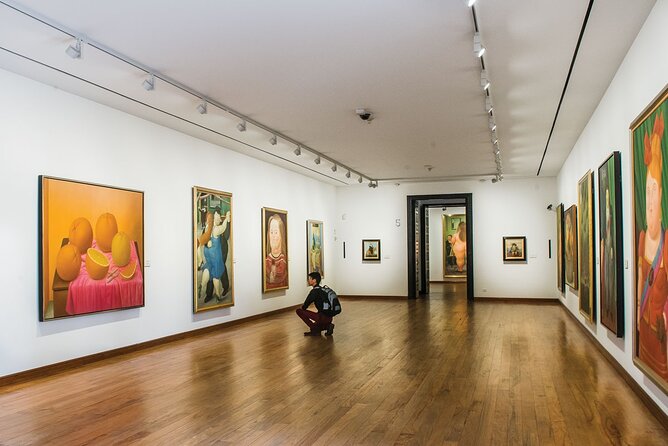
The stop described as the Banco de la República museums includes the Botero Museum, with about 45 minutes and admission included. It is located in a colonial house in La Candelaria.
Fernando Botero donated the collection that opened the museum in 2000. His familiar figures, with their generous proportions, make the visit approachable even if you are not an art expert. The collection also includes international works associated with artists such as Picasso, Dalí, Monet, and Matisse.
That mix is important. You are not seeing only one Colombian artist in isolation. You are also getting a look at how Colombian art sits beside major European and international names.
The 45-minute slot should give you a focused introduction. It may feel short if you want to study every work, especially because the museum combines Botero’s art with a wider international collection. Still, it is a smart inclusion for a first visit to Bogotá. After the Gold Museum and colonial churches, the Botero Museum brings the day into the modern art world.
The wording of the stop can be slightly confusing because the Banco de la República complex also includes the Casa de la Moneda. Confirm with the operator how the museum sequence will work on your date. The tour information separately lists the Museo de la Moneda, so you should expect both art and numismatic collections, but the exact pacing is worth checking.
Coins, banknotes, and Colombia’s changing economy
Museo Casa de la Moneda offers another 45-minute visit, with admission included. The museum occupies an 18th-century colonial house where Colombian coins were originally minted.
The collection includes coins, banknotes, medals, and tools used in minting. Displays trace monetary systems from pre-Columbian times to the present, while other rooms explain the building and the techniques used to make money.
This stop is less instantly famous than the Gold Museum or Botero Museum, but it adds a useful layer. Coins show how governments organize trade, authority, and daily life. The old mint also lets you see colonial history through a practical subject rather than only through churches and grand public buildings.
If numismatics is not your interest, 45 minutes may be plenty. If you enjoy objects with a clear link to political and economic change, you may find this more engaging than expected.
Teatro Colón and the city’s artistic side
The Teatro Colón is included as another central stop. Opened in 1892, this neoclassical theater has a capacity of more than 900 people and combines Renaissance and baroque details inside. A painted ceiling and large crystal chandelier are among its main visual features.
The theater has hosted opera, theater, ballet, and concerts. Even if you do not attend a performance, its interior helps explain Bogotá’s long connection with formal arts and public culture.
The available schedule does not assign a separate duration or state that a performance ticket is included. Think of this as a sightseeing stop, not a promise of a show. Ask whether you will enter the theater or view it as part of the walking route, since access can depend on the day’s arrangements.
Monserrate at 3,152 meters
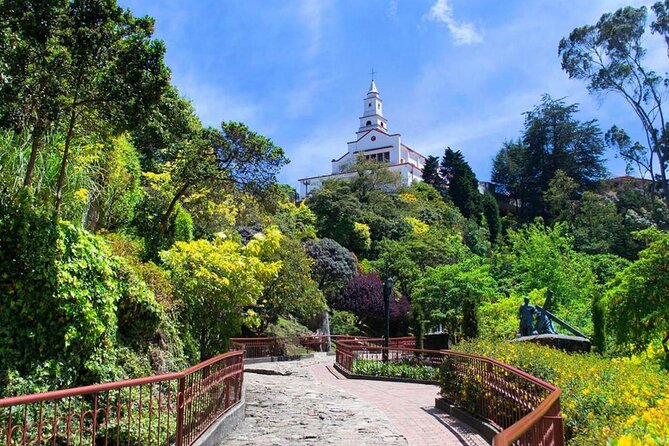
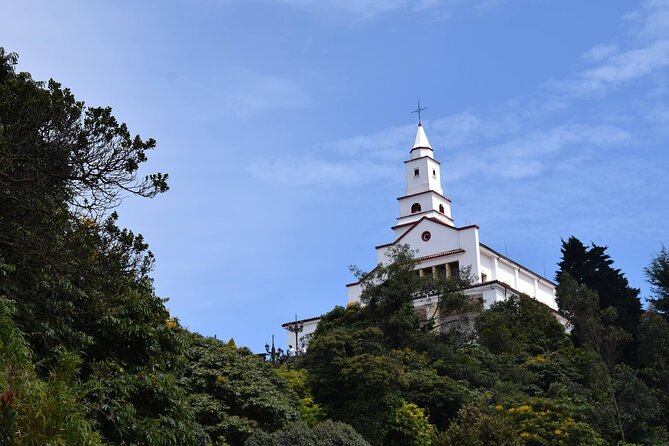
Monserrate is the tour’s big change of scale. You spend about two hours at the mountaintop sanctuary, located at 3,152 meters above Bogotá.
The Basilica of the Fallen Lord makes Monserrate an important pilgrimage site, especially during Holy Week. The viewpoint also gives you a broad view over the capital. Restaurants serving typical food and souvenir shops add practical reasons to linger.
You can reach the top by cable car, funicular, or on foot along a steep path. The tour information says admission is free, but it does not clearly state which transport costs are covered. Ask before booking, especially if you do not plan to walk. Do not assume that a free sanctuary visit means the cable car or funicular is included.
Altitude is the other key consideration. The tour asks for moderate physical fitness, and Monserrate’s height may feel demanding for some people. You do not need to plan a mountain expedition, but take the uphill setting seriously. Move at a comfortable pace, drink the supplied water, and tell your guide if you need a pause.
Weather matters here. If poor weather cancels the experience, GoBogotá offers another date or a full refund. That policy is helpful because Monserrate is a major part of the day, and cloud or rain can affect the view.
Food, transport, and the private-tour advantage
The extras are modest but well chosen. You receive a Colombian fruit tasting, a typical Colombian snack, water, Wi-Fi, and medical insurance. Lunch is not included, and other expenses are your responsibility.
The fruit and snack are especially useful because the itinerary covers several hours. They also give the day a local flavor without pretending to replace a proper meal. Plan for lunch separately if you need one, and ask the guide when the best break will be.
Pickup is offered wherever you choose, which removes one of the usual hassles in Bogotá. You do not need to find a fixed meeting point, and the driver handles the route between distant parts of the city.
A private tour also changes the value calculation. At $137.75 per person, the cost is not low. But it covers a guide, driver, pickup, museum admissions, water, Wi-Fi, insurance, fruit, and a snack, all for your own group. For a couple or family that wants a single organized day, the convenience can make sense. Group discounts may improve the price for larger parties.
For a solo visitor or someone staying near La Candelaria, the price may be harder to justify. You could spend less by visiting central museums and plazas independently, though you would lose the private vehicle, door-to-door pickup, and guide-led connections between the sites.
What the guide and driver add
The strongest praise centers on the human side of the experience. Milena is noted for filling the day with information in English and Spanish, including a route through Las Aguas, La Candelaria, Plaza de Bolívar, and Plaza Núñez. Diego is described as friendly and well informed about Bogotá, while Luisa is praised for a gentle driving style and warm welcome.
Those details matter. A city tour succeeds when the guide turns separate buildings into a story and the driver makes the transfers feel calm. You should expect an English-speaking experience, but the team is bilingual, so Spanish can also be part of the conversation.
The private format gives you room to ask for clarification or spend more time at a favorite stop. Still, the large number of sites means you should agree on priorities early. If the Gold Museum matters most, say so. If Monserrate views are your top goal, make sure the mountain transfer and weather plan are clear.
Who should book this experience?
I would recommend this tour to a first-time visitor who wants Bogotá’s major cultural sights in one organized day. It also suits families, couples, and small groups that value private pickup and do not want to manage several museum entries and transfers.
It is a good fit if you want history, art, religion, local food, and views rather than a single subject. The range is the point.
I would hesitate if you prefer slow museum visits, independent wandering, or long meals. The five-to-seven-hour schedule covers a lot. You will see more, but you may not linger everywhere.
The moderate fitness requirement and Monserrate altitude also deserve attention. If steep walking or high elevation is a concern, ask about the transport option and pacing before you pay.
Cancellation is free up to 24 hours before the start time for a full refund. Changes made inside that window are not accepted, and poor weather or failure to meet the minimum number of participants can lead to a new date, another experience, or a full refund.
Should you book the La Candelaria and Monserrate Tour?
Book it if you want a private, well-filled introduction to Bogotá and value having Milena, Diego, or another local guide connect the pieces for you. The best parts are the Gold Museum, the contrast between the two main plazas, Botero’s art, and the final rise to Monserrate.
Before booking, confirm the day’s order, how the Teatro Colón visit works, and whether cable car or funicular costs are included. If those details suit you, the tour offers a useful mix of Bogotá’s past and present without making you solve the city’s transport puzzle yourself.
FAQ
How long does the La Candelaria and Monserrate Tour last?
The experience lasts approximately five to seven hours. The length can vary based on traffic, walking, museum time, and the pace of your private group.
What is the tour price?
The listed price is $137.75 per person. Group discounts are available.
Is hotel or location pickup offered?
Yes. Pickup is offered wherever you choose in Bogotá.
Is this a private tour?
Yes. Only your group participates in the activity.
Is the tour offered in English?
Yes. The tour is offered in English, and the guide is professional, local, and bilingual.
Are museum admissions included?
Admission is included for the Museo del Oro, Botero Museum, and Museo Casa de la Moneda.
Is lunch included?
No. Lunch and expenses not specifically listed are not included.
How do you reach Monserrate?
You can reach Monserrate by cable car, funicular, or by walking up a steep path. The information provided does not specify whether cable car or funicular costs are included.
What is the cancellation policy?
You can cancel at least 24 hours before the start time for a full refund. Cancellations or changes made less than 24 hours before the start are not accepted for a refund. Poor weather or failure to meet the minimum number of participants may result in a different date, another experience, or a full refund.
More Monserrate Trips
- Bogotá: Private City Tour, Monserrate, Emerald and Botero
★ 4.9 · 798 reviews - Bogotá City Tour with Monserrate, Gold and Botero Museums
★ 4.9 · 584 reviews - Bogotá Tour: Monserrate, Food, City Walk & Botero Museum
★ 5.0 · 328 reviews - Bogota: Monserrate Entry Ticket
★ 4.4 · 233 reviews
Just added in Bogota
- Tour of Zipaquirá: Visit the Salt Cathedral and the main squares★ 4.5 · 55 reviews
- Catedral de Sal desde Bogotá en Tren★ 5.0 · 5 reviews
- Zipaquirá and Salt Cathedral Muisca Heritage with Guide – Private★ 4.5 · 23 reviews
- Botanical Garden Bogotá Private Tour (4 Hrs.)★ 5.0 · 13 reviews
- Zipaquira Salt Cathedral★ 4.5 · 12 reviews
- LOCAL GUIDE Zipaquirá PRIVATE TOUR – Salt Cathedral and Salt Oven★ 5.0 · 24 reviews
- Zipaquirá Salt Cathedral: An architectural wonder.★ 4.5 · 24 reviews
- Private Zipaquira Salt Cathedral and Guatavita Lagoon Tour from Bogota★ 4.5 · 44 reviews
Monserrate Tours, compared.
La Candelaria, Monserrate and Museums Bogotá Private City Tour
Read our review →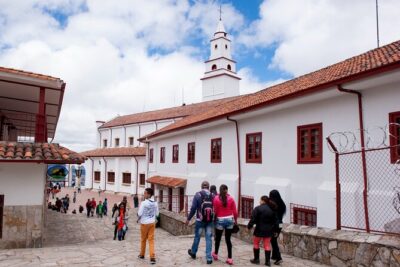
Bogota + Monserrate Private City Tour, Museums, Candelaria.
Read our review →
Private City Tour, Monserrate, Emerald and Botero
Read our review →
Bogotá City Tour with Monserrate, Gold and Botero Museums
Read our review →
Bogotá Tour: Monserrate, Food, City Walk & Botero Museum
Read our review →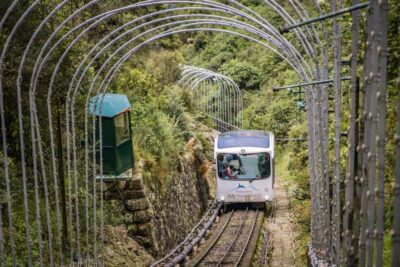
Private Tour in Bogota : Monserrate, Museums and Candelaria
Read our review →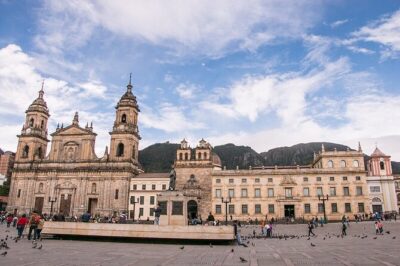
Private Bogotá Tour: Candelaria, Gold Museum, Optional Monserrate
Read our review →Browse the lists this tour appears in