REVIEW · PRIVATE
“Essential Cartagena” Private Tour.
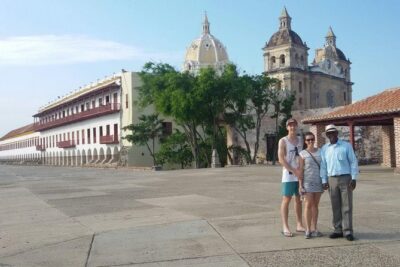
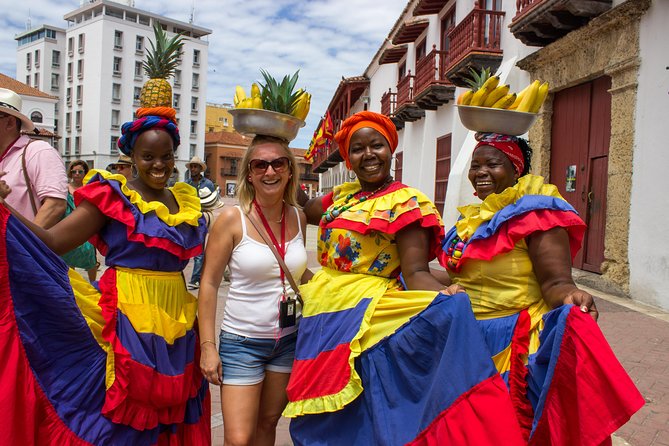
Cartagena’s old city rewards curious walkers. Essential Cartagena gives you a private four-hour circuit through the walled center and Getsemaní, with a guide who can adjust the pace and subjects to your interests. I like the personal format and the way the route connects grand plazas with harder history, including slavery, colonial trade, and the fight for independence. I also like that Néstor, one of the named guides, brings events to life through relaxed storytelling rather than a dry list of dates.
The main drawback is simple: this is a serious walking tour. Cobblestones, heat, and seventeen stops can wear you down, especially if rain interrupts the route. The Museo Naval del Caribe costs extra, and four hours is enough for a strong introduction, not a complete look at Cartagena.
In This Review
- Five useful things to know before booking
- Why a private four-hour walk works well in Cartagena
- Starting with trade, slavery, and the city gate
- San Pedro Claver and Cartagena’s difficult moral story
- The naval museum and the view from the bastions
- Bolívar Square and the Zenú gold collection
- Botero, water, and the old city’s public squares
- San Diego, street food, and La Serrezuela
- Getsemaní and the final return to the Clock Tower
- The guide matters more than the stop count
- Walking demands, timing, and value
- Should you book Essential Cartagena?
- FAQ
- How long does Essential Cartagena last?
- Where does the tour begin?
- Where does the tour end?
- Is this a private tour?
- What is included in the price?
- Is museum admission included?
- Are alcoholic beverages included?
- Do I need to be physically fit for the tour?
- Can I cancel for a full refund?
Five useful things to know before booking
- A private route can change around your interests: Your guide can focus more on history, architecture, food, or the parts of Cartagena that matter most to your group.
- The walk covers both sides of old Cartagena: You move through the formal colonial center, then continue into colorful Getsemaní.
- The slavery story is not skipped: Plaza de los Coches and San Pedro Claver provide important, sometimes difficult context about Cartagena’s role in the Atlantic slave trade.
- Good shoes matter: The route includes cobblestone streets, city walls, plazas, and a lot of walking.
- The naval museum is the only paid sight: Admission to Museo Naval del Caribe is not included, while the Museo del Oro Zenú is free.
- The tour returns to the Clock Tower: You begin and end at Monumento Torre del Reloj, making the route practical for a short visit or a cruise stop.
Why a private four-hour walk works well in Cartagena
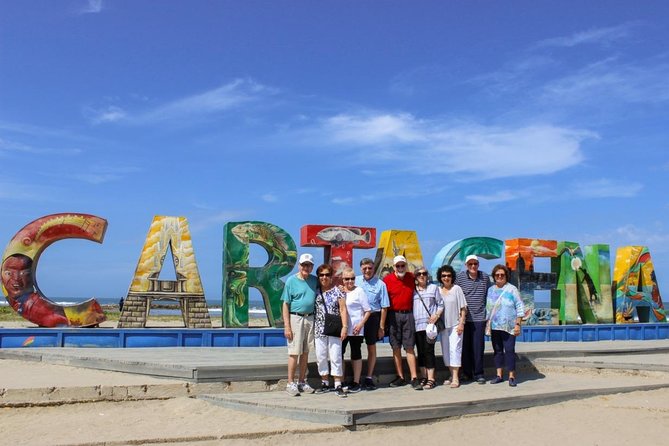
At $140 per person, this tour is not the bargain choice for a solo visitor. It makes more sense for couples, families, or small groups who want a guide’s full attention and can share the cost among several people.
The real value is control. You can choose a start time that fits your day, ask for more explanation at a favorite stop, and adjust the pace if someone in your group has trouble walking. Stefania and José once adapted the route for a mother who could not walk long distances, which shows why a private format can be useful for mixed-ability groups.
You should still set realistic expectations. The tour lasts about four hours, but the listed stops add up to more than a simple stroll through a few squares. Some stops last only eight minutes, while the two museums receive about thirty minutes each. You get broad coverage, not long visits inside every landmark.
The usual meeting point is the Clock Tower at Boca del Puente, at the entrance to the old center. The tour ends there too. That makes it easy to orient yourself after the walk, though the precise meeting area may be busy with people, traffic, and activity around the city gate.
More things to do in Cartagena:
- Cartagena Island Hopping: 5-Stop Rosario Islands Tour with Lunch
★ 4.5 · 4,903 reviews - Cartagena: Historic Center and Getsemaní Shared Walking Tour
★ 4.9 · 2,716 reviews - Cartagena: Rosario Islands Catamaran with Lunch and Snorkel
★ 4.5 · 2,479 reviews
Starting with trade, slavery, and the city gate
The first stop, Plaza de los Coches, introduces Cartagena through commerce and power. This was the main entry into the walled city, a transport hub, and a place tied to the slave trade. The statue of Pedro de Heredia, the city’s founder, adds a reminder of the Spanish origins of Cartagena.
I appreciate beginning here because it avoids the usual postcard-only version of the city. Cartagena’s beauty is real, but its wealth was built through trade, forced labor, and military control. A good guide can help you hold those facts together.
At Plaza de la Aduana, the story shifts to the movement of goods. Gold, silver, tobacco, potatoes, sugar, fruit, and other products were sent toward Spain through the Galeón Armada. Imports from Spain also passed through this point before moving to other parts of South America.
The former Casa de la Real Contaduría, once the king’s accounting office, is now Cartagena’s mayor’s office. That change neatly shows how the same buildings have carried different forms of authority over time.
These first two squares are short stops, about eight minutes each. That is enough for an explanation and photographs, but not a detailed architectural study.
San Pedro Claver and Cartagena’s difficult moral story
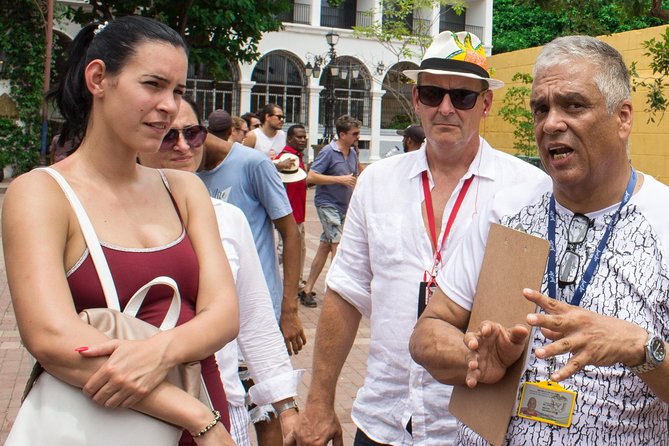
Plaza de San Pedro Claver brings the human side of the port’s history into sharper focus. The church honors Pedro Claver, a Jesuit priest who dedicated his work to the enslaved Africans brought through Cartagena.
The stop is important because it places an individual life beside the larger economic system. You are not only hearing about ships and cargo. You are also considering the people who suffered within that system and the person who chose to serve them.
The tour then moves to Baluarte de San Ignacio, where you can look toward Cartagena Bay and the Bodeguita dock. Here the subject becomes defense. Cartagena was a valuable port, so Spain built walls and bastions to protect its trade from pirates and enemy forces.
At Parque de la Marina, the focus turns to Colombia’s navy and Admiral José Padilla. His role in defeating the Spanish Armada, with very few men and ships, connects Cartagena’s colonial past to the struggle for independence.
I like this sequence. It moves from entry and trade to slavery, defense, and independence without treating each subject as an isolated fact.
The naval museum and the view from the bastions
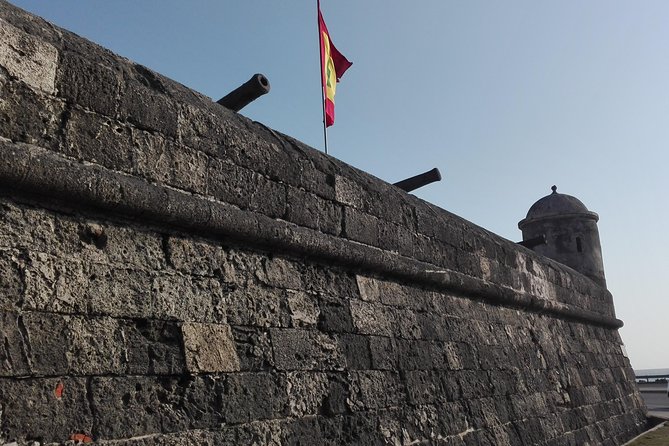
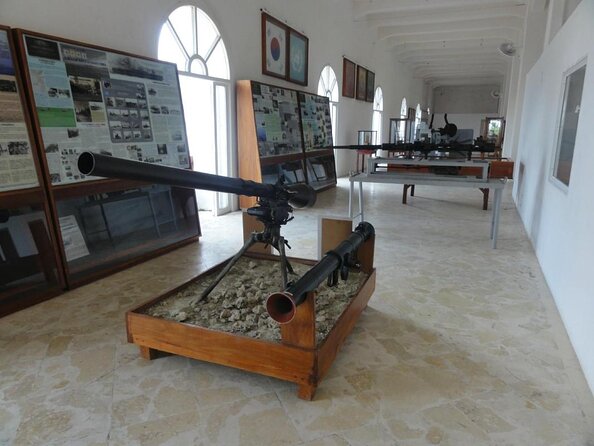
Museo Naval del Caribe is the route’s longest indoor visit, at about thirty minutes. Admission is not included, so you will need to pay separately if you want to enter.
The museum explains why Cartagena’s geography made it a strong defensive port. It also presents the city’s story from a naval point of view. That makes it especially useful if you want to understand why the bay, sea routes, docks, and fortifications mattered so much.
Thirty minutes gives you an introduction, not time to study every display. If naval history is a major interest, you may want to return on your own. If you would rather spend the full four hours outdoors, ask whether your private group can shorten or skip the museum.
Outside, Baluarte de San Francisco Javier offers views along the coastline toward Bocagrande. The guide explains the underwater jetty built by Spanish military engineers to keep ships from approaching freely and to force navigation toward the guarded entrance at Bocachica.
Baluarte de San Pedro Mártir provides another defensive viewpoint. From there, you can see toward Cerro de La Popa and Castillo de San Felipe de Barajas. The route does not appear to include a visit inside either landmark, so treat these as distant views and historical reference points, not full fortress tours.
A few more options to weigh up in Cartagena
- Private Walking Tour in Cartagena Walled City & Getsemaní
★ 5.0 · 1,357 reviews - Cartagena : Full day 3 private islands
★ 5.0 · 558 reviews - The best private Transfer from/to Cartagena airport. ONE WAY
★ 4.5 · 513 reviews - Private City Tour of Cartagena
★ 5.0 · 480 reviews
Bolívar Square and the Zenú gold collection
Plaza de Bolívar is one of the essential pauses in the old center. You will see the Palacio de la Inquisición, a statue of Simón Bolívar, and a hall connected with Colombian beauty queens.
The square brings several parts of Cartagena together: colonial religious authority, independence, national identity, and public life. The statue honors Bolívar as the Libertador of five countries, giving your guide a natural opening to explain his place in South American history.
Museo del Oro Zenú is a welcome change in focus. Its gold artifacts come from the Zenú culture, which lived in the region before the Spanish arrived in the sixteenth century. Admission is free, and the visit lasts about thirty minutes.
I value this stop because the story begins before Cartagena became a Spanish port. The museum gives you a glimpse of local culture that is easy to miss when the old city’s colonial buildings dominate the day.
With only half an hour, you will receive an overview rather than a slow museum visit. The private format helps here: you can ask your guide to explain objects that interest you instead of trying to absorb everything at once.
Botero, water, and the old city’s public squares
Plaza Santo Domingo is one of Cartagena’s most recognizable spaces. You will see the church of Santo Domingo, described as the city’s first monumental construction, along with Gertrudis, Fernando Botero’s famous rounded bronze figure, often called La Gorda de Botero.
Gertrudis is a fun stop, but the plaza is not just a photo backdrop. The church and surrounding buildings show how religious institutions shaped the city’s early public spaces. You have about ten minutes here, so the guide’s explanation will matter more than a long examination of the buildings.
At Plaza Fernández Madrid, the Iglesia de Santo Toribio provides another architectural marker. This is also where you hear about Cartagena’s fresh-water supply, a practical subject that helps explain daily life beyond churches, palaces, and military walls.
These brief stops are part of the tour’s strength and its limitation. You see many places in one morning or afternoon, but you must be comfortable moving on before every square has fully sunk in.
San Diego, street food, and La Serrezuela
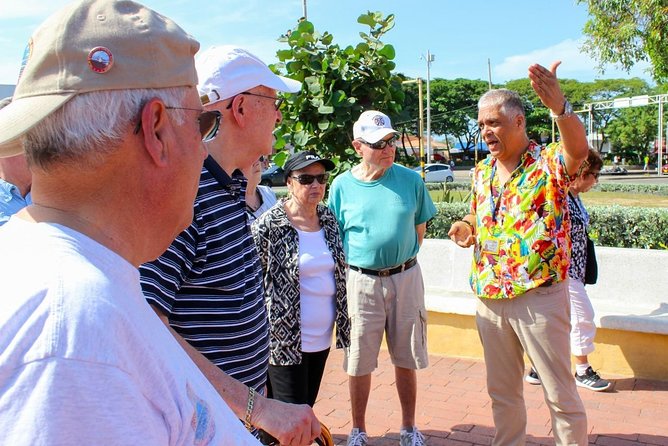
Plaza de San Diego has a different mood from the grander civic squares. Students from the local arts university help give the area a youthful feel, and the plaza is surrounded by restaurants and historic buildings, including the former Santa Clara convent, now a luxury hotel.
This is one of the best points to ask about food. The guide may help you find local snacks such as arepa de huevo, carimañolas, or empanadas. Bottled water and snacks are included, but alcoholic drinks are not. Any additional food or drinks should be treated as your own expense unless your guide says otherwise.
La Serrezuela adds a sharp modern contrast. The site was once Cartagena’s bullring and a multipurpose arena. It is now a high-end shopping center and venue for concerts and shows.
I like the stop because it shows how old buildings and public spaces keep changing uses. Still, a shopping mall may be less appealing if your priority is colonial architecture. Since the tour is private, this is a sensible place to shorten the visit if your group would rather spend time in Getsemaní.
Getsemaní and the final return to the Clock Tower
Plaza de la Trinidad takes you into Getsemaní, the part of the route most likely to feel different from the formal center. You will see colorful streets and street art, with a more local, informal character than the grand plazas inside the walls.
The route then passes along Camellón de los Mártires and Parque Centenario. From here, you can see the Convention Center and the connection between Getsemaní and the central historic district.
This final section gives the tour a useful sense of place. Cartagena is not only its preserved colonial core. The city also includes neighborhoods where art, daily life, food, and history sit close together.
The last stop is Torre del Reloj, where the circuit closes. Beginning and ending at the same landmark is convenient, especially if you have a limited schedule before returning to a ship or moving on to another activity.
Rain can affect this part of the walk. One group managed about three-quarters of the route before bad weather stopped the tour, with Getsemaní still ahead. Bring sensible rain protection during wet weather, and remember that poor weather can lead to a rescheduled tour or a full refund under the stated policy.
The guide matters more than the stop count
The strongest part of this experience is the guide. Néstor is repeatedly praised for clear English, strong historical knowledge, easy conversation, and storytelling that makes Cartagena’s past easier to follow. One especially useful quality is his relaxed style. You are not pushed through a script at the same speed as a large group.
Stefania and José have also guided the experience, including a private outing adjusted for a guest with limited walking ability. Hector is another guide name connected with the tour. Because several guides may lead the experience, ask for the guide you want if that is important to you, but do not assume a specific person is guaranteed unless the booking confirms it.
A small but telling detail from Néstor’s response to one guest was his gentle correction of Colombia’s name. That reflects the kind of local connection you can expect from a guide who takes pride in the city and country.
The tone seems best suited to people who want stories, questions, and personal attention. If you prefer to move silently with an audio guide, the private format may feel unnecessary.
Walking demands, timing, and value
Plan on a moderate level of physical fitness. The tour involves cobblestone streets, bastions, plazas, and long periods on foot. Wear shoes with a firm sole, carry water, and protect yourself from sun and rain.
The tour offers start times listed between 8:00 and 9:00 in the morning, 10:00 and 11:00 in the morning, and afternoon options from 3:00 to 4:00 and 5:00 to 5:30 on Mondays and Tuesdays during the stated operating period. Confirm the exact time available for your date before you build the rest of your day around it.
At $140 per person, the price is easiest to justify when you value flexibility. You receive a private guide, bottled water, snacks, a broad historical route, and the ability to adjust the pace. The museums are not both alike in cost: the Museo del Oro Zenú is free, while Museo Naval del Caribe requires a separate ticket.
I would choose this for a first visit, a short cruise stop, or a group with different interests. I would not choose it for someone who wants a slow museum day, extensive time inside Castillo de San Felipe, or a vehicle-based tour with very little walking.
Should you book Essential Cartagena?
Book this tour if you want a wide introduction to Cartagena in four hours, especially with a private guide who can connect colonial trade, slavery, independence, naval defense, Indigenous culture, food, and modern neighborhood life.
The tour suits couples, families, cruise passengers, and small groups who want control over pace and subject matter. It is also a good choice if you want to combine famous sights with places such as Getsemaní and Plaza de San Diego.
Skip it if heat, cobblestones, or long walks are a serious concern, or if you prefer to explore only one museum or monument in depth. For everyone else, the route offers a thoughtful first look at Cartagena, provided you wear good shoes and leave room for weather and conversation.
FAQ
How long does Essential Cartagena last?
The tour lasts approximately four hours.
Where does the tour begin?
It begins at Monumento Torre del Reloj, also called the Clock Tower, at Boca del Puente in El Centro, Cartagena de Indias.
Where does the tour end?
The activity ends back at the Clock Tower meeting point.
Is this a private tour?
Yes. Only your group participates in the activity.
What is included in the price?
Bottled water and snacks are included.
Is museum admission included?
Admission to Museo del Oro Zenú is free. The entrance ticket for Museo Naval del Caribe is not included.
Are alcoholic beverages included?
No. Alcoholic beverages are not included.
Do I need to be physically fit for the tour?
A moderate level of physical fitness is recommended. The route includes considerable walking on cobblestone streets and through plazas and bastions.
Can I cancel for a full refund?
Yes. You can cancel at least 24 hours before the local start time for a full refund. Changes or cancellations made less than 24 hours before the start time are not accepted for a refund. If poor weather cancels the experience, you will be offered another date or a full refund.
Just added in Cartagena
- Private History Photography Tour★ 5.0 · 17 reviews
- Self-Guided Audio Tour: Pirate Tales in Cartagena★ 3.0 · 2 reviews
- Paue Island Tour in the Rosary Islands★ 5.0 · 1 review
- Totumo Volcano★ 3.5 · 15 reviews
- Palmarito Beach★ 3.5 · 4 reviews
- Party without limits! Cartagena; VIP Party.★ 4.5 · 32 reviews
- Paragliding Experience in Cartagena★ 5.0 · 8 reviews
- Tour cultural to san Basilio de Palenque from cartagena★ 5.0 · 45 reviews
Private, compared.
La Candelaria, Monserrate and Museums Bogotá Private City Tour
Read our review →
Private Walking Tour in Cartagena Walled City & Getsemaní
Read our review →
Bogota + Monserrate Private City Tour, Museums, Candelaria.
Read our review →
Private Coffee Farm Tour in Medellin: Real Authentic Experience
Read our review →
Private City Tour, Monserrate, Emerald and Botero
Read our review →
Bogota Zipaquira Salt Cathedral Private Tour + Lunch
Read our review →