
REVIEW · LA CANDELARIA TOURS
Craft Beers and Traditional Drinks in Candelaria
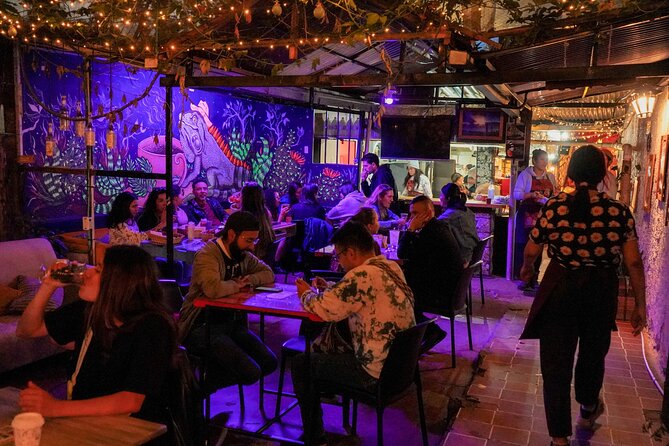
Bogotá’s best stories are often served in a glass. This three-hour Candelaria walk connects chicha, coca traditions, craft beer, and tejo in places that feel tied to local life rather than built for sightseeing. I like the cultural range, and I like that the route uses small cafés, bars, galleries, and drink houses instead of one formal tasting room. The main consideration is that alcohol is part of nearly every stop, so this is not a good fit if you want a dry cultural tour or a quiet museum visit.
The tour begins at 4:00 p.m. in Plazoleta Chorro de Quevedo and returns there after five stops. The $60 price is reasonable if you value guided context and several included tastings, though the short 30-minute visits mean you should expect a lively introduction to each place, not long, detailed time at any one venue.
In This Review
- Five distinctive reasons to consider this Candelaria tasting walk
- Starting at Chorro de Quevedo at 4:00 p.m.
- Stop one: Chicha at The Blessed Chichería
- Stop two: Art and regional identity at Nuestra Herencia
- Stop three: Coca, Andean beliefs, and traditional spirits
- Stop four: Four Colombian beers at Doña Ceci
- Stop five: Craft beer and tejo at Casa Magola
- What the $60 price really covers
- Who will enjoy this tour most
- Timing, group size, and cancellation advice
- Should you book Craft Beers and Traditional Drinks in Candelaria?
- FAQ
- Where does the tour start?
- What time does the tour begin?
- How long does the experience last?
- Where does the tour end?
- Is the tour offered in English?
- How many people can join the tour?
- Can I cancel for a full refund?
Five distinctive reasons to consider this Candelaria tasting walk
- Chicha takes center stage: Learn why this fermented corn drink matters to Colombian identity at The Blessed Chichería.
- Indigenous traditions are treated as living culture: The route explains coca, native communities, regional ingredients, and Andean beliefs.
- Art adds context: Café Galeria Nuestra Herencia uses Carlos Trilleras’s paintings to connect drinks with Colombia’s many regions.
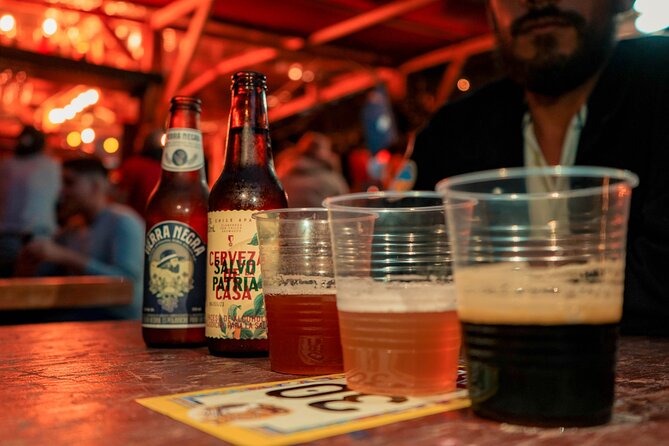
- You try local beer in a real neighborhood setting: Doña Ceci is a bar and tienda where people gather after work or classes.
- Tejo gives the finale some play: Casa Magola pairs craft beer with Colombia’s native throwing game.
- Small groups keep the route manageable: A maximum of 15 people is much easier to handle in compact city venues.
Starting at Chorro de Quevedo at 4:00 p.m.
The meeting point is Plazoleta Chorro de Quevedo, at Cl. 12b #2-98 in Bogotá’s La Candelaria district. This is a useful starting place because the tour begins in one of the area’s best-known public squares, then moves through nearby cultural and drinking spots on foot.
You should arrive ready for an afternoon and evening walk. The tour lasts about three hours, and the schedule gives roughly 30 minutes to each of the five stops. That creates a clear rhythm: listen, taste, move on, and repeat.
The maximum group size of 15 matters here. La Candelaria’s cafés, bars, and small cultural spaces can be compact. A smaller group makes it easier to hear the guide and reduces the chance that the tasting becomes a long exercise in waiting for everyone to be served.
The tour is offered in English, and confirmation is provided when you book. The route is near public transportation, though the supplied details do not specify which lines or stops to use. You can ask the operator for the best approach before setting out.
More La Candelaria walks:
- La Candelaria, Monserrate and Museums Bogotá Private City Tour
★ 5.0 · 1,567 reviews - Shared Tour of the Historic Candelaria in Bogotá
★ 5.0 · 1,551 reviews - Bogotá: Guided La Candelaria Walking Tour
★ 4.8 · 1,229 reviews
Stop one: Chicha at The Blessed Chichería
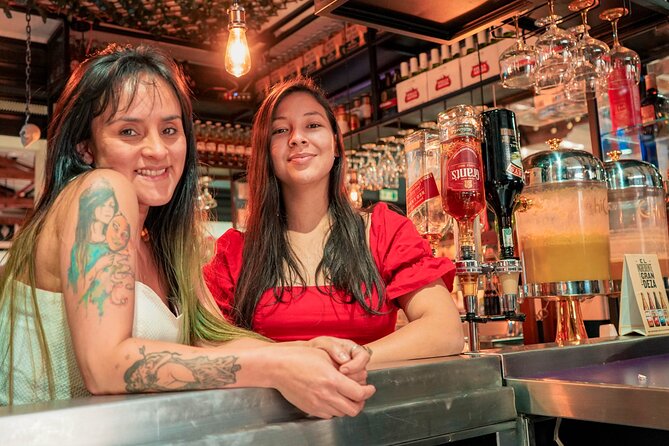
The first stop introduces chicha, one of Colombia’s oldest traditional drinks. You get about 30 minutes here, with admission included.
Chicha is made from fermented corn, and the point of this visit is not simply to sample a sweet or sour beverage. You learn about its place in the culture of Bogotá and Colombia, including why it matters as an ancestral drink. That context gives the rest of the evening a useful foundation.
I like starting with chicha because it places Colombian food and drink in a much older frame than the modern craft-beer movement. Beer may be familiar to you, but chicha points toward Indigenous traditions and the long role of corn in local life.
The short stop is also the main limitation. Thirty minutes allows for an introduction and tasting, but not an exhaustive lesson about preparation, regional differences, or every cultural debate around the drink. Go in expecting a focused orientation rather than a full workshop.
If you have only encountered commercial beer in Colombia, this is likely to be the most distinctive drink of the afternoon. Chicha can vary in flavor and style, so listen closely to the explanation rather than judging it by familiar beer standards.
Stop two: Art and regional identity at Nuestra Herencia
Café Galeria Nuestra Herencia combines a café with an art gallery. Here, paintings by Carlos Trilleras help present Colombia’s different territories, Indigenous communities, and cultural traditions while you sample craft drinks.
This stop broadens the tour beyond alcohol. The paintings provide a visual way to connect regional identity with what appears in your glass. That is useful in a country where ingredients, customs, and communities vary widely from one part of Colombia to another.
I like the pairing of artwork and tasting because it gives you something to look at while you listen. A drink can tell only part of a story. The gallery setting adds another layer, helping you think about how Colombia represents its communities and regional cultures.
Again, you have about 30 minutes. That is enough to get a sense of the gallery and its theme, but you will not have time to study every painting at length. If Carlos Trilleras’s work interests you, take note of the artist’s name and treat this stop as an introduction.
The exact craft drinks served here are not specified, so you should not expect a fixed list of labels or styles. The appeal is the connection between drinks, art, and cultural identity, not a technical beer seminar.
Stop three: Coca, Andean beliefs, and traditional spirits
At Embajada de la Coca Candelaria, the focus shifts to Andean communities and the coca plant. You learn about coca’s role in diet and cosmology, then taste different types of chicha along with spirit drinks made from seeds and plants used in the regions where those communities live.
This may be the most culturally important stop on the route. Coca is often discussed only through the lens of modern drug policy, but the tour presents its place in Andean life and belief. That wider setting helps you understand why a plant can carry meanings that go far beyond its modern reputation.
The tasting also adds variety. You are not limited to one corn-based beverage. Different chichas and plant or seed-based spirits show how local ingredients can become drinks with distinct cultural uses.
You should approach this stop with respect and attention. The purpose is to learn from Andean traditions, not to treat Indigenous customs as a novelty. The 30-minute format keeps the presentation moving, but it also means you may want to ask questions while you have the chance.
The available information does not identify the exact plants, seeds, alcohol levels, or serving sizes. If you need to avoid a certain ingredient, ask before tasting. The same applies if you do not drink alcohol, since the stop includes spirit drinks as well as chicha.
More things to do in Bogota:
- Bogotá Bike Tour
★ 5.0 · 3,329 reviews - Bogota: Bicycle City Tour
★ 4.9 · 2,156 reviews - Zipaquirá: Salt Cathedral Group Tour with Pickup
★ 4.8 · 1,606 reviews - Graffiti Tour: a fascinating walk through a street art City
★ 5.0 · 1,074 reviews
Stop four: Four Colombian beers at Doña Ceci
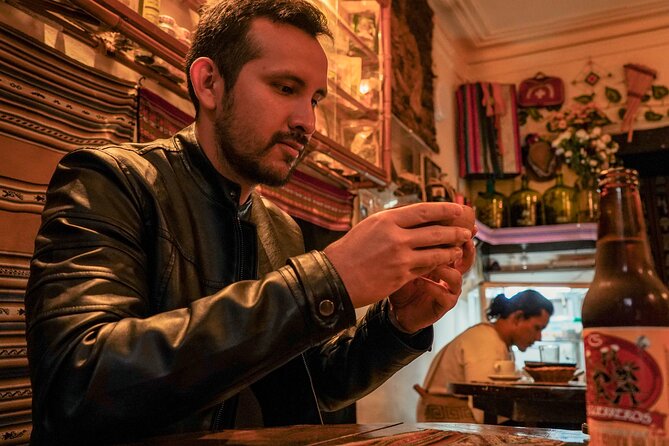
Doña Ceci is described as a bar and tienda where local people gather after classes or work, listen to music, and share time together. Here, you choose four local Colombian beers.
This stop changes the mood. The earlier venues focus on ancestry, art, and Indigenous culture. Doña Ceci gives you a look at a more everyday social setting. You are not simply sampling beer in a polished tasting room. You are visiting a typical local place built around conversation, music, and informal gatherings.
The choice of four beers is a strong value point. It gives you room to compare styles or brands, though the supplied details do not name the available beers. If you care about specific breweries, ask what is being poured on the day.
I like this stop because it keeps the tour from becoming too serious. Cultural education is more useful when it includes ordinary social life, and a neighborhood bar can reveal something that a formal attraction cannot.
There is also a practical caution. Four beers, added to chicha and spirits from earlier stops, can make this a substantial amount of alcohol. Pace yourself, drink water when available, and do not feel obliged to finish every sample. The experience is about understanding local drinks, not proving you can consume them all.
Stop five: Craft beer and tejo at Casa Magola
The final stop is Casa Magola, where you finish with craft-beer tasting and tejo. Tejo is described as the only native game played by Colombian ancestors for centuries, making it more than a casual bar activity.
Ending with a game is a smart choice. After several cultural explanations and tastings, you get an active way to connect with a Colombian tradition. The exact rules and setup are not provided, so the guide’s explanation will shape how much time you spend playing and learning.
Tejo also gives the evening a social finish. You can compare your impressions of the drinks, try your hand at the game, and return to the starting point with the group. It is a more memorable finale than simply sitting down for one last pour.
The phrase craft-beer tasting does not guarantee a particular number of beers or breweries at Casa Magola. If your priority is beer discovery, ask the operator what the tasting includes. If your priority is a cultural evening with a game attached, the combination should be more appealing.
What the $60 price really covers
At $60 per person, the tour is not the cheapest way to buy Colombian drinks. You are paying for five stops, included admission, guided interpretation in English, tastings, and the structure of moving through several distinct venues without planning the route yourself.
The value depends on what you want. If you are mainly interested in drinking four beers, you could likely spend less at a bar. If you want to understand chicha, coca traditions, regional Indigenous cultures, and tejo in one evening, the price makes more sense.
The route also saves you the work of identifying places that may not be obvious to an English-speaking visitor. The strongest praise for this experience centers on its cultural, local, and current perspective, with the idea that it shows Candelaria in a way a standard sightseeing walk may not.
The rating is 4.4 from seven reviews, which is encouraging but still a small sample. I would read that as a positive signal, not a guarantee that every part will suit every person. The tour’s success depends on your interest in culture and your comfort with several drink tastings in a short period.
Who will enjoy this tour most
I would recommend this experience to you if you want more than Bogotá’s usual churches, plazas, and street photographs. It suits people who like learning through food and drink, especially if you are curious about Indigenous traditions and modern Colombian beer at the same time.
It is also a good fit for:
- People visiting Bogotá who want an English-language cultural activity
- Couples and small groups looking for an evening plan in La Candelaria
- Beer drinkers who want local context, not only brewery information
- Anyone interested in chicha, coca traditions, and regional ingredients
- People who enjoy games and informal social settings
I would be more cautious if you do not drink alcohol, dislike moving between several venues, or prefer long museum visits with detailed interpretation. The tour is short, social, and tasting-led. It does not promise extensive time at any one location.
The activity is available to most people, and service animals are allowed. Those are useful points, but the information does not give detailed access notes for every venue. If you have mobility concerns or need specific accommodations, contact Condor Tours before booking.
Timing, group size, and cancellation advice
The 4:00 p.m. start lets the tour carry into the evening, when Doña Ceci’s social atmosphere should fit the route’s final half. Since the tour ends back at Chorro de Quevedo, you have a clear return point rather than finishing in an unfamiliar part of Bogotá.
You should allow extra time to reach the plaza and keep your phone available for the booking confirmation. The activity is booked, on average, six days ahead, so reserving about a week early is sensible if your dates are fixed.
Free cancellation is available until 24 hours before the start time for a full refund. Changes or cancellations made inside that 24-hour window are not accepted for a refund, and the cut-off uses Bogotá’s local time.
Should you book Craft Beers and Traditional Drinks in Candelaria?
Book it if you want a compact, culture-focused evening that links ancestral drinks with everyday Bogotá drinking culture. The best reason to choose it is the range: chicha at The Blessed Chichería, Indigenous and Andean traditions at Embajada de la Coca, art at Nuestra Herencia, four local beers at Doña Ceci, and tejo at Casa Magola.
Skip it if you want a pure craft-beer crawl, because much of the tour concerns history, beliefs, community, and traditional drinks rather than beer alone. Also think carefully about the alcohol load across five stops.
For the right person, this is a useful way to see Candelaria through its drinks and social customs instead of only its buildings. At $60, it offers good value when you want interpretation, included tastings, and a planned route in one small-group experience.
FAQ
Where does the tour start?
It starts at Plazoleta Chorro de Quevedo, Cl. 12b #2-98, in Bogotá’s La Candelaria area.
What time does the tour begin?
The tour starts at 4:00 p.m.
How long does the experience last?
It lasts approximately three hours.
Where does the tour end?
The activity ends back at the meeting point at Plazoleta Chorro de Quevedo.
Is the tour offered in English?
Yes. The tour is offered in English.
How many people can join the tour?
The maximum group size is 15 people.
Can I cancel for a full refund?
Yes. You can cancel at least 24 hours before the experience starts for a full refund. Cancellations or changes made less than 24 hours before the start time are not accepted for a refund.
Just added in Bogota
- Tour of Zipaquirá: Visit the Salt Cathedral and the main squares★ 4.5 · 55 reviews
- Catedral de Sal desde Bogotá en Tren★ 5.0 · 5 reviews
- Zipaquirá and Salt Cathedral Muisca Heritage with Guide – Private★ 4.5 · 23 reviews
- Botanical Garden Bogotá Private Tour (4 Hrs.)★ 5.0 · 13 reviews
- Zipaquira Salt Cathedral★ 4.5 · 12 reviews
- LOCAL GUIDE Zipaquirá PRIVATE TOUR – Salt Cathedral and Salt Oven★ 5.0 · 24 reviews
- Zipaquirá Salt Cathedral: An architectural wonder.★ 4.5 · 24 reviews
- Private Zipaquira Salt Cathedral and Guatavita Lagoon Tour from Bogota★ 4.5 · 44 reviews
La Candelaria Tours, compared.
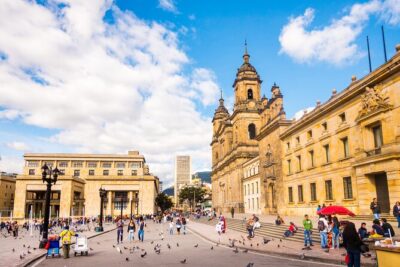
La Candelaria, Monserrate and Museums Bogotá Private City Tour
Read our review →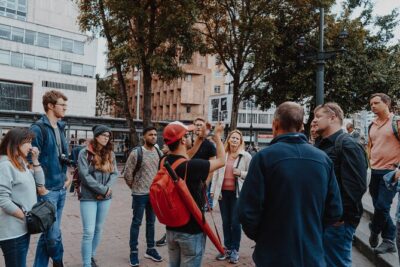
Shared Tour of the Historic Candelaria in Bogotá
Read our review →
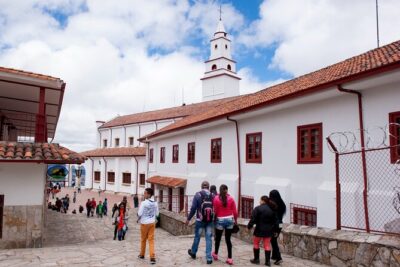
Bogota + Monserrate Private City Tour, Museums, Candelaria.
Read our review →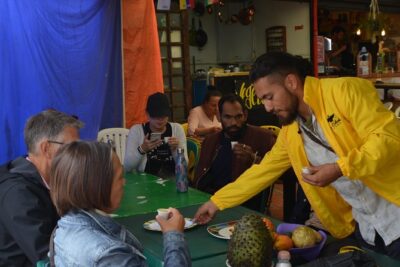
Private Tour in Bogota : Monserrate, Museums and Candelaria
Read our review →Browse the lists this tour appears in