
REVIEW · CABLE CAR RIDES
Cable car to el Paraiso, the city slum
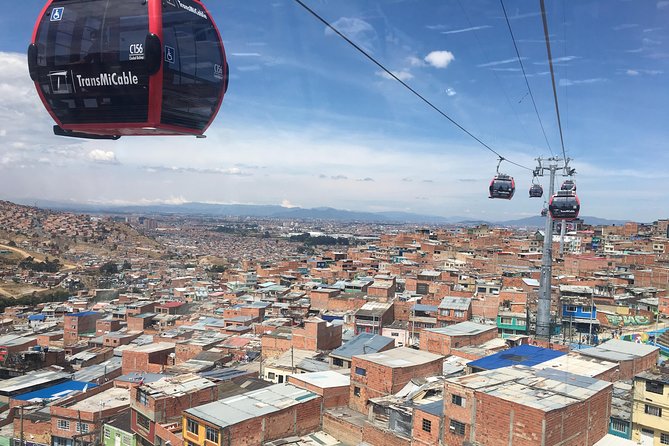
Bogotá looks different from above. This four-hour outing carries you from central Bogotá toward Ciudad Bolívar, up the TransMiCable to El Paraíso, where street art, local stories, and wide city views replace the usual museum circuit. I especially like the chance to use public transport as residents do and the meeting with a local guide who can explain daily life in the neighborhood.
I also like the small-group format, capped at 15 people, and the personal attention promised by a private tour. The main consideration is the travel time: reaching the cable-car station can involve a lengthy bus ride, and the walking portion takes place on a hillside community rather than a polished tourist district.
- The cable car is public transport, not just a sightseeing ride, giving you a practical view of how Bogotá connects hillside communities with the rest of the city.
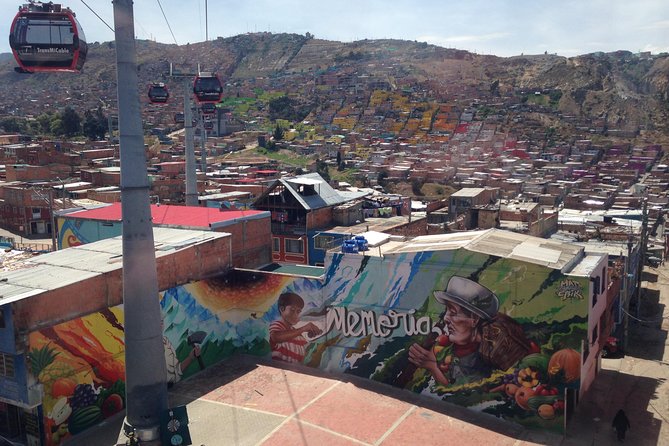
- El Paraíso’s street art carries local meaning, with guides explaining graffiti culture and projects intended to support residents.
- The views from the upper station are superb, with several visitors rating them better than the panorama from Monserrate.
- Local hosts add context, including guides such as Andrea and Brian, who have helped explain life in the neighborhood.
- Snacks may include empanadas and traditional juices, adding a small but welcome taste of Bogotá.
- The experience is highly rated, with 98 percent of customers recommending it and a 4.9 rating from 44 reviews.
In This Review
- Why El Paraíso Belongs on Your Bogotá Plan
- From Teusaquillo to the TransMiCable
- The TransMiCable Ride to El Paraíso
- Walking Through El Paraíso’s Street Art
- Meeting a Local Resident
- Food, Conversation, and the Human Scale
- Is $67 a Fair Price?
- Who Will Enjoy This Most?
- Practical Details Before You Book
- Should You Book the El Paraíso Cable Car Tour?
- FAQ
- How long does the El Paraíso cable car tour last?
- What time does the tour start?
- Where does the tour begin?
- Where does the tour end?
- Is the cable-car admission included?
- How long is the cable-car ride?
- How many people can join the tour?
- Is the tour suitable for most people?
- Can I cancel for a full refund?
Why El Paraíso Belongs on Your Bogotá Plan
Most first-time visits to Bogotá stay near La Candelaria, the Gold Museum, Monserrate, and the restaurant districts of Chapinero. Those places matter, but they do not show the whole city. El Paraíso, in Ciudad Bolívar, offers a look at a large hillside community and the ways residents are shaping its public spaces.
I find the appeal strongest when you treat this as a cultural visit rather than a poverty tour. The neighborhood is not scenery for a quick photograph. It is a lived-in place, with homes, shops, children playing, public art, and people going about their day. A local guide helps you understand what you are seeing and keeps the walk respectful.
The tour’s strongest feature is its combination of transport, history, art, and conversation. You are not simply driven to a viewpoint. You use a city bus and cable car, hear about Ciudad Bolívar, walk through El Paraíso, and meet someone connected to the area.
That mix makes the experience useful for anyone who wants more than Bogotá’s standard postcard stops. It also means you should arrive ready for a real neighborhood visit, with some uneven walking and less predictability than a museum tour.
From Teusaquillo to the TransMiCable
The outing begins at 9:00 a.m. at El Empanadazo de la 39Dg. 40a #14-03 in Teusaquillo. The tour returns to this same meeting point at the end, which keeps the morning simple if you are staying nearby or can reach Teusaquillo by public transport.
The transfer toward TransMiCable Tunal Station is part of the experience. Descriptions of the tour indicate that the group may take a public bus for roughly 40 minutes, while the listed cable-car segment itself is about 15 minutes. Your guide can use this time to explain Bogotá, Ciudad Bolívar, and the area you are about to visit.
I like this approach because it gives the trip a sense of place. You are not sealed inside a private vehicle, watching the city pass behind glass. You are using the same transport network that links central Bogotá with outlying districts.
The drawback is clear: this is not a quick excursion from the historic center. Traffic and public transport can affect the timing, and the trip to the station may feel long if you are expecting four hours of constant sightseeing. Still, the ride helps explain why the cable car matters.
More cable car rides in Bogota:
- Bogotá´s Barrios: El Paraíso Favela Tour with Cable Car
★ 4.8 · 731 reviews - Bogotá: El Paraíso Favela Tour with Cable Car-CIUDAD BOLIVAR
★ 5.0 · 254 reviews - Shared Tour to Ciudad Bolivar (Paradise Quarter) & Cable Car
★ 5.0 · 11 reviews
The TransMiCable Ride to El Paraíso
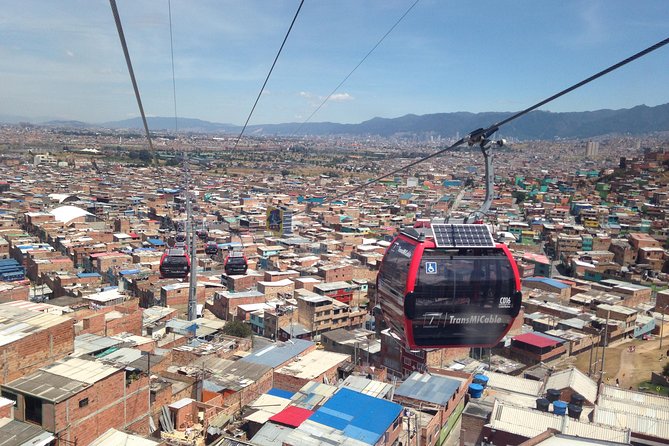
At Tunal Station, you board Bogotá’s modern cable-car system and ride toward the high point of the hill. The listed ride lasts about 15 minutes, with admission included.
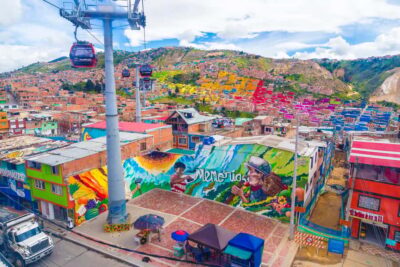
This is one of the most enjoyable parts of the outing. The cabins lift you above streets and rooftops, giving you a broad view of Bogotá as the city stretches across the plain. At the same time, you can see how closely the homes and roads follow the steep hillsides.
The cable car is valuable for two reasons. First, it is simply a fine way to see the city. Second, it is part of everyday infrastructure, not a ride built only for sightseers. You get a better sense of the distance between central Bogotá and Ciudad Bolívar, along with the physical challenge of reaching hillside communities by road.
At the top, the view is the headline attraction. Several accounts describe it as one of the best viewpoints in Bogotá, with some placing it ahead of Monserrate. I would not treat that as an objective contest, since the two viewpoints show the city from different angles, but the cable-car panorama is certainly a major reason to book this outing.
Bring a camera, but do not let the view become the entire point. The guide’s explanations and the walk through El Paraíso give the ride its meaning.
Walking Through El Paraíso’s Street Art
After arriving at the upper station, you walk through El Paraíso with a guide. Brian is one of the local hosts associated with the experience, and Andrea has also led walks and explained the area’s public art and community projects. Other guides named in the tour feedback include Juan, Yacky, Melissa, Gerald, Nick, and Juan Sebastián Marín.
Because staff can vary, the exact personality and route may change. The consistent idea is a guided walk that explains the neighborhood rather than leaving you to wander without context.
The street art is a central feature. You will see colorful murals and graffiti, with explanations of the artistic culture and the projects connected to local improvement efforts. The art is not presented as decoration alone. It reflects community identity, solidarity, and an effort to change how the area is seen.
I appreciate that distinction. A quick mural stop can become shallow if the artwork is treated only as a backdrop for photographs. Here, the guide can connect the paintings to the people who live in the area and to wider efforts to improve public life.
The walk also gives you a chance to notice ordinary details: storefronts, local activity, and residents using the neighborhood. Keep your camera manners sensible. Ask before photographing people, avoid blocking entrances, and remember that this is someone’s home.
Meeting a Local Resident
A particularly useful part of the visit is meeting a resident who can describe life in the neighborhood firsthand. Brian has been praised for showing visitors around his home area, while Andrea has explained local graffiti culture and community projects.
That personal connection changes the tone of the tour. A guide can provide dates, facts, and useful explanations, but a resident can add the daily perspective that maps and guidebooks cannot provide. You may hear about how people view their own neighborhood, how public art is used, and how community efforts are trying to improve local conditions.
The tour is also described as safe and welcoming, with residents going about normal activities while the group walks through the area. I would still use ordinary city sense: stay with the guide, keep valuables secure, and follow instructions. A positive experience depends partly on being a respectful guest.
This meeting is also why the private or small-group setup matters. With no more than 15 people, you have a better chance to ask questions than you would on a large coach outing. If your group is small, the conversation may feel especially personal.
More things to do in Bogota:
- Bogotá Bike Tour
★ 5.0 · 3,329 reviews - Bogota: Bicycle City Tour
★ 4.9 · 2,156 reviews - Zipaquirá: Salt Cathedral Group Tour with Pickup
★ 4.8 · 1,606 reviews - La Candelaria, Monserrate and Museums Bogotá Private City Tour
★ 5.0 · 1,567 reviews
Food, Conversation, and the Human Scale
Small snacks are included, and descriptions of the food mention empanadas and traditional juices. That is not a full meal, so you should not book the tour as a food excursion, but the snack adds a pleasant local touch.
I like food stops that fit the setting. An empanada eaten during a neighborhood visit connects the experience to daily life more naturally than a formal restaurant meal. The refreshments also give you a short pause during a four-hour outing.
The guides are another major strength. Juan is described as offering clear background on the history and culture of the area, while Yacky has been praised for answering questions and explaining the bus journey. Melissa has been noted for her friendly manner and practical recommendations. These details suggest a tour team that puts real effort into personal contact.
That said, service can vary by departure date and guide. You should expect the same basic structure, but not the exact same stories, route, or guide pairing every time.
Is $67 a Fair Price?
At $67 per person, this is not the cheapest way to see a Bogotá viewpoint. You could use public transport on your own for far less, and Bogotá has many low-cost attractions.
The price makes more sense when you count what the guide adds. You are paying for help navigating to the cable car, interpretation of Ciudad Bolívar and El Paraíso, a local connection, the guided art walk, the return trip, and snacks. You are also paying for confidence in visiting a part of Bogotá that many people would not choose to explore independently.
For me, the value is good if you care about local context and organized transport. It is weaker if all you want is a cable-car ride and a photograph from above.
The 4.9 rating from 44 reviews and 98 percent recommendation rate support the idea that the experience delivers what it promises. The repeated praise focuses on the guides, the views, the art, and the chance to see another side of Bogotá. That is a useful pattern, since those are the parts that justify the cost.
Who Will Enjoy This Most?
I would recommend this tour to solo visitors, couples, families with older children, and friends who have already seen Bogotá’s main central sights. It suits people who like public art, urban history, photography, and conversations with local residents.
It also works well for a solo visitor who wants company and structure. One solo participant reportedly received clear explanations in English even when attending alone, suggesting that the tour can remain worthwhile without a larger group.
Families should consider the walking and transport time. The activity is listed as suitable for most people, but it is not designed as a stroller-focused or low-effort sightseeing trip. You should be comfortable with public transportation and walking around a hillside neighborhood.
This is less suitable if you want luxury transport, a tightly timed museum-style route, or a polished tourist setting. The point is to see an everyday part of the city, not to remain inside the familiar visitor zone.
Practical Details Before You Book
The tour lasts about four hours and starts at 9:00 a.m. It ends back at the Teusaquillo meeting point. The maximum group size is 15, although the experience may be smaller depending on bookings.
Confirmation is provided when you book. Service animals are allowed, and the meeting point is near public transportation. Most people can take part, according to the activity information.
The tour requires good weather. If poor weather forces a cancellation, you can receive a different date or a full refund. If the minimum number of participants is not reached, you can also choose another date or experience, or receive a full refund.
Free cancellation is available up to 24 hours before the start time. Cancellations or changes made within 24 hours are not accepted for a refund, so check your plans before the cutoff.
Because the activity averages being booked 21 days ahead, I would reserve it before your trip if the date matters. That is especially sensible if you are visiting Bogotá for only a few days.
Should You Book the El Paraíso Cable Car Tour?
Book it if you want to see Bogotá beyond La Candelaria and Monserrate. The cable car offers excellent views, but the real value comes from the combination of public transport, street art, local voices, and a guided walk through Ciudad Bolívar.
I would skip it only if you dislike bus rides, hillside walking, or tours that focus on present-day community life rather than major monuments. For everyone else, this is a thoughtful, well-priced way to understand a part of Bogotá that most independent itineraries leave out.
Go with an open mind, stay respectful, and give the local guides room to explain the place in their own terms. That is where the four hours earn their keep.
FAQ
How long does the El Paraíso cable car tour last?
The experience lasts approximately four hours.
What time does the tour start?
The tour starts at 9:00 a.m.
Where does the tour begin?
It begins at El Empanadazo de la 39Dg. 40a #14-03 in Teusaquillo, Bogotá.
Where does the tour end?
The activity ends back at the original meeting point.
Is the cable-car admission included?
Yes. Admission for the listed TransMiCable segment is included.
How long is the cable-car ride?
The listed cable-car portion lasts about 15 minutes.
How many people can join the tour?
The activity has a maximum of 15 participants.
Is the tour suitable for most people?
The activity information says most people can participate. Service animals are also allowed.
Can I cancel for a full refund?
Yes, if you cancel at least 24 hours before the local start time. Cancellations or changes made less than 24 hours before the start are not accepted for a refund.
Just added in Bogota
- Tour of Zipaquirá: Visit the Salt Cathedral and the main squares★ 4.5 · 55 reviews
- Catedral de Sal desde Bogotá en Tren★ 5.0 · 5 reviews
- Botanical Garden Bogotá Private Tour (4 Hrs.)★ 5.0 · 13 reviews
- Zipaquirá and Salt Cathedral Muisca Heritage with Guide – Private★ 4.5 · 23 reviews
- Zipaquira Salt Cathedral★ 4.5 · 12 reviews
- LOCAL GUIDE Zipaquirá PRIVATE TOUR – Salt Cathedral and Salt Oven★ 5.0 · 24 reviews
- Zipaquirá Salt Cathedral: An architectural wonder.★ 4.5 · 24 reviews
- Private Zipaquira Salt Cathedral and Guatavita Lagoon Tour from Bogota★ 4.5 · 44 reviews
Cable Car Rides, compared.

Comuna 13 Graffiti Tour, Cable Car & Street Food
Read our review →
Medellín Tour: Themed Vehicles, Tram Ride and Metrocable
Read our review →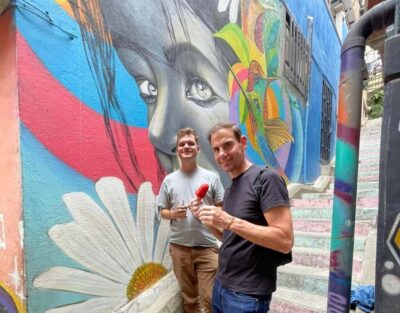
Bogotá´s Barrios: El Paraíso Favela Tour with Cable Car
Read our review →
Private City Tour with Metrocable and Comuna 13
Read our review →
Medellín Coffee Farm Tour with Trolley and Cable Car Ride
Read our review →Browse the lists this tour appears in