
REVIEW · SALT CATHEDRAL TOURS
Bogotá: Tour to Salt Cathedral of Zipa & Nemocón Salt Mine
Salt turns stone into something memorable. This day trip pairs the Nemocón Salt Mine, with its working-mine history and unusual salt formations, with the grand underground spaces of Zipaquirá’s Salt Cathedral. I like the contrast between the two stops: Nemocón feels like a mine first and tourist attraction second, while the cathedral is a carefully designed cultural and spiritual site. I also like that hotel pickup, mine admission, a guide, a helmet, and a Colombian snack are included.
The main drawback is the tight schedule. You have about eight hours for two sites, transport from Bogotá, a short lunch and shopping break, and plenty of underground walking. The cathedral’s interior guide is not included, so you must choose between joining a group tour or using an audio guide after arriving.
In This Review
- The tour at a glance
- Why these two salt sites belong together
- Starting from Bogotá and heading north
- Inside the Nemocón Salt Mine
- From working mine to Salt Cathedral
- What the architecture feels like underground
- The short stop in Zipaquirá
- Is the $207 price reasonable?
- Who will enjoy this day most?
- My practical take on the two-hour and two-and-a-half-hour split
- Should you book this salt tour?
- FAQ
- How long does the tour last?
- Where does the tour begin and end?
- Which places does the tour visit?
- Is transportation included?
- Is admission to the Nemocón Salt Mine included?
- Is a guide inside the Salt Cathedral included?
- What languages are available?
- Is lunch included?
- What should I wear?
- Is the tour suitable for people with mobility impairments?
- Can I cancel for a refund?
- Do I have to pay at the time of booking?
The tour at a glance
- Two very different salt sites: Nemocón shows the mining process and underground formations, while Zipaquirá focuses on architecture, faith, and sculpture.
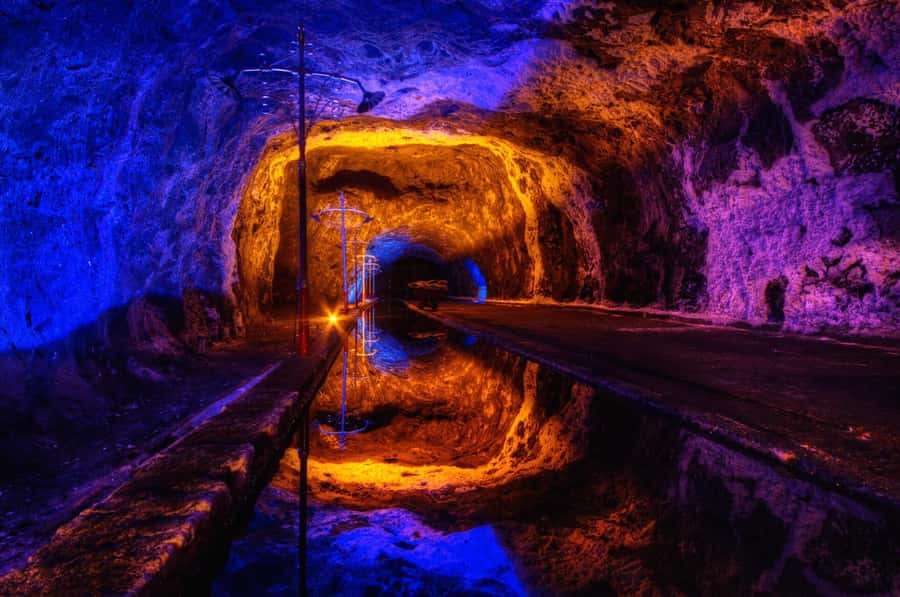
- Nemocón’s Salt Mirror Room: A salt formation creates a striking visual effect and gives the mine a memorable centerpiece beyond its tunnels.
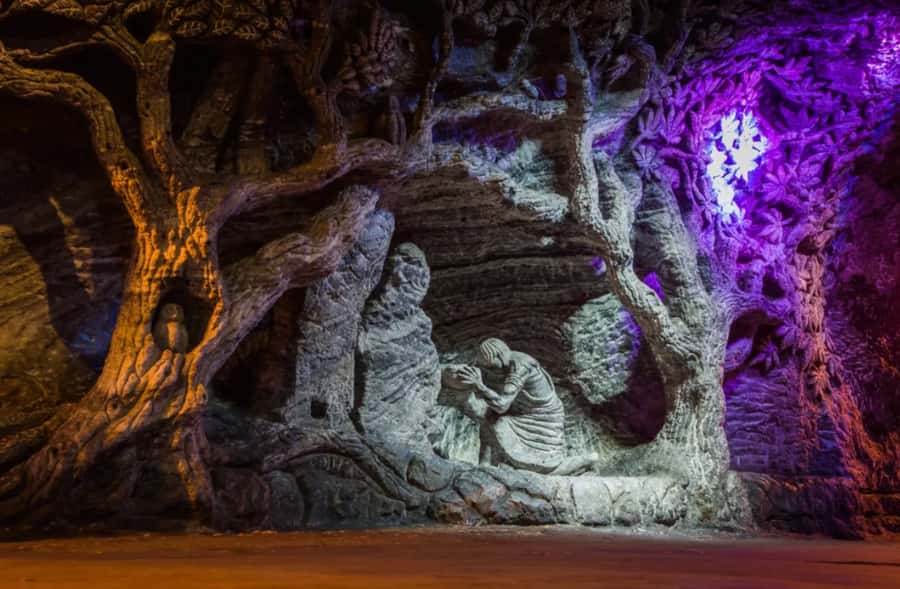
- A salt-carved Christ: The mine contains a Salt Christ carved into one of its walls.
- Zipaquirá’s Stations of the Cross: The cathedral’s underground route includes the fourteen stations, making the visit more than a quick look at a large cross.
- Private group with English or Spanish service: Hotel pickup and drop-off make the long day simpler from Bogotá.
- Walking matters: Expect uneven underground surfaces, cooler temperatures, and enough time on your feet that comfortable shoes are essential.
Why these two salt sites belong together
At first, a mine and a cathedral may sound like variations on the same stop. They are not. The connection is salt, but the mood and purpose change sharply between Nemocón and Zipaquirá.
Nemocón helps you understand how salt was formed, extracted, and used in Cundinamarca. Its mine has been in operation since the 13th century, with major development in the 19th and 20th centuries. Underground, the emphasis is practical: galleries, salt walls, ventilation, safety, tools, and the work required to bring salt out of the earth.
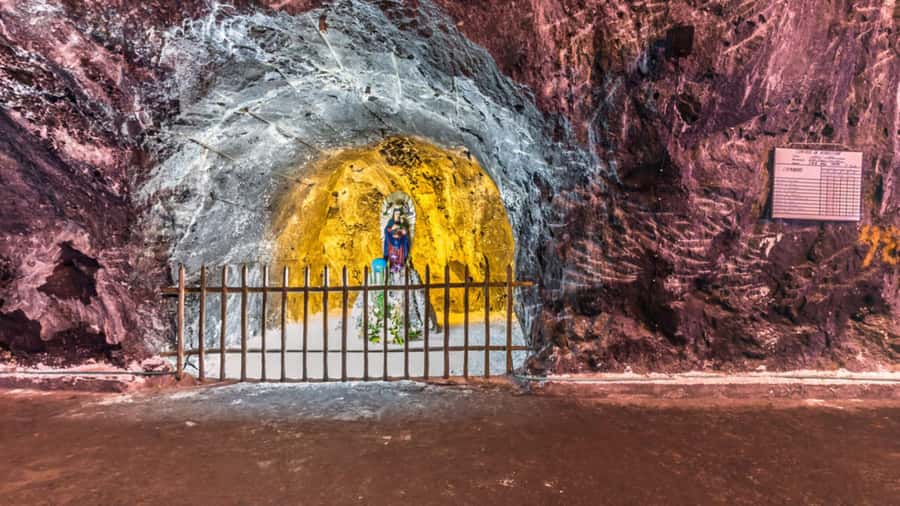
Zipaquirá turns that same material into a place of art and prayer. The Salt Cathedral was built inside a mine worked since the 19th century. The first version opened in 1954, while the present cathedral opened in 1995. Its chapels, Stations of the Cross, lighting, and carved spaces give the second half of the day a more polished and theatrical feel.
I think the pairing works because you see both sides of the story. Nemocón shows the labor behind salt production. Zipaquirá shows how miners and artists transformed an old excavation into a major Colombian attraction.
More Salt Cathedral trips:
- Zipaquirá: Salt Cathedral Group Tour with Pickup
★ 4.8 · 1,606 reviews - Bogota: Guatavita and Salt Cathedral Daily Group Tour
★ 4.7 · 615 reviews - Bogota: Zipaquirá Salt Cathedral and Lake Guatavita Day Tour
★ 4.8 · 551 reviews
Starting from Bogotá and heading north
The experience begins with pickup in Bogotá and ends with drop-off there. That matters because the two sites lie north of the capital, about 80 kilometers from Bogotá to Nemocón and about 50 kilometers to Zipaquirá. Having transport arranged saves you from working out separate bus connections or coordinating the two destinations on your own.
The day lasts about eight hours. That includes scenic views along the way, guided time underground, a short stop in Zipaquirá for lunch and shopping, and the return drive. The route is efficient, but not leisurely. If you prefer to spend half a day photographing one location or sitting over a long meal, this schedule may feel brisk.
The group is private, which gives the outing a more personal setup than a large coach excursion. The tour is offered in English and Spanish. Exact pickup time depends on availability, so check the starting options when booking.
A Colombian snack is included, which is a useful small touch during a full morning of walking. Meals and drinks are not included, so plan to pay for lunch in Zipaquirá.
Inside the Nemocón Salt Mine
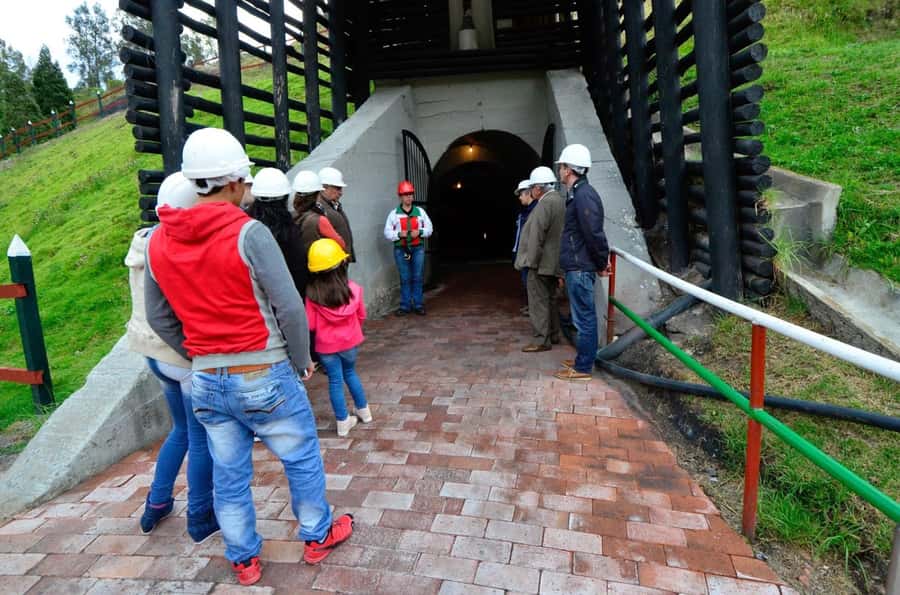
Nemocón is the stronger stop if you want to understand mining rather than simply admire an unusual building. The guided visit lasts about two hours and takes you through underground galleries with natural salt formations. You receive a helmet for the mine visit, a practical reminder that this is still presented as a mine, not only as a scenic attraction.
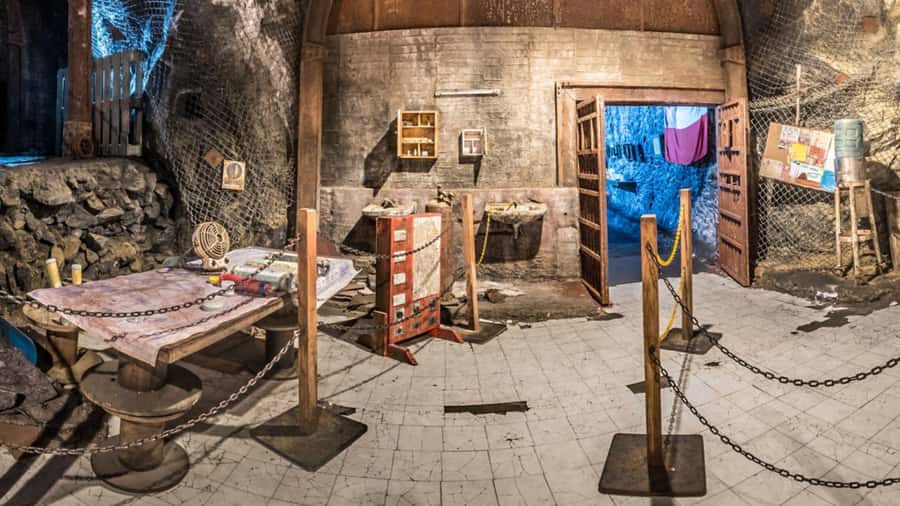
The guide explains how salt extraction developed in the region and why ventilation and safety were important. Those details give the tunnels meaning. Without them, underground walls can blur into one another. With them, you start to picture the conditions faced by workers and the technical problems involved in taking salt from below ground.
The mine also includes a small museum area with fossils and rock formations. This is an easy detail to miss if you are rushing, but it adds useful context. Salt mining is part of a larger story about geology, and the displays help connect the mine to the natural material around it.
One of the most memorable features is the Salt Christ, carved into a wall inside the mine. It is a direct link between the local mining tradition and religious belief. The carving is not simply an object placed in a gallery. Its position inside the mine makes you think about the people who worked in those spaces and the faith they carried with them.
The Salt Mirror Room creates another visual highlight. A salt formation produces a reflective effect that can make the chamber feel larger and stranger than expected. This is likely to be one of the best places for a photograph, though the underground setting and lighting may affect how clearly your camera captures it.
Nemocón is not presented as a polished cathedral. That is part of its appeal. You see salt as a material shaped by nature and labor, with tunnels that retain a sense of the original mining purpose. The tradeoff is that uneven surfaces and underground walking can be tiring. People with mobility impairments are advised not to take this tour.
From working mine to Salt Cathedral
After Nemocón, the route continues to Zipaquirá and its Salt Cathedral. Allow about two and a half hours for the visit, including sightseeing and walking. The cathedral is the more dramatic stop, but it is also the place where the tour’s religious meaning becomes central.
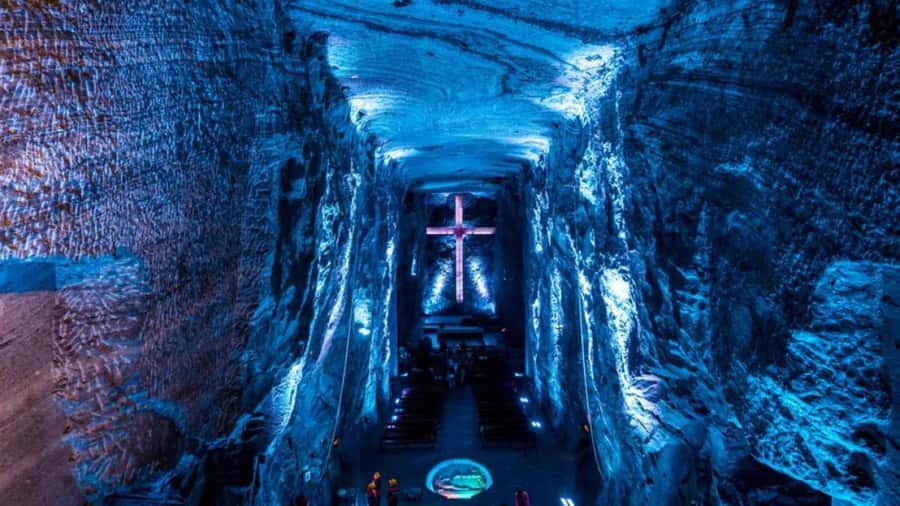
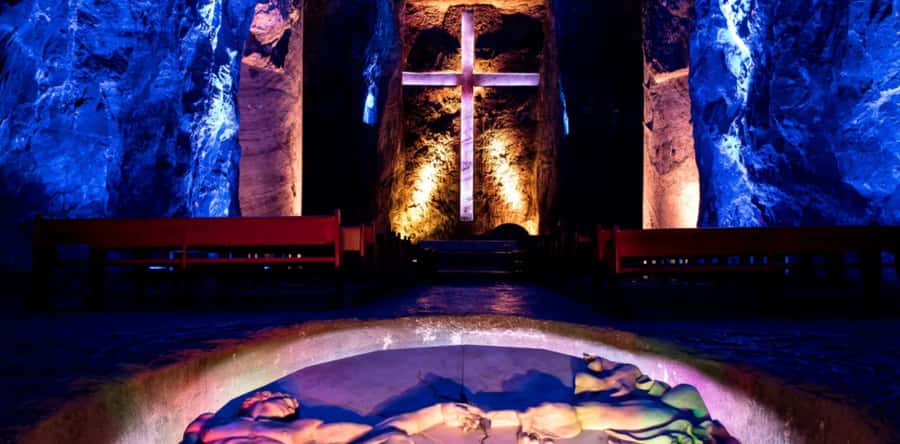
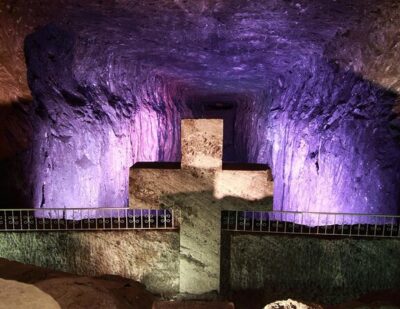
The cathedral is completely underground and uses salt as its main material. Its design includes the main nave, the Stations of the Cross, chapels, and other carved spaces. Lighting is used to bring out the shapes and surfaces of the salt, so the atmosphere changes as you move through the complex.
The fourteen stations are especially important. Each represents part of the story of Jesus’s suffering before his death. The route gives the visit a processional quality, with one symbolic space leading to the next. You do not simply arrive at an underground room with a cross and leave. The sequence encourages you to move slowly and consider the religious meaning of the site.
You do not need to be religious to appreciate the workmanship. The scale of the excavation, the care in the carving, and the way the spaces were arranged are impressive on their own. At the same time, the cathedral is clearly a spiritual place, not just an architectural oddity. You should expect religious imagery and a quiet, reflective tone in parts of the visit.
The main drawback here is the guide arrangement. The private tour includes the visit to the cathedral, but not a dedicated guide inside it. You have the option of joining a group tour or using an audio guide. If detailed interpretation matters to you, confirm how this works on the day and allow time to follow the explanations rather than treating the cathedral as a quick photo stop.
More things to do in Bogota:
- Bogotá Bike Tour
★ 5.0 · 3,329 reviews - Bogota: Bicycle City Tour
★ 4.9 · 2,156 reviews - La Candelaria, Monserrate and Museums Bogotá Private City Tour
★ 5.0 · 1,567 reviews - Shared Tour of the Historic Candelaria in Bogotá
★ 5.0 · 1,551 reviews
What the architecture feels like underground
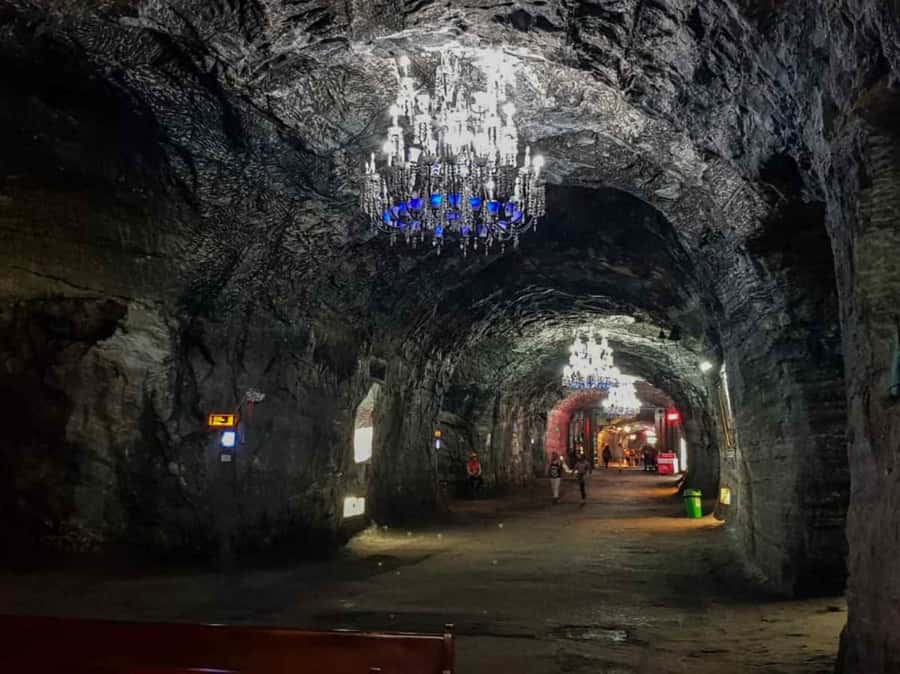
Zipaquirá’s Salt Cathedral is best understood as a series of connected spaces rather than one conventional church. The underground location gives the architecture its identity. Salt surfaces, low passages, large carved chambers, religious symbols, and colored lighting work together to create an experience that would not be possible above ground.
The main nave provides the grandest moment, while the chapels and Stations of the Cross offer smaller, more intimate spaces. The design makes the mine itself part of the religious setting. Instead of covering up the fact that the building began as an excavation, the cathedral uses that origin as its main visual idea.
The lowest level includes chapels, shops, and restaurants. That gives you a chance to pause after the walk, though it also means the attraction is not an untouched sacred site. It is a major tourist complex, with commercial areas alongside places of prayer.
I appreciate that mixture because it reflects how the cathedral works today. It is a religious site, an engineering project, a cultural attraction, and a stop for people interested in Colombia’s salt-mining tradition. You can approach it from any of those angles.
The short stop in Zipaquirá
The itinerary allows about 30 minutes in Zipaquirá for a break, photographs, lunch, and shopping. That is not enough time for a long meal or a full town visit. Think of it as a useful pause between sightseeing rather than a separate city tour.
Meals and drinks are not included, so lunch is at your own expense. Keep an eye on the clock. The two underground visits are the main purpose of the day, and the town stop is brief by design.
The break can also help you recover from the walking. Nemocón and the cathedral both involve uneven underground surfaces, and the second visit comes after the first. A quick meal and a little time to sit may make the final return to Bogotá more comfortable.
Is the $207 price reasonable?
At $207 per person, this is not a budget day trip. The price needs to be judged against what it removes from your planning. Hotel pickup and drop-off, private group transport, admission to Nemocón, a guided Nemocón visit, a helmet, and a Colombian snack are included.
The price does not include lunch, drinks, personal expenses, or a dedicated guide inside the Salt Cathedral. That last point is important. You may join a group explanation or use an audio guide, but you are not paying for a private specialist to interpret every cathedral space.
I see the value mainly in convenience and coverage. You visit both major salt attractions in one day, with transport from Bogotá and a live guide in English or Spanish. Doing the same route independently would require more planning, and you would need to arrange transport between Nemocón and Zipaquirá yourself.
For a solo visitor who values a private group and wants both sites without handling the logistics, the price may be fair. For two or more people focused on keeping costs low, compare it with public transport and separate admissions before booking. The strongest value comes from the combined route, not from any single inclusion.
Who will enjoy this day most?
I would choose this experience if you want a day outside Bogotá with a clear theme and plenty of cultural context. It suits people who enjoy unusual architecture, industrial history, religious art, geology, and guided sightseeing.
It is also a good fit if you want the two salt attractions in one outing. Nemocón is more technical and connected to mining, while Zipaquirá is more visual and spiritual. The combination keeps the day from feeling repetitive.
You should think twice if you dislike enclosed spaces, uneven ground, or a full schedule. The experience involves underground walking at both sites, and the temperature inside the mines can be cooler than in Bogotá. Wear comfortable shoes and bring a light jacket.
The tour is not suitable for people with mobility impairments. That is not a minor footnote. The walking conditions are a real part of the experience, and you should consider them before paying.
Free cancellation is available up to 24 hours in advance for a full refund, and you can reserve now and pay later. Those terms help if your Bogotá plans are still changing, but they do not make the walking demands any easier.
My practical take on the two-hour and two-and-a-half-hour split
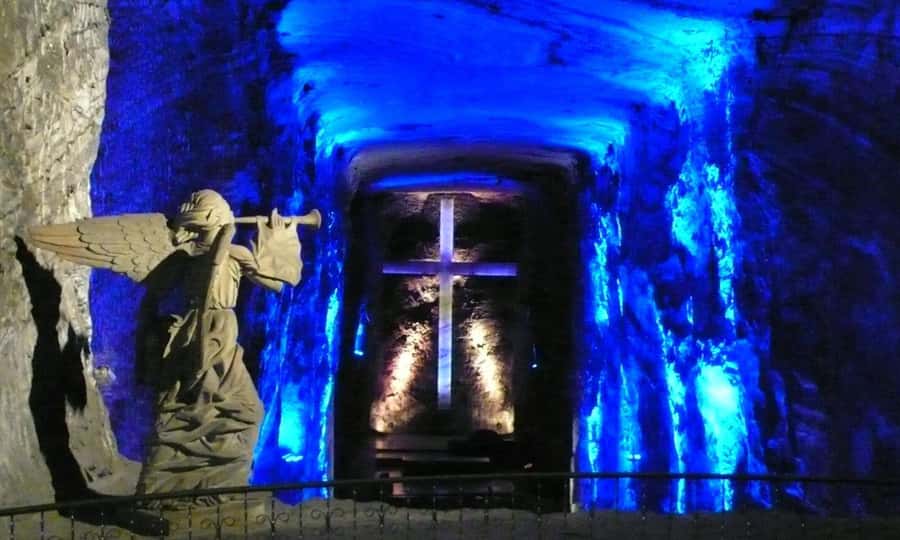
The time allocation makes sense. Nemocón needs about two hours because the guide has to explain the mine, extraction, ventilation, safety, salt formations, and museum displays. Rushing through it would reduce the visit to a series of dark tunnels.
Zipaquirá receives about two and a half hours because the cathedral is larger and more layered. You need time for the Stations of the Cross, chapels, main nave, photographs, and whichever guide option you choose.
Still, this is a day of transitions. You will spend time on the road, then walk underground, then get back in the vehicle, then walk again. I would not add another major attraction to the same day. The salt sites already provide a full program.
Should you book this salt tour?
Book it if you want a well-organized private day trip that combines mining history with underground religious architecture. Nemocón supplies the hands-on explanation of salt extraction, the Salt Mirror Room, the Salt Christ, and the small fossil and rock displays. Zipaquirá delivers the grander visual experience, with the fourteen Stations of the Cross and its carved chapels.
Skip it if you want a cheap outing, a long lunch, or a slow visit with full personal guiding inside the cathedral. The $207 price is aimed at convenience and a two-site experience, not bare-bones transport.
For the best day, wear sturdy comfortable shoes, bring a light jacket, keep lunch short, and decide in advance if you prefer a group explanation or an audio guide at Zipaquirá. If those conditions suit you, this is one of the clearest ways to understand why salt matters so much to Cundinamarca.
FAQ
How long does the tour last?
The tour lasts about eight hours, including pickup and drop-off in Bogotá, visits to both salt sites, the stop in Zipaquirá, and travel between locations.
Where does the tour begin and end?
Pickup and drop-off are provided in Bogotá.
Which places does the tour visit?
The tour visits the Nemocón Salt Mine, the Salt Cathedral of Zipaquirá, and the town of Zipaquirá for a short break, lunch, shopping, and photographs.
Is transportation included?
Yes. Hotel pickup and drop-off are included.
Is admission to the Nemocón Salt Mine included?
Yes. Entrance to the Nemocón Salt Mine and a guided tour there are included.
Is a guide inside the Salt Cathedral included?
No. At Zipaquirá, you can choose to join a group tour or use an audio guide.
What languages are available?
The live tour guide service is available in English and Spanish.
Is lunch included?
No. Meals and drinks are not included. The itinerary provides about 30 minutes in Zipaquirá for lunch and shopping.
What should I wear?
Wear comfortable shoes and clothing suitable for walking. The mines can be cooler, so bringing a light jacket is advisable.
Is the tour suitable for people with mobility impairments?
No. The tour includes walking on uneven underground surfaces and is not suitable for people with mobility impairments.
Can I cancel for a refund?
Yes. You can cancel up to 24 hours in advance for a full refund.
Do I have to pay at the time of booking?
No. The reserve-now, pay-later option lets you reserve a place without paying immediately.
Just added in Bogota
- Tour of Zipaquirá: Visit the Salt Cathedral and the main squares★ 4.5 · 55 reviews
- Catedral de Sal desde Bogotá en Tren★ 5.0 · 5 reviews
- Zipaquirá and Salt Cathedral Muisca Heritage with Guide – Private★ 4.5 · 23 reviews
- Botanical Garden Bogotá Private Tour (4 Hrs.)★ 5.0 · 13 reviews
- Zipaquira Salt Cathedral★ 4.5 · 12 reviews
- LOCAL GUIDE Zipaquirá PRIVATE TOUR – Salt Cathedral and Salt Oven★ 5.0 · 24 reviews
- Zipaquirá Salt Cathedral: An architectural wonder.★ 4.5 · 24 reviews
- Private Zipaquira Salt Cathedral and Guatavita Lagoon Tour from Bogota★ 4.5 · 44 reviews
Salt Cathedral Tours, compared.
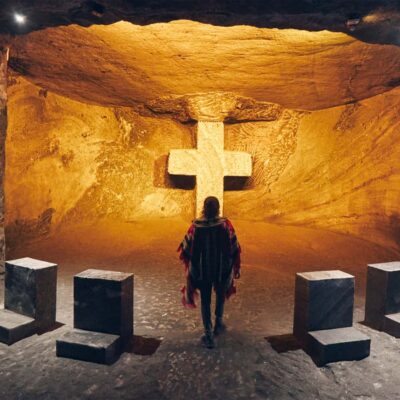
Zipaquirá: Salt Cathedral Group Tour with Pickup
Read our review →

Zipaquirá Salt Cathedral and Lake Guatavita Day Tour
Read our review →
Bogota Zipaquira Salt Cathedral Private Tour + Lunch
Read our review →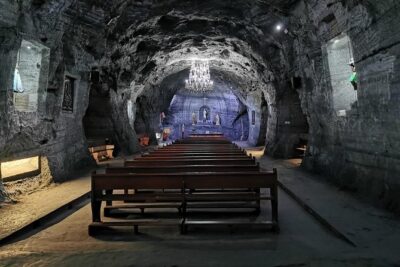
Route of the 7 Treasures of El Dorado – Guatavita and Zipaquirá
Read our review →Small Group Tour Zipaquira Salt Cathedral with Pickup
Read our review →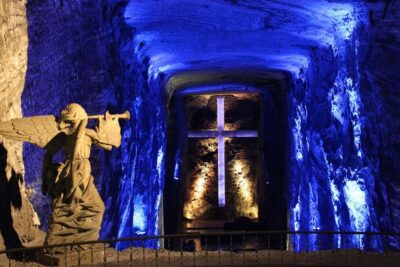
Zipaquirá Group Tour – More than Salt Cathedral
Read our review →Browse the lists this tour appears in