
REVIEW · LA CANDELARIA TOURS
Bogota: La Candelaria Highlights Walking Tour
Bogotá reveals itself on foot. This private La Candelaria tour combines the district’s major sights with four lesser-known local stops, including a baroque church, a conflict memorial, and a coffee shop. I like the way it moves beyond postcard views, and I also like that the guide connects buildings to Colombia’s political and social story.
The coffee break adds a welcome pause after several hours of walking, while guides such as Alejandra and Juanita bring a personal touch to the route. The main thing to consider is the weather: the tour runs rain or shine, so comfortable shoes and an umbrella are not optional extras.
In This Review
- Key points to know before booking
- Why La Candelaria works best on foot
- Bolívar Square and Bogotá’s civic heart
- Teatro Colón and the stories behind the façades
- Chorro de Quevedo and the older face of the district
- Four lesser-known stops with more personal meaning
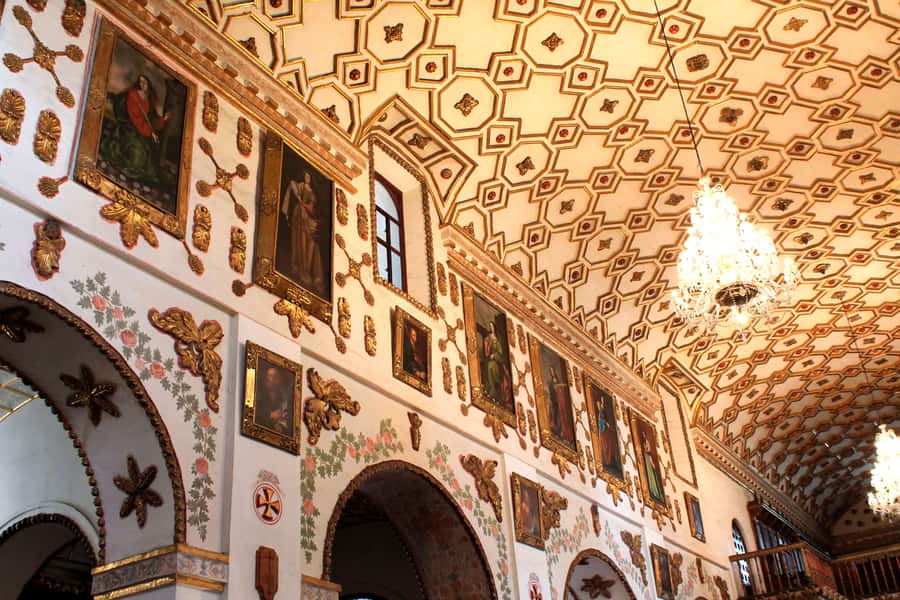
- A baroque church with unusual stories
- A counter-monument made by conflict victims
- Virgen del Carmen Sanctuary
- A local coffee shop and coffee tasting
- A photo stop with a local point of view
- The guide makes or breaks this walk
- What $73 means for the value
- Practical preparation for three and a half hours
- Who should book this La Candelaria tour?
- Should you book the Bogotá La Candelaria Highlights Walking Tour?
- FAQ
- How long does the La Candelaria walking tour last?
- How much does the tour cost?
- Is the tour private?
- What languages are available?
- Where is the meeting point?
- What landmarks are included?
- Is coffee included?
- What should I bring?
Key points to know before booking
- A private 210-minute walk: You get a three-and-a-half-hour route with a guide who can shape the conversation around your interests.
- Four local stops beyond the usual sights: The tour visits a baroque church, a memorial created by victims of Colombia’s conflict, the Virgen del Carmen Sanctuary, and a local coffee shop.
- A clear introduction to Bogotá: Bolívar Square, Teatro Colón, Chorro de Quevedo, and other central landmarks create a useful first look at La Candelaria.
- History with present-day context: The guide discusses culture, current social and political issues, and personal stories, not just dates and façades.
- Coffee is included: The break is part of the experience and helps explain the craft behind Colombian coffee.
- English or Spanish: You can take the tour in either language, with the meeting point outside Café Pasaje.
Why La Candelaria works best on foot
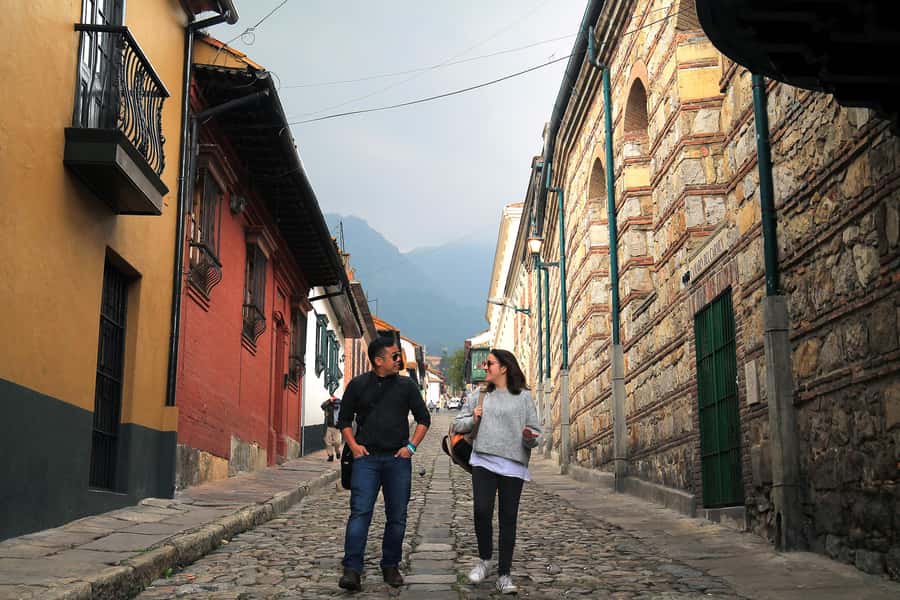
La Candelaria is Bogotá’s historic center, and its major sights sit close enough together to connect in a single walk. That sounds simple, but the area makes more sense when someone points out how government, religion, art, education, and public memory share the same streets.
You begin at Plazoleta del Rosario, outside Café Pasaje. This is a useful starting point because you can meet your guide in a recognizable public square before heading along Seventh Street toward the central landmarks.
I like the walking format because you are not sealed inside a vehicle while the city passes by. You can pause at a doorway, look up at a church façade, and notice how the neighborhood changes from formal civic spaces to narrow streets and local gathering spots.
The route lasts 210 minutes, so you should expect a substantial walk rather than a quick orientation. The pace includes time for stories and stops, but you will still want shoes that can handle several hours on city pavement.
More Walking Tours in Bogota
- Bogotá: Guided La Candelaria Walking Tour
★ 4.8 · 1,229 reviews - Graffiti Tour: a fascinating walk through a street art City
★ 5.0 · 1,074 reviews - Walking Tour in La Candelaria Bogotá
★ 5.0 · 859 reviews
Bolívar Square and Bogotá’s civic heart
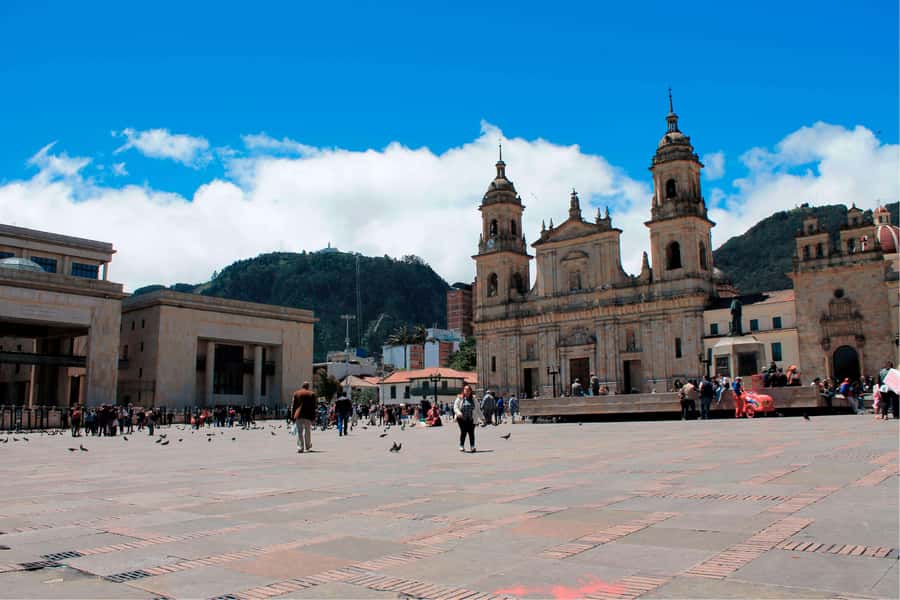
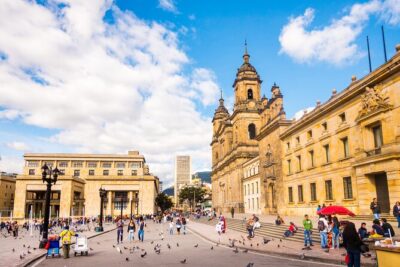
The tour’s first major section centers on Bolívar Square, where several of Bogotá’s most important public buildings face one another. You see the Capitol, the Justice Palace, City Hall, and the Main Cathedral of Bogotá.
This is more than a checklist of grand buildings. The square gives your guide a natural place to explain how Colombia’s government and public life developed around the historic center. The Capitol and City Hall represent civic power, the Justice Palace brings the legal system into view, and the cathedral shows the lasting role of religion in the city’s public identity.
I would pay attention to the stories here rather than trying to memorize every architectural detail. The tour is designed around the events and people connected to these buildings, and the guide also discusses Colombia’s current social and political situation.
The Justice Palace is especially useful as a reference point for understanding how national conflict has shaped public memory. The tour later visits a counter-monument made by victims of the Colombian conflict, so the route links an official government building with a more personal form of remembrance.
That contrast is one of the tour’s strongest features. You see the institutions that represent the state, then hear from a place created to remember people affected by violence. It gives the walk emotional weight without turning every stop into a formal lecture.
Teatro Colón and the stories behind the façades
Teatro Colón adds a cultural stop to the civic focus of Bolívar Square. The theater represents Bogotá’s performance tradition and gives the guide another way to explain how the historic center has been used over time.
You should not expect a full theater performance or a long interior visit unless your guide confirms otherwise. The information describes a visit to the theater as part of the walking route, but it does not promise a scheduled show or a complete backstage tour.
That is worth keeping in mind when you set expectations. The value here is the setting and the story, not a ticketed cultural event. A good guide can make the building meaningful even if you only see selected areas or discuss it from the street.
The tour’s approach is conversational. You hear about history, culture, politics, and personal experiences rather than receiving only a list of construction dates. Reviews of Alejandra and Juanita point to guides who are attentive, patient, and able to adapt the conversation to individual interests.
Chorro de Quevedo and the older face of the district
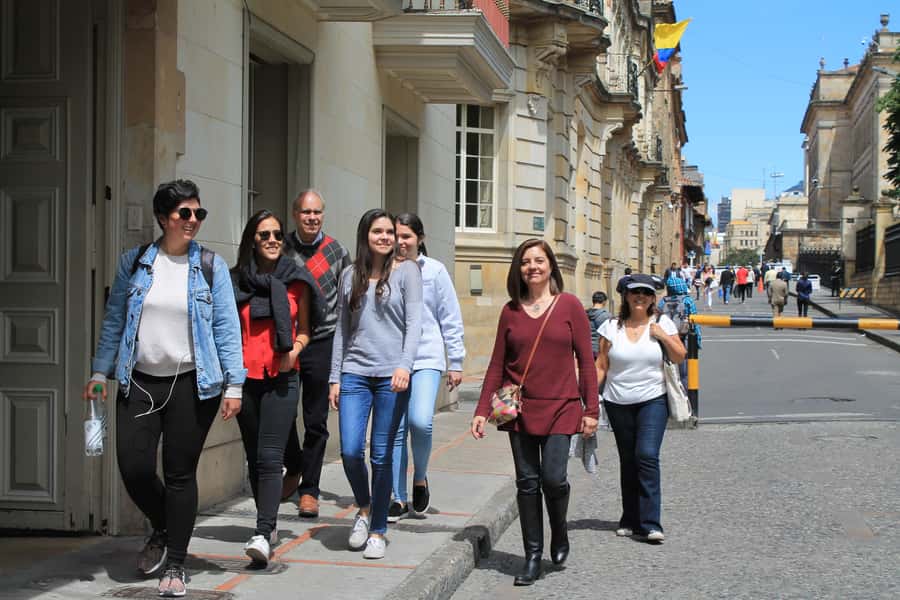
Chorro de Quevedo is one of La Candelaria’s best-known meeting points. It brings a more informal mood to the route after the formal spaces around Bolívar Square and Teatro Colón.
The stop helps you see how the neighborhood works as a living part of Bogotá, not only as an open-air museum. Your guide can use the area to explain local traditions, urban stories, and the way residents relate to the historic center.
I like that Chorro de Quevedo is not treated as the final answer to La Candelaria. Many short city walks stop at the familiar attractions and call it a day. This tour uses the main sights as a base, then takes you away from the most touristic path.
That shift is central to the experience. You still get the landmarks you want to see, but you also get places you might not find on your own, especially if this is your first time in Bogotá.
More La Candelaria walks:
- La Candelaria, Monserrate and Museums Bogotá Private City Tour
★ 5.0 · 1,567 reviews - Shared Tour of the Historic Candelaria in Bogotá
★ 5.0 · 1,551 reviews - Bogota + Monserrate Private City Tour, Museums, Candelaria.
★ 5.0 · 1,015 reviews - Graffiti Tour in La Candelaria Bogotá
★ 5.0 · 315 reviews
Four lesser-known stops with more personal meaning
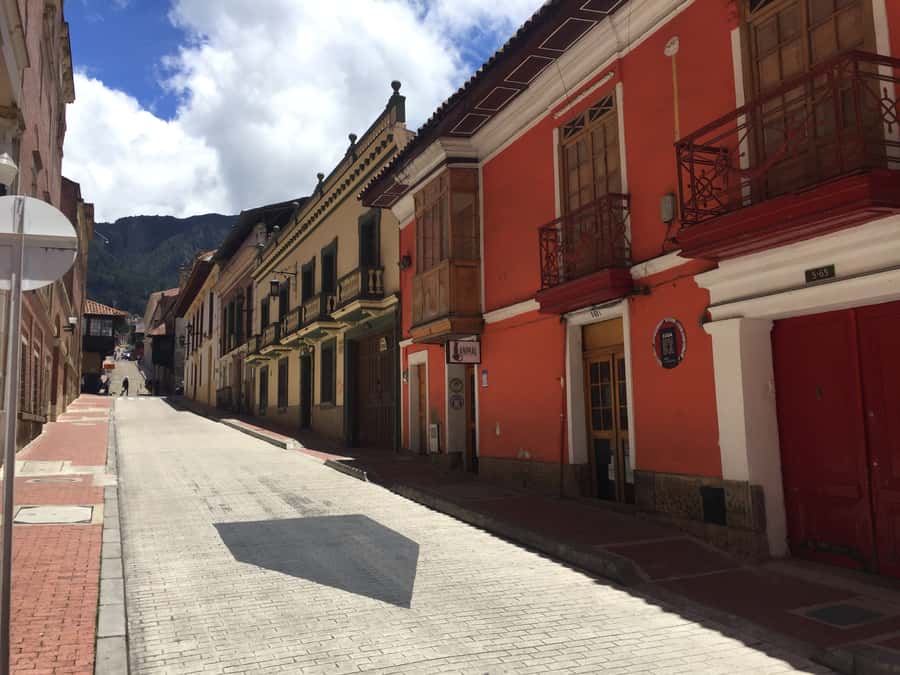
After the main landmarks, the route moves into four local favorites. The details supplied for the tour do not give the names of every stop, but they do explain why each one matters.
A baroque church with unusual stories
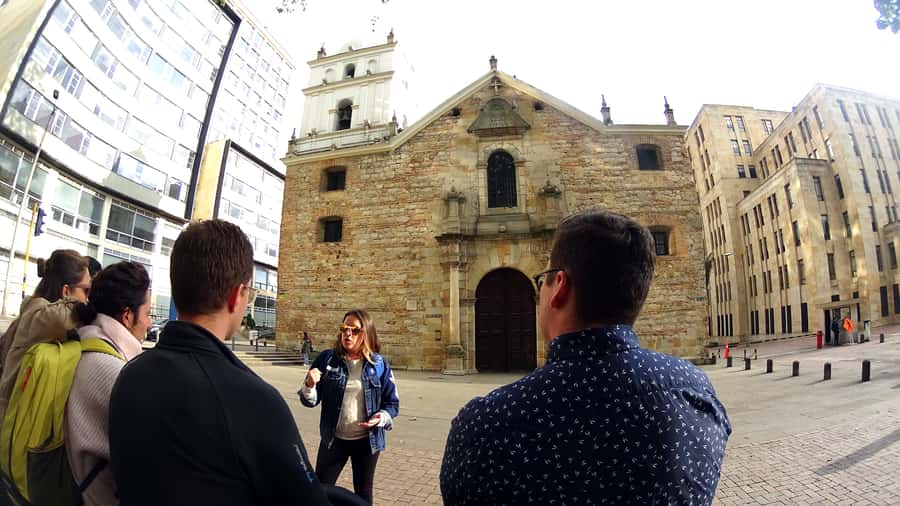
The church is described as a keeper of some of the most curious stories in Colombian history. That wording suggests a stop built around anecdotes and unusual details rather than a standard religious sightseeing visit.
You may find this especially useful if you enjoy history told through small human stories. Churches can blur together during a city tour, but a guide who knows the local tales can make one memorable.
The route does not promise a formal religious service or a guaranteed interior visit, so I would treat this as a guided cultural stop. Respectful clothing and quiet behavior are sensible whenever you enter a working church.
A counter-monument made by conflict victims
This is likely the most serious stop on the route. Rather than presenting Colombia’s past only through official institutions, the monument gives space to people who suffered during the country’s conflict.
That makes the stop valuable for anyone who wants context beyond the attractive colonial streets. It may also feel emotionally heavy, so you should be ready for a thoughtful conversation rather than a light photo opportunity.
The guide’s role matters here. Personal anecdotes and clear explanations can help you understand why the monument exists and how it fits into Colombia’s continuing public conversation.
Virgen del Carmen Sanctuary
The Virgen del Carmen Sanctuary adds another religious and cultural layer. The tour presents it as one of the places locals value, not simply as a famous building on a standard sightseeing circuit.
A visit here can help you notice how faith remains part of daily life in Bogotá. The sanctuary also broadens the tour beyond the government buildings and central plazas, giving you a better sense of the district’s varied identity.
The information does not promise a specific ceremony, opening time, or interior access. If entering the sanctuary is important to you, confirm the details with the provider before booking.
A local coffee shop and coffee tasting
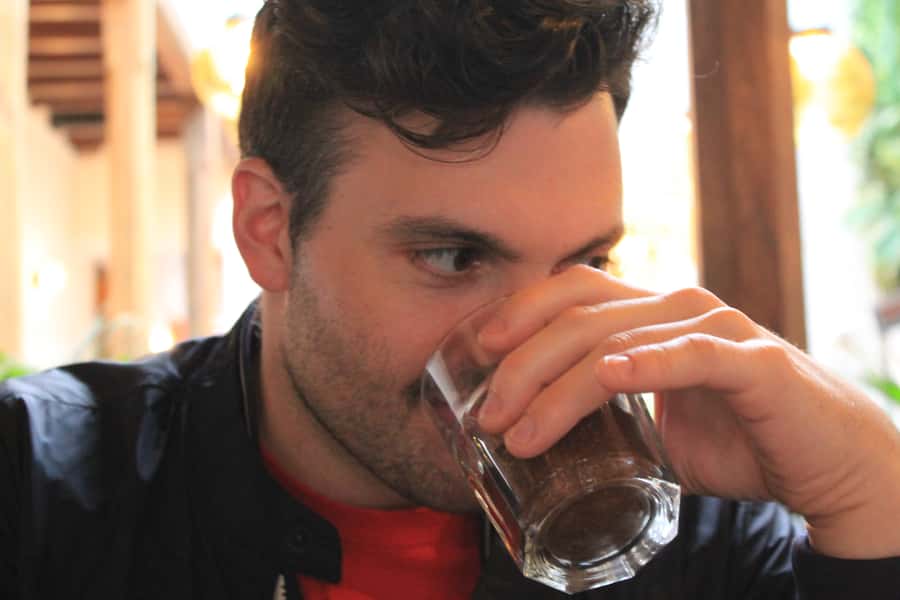
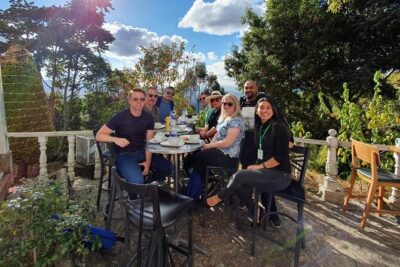
Coffee is included, and the break is one of the most praised parts of the experience. It is not just a chance to sit down after walking. The tour uses the stop to explain the art of preparing Colombian coffee.
That makes the pause useful on two levels. You get a rest during a long walk, and you learn why coffee matters as part of Colombian culture and daily life.
One past booking described the café as a highlight, while another praised the coffee tasting for giving a better understanding of coffee preparation. I would see this as a strong reason to choose this tour over a basic landmark walk.
The exact coffee shop may depend on the route, but the meeting point is outside Café Pasaje. Do not confuse the starting café with the later local coffee stop unless your guide tells you they are the same place.
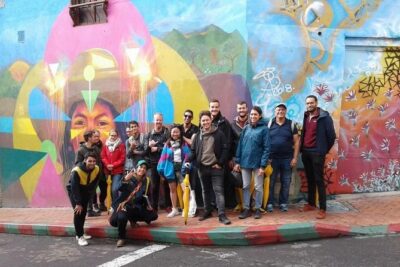
A photo stop with a local point of view
The final lesser-known stop is described as a good place for Instagram pictures. That may sound less serious than the memorial or the church, but it serves a practical purpose.
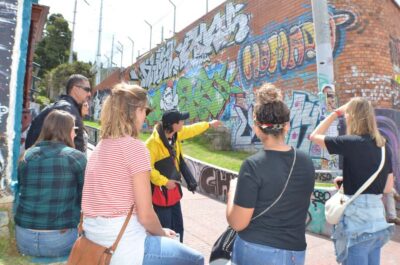
La Candelaria has plenty of colorful streets, old façades, and interesting angles. A guide can help you find a better photo setting without forcing you to spend the entire tour stopping for pictures.
I would keep the photo stop in perspective. It is a pleasant addition, not the main reason to book the experience. The real value comes from the balance between well-known landmarks, social context, and places you might otherwise miss.
The guide makes or breaks this walk
A private tour gives the guide room to adjust the conversation. If you care about politics, architecture, coffee, religion, or local life, you can make that clear at the start.
Cameron, from the United States, described the guide as responsive to personal interests and said the recommendations helped with the rest of a Colombia trip. That is an important advantage of a private format. You are not tied to a fixed group discussion that may ignore what you want to know.
Alejandra receives especially strong praise for her patience, kindness, local connections, and ability to explain both Bogotá’s history and the political forces that shaped Colombia. One booking was a solo experience, which shows that the private format can work well even if you are traveling alone.
Juanita is also praised for being cultured, friendly, careful, and attentive. Those qualities matter on a city walk, especially when the subject changes from famous buildings to difficult modern history.
You should not assume that a particular guide will lead every departure. But the named guides give you a useful sense of the company’s style: personal, flexible, and focused on conversation rather than a memorized speech.
What $73 means for the value
At $73 per person, this is not the cheapest way to walk around La Candelaria. The price makes more sense when you account for the private group format, the 210-minute duration, the live guide, the coffee, and the extra stops beyond the main landmarks.
A free group walk may cover Bolívar Square, Chorro de Quevedo, and a few nearby streets. This tour offers more time and more personal attention. It also includes the chance to ask direct questions about Colombia’s social and political situation.
The value is strongest for a first visit, a short stay, or anyone who wants a thoughtful introduction before exploring alone. It is less compelling if you only want quick photo stops or already know La Candelaria well.
The booking terms also reduce some risk. You can reserve now and pay later, and cancellation is allowed up to 24 hours before the tour for a full refund. Those policies are useful when your Bogotá plans are still moving.
Practical preparation for three and a half hours
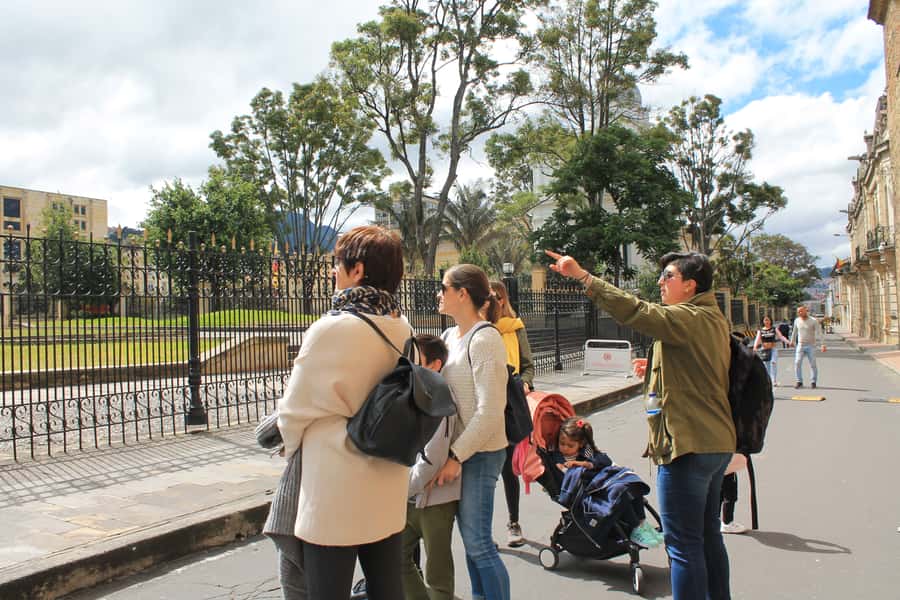
Wear comfortable shoes. The route includes several hours of walking, and the tour does not suggest switching to transport between stops.
Bring an umbrella. The tour operates rain or shine, so the weather should not be an afterthought. A light rain can change the feel of the streets, and wet pavement may make a long walk less pleasant.
Meet your guide outside Café Pasaje at Plazoleta del Rosario. The meeting point is specific, but you should still allow time to find the café and identify the guide before the scheduled start.
The tour is offered in English or Spanish. A private group can be helpful if you want to ask questions freely or need the guide to adjust the language level.
The route includes churches, public buildings, memorial spaces, cafés, and open streets. I would plan for changing conditions rather than treating it like a museum visit with controlled indoor temperatures.
Who should book this La Candelaria tour?
I would recommend it to first-time visitors who want more than a quick look at the historic center. It is also a good match for solo visitors, couples, families with an interest in history, and anyone who prefers a private conversation over a large scheduled group.
You will get the most from it if you enjoy stories about people and politics as much as architecture. The counter-monument and the discussions about Colombia’s conflict give the route more depth than a simple old-town stroll.
Coffee lovers have another reason to consider it. The included tasting is treated as part of Colombian culture, not just a drink handed over during a break.
I would hesitate if you dislike walking in uncertain weather, want guaranteed interior access at every stop, or prefer a short tour with only the famous sights. The route is long, and its best moments depend on your interest in local stories and modern Colombia.
Should you book the Bogotá La Candelaria Highlights Walking Tour?
Book it if you want La Candelaria explained through both its grand landmarks and its quieter local places. The private format, strong guide feedback, coffee stop, and thoughtful look at Colombia’s conflict give the $73 price a reasonable foundation.
The best choice is to reserve it early in your Bogotá stay. That gives you a working map of the historic center, useful background for later sightseeing, and local recommendations for the rest of your visit.
Skip it only if you want a very short, low-cost introduction or do not want a rain-or-shine walking route. For everyone else, Zebra Fisgona Tours offers a personal and unusually broad first look at Bogotá’s most historic neighborhood.
FAQ
How long does the La Candelaria walking tour last?
The tour lasts 210 minutes, or three and a half hours.
How much does the tour cost?
The price is $73 per person.
Is the tour private?
Yes. The experience is offered as a private group tour.
What languages are available?
The tour is available in English and Spanish.
Where is the meeting point?
Meet your guide outside Café Pasaje at Plazoleta del Rosario.
What landmarks are included?
The route includes Bolívar Square, the Capitol, Justice Palace, City Hall, the Main Cathedral of Bogotá, Teatro Colón, and Chorro de Quevedo.
Is coffee included?
Yes. Coffee is included as part of the experience.
What should I bring?
Bring comfortable shoes and an umbrella. The tour takes place rain or shine.
Just added in Bogota
- Tour of Zipaquirá: Visit the Salt Cathedral and the main squares★ 4.5 · 55 reviews
- Catedral de Sal desde Bogotá en Tren★ 5.0 · 5 reviews
- Zipaquirá and Salt Cathedral Muisca Heritage with Guide – Private★ 4.5 · 23 reviews
- Botanical Garden Bogotá Private Tour (4 Hrs.)★ 5.0 · 13 reviews
- Zipaquira Salt Cathedral★ 4.5 · 12 reviews
- LOCAL GUIDE Zipaquirá PRIVATE TOUR – Salt Cathedral and Salt Oven★ 5.0 · 24 reviews
- Zipaquirá Salt Cathedral: An architectural wonder.★ 4.5 · 24 reviews
- Private Zipaquira Salt Cathedral and Guatavita Lagoon Tour from Bogota★ 4.5 · 44 reviews
La Candelaria Tours, compared.
La Candelaria, Monserrate and Museums Bogotá Private City Tour
Read our review →
Shared Tour of the Historic Candelaria in Bogotá
Read our review →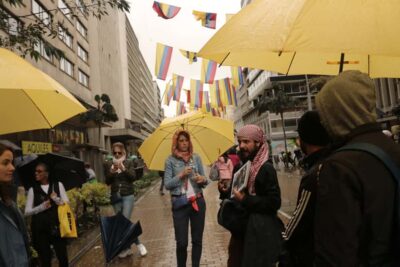
Bogota + Monserrate Private City Tour, Museums, Candelaria.
Read our review →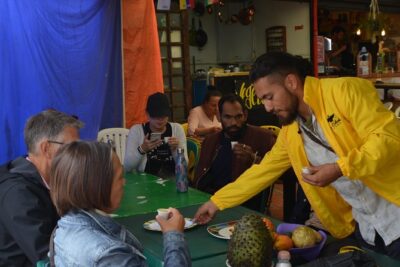
Private Tour in Bogota : Monserrate, Museums and Candelaria
Read our review →Browse the lists this tour appears in