

REVIEW · CACAO AND CHOCOLATE WORKSHOPS
Amazing Colombian Chocolate and Cacao Workshop in Cartagena
Chocolate gets serious in Cartagena.
This private Colombian cacao workshop turns a sweet treat into a hands-on lesson. I like the clear look at the full process, from roasting and separating cacao to shaping bonbons, truffles, and bars. I also like the friendly teaching style of Alejandra, whose energy has kept children and adults engaged.
The main drawback is the price: $96 per person is a lot for a 1-hour-45-minute activity. It makes the most sense if you want an active food experience, not just a tasting. Chocolate allergies are another obvious concern.
In This Review
- Key points at a glance
- Why this Cartagena chocolate workshop is worth your time
- Starting at El Arsenal in Getsemaní
- Meeting the equipment and chocolate team
- Following cacao from roasting to separation
- Refining chocolate and making your own creations
- What the chocolate tasting teaches you
- Why the private format matters
- Timing, clothing, and practical planning
- Who should book this experience
- Should you book the $96 chocolate workshop?
- FAQ
- How long does the Colombian chocolate workshop last?
- Where does the workshop begin?
- Where does the activity end?
- Is the chocolate workshop private?
- Is the workshop offered in English?
- Can I cancel for a full refund?
Key points at a glance
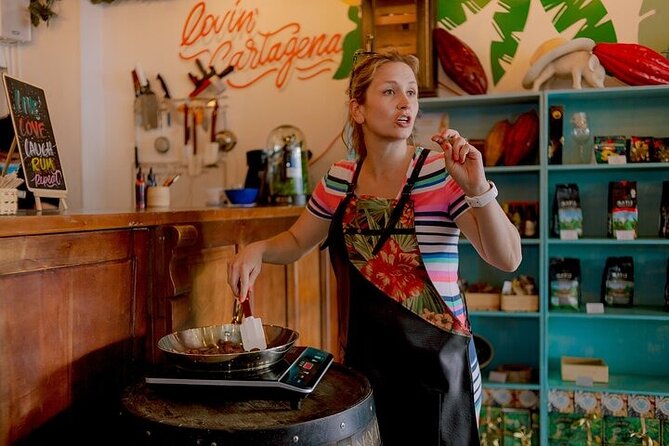
- From cacao bean to finished chocolate: You learn how cacao arrives, gets roasted, and is separated before becoming chocolate.
- Your group has the workshop to itself: This is a private activity, so the pace and ideas can fit your party.
- Alejandra brings the lesson to life: Her enthusiasm has worked well with both adults and an 11-year-old child.
- You make your own chocolates: The practical part can include bonbons, truffles, chocolate bars, or other creations.
- Five chocolate styles are featured: You may work with white chocolate at 40 percent, milk chocolate at 46 percent, dark chocolate at 80 percent, pure cocoa at 100 percent, and blends.
- The meeting point is easy to find in Getsemaní: Start at El Arsenal: The Rum Box 24, Calle Arsenal #8b-19.
Why this Cartagena chocolate workshop is worth your time
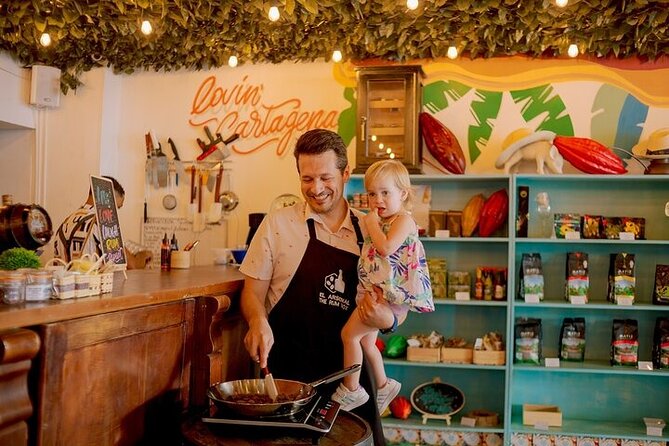
Cartagena has no shortage of food stops, but many involve sitting down and eating what someone else has prepared. This workshop asks you to take part. You do not simply hear that Colombian cacao is important. You see the stages that turn a raw agricultural product into something smooth, fragrant, and ready for a mold.
I like that the experience connects chocolate to Colombia at a national level. The lesson is not limited to candy-making. You also learn why different cacao types and origins matter, which gives your final bonbon or bar more meaning than a quick sugar hit.
The workshop lasts about 1 hour and 45 minutes. That is long enough for a proper introduction, practical work, and tasting without taking up half your day in Cartagena. You can still fit it around a walk through Getsemaní, lunch, or an afternoon visit to the old city.
The price deserves a careful look. At $96 per person, this is not a bargain activity. You are paying for a private format, an English-speaking guide, equipment, instruction, and the chance to make chocolate yourself. If you are mainly looking for inexpensive samples, choose a shop visit instead. If you want a guided food class that works for a couple or family, the cost is easier to defend.
A few more options to weigh up in Cartagena
- Rum and Chocolate Tasting in Cartagena
★ 5.0 · 360 reviews - Boutique Rum and Chocolate Tasting at Lunático
★ 5.0 · 328 reviews - Cartagena: Boutique Rum and Chocolate Tasting at Lunático
★ 4.9 · 121 reviews
Starting at El Arsenal in Getsemaní
Your meeting point is El Arsenal: The Rum Box 24, at Calle Arsenal #8b-19 in Getsemaní, Cartagena de Indias. The activity ends at the same location, which keeps the logistics simple.
The location is near public transportation, but the supplied information does not specify a hotel pickup or drop-off service. Plan to make your own way to the meeting point and allow enough time to find the address. A mobile ticket is accepted, and confirmation arrives when you book.
Because the workshop is private, only your group participates. That matters more than it may sound. You do not need to match the speed of a large class, and you can bring your own ideas for what to make. A couple may prefer an experimental session, while a family can give children more time with the hands-on work.
The venue is connected with chocolate retail, so the experience begins in a place where the product is already part of the setting. One account describes discovering the shop in Getsemaní, then being offered a closer look at the chocolate process. That makes this a useful stop if you are already exploring the neighborhood and want more than a purchase to take back to your hotel.
Meeting the equipment and chocolate team
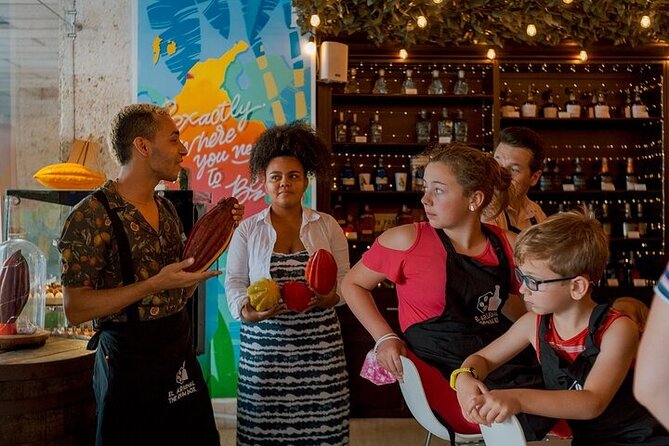
The first stage introduces you to the machinery and the staff. This is important because chocolate making can look mysterious when you only see the finished pieces in a display case. Here, you get a practical sense of the tools used by chocolatiers and the work involved before the decorative part begins.
The staff also help set the tone. Alejandra is the guide most often named in the feedback, and her enthusiasm appears to be one of the workshop’s strongest features. She explains the subject with energy rather than treating it like a formal lecture. That has helped keep children involved, including an 11-year-old who remained interested throughout the session.
I would choose this activity for a family that wants something more creative than a standard city tour. Children get to use their hands, make their own pieces, and accept a little mess as part of the fun. Adults still get a real lesson in cacao, so the activity does not feel like it was designed only for children.
You should expect the work area to become chocolatey. Wear clothes that can handle stains. The recommendation is practical, not decorative. Chocolate on your shirt may be a funny memory later, but it is less funny when it is your only dinner outfit.
Following cacao from roasting to separation
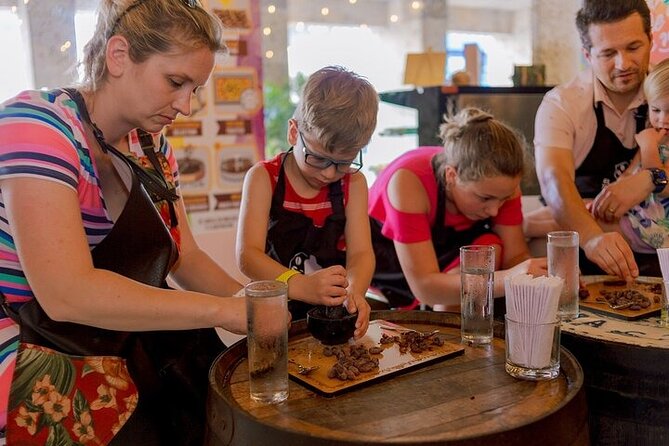
The central teaching section follows cacao through its early stages. You learn how the cocoa arrives, how it is roasted, and how it is separated to obtain the base product used for later chocolate making.
This part gives the workshop its educational value. You are not only pressing a mold or adding toppings. You see that chocolate begins with a raw ingredient that needs careful handling before it can become a smooth bar or filled sweet.
The guide also explains the importance of different types on a national level. The information provided does not list specific Colombian regions or farms, so you should not expect a detailed agricultural map. Still, the focus on type and origin helps you understand why chocolates can taste and behave differently.
The menu includes several percentages and styles:
- White chocolate at 40 percent
- Milk chocolate at 46 percent
- Dark chocolate at 80 percent
- Pure cocoa at 100 percent
- Blends of different chocolates
Those percentages give you a useful comparison. White, milk, dark, and pure cocoa do not deliver the same balance of sweetness, bitterness, texture, or intensity. A 100 percent cocoa product is very different from a sweet milk chocolate, and trying several styles in one sitting makes that difference clear.
For someone who already buys fine chocolate, this section adds vocabulary and technique. For someone who normally grabs a candy bar without thinking about cacao content, it provides a new way to taste. I especially like that the lesson treats chocolate as an ingredient with character, not as one uniform product.
More things to do in Cartagena:
- Cartagena Island Hopping: 5-Stop Rosario Islands Tour with Lunch
★ 4.5 · 4,903 reviews - Cartagena: Historic Center and Getsemaní Shared Walking Tour
★ 4.9 · 2,716 reviews - Cartagena: Rosario Islands Catamaran with Lunch and Snorkel
★ 4.5 · 2,479 reviews - Full-Day Rosario Islands Including Barú, Bocachica & Playa Blanca
★ 4.0 · 1,729 reviews
Refining chocolate and making your own creations
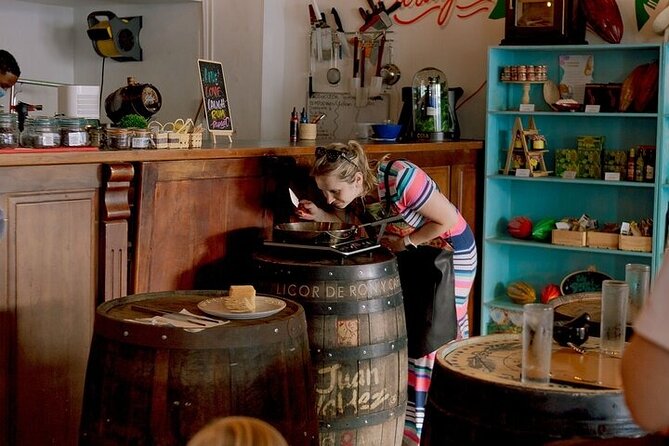
After the cacao lesson, you move toward the finished product. The process includes refining and then creating chocolates such as bonbons, truffles, or bars. The exact creation can adapt to the ideas you bring, which is a strong feature of a private class.
You can use what you learn here at home. That does not mean the workshop turns you into a professional chocolatier in under two hours. It means you leave with a better understanding of the sequence, the ingredients, and the care needed to shape a finished piece.
The hands-on section is also where the activity becomes memorable for families. Children get to make their own chocolates rather than watching an adult do all the work. The result may not look like a shop display, but that is part of its charm. A slightly uneven truffle made by your child has more holiday value than a perfect boxed sweet.
Couples can enjoy the same format in a different way. One account describes the experience as a playful evening activity, with the pair continuing to experiment with chocolate after the workshop. The setting may suit couples who want a shared project, especially if they prefer food and conversation over a passive show.
The workshop welcomes your ideas, but the supplied details do not promise a specific decoration list, filling menu, or take-home quantity. If you have a particular design in mind, ask the staff at the start what is possible. That is especially sensible if your group includes young children or if you have limited time.
What the chocolate tasting teaches you
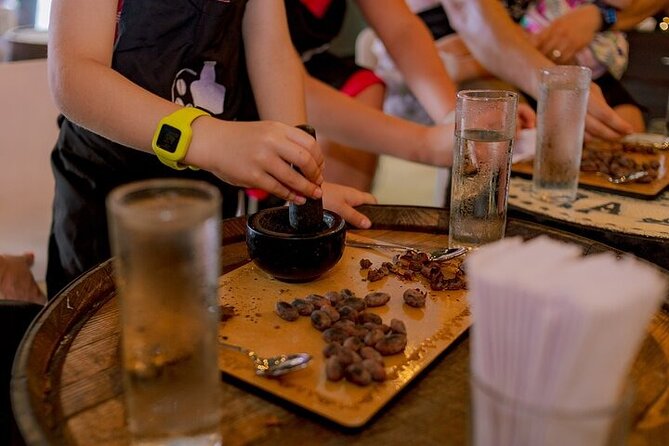
The sample menu is simple but useful. Comparing different cocoa percentages and origins gives you a way to notice how chocolate changes as the balance shifts.
White chocolate at 40 percent should offer a sweeter, creamier experience than 80 percent dark chocolate. Milk chocolate at 46 percent sits between those extremes, while pure cocoa at 100 percent is the most intense option listed. Blends let you see how makers combine characteristics instead of relying on one style.
I would encourage you not to rush this part. Smell the chocolate before eating it, notice the texture as it melts, and compare one percentage with another. You do not need special tasting skills. The point is simply to pay attention.
The experience has also been praised for its flavors and textures. That praise fits the structure of the activity, since you are working with several forms of chocolate rather than sampling only one finished product. You get both the pleasure of eating and a better sense of why chocolate can taste earthy, bitter, creamy, or sweet.
People with a serious chocolate allergy should not book this activity. The information specifically says it is not recommended for anyone allergic to chocolate. The workshop is built around cocoa, chocolate, equipment, and tasting, so this is not a situation where you can easily sit apart and avoid contact.
Why the private format matters
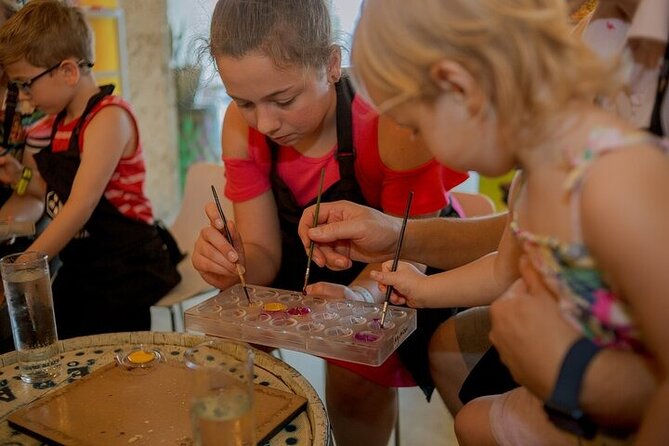
A private tour can be a luxury, but here it has a practical benefit. Chocolate making involves questions, trial and error, and different comfort levels. Your group can ask for more explanation, move on when ready, or spend extra time making a particular item.
This is also useful for mixed-age groups. Adults can focus on cacao types and technique while children work on their own chocolate. The activity has received strong praise for keeping younger participants involved, which is not always easy in a food lesson.
The private format may be less valuable if you are alone and mainly want a quick introduction. At $96, solo participation could feel expensive unless you place a high value on personal instruction. For a couple, family, or small group, the cost is easier to spread across a shared experience.
The activity is offered in English. That makes the technical explanations accessible to English-speaking visitors, though the provider and local setting are Colombian, and some staff interactions may naturally include Spanish.
Timing, clothing, and practical planning
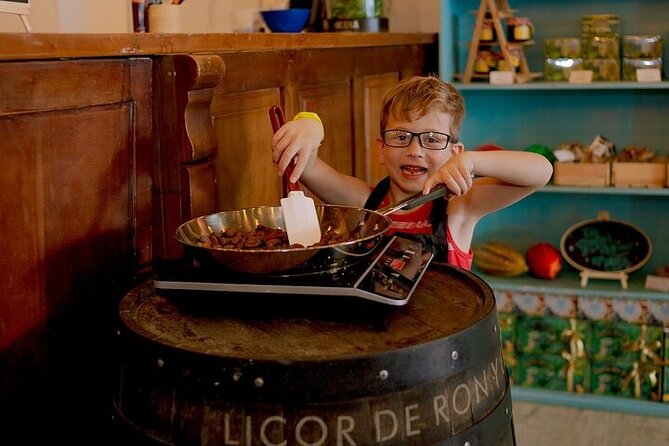
The workshop takes approximately 1 hour and 45 minutes. That is a manageable length for a hot Cartagena day, especially when you want a break from walking outdoors. The information does not state a specific start-time schedule, so check the available booking time before planning meals or other timed visits.
Wear comfortable clothes that you do not mind staining. You may be working directly with chocolate, and the family-focused accounts make clear that getting messy can be part of the activity.
The meeting point is in Getsemaní, and the end point is the same place. There is no separate transportation portion, sightseeing stop, or hotel transfer included in the supplied details. Think of this as a focused food workshop, not a general Cartagena tour.
Book ahead if your dates are fixed. The activity is booked on average 17 days before the scheduled date, which suggests that waiting until the last moment may limit your options. Confirmation is provided at booking, and free cancellation is available up to 24 hours before the start time. Changes or cancellations inside that window are not accepted for a refund.
Who should book this experience
I would recommend this workshop to several kinds of visitors:
- Families wanting a creative activity that keeps children involved
- Couples looking for a shared food experience in Getsemaní
- Chocolate fans curious about cacao percentages and origins
- Visitors who prefer private instruction to a large group class
- People who enjoy learning a process and then trying it themselves
I would be more cautious if you have a limited budget, dislike hands-on activities, or want a long cultural tour with several Cartagena sights. This is a short, focused session. Its value comes from participation and instruction, not from the number of places visited.
The activity is also a good choice for a rainy spell or a planned rest from city walking. You get an indoor food experience with enough structure to feel worthwhile, but not so much time that it takes over your day.
Should you book the $96 chocolate workshop?
Book it if you want to make chocolate, ask questions, and understand what happens before cacao becomes a bonbon or bar. Alejandra’s warm teaching style, the private setup, and the chance for children to create their own sweets are the strongest reasons to go.
Skip it if you only want a cheap tasting or if chocolate is not a major interest. At $96 per person, the workshop needs to be an experience you actively want, not an impulse stop.
For families and couples who enjoy food with a creative twist, I think the format makes sense. Wear something stain-friendly, arrive at El Arsenal in Getsemaní ready to work, and give yourself permission to make chocolate that looks homemade. That is the point.
FAQ
How long does the Colombian chocolate workshop last?
The workshop lasts approximately 1 hour and 45 minutes.
Where does the workshop begin?
It begins at El Arsenal: The Rum Box 24, Calle Arsenal #8b-19, Getsemaní, Cartagena de Indias, Bolívar, Colombia.
Where does the activity end?
The workshop ends back at the meeting point.
Is the chocolate workshop private?
Yes. Only your group participates in this private activity.
Is the workshop offered in English?
Yes. The experience is offered in English.
Can I cancel for a full refund?
Yes. You can cancel at least 24 hours before the experience start time for a full refund. Cancellations or changes made less than 24 hours before the start time are not accepted for a refund.
Just added in Cartagena
- Private History Photography Tour★ 5.0 · 17 reviews
- Self-Guided Audio Tour: Pirate Tales in Cartagena★ 3.0 · 2 reviews
- Paue Island Tour in the Rosary Islands★ 5.0 · 1 review
- Totumo Volcano★ 3.5 · 15 reviews
- Palmarito Beach★ 3.5 · 4 reviews
- Party without limits! Cartagena; VIP Party.★ 4.5 · 32 reviews
- Paragliding Experience in Cartagena★ 5.0 · 8 reviews
- Tour cultural to san Basilio de Palenque from cartagena★ 5.0 · 45 reviews
Cacao and Chocolate Workshops, compared.
Chocolate Farm Private Tour in Medellin: Real Genuine Experience
Read our review →
Eco-Hike in Minca: Coffee Tour, Waterfall & Chocolate Experience!
Read our review →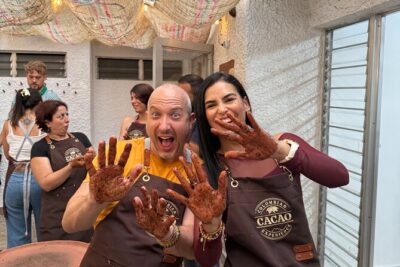
Colombian Cacao Experience | Chocolate Tour | BOOK NOW!
Read our review →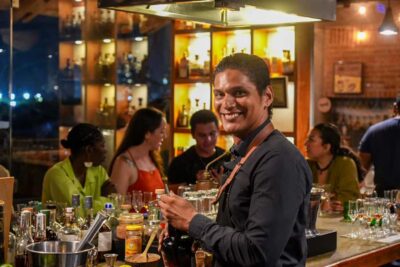
Boutique Rum and Chocolate Tasting at Lunático
Read our review →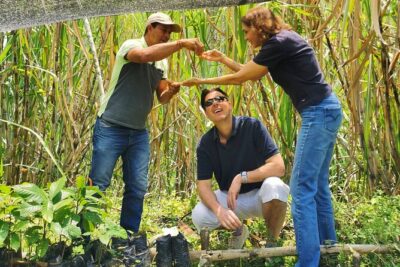
Coffee & Chocolate Private Tour in Medellin: Genuine Experience
Read our review →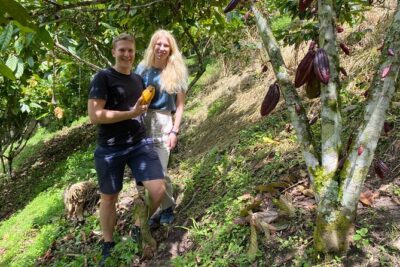
Browse the lists this tour appears in