
REVIEW · MARKETS
Tour in the Peasant Market of the Traditional Neighborhood of Bogotá
See Bogotá beyond the postcard center. This three-hour tour takes you south to 20 de Julio, a working neighborhood where religious tradition, market life, Colombian produce, and everyday local culture come together. You visit the Divino Niño sanctuary, walk through the parish area, and spend the main part of the morning at the 20 de Julio market.
I like the small group, limited to eight people, and the fact that tastings and the TransMilenio ticket are included. I also like the unusual route: this is not another tour of La Candelaria, but a chance to see a part of Bogotá that feels more like a nearby Colombian town. The main consideration is that breakfast costs an extra $5, and the market visit may feel less polished than a standard sightseeing tour.
The price is $53 per person, with a total duration of about three hours and ten minutes to three hours and thirty minutes. You meet at 9:00 a.m. outside the National Museum TransMilenio station and return there at the end. Free cancellation is available up to 24 hours before the start time.
In This Review
- Key points before you book
- Why 20 de Julio gives you a different Bogotá
- Starting underground at the National Museum station
- Arriving at Portal 20 de Julio
- Understanding the Divino Niño sanctuary
- Walking through Parque Iglesia 20 de Julio
- Spending 80 minutes in the 20 de Julio market
- Breakfast costs extra, but the tasting is included
- A small group makes a difference here
- How this tour compares with a standard Bogotá outing
- Who should book this experience?
- Should you book the 20 de Julio market tour?
- FAQ
- How much does the tour cost?
- How long does the experience last?
- Where does the tour start?
- Where does the tour end?
- Is transportation included?
- Is breakfast included?
- How large is the tour group?
Key points before you book
- 20 de Julio feels far removed from central Bogotá: The neighborhood gives you a different view of the capital, with local commerce and religious life at the center.
- The Divino Niño sanctuary shapes the visit: You learn why this parish matters to the neighborhood and why the area draws people from around the country.
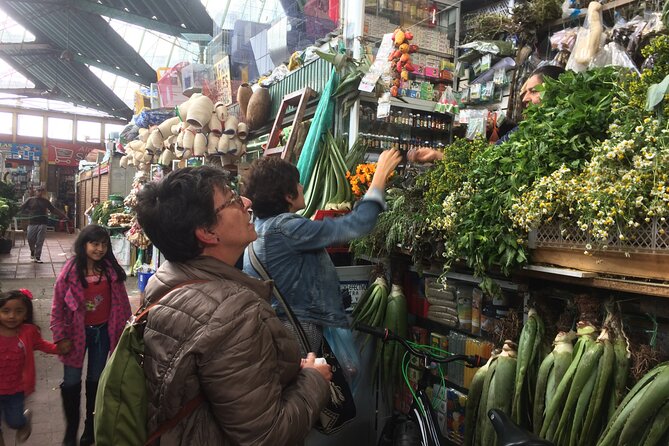
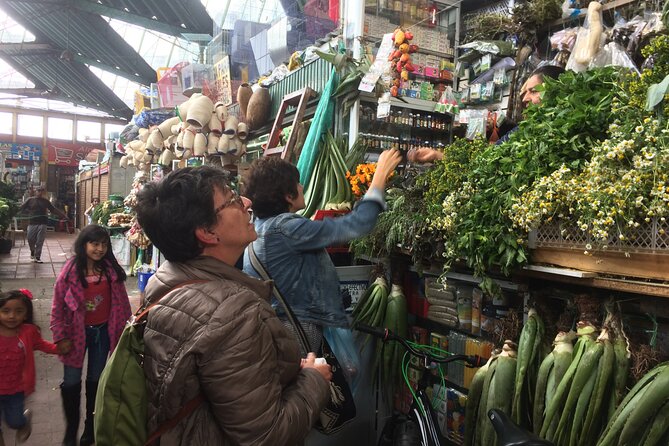
- The market is the heart of the morning: Expect fruit stalls, farm products, merchants, and tastings rather than a quick photo stop.
- Tastings are included, breakfast is not: Bring about $5 if you want the optional breakfast experience.
- The group has a maximum of eight people: That is a useful size for asking questions and moving through a crowded market.
- The tour uses TransMilenio: Your transportation ticket is included, and the meeting point is the National Museum station.
Why 20 de Julio gives you a different Bogotá
Many first visits to Bogotá stay near museums, grand plazas, restaurants, and the colonial streets of La Candelaria. Those places deserve attention, but they do not tell the whole story of the city. 20 de Julio offers a more ordinary and more local side of Bogotá, where a church, a market, neighborhood streets, and small merchants shape the rhythm of the morning.
The tour is especially useful if you want to understand how the city connects with Colombia’s countryside. Farmers bring fruit and other products from different parts of the country to the market. You are not simply looking at food on a shelf. You are seeing how produce moves from rural growing areas into a large urban center.
That connection gives the experience its purpose. The market is a meeting point between Bogotá and the rest of Colombia. You can try products you may not recognize, ask about local traditions, and hear directly from people who work in the plaza.
The neighborhood’s religious identity is just as important. The Divino Niño sanctuary and the 20 de Julio parish are not decorative stops added for tourists. They help explain why this part of the city has such a strong sense of place.
More markets in Bogota:
- Bike Tour in Bogota Historical Sites and Fruit Market
★ 5.0 · 171 reviews - PALOQUEMAO MARKET FOOD TOUR. EXOTIC FRUIT. LOCAL SNACKS. /Min 2 pax
★ 5.0 · 70 reviews - Fruit Tour at the World’s sweetest Market
★ 5.0 · 67 reviews
Starting underground at the National Museum station
Your morning begins at the National Museum TransMilenio station on Ak 7 at 9:00 a.m. The station is notable because it is currently Bogotá’s only underground TransMilenio station, giving the first few minutes of the tour a small piece of local urban interest.
Your transportation ticket is included, which makes the start simple. You do not need to work out the fare for this part of the trip, and you return to the same meeting point at the end. Since the tour runs by public transport, allow yourself enough time to reach the station before 9:00 a.m.
The short stop is listed at about ten minutes. That suggests the station is mainly a meeting and orientation point, not a long sightseeing visit. The real change of scene comes when you travel south toward 20 de Julio.
For visitors staying in central Bogotá, this transfer matters. You begin in a familiar tourist area and then move toward a neighborhood that most sightseeing routes skip. The shift helps you see how large and varied Bogotá is.
Arriving at Portal 20 de Julio
The first neighborhood stop is Portal 20 de Julio, also in the south of Bogotá. The visit is expected to last about ten minutes, but its value is less about a specific monument and more about getting your bearings.
The portal is a transport gateway into this part of the city. From here, the tour takes you into streets where daily life is the main attraction. You may notice the difference in atmosphere from the central districts, but the tour does not promise a formal architectural tour or a list of major landmarks.
I would treat this stop as a transition. It prepares you for a neighborhood visit rather than presenting a single sight that fills an hour. If you prefer famous buildings and carefully staged photo opportunities, this may feel modest. If you like seeing how people actually move through a city, it is a useful beginning.
The short timing also keeps the morning moving. You do not spend too much of the three-hour experience standing beside a transport station.
Understanding the Divino Niño sanctuary
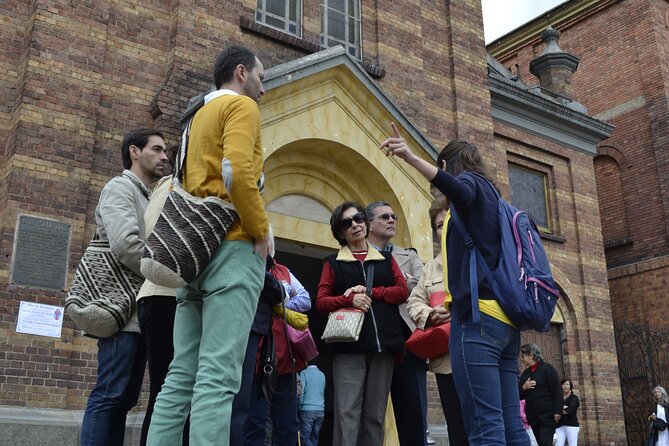
The Santuario del Divino Niño is one of the key reasons to choose this tour. You spend about twenty minutes learning about the culture, history, and important events connected with the sanctuary.
The Divino Niño, or Divine Child, is central to the identity of 20 de Julio. The tour explains the religious tradition around the site and shows how the sanctuary connects with the surrounding community. This gives you more than a quick look inside a church. It places the parish within the life of the neighborhood.
The information provided does not promise a private religious service, special access, or a long guided ceremony. You should expect an explanation of the sanctuary and its importance, followed by time in the surrounding parish area.
This stop will suit you best if you enjoy understanding why a place matters to local people. Even if you are not religious, the sanctuary offers a way to learn about popular culture in Bogotá. Religious buildings often reveal a city’s social networks, family traditions, and local habits more clearly than a museum display.
The timing is fairly brief, so do not expect an exhaustive study of the sanctuary. The tour’s strength is the combination of church, streets, and market. Each part supports the next.
A completely different kind of day:
- Bogotá Bike Tour
★ 5.0 · 3,329 reviews - Bogota: Bicycle City Tour
★ 4.9 · 2,156 reviews - Zipaquirá: Salt Cathedral Group Tour with Pickup
★ 4.8 · 1,606 reviews - La Candelaria, Monserrate and Museums Bogotá Private City Tour
★ 5.0 · 1,567 reviews
Walking through Parque Iglesia 20 de Julio
The next stop lasts about thirty minutes at Parque Iglesia 20 de Julio. Here, you walk through the neighborhood and visit the parish that gives the area much of its identity.
This is where the tour begins to feel like a neighborhood walk rather than a church visit. You may find small corners that do not appear in a typical Bogotá guidebook, along with the ordinary signs of a busy local district. The appeal is the setting itself: the parish, the park, the surrounding streets, and the people who use them.
The tour description emphasizes the feeling of being in another Colombian town despite still being inside Bogotá. That is a useful way to think about this stop. You are not being taken to a historic village outside the capital. You are seeing how a large city contains districts with their own character and traditions.
The walk may be less comfortable for anyone who wants a quiet, controlled route. Neighborhood markets and parish areas can be active and crowded, and the experience is based on real street life rather than a polished attraction. Wear comfortable shoes and keep your belongings secure, as you would in any busy urban market.
One piece of practical advice comes from the broader street experience described in the supplied material: bring a camera. Bogotá’s neighborhoods can offer strong visual details, from older buildings and colorful wall art to musicians and street performers in public areas. That comment refers to La Candelaria rather than 20 de Julio, so it should not be treated as a promise for this tour. Still, a camera is a sensible addition if you enjoy candid city scenes.
Spending 80 minutes in the 20 de Julio market
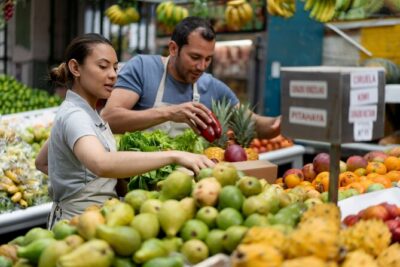
The main event is the 20 de Julio market square, where you spend about one hour and twenty minutes. This is long enough to look beyond the first row of stalls, meet merchants, try fruit, and take in the market at a reasonable pace.
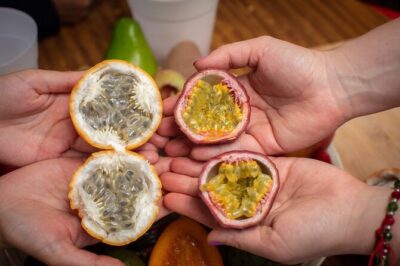
The tour describes the market as a place to sample exotic fruits and other products brought by farmers from different parts of Colombia. The exact items can change, but you can expect the guide to introduce you to local products and explain how the merchants work.
I like the amount of time given to this stop. A market can feel rushed when it is squeezed into twenty minutes. Here, you have room to pause, taste something, ask questions, and watch the plaza’s daily activity.
The market also gives the tour a human focus. You meet members of the plaza community, and they can explain their traditions and share what they know about the products they sell. That direct contact is more useful than simply walking past stalls while a guide names every fruit.
The word exotic can be a little misleading, since a product unfamiliar to you may be an everyday food for someone else. The better approach is to stay curious and ask what you are trying, where it comes from, and how people usually eat it.
The experience is not designed as a full shopping excursion. You may have a chance to purchase something, but the main purpose is tasting and conversation. If you want to buy produce or gifts, carry small Colombian pesos if possible, though the supplied information does not specify accepted payment methods.
Breakfast costs extra, but the tasting is included
Tastings are included in the $53 price. Breakfast is not, and the additional cost is listed as $5. This distinction matters because the market stop takes place in the morning and the tour description presents breakfast as part of the food experience.
You should plan for that extra amount if you want to try different breakfast foods offered by local merchants. The supplied details do not list a fixed menu, so do not book this expecting a specific dish or a restaurant-style meal.
The included tastings add real value, particularly if you are willing to try unfamiliar fruit and market products. Food samples can also make conversation easier. Instead of standing beside a stall with nothing to say, you have a natural reason to ask about flavor, origin, and preparation.
At $53, the tour is not the cheapest way to get from central Bogotá to a market. You are paying for a small group, a guide, transportation, cultural context, and tastings. The value is strongest if you want interpretation and local introductions rather than simply directions to the market.
If you are comfortable exploring markets alone and already know Bogotá’s public transportation system, you could spend less by arranging your own visit. You would, however, give up the organized explanations and introductions to merchants.
A small group makes a difference here
The maximum group size is eight people. That is a strong feature for a market tour, where a large group can block aisles and make conversation awkward.
With eight or fewer participants, you have a better chance to hear explanations, ask about unfamiliar food, and stay connected with the guide. It also helps when the group moves through busy streets or gathers around a stall.
The tour lasts roughly three hours and ten minutes to three hours and thirty minutes. The listed stops add up to about two and a half hours, so the remaining time is likely used for transport and movement between locations. That is normal for a route crossing Bogotá, but you should not expect three and a half hours of continuous walking and tasting.
Most people can participate, and the activity is near public transportation. Still, the experience includes public transit, neighborhood walking, and a market environment. If you need a very quiet route or a tightly controlled schedule, this may not be the best match.
How this tour compares with a standard Bogotá outing
This is not a substitute for a city-center history tour, a museum visit, or a dedicated graffiti walk. It gives you a different kind of information: how faith, food, transport, and neighborhood commerce fit together.
The supplied material also highlights La Candelaria as an outdoor cultural museum, with graffiti, murals, historic buildings, musicians, and Sunday performers. That is useful context, but La Candelaria is not part of this route. Do not book the 20 de Julio tour expecting those specific sights.
Instead, choose this experience for the market and the local setting. You will spend more time with merchants and community members than with major monuments. The payoff is a closer look at Bogotá’s everyday culture.
Who should book this experience?
I would recommend this tour if you want:
- A small group rather than a large bus
- A market visit with tastings
- An introduction to Colombian fruits and farm products
- A look at religious tradition around the Divino Niño
- A neighborhood outside the usual central sightseeing route
- Organized public transportation with the ticket included
It is also a good fit if you have already seen some of Bogotá’s best-known central sights and want a different morning. The tour adds variety to a city visit without requiring a full day outside Bogotá.
I would think twice if you want a polished food tour with a fixed menu, a formal breakfast, or extensive time inside one major attraction. The $5 breakfast supplement and changing market products mean the food portion is flexible rather than standardized.
Booking confirmation is sent within 48 hours, subject to availability. The experience offers free cancellation if you cancel at least 24 hours before the local start time. Changes or cancellations made inside that window are not accepted for a refund.
Should you book the 20 de Julio market tour?
Book it if your idea of a good Bogotá morning includes public transport, a working neighborhood, a respected local sanctuary, and fruit tasting in a real market. The strongest parts are the small group, the long market visit, and the chance to connect Bogotá with the farmers and merchants who supply it.
Skip it if you mainly want La Candelaria, murals, grand architecture, or a restaurant breakfast included in the price. For everyone else, this is a useful three-hour look at a side of Bogotá that many visitors miss. Bring comfortable shoes, allow for the extra $5 breakfast cost, and arrive ready to taste something you may not recognize.
FAQ
How much does the tour cost?
The price is $53 per person.
How long does the experience last?
The tour lasts approximately three hours and ten minutes to three hours and thirty minutes.
Where does the tour start?
It starts at the National Museum TransMilenio station on Ak 7 in Bogotá at 9:00 a.m.
Where does the tour end?
The activity ends back at the meeting point, the National Museum TransMilenio station.
Is transportation included?
Yes. The TransMilenio transportation ticket is included.
Is breakfast included?
No. Breakfast costs an additional $5, while tastings are included.
How large is the tour group?
The activity has a maximum of eight participants.
Just added in Bogota
- Tour of Zipaquirá: Visit the Salt Cathedral and the main squares★ 4.5 · 55 reviews
- Catedral de Sal desde Bogotá en Tren★ 5.0 · 5 reviews
- Botanical Garden Bogotá Private Tour (4 Hrs.)★ 5.0 · 13 reviews
- Zipaquirá and Salt Cathedral Muisca Heritage with Guide – Private★ 4.5 · 23 reviews
- Zipaquira Salt Cathedral★ 4.5 · 12 reviews
- LOCAL GUIDE Zipaquirá PRIVATE TOUR – Salt Cathedral and Salt Oven★ 5.0 · 24 reviews
- Zipaquirá Salt Cathedral: An architectural wonder.★ 4.5 · 24 reviews
- Private Zipaquira Salt Cathedral and Guatavita Lagoon Tour from Bogota★ 4.5 · 44 reviews
Markets, compared.
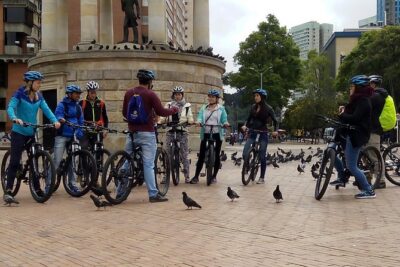
Bike Tour in Bogota Historical Sites and Fruit Market
Read our review →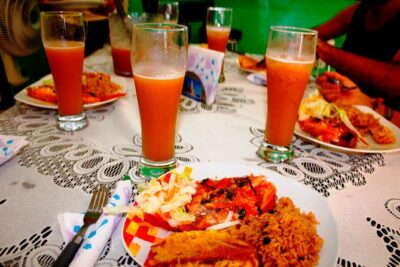
Bazurto Market Tour and Cooking Class in Cartagena
Read our review →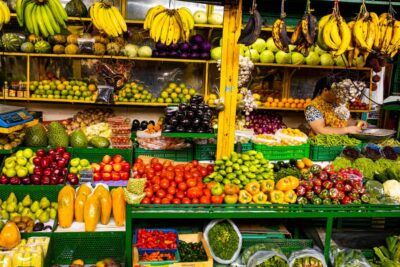
Medellín Multi-sensory Tour in the market, +15 Exotic Fruits
Read our review →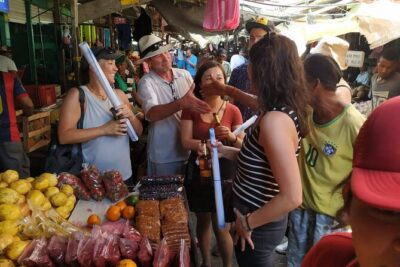
PALOQUEMAO MARKET FOOD TOUR. EXOTIC FRUIT. LOCAL SNACKS. /Min 2 pax
Read our review →
VIP Bogota City Tour: Farmers Market, Monserrate, Candelaria, 9hr
Read our review →Browse the lists this tour appears in