REVIEW · BOGOTÁ TOURS
Ciudad Bolívar & Paraíso Transmicable Social Art Tour
See Bogotá from a different angle. This five-hour trip to Ciudad Bolívar combines a TransMiCable ride, local art, community projects, city views, and a break-dance session in a district working to reshape its future through tourism. I like the way the tour puts local people and their ideas at the center, and I like that your money supports several community roles, from guiding to food preparation and art. The main consideration is comfort: you will walk through hilly areas, climb stairs, and spend time outdoors, so this is not a soft sightseeing outing.
The tour costs $128 per person and includes shared hotel or hostel transport, cable-car tickets, a local guide and translator, a snack, a small gift, and the dance activity. I see it as a good choice if you want to understand Bogotá beyond its historic center, though anyone seeking polished monuments, long free time, or a standard city tour may find the social focus more demanding than expected.
In This Review
- Key points to know before you go
- Why Ciudad Bolívar makes a meaningful half-day trip
- Starting at Portal Tunal and riding TransMiCable
- Arriving at El Paraíso station
- El Mirador and the southwest view of Bogotá
- Illimani Park and public space that serves families
- Brisas del Volador, La Serpiente, and the uphill walk
- The huerta and local ideas about food and work
- Break dancing, music, and the human side of the visit
- How the community model affects your experience
- Is $128 a fair price?
- Who will enjoy this Ciudad Bolívar tour?
- Should you book the Paraíso Social Art Tour?
- FAQ
- Where does the Ciudad Bolívar tour take place?
- How long does the tour last?
- What is the price?
- Is transportation from my hotel included?
- Is the TransMiCable ticket included?
- What languages are available?
- What places are visited?
- Is a snack included?
- Is a break-dance activity included?
- Is the tour suitable for wheelchair users or pregnant women?
Key points to know before you go
- The TransMiCable is part of the story: You ride the cable car as a daily mobility system used by people in Ciudad Bolívar, not simply as a sightseeing ride.
- Paraíso offers a different view of Bogotá: El Mirador looks across the city from the southwest, giving you a sense of the district’s scale and position.
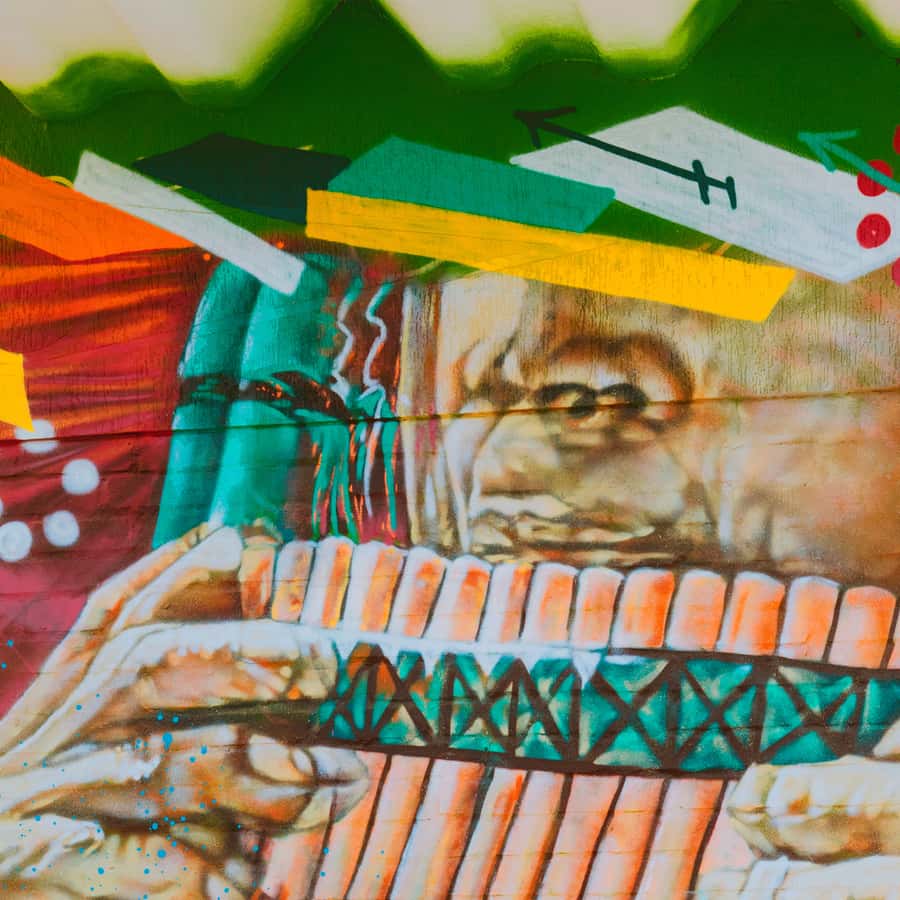
- Local art carries a message: Murals, colorful stairs, music, souvenirs, and dance show how creative work can support a new public identity.
- Illimani Park is social infrastructure: Parks, soccer fields, and shared public areas show how investment can change daily life for working families.
- The tour pays attention to local workers: Guides, artists, snack makers, and performers are involved in the experience and its income.
- Expect active touring: Comfortable shoes, sunscreen, drinks, and clothes suited to walking are important.
Why Ciudad Bolívar makes a meaningful half-day trip
Ciudad Bolívar is not presented as a polished postcard district. It is an area shaped by social and economic challenges, along with local efforts to create more opportunity. That context matters because the tour is not only about looking at murals or riding a cable car. It asks you to consider how transport, public parks, small businesses, art, and community action can work together.
I appreciate this approach. Many city tours show you what is already famous. This one looks at a part of Bogotá that is trying to become known for something new: inclusive social tourism built with local participation. You are not simply observing a neighborhood from a vehicle. You are walking through spaces where residents, artists, families, and entrepreneurs are trying to change how the area is understood.
That does not mean the tour hides difficult subjects. Social conflict and economic pressure are part of the setting. The visit is best approached with respect and curiosity, not as a poverty spectacle. The emphasis is on talent, work, public improvements, and community-led ideas.
More things to do in Bogota:
- Bogotá Bike Tour
★ 5.0 · 3,329 reviews - Bogota: Bicycle City Tour
★ 4.9 · 2,156 reviews - Zipaquirá: Salt Cathedral Group Tour with Pickup
★ 4.8 · 1,606 reviews
Starting at Portal Tunal and riding TransMiCable
The day begins with pickup in Bogotá, using shared transportation from your hotel or hostel. The exact pickup details and starting time depend on availability, so you should check those when booking. From there, the group heads toward Portal Tunal for the TransMiCable experience.
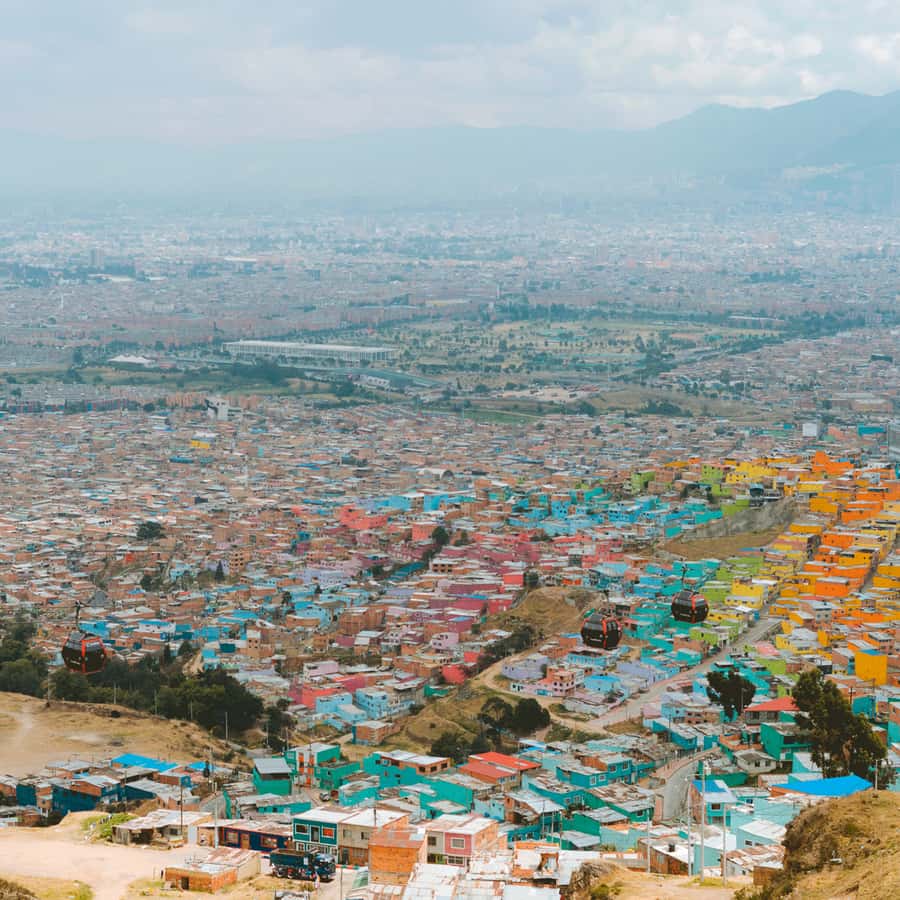
The cable car is an important part of the tour’s purpose. In many cities, a cable car is sold as a scenic ride. Here, it is also a mobility solution for residents of the area. The system connects Ciudad Bolívar with the wider transport network and helps make daily movement easier for people living on the city’s southwestern hills.
That gives the ride more meaning than a quick photo stop. As you travel above the city, you can think about the difference between transport built only for visitors and transport that serves local working families every day. You will also get a broad view of the built-up hills and the size of Ciudad Bolívar.
The ride itself is likely to be one of the most memorable parts of the experience, especially if you have only seen Bogotá from central neighborhoods. Still, do not expect a long private cable-car ride. This is shared public transport, and the tour uses it as part of a larger visit.
Arriving at El Paraíso station
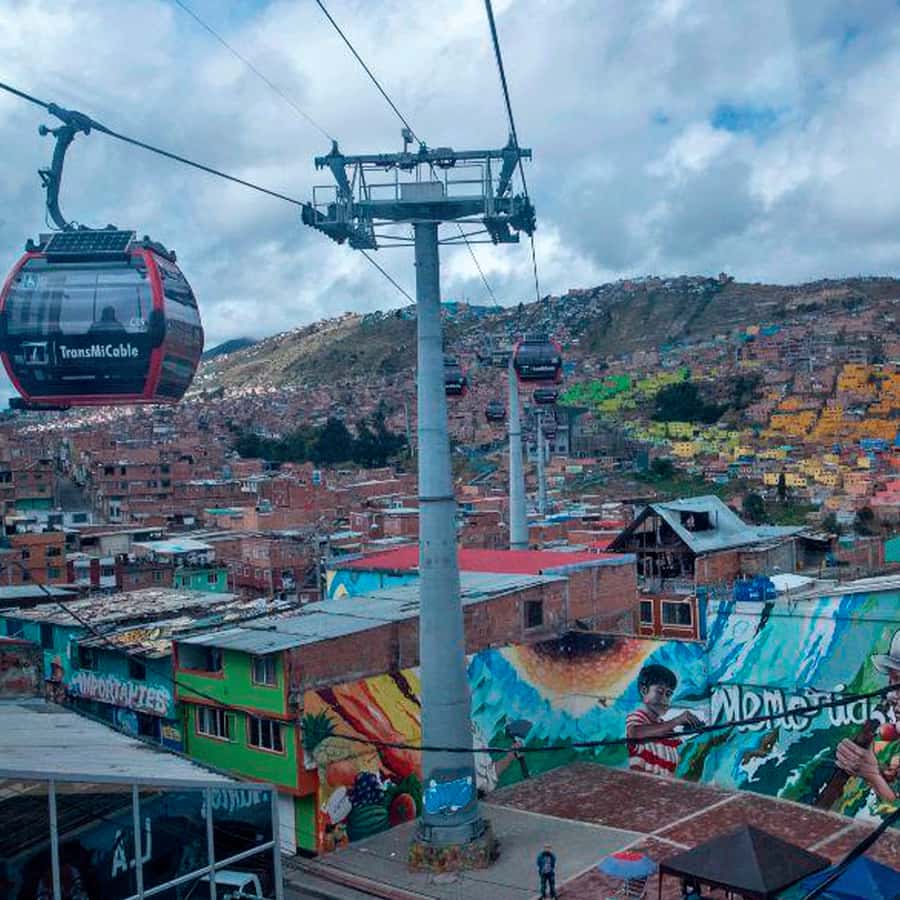
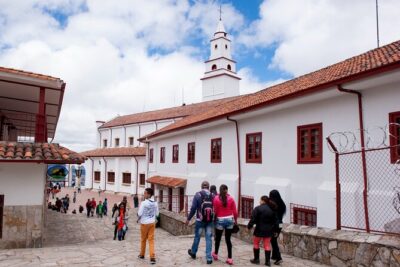
The cable car brings you to El Paraíso station, the gateway to the walking portion of the tour. The station is more than a transfer point. It places you directly in a neighborhood where local tourism projects are being developed by people who believe visitors can help support positive change.
You will begin to see the mix of street art, music, color, and everyday life that defines the visit. The tour does not treat art as decoration added for tourists. It presents creative work as a way for local residents to express ideas about identity, hope, opportunity, and the future.
A guide and translator lead the group in Spanish and English. Since this is a shared tour, you may meet people from different places and backgrounds. That group format keeps the experience social, but it also means you will have less control over the pace than on a private tour.
El Mirador and the southwest view of Bogotá
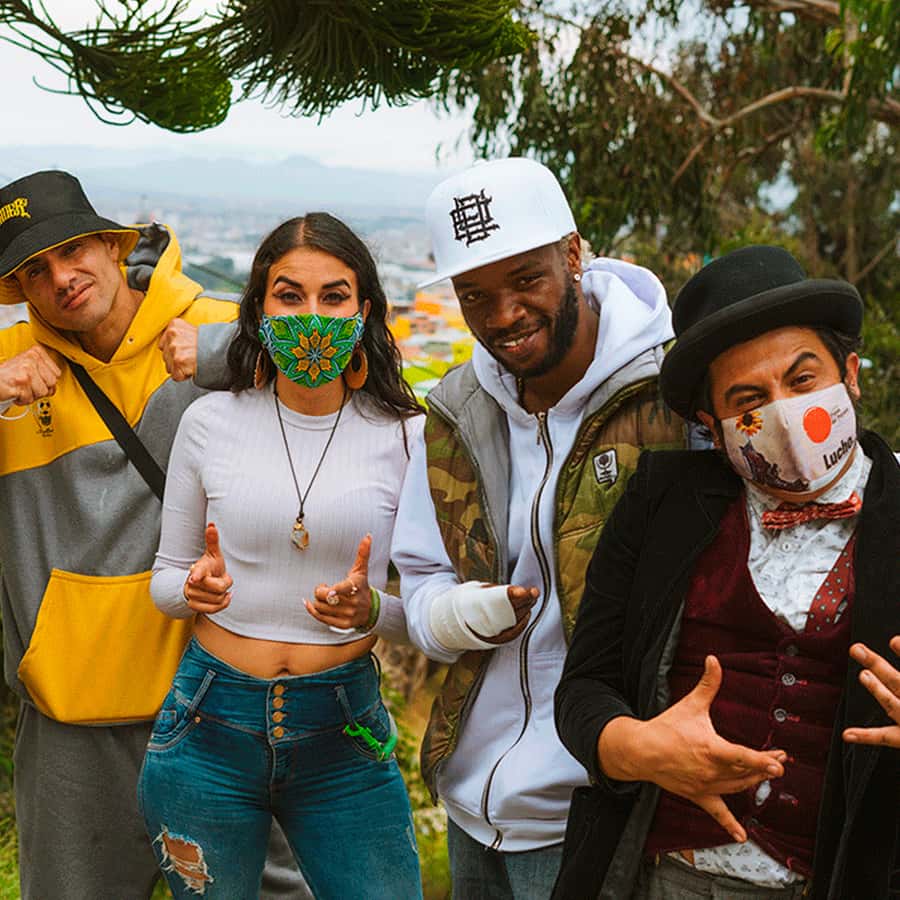
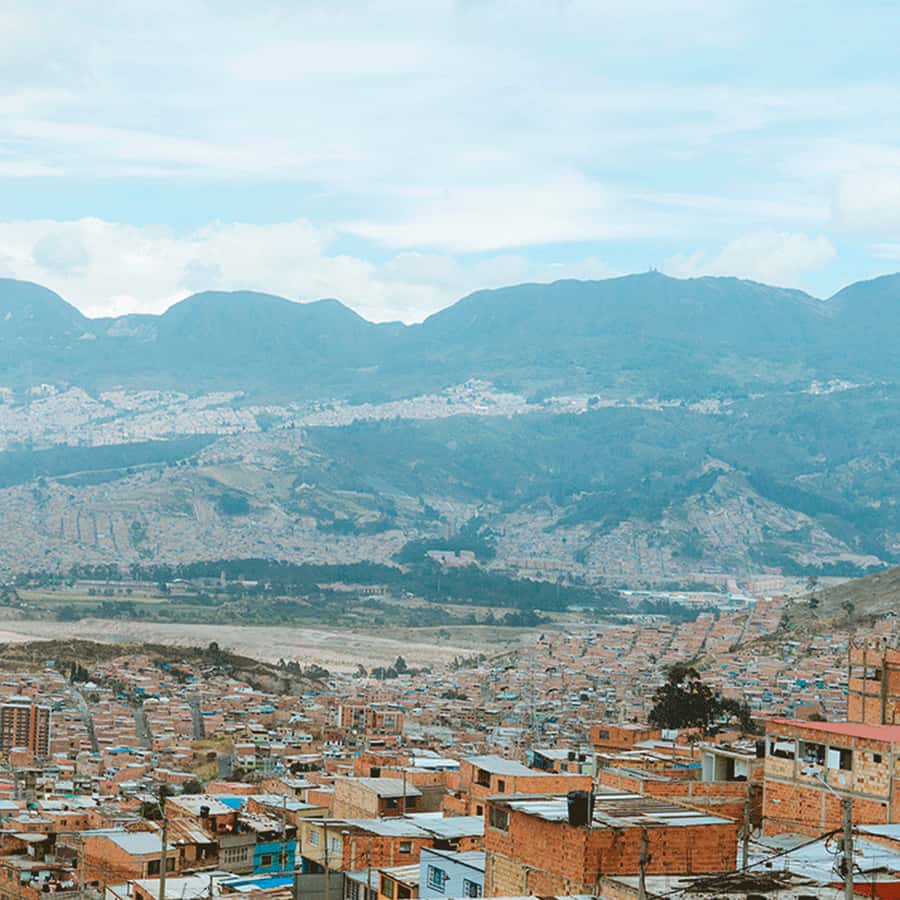
One of the walking stops is El Mirador, a viewpoint on the southwest side of Bogotá. From here, you can appreciate the size of Ciudad Bolívar and see how the district relates to the wider capital.
This is a useful place to pause. A map can tell you where Ciudad Bolívar is, but a high view shows you the physical scale of the city and the density of its neighborhoods. It also helps explain why transport matters so much in a hilly district. The TransMiCable is not crossing a small scenic valley. It is linking a large urban area with the rest of Bogotá.
Bring a camera if you like city views, but keep your attention on the guide as well. The point is not only the panorama. The viewpoint supports the larger story about access, urban growth, and how local people see their own home.
The outdoor setting brings a few practical concerns. Sun exposure can be strong, and weather in Bogotá can change. Sunscreen, water, and comfortable clothes are listed as essentials for good reason.
A completely different kind of day:
- La Candelaria, Monserrate and Museums Bogotá Private City Tour
★ 5.0 · 1,567 reviews - Shared Tour of the Historic Candelaria in Bogotá
★ 5.0 · 1,551 reviews - Bogotá: Guided La Candelaria Walking Tour
★ 4.8 · 1,229 reviews - Graffiti Tour: a fascinating walk through a street art City
★ 5.0 · 1,074 reviews
Illimani Park and public space that serves families
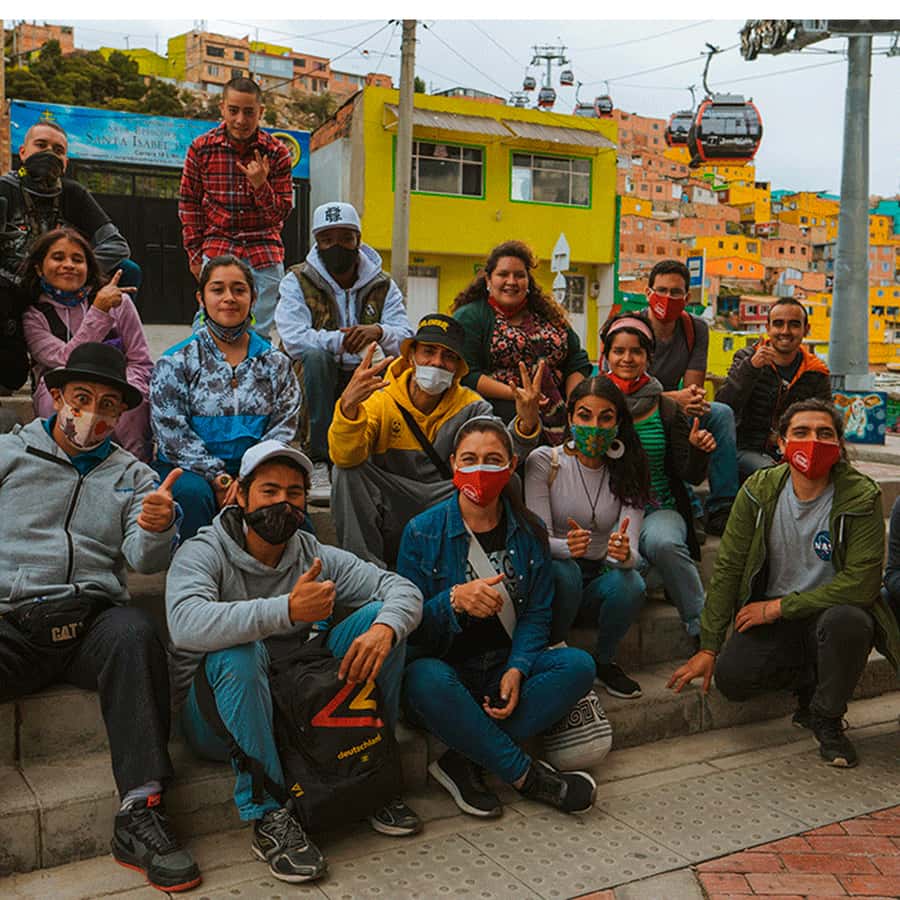
The tour continues to Parque Illimani, described as a major piece of social infrastructure in the area. Its parks and soccer fields give residents public places for recreation, sport, and community life.
I find this stop valuable because it shifts the focus from art alone to the physical changes that affect daily routines. A mural can change how a street feels. A park can change how families use their neighborhood. Soccer fields and open areas give children and adults room to gather without needing to spend money.
You will also hear about the urban development projects helping reshape Ciudad Bolívar. The tour connects those projects with local working families and the opportunities they hope to build. This is where the experience moves beyond a simple art walk. You are looking at how public investment and community action can support one another.
Parque Illimani may not appeal to someone who wants a famous attraction with a long list of historical dates. Its value is practical. It shows how a city can improve a district by investing in places people use every day.
Brisas del Volador, La Serpiente, and the uphill walk
Another part of the route includes Brisas del Volador and the colorful stairway known as La Serpiente. The stairs have 120 steps and offer another way to see the size of Ciudad Bolívar.
This section requires the most physical effort. You should wear shoes with good support and expect an active walk rather than a flat stroll. The stairs also give you time to notice how color and art are used in an ordinary urban setting. Instead of placing all creative work inside a museum, the community has made the route itself part of the visit.
As you climb, you may find that the stairs are as useful for understanding the neighborhood as the viewpoint. They connect practical movement with public art. The bright design gives the route character, while the climb reminds you that daily life in a hilly district can require real effort.
Because the tour includes stairs and uneven walking areas, it is not suitable for wheelchair users. Pregnant women are also listed as unsuitable for the activity. If you have concerns about walking or climbing, this is the right detail to consider before paying.
The huerta and local ideas about food and work
The route also includes a huerta, or vegetable garden, promoted by local families. This small detail adds another layer to the tour. The visit is not limited to murals and public works. It also includes a local effort tied to food, family participation, and self-reliance.
A community garden may seem modest beside the city view or cable car, but that is precisely why it matters. The tour asks you to notice the many forms that local development can take. A large transport project, a public sports area, a stairway artwork, and a family-supported garden can all be part of the same effort to create a stronger neighborhood.
The garden also connects with the people who prepare the snack included in the tour. Food is not an afterthought here. A local mother is part of the community network involved in welcoming visitors and creating income through the experience.
Do not expect a full meal. Drinks and extra food are not included, so you should carry water and plan accordingly. The snack is a small part of a much larger community exchange.
Break dancing, music, and the human side of the visit
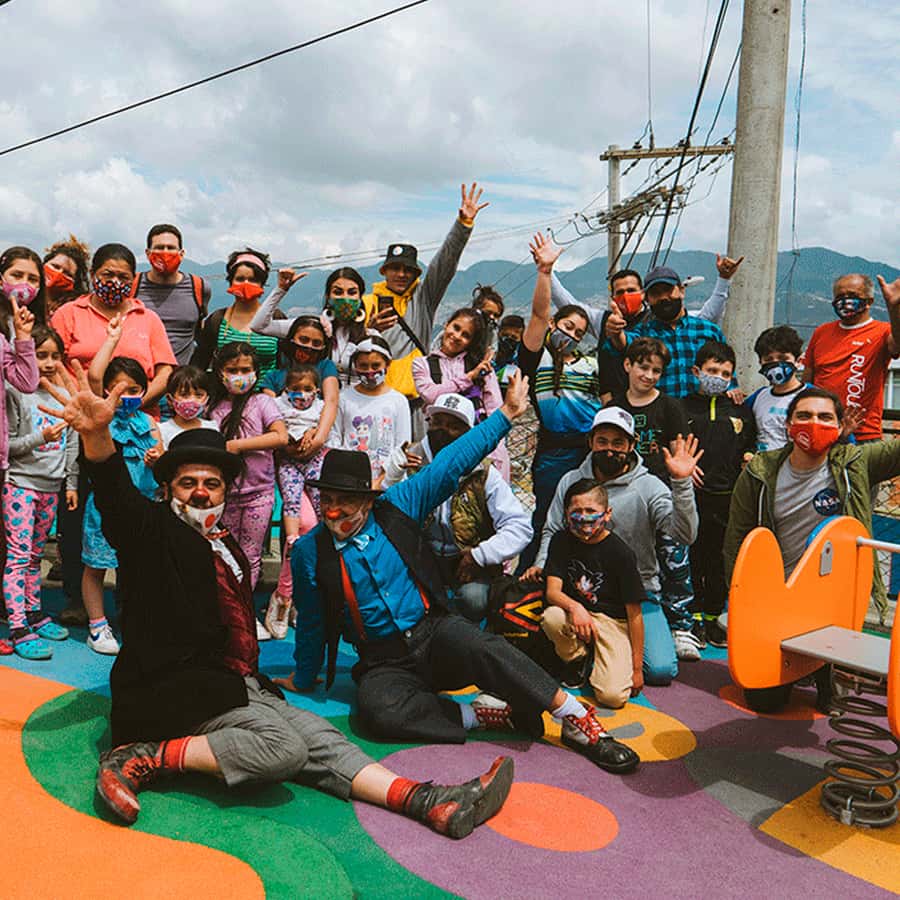
The tour includes a break-dance lesson and show. A local break dancer takes part in the program, giving you a chance to see performance as both art and community work.
The activity helps break up the walking and discussion. It also gives the tour a direct, participatory moment. You are not only looking at street art from a distance. You can see how movement, music, and performance create energy and confidence.
You do not need to be an experienced dancer. The lesson is included as part of the social experience, not as a serious dance class. If you prefer quiet sightseeing, this may feel outside your usual routine. I see that as a strength for most people, since it gives the visit a personal and playful element.
The performance also supports the wider theme: local talent can create pride, connection, and economic opportunity. Along with the guide, artist, and snack maker, the dancer helps show how a tour can distribute value among several members of the community.
How the community model affects your experience
The tour involves local people in several roles. A community guide explains the area. A translator helps bridge languages. A local artist creates souvenirs. A mother prepares snacks. A break dancer teaches and performs.
That structure is one of the strongest reasons to consider the tour. You are paying for more than transport and sightseeing. You are helping support a local network built around tourism as a tool for change. The experience gives residents a way to share what they know and what they make, rather than having the neighborhood described only by outsiders.
You should also keep your expectations realistic. Community tourism does not remove the social problems that the tour discusses. You may see unfinished areas, economic hardship, or signs of uneven urban development. The goal is not to pretend everything has been fixed. It is to show the work already being done and the people trying to shape what comes next.
That balance makes the tour more credible. It offers hope without turning the neighborhood into a simple feel-good story.
Is $128 a fair price?
At $128 per person, this is not a cheap cable-car ride. The price includes shared transportation to and from your hotel or hostel, TransMiCable tickets, a local guide, an English or Spanish translator, a snack, a surprise gift, and the break-dance lesson and show.
The value depends on what you want from Bogotá. If you are only looking for transport, a viewpoint, or a short street-art walk, you can likely spend less elsewhere. But this is a five-hour guided experience with several community participants and transportation arranged for you. The price also helps pay for local work that is central to the tour.
I consider it fair for someone who wants context and direct community contact, especially if you would not feel comfortable arranging this route alone. The shared format helps keep it from becoming a fully private, high-priced excursion, though it also means you will not have an exclusive guide.
Extra food, drinks, souvenirs, and unlisted entrances are not included. The tour makes clear that it will not take you to places with sudden extra charges, which helps keep the cost predictable.
Who will enjoy this Ciudad Bolívar tour?
I would recommend it to you if you enjoy urban culture, public art, social issues, local entrepreneurship, and guided walks that explain how a city is changing. It suits people who want to see a less familiar part of Bogotá and are willing to listen as well as take photographs.
It is especially useful if you want to understand the role of the TransMiCable in local life. The cable car, parks, gardens, stairs, and art all make more sense when viewed together.
You may want a different activity if you prefer museums, colonial buildings, or a relaxed schedule with little walking. The tour is not suitable for wheelchair users or pregnant women, and it is not designed as a food tour or a private luxury outing.
For the best experience, bring:
- Comfortable walking shoes
- Comfortable clothes
- Sunscreen
- Drinks or water
- Space for a small souvenir
Free cancellation is available up to 24 hours in advance, and you can reserve now while paying later. The tour runs for five hours, with start times based on availability.
Should you book the Paraíso Social Art Tour?
Book it if you want Bogotá to feel larger than its central sights. The TransMiCable ride, El Mirador, Illimani Park, La Serpiente, the huerta, and the dance session create a varied half-day, while the local participants give the visit a clear purpose.
Skip it if you want a purely scenic outing, a private guide, or an easy route with no stairs. For the right visitor, though, this is an unusually direct way to see how art, transport, public space, and community action are shaping Ciudad Bolívar. Its greatest value is not one single attraction. It is the chance to see a neighborhood working toward a different future, with local people doing the explaining and the creating.
FAQ
Where does the Ciudad Bolívar tour take place?
The experience visits the Paraíso neighborhood in Ciudad Bolívar, in the Bogotá region of Colombia.
How long does the tour last?
The tour lasts five hours.
What is the price?
The listed price is $128 per person.
Is transportation from my hotel included?
Yes. Shared transportation to and from your hotel or hostel is included.
Is the TransMiCable ticket included?
Yes. The TransMiCable ticket is included in the tour price.
What languages are available?
The tour is available with a live guide in Spanish and English.
What places are visited?
The route includes the Bogotá cable car, El Paraíso station, Illimani Park, Brisas del Volador, and the return cable-car ride. The walking experience also includes locations described as El Mirador, La Serpiente, and a local huerta.
Is a snack included?
Yes. A snack and a surprise gift are included. Drinks, additional food, and extra souvenirs are not included.
Is a break-dance activity included?
Yes. The tour includes a break-dance lesson and show.
Is the tour suitable for wheelchair users or pregnant women?
No. The activity is listed as unsuitable for wheelchair users and pregnant women. Comfortable shoes are recommended because the tour includes walking and a 120-step stairway.
Just added in Bogota
- Tour of Zipaquirá: Visit the Salt Cathedral and the main squares★ 4.5 · 55 reviews
- Catedral de Sal desde Bogotá en Tren★ 5.0 · 5 reviews
- Zipaquirá and Salt Cathedral Muisca Heritage with Guide – Private★ 4.5 · 23 reviews
- Botanical Garden Bogotá Private Tour (4 Hrs.)★ 5.0 · 13 reviews
- Zipaquira Salt Cathedral★ 4.5 · 12 reviews
- LOCAL GUIDE Zipaquirá PRIVATE TOUR – Salt Cathedral and Salt Oven★ 5.0 · 24 reviews
- Zipaquirá Salt Cathedral: An architectural wonder.★ 4.5 · 24 reviews
- Private Zipaquira Salt Cathedral and Guatavita Lagoon Tour from Bogota★ 4.5 · 44 reviews
Bogotá Tours, compared.
Zipaquirá: Salt Cathedral Group Tour with Pickup
Read our review →
La Candelaria, Monserrate and Museums Bogotá Private City Tour
Read our review →
Shared Tour of the Historic Candelaria in Bogotá
Read our review →
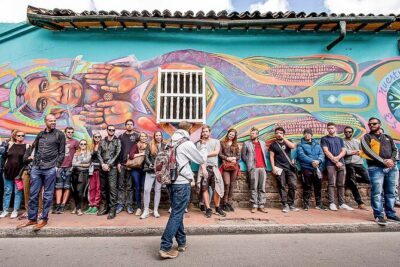
Graffiti Tour: a fascinating walk through a street art City
Read our review →