REVIEW · BOGOTÁ TOURS
Breaking Borders: Bogota Gansters Story
Some tours change how you see a city. Breaking Borders takes you from Chorro de Quevedo into Barrio Egipto, where former gang members explain their past and the community’s hard work toward peace. I like the direct access to local voices, and I like that your visit supports a real social-change project rather than simply showing you another set of murals. The main consideration is that the stories involve violence, drugs, poverty, and personal loss, so this is not a light sightseeing walk.
I also appreciate the small details, such as the traditional chicha drink, local snack, football field, and graffiti that tells Egipto’s story. Guides such as Gigio, Raul, Harold, Monkey, and Gildardo Arango have received especially warm praise for their honesty and care. You should also know that the steep walk into the neighborhood can be demanding, and the experience may feel rushed if you want long conversations at every stop.
In This Review
- Key points before you book
- Starting at Chorro de Quevedo in La Candelaria
- Entering Egipto with local voices
- What the murals reveal about Barrio Egipto
- The church and football field
- A snack, chicha, and possible community purchases
- How much value do you get for $91?
- Safety, comfort, and the right frame of mind
- Who will enjoy Breaking Borders most?
- Should you book this Bogotá social-change tour?
- FAQ
- Where does Breaking Borders begin?
- Where does the experience end?
- How long does the tour last?
- Is hotel pickup included?
- What languages are available?
- Who leads the visit in Barrio Egipto?
- Is food included?
- Can children join the tour?
- What should I bring?
Key points before you book
- Former gang members lead the conversation: You hear firsthand accounts of gang life, violence, and the choice to build a different future.
- Chorro de Quevedo begins the story: The tour starts at the traditional founding place of Bogotá before climbing toward Egipto.
- Graffiti works like a history book: Murals explain the neighborhood’s people, pain, and hopes through local art.
- The football field represents change: This community space reflects a growing focus on children, youth, and safer choices.
- Private transport is optional: Hotel pickup and drop-off are included only when you select the transportation option.
- Bring cash and sturdy shoes: You may want money for personal purchases and tips, and the uphill streets call for comfortable footwear.
Starting at Chorro de Quevedo in La Candelaria
The meeting point is Plazoleta Chorro de Quevedo, at Cl. 12b #2-98 in Bogotá’s La Candelaria district. This is a useful place to begin because it gives you the city’s traditional origin story before the tour moves into a neighborhood that many standard city walks skip.
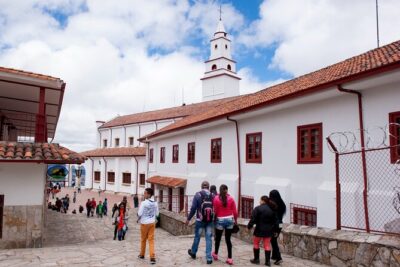
You meet your bilingual guide here, learn about the Breaking Borders project, and then head toward the Iglesia de Egipto, or Church of Egipto. The church sits at the entrance to Barrio Egipto and is also tied to the neighborhood’s January 6 festivities.
The opening hour is more than a warm-up. It sets up the contrast at the heart of the experience: La Candelaria is a familiar stop for visitors, while Egipto rises just beyond it on the hills. You are not crossing to a distant suburb. You are moving only a short distance from the city’s well-worn sightseeing route into a community with a very different public image.
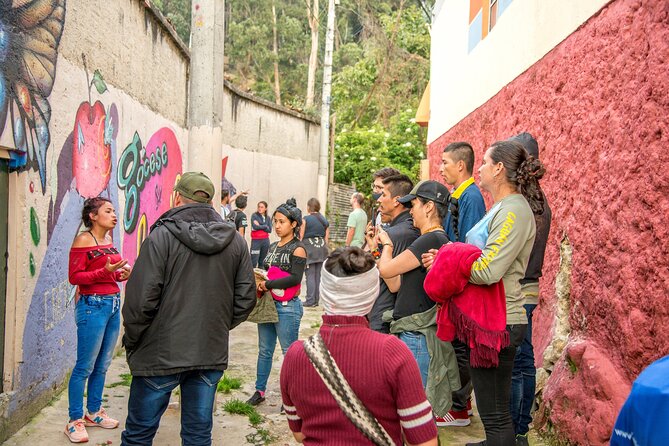
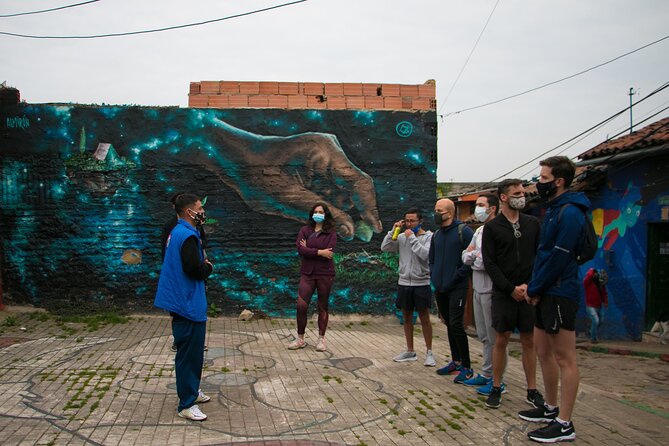
The walk includes streets covered with murals and graffiti. Your guide explains the meaning behind the images and connects them to the lives of local people. This makes the art easier to understand. Instead of treating graffiti as background decoration, you see it as a record of conflict, identity, and change.
One practical point matters here: the route climbs. One person found that arriving by taxi at the square meant facing a steep walk upward and suggested that meeting closer to the church might be easier. The official meeting place remains Chorro de Quevedo, so wear shoes with a firm sole and allow yourself time to get there.
More things to do in Bogota:
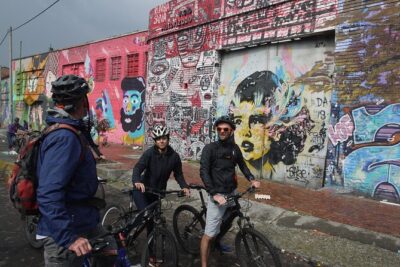
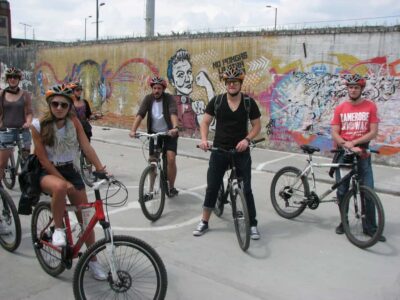
- Bogotá Bike Tour
★ 5.0 · 3,329 reviews - Bogota: Bicycle City Tour
★ 4.9 · 2,156 reviews - Zipaquirá: Salt Cathedral Group Tour with Pickup
★ 4.8 · 1,606 reviews
Entering Egipto with local voices
The main portion of the tour lasts about two hours in Egipto. You climb the hills, walk through the neighborhood, and hear about the years when drugs, weapons, and gang control shaped everyday life.
The strongest part is the human context. Your personal guide from Egipto may speak about joining a gang, the pressures that kept people involved, and the reasons for leaving. Former gang leaders and members have shared these accounts with visitors, including Harold, Monkey, and a guide known as Mr. Pumpkin. Names and exact guide assignments can vary, but the central idea remains the same: you hear about the neighborhood from people who lived through its worst period and are now working to change its direction.
That personal contact gives the walk a seriousness that a normal crime-history presentation cannot match. You are not being shown a problem from the outside. You are listening to people who describe the cost of violence and the work required to break its cycle.
The tone is not simply gloomy. One former gang member described his new life as feeling relaxed, with Friday nights once marked by drinking, drugs, and violence now replaced by family movie nights for the neighborhood. A young person connected with the organization hoped to study and become an English-speaking guide. Those details give the social project a human scale. Change is not an abstract slogan here. It involves children, family routines, work, and new ambitions.
At the same time, you should approach this visit with respect. Egipto is a functioning residential community, not a stage set for crime stories. Listen carefully, ask thoughtful questions, and avoid treating personal hardship as entertainment. The best attitude is curiosity without gawking.
What the murals reveal about Barrio Egipto
The graffiti is one of the tour’s most useful tools. The murals illustrate local history and help your guide explain how people remember the neighborhood. Their meaning comes through the stories attached to them, so the quality of the explanation matters as much as the artwork itself.
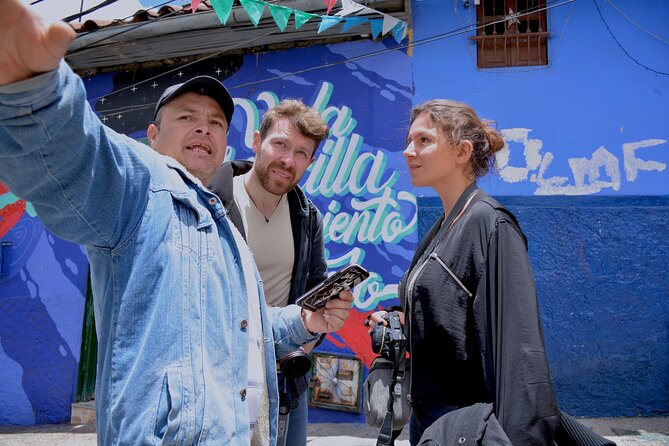
Guides such as Gigio and Raul have been praised for translating, answering questions, and adding context. That is especially helpful if you do not speak Spanish. The experience includes an English and Spanish guide, but the exact balance of languages may depend on your group and guide.
You will see how public art can help a community tell a new story about itself. The murals do not erase the violence of the past. Instead, they place that past beside images of identity, hope, and renewal. I find this more useful than a polished presentation that only celebrates progress.
The route also gives you a closer look at the physical setting of Egipto. The neighborhood sits on the hills, and the climb helps explain why it can feel separate from the more affluent parts of Bogotá below. One comment captured the contrast between the community and the wealthier life across the main road. That contrast is important, but it should not become the only way you see Egipto. The neighborhood is not merely a symbol of inequality. It is also a place where people work, raise families, create art, and organize for the future.
The church and football field
The Iglesia de Egipto is a key point near the neighborhood entrance. It anchors the community both physically and culturally, and the January 6 festivities take place around this area. The church also gives you a clear point of reference as the route moves from La Candelaria toward the upper streets.
The new community football field is another important stop. It represents the effort to give young people safer activities and better choices. A football field may sound ordinary, but here it reflects a larger aim: changing the social fabric by investing in children and youth.
This is where the tour shifts from describing past danger to showing practical work in the present. You see how a shared space can support relationships and offer an alternative to gang control. The field does not solve every economic or social problem, and the guides are open about the fact that the project still needs support. That honesty makes the visit more credible.
Families can find value in this part of the tour, especially if older children are ready to discuss poverty, crime, and social responsibility. Children must be accompanied by an adult, and parents should decide if the darker parts of the story are suitable for their family.
A completely different kind of day:
- La Candelaria, Monserrate and Museums Bogotá Private City Tour
★ 5.0 · 1,567 reviews - Shared Tour of the Historic Candelaria in Bogotá
★ 5.0 · 1,551 reviews - Bogotá: Guided La Candelaria Walking Tour
★ 4.8 · 1,229 reviews - Graffiti Tour: a fascinating walk through a street art City
★ 5.0 · 1,074 reviews
A snack, chicha, and possible community purchases
The experience includes a local snack and traditional chicha. Chicha is a fermented local drink, and it gives you a small taste of Colombian food culture within the wider community story. Alcoholic drinks are not included, although they may be available to purchase, so do not confuse the included chicha with a full meal or lunch.
Food is limited. Lunch is not included, and the tour information advises bringing cash for personal expenses. If you want to buy a local item or leave a tip, Colombian pesos will be useful.
One account also described a weaving workshop where visitors could buy a hand-loomed rug directly from local women. That stop may not be part of every departure, so I would treat it as a possible addition rather than a guaranteed feature. If it is offered, take time to ask how the purchase supports the makers. One person felt this section was rushed and wished for more time to talk with the women.
You may also encounter music or performance. One private visit ended with a freestyle rap created for the group. Again, this should not be treated as a fixed promise, but it shows the kind of personal exchange that can make the experience memorable.
How much value do you get for $91?
The listed price is $91 per person, with an approximate duration of three hours. For that amount, you receive a bilingual guide, a local Egipto guide, a snack, chicha, and, if selected, private hotel transportation.
The value depends on what you want from Bogotá. If you are looking for a low-cost walking tour focused on major sights, this will seem expensive. If you want a private or small-group experience with personal testimony, local interpretation, and a direct contribution to a community project, the price is easier to justify.
Transportation adds practical value, especially if you are staying outside La Candelaria or prefer not to arrange your own ride. Check the option you select carefully, because hotel pickup and drop-off are not included in every booking. Without that option, you meet at Chorro de Quevedo and return there at the end.
Solo visitors should also check the final price closely. One person paid much more than the advertised starting figure because of a single-person supplement and felt the price was not clearly presented. The listed $91 is per person, but the total can vary by group size and selected transport. Review the checkout total before paying.
Plan extra cash for tips. Several people wanted to give more to the former gang members and guides after hearing their stories. Tipping is optional, but carrying some money lets you respond as you choose.
Safety, comfort, and the right frame of mind
The experience is private, meaning only your group participates. That can make the conversation more personal and gives you more room to ask questions. It also means the cost may be higher for one person than for a group sharing the price.
The tour is near public transportation, and service animals are allowed. Most people can participate, but the uphill streets and walking time may challenge anyone with mobility concerns. No special fitness level is stated, so the sensible plan is to wear comfortable clothes and shoes and discuss any concern with the operator before booking.
Safety is a natural question when a tour focuses on a neighborhood once associated with weapons and gang activity. The strongest available indication is that people felt safe during the walk and appreciated the guides’ care. Still, use normal city awareness, follow local instructions, and do not wander away from the group.
You should also be emotionally ready. The stories concern loss, violence, limited education, poverty, drugs, and the struggle to change. The experience can be inspiring, but it is not carefree. I would schedule it when you have time afterward to think about what you heard rather than rushing straight to another attraction.
Who will enjoy Breaking Borders most?
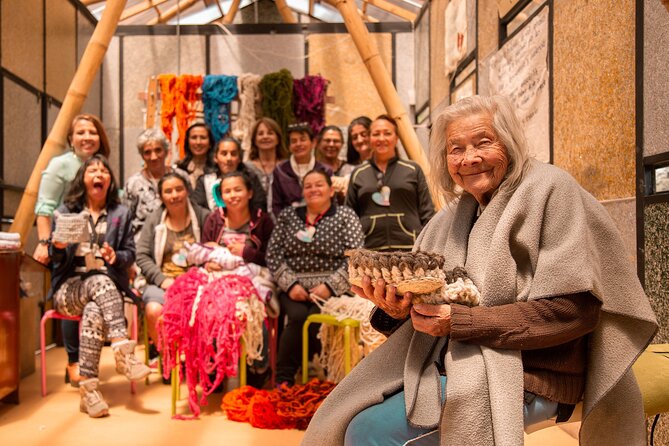
I recommend this experience to people who want to understand Bogotá beyond its postcard sights. It suits you if you prefer local voices, social history, public art, and honest conversation over a checklist of monuments.
It is also a good choice for families with older children, couples, solo visitors, and anyone interested in responsible tourism. The visit gives you a way to support former gang members and local efforts while learning about the forces that shaped the neighborhood.
It may not suit you if you want a relaxed food tour, a short photo stop, or a polished account of Bogotá’s past. The emotional subject matter is central, not a side note. You also need to accept that the pace may vary, especially if the group spends time talking with former gang members or visiting a workshop.
The tour has a perfect five-star rating from 62 reviews and is recommended by all listed participants. That level of praise fits the experience’s strongest qualities: personal guides, honest stories, a feeling of safety, and the chance to see real work under way. Still, the practical complaints are worth taking seriously. The climb can be steep, a craft visit may feel rushed, and solo pricing deserves a close look.
Should you book this Bogotá social-change tour?
Book Breaking Borders if you want a meaningful, direct look at Barrio Egipto and are willing to listen to difficult stories with respect. I especially recommend it if you have already seen La Candelaria’s churches and plazas and now want to understand the city’s social divisions and local efforts to change them.
Before booking, confirm the final price, decide if you need hotel transportation, wear good shoes, and bring cash for tips or personal purchases. The tour offers more than a view of a neighborhood. It gives you a chance to meet people who are trying to turn a painful past into a safer future.
Free cancellation is available if you cancel at least 24 hours before the start time. Changes or cancellations made less than 24 hours ahead are not accepted for a refund.
FAQ
Where does Breaking Borders begin?
The tour begins at Plazoleta Chorro de Quevedo, located at Cl. 12b #2-98 in La Candelaria, Bogotá.
Where does the experience end?
The activity ends back at the Chorro de Quevedo meeting point.
How long does the tour last?
The experience lasts approximately three hours. The first portion takes about one hour, followed by about two hours in Egipto.
Is hotel pickup included?
Private transportation to and from your hotel is included only if you select the transportation option when booking.
What languages are available?
The experience includes a bilingual expert guide who speaks English and Spanish.
Who leads the visit in Barrio Egipto?
You are accompanied by a personal guide from the Egipto neighborhood. Former gang members and local project members share their experiences as part of the visit.
Is food included?
A local snack and traditional chicha drink are included. Lunch and other food or drinks are not included unless specifically stated.
Can children join the tour?
Yes. Children must be accompanied by an adult.
What should I bring?
Wear comfortable clothes and shoes, and bring cash for personal expenses, purchases, or optional tips.
Just added in Bogota
- Tour of Zipaquirá: Visit the Salt Cathedral and the main squares★ 4.5 · 55 reviews
- Catedral de Sal desde Bogotá en Tren★ 5.0 · 5 reviews
- Zipaquirá and Salt Cathedral Muisca Heritage with Guide – Private★ 4.5 · 23 reviews
- Botanical Garden Bogotá Private Tour (4 Hrs.)★ 5.0 · 13 reviews
- Zipaquira Salt Cathedral★ 4.5 · 12 reviews
- LOCAL GUIDE Zipaquirá PRIVATE TOUR – Salt Cathedral and Salt Oven★ 5.0 · 24 reviews
- Zipaquirá Salt Cathedral: An architectural wonder.★ 4.5 · 24 reviews
- Private Zipaquira Salt Cathedral and Guatavita Lagoon Tour from Bogota★ 4.5 · 44 reviews
Bogotá Tours, compared.
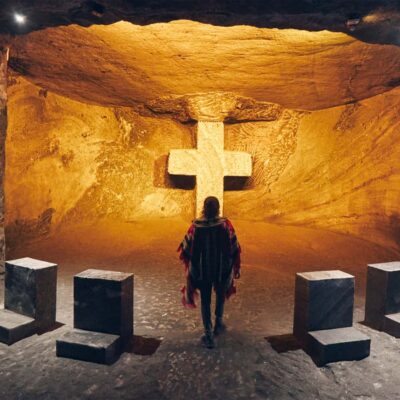
Zipaquirá: Salt Cathedral Group Tour with Pickup
Read our review →
La Candelaria, Monserrate and Museums Bogotá Private City Tour
Read our review →
Shared Tour of the Historic Candelaria in Bogotá
Read our review →
Graffiti Tour: a fascinating walk through a street art City
Read our review →