REVIEW · BOGOTÁ TOURS
Armed Conflict and Violence Tour in Bogotá, Colombia
History can change a city forever. This two-hour, 15-minute walking tour connects Bogotá’s streets and squares with Colombia’s armed conflict, political violence, journalism, drug cartels, and hopes for peace. I like that it focuses on personal local insight rather than simply pointing out old buildings. I also like the low $12 price, which makes serious historical context accessible without a costly museum program.
The main consideration is that this is an outdoor walking experience covering emotionally difficult subjects. The tour has a small but not tiny maximum of 20 people, and one serious scheduling complaint involved a participant and the operator disagreeing about whether the meeting took place. Confirm your meeting details carefully and arrive early.
In This Review
- Key points to know before booking
- Why this Bogotá tour is different
- Starting at Parque de los Periodistas
- Jorge Eliécer Gaitán and the Bogotazo
- Chorro de Quevedo and Bogotá’s beginnings
- Cartels at the Banco de la República museums
- The former presidential palace and Colombia’s government
- Plaza de Bolívar and the center of power
- Gabriel García Márquez and cultural memory
- What the $12 price really gets you
- Language, group size, and walking demands
- One important booking warning
- Who should book this experience?
- Should you book the Armed Conflict and Violence Tour?
- FAQ
- Where does the Armed Conflict and Violence Tour begin?
- Where does the tour end?
- How long does the tour last?
- What language is the guide?
- How much does the tour cost?
- Is transportation included?
- Are admission tickets included?
- What is the maximum group size?
- Is the tour available by mobile ticket?
- Can I cancel for a full refund?
Key points to know before booking
- Colombia’s violence is explained through real locations, including the monument to Jorge Eliécer Gaitán, Plaza de Bolívar, and the former presidential palace.
- The tour links several periods of conflict, from the 1948 Bogotazo and La Violencia to the Medellín and Cali cartels.
- English and Spanish are offered, giving you a chance to choose the language that makes difficult subjects easiest to follow.
- The $12 fee covers a local guide and walking commentary, while admission to the listed stops is free.
- The route is compact but serious, with about 90 minutes of listed stop time plus the walking between locations.
- The tour works best for adults and older children interested in modern Colombian history, not for anyone seeking a light sightseeing stroll.
Why this Bogotá tour is different
Many city walks concentrate on architecture, food, street art, or colonial foundations. This one asks a harder question: how did Colombia become the country you see today?
That makes the tour useful early in your stay. Bogotá can feel like a collection of plazas, government buildings, museums, and cafés until someone explains the events that gave those places political weight. Here, a monument is not just a monument, a government building is not just a government building, and a public square carries memories far beyond its attractive stone façades.
The guides are local and speak Spanish and English. The description promises personal insight, which matters for a subject often reduced to dates and names. You should expect discussion rather than a museum-style presentation. The value comes from connecting the places you see with the people and conflicts behind them.
The subject is not easy. The tour deals with assassination, riots, political repression, journalism under pressure, organized crime, extradition, and the long effects of armed conflict. I would not choose it if you want an easygoing introduction to Bogotá. I would choose it if you want the city explained with honesty and context.
More things to do in Bogota:
- Bogotá Bike Tour
★ 5.0 · 3,329 reviews - Bogota: Bicycle City Tour
★ 4.9 · 2,156 reviews - Zipaquirá: Salt Cathedral Group Tour with Pickup
★ 4.8 · 1,606 reviews
Starting at Parque de los Periodistas
The meeting point is Parque de los Periodistas Gabriel García Márquez, a central location dedicated to journalists. It is also one of the tour’s scheduled stops, so the park sets the tone before the walk moves into the wider story.
The park symbolizes freedom of expression and the risks faced by journalists during conflict. That is an important opening idea. In Colombia, reporting on politics, crime, and armed groups has not always been a safe or simple task. A discussion here helps you understand why newspapers, reporters, and public speech matter so much in a country shaped by violence.
Because the tour begins in a public park and uses a mobile ticket, keep your confirmation easy to access. The group size can reach 20 people, so the guide may need a clear way to identify the meeting group. I would arrive several minutes early rather than trying to find the group at the exact start time.
Jorge Eliécer Gaitán and the Bogotazo
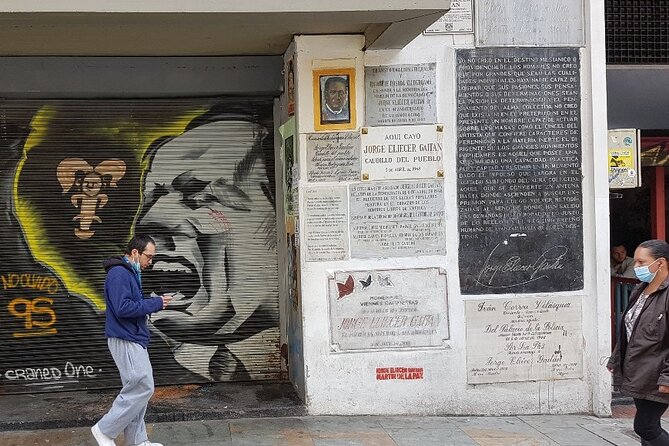
The stop at the Jorge Eliécer Gaitán Monument is one of the most important parts of the route. Gaitán was a charismatic political leader who was assassinated on April 9, 1948. His death triggered the Bogotazo riots and helped push Colombia into the period of widespread violence known as La Violencia.
You receive about 15 minutes here, which is enough for a clear explanation but not a full political biography. The guide’s job is to show why one assassination had such a large effect. This is where the tour moves from general discussion to a precise turning point in the country’s past.
I like this stop because it gives the rest of the walk a starting point. Later subjects, including political institutions, drug cartels, and public memory, become easier to place once you understand the shock surrounding Gaitán’s death.
The limitation is time. If you want a detailed account of Gaitán’s policies, political rivals, and the Bogotazo’s full sequence of events, you will need another source. Treat this as a strong introduction, not a complete lesson.
Chorro de Quevedo and Bogotá’s beginnings
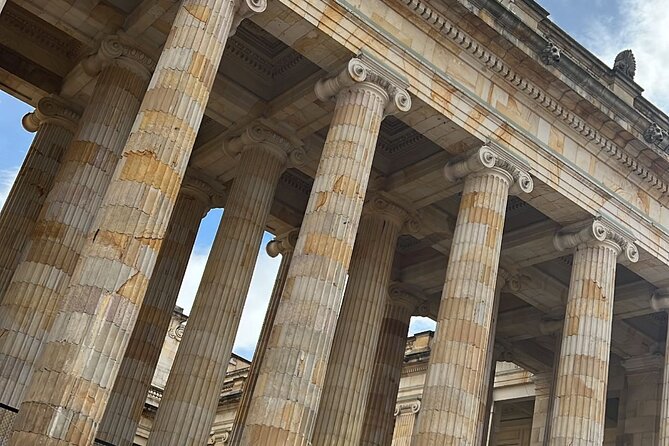
At Plaza del Chorro de Quevedo, the guide discusses the foundation of Bogotá and offers some wider context about the history of the continent. The stop lasts about 10 minutes.
This pause may seem less directly connected to armed conflict, but it gives the tour a longer time frame. Colombia’s political struggles did not appear from nowhere. The country’s institutions, social divisions, and ideas about power developed over centuries, and this plaza helps place the modern story inside that older setting.
The plaza is also a useful change of pace. After the difficult subject of Gaitán’s assassination and the Bogotazo, you get a broader explanation of how Bogotá began. I appreciate that the route does not treat violence as the country’s only story. Colombia has foundations, culture, literature, and civic life as well as conflict.
The stop is brief, so expect an overview. The guide may connect Bogotá’s origins to the wider history of the continent, but the supplied schedule does not promise an extensive archaeological or colonial tour.
A completely different kind of day:
- La Candelaria, Monserrate and Museums Bogotá Private City Tour
★ 5.0 · 1,567 reviews - Shared Tour of the Historic Candelaria in Bogotá
★ 5.0 · 1,551 reviews - Bogotá: Guided La Candelaria Walking Tour
★ 4.8 · 1,229 reviews - Graffiti Tour: a fascinating walk through a street art City
★ 5.0 · 1,074 reviews
Cartels at the Banco de la República museums
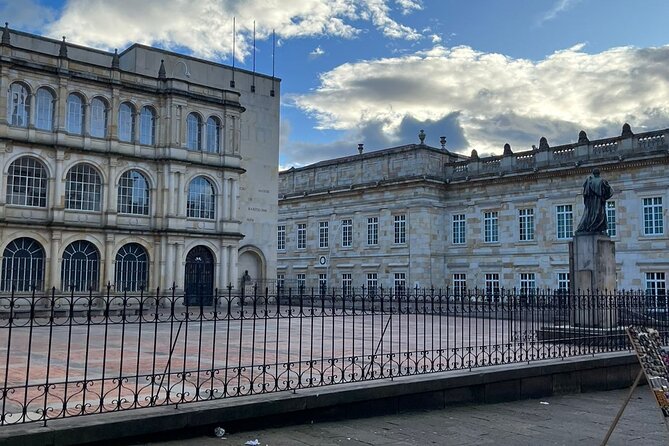
The visit near the Museos del Banco de la República shifts the focus to the Medellín and Cali cartels. The guide explains how these powerful drug groups grew, what led to their decline, and why extradition of Cali cartel members to the United States became such an important issue.
This is one of the most useful parts for anyone who knows Colombia mainly through films, television, or headlines. Popular culture often turns cartels into colorful stories of crime and wealth. A good explanation should show the larger systems around them, including political power, international pressure, law enforcement, and the choices that led to their downfall.
You get about 15 minutes at this stop. That is enough to outline the rise and collapse of two major organizations, but it cannot cover every leader, date, operation, or consequence. I would listen for the basic chain of events rather than expect a complete account of the drug trade.
The stop is listed as free admission. Since the experience is primarily a guided walk, you should not assume that a full museum visit is included. The important feature here is the guide’s commentary and the connection between the place and the subject.
The former presidential palace and Colombia’s government
The route continues to the Passport Office North Headquarters, connected with Colombia’s Ministry of Foreign Affairs. The guide explains that this government building was central to diplomatic efforts and was the country’s first presidential palace.
You spend about 10 minutes here. The stop helps shift the story from armed groups and cartels to the state itself. Conflict is not only about criminals or rebels. It also involves government decisions, international relations, diplomacy, justice, and the way institutions respond under pressure.
I like this part because it gives the tour political balance. You are not simply hearing about violence from the viewpoint of victims or criminal organizations. You are also seeing the buildings where official power operated and where Colombia dealt with other nations.
Since the route is outdoors and admission is free, the experience depends on what the guide can explain from the public space. Do not expect an interior tour of the government offices. The value is historical interpretation, not access behind the doors.
Plaza de Bolívar and the center of power

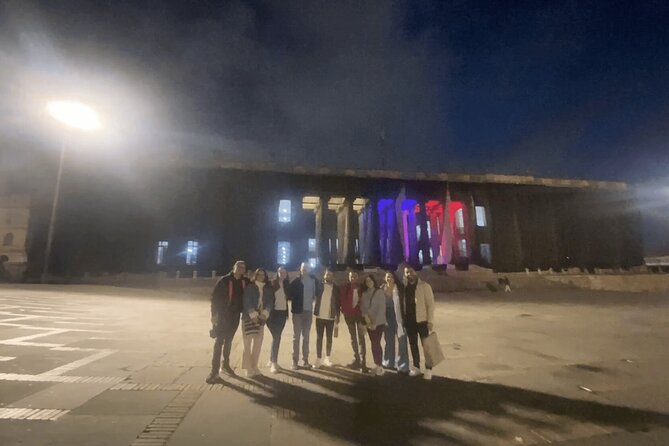
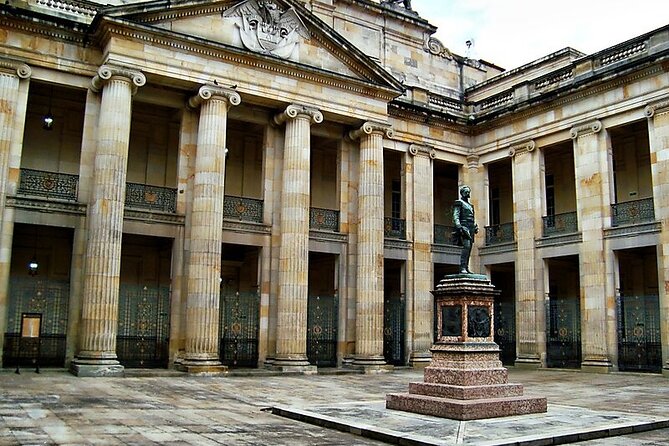
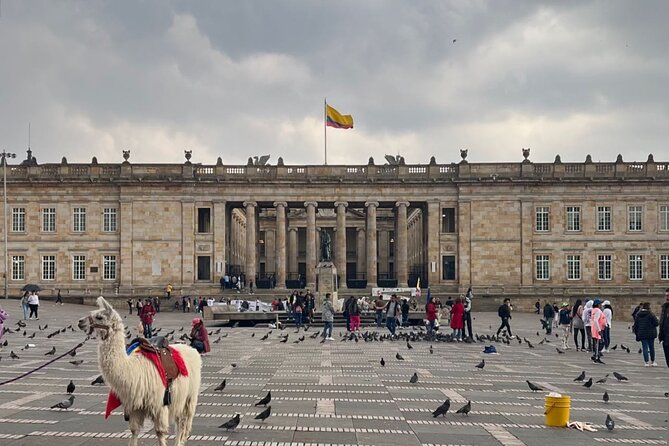
The walk ends its main historical sequence at Plaza de Bolívar, Bogotá’s principal square. The plaza is surrounded by the National Capitol, the Supreme Court, and the Presidential Palace. You receive about 20 minutes here, the longest listed stop.
That extra time makes sense. Plaza de Bolívar brings many of the tour’s themes together: political power, public protest, law, government, and national identity. After hearing about Gaitán, journalism, cartels, and diplomacy, you can see how these institutions fit into the country’s modern story.
This is also a practical sightseeing stop. Even if you later return on your own, you will understand the square better after learning what its surrounding buildings represent. The guide can help you read the center of Bogotá as a working political place, not just a photo stop.
The square can be busy, and a group of up to 20 people may need to gather closely to hear the guide. Stay near the speaker and pay attention to the exact meeting instructions. Public squares are easy to recognize but not always easy places for a group to find one another.
Gabriel García Márquez and cultural memory
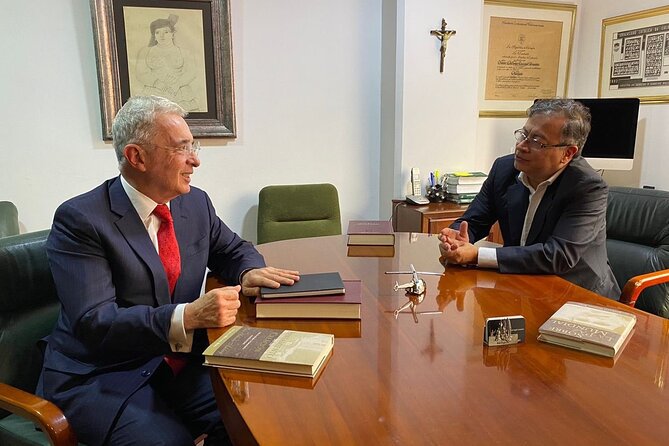
The final listed stop is the Centro Cultural Gabriel García Márquez. It offers a look at Colombia’s cultural and literary reflections on its turbulent past.
This is a fitting way to finish. The tour does not end with a cartel, a riot, or a government office. It ends with culture and memory. Literature and art can explain fear, loss, politics, and resilience in ways that official records sometimes cannot.
The center receives about 10 minutes of the tour. Again, the time suggests a guided exterior or orientation stop rather than a long cultural program. If you are interested in Gabriel García Márquez or Colombian literature, you may want to return separately with more time.
The stated end point is back at the meeting point. Since the route includes several central locations, ask the guide at the beginning how the return works and where the group will finish. That small bit of clarity can prevent confusion at the end of a compact walking tour.
What the $12 price really gets you
At $12 per person, this is inexpensive for a guided two-hour-plus city experience. All listed admissions are free, and the price includes an in-person guide who speaks English and Spanish. You are paying mainly for interpretation, organization, and the chance to connect places that you might otherwise pass without understanding.
That is good value if the guide provides clear context and handles the subject with care. A free walk through Bogotá will show you the same plazas, but it will not automatically explain why Gaitán’s assassination mattered, how cartels developed, or why extradition became such a major issue.
The low price also sets a realistic expectation. This is not a private historian, a museum ticket package, or a luxury vehicle tour. Private transportation is not included, so you walk between the stops and make your own way to the starting point.
The experience is booked an average of 14 days ahead, so I would not leave it until the last morning of your trip if the subject matters to you. Confirmation is provided at booking, and the mobile ticket makes carrying the details simple.
Language, group size, and walking demands
The guide speaks Spanish and English. Check that your selected language is clear at booking, especially because political history can be difficult to follow when translated informally or heard in a noisy square.
The maximum group size is 20 people. That is still manageable for a walking tour, though it is not an intimate private outing. A larger group may be harder to hear around Plaza de Bolívar or other public spaces, so staying near the guide will improve the experience.
The duration is approximately two hours and 15 minutes. The listed stops account for about 90 minutes, leaving roughly 45 minutes for walking, transitions, and questions. Wear comfortable shoes and plan for an outdoor activity. The tour requires good weather, and poor conditions can lead to a new date or a full refund.
Service animals are allowed, and the tour is near public transportation. Most people can participate, but the information provided does not promise a fully accessible route or describe specific pavement, seating, or restroom arrangements. If those details matter to you, ask before booking.
One important booking warning
There is one serious point to handle carefully. A participant reported arriving at the stated place and time but finding no one from the organization. The operator replied that the participant had not attended, said the service had been fulfilled, and then stated that a full refund was issued.
Because the two accounts conflict, I would take simple precautions. Save the confirmation, check the local date and time, verify the meeting point, and arrive early at Parque de los Periodistas Gabriel García Márquez. If you cannot find the group, contact the operator immediately rather than waiting until the tour has ended.
This does not prove that a meeting problem is common, but it is enough to justify careful planning. The experience has a 3.7 rating based on three reviews, a small sample that gives you limited evidence about consistency. The refund response is a positive sign in the specific case described, but you should still protect yourself with clear records.
Who should book this experience?
I would recommend this tour to you if you want modern Colombian history explained in the places where it unfolded. It suits first-time visitors who want more than postcard sights, students of politics or Latin American history, and anyone who prefers local discussion to a standard monument checklist.
It is also a good choice if you want to understand Bogotá before visiting other parts of Colombia. The references to Medellín and Cali cartels give the story national reach, even though the walk itself takes place in Bogotá.
I would be more cautious if you are traveling with young children who may find the subject too serious. The tour does not appear designed as a light family activity. I would also skip it if you dislike walking, want interior museum access, or prefer a tour centered on food, architecture, or art.
Should you book the Armed Conflict and Violence Tour?
Book it if Colombia’s recent past is a major reason you came and you want a low-cost guide to the forces that shaped modern Bogotá. The best parts are the Gaitán monument, the discussion of the cartels, and the time at Plaza de Bolívar, where politics and public memory meet.
Do not book it expecting a polished private tour or a complete academic history. The group may reach 20 people, transportation is not included, and the small number of ratings leaves some uncertainty about reliability. Confirm the meeting details, arrive early, and keep the free-cancellation deadline in mind.
You can cancel for a full refund up to 24 hours before the start time. Cancellations or changes within 24 hours are not refunded or accepted. If bad weather or an insufficient number of participants cancels the tour, you are offered another date or experience, or a full refund.
For $12, this is a sensible pick for a serious introduction. It asks you to pay attention, but it gives you a clearer way to read Bogotá afterward.
FAQ
Where does the Armed Conflict and Violence Tour begin?
It begins at Parque de los Periodistas Gabriel García Márquez in Bogotá, Colombia.
Where does the tour end?
The activity is stated to end back at the meeting point.
How long does the tour last?
The tour lasts approximately two hours and 15 minutes.
What language is the guide?
The in-person guide speaks Spanish and English.
How much does the tour cost?
The price is $12 per person.
Is transportation included?
No. Private transportation is not included.
Are admission tickets included?
The listed stops have free admission. The tour includes the in-person guide, but the information does not describe paid museum entry as part of the experience.
What is the maximum group size?
The tour can have a maximum of 20 participants.
Is the tour available by mobile ticket?
Yes. A mobile ticket is available, and confirmation is received at the time of booking.
Can I cancel for a full refund?
Yes, if you cancel at least 24 hours before the experience starts. Cancellations or changes made within 24 hours are not refunded or accepted. If the tour is canceled because of poor weather or because the minimum number of participants is not reached, you are offered another date or experience, or a full refund.
Just added in Bogota
- Tour of Zipaquirá: Visit the Salt Cathedral and the main squares★ 4.5 · 55 reviews
- Catedral de Sal desde Bogotá en Tren★ 5.0 · 5 reviews
- Zipaquirá and Salt Cathedral Muisca Heritage with Guide – Private★ 4.5 · 23 reviews
- Botanical Garden Bogotá Private Tour (4 Hrs.)★ 5.0 · 13 reviews
- Zipaquira Salt Cathedral★ 4.5 · 12 reviews
- LOCAL GUIDE Zipaquirá PRIVATE TOUR – Salt Cathedral and Salt Oven★ 5.0 · 24 reviews
- Zipaquirá Salt Cathedral: An architectural wonder.★ 4.5 · 24 reviews
- Private Zipaquira Salt Cathedral and Guatavita Lagoon Tour from Bogota★ 4.5 · 44 reviews
Bogotá Tours, compared.
Zipaquirá: Salt Cathedral Group Tour with Pickup
Read our review →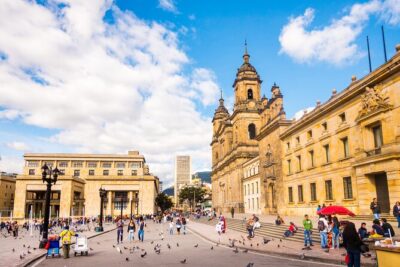
La Candelaria, Monserrate and Museums Bogotá Private City Tour
Read our review →
Shared Tour of the Historic Candelaria in Bogotá
Read our review →
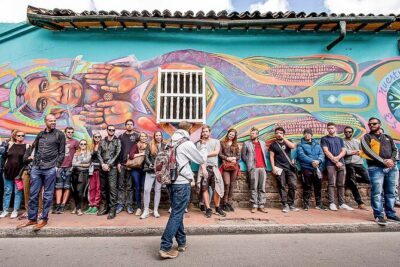
Graffiti Tour: a fascinating walk through a street art City
Read our review →