
REVIEW · COLOMBIAN COFFEE TOURS
Specialty Coffee Workshops in Bogota
Coffee makes Bogotá easier to read. This 2.5-hour workshop uses three specialty cafés in Chapinero to explain Colombia’s coffee regions, farming, roasting, tasting, and brewing. I like the short walking route and the chance to sample coffees from different parts of the country without leaving the city.
I also like the small groups and the strong English-speaking guides, including Daniela, Laura, Karen, and Indira. The main drawback is simple: you get coffee, not a meal, and a caffeine-heavy morning may leave you wishing for a pastry or snack.
In This Review
- Key points to know before booking
- Why Chapinero is a smart place for a coffee tour
- Starting with Colombian coffee history at the first café
- Casa Café Cultor and the route from farm to cup
- Café 18 Rosales and Bogotá’s specialty coffee culture
- What you actually taste and learn
- The guides make the biggest difference
- Price and value at $45.95
- Timing, walking, and practical planning
- Who will enjoy this workshop most
- Final call: should you book it?
- FAQ
- Where does the Bogotá coffee workshop begin?
- Where does the workshop finish?
- How long does the experience last?
- What time does the public workshop start?
- How much walking is involved?
- Is food included?
- Is decaf coffee available?
- Can I cancel for a full refund?
Key points to know before booking
- Three Chapinero coffee shops: You visit a small group of specialty cafés within a walking route of less than one mile.
- Coffee from several Colombian regions: Tastings help you compare northern, central, Bogotá-area, and southern coffees.
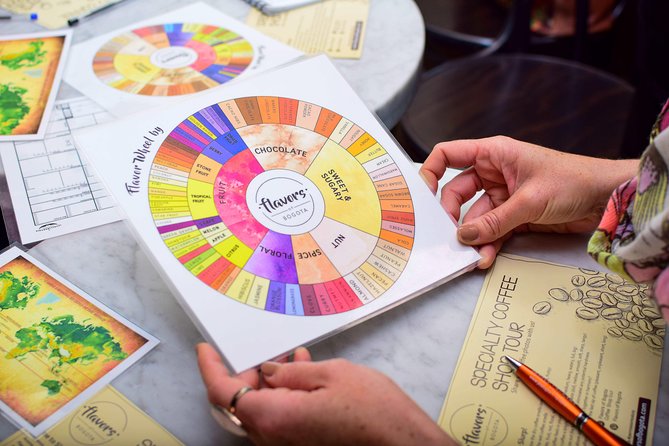
- Practical tasting instruction: You learn to notice fragrance, aroma, body, flavor, balance, sweetness, and acidity.
- Small-group format: The workshop is designed to feel intimate, with a stated maximum of eight people, although the overall activity limit is listed as ten.
- Morning schedule: Public workshops start at 10 a.m. and run for about two and a half hours, generally on Tuesdays.
- Bring a jacket and umbrella: Bogotá weather can shift quickly, and the workshop runs in all weather.
Why Chapinero is a smart place for a coffee tour
This is not a tour of Bogotá’s old center. The workshop takes place in Chapinero, around the neighborhoods of Rosales and nearby streets. If you are staying in La Candelaria, allow roughly 20 to 25 minutes by taxi or Uber to reach the starting point, depending on traffic.
That location is part of the appeal. You get a look at a more modern, local café district rather than spending another morning among the usual historic-center sights. The coffee shops are close enough to walk between, and the route stays under one mile, so the physical demand is modest.
The meeting point is Casa Café Cultor at Cl. 70a #9-44. The tour finishes at Café 18 Rosales, at Cra. 5 #71-45, local 104B. You can order a taxi or Uber from the final café, which makes it easy to continue to lunch or another Bogotá activity.
The morning timing works well. You can spend the afternoon sightseeing, shopping, or resting after several cups of coffee. Just remember that Bogotá sits high above sea level, and caffeine can feel more powerful than expected when combined with a busy day.
More coffee tours in Bogota:
- Coffee Farm Tour from Bogotá – Be a Farmer for a Day
★ 5.0 · 213 reviews - From Bogotá: Coffee Farm and Tequendama Falls Tour
★ 4.5 · 130 reviews - VIP Bogota City Tour: Monserrate, Candelaria, Coffee Tasting, 6hr
★ 5.0 · 95 reviews
Starting with Colombian coffee history at the first café
The workshop visits three specialty cafés, and the precise order can depend on the operating day and the businesses involved. Café 18 Rosales is identified as the final stop, while Casa Café Cultor is one of the main tasting locations.
At the first café, the guide introduces the broad story of coffee. You discuss coffee’s global development, its importance in Colombia, and why tastings help people understand what they are drinking rather than simply deciding if they like it.
This part is useful even if you already drink coffee every day. Most people know coffee by roast level or brewing method, but not by growing region, processing, or the conditions that shape the final flavor. The guide begins to connect those pieces.
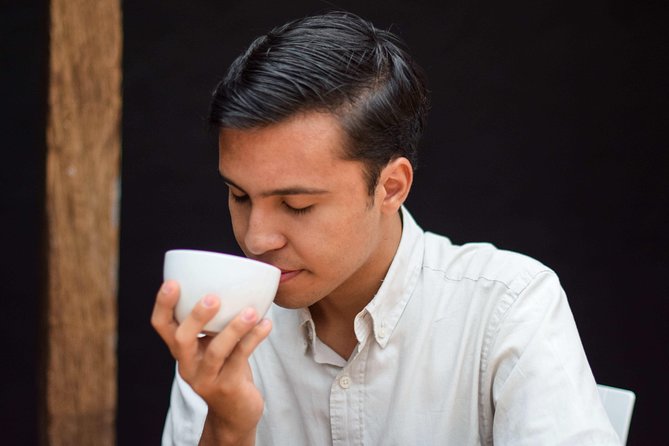
You may taste coffee using a method that lets you compare aromas and flavors directly. The point is not to perform like a professional taster. It is to slow down and notice what is in the cup.
The workshop teaches you to pay attention to fragrance and aroma first, then body, flavor, balance, sweetness, and other qualities. That vocabulary gives you a better chance of choosing beans you actually enjoy later in your trip.
Casa Café Cultor and the route from farm to cup
Casa Café Cultor provides the setting for a second tasting and a closer look at Colombia’s coffee-growing regions. Here, the discussion turns toward where coffee is grown and why the crop matters to millions of Colombian growers.
That farming context gives the tasting some meaning. Colombia is not just a label printed on a bag. Coffee comes from different areas, and beans from northern, central, Bogotá-area, and southern regions can show different characteristics.
The guide also explains how roasting changes the coffee in your cup. Roast level affects the way the bean expresses its flavors, so two coffees from the same country may taste quite different after different roasting choices.
One useful feature is the comparison across regions. A past workshop included coffees from northern Colombia, the Bogotá region, and the south, with an explanation of the general differences among them. That kind of side-by-side tasting is more helpful than drinking one coffee and trying to remember its flavor several days later.
Casa Café Cultor is also a good place to browse and possibly buy coffee. You may find beans or café items that you want to take home, but purchases are not included in the $45.95 price.
Café 18 Rosales and Bogotá’s specialty coffee culture
The final stop is Café 18 Rosales. This café is more than a place to finish the route. It gives you another look at how specialty coffee is prepared and served in Bogotá.
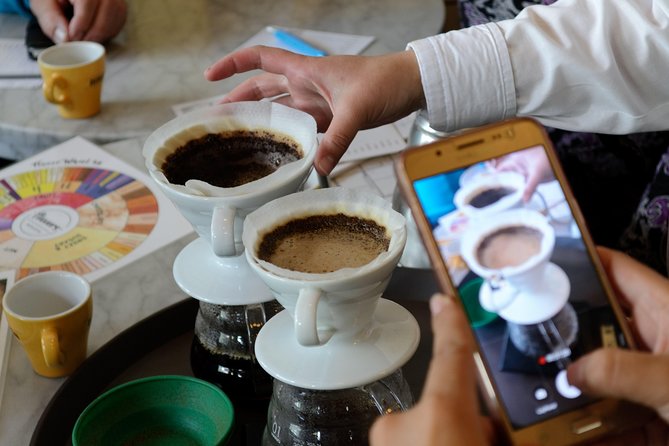
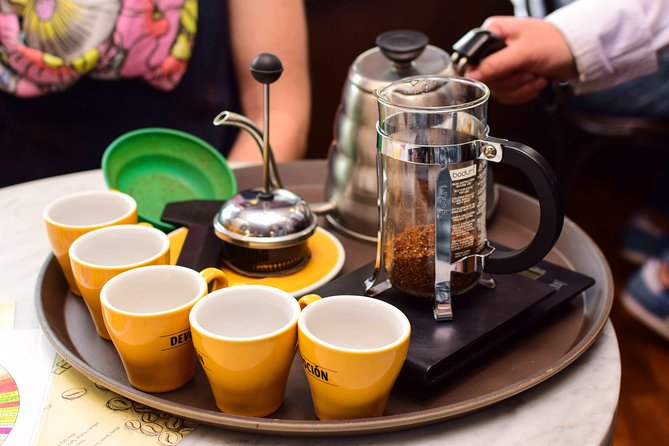
Depending on the session, you might see a method such as a V60 pour-over demonstrated. The workshop covers different brewing methods, and the café staff may prepare coffees methodically in front of you.
The café setting also helps explain why coffee culture matters in Colombia. Colombia is famous for exporting coffee, but a specialty coffee scene has also grown inside the country. In Bogotá, cafés are places to taste local beans, learn about preparation, meet friends, and buy coffee for home.
You should keep your expectations realistic. This is an educational tasting route, not a behind-the-scenes roastery visit. One person specifically wished there had been a chance to smell or watch beans being roasted, and that is not promised here.
You also may not spend much time talking directly with each barista. The guide leads the workshop, and the café staff’s availability can vary. If your main interest is equipment, café operations, or conversations with roasters, you may want a more specialized class.
More things to do in Bogota:
- Bogotá Bike Tour
★ 5.0 · 3,329 reviews - Bogota: Bicycle City Tour
★ 4.9 · 2,156 reviews - Zipaquirá: Salt Cathedral Group Tour with Pickup
★ 4.8 · 1,606 reviews - La Candelaria, Monserrate and Museums Bogotá Private City Tour
★ 5.0 · 1,567 reviews
What you actually taste and learn
The experience includes coffee tastings from different areas of Colombia. The exact number can vary, but one account describes three to five cups across the cafés.
That is enough to make the lesson practical without turning the morning into a giant coffee crawl. You are not merely handed different drinks. You are shown how to compare them and how growing region, harvesting, roasting, and brewing affect the result.
You also learn about the coffee process from plant to cup. Topics include cultivation, harvesting, regional differences, roasting techniques, and brewing methods. The guides explain these subjects in clear English, and a Spanish option is available if you request it.
This structure suits a curious beginner especially well. You do not need to know the difference between washed and natural processing, understand extraction, or recognize tasting notes before you arrive. The workshop starts with basic observation and builds from there.
It can also work for a serious coffee drinker. You may already know your preferred espresso or filter style, but the regional comparisons and guided tasting can help you identify why one coffee appeals to you more than another.
Even people who do not usually drink coffee can enjoy the experience because the subject includes agriculture, Colombian culture, trade, and food production. Just note that the workshop serves caffeinated coffee only. Decaf is not available.
The guides make the biggest difference
The guide is central to the quality of this workshop. Daniela receives especially strong praise for being warm, energetic, patient, and highly informed about Colombian coffee and coffee in general. She has also handled groups with an elderly participant and a baby, adjusting to the group’s needs.
Laura is another named guide who receives praise for her expertise and kindness. One solo participant had a private session with her and appreciated having her full attention. Indira is described as outgoing, clear in English, and especially good at explaining the full production process.
Karen and her team also lead sessions, and the workshop provider emphasizes that the guides are fluent in English. If you prefer Spanish, you can message the provider before booking.
The small-group setup helps. A group of five was described as large enough for conversation but small enough for everyone to ask questions. A solo booking may even become a private or nearly private session, depending on who else books that date.
The listed details contain two group limits: an intimate maximum of eight and an overall maximum of ten. I would plan on a small group, but I would not assume a private tour unless the provider confirms it.
Price and value at $45.95
At $45.95 per person, this is not the cheapest way to drink coffee in Bogotá. You could order several excellent cups on your own for less.
The value comes from the instruction and the carefully arranged comparisons. You are paying for a guide who explains Colombian coffee, leads the tasting, manages the route, and helps you understand why the coffees differ. If you buy beans afterward, the workshop may also save you from choosing a bag based only on attractive packaging.
The price includes the coffee tastings, a local English-speaking guide, coffee and/or tea, and the walking route. It does not include food, extra drinks, transportation, hotel pickup, or purchases at the cafés.
The absence of food is worth noting. A pastry is not included, and the provider explains that strong flavors can affect your ability to taste coffee accurately. That is a fair tasting concern, but after three to five cups, I would want breakfast either before the workshop or immediately afterward.
For a coffee lover, the price is reasonable if you value explanation and comparison more than quantity. For someone who simply wants a good cup in a pleasant café, booking three cafés independently may be better value.
Timing, walking, and practical planning
The public workshop starts at 10 a.m. and lasts about two hours and 30 minutes. The supplied operating schedule lists Tuesday from 10 a.m. to 12:30 p.m., so check the date carefully when booking.
Arrive early. Bogotá traffic can be unpredictable, and a late arrival by one person once delayed the group enough that the final café could not be completed by someone with a fixed childcare pickup. You should avoid scheduling an important appointment immediately after the workshop.
The route is less than one mile and passes between nearby cafés. Most people can take part, but the provider asks anyone with mobility concerns to make contact before booking. The workshop operates in rain or shine, so bring a light jacket or sweater and an umbrella.
The meeting area is described as safe and easy to reach by public transportation. Hotel pickup and drop-off are not included. You need to make your own way to Casa Café Cultor and arrange your return from Café 18 Rosales.
Service animals are allowed. Confirmation is issued at booking, and free cancellation is available up to 24 hours before the start time. Changes or cancellations inside that window are not accepted for a refund.
Who will enjoy this workshop most
I would choose this workshop if you want your Bogotá coffee experience to include context. It is a good match for:
- Coffee drinkers who want to compare Colombian regions
- Beginners who want a simple introduction to tasting
- Solo visitors who enjoy small-group instruction
- Couples and friends looking for a relaxed morning activity
- People interested in Colombian farming and café culture
- Visitors staying near Chapinero, Rosales, or northern Bogotá
It is also a sound choice for a non-coffee enthusiast who enjoys food culture and learning. The experience is not only about caffeine, and the tasting process can make a familiar daily drink more interesting.
I would hesitate if you need decaf, want a full breakfast, dislike walking in uncertain weather, or expect to tour a working roastery. You should also think twice if caffeine affects you strongly, since only regular coffee is served and several samples may be included.
Final call: should you book it?
Yes, if you want to understand Colombian coffee rather than simply drink it. The workshop offers a manageable walk, small groups, several tastings, and guides such as Daniela and Laura who bring warmth as well as strong subject knowledge.
Book it early if your schedule is fixed. The experience is often reserved about 17 days ahead, and the small group size limits flexibility.
Come fed, arrive early, wear a light layer, and leave room in your bag for coffee purchases. If you can accept the lack of food and the absence of a guaranteed roasting demonstration, this is a smart, focused way to spend a morning in Bogotá.
FAQ
Where does the Bogotá coffee workshop begin?
It begins at Casa Café Cultor, Cl. 70a #9-44 Casa, Bogotá, Colombia.
Where does the workshop finish?
The final stop is Café 18 Rosales at Cra. 5 #71-45, local 104B, Bogotá. You can order a taxi or Uber from there.
How long does the experience last?
The workshop lasts approximately two hours and 30 minutes.
What time does the public workshop start?
Public workshops start at 10 a.m. The supplied schedule lists the session from 10 a.m. to 12:30 p.m. on Tuesdays.
How much walking is involved?
The route is less than one mile, with the cafés located close enough to walk between.
Is food included?
No. Food and extra drinks are not included. The included drinks are the coffee tastings and coffee and/or tea listed for the experience.
Is decaf coffee available?
No. The workshop offers caffeinated coffee only.
Can I cancel for a full refund?
Yes, if you cancel at least 24 hours before the experience start time. Cancellations or changes made less than 24 hours in advance are not accepted for a refund.
Just added in Bogota
- Tour of Zipaquirá: Visit the Salt Cathedral and the main squares★ 4.5 · 55 reviews
- Catedral de Sal desde Bogotá en Tren★ 5.0 · 5 reviews
- Zipaquirá and Salt Cathedral Muisca Heritage with Guide – Private★ 4.5 · 23 reviews
- Botanical Garden Bogotá Private Tour (4 Hrs.)★ 5.0 · 13 reviews
- Zipaquira Salt Cathedral★ 4.5 · 12 reviews
- LOCAL GUIDE Zipaquirá PRIVATE TOUR – Salt Cathedral and Salt Oven★ 5.0 · 24 reviews
- Zipaquirá Salt Cathedral: An architectural wonder.★ 4.5 · 24 reviews
- Private Zipaquira Salt Cathedral and Guatavita Lagoon Tour from Bogota★ 4.5 · 44 reviews
Colombian Coffee Tours, compared.
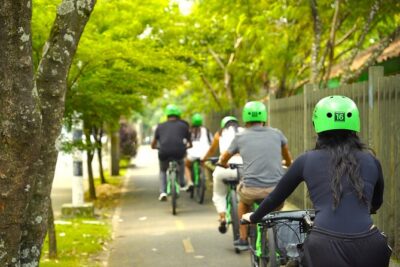
Half Day Bike Tour in Medellin – Local snack, Coffee or Beer
Read our review →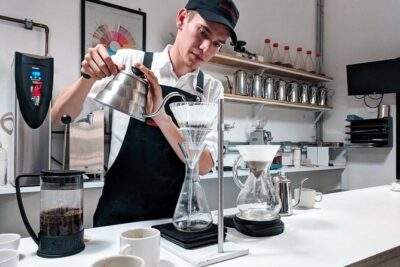
Half-Day Coffee Tour: From the Seed to the Cup, Farm & roastery
Read our review →
Coffee Tour with Transport, Snacks and Tastings
Read our review →
Electric Bike City Tour Medellin With Colombian Coffee and Snack
Read our review →
Private Coffee Farm Tour in Medellin: Real Authentic Experience
Read our review →
Guatape & Coffee Farm & El Peñol Rock & Quaint Town: Best Combo
Read our review →
Coffee tour in Medellín with tastings and transportation
Read our review →Browse the lists this tour appears in