
REVIEW · MEDELLÍN TOURS
Shared Tour Medellin’s Violence & Post-conflict after Pablo
Medellín’s past demands more than a cartel story. This walking tour explains how violence grew from political, social, and economic conditions, then follows the city’s long effort to replace guns with civic action. I especially like its focus on ordinary communities and its refusal to make Pablo Escobar the whole story. The main drawback is that the subject matter is heavy, and the walk covers about 5 kilometers through busy parts of downtown.
I also like the way the tour connects major events to actual places, beginning at Parque San Antonio and ending at Museo Casa de la Memoria. Guides such as Miguel and Sebastian have been praised for clear, engaging explanations, which matters when the topic includes guerrillas, paramilitaries, drug trafficking, peace agreements, and reconciliation. You should bring patience, water, and an open mind.
In This Review
- Key points to know before you go
- Why this Medellín tour is different from a cartel outing
- Starting beside Botero’s birds at Parque San Antonio
- Following the city center through conflict
- From the Narcos era to the years after the cartel
- How bullets became words and ideas
- Ending at Museo Casa de la Memoria
- What the guides add to a difficult subject
- The practical side: time, effort, and weather
- Is $13 a fair price?
- Who should book this walk?
- Should you book the Violence and Post-Conflict tour?
- FAQ
- How long does the tour last?
- Where does the tour meet?
- Where does the tour finish?
- Is the tour about Pablo Escobar?
- Is the tour conducted in English?
- What should I bring?
Key points to know before you go
- This is not a Pablo Escobar tour: The cartel era is part of the story, but the focus is Medellín’s wider conflict and its aftermath.
- The route links 1982 to 2015: You follow the city’s changing experience from cartel violence through post-conflict efforts and urban reconciliation.
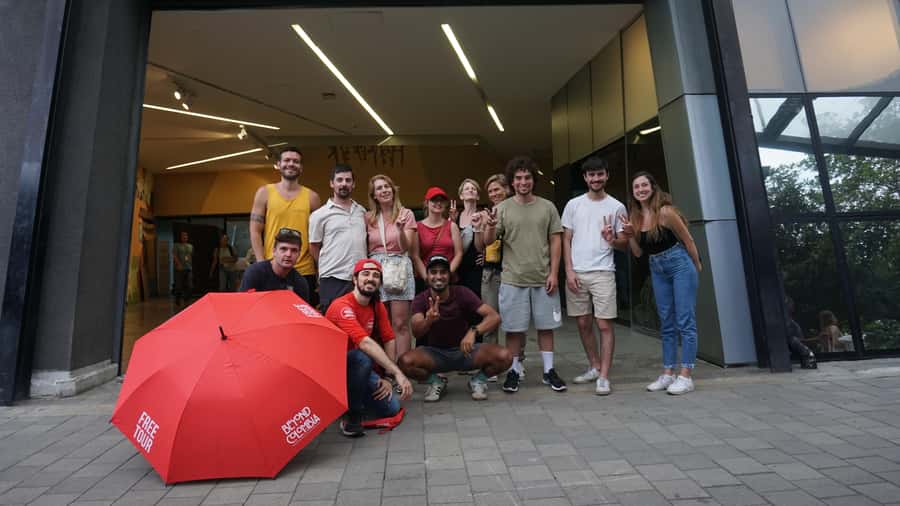
- Parque San Antonio is the meeting point: Find the Beyond Colombia guides beside Botero’s bird sculptures and their red umbrellas.
- The tour finishes at Museo Casa de la Memoria: This gives the walk a serious closing point centered on victims, memory, and public reflection.
- Expect a substantial city walk: You will cover about 5 kilometers, with stops to listen and rest.
- The price is low for the subject covered: At $13 per person, the tour offers an inexpensive way to put Medellín’s streets and public spaces into context.
Why this Medellín tour is different from a cartel outing
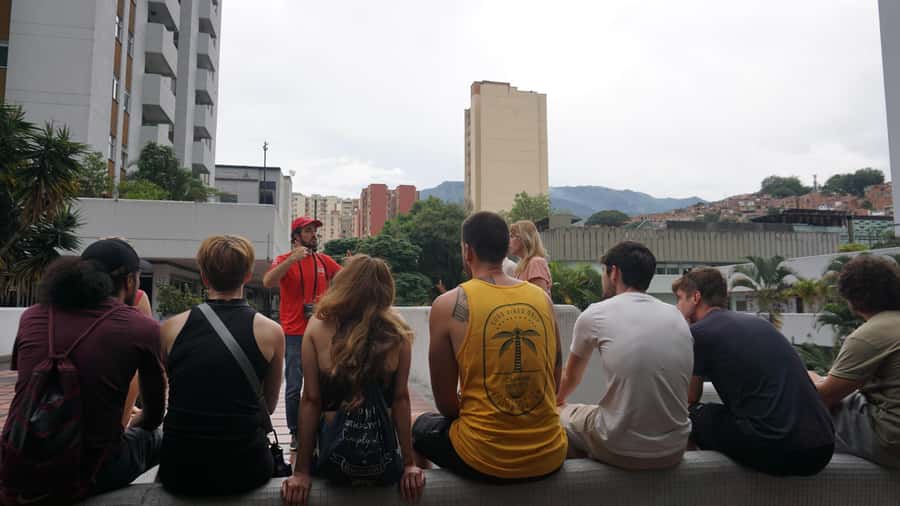
Many people arrive in Medellín knowing the city mainly through television dramas and Pablo Escobar stories. This tour gives you a needed correction. It explains the cartel era, but it also asks why violence took root, how different armed groups gained power, and how local people tried to survive and organize.
That wider view is the tour’s greatest strength. You learn about the conditions that allowed the Medellín Cartel to grow, including social and economic pressures, rather than treating criminal power as the work of one unusually famous man. The result is less sensational and more useful.
You also hear about what happened after the main cartel period. The tour discusses Donbernabilidad, a later phase of criminal control and negotiation associated with Medellín’s changing power structure. That helps you see that the end of the cartel era did not mean the end of violence. The city’s problems shifted, and many old patterns continued in new forms.
I would choose this experience if you want political and social context during your time in Medellín. I would skip it if you want a light sightseeing walk or a simple collection of dramatic crime stories.
More things to do in Medellin:
- Medellin: Comuna 13 Graffiti Tour, Cable Car & Street Food
★ 4.8 · 9,046 reviews - Comuna 13 Graffiti Tour with Street Food
★ 5.0 · 7,503 reviews - Museo Pablo Escobar
★ 5.0 · 7,242 reviews
Starting beside Botero’s birds at Parque San Antonio
The meeting point is Parque San Antonio, beside Fernando Botero’s famous bird sculptures. Look for the red umbrellas used by Beyond Colombia. This is a practical place to begin because you are already in central Medellín, close to major public spaces and streets shaped by the city’s modern story.
The opening section sets the tone. You are not simply looking at monuments or taking photographs. The guide frames the city center as a place where political power, commerce, public life, and violence have met over many decades.
That approach makes the first stop more valuable than it might seem. A public square can look ordinary until you learn how the city changed around it. The guide helps you read Medellín as a lived city, not just a collection of attractions.
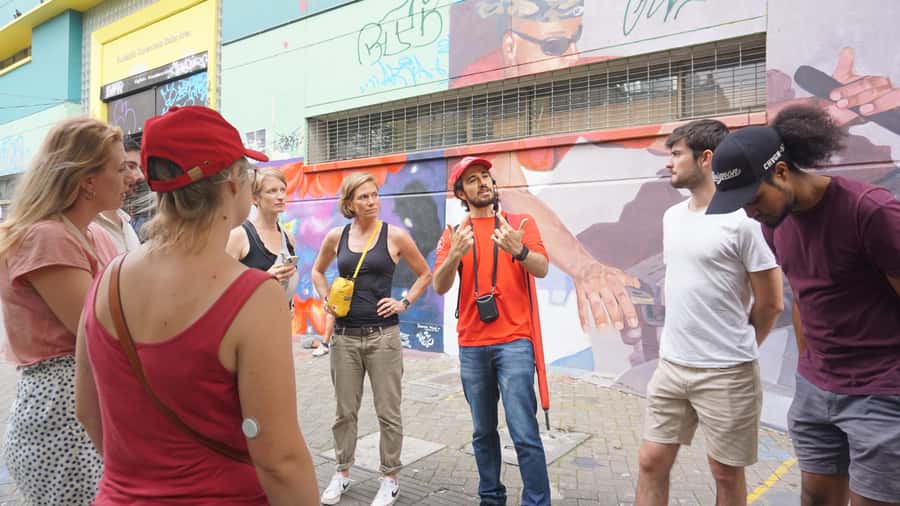
Expect the group to pause often while the guide explains events and answers questions. This is a shared tour, so you will not have an exclusive guide. That keeps the cost low, but it also means the pace and discussion depend partly on the size of the group.
Following the city center through conflict
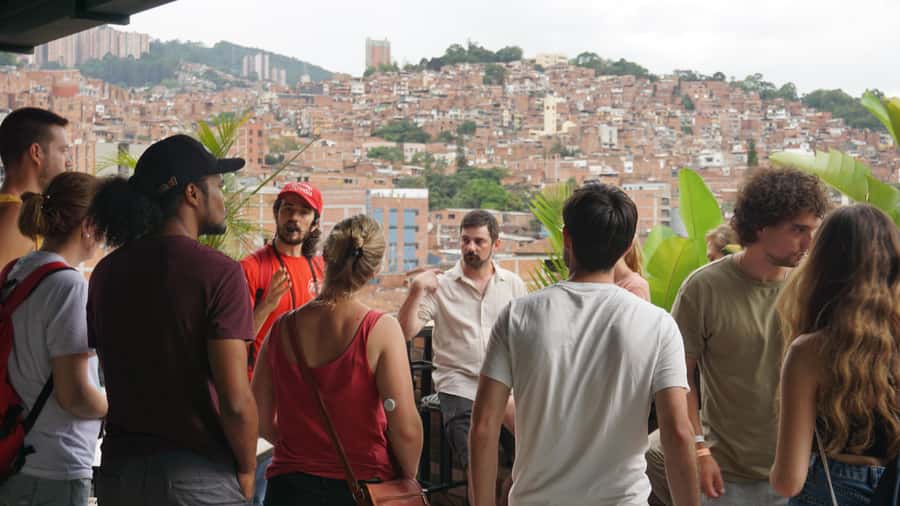
From Parque San Antonio, the walk continues through downtown. The route uses central streets and important public places to explain how the Colombian conflict became an urban problem.
The phrase urbanization of war is central here. Guerrillas, paramilitary groups, and drug traffickers did not operate only in remote countryside. Their influence reached cities, neighborhoods, businesses, institutions, and public life. Medellín became both an epicenter of conflict and a city filled with urban victims.
This is where the tour moves beyond crime statistics. You examine how violence affected culture, family life, local economies, and the way people used public space. The discussion also covers the motivations and actions of institutions, communities, and individuals involved in war, peace, and resistance.
I appreciate this part because it gives you several viewpoints without pretending that every actor had the same role. The promise of accurate and objective information is important when discussing a subject that still carries political weight. The tour aims not to take sides, while still showing the damage caused by violence and the efforts made against it.
You should expect difficult topics. The organizers specifically ask participants to come with an open mind and ask questions. That is good advice. A short tour cannot explain every part of Colombia’s conflict, but a curious listener will get more from it than someone hoping for a polished, comfortable story.
From the Narcos era to the years after the cartel
The section on the Narcos war period explains how the violence emerged and what it changed. You hear about its social, cultural, and economic consequences, along with the ways drug trafficking affected Medellín’s institutions and communities.
The focus is not on glorifying criminals. That distinction matters. You will not spend the walk collecting amusing criminal anecdotes or treating cartel leaders as folk heroes. Instead, the guide places the cartel period inside a longer chain of events.
The tour covers changes from 1982 through 2015. This broad time frame helps you compare several stages of Medellín’s recent past:
- The rise of cartel power and drug-related violence
- The spread of armed conflict into urban life
- The involvement of guerrillas and paramilitary groups
- The period after the Medellín Cartel
- Donbernabilidad and continuing criminal influence
- Twenty-first-century peace agreements and reconciliation efforts
The dates do not turn the tour into a lecture, but they give you a useful timeline. Without that structure, Medellín’s violent past can blur into one long episode. Here, you can see shifts in power and strategy.
The drawback is that the subject is too large for 150 minutes, or roughly three hours depending on the day’s pace. You will receive an introduction and a strong framework, not every detail. If you want a full study of Colombia’s conflict, you should use the guide’s recommended books and other material after the walk.
A completely different kind of day:
- Guatapé Tour: Piedra del Peñol with Boat Tour, Breakfast, Lunch
★ 5.0 · 7,035 reviews - Medellín: The Real Pablo Escobar Tour
★ 4.8 · 3,205 reviews - Day Trip To Guatapé with ,Breakfast, Lunch and Boat Ride
★ 5.0 · 2,996 reviews - Comuna 13 Graffitour knows the urban art district of Medellín
★ 5.0 · 2,856 reviews
How bullets became words and ideas
One of the strongest themes is the change from bullets for words and ideas. The phrase captures the city’s attempt to use education, community action, public debate, and cultural work in place of armed force.
The tour looks at strategies used by communities and local figures involved in peacemaking and social struggle. This gives the walk a human center. You are not only hearing about armed groups and government institutions. You are also learning how people tried to keep neighborhoods functioning, resist intimidation, and create a different future.
The idea of resistance is especially useful because it avoids presenting Medellín as a passive victim. Residents faced serious danger, but they also built responses. Those efforts did not erase conflict, and the tour does not claim that the city has solved every problem. Instead, it shows a city still working through its past.
I like that balance. Medellín’s transformation is real, but it is not a neat before-and-after tale. The tour connects present-day memory with an ongoing conflict, reminding you that peace is a process rather than a single event.
Ending at Museo Casa de la Memoria
The final stop is Museo Casa de la Memoria. The walk ends here after moving through downtown and discussing violence, resistance, peace, and social change.
The museum gives the subject a proper place for reflection. Its connection to memory helps you consider the people affected by conflict, not just the political figures and armed groups who usually dominate the headlines. The tour’s final section ties the city’s transformation to remembrance and reconciliation.
No entrance ticket is included, and the tour does not promise sudden extra charges at places along the route. The walk is framed around important locations rather than a series of paid attractions. If you want to enter the museum, confirm the current admission details separately.
Ending at the museum is also practical. You can continue learning on your own after the guide finishes. Beyond Colombia provides suggestions for further material and for Medellín’s cultural offerings connected to the places visited.
What the guides add to a difficult subject
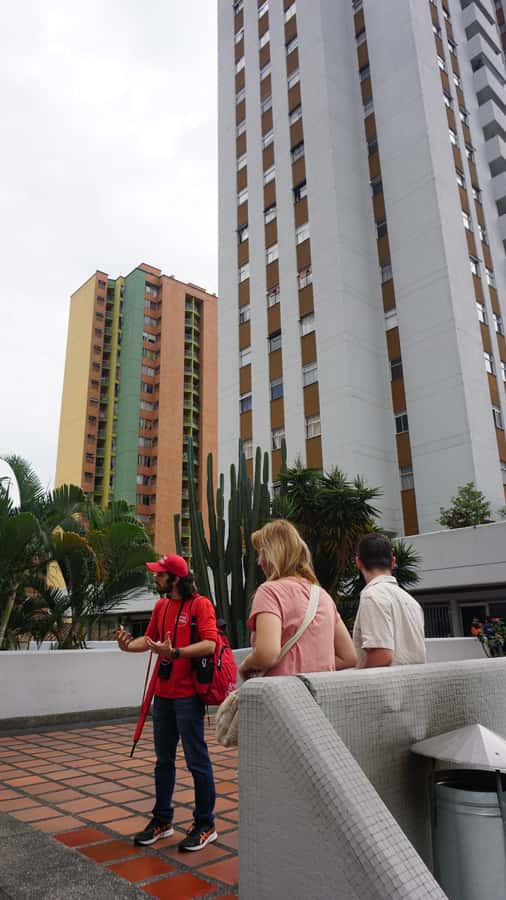
A guide can make or break a tour about conflict. Facts alone are not enough. The information needs order, context, and a calm delivery.
Miguel received particular praise for being thorough and explaining information that participants had not known before. That suggests a guide who is prepared to give background rather than rush through headline events.
Sebastian was praised for an engaging and amusing style. That does not mean the subject becomes light. It means his presentation helped make difficult material easier to follow. A little warmth and humor can help a group stay focused during a long discussion, provided the tone remains respectful.
Beyond Colombia has operated since 2013 and offers original walking tours in several Colombian cities. The company describes itself as one of the country’s most recognized free-tour groups, with international awards and TripAdvisor distinctions. Those claims are not a substitute for judging the actual subject or route, but they suggest an established operation rather than a one-off activity.
Remember that this is a shared walk. You will meet other people, and the guide’s attention is divided among the group. That format suits you if you like conversation and comparing questions. A private tour would offer more control, but it would not cost $13 per person.
The practical side: time, effort, and weather
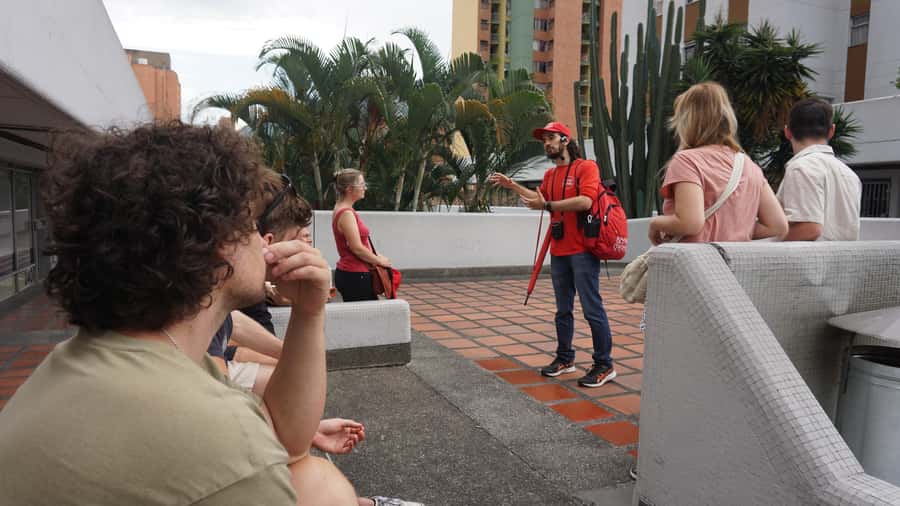
The published duration is 150 minutes, while the tour description also says approximately three hours. Plan for the longer figure so you are not rushing to your next activity. The walk covers about 5 kilometers and includes resting stops.
Wear comfortable shoes and clothing. This is not a route for stiff dress shoes or a tightly packed schedule. Bring water or another drink, sunblock, and a rainproof coat or umbrella. Rain can affect Medellín, and mosquito repellent may be useful from March through June.
You will pass through crowded areas, so keep your belongings close. The organizers use the local expression don’t give papaya, meaning do not make yourself an easy target. That is sensible advice for any busy city-center walk.
Alcohol, drugs, audio recording, and video recording are not allowed. Party groups are not suitable for this experience. The subject calls for attention and respect, and the rules support that tone.
The tour is not suitable for wheelchair users, children under 18, or people over 70. Those restrictions may disappoint some visitors, but the distance, public streets, stops, and difficult material explain why the organizers have set limits.
Is $13 a fair price?
At $13, this is strong value if you want context rather than paid attractions. You receive an English-speaking guide, a two-and-a-half to three-hour walk, explanations of Medellín and Colombian history, central sightseeing, and suggestions for further reading and cultural activities.
The price does not include food, drinks, souvenirs, hotel transportation, or museum tickets. That is easy to manage because the route is walked from the central meeting point and does not require a separate vehicle.
The low price also comes with shared-tour limits. You do not get a private guide, a custom pace, or a personalized route. For many people, that is a fair trade. You spend little, meet other visitors, and receive a serious introduction to one of Colombia’s hardest subjects.
I would see this as a value purchase for your first days in Medellín. It can help you understand later visits to museums, neighborhoods, public projects, and memorials. It also gives you questions to carry into the rest of your trip.
Who should book this walk?
This tour suits you best if you:
- Want to understand Medellín beyond Pablo Escobar
- Are interested in politics, community action, and recent Colombian history
- Prefer walking and public spaces to a bus-based city tour
- Can handle serious discussions about violence and victims
- Like asking questions and listening to different viewpoints
- Want an inexpensive introduction before visiting cultural sites on your own
It is less suitable if you want cheerful sightseeing, a short route, or a crime-themed entertainment experience. It is also not the right choice if you need step-free access or cannot manage a 5-kilometer walk.
The tour works particularly well when paired with more casual Medellín activities. After learning about conflict and reconciliation, you may notice the city’s public art, civic spaces, and community projects with a sharper eye. The guide’s suggestions for cultural places and reading can help you continue beyond the walk.
Should you book the Violence and Post-Conflict tour?
Book it if you want a serious, affordable explanation of how Medellín moved through cartel violence, armed conflict, and ongoing efforts at peace. The strongest reasons are the broad timeline, the attention to communities, and the final connection to Museo Casa de la Memoria.
Go in ready for difficult subjects, a fair amount of walking, and an account that is larger than Pablo Escobar. Bring rain protection, water, and questions. If Miguel or Sebastian leads your group, you can expect a clear and engaging presentation based on the strong descriptions available, though every tour can vary by guide and group.
For $13, this is one of the better ways to put Medellín’s recent past into human and urban context. It will not tell you everything, but it should help you understand much more than a cartel biography ever could.
FAQ
How long does the tour last?
The activity is listed as lasting 150 minutes, while the description says approximately three hours. Plan for up to three hours.
Where does the tour meet?
It meets at Parque San Antonio beside Botero’s bird sculptures. Look for the Beyond Colombia guides with red umbrellas.
Where does the tour finish?
The route finishes at Museo Casa de la Memoria.
Is the tour about Pablo Escobar?
No. The cartel period is included, but the tour is not a Pablo Escobar tour. It covers Medellín’s wider violence, guerrillas, paramilitaries, drug trafficking, peace efforts, and community resistance.
Is the tour conducted in English?
Yes. The tour includes a live English-speaking guide.
What should I bring?
Bring comfortable shoes, comfortable clothes, water or another drink, sunblock, and rain protection. Mosquito repellent may be useful during the rainy season from March through June.
Just added in Medellin
- Tour Peñol-Guatape privado: con desayuno, almuerzo y bote★ 5.0 · 1 review
- Silletero Tour – From Medellín★ 5.0 · 1 review
- Tour Medellín: Commune13 and Pablo Escobar + Rooftop★ 5.0 · 2 reviews
- Tour Medellín: Pablo Escobar and Commune 13★ 5.0 · 3 reviews
- Medellin: Tour Pablo Escobar Privado Con Guia Local★ 5.0 · 1 review
- Tour Guatapé: luxury yacht to the stone of Peñol.★ 5.0 · 2 reviews
- Tour Guatapé – Piedra del Peñol with departure from Medellín★ 5.0 · 24 reviews
- Tour Guatapé con visita a Granja de las Llamas y las Alpacas★ 3.5 · 11 reviews
Medellín Tours, compared.

Comuna 13 Graffiti Tour, Cable Car & Street Food
Read our review →

Guatapé Tour: Piedra del Peñol with Boat Tour, Breakfast, Lunch
Read our review →
Day Trip To Guatapé with ,Breakfast, Lunch and Boat Ride
Read our review →
Comuna 13 Graffitour knows the urban art district of Medellín
Read our review →
Tour to Guatape, Piedra del Peñol, lunch, snacks boat trip
Read our review →
Half Day Bike Tour in Medellin – Local snack, Coffee or Beer
Read our review →