
REVIEW · PABLO ESCOBAR HISTORY TOURS
Pablo Escobar Tour; La Catedral Prison, Quarter, House, and Grave
History here is never just history. This private Medellín tour connects Pablo Escobar’s former home, prison, neighborhood, and grave with the wider story of a city scarred by violence and changed by it. I like the strong local perspective, especially from guides such as Jairo Calderon and Oscar Escobar, and I like that the tour treats victims and Medellín’s recovery seriously. The main drawback is that access inside La Catedral has changed, and some areas are now off-limits.
I also like the comfort of door-to-door transport in an air-conditioned vehicle, since La Catedral is well outside the city center. At $92 per person for roughly four to five hours, the price is reasonable for a private tour with a local guide, but the value depends on your interest in difficult modern history. This is not a light sightseeing outing.
In This Review
- Key points to know before booking
- Why this tour needs more than crime trivia
- Inflexión Memorial Park and the former Monaco Building
- La Catedral: prison, private kingdom, and restricted access
- La Paz and the house tied to Escobar’s youth
- Cementerio Jardines Montesacro and the final chapter
- What the private vehicle adds
- Is $92 a fair price?
- Who will enjoy this experience most?
- Cancellation and planning notes
- Should you book the Pablo Escobar tour?
- FAQ
- How much does the Pablo Escobar tour cost?
- How long does the tour last?
- Is this a private tour?
- Does the tour include hotel pickup and drop-off?
- Can I enter all parts of La Catedral?
- Can I cancel for a full refund?
Key points to know before booking
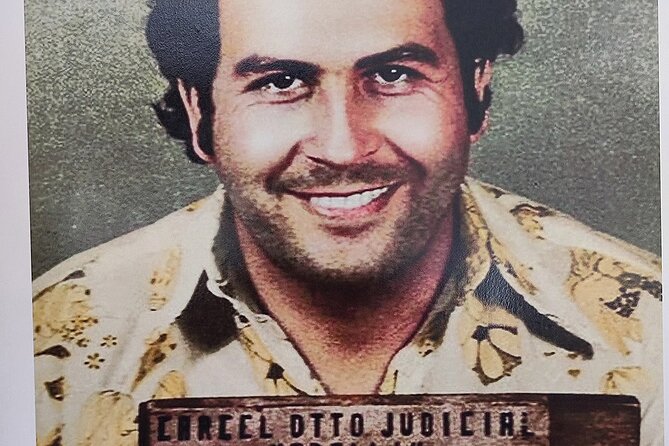
- La Catedral access changed in June 2025: You can still visit public areas and walk through open parts of the ruined prison, but authorities no longer allow visitors to walk through the cells, nightclub, helipad, tower, and escape-route areas shown in some older photos.
- The tour links four very different places: Inflexión Memorial Park, La Catedral, the La Paz neighborhood, and Cementerio Jardines Montesacro each tell a separate part of Escobar’s story.
- Jairo Calderon and Oscar Escobar are named guides: The strongest praise goes to the guides’ local knowledge, balanced explanations, flexibility, and personal connection to Medellín.
- It is a private tour: Only your group takes part, with pickup and drop-off at your accommodation.
- The tour is about Medellín as much as Escobar: Good guiding places the drug trade beside poverty, weak public services, political violence, and the city’s later recovery.
- Allow four to five hours: Transfers are included in the timing, but the route includes a trip outside Medellín to the mountain site of La Catedral.
Why this tour needs more than crime trivia

A Pablo Escobar tour can easily become a parade of notorious names, escape stories, and old mansions. That approach may be entertaining for an hour, but it gives you little sense of what life was like for ordinary people caught in the violence.
This experience is strongest when the guide explains cause and consequence. Medellín’s inequality, rapid growth, and weak government presence helped create conditions in which Escobar could first gain support in poor communities. His housing projects and public works did not erase the terror that followed, but they help explain why some people once viewed him as a benefactor.
That distinction matters. The tour does not need to excuse Escobar in order to explain how his influence grew. A good guide can describe the appeal of easy money and local investment while also showing how extortion, assassinations, bombings, and plata o plomo, silver or lead, destroyed trust and civic life.
The strongest guiding style here is calm and measured. Jairo Calderon has been praised for giving clear explanations, allowing time for photos and refreshment breaks, and adding details as the vehicle passes through different parts of Medellín. Oscar Escobar has also been described as someone who grew up in barrios affected by the cartel era, giving his account a personal quality that a documentary cannot provide.
You should expect a serious tone. The tour is not designed to make Escobar into a folk hero, and it does not hide the fact that the subject remains painful for many people in Colombia.
More Pablo Escobar history tours:
- Museo Pablo Escobar
★ 5.0 · 7,242 reviews - Medellín: The Real Pablo Escobar Tour
★ 4.8 · 3,205 reviews - Pablo Escobar Shared Tour of Medellin
★ 5.0 · 1,560 reviews
Inflexión Memorial Park and the former Monaco Building
The first stop is Inflexión Memorial Park, located at the site of the former Monaco Building. This was the main home of Escobar and his family, a large residence tied to wealth, power, and danger.
The building itself is gone. In its place, the memorial focuses attention on people affected by Escobar’s criminal activity. That change in use is important. Instead of preserving a narco mansion as a shrine, Medellín has turned the location toward memory and public reflection.
You get about 45 minutes here, including the arrival and departure transfer time. Do not expect a long museum visit or a preserved interior. The value is in understanding the shift from private power to public remembrance.
I like this as the opening stop because it gives the day a moral center. You begin with the people harmed by the cartel era, not with glamorous stories about hidden rooms or luxury cars. The guide can then explain Escobar’s family life, wealth, and public image without letting those details dominate the story.
The stop is also useful for visitors who have seen television dramas about Escobar. Fiction often compresses events and turns locations into symbols. At Inflexión, you get a physical place where those stories can be connected to Medellín’s real civic memory.
La Catedral: prison, private kingdom, and restricted access
La Catedral is the most unusual stop, and it is also the one most likely to differ from older photographs and descriptions.
Escobar was held here in a prison arrangement that became famous because it offered him conditions far removed from a normal prison. The site included cells, halls, a nightclub, a guard tower, a former soccer field, tunnel areas, and an escape route. Some accounts also identify a possible mass grave and cocaine laboratory in the surrounding area.
The tour explains what happened in these places and points out the public areas that remain accessible. Some sections of the old prison have been reconstructed, while others are ruins. Local regulations can limit access without warning.
The crucial practical point is the June 2025 change. Authorities no longer allow visitors to walk through the cells, helipad, nightclub interior, guard tower, and escape-route areas shown in some user-submitted photographs. You may still stop, look around, and walk through portions of the former prison that are open to the public, but you should not book this expecting the close-up access shown in older online images.
That restriction does not make the stop pointless. In some ways, seeing the remains from permitted areas reinforces the strange scale of the place. The guide’s explanation becomes more important when you cannot enter every room. You are relying on context, maps, stories, and the physical setting rather than simply collecting photographs.
The two-hour stop includes the visit and related movement around the site. Since admission is included, you do not need to budget a separate entrance fee. The drive also matters. La Catedral is in the hills outside Medellín, so private transport saves you the trouble of arranging a separate route and lets the guide add commentary along the way.
This part may not suit you if you want a polished historic attraction with clearly marked rooms. La Catedral is partly ruined, partly reconstructed, and subject to access rules. Its appeal comes from the story and the setting, not from a perfectly preserved prison interior.
La Paz and the house tied to Escobar’s youth
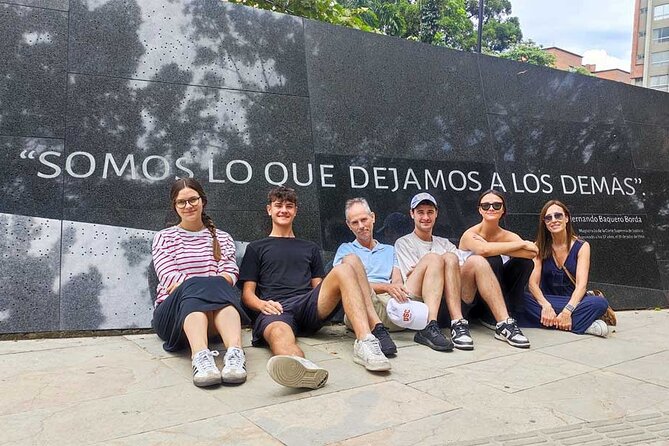
The stop in La Paz shifts the story from the powerful adult criminal to the young man who grew up in Medellín.
You enter the neighborhood where Escobar spent his teenage years, met his wife, and began building the relationships and ambitions that later shaped his criminal career. The tour visits the site of the house where he spent his youth and uses the surrounding streets to explain his early environment.
You get about 45 minutes here. This is not a grand monument, and that is part of its value. The stop places Escobar within an ordinary residential setting rather than presenting him only through his later wealth and notoriety.
I find this kind of context useful because crime stories often begin with the criminal already fully formed. Seeing the neighborhood and the family setting helps you consider the social conditions around him without turning background into an excuse.
The guide’s ability matters most here. A local guide can explain how Medellín’s neighborhoods changed during the period, how money moved through communities, and why some residents viewed Escobar with a mix of fear, dependence, and admiration. The account should remain balanced: building homes or helping poor families never cancels murder, intimidation, or the destruction of public life.
Keep your expectations realistic. The house site is not presented as a lavish museum, and the neighborhood itself is not an attraction built for mass sightseeing. It is a brief, grounded stop that works best when you listen carefully to the explanation.
More things to do in Medellin:
- Medellin: Comuna 13 Graffiti Tour, Cable Car & Street Food
★ 4.8 · 9,046 reviews - Comuna 13 Graffiti Tour with Street Food
★ 5.0 · 7,503 reviews - Guatapé Tour: Piedra del Peñol with Boat Tour, Breakfast, Lunch
★ 5.0 · 7,035 reviews - Day Trip To Guatapé with ,Breakfast, Lunch and Boat Ride
★ 5.0 · 2,996 reviews
Cementerio Jardines Montesacro and the final chapter
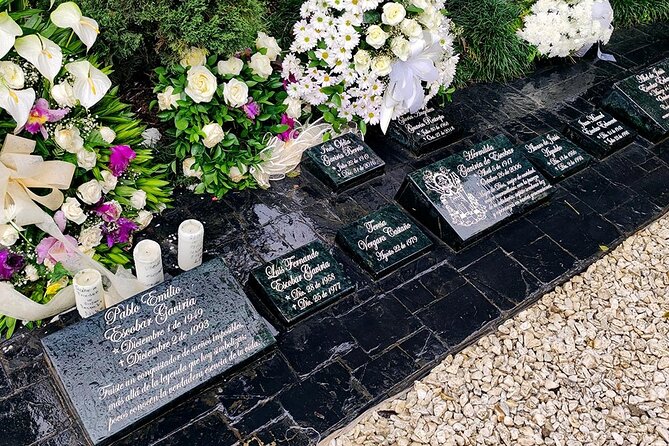
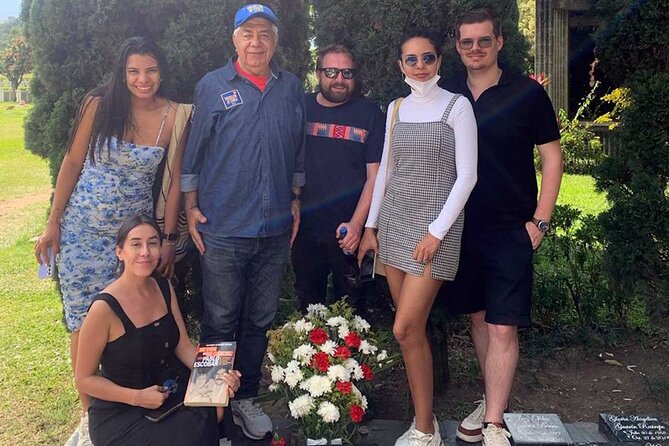
The final major stop is Cementerio Jardines Montesacro, where Escobar is buried. His grave draws visitors throughout the year, making this one of the more direct and emotionally charged places on the route.
The tour also visits the graves of other figures associated with the Medellín Cartel, including Griselda Blanco and Gustavo Gaviria. That wider view helps show that Escobar was part of a network, not a lone figure operating in isolation.
You have about an hour here, including the transfers connected with the stop. The cemetery offers a quieter setting after the drive, the prison ruins, and the urban sites. It also raises a question that the tour cannot answer for you: why does a criminal figure remain such a strong object of public fascination?
I appreciate that the cemetery visit can bring the story back to human scale. Graves are less theatrical than a prison escape route. They encourage you to think about death, family, reputation, and the people who continue to live with the consequences.
The presence of Griselda Blanco’s and Gustavo Gaviria’s graves adds useful context, though you should not expect a full separate biography of each person. The focus remains Escobar and Medellín’s cartel era.
What the private vehicle adds
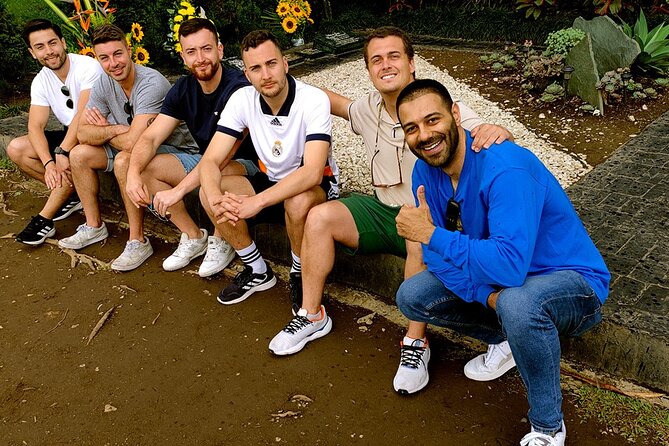
The tour includes an air-conditioned vehicle and pickup and drop-off at your accommodation. That is more than a minor convenience. The route covers central Medellín, residential neighborhoods, and the rural mountain setting of La Catedral, so arranging each transfer independently would take time and could make the day less efficient.
The private format means only your group participates. You can ask questions without waiting for a large group, and the guide can adjust the pace for photos, explanations, or a short refreshment break. Jairo Calderon has been praised for this flexibility, including his willingness to adapt the day as questions and interests develop.
There is one comfort issue to consider. The back seat can feel tight for three adult men. If your group includes three larger adults, ask about seating before booking if possible. A private vehicle is useful, but private does not always mean spacious.
The tour is listed as suitable for most people and near public transportation, though pickup and drop-off are provided. Confirmation arrives at booking. These details make the experience simple to arrange, especially if you have only a few days in Medellín.
Is $92 a fair price?
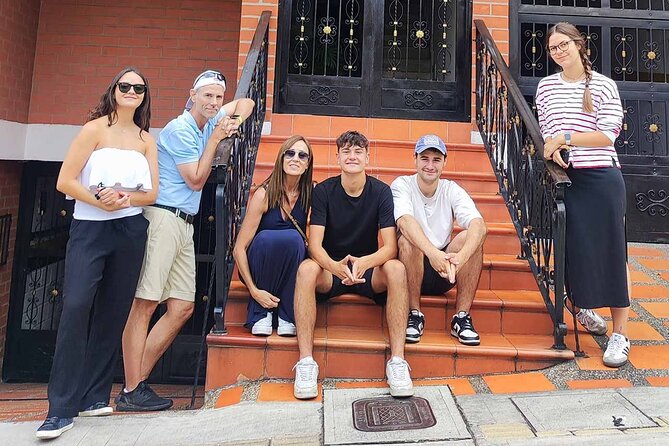
At $92 per person, this is not the cheapest way to hear about Pablo Escobar. You are paying for a private vehicle, a native local guide, hotel pickup and return, and a half-day route that reaches La Catedral.
The price makes more sense if you are traveling with two or three people and want a focused, private experience. A strong guide can add far more value than a basic transport service because the important part is not simply seeing a grave or a ruined wall. It is understanding how the places connect.
The value is also tied to the guide. The most praised qualities are clear storytelling, local experience, balance, flexibility, and respect for victims. Jairo Calderon is particularly praised for combining city history with cartel-era details, while Oscar Escobar is described as offering a personal view shaped by growing up in affected barrios.
Still, the price may feel high if you mainly want photographs of the old prison interiors. Since access changed in June 2025, you should book for the explanations and broader history, not for guaranteed entry into every room shown online.
Who will enjoy this experience most?
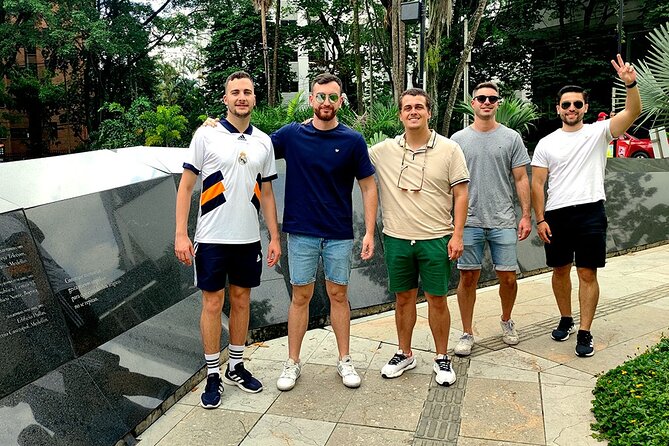
I would recommend this tour to you if you want to understand Medellín beyond cable cars, restaurants, and scenic viewpoints. It is especially useful if you have watched documentaries or dramas about Escobar and want to separate fiction from local memory.
It suits people interested in modern Colombian history, urban change, organized crime, and the difficult question of how communities respond when the state fails to provide basic services. It also works well for visitors who prefer a private guide and direct transport.
I would hesitate to recommend it to you if you want a cheerful half-day activity. The subject includes terrorism, murder, corruption, and lasting trauma. You should be ready to listen rather than treat the sites as a collection of sensational photo stops.
You should also be comfortable with changing access at La Catedral. The experience remains worthwhile, but the exact route through the ruins can be limited by local rules.
Cancellation and planning notes
You can cancel for a full refund up to 24 hours before the scheduled start time. Changes or cancellations made less than 24 hours in advance are not accepted for a refund, and cut-off times use Medellín local time.
The tour is booked, on average, about 10 days ahead. That does not guarantee that last-minute reservations are impossible, but planning ahead is sensible if you want a particular date or guide.
Most people can participate, and the tour is private. Because the day includes ruins, outdoor walking, and a mountain-site visit, ask for current access details when booking if your group has specific mobility concerns. The supplied information does not promise access to every former prison area.
Should you book the Pablo Escobar tour?
Book it if you want context, local stories, and a serious look at Medellín’s past, rather than a quick collection of cartel anecdotes. The private format, hotel transfers, and experienced local guides make $92 a reasonable price for a half-day experience.
My main advice is to reset your expectations before you go. La Catedral is no longer an open walk-through of every cell and notorious room, and older photographs can be misleading. If you accept that, the tour’s real strength comes through: it connects a former home, a neighborhood, a prison ruin, and a cemetery to the city’s long struggle with violence and recovery.
Skip it if you are interested only in sensational details or if difficult history is not your idea of a good day. For anyone hoping to understand modern Medellín beyond the headlines, this is one of the more useful ways to spend four to five hours.
FAQ
How much does the Pablo Escobar tour cost?
The tour costs $92 per person.
How long does the tour last?
The experience lasts approximately four to five hours, including transfers connected with the stops.
Is this a private tour?
Yes. Only your group participates.
Does the tour include hotel pickup and drop-off?
Yes. Pickup and drop-off at your accommodation are included.
Can I enter all parts of La Catedral?
No. Since June 2025, authorities no longer allow visitors to walk through certain areas shown in older photographs, including the cells, helipad, nightclub interior, guard tower, and escape route. Open public areas and some ruins remain available, but access can change without notice.
Can I cancel for a full refund?
Yes. You can cancel at least 24 hours before the experience start time for a full refund. Cancellations or changes made less than 24 hours in advance are not accepted for a refund.
Just added in Medellin
- Tour Peñol-Guatape privado: con desayuno, almuerzo y bote★ 5.0 · 1 review
- Silletero Tour – From Medellín★ 5.0 · 1 review
- Tour Medellín: Commune13 and Pablo Escobar + Rooftop★ 5.0 · 2 reviews
- Tour Medellín: Pablo Escobar and Commune 13★ 5.0 · 3 reviews
- Medellin: Tour Pablo Escobar Privado Con Guia Local★ 5.0 · 1 review
- Tour Guatapé – Piedra del Peñol with departure from Medellín★ 5.0 · 24 reviews
- Tour Guatapé: luxury yacht to the stone of Peñol.★ 5.0 · 2 reviews
- Tour Guatapé con visita a Granja de las Llamas y las Alpacas★ 3.5 · 11 reviews