
REVIEW · MEDELLÍN TOURS
Pablo E. with Commune 13 Tour
Medellín’s past and present meet here. This four-hour private outing links three Pablo Escobar sites with the colorful streets of Comuna 13, giving you a quick look at both the city’s dark chapter and its remarkable social change. I like the efficient route and the chance to discuss Escobar’s story at the actual places tied to it. I also like that hotel pickup and a private group keep the day simple and personal. The main drawback is the pace: four stops in about four hours leave little time for lingering.
I would choose this experience if you want a focused introduction rather than a full-day city tour. The subject is serious, and the Escobar portion can feel uncomfortable if you prefer Medellín stories centered only on art and renewal. Still, the shift from a former prison and a gravesite to street art and community life gives the outing a useful contrast.
In This Review
- Key points at a glance
- Why this Medellín tour works as a half-day plan
- La Catedral, Escobar’s former prison
- Jardines Montesacro and the grave of Pablo Escobar
- Los Olivos and the house where Escobar died
- Comuna 13, where art changes the conversation
- What the private format adds
- Is $95 a fair price?
- Timing, pickup, and practical details
- Who should book this experience?
- My booking advice
- FAQ
- How much does the tour cost?
- How long does the experience last?
- Is hotel pickup included?
- Is this a private tour?
- Can I cancel for a full refund?
- Is Comuna 13 admission included?
Key points at a glance
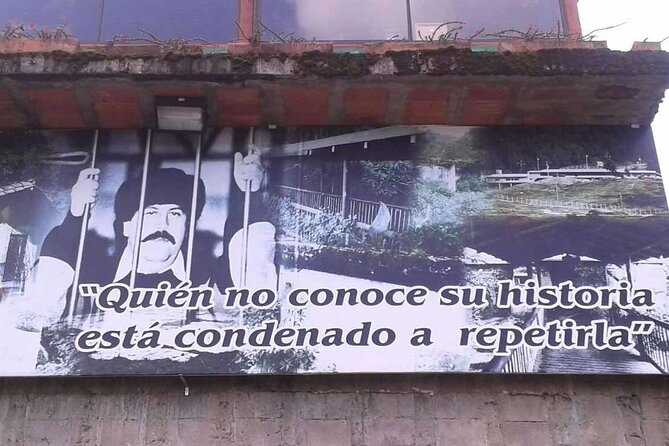
- Four connected stops: Visit La Catedral, Escobar’s grave, the house where he died, and Comuna 13 in one private outing.
- Hotel pickup included: Start with collection at your hotel, a practical touch in an unfamiliar city.
- A guide-led history lesson: The Escobar stops focus on stories, events, and the role each place played.
- Comuna 13 takes about 75 minutes: See graffiti, street art, and the famous outdoor escalators.
- Private for your group: You do not share the activity with other participants.
- Flexible guiding may be possible: Jhon is praised for making the trip joyful and for adjusting the route when asked about other Escobar-related places.
Why this Medellín tour works as a half-day plan
This experience is built around contrast. The first three stops examine Pablo Escobar’s power, imprisonment, death, and burial. The final stop shifts the focus to Comuna 13, where art, public space, and community identity now shape the visit.
That structure matters. An Escobar-only outing can leave you with a narrow picture of Medellín, one fixed on crime and notoriety. Comuna 13 adds a second story. You see why the city is not defined only by its past, and why the neighborhood has become such a major stop for people exploring Medellín.
The timing is tight but useful. The listed visits add up to roughly two hours and 45 minutes, with the rest of the approximately four-hour experience used for driving, hotel pickup, and transitions. You should expect a brisk schedule rather than a slow, open-ended day.
Because the tour is private, you can ask questions without waiting for a large group. That is especially helpful at the Escobar sites, where context makes the locations more meaningful. One guide associated with the experience, Jhon, is singled out for keeping the trip cheerful and adapting when a participant wanted to see additional Escobar-related places. That flexibility is worth asking about when you book, but extra stops should not be treated as guaranteed.
More things to do in Medellin:
- Medellin: Comuna 13 Graffiti Tour, Cable Car & Street Food
★ 4.8 · 9,046 reviews - Comuna 13 Graffiti Tour with Street Food
★ 5.0 · 7,503 reviews - Museo Pablo Escobar
★ 5.0 · 7,242 reviews
La Catedral, Escobar’s former prison
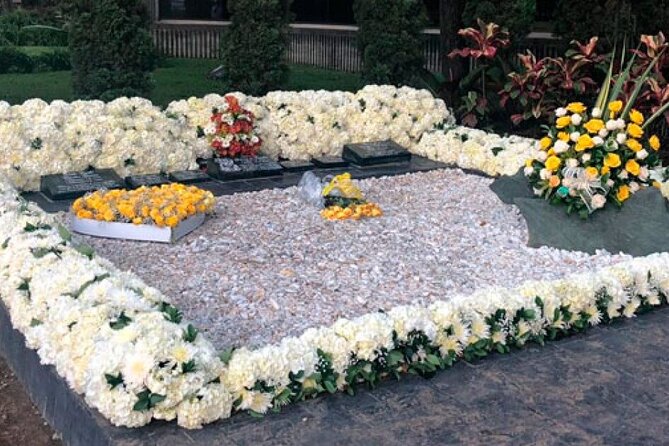
The first major stop is La Catedral, the prison where Pablo Escobar was held. The visit lasts about 30 minutes, and admission is included at no extra cost.
This site is important because it was not simply a place where Escobar sat out a sentence. The tour presents it as a base of operations for the cartel leader, with events and stories connected to his time there. That gives the stop a strange historical weight. A prison that should have represented state control instead became part of the story of Escobar’s power.
Thirty minutes is enough for an introduction, but not enough for an exhaustive historical session. You will likely get the most from this stop by listening closely to the guide’s explanation and asking direct questions. If you already know the broad outline of Escobar’s life, the value comes from connecting those facts to the physical setting.
I appreciate that the tour begins here rather than rushing straight to the more famous Comuna 13. You first see how Escobar’s influence shaped the public story of Medellín. The limitation is that a half-hour visit cannot cover every political, social, and personal detail tied to La Catedral.
The subject also calls for some care. Escobar remains a famous figure, but fame is not the same as admiration. I would treat this stop as a chance to understand power, violence, and the failures that allowed a criminal leader to operate so freely, not as a celebration of his image.
Jardines Montesacro and the grave of Pablo Escobar
The second stop takes you to Cementerio Jardines Montesacro, where Escobar is buried. You have about 30 minutes here, with admission included.
A gravesite can feel less dramatic than a prison, but it often gives a better sense of how public memory works. The guide talks through Escobar’s life and helps place the grave within the wider story. You are not simply checking off a famous name. You are considering how one person’s actions continue to attract attention long after his death.
The cemetery stop also breaks up the route well. After the institutional setting of La Catedral, you move to a personal and symbolic place. The shift can make the history feel less abstract.
Do not expect a large museum or a long memorial program. The supplied details describe a visit to the tomb and a short discussion of his history. If you want a highly detailed account of the cartel years, you will need to use your time with the guide wisely.
I would keep your expectations measured here. The attraction is the meaning of the place, not a long list of displays or activities. For anyone interested in how Medellín remembers its past, though, the stop provides a direct connection to one of the city’s most controversial figures.
Los Olivos and the house where Escobar died
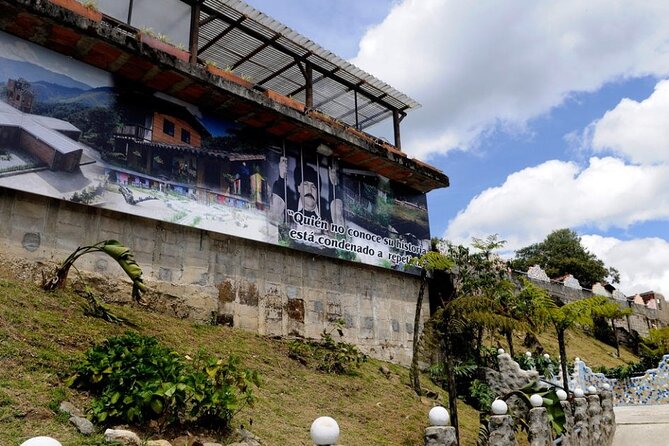
The third stop is in the Los Olivos neighborhood, at the house where Escobar died during the operation carried out by the Search Bloc. This visit also lasts about 30 minutes.
The house gives the tour a strong narrative midpoint. At La Catedral, you see the period when Escobar held unusual power. At the cemetery, you see the aftermath. Here, the story reaches its final scene.
A guide’s explanation is particularly important at this stop because the house itself may not communicate much without context. The meaning comes from what happened there and from the operation that brought Escobar’s life to an end. I would listen for the sequence of events and ask questions about how the location fits into the wider story.
As with the other Escobar stops, the short visit is both a strength and a weakness. It keeps the tour moving and prevents the morning from becoming a single-topic history lecture. On the other hand, you will not have much time for extended discussion.
The three stops work best together. Each location shows a different stage of the story: power, memory, and death. Taken as a set, they offer more than any one stop could provide.
A completely different kind of day:
- Guatapé Tour: Piedra del Peñol with Boat Tour, Breakfast, Lunch
★ 5.0 · 7,035 reviews - Medellín: The Real Pablo Escobar Tour
★ 4.8 · 3,205 reviews - Day Trip To Guatapé with ,Breakfast, Lunch and Boat Ride
★ 5.0 · 2,996 reviews - Comuna 13 Graffitour knows the urban art district of Medellín
★ 5.0 · 2,856 reviews
Comuna 13, where art changes the conversation
The final stop is Comuna 13, and it receives the longest scheduled visit, about one hour and 15 minutes. Admission is included.
Here, you walk through the area known for graffiti and street art, use the famous outdoor escalators, and hear how the community changed from one of Medellín’s most dangerous areas into a place associated with culture, inclusion, and hope.
The extra time makes sense. Comuna 13 is not a single viewpoint or monument. It is a neighborhood to walk through, with art and public spaces forming part of the experience. The escalators are practical infrastructure, but they also represent improved access for residents on the hillside. The tour frames the area through social transformation, community strength, and creative expression.
I like the balance created by placing Comuna 13 after the Escobar sites. The first part deals with a figure who often dominates outside impressions of Medellín. The final part gives you a closer look at people and communities shaping their own identity.
The street art is another reason to pay attention to the guide rather than treating the stop as a photo session. Murals can carry political, social, and local meaning. The supplied description promises a close look at the history behind the neighborhood’s change, so use the walk to ask how art connects with daily life and public memory.
You should also keep the tone of the visit respectful. Comuna 13 is a living neighborhood, not a film set. The tour presents it as peaceful and full of life, but that does not mean its past should be treated as entertainment. I would enjoy the music, color, and artwork while remembering that the transformation came through real community effort.
The 75-minute schedule gives you a useful introduction, though it is not enough to explore every corner. If Comuna 13 is your main reason for visiting Medellín, you may want a longer, dedicated neighborhood tour instead. If you want to combine it with an Escobar history lesson, this arrangement is efficient.
What the private format adds
Only your group participates, which changes the feel of the day. You can ask about a detail that interests you, pause for clarification, and avoid being locked into the interests of a large crowd.
That matters most during the Escobar portion. The subject often brings up questions about politics, policing, violence, and memory. A private guide can respond to your level of knowledge instead of delivering one fixed speech.
The private format may also help at Comuna 13. You can focus on the street art, the escalators, or the social changes that interest you most. The experience is still time-limited, but the conversation can be more relevant to you.
One caution: private does not automatically mean fully customized. The planned route has four defined stops, and the total duration is about four hours. Jhon is noted for being flexible when asked about additional Escobar locations, but you should confirm any special request before assuming it can be added.
Is $95 a fair price?
At $95 per person, this is not the cheapest way to see Medellín. The value depends on what you want from the outing.
You are paying for a private activity, hotel pickup, a guide, transportation between several locations, and admission at the included stops. You also save the effort of arranging separate visits to La Catedral, Jardines Montesacro, Los Olivos, and Comuna 13.
For a solo participant or a couple, the price may feel high compared with using public transportation and visiting fewer sites independently. For a small private group, the cost becomes easier to justify because the fee buys convenience and shared guiding rather than a seat on a large coach.
The strongest value is the combination. A dedicated Comuna 13 tour and a separate Escobar tour could take more time and cost more. This experience gives you both subjects in one morning or afternoon, though neither receives the depth of a stand-alone tour.
I would book it for the route and the private format, not simply because Escobar’s name is famous. If you want slow photography, long conversations, or a detailed study of Medellín’s social history, the schedule may feel too compressed for the price.
Timing, pickup, and practical details
Hotel pickup is included, which removes one common source of stress. You should provide clear hotel details when booking and be ready at the agreed time, since a four-hour route has limited room for delays.
Confirmation is provided at booking. The experience operates near public transportation, but the stated plan includes hotel pickup, so you may not need to arrange your own way to the starting point.
Most people can participate, and service animals are allowed. No special admission charges are listed for La Catedral, Jardines Montesacro, or the house in Los Olivos, while Comuna 13 admission is included.
The tour is available for booking an average of seven days in advance. That is a useful planning clue, especially if your Medellín schedule is short. I would not leave it until the final day if you need a particular pickup time or want to ask about an extra Escobar-related stop.
Free cancellation is available if you cancel at least 24 hours before the local start time. Within 24 hours, you receive no refund, and changes made inside that window are not accepted.
Who should book this experience?
I would recommend it to you if you want a compact introduction to two very different sides of Medellín. It suits first-time visitors who want historical context, a famous neighborhood, and the convenience of private transportation in one package.
It is also a good fit if you enjoy asking questions. The format gives you room to discuss the Escobar sites and then switch to art, community life, and urban change in Comuna 13.
You may want another option if your main goal is a slow, detailed exploration of the neighborhood. You may also prefer a different tour if you dislike crime-focused tourism or do not want to visit a grave and the site of a violent death.
Families and mixed-interest groups could find the combination useful, provided everyone is comfortable with the serious subject matter. The final Comuna 13 visit brings more color and movement, but the first half remains centered on crime and its consequences.
My booking advice
I would book this tour when you want one private, well-structured route that connects Escobar’s story with Medellín’s current community identity. The four stops make sense together, the hotel pickup is convenient, and the 75-minute Comuna 13 visit keeps the day from becoming a one-note crime tour.
I would skip it if you want maximum time at any single site or if $95 feels high for a short half-day. Before booking, ask whether Jhon is available if you value the flexible guiding noted in the experience, and confirm whether any additional Escobar locations can fit without cutting into Comuna 13.
FAQ
How much does the tour cost?
The price is $95 per person.
How long does the experience last?
The tour lasts approximately four hours.
Is hotel pickup included?
Yes. Hotel pickup is part of the experience.
Is this a private tour?
Yes. Only your group participates in the activity.
Can I cancel for a full refund?
Yes, if you cancel at least 24 hours before the experience start time. Cancellations within 24 hours are not refunded.
Is Comuna 13 admission included?
Yes. Admission for the Comuna 13 portion is included.
Just added in Medellin
- Walking Tour, Cable Car & Fruit Tasting★ 5.0 · 1 review
- Pablo Escobar and Griselda Blanco Tour★ 5.0 · 1 review
- 3 days private mountain tour, nature and culture near Medellin★ 5.0 · 22 reviews
- City tour, Commune 13, Metro Cable, Botero Park and more. Private★ 5.0 · 34 reviews
- comuna 13 tour★ 3.5 · 6 reviews
- commune thirteen transformation story★ 4.5 · 14 reviews
- fruits tour★ 5.0 · 2 reviews
- Paragliding and hammocks zipline over waterfalls private tour★ 5.0 · 6 reviews
Medellín Tours, compared.

Comuna 13 Graffiti Tour, Cable Car & Street Food
Read our review →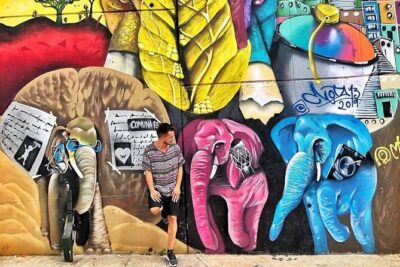

Guatapé Tour: Piedra del Peñol with Boat Tour, Breakfast, Lunch
Read our review →
Day Trip To Guatapé with ,Breakfast, Lunch and Boat Ride
Read our review →
Comuna 13 Graffitour knows the urban art district of Medellín
Read our review →
Tour to Guatape, Piedra del Peñol, lunch, snacks boat trip
Read our review →
Half Day Bike Tour in Medellin – Local snack, Coffee or Beer
Read our review →