
REVIEW · MEDELLÍN TOURS
Pablo and the drug trafficking world
Medellín’s past is never far from view. This five-stop tour connects Pablo Escobar’s former homes, prison, grave, and final hiding place with the wider story of violence, fear, and recovery in Colombia. I like the small limit of four people, which gives you room to ask direct questions, and I like that La Catedral, Escobar’s self-built prison in the mountains, is included. The main drawback is the amount of time spent in the car, though that is also what makes the far-flung stops possible.
Juan Eduardo, also called Eduardo by some guests, leads the experience in English or Spanish. He uses photographs, explains the people around Escobar, and keeps the story tied to Medellín rather than treating the drug lord like a celebrity.
At $50 per person, the tour offers strong value if you want several important sites in one half-day. It is not a light sightseeing outing, and some stops deal with murder, intimidation, and the suffering caused by the cartel. Go for context, not glamour.
In This Review
- Key points at a glance
- Why this Medellín tour is different
- Pickup, timing, and the small-group setup
- Stop one: the former house turned memorial site
- Stop two: La Catedral and the mountain views
- Stop three: a place linked to his teenage years
- Stop four: Jardines Montesacro and the grave
- Stop five: the house where Escobar was found and shot
- A guide who makes the long route worthwhile
- What the $50 price gets you
- Who should book this experience
- Practical limits and small cautions
- Should you book Pablo and the Drug Trafficking World?
- FAQ
- How long does the tour last?
- What languages are available?
- How many people can join the tour?
- Where is pickup?
- What places are visited?
- Is transportation included?
- Is La Catedral included?
- What should I bring?
- Can children join?
Key points at a glance
- La Catedral is the rare stop: The mountain prison Escobar built for himself is included, with wide views over Medellín.
- Five places tell one connected story: You visit a memorial site, La Catedral, an area linked to his youth, his grave, and the house where he was found.
- Four people maximum: The small vehicle and group make questions easy and help the tour move through traffic.
- Juan Eduardo is the main strength: He explains the timeline clearly, uses old photographs, and speaks strong English as well as Spanish.
- Expect about four and a half hours: The advertised duration is 270 minutes, with driving between widely separated locations.
- This is history with difficult material: The tour puts Escobar’s power beside the damage done to Medellín and Colombia.
Why this Medellín tour is different
Many Pablo Escobar tours focus on a few city locations and the familiar television version of the story. This experience takes a wider view. You see places connected to his rise, his power, his imprisonment, and his death, while the guide explains how Medellín became associated with extreme danger during the height of the cocaine trade.
I like that the tour does not stay in one neighborhood. The distance between the stops helps you understand that Escobar’s story was not confined to a single house or street. It spread from poor districts to wealthy parts of the city, from urban hideouts to a remote mountain compound, and from local criminal networks to a national crisis.
The guide also uses photographs to show people and places as they looked during that period. That matters because many locations have changed. A current building or park can look ordinary until you see the older image and hear what happened there.
The tone is best described as serious but personal. Juan Eduardo is friendly and has a sense of humor, yet the subject is handled with respect. You get stories and details, but the focus remains on how drug trafficking shaped Colombia and how Medellín has worked to move beyond that identity.
More things to do in Medellin:
- Medellin: Comuna 13 Graffiti Tour, Cable Car & Street Food
★ 4.8 · 9,046 reviews - Comuna 13 Graffiti Tour with Street Food
★ 5.0 · 7,503 reviews - Museo Pablo Escobar
★ 5.0 · 7,242 reviews
Pickup, timing, and the small-group setup
Pickup is arranged from two possible meeting points: Éxito in El Poblado or the Primer Parque de Laureles. The exact meeting place is sent by WhatsApp the day before, so keep your number current and watch for the message.
For afternoon departures, the meeting point is generally Primer Parque de Laureles. This is intended to reduce the effect of rush-hour traffic and keep the route moving. Morning tours can also be useful if you want to reach the sites before larger groups arrive.
The group is limited to four people. That changes the feel of the day. You are not trying to catch a guide’s voice from the back of a bus, and you can stop to ask about a name, event, or photograph without holding up a crowd.
Transport is by car rather than public transit or a large coach. That is especially useful for La Catedral, high in the mountains, where a larger vehicle may not be practical. The car also makes it easier to move through Medellín traffic.
The tradeoff is space. A private car is more personal, but you will spend several hours riding between stops. The guide fills much of that time with explanations, photographs, and stories, so the driving is part of the presentation rather than empty transfer time.
Stop one: the former house turned memorial site
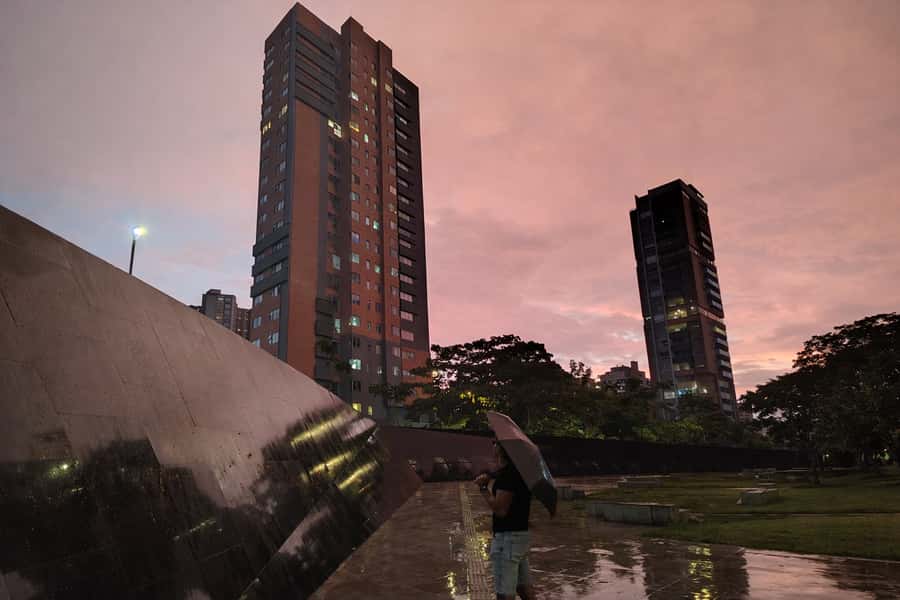
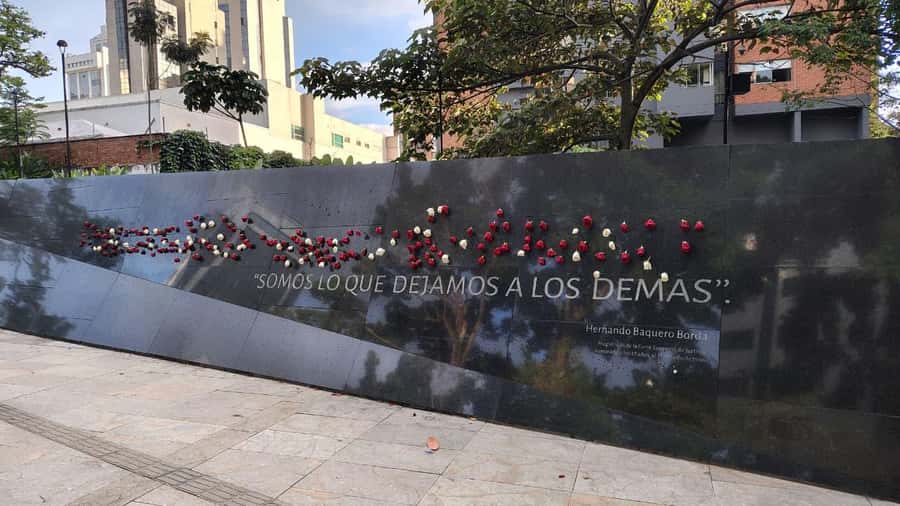
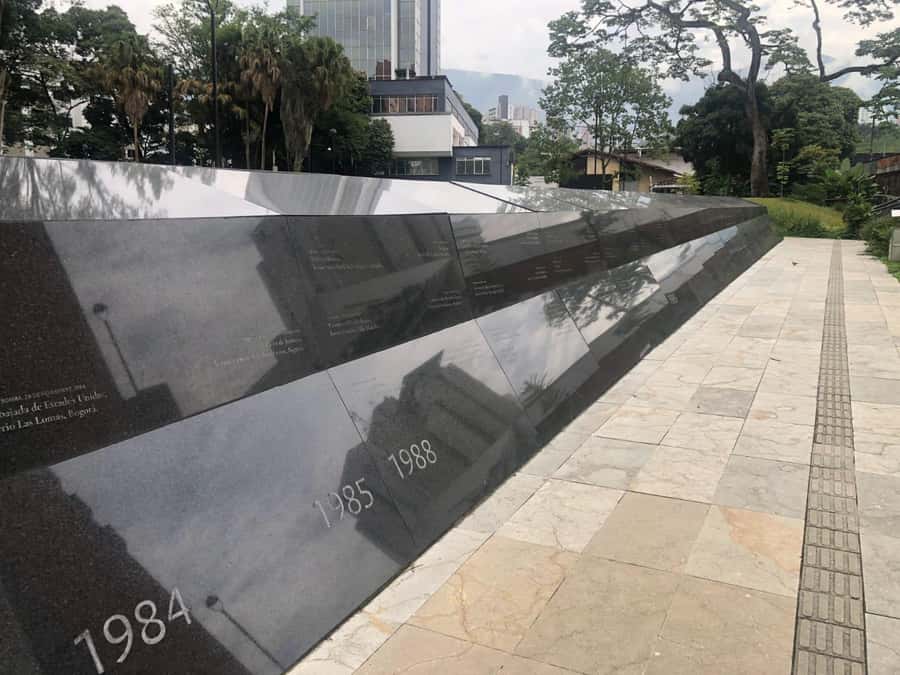
The first location was once one of Escobar’s houses and is now a memorial park. This is a useful opening because it introduces the difference between the man’s public image and the consequences of his actions.
You can expect the guide to explain how Escobar built influence through money, fear, and a carefully managed public persona. Photographs help place the property in its earlier setting and show how the site has been reinterpreted.
Allow about 25 minutes here. That is enough time to hear the background and take photographs without turning the stop into a long walk. Bring sunscreen, since parts of the visit can be exposed to strong sun.
This stop is likely to appeal most if you want to understand how Escobar presented himself to local communities. It is less about dramatic ruins and more about memory, image, and the way a city chooses to mark a painful past.
Stop two: La Catedral and the mountain views
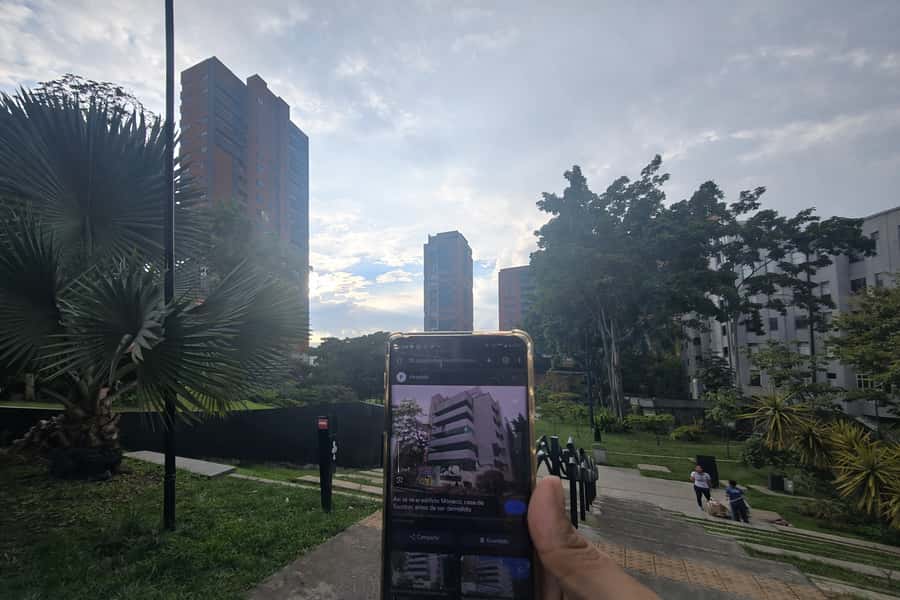
La Catedral is the central reason many people choose this tour. Escobar was technically imprisoned there, but the arrangement gave him unusual control and comfort. He built the facility himself in a mountain setting, far from the feel of a normal jail.
The site is now something else, and you should not expect a perfectly preserved museum. This is an important practical point. You are visiting the place associated with La Catedral and hearing its story, rather than entering a polished attraction with a complete display of original rooms.
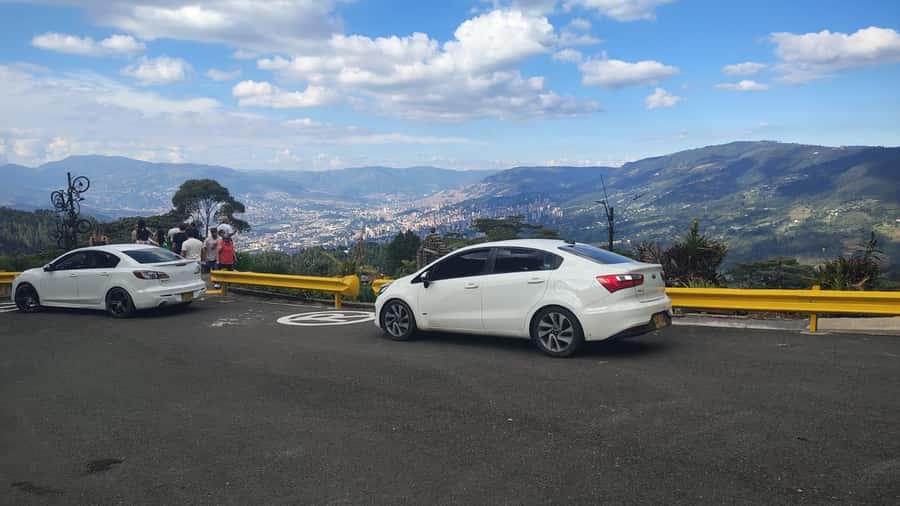
The drive up is part of the experience. The road reaches the mountains, and the views over Medellín are a major reward. From above, the city’s size and setting become clearer, and the contrast between the urban valley and the remote prison site gives the story a strong sense of place.
Plan for about 25 minutes at the stop, not counting the drive. The tour description and photographs may suggest access to a helipad, but that area is no longer available. Treat the visit as a look at the site and its setting, not as access to every feature once associated with it.
For me, this is the stop that gives the tour its strongest sense of place. You are not simply hearing that Escobar had a private prison. You are seeing where it was built and how isolated it could feel.
A completely different kind of day:
- Guatapé Tour: Piedra del Peñol with Boat Tour, Breakfast, Lunch
★ 5.0 · 7,035 reviews - Medellín: The Real Pablo Escobar Tour
★ 4.8 · 3,205 reviews - Day Trip To Guatapé with ,Breakfast, Lunch and Boat Ride
★ 5.0 · 2,996 reviews - Comuna 13 Graffitour knows the urban art district of Medellín
★ 5.0 · 2,856 reviews
Stop three: a place linked to his teenage years
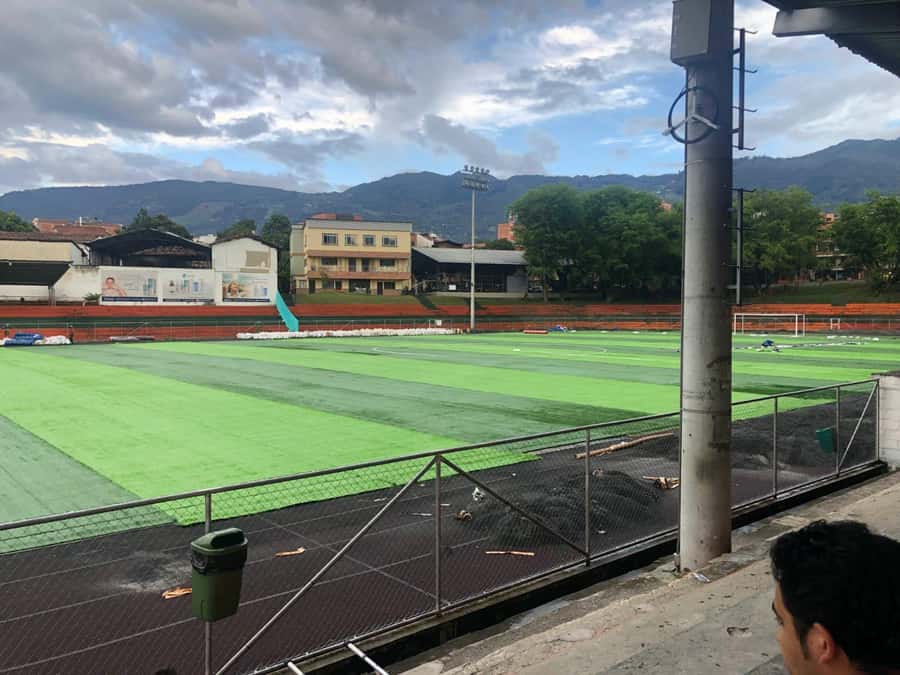
The third stop is connected with where Escobar grew up as a teenager. The itinerary identifies the location as 67R64C97+6P2, so the exact name may not be as clear to you when you book as the other stops.
That does not make it unimportant. This part of the route helps shift the story away from the famous criminal years and toward the social setting that shaped his early life. The guide explains how he became involved in drug dealing, using pictures and examples to build the timeline.
You have about 15 minutes here. A bathroom is available at this stop, which makes it a sensible moment to take a break. If you need facilities earlier or later, ask the guide rather than waiting.
The stop is brief, but the background provided while driving adds weight to it. A short look at a place linked to his youth works best when you are interested in the path from local hustling to organized trafficking, not only in the final years shown in television series.
Stop four: Jardines Montesacro and the grave
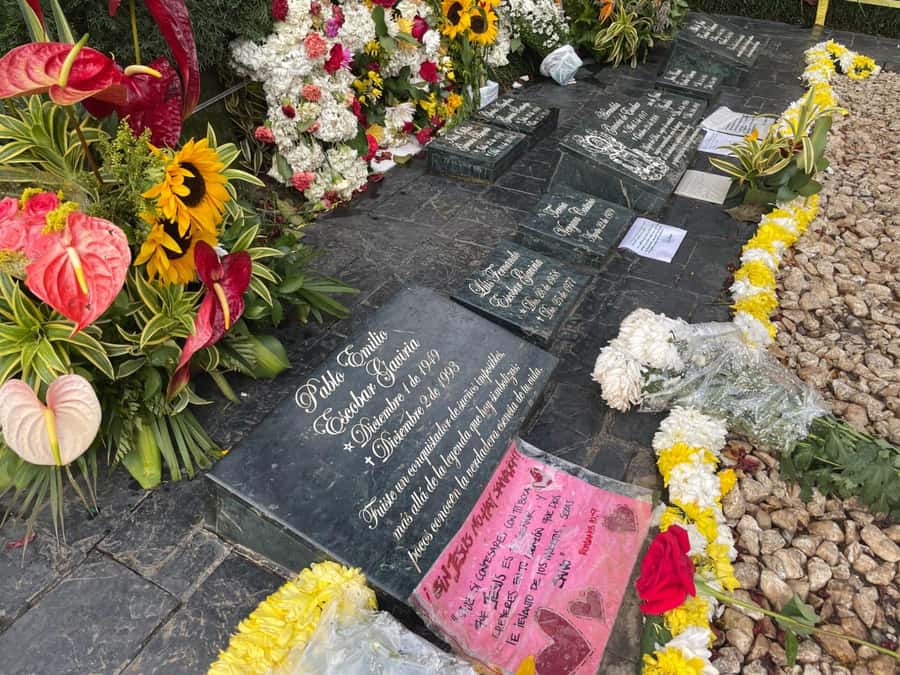
At Jardines Montesacro, you visit the cemetery where Escobar is buried. The stop lasts about 20 minutes and gives the tour a quieter change of pace.
A grave can attract curiosity, especially for anyone familiar with Narcos or other screen portrayals. But the point here is not simply to photograph a notorious name. The cemetery helps bring the story back to its human scale and opens a discussion about family, loyalty, public memory, and the long shadow left by the cartel.
The guide can explain who else was connected to Escobar’s world and how the period affected people beyond the headline figure. This is one place where a small group helps. You can ask uncomfortable or specific questions without feeling that you are performing for a busload of strangers.
Show respect at the cemetery. Keep photographs discreet and follow any instructions given on site. The tour is about understanding the past, not treating a burial place like a film set.
Stop five: the house where Escobar was found and shot
The final major stop is the house where Escobar was hiding when authorities found him. It is connected with the events of his death and gives the timeline a clear endpoint.
You have about 20 minutes here. The guide uses photographs and explains what happened, how the search closed in, and why the location mattered. The value comes from having the scene placed within the larger story rather than hearing only a dramatic final anecdote.
This stop can feel intense. If you are mainly looking for architecture or a scenic view, it may seem ordinary. If you want to understand how the manhunt ended and how Medellín’s most violent period began to change afterward, it is an important final piece.
The tour finishes at Éxito Wow Poblado. Some guides have also helped with a hotel drop-off when practical, but do not assume that this is guaranteed. Confirm your end point if you need to make a tight evening plan.
A guide who makes the long route worthwhile
The strongest part of this experience is Juan Eduardo’s presentation. He explains the story in clear English and Spanish, answers detailed questions, and keeps talking during the drives so the travel time does not feel wasted.
He also brings visual material. Seeing older photographs while standing near a current site helps you connect names, dates, and places. This is particularly useful when a building has changed or when the modern surroundings give little clue about what happened there.
The small group lets him adjust the conversation. If you already know the basic story from books or television, you can ask about lesser-known figures and events. If you are starting from zero, he can build the timeline from Escobar’s early years through the Medellín cartel and the national consequences.
The guide’s tone also matters. The best version of this tour does not excuse Escobar’s crimes or turn victims into background scenery. It explains why his public image attracted support in some communities while his organization caused fear, murder, and destruction across Colombia.
What the $50 price gets you
At $50 per person, the price is reasonable for a 270-minute guided route with transport, five locations, and a maximum of four participants. You are paying for the car, the guide’s time, the mountain drive to La Catedral, and a structured explanation that connects the stops.
The value is strongest for couples, families with older children, or small groups who want a personal experience without hiring a fully private tour at a much higher rate. It is also a good fit if you do not want to figure out several distant locations by yourself.
A special-month promotion offers 20 percent off, but check the final price at booking to see how that discount is applied. Snacks and drinks are not included, though the guide can stop if you need to buy something.
Bring cash for water or small purchases. Sunscreen is important, especially at the first stop, and a passport or copy is recommended in case police ask for identification. Pack personal medication if you need it.
Who should book this experience
I would choose this tour if you want a serious look at Medellín’s recent past and prefer questions, photographs, and conversation over a large scripted group. It suits people interested in Colombian history, organized crime, journalism, true crime, or the real events behind television dramas.
It also works well if you want to limit walking. Most of the route is handled by car, with short visits at the locations. You should still be comfortable with a long half-day and mountain travel.
The tour is not suitable for children under eight or people over 75. It is also a poor choice if you want a cheerful city outing with no difficult subject matter. The story includes violence, death, and the effects of drug trafficking on ordinary people.
The optional meeting with Escobar’s brother is a separate experience with an additional fee. Consider it only if you specifically want that extra encounter and have confirmed the cost and arrangements in advance.
Practical limits and small cautions
The group may include English and Spanish speakers together. That can work well, and one family even used both languages during the tour, but the pace may vary if information is repeated or explained in two languages.
Smoking is not allowed in the vehicle or indoors. Weapons, sharp objects, alcohol in the vehicle, pets except assistance dogs, speakers, skateboards, surfboards, fireworks, and several other items are prohibited.
Keep valuables to a minimum. Do not feed animals, make fires, or bring items that have no place on a guided historic route.
The advertised duration is 270 minutes, but traffic can affect the schedule. Afternoon travel is planned around rush hour, yet Medellín roads are still unpredictable. Leave some space before your next appointment.
Should you book Pablo and the Drug Trafficking World?
Book it if you want the full route, especially La Catedral, and value a guide who can explain the people and events behind each place. Juan Eduardo’s clear English, careful use of photographs, punctual communication, and personal approach add real value.
Think twice if you want a quick city tour, a museum-style display, or a polished attraction at every stop. Some locations are ordinary modern places, and the tour asks you to listen and think.
For most visitors interested in Medellín beyond its usual sights, this is a worthwhile half-day. The best reason to go is not to admire Pablo Escobar. It is to understand how one criminal empire affected a city and a country, and how Medellín is still telling that story on its own terms.
FAQ
How long does the tour last?
The tour lasts 270 minutes, or about four and a half hours. Traffic and the time spent at each location can affect the exact finish time.
What languages are available?
The tour is offered in English and Spanish. No other languages are included.
How many people can join the tour?
The group is limited to four participants. This allows more time for questions and a more personal experience.
Where is pickup?
Pickup is arranged from Éxito in El Poblado or Primer Parque de Laureles. The exact meeting point is sent by WhatsApp the day before.
What places are visited?
The route includes a former Escobar house that is now a memorial park, the site associated with La Catedral, a place linked to his teenage years, his grave at Jardines Montesacro, and the house where he was hiding when he was found and shot.
Is transportation included?
Yes. Transportation from the agreed meeting point is included, and the route is done by car.
Is La Catedral included?
Yes. The tour visits the mountain site associated with La Catedral, the prison Escobar built for himself. The helipad is no longer accessible.
What should I bring?
Bring sunscreen, a passport or copy, personal medication, and some cash for water or other small purchases.
Can children join?
Children under eight are not permitted. People over 75 are also listed as unsuitable for this activity.
Just added in Medellin
- Tour Peñol-Guatape privado: con desayuno, almuerzo y bote★ 5.0 · 1 review
- Silletero Tour – From Medellín★ 5.0 · 1 review
- Tour Medellín: Commune13 and Pablo Escobar + Rooftop★ 5.0 · 2 reviews
- Tour Medellín: Pablo Escobar and Commune 13★ 5.0 · 3 reviews
- Medellin: Tour Pablo Escobar Privado Con Guia Local★ 5.0 · 1 review
- Tour Guatapé – Piedra del Peñol with departure from Medellín★ 5.0 · 24 reviews
- Tour Guatapé: luxury yacht to the stone of Peñol.★ 5.0 · 2 reviews
- Tour Guatapé con visita a Granja de las Llamas y las Alpacas★ 3.5 · 11 reviews
Medellín Tours, compared.

Comuna 13 Graffiti Tour, Cable Car & Street Food
Read our review →

Guatapé Tour: Piedra del Peñol with Boat Tour, Breakfast, Lunch
Read our review →
Day Trip To Guatapé with ,Breakfast, Lunch and Boat Ride
Read our review →
Comuna 13 Graffitour knows the urban art district of Medellín
Read our review →
Tour to Guatape, Piedra del Peñol, lunch, snacks boat trip
Read our review →
Half Day Bike Tour in Medellin – Local snack, Coffee or Beer
Read our review →