
REVIEW · PABLO ESCOBAR HISTORY TOURS
More than Escobar Tour
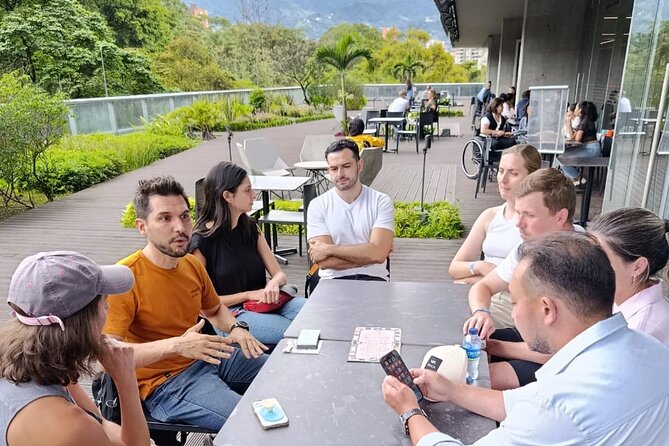
Escobar is only part of the story. More Than Escobar Tour looks at coca, cocaine, money, politics, and the human cost of Medellín’s violent past without turning crime into entertainment. I like its focus on Indigenous uses of the coca leaf, and I like the way it connects local events to the global War on Drugs. The main drawback is that transportation is not included, so you need to plan how you will move between stops.
This is a small-group tour capped at 12 people, which should give the subject room for questions rather than a rushed lecture. If Pablo is your guide, expect a strong storyteller who links history, politics, economics, and victims’ experiences with care. At $25 per person, I find the tour a good value for its three-and-a-half hours, especially if you want more than the usual cartel anecdotes.
In This Review
- What makes this Medellín tour different
- Why the title More Than Escobar matters
- Starting at Parque Lineal La Frontera
- Montecasino and the violent years
- The Medellín Chamber of Commerce and the business of drugs
- Inflexión Memorial Park and the final turn toward victims
- What you get for $25
- Who should book this experience
- Timing, group size, and practical planning
- Should you book More Than Escobar Tour?
- FAQ
- How much does the More Than Escobar Tour cost?
- How long does the tour last?
- What time does the tour start?
- Where does the tour begin?
- Where does the tour end?
- Is transportation included?
- What is included in the tour?
- How many people can join the tour?
- Can I cancel for a full refund?
What makes this Medellín tour different
- Coca leaf before cocaine: Learn about the plant’s cultural, spiritual, and medicinal roles among Indigenous communities before examining its illegal transformation.
- Montecasino and the Castaño brothers: Discuss the former residence connected to the creation of paramilitary groups and Los Pepes.
- A look at the drug trade as business: The Medellín Chamber of Commerce stop covers demand, supply chains, elasticity, money laundering, and shadow economies.
- A memorial instead of a shrine: The tour ends at Inflexión Memorial Park, built on the site of Escobar’s former Monaco building and dedicated to victims.
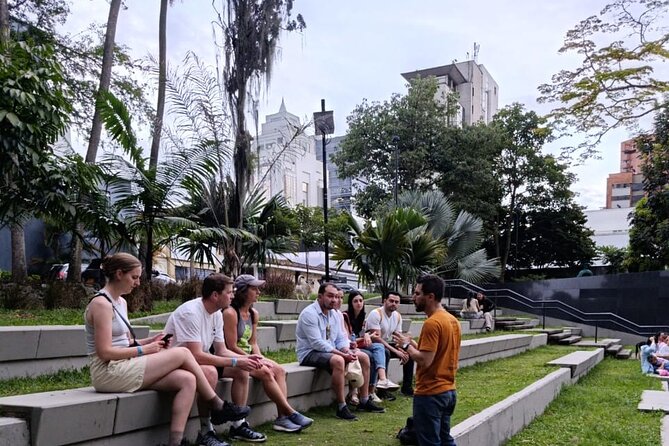
- A small group with a clear purpose: With no more than 12 people, the format supports conversation about difficult subjects.
- An afternoon schedule: The tour begins at 3:00 pm and lasts about three hours and 30 minutes, ending at the memorial.
Why the title More Than Escobar matters
Medellín has no shortage of Pablo Escobar stories. Some tours reduce the city’s past to escape routes, luxury houses, gun battles, and larger-than-life criminal legends. This experience takes a different road. It uses Escobar as one part of a much bigger story about coca, global demand, state policy, paramilitary violence, money, and memory.
That choice matters. You are not asked to admire a criminal mastermind or treat narco-violence as a colorful chapter in local folklore. The tour puts victims at the center and asks what created the conditions for the violence in the first place.
I especially like the way the experience starts before Escobar enters the picture. By discussing coca’s traditional uses first, the guide can separate the plant from the drug made from it. That distinction is easy to miss, yet it gives the rest of the afternoon a stronger foundation.
The tour also examines the role of the United States and its declaration of the War on Drugs. You get a chance to consider how policy, demand, enforcement, and local Colombian suffering fit together. The aim is not to offer one easy answer. Instead, the tour gives you a framework for asking better questions.
More Pablo Escobar history tours:
- Museo Pablo Escobar
★ 5.0 · 7,242 reviews - Medellín: The Real Pablo Escobar Tour
★ 4.8 · 3,205 reviews - Pablo Escobar Shared Tour of Medellin
★ 5.0 · 1,560 reviews
Starting at Parque Lineal La Frontera
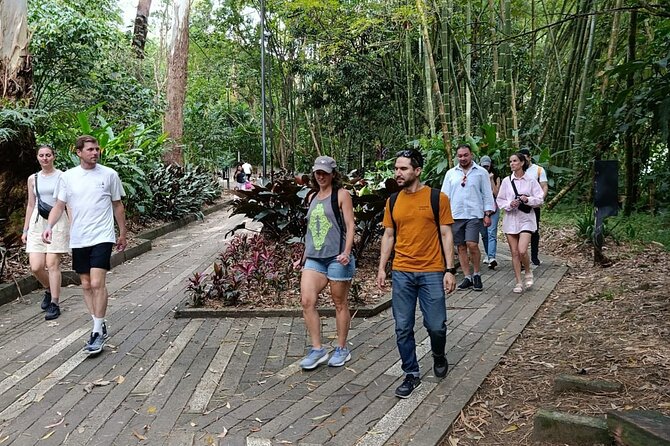
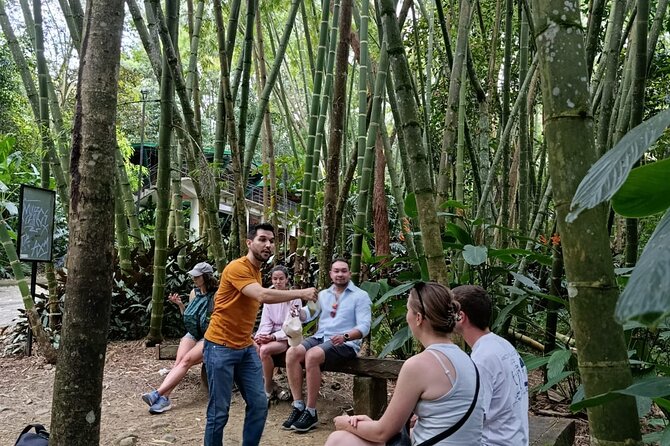
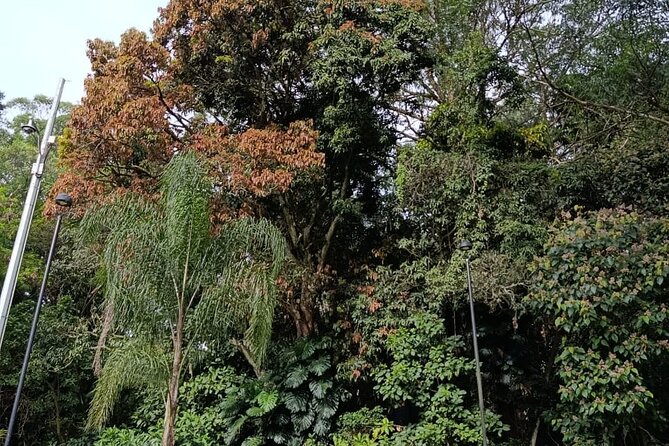
The tour begins at Parque Lineal La Frontera, at Tanque Campestre EPM on Calle 18 Sur, between El Poblado and Envigado. The meeting time is 3:00 pm. This green corridor may seem like an unexpected place to begin a discussion of cocaine, but that is part of the point. The opening location creates space to talk about the coca leaf as a plant with a long cultural life.
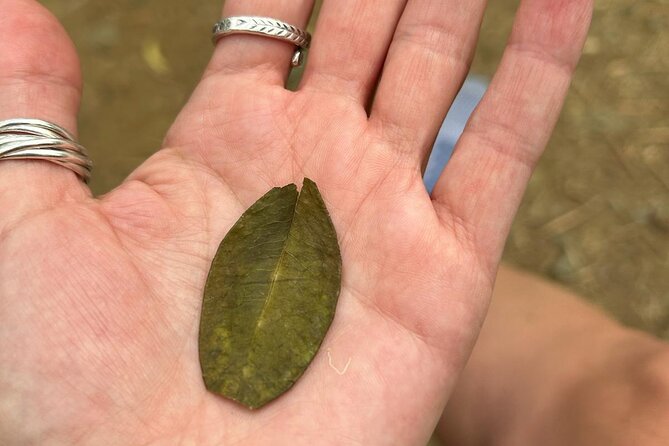
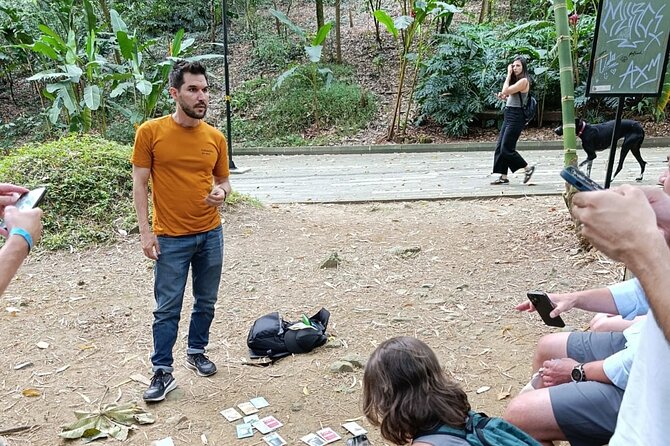
Here, you learn about the leaf’s spiritual, medicinal, and cultural uses among Indigenous communities. That opening helps prevent a common mistake: treating coca and cocaine as identical. The leaf has traditional meaning, while cocaine is a processed substance tied to a destructive international trade.
The guide then explains how coca is transformed into cocaine. The discussion includes the chemical process and the damage caused when chemical waste is dumped into the jungle. This environmental point broadens the tour beyond urban violence. The drug trade does not harm only people caught in cartel wars. It also damages remote places where production takes place.
I appreciate the order of this stop. You first encounter the plant in its traditional context, then follow its transformation into an illegal commodity. That sequence makes the later discussion of demand and profits easier to understand.
The stop lasts about 40 minutes, and admission is free. Because this is an outdoor starting point, comfortable shoes and water are sensible choices. Those are general practical suggestions rather than special tour requirements, but a three-and-a-half-hour afternoon is easier when you are comfortable.
Montecasino and the violent years
The route then turns toward Montecasino, the former residence of the Castaño brothers. The house is linked to the creation of paramilitary forces and the vigilante group Los Pepes. This is where the tour moves from the story of coca to the power struggles surrounding Medellín’s drug trade.
At Montecasino, the guide discusses the rise and fall of Escobar and the Medellín cartel. You also examine narco-terrorism, the War on Drugs, and the effects of that era on Colombian society. The setting gives the conversation a physical anchor. Instead of hearing about events in a classroom with no connection to place, you are standing before a location tied to major figures and organizations.
This section is likely to be the most familiar part for anyone who has watched films or television about Medellín. The useful difference is the wider frame. Escobar is not presented as a lone villain whose story explains everything. The discussion includes paramilitaries, rival cartels, government policy, and the people who endured the violence.
The material can be heavy. If you want a light sightseeing outing, this is not the right choice. The tour deals with political violence, victims, drug production, and social damage. Its strength is also its demand: you need to pay attention and be ready to think beyond a simple good-versus-evil story.
A past participant singled out Pablo as a local guide and an effective storyteller. His approach was described as respectful, research-based, and able to connect history, politics, economics, and personal suffering. Guides can vary, but that gives you a useful sense of the tone to expect when he leads the group.
The Medellín Chamber of Commerce and the business of drugs
The next major stop is the Medellín Chamber of Commerce, where the tour turns to economics. This may sound less dramatic than a cartel residence, but I consider it one of the most useful sections. Many people understand the drug trade through personalities and violence. Fewer understand how demand, supply chains, pricing, money laundering, and shadow economies keep such a system alive.
The discussion covers demand and supply, including elasticity. In plain terms, you look at how buyers, prices, risk, and availability affect the trade. You also examine how money moves through legitimate and illegal systems at local, national, and global levels.
This stop helps answer a question that a house or memorial cannot answer on its own: how did the drug trade become such a powerful economic force? The answer involves more than one cartel or one city. It includes buyers in other countries, people who move products and money, institutions affected by corruption, and communities pulled into an underground economy.
The Chamber of Commerce setting is an interesting contrast to the earlier locations. It shifts the subject from armed groups and notorious names to systems. You may find this section especially valuable if you like political history, economics, or tours that explain how events work rather than simply recounting them.
The planned discussion lasts about 45 minutes, and admission is free. It is also the point where the tour most clearly earns its More Than Escobar name. You are encouraged to think about the issue as a global system with local consequences.
More things to do in Medellin:
- Medellin: Comuna 13 Graffiti Tour, Cable Car & Street Food
★ 4.8 · 9,046 reviews - Comuna 13 Graffiti Tour with Street Food
★ 5.0 · 7,503 reviews - Guatapé Tour: Piedra del Peñol with Boat Tour, Breakfast, Lunch
★ 5.0 · 7,035 reviews - Day Trip To Guatapé with ,Breakfast, Lunch and Boat Ride
★ 5.0 · 2,996 reviews
Inflexión Memorial Park and the final turn toward victims
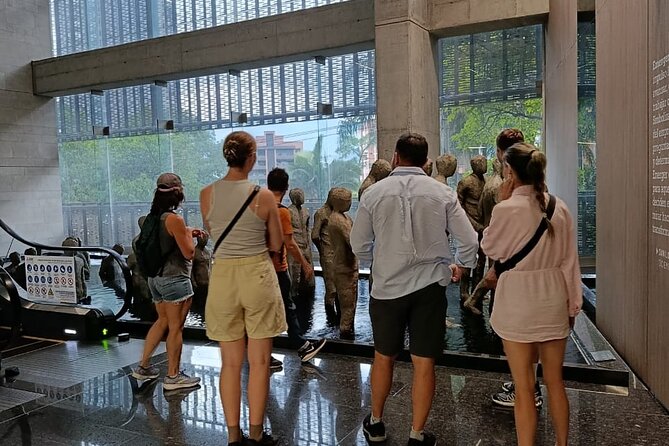
The final stop is Inflexión Memorial Park, at Carrera 44 in El Poblado. The park occupies the site of the former Monaco building, once owned by Escobar and bombed by the Cali Cartel. Rather than preserving the property as a shrine to its former owner, the site now serves as a memorial to victims of narco-violence.
That change in purpose gives the tour its moral center. The earlier stops explain coca, cocaine, political violence, and economics. The memorial asks you to consider the people behind those forces. It is a quieter way to finish than ending with a famous criminal’s former home or a dramatic crime story.
The memorial also brings the tour’s separate subjects together. Environmental destruction, local violence, international demand, paramilitary power, and money laundering are not isolated topics. They form part of a chain, and ordinary people paid the highest price.
The visit lasts about 30 minutes. The tour ends here, which is useful because you do not have to return to the starting point. The stated end location is Inflexión Memorial Park, while the starting point is near the Parque Lineal La Frontera area. Since transportation is not part of the $25 price, you should think ahead about your arrival and departure plans.
What you get for $25
At $25 per person, the tour is priced below many full-day excursions while offering about three hours and 30 minutes of guided content. Admission to the listed stops is free, so your payment mainly covers professional guidance, research, organization, and the small-group format.
That value depends on what you want from Medellín. If you are looking for entertainment, photographs, or a quick list of Escobar locations, you can find simpler options. If you want context and a careful explanation of how several forces shaped the city, this price is reasonable.
The maximum group size is 12 people. That is small enough to make questions practical and should help keep the discussion from feeling like a speech delivered to a crowd. The subject benefits from that format because you may want clarification about terms such as Los Pepes, paramilitaries, money laundering, or elasticity.
Transportation is the main extra cost to consider. No transport is included, so you are responsible for getting to the meeting point and arranging your way onward from the memorial. The tour is near public transportation, but the information provided does not specify a particular route or transit fare.
Who should book this experience
I would choose this tour if you want to understand Medellín beyond the familiar Escobar story. It suits you if you enjoy history, politics, economics, and serious conversations about how public policy affects real people.
It is also a good fit if you have already seen cartel-focused material and want a more grounded explanation. The tour challenges the idea that one criminal explains an entire city. Instead, it connects Indigenous traditions, chemical production, international demand, political violence, and victim remembrance.
Families and groups should think about the subject matter before booking. Most people can participate, and service animals are allowed, but this is not a playful family attraction. The content deals with violence, drugs, terrorism, and social trauma.
You may also prefer it if you value a local voice. Pablo, when leading the tour, has been praised for telling the story with energy while keeping the focus on facts and victims. His style appears to make complex material easier to follow without turning it into a show.
Timing, group size, and practical planning
The tour starts at 3:00 pm and lasts approximately three hours and 30 minutes. The afternoon schedule lets you fit it into a day of sightseeing, but leave enough room beforehand to reach Tanque Campestre EPM without rushing.
The exact route between stops is not described in detail, so do not assume that all transportation is covered or that every transfer is a short walk. Ask the provider if you need specific movement instructions. You finish at Inflexión Memorial Park, not at the original meeting point.
Confirmation is provided when you book. The tour has free cancellation if you cancel at least 24 hours before the start time. Cancellations or changes made within 24 hours are not refunded or accepted, based on local time.
The experience has received a 5 rating from 243 submitted ratings, with 100 percent recommending it. Those numbers suggest a very strong match for people seeking a thoughtful alternative to a standard Escobar tour, but they do not change the need to consider the serious subject matter and transport arrangements.
Should you book More Than Escobar Tour?
Book it if you want the wider story. The best parts are the opening discussion of coca’s traditional uses, the economics section at the Chamber of Commerce, and the final memorial, where the focus shifts firmly to victims.
Skip it if you want a fast, light tour built around famous criminal locations. This experience asks you to listen, question, and consider responsibility at local and global levels. At $25, with a maximum of 12 people and professional guidance, I find it a strong choice for an informed afternoon in Medellín. Just plan your transportation and arrive ready for a serious conversation.
FAQ
How much does the More Than Escobar Tour cost?
The tour costs $25 per person.
How long does the tour last?
The experience lasts approximately three hours and 30 minutes.
What time does the tour start?
The tour starts at 3:00 pm.
Where does the tour begin?
The meeting point is Tanque Campestre EPM, Cl. 18 Sur #39a-85, in El Poblado, Medellín.
Where does the tour end?
The tour ends at Inflexión Memorial Park, Cra. 44 #15 Sur-31, in El Poblado, Medellín.
Is transportation included?
No. Transportation is not included in the tour price.
What is included in the tour?
Professional guidance is included. Admission tickets at the listed stops are free.
How many people can join the tour?
The tour has a maximum of 12 participants.
Can I cancel for a full refund?
Yes. You can cancel at least 24 hours before the start time for a full refund. Cancellations made less than 24 hours before the start time are not refunded.
Just added in Medellin
- Tour Peñol-Guatape privado: con desayuno, almuerzo y bote★ 5.0 · 1 review
- Silletero Tour – From Medellín★ 5.0 · 1 review
- Tour Medellín: Commune13 and Pablo Escobar + Rooftop★ 5.0 · 2 reviews
- Tour Medellín: Pablo Escobar and Commune 13★ 5.0 · 3 reviews
- Medellin: Tour Pablo Escobar Privado Con Guia Local★ 5.0 · 1 review
- Tour Guatapé – Piedra del Peñol with departure from Medellín★ 5.0 · 24 reviews
- Tour Guatapé: luxury yacht to the stone of Peñol.★ 5.0 · 2 reviews
- Tour Guatapé con visita a Granja de las Llamas y las Alpacas★ 3.5 · 11 reviews