
REVIEW · MEDELLÍN TOURS
More authentic visit to Medellín + Comuna 3 (alternative)
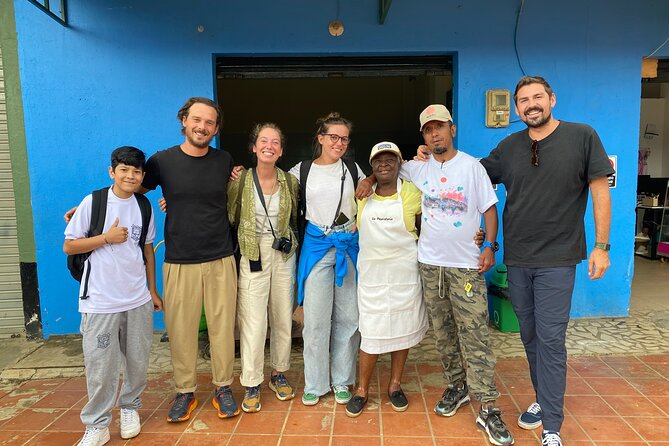
Medellín rewards a closer look. This seven-hour small-group outing combines exotic fruit tasting at Placita de Florez with a thoughtful visit to Comuna 3, where local art and personal stories explain the city’s social change. I especially like the maximum group of six, which makes conversation easier, and the chance to meet Javier, a local artist and resident who connects neighborhood murals with his own life. The main consideration is that the day ends at UVA de la Armonía rather than back at your hotel, and the route requires public transport and a moderate level of fitness.
I also like that the tour does not treat Medellín as a collection of viewpoints. It connects markets, public spaces, the Metrocable, urban planning, and community life. Guides such as Tom and Santiago are praised for clear explanations and strong local involvement, though the morning city-center stops may feel less personal than the later visit to Comuna 3.
In This Review
- Key points at a glance
- Why this Medellín tour feels different
- Placita de Florez: start with fruit and ordinary life
- Botero Square and the city center
- Palacio Nacional: a clever reuse of old architecture
- The Metrocable: transport as part of the story
- UVA de la Armonía and the work of public space
- Comuna 3, murals, and Javier’s personal account
- The guide can shape the whole day
- Who will get the most from this tour?
- Practical value at $65.90
- Should you book it?
- FAQ
- How long does the tour last?
- What time does the tour start?
- Where does the tour begin?
- Where does the tour end?
- How do I return to my hotel after the tour?
- Is the Metrocable included?
- What food and drinks are included?
- How large is the group?
- Can I cancel for a full refund?
Key points at a glance
- Placita de Florez fruit tasting: Try exotic Colombian fruits while getting an early look at everyday city life.
- Botero Square in context: See Fernando Botero’s famous public sculptures alongside the Nutibara Hotel, Palace of Culture, and Veracruz Church.
- Metrocable with a purpose: The cable car ride is used to explain transport, community ties, and urban planning.
- UVA de la Armonía: Visit a public project in Manrique linked to a reported 70 percent drop in insecurity.
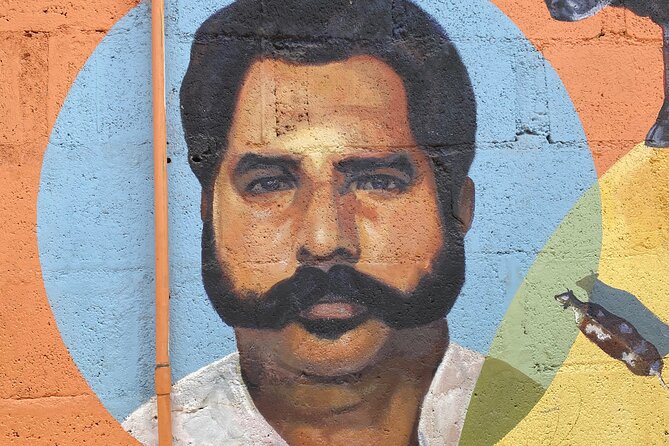
- Javier’s Comuna 3 walk: Hear a resident’s account of armed conflict, disability, education, art, and hope.
- Small-group format: Six people or fewer allows more room for questions and a less rushed pace.
Why this Medellín tour feels different
Many city tours stop at the familiar postcard locations, then hurry on. This one uses those places as stepping stones toward a more complicated story. You begin with food and architecture, then move through the city by public transport before reaching Comuna 3 Manrique.
That progression matters. You first see Medellín as a visitor, with its central plazas and public buildings. Later, you hear how transport, public space, neighborhood projects, and local leadership affect daily life in areas shaped by violence and inequality.
The experience lasts about seven hours and costs $65.90 per person. That is not the cheapest way to move around Medellín, since much of the transport is public and admission to the listed stops is free. Still, the price includes a guide, exotic fruit tasting, snacks, natural juice, the Metrocable, and a meeting with a local artist. The real value is the interpretation and community connection, not entrance tickets.
With a group capped at six, you are more likely to ask direct questions and hear detailed answers. That is useful on a subject that needs care. Comuna 3 should not be reduced to a dramatic photo stop, and a small group gives the guide a better chance to explain the setting respectfully.
More things to do in Medellin:
- Medellin: Comuna 13 Graffiti Tour, Cable Car & Street Food
★ 4.8 · 9,046 reviews - Comuna 13 Graffiti Tour with Street Food
★ 5.0 · 7,503 reviews - Museo Pablo Escobar
★ 5.0 · 7,242 reviews
Placita de Florez: start with fruit and ordinary life
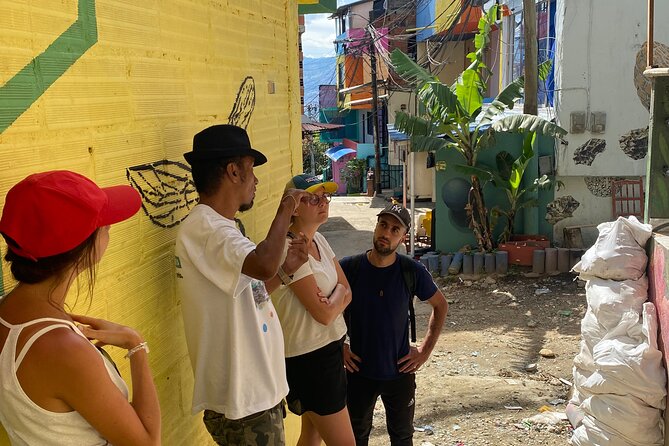
The tour begins at 9:30 a.m. at Miraflores TramVia Station. From there, you reach Placita de Florez, a traditional fruit market where the scheduled visit lasts about 30 minutes.
The tasting is a good choice for the first stop. Colombian fruit can be unfamiliar even to experienced visitors, and sampling it at a local market gives the food a setting rather than presenting it as a simple snack. You receive exotic fruit tasting, snacks, and natural juice as part of the experience.
I would use this half-hour to ask your guide about the names and flavors of the fruit, as well as the market’s role in the city. The stop is short, so do not expect a full market tour or a long shopping session. It works best as a quick introduction to Medellín’s daily rhythm before the architectural and social parts of the day.
Botero Square and the city center
Next comes Plaza Botero, with about 25 minutes to see the square and its surroundings. The area is known for Fernando Botero’s large bronze figures, but this tour also points out several nearby landmarks: the Nutibara Hotel, the Palace of Culture, and the Church of the Veracruz.
That wider view is helpful. Botero Square is easy to treat as a place for a few photographs, yet the surrounding buildings give you more to notice. The Palace of Culture adds a striking architectural counterpoint to the sculptures, while the church and hotel help place the square within the older central city.
Admission to this stop is free. The short time means you will likely get an orientation and explanation rather than an extensive art lesson. If Botero’s work is a major priority for you, you may want separate time elsewhere to see more of his art. On this tour, the square is one chapter in a larger account of Medellín.
Palacio Nacional: a clever reuse of old architecture
The former National Palace is the third listed stop, with another 25 minutes. Its early 20th-century architecture has been converted into a shopping center, creating an unusual mix of historic design and present-day commerce.
That change of use is the point. You are not only looking at an old building from the outside. You are seeing how a piece of the city’s built past has been adapted for current life. It is a compact stop, but it supports one of the tour’s larger ideas: Medellín keeps reshaping its public spaces rather than leaving them frozen in time.
Again, there is no admission charge listed. The visit will appeal most to you if you enjoy architecture, urban details, and the way old buildings are given new purposes. If you prefer long museum visits, this part may feel brief.
A completely different kind of day:
- Guatapé Tour: Piedra del Peñol with Boat Tour, Breakfast, Lunch
★ 5.0 · 7,035 reviews - Medellín: The Real Pablo Escobar Tour
★ 4.8 · 3,205 reviews - Day Trip To Guatapé with ,Breakfast, Lunch and Boat Ride
★ 5.0 · 2,996 reviews - Comuna 13 Graffitour knows the urban art district of Medellín
★ 5.0 · 2,856 reviews
The Metrocable: transport as part of the story
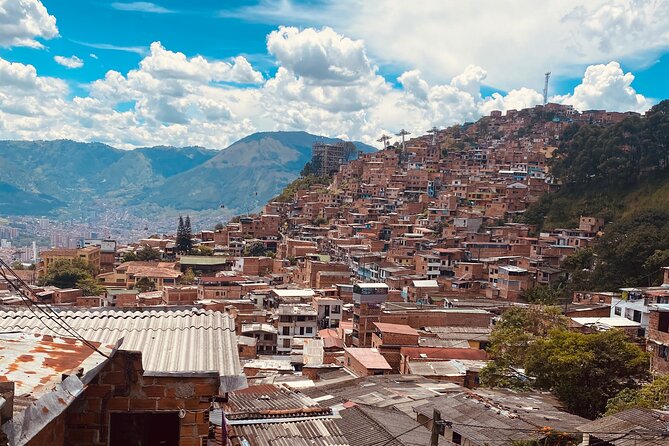
The Metrocable ride is more than a way to reach the hills. Your guide uses it to explain three connected parts of Medellín’s progress: public transport, mutual aid and community belonging, and urban planning.
From the cable car, you get a different sense of how the city is arranged. The ride helps explain why transport can matter far beyond convenience. A system that connects hillside communities to the wider city can affect access, movement, and the relationship between neighborhoods and the center.
The tour includes public transport by cable car, but you should expect to travel like a local rather than in a private vehicle. That is one of the strongest parts of the experience for anyone who wants to understand how Medellín functions. It also means you should be comfortable with a moving day, transfers, and walking.
The tour description emphasizes Medellín’s renewal and resilience. A good guide should keep that story balanced, showing progress without pretending that every social problem has disappeared. Tom is praised for presenting the city’s past and present clearly, while Santiago is also noted for knowing the city well and explaining it with care.
UVA de la Armonía and the work of public space
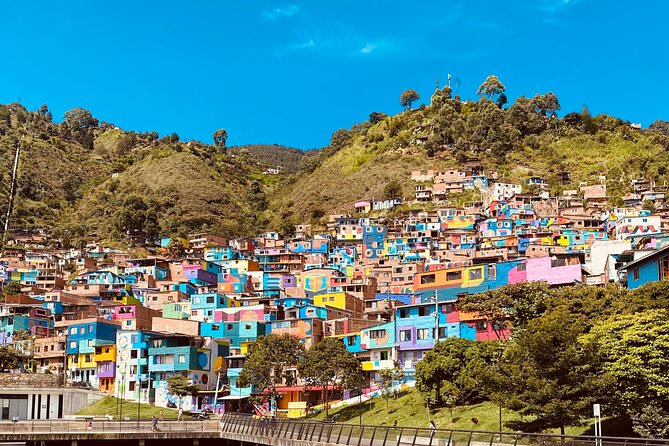
The route continues by public transport toward Comuna 3 Manrique, a neighborhood that has undergone major social change. At UVA de la Armonía, you learn about a Unit of Articulated Life, an urban planning project designed to strengthen community use of public space.
The project is associated with a reported 70 percent drop in insecurity. That figure gives the stop weight, but the more useful question is how public design can support social connection. The visit presents the UVA as a place where planning and community life meet, not simply as a modern structure to photograph.
The scheduled stop lasts about 30 minutes. It is a good point to listen closely and ask how the project fits into the neighborhood. Since the tour ends here, this is also where you need to start thinking about your return journey. You can take a private taxi or a bus back to your hotel, but that ride is not included.
The end point is Cra. 31b, Oriente, Medellín, Manrique. Keep the address available on your phone, especially if you are unfamiliar with the area. The tour does not return to the Miraflores meeting point.
Comuna 3, murals, and Javier’s personal account
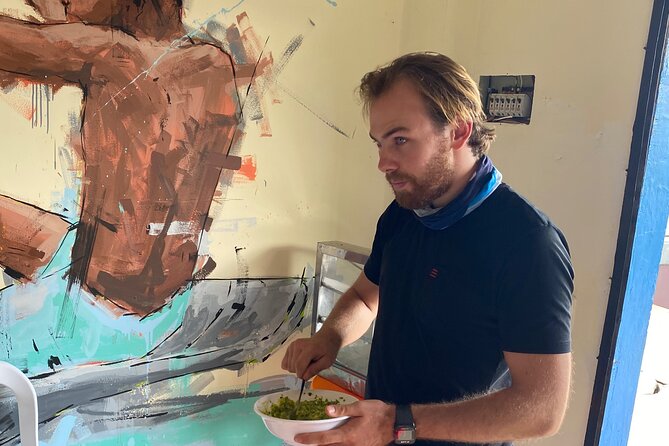
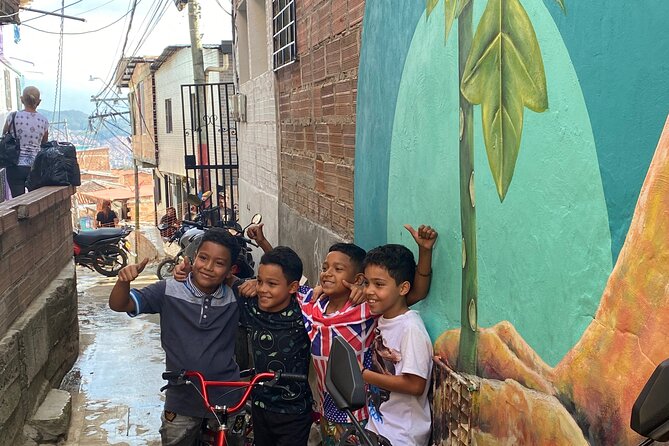
The emotional center of the day is the 90-minute visit to San José de la Cima and Brisas del Jardin. Here you meet Javier, an exceptional local resident who guides you through frescoes and murals in the streets.
Javier’s role gives this part a human scale. He witnessed armed conflict in his neighborhood and now works to educate young people. Despite living with a disability, he uses local art to share stories about hardship, hope, and the people who helped shape his barrio.
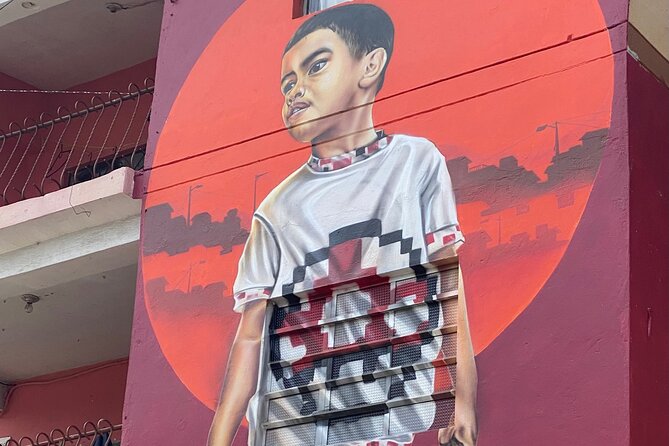
This is not a standard wall-art walk. The murals become a way to discuss Medellín’s social evolution, and Javier’s own experience keeps the subject grounded. You are not merely looking at painted surfaces. You are hearing why those images matter to the people who live among them.
The tour’s community focus is strengthened by the agency’s involvement in social projects and local initiatives funded through tourism revenue. That does not remove the need for respectful behavior, but it gives the visit a clearer purpose than simply entering a neighborhood for dramatic photographs.
I would avoid treating Comuna 3 as a spectacle. Listen, ask questions politely, and let Javier set the tone. The strongest praise for this experience centers on the exchanges with local people, the personal dimension, and the feeling of seeing the area in a way that is more direct and less packaged.
The guide can shape the whole day
The guides are important here because the subject is not simple. Tom is described as dynamic, patient, and clear, with a strong connection to Medellín’s comunas. Santiago is also named as a guide who knows the city and its story well.
The experience may be led by Tom, Santiago, or another member of the team, so the exact style can vary. The available feedback also describes guides answering many questions and adapting to individual interests. That flexibility is useful during a day that moves between food, architecture, transport, and difficult social history.
Javier is a separate local voice rather than just another stop on a guide’s script. His presence is one reason this tour feels more personal than a standard city circuit.
Who will get the most from this tour?
This outing suits you if you want to understand Medellín through people and public projects, not only through attractions. It is especially useful for first-time visitors who want an organized introduction to the city’s center before exploring a comuna with local guidance.
You should also enjoy:
- Public transport rather than private transfers
- Short visits to several central landmarks
- Hearing personal stories
- Street art and urban planning
- Asking questions in a small group
- A full day with movement and walking
It may be less suitable if you want a relaxed bus tour, a long museum visit, or a return to your hotel at the end. The tour requires moderate physical fitness, and the route involves public transportation. Service animals are allowed, and the meeting point is near public transport.
Practical value at $65.90
At $65.90, the cost is best judged by what is included beyond transport. Placita de Florez tasting, snacks, natural juice, the Metrocable, and the local artist meeting are included. The listed stops themselves do not charge admission.
If you only want to see Botero Square and ride the cable car, you can spend less by arranging your own day. You are paying here for structure, context, language support, local introductions, and a small group. The community component is also central to the price, since the agency supports local initiatives through tourism income.
The seven-hour length gives the tour enough time to move from a general city introduction to a more focused neighborhood visit. Still, the morning section has a quicker rhythm, with 25 or 30 minutes at several stops. The final Comuna 3 visit is longer and more personal, so your day builds toward its strongest section.
Should you book it?
Book this tour if you want a guided, socially focused look at Medellín and are comfortable using public transport, walking, and ending away from your hotel. The strongest reasons are the six-person limit, the Metrocable explanation, and Javier’s firsthand account in Comuna 3.
Skip it if your priority is independent sightseeing, extensive time at museums, or a private vehicle throughout the day. For many visitors, though, the $65.90 price is fair because the real product is access to local voices and a clearer understanding of how Medellín’s public projects and neighborhoods connect.
FAQ
How long does the tour last?
The experience lasts approximately seven hours.
What time does the tour start?
The tour starts at 9:30 a.m.
Where does the tour begin?
It begins at Miraflores TramVia Station, Cl. 51a #261, Alejandro Echavarría, Buenos Aires, Medellín.
Where does the tour end?
It ends at UVA de la Armonía in Manrique, at Cra. 31b, Oriente, Medellín.
How do I return to my hotel after the tour?
You can use a private taxi or a bus from UVA de la Armonía. The return trip is not included.
Is the Metrocable included?
Yes. Public transportation by cable car is included.
What food and drinks are included?
The tour includes exotic fruit tasting, snacks, and natural juice.
How large is the group?
The tour has a maximum of six people.
Can I cancel for a full refund?
Yes, if you cancel at least 24 hours before the experience starts. Cancellations made less than 24 hours in advance are not refunded, and changes within that period are not accepted.
Just added in Medellin
- Walking Tour, Cable Car & Fruit Tasting★ 5.0 · 1 review
- Pablo Escobar and Griselda Blanco Tour★ 5.0 · 1 review
- comuna 13 tour★ 3.5 · 6 reviews
- 3 days private mountain tour, nature and culture near Medellin★ 5.0 · 22 reviews
- City tour, Commune 13, Metro Cable, Botero Park and more. Private★ 5.0 · 34 reviews
- commune thirteen transformation story★ 4.5 · 14 reviews
- fruits tour★ 5.0 · 2 reviews
- Paragliding and hammocks zipline over waterfalls private tour★ 5.0 · 6 reviews
Medellín Tours, compared.
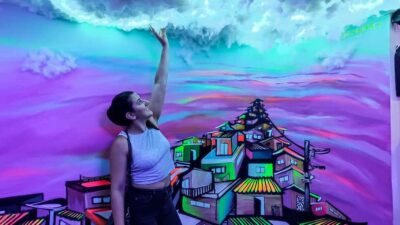
Comuna 13 Graffiti Tour, Cable Car & Street Food
Read our review →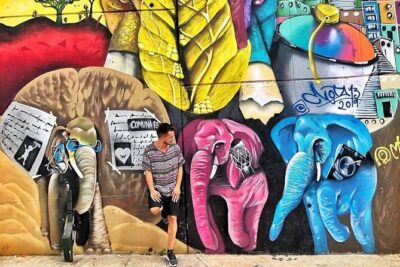

Guatapé Tour: Piedra del Peñol with Boat Tour, Breakfast, Lunch
Read our review →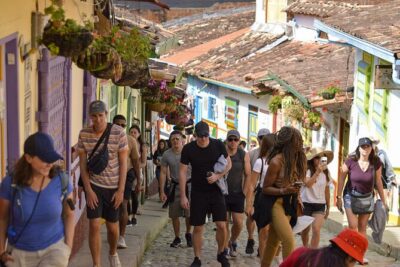
Day Trip To Guatapé with ,Breakfast, Lunch and Boat Ride
Read our review →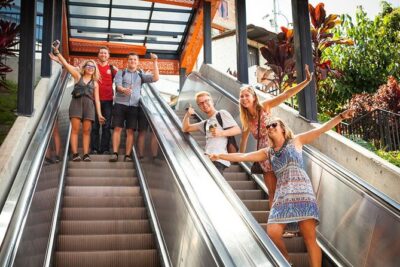
Comuna 13 Graffitour knows the urban art district of Medellín
Read our review →
Tour to Guatape, Piedra del Peñol, lunch, snacks boat trip
Read our review →
Half Day Bike Tour in Medellin – Local snack, Coffee or Beer
Read our review →