
REVIEW · MEDELLÍN TOURS
Moravia : el jardín inesperado de Medellín
A garbage mountain now grows flowers. Moravia offers one of Medellín’s most striking urban transformations, with a social leader guiding you through Comuna 4, its planted hill, local nurseries, and a photo path that explains how the old dump changed. I like the small group of up to eight and the chance to plant a tree yourself. I also like that the tour puts local residents at the center of the story.
The main consideration is that this is a walking experience on a former waste hill, not a polished sightseeing stop. You should be comfortable walking for about three hours and giving your attention to a serious story about waste, housing, work, and community action.
In This Review
- Key points about Moravia’s unexpected garden
- Why Moravia matters to Medellín
- Starting at the Moravia Cultural Center
- Walking through Comuna 4 with a social leader
- Following the photo path through Moravia
- Visiting the cooperative nurseries
- Reaching the hillock for Medellín’s 360-degree view
- Planting a tree as part of the visit
- Is $25.65 a fair price?
- Who will enjoy this three-hour walk?
- Practical details before you book
- Should you book Moravia’s unexpected garden?
- FAQ
- Where does the Moravia tour start?
- Where does the tour end?
- How long does the experience last?
- What is included in the price?
- How many people can join the tour?
- Can I cancel for a full refund?
Key points about Moravia’s unexpected garden
- A former dump became a planted hill: The old municipal dump once rose as high as 40 meters. It is now a colorful garden shaped by local effort.
- A social leader provides the context: You hear Moravia’s story while walking through Comuna 4, rather than simply looking at flowers and taking photographs.
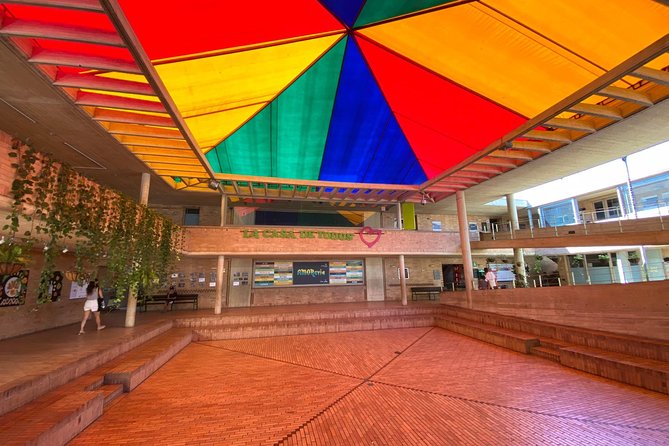
- The tour begins at a major cultural center: The Moravia Cultural Center was designed by Franco-Colombian architect Rogelio Salmona.
- You plant a tree or plant: The fee includes a reforestation activity on the side of the hill.
- A 360-degree view finishes the walk: From the hillock, you can look across Medellín from a place with an unusual past.
- The format stays personal: The group is capped at eight people, and the activity lasts about three hours.
Why Moravia matters to Medellín
Moravia was once Medellín’s municipal dump. For years, waste was piled into a large mountain that eventually reached about 40 meters high. That fact gives the visit its force. You are not seeing an old industrial site preserved behind a fence. You are walking through a place that residents helped change.
The garden is the result of local initiative. Plants now cover ground that once held refuse, and gardening cooperatives operate nurseries in the district. The change is practical as well as symbolic. Plants help give the hill a new purpose, while the nurseries create a setting for local work and community organization.
I like tours that explain how a place functions today, not only what happened in the past. Moravia gives you that chance. You see the garden, hear how the district developed, visit the nurseries, and take part in a small planting activity. The result feels more connected to daily life than a quick photo stop.
The story also asks you to look at Medellín with some care. The city is often presented through its cable cars, public art, and dramatic mountain views. Moravia adds another layer. It shows how residents responded to a difficult urban problem and helped create something useful from it.
More things to do in Medellin:
- Medellin: Comuna 13 Graffiti Tour, Cable Car & Street Food
★ 4.8 · 9,046 reviews - Comuna 13 Graffiti Tour with Street Food
★ 5.0 · 7,503 reviews - Museo Pablo Escobar
★ 5.0 · 7,242 reviews
Starting at the Moravia Cultural Center
The meeting point is Estación Universidad on the Medellín Metro, at Cra. 53 #73-72 in Aranjuez. From there, the group goes to the Moravia Cultural Center, a building designed by Rogelio Salmona, the Franco-Colombian architect known for strong public spaces and bold brick architecture.
The cultural center gives the tour a thoughtful starting point. You begin with architecture and civic life before moving into the neighborhood and up toward the former dump. That sequence helps connect Moravia’s physical transformation with the city’s wider investment in public spaces.
Your social leader explains the story of Moravia before the walk continues through Comuna 4. This opening is important because the garden can look simple at first glance. Without context, you might see only a planted slope. With context, you can recognize the work behind it and understand why the site matters to people who live nearby.
Since the tour starts near public transportation, it is practical for a day of independent sightseeing. You should pay close attention to the meeting instructions and allow enough time to reach Estación Universidad. The activity returns to the same meeting point at the end, so you do not need to arrange a separate pickup location.
Walking through Comuna 4 with a social leader
The walking portion is the heart of the experience. Rather than riding past Moravia, you move through the district and hear its story as the setting changes around you. The social leader helps connect the streets, the garden, the nurseries, and the former dump into one narrative.
This approach has real value. A standard city tour might describe Moravia in a few sentences, then take you somewhere else. Here, the neighborhood is the destination. You have time to see how a community-led project fits into its surroundings.
The tour is not described as a formal museum visit or a performance. That means the quality of the experience depends partly on the conversation and explanations provided by the social leader. The maximum group size of eight should help keep the exchange direct. You can ask questions without trying to speak over a large crowd.
I would choose this tour if you want a human-scale look at Medellín. It suits people who prefer local projects, social history, and walking over a checklist of famous landmarks. It may be less suitable if you want a fast panoramic outing with little discussion.
The tour lasts about three hours. That is long enough to visit several parts of the project, but short enough to fit into a wider Medellín itinerary. Wear practical walking clothes and plan your day around the time at the meeting point, since the activity begins and ends there.
Following the photo path through Moravia
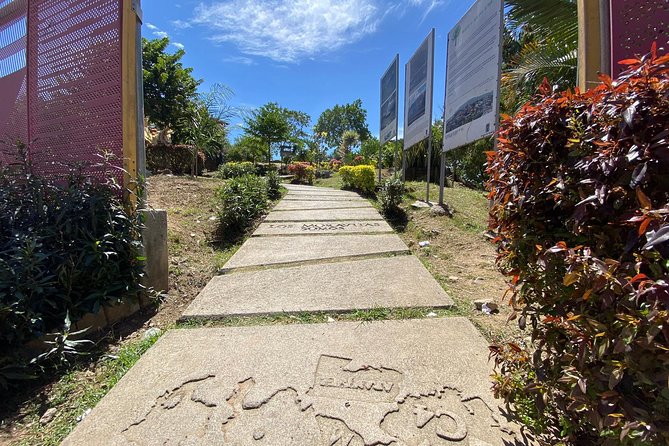
One of the most useful parts of the visit is the illustrated path. Photos along the route trace Moravia’s change from dump to garden. This gives you a visual timeline instead of asking you to remember a long spoken explanation.
The images should help you compare the site’s former condition with what you see today. The contrast is the point. The garden is not meaningful only because it looks pleasant. It matters because it occupies ground once associated with waste and difficult living conditions.
I find photo displays especially helpful on transformation tours. Words can describe a before-and-after story, but pictures let you see the scale of the change. They also give the social leader something concrete to discuss while you walk.
Do not expect a conventional attraction with a single entrance, a large exhibition hall, and a fixed route through rooms. The story is spread across the neighborhood and hill. The illustrated path works as an outdoor record, and the walk gives the information a physical setting.
That format calls for curiosity. Look at the photos, listen to how the site changed, and notice how the garden is used now. The tour is strongest when you treat Moravia as a living community project rather than simply a former dump with flowers.
A completely different kind of day:
- Guatapé Tour: Piedra del Peñol with Boat Tour, Breakfast, Lunch
★ 5.0 · 7,035 reviews - Medellín: The Real Pablo Escobar Tour
★ 4.8 · 3,205 reviews - Day Trip To Guatapé with ,Breakfast, Lunch and Boat Ride
★ 5.0 · 2,996 reviews - Comuna 13 Graffitour knows the urban art district of Medellín
★ 5.0 · 2,856 reviews
Visiting the cooperative nurseries
The itinerary includes visits to several nurseries run by gardening cooperatives. These nurseries show how the project continues beyond the planted hill. The garden is not just a finished result. It also supports organized growing and local participation.
This stop adds a useful practical detail. Reforestation requires more than a one-time planting ceremony. Plants need to be raised, selected, cared for, and placed where they can survive. The cooperative nurseries help you understand that ongoing work.
I like this part because it brings the environmental message down to earth. You are not hearing only broad claims about renewal. You are seeing the places connected with the plants themselves and learning how gardening forms part of the district’s activity.
The available information does not specify the exact plants, nursery size, or seasonal conditions. You should therefore expect an introduction to the cooperatives rather than a specialist botany lesson. If you have particular questions about plant species or cultivation, ask the social leader during the visit.
Reaching the hillock for Medellín’s 360-degree view
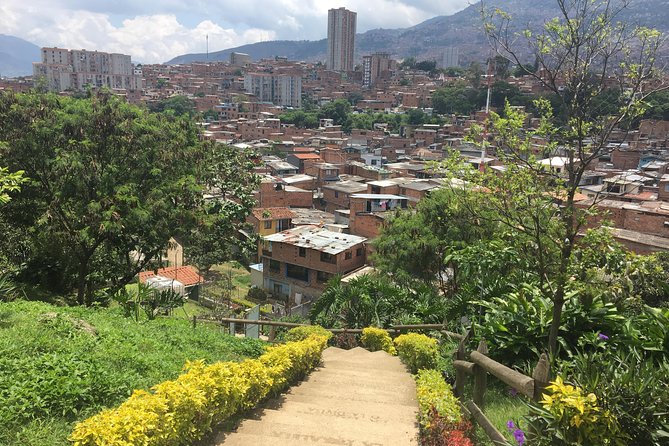
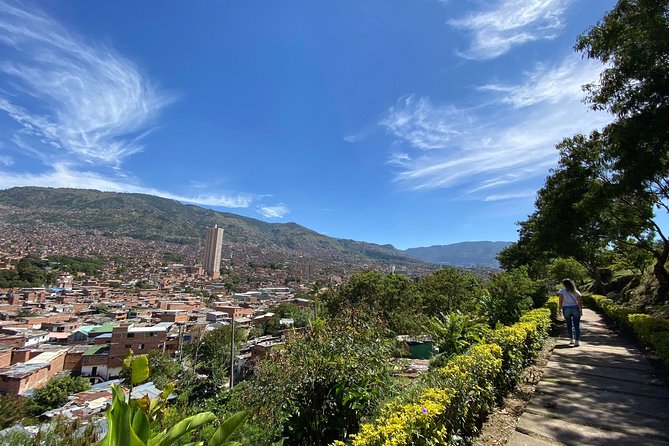
The walk continues to the hillock, the high point of the former waste site. From there, you can admire a 360-degree view of Medellín. This is the visual reward of the tour, but it works best because you already understand what the hill used to be.
A city view from an ordinary lookout can be pleasant but forgettable. A view from a former 40-meter waste mountain carries a different meaning. You are looking across Medellín from a place that has changed in both appearance and purpose.
The panoramic stop also gives the tour a natural pause. After hearing the story and visiting the nurseries, you can take in the city’s size and setting. The view helps place Moravia within Medellín rather than treating it as an isolated project.
The exact visibility will depend on the day. The tour promises the 360-degree viewpoint, but no city view can guarantee perfect weather. I would consider the panorama an important part of the experience, not the only reason to book it.
Planting a tree as part of the visit
The price includes planting a tree. The activity takes place on the side of the mountain and supports continued reforestation. This is a small action, but it changes the tone of the tour.
You are not only observing a community project. You are asked to contribute to its next stage. The planting gives you a clear way to connect with the work you have just heard about.
The information says you may plant a tree or plant. It does not promise a particular species or explain how long you can spend on the activity. Think of it as a hands-on contribution rather than a full gardening workshop.
I like this inclusion because it has a direct purpose. Some tours attach a vague conservation message to a standard outing. Here, the activity is tied to the site itself and to the aim of giving the garden more life.
It is also worth keeping your expectations realistic. One planted tree will not transform Moravia by itself. The value is in participating respectfully in a larger effort led by people connected to the district.
Is $25.65 a fair price?
At $25.65 per person, this is reasonably priced for an approximately three-hour guided walk with a social leader, several stops, a small group, a city viewpoint, and a planting activity. The fee also includes the tree or plant you put into the ground.
The value depends on what you want from a Medellín tour. If your main goal is transportation, a long list of attractions, or a formal museum visit, this may feel modest. You are paying for local interpretation and access to a community project, not for a large attraction with extensive facilities.
The group limit matters here. With no more than eight people, the guide can keep the walk focused and make room for questions. A smaller group also feels more appropriate in a residential district, where respectful behavior and attention to local life matter.
Tips are not included. You should budget separately if you want to thank the social leader. The experience uses a mobile ticket, which makes booking simple, but you still need to arrive at the stated meeting point.
Tika Travel has also arranged a full-day pairing with a morning graffiti tour and Moravia in the afternoon. If you have only one day in Medellín, that combination may help you connect two community-focused experiences, although the graffiti tour is separate from this activity.
Who will enjoy this three-hour walk?
I would recommend Moravia to you if you enjoy understanding how cities change from the ground up. It is a good fit for people interested in community work, urban renewal, gardening, public architecture, and environmental action.
It also suits a first visit to Medellín if you want something beyond the usual city highlights. The tour gives you a different view of Comuna 4 and shows how a former municipal dump became a place for plants, cooperatives, and public storytelling.
Families may appreciate the planting activity, provided everyone is comfortable with the walking format. The tour states that most people can participate, and service animals are allowed. It is close to public transportation, which makes it easier to add to a day in the city.
I would think twice if you dislike walking or prefer tours with a tightly scripted schedule. The route includes Comuna 4, the garden hill, the photo path, nurseries, and the hillock, so the experience depends on moving between places and listening along the way.
The tour is also not a substitute for a full Medellín city tour. It focuses on Moravia and its transformation. That narrow focus is a strength if the subject interests you, but it means you should not book it expecting a broad introduction to every part of the city.
Practical details before you book
The experience lasts about three hours and starts and ends at Estación Universidad Metro Medellín. The stated address is Cra. 53 #73-72, Aranjuez, Medellín, Antioquia. Since the tour begins at a public transit stop, the meeting point is easier to reach than a remote hillside location.
Confirmation is sent within 48 hours of booking, subject to availability. The activity requires a minimum number of people, so if that minimum is not met, Tika Travel offers another date or experience, or a full refund.
You can cancel for a full refund up to 24 hours before the local start time. Changes made less than 24 hours before the start are not accepted, and a cancellation inside that window is not refunded.
The tour has a mobile ticket and a maximum of eight people. Most people can take part, and service animals are permitted. The supplied information does not give a detailed accessibility description for the route, so if you have specific mobility needs, ask Tika Travel before booking.
Should you book Moravia’s unexpected garden?
Book this tour if you want a personal, place-based experience that explains how Medellín residents turned a former dump into a garden. The planting activity, cooperative nurseries, and photo path make the story tangible, while the 360-degree view gives you a memorable finish.
Skip it if you only want famous sights, a bus-based tour, or a quick viewpoint. Moravia asks you to walk, listen, and think about the work behind urban change.
At $25.65, the experience offers good value for a small group and a three-hour visit with a clear social purpose. I would make it a strong choice for an afternoon in Medellín, especially if you have already seen the city’s main attractions and want to understand another side of its character.
FAQ
Where does the Moravia tour start?
The tour starts at Estación Universidad Metro Medellín, at Cra. 53 #73-72 in Aranjuez, Medellín, Antioquia, Colombia.
Where does the tour end?
The activity ends back at the original meeting point.
How long does the experience last?
The tour lasts approximately three hours.
What is included in the price?
Planting a tree or plant is included. Tips are not included.
How many people can join the tour?
The activity has a maximum group size of eight people.
Can I cancel for a full refund?
Yes. You can cancel at least 24 hours before the local start time for a full refund. Cancellations made less than 24 hours before the start are not refunded.
Just added in Medellin
- Walking Tour, Cable Car & Fruit Tasting★ 5.0 · 1 review
- Pablo Escobar and Griselda Blanco Tour★ 5.0 · 1 review
- City tour, Commune 13, Metro Cable, Botero Park and more. Private★ 5.0 · 34 reviews
- comuna 13 tour★ 3.5 · 6 reviews
- 3 days private mountain tour, nature and culture near Medellin★ 5.0 · 22 reviews
- commune thirteen transformation story★ 4.5 · 14 reviews
- fruits tour★ 5.0 · 2 reviews
- comuna 13 graffitour & cable car★ 5.0 · 52 reviews
Medellín Tours, compared.

Comuna 13 Graffiti Tour, Cable Car & Street Food
Read our review →

Guatapé Tour: Piedra del Peñol with Boat Tour, Breakfast, Lunch
Read our review →
Day Trip To Guatapé with ,Breakfast, Lunch and Boat Ride
Read our review →
Comuna 13 Graffitour knows the urban art district of Medellín
Read our review →
Tour to Guatape, Piedra del Peñol, lunch, snacks boat trip
Read our review →
Half Day Bike Tour in Medellin – Local snack, Coffee or Beer
Read our review →