
REVIEW · MEDELLÍN TOURS
Medellin Indigenous Social Tour
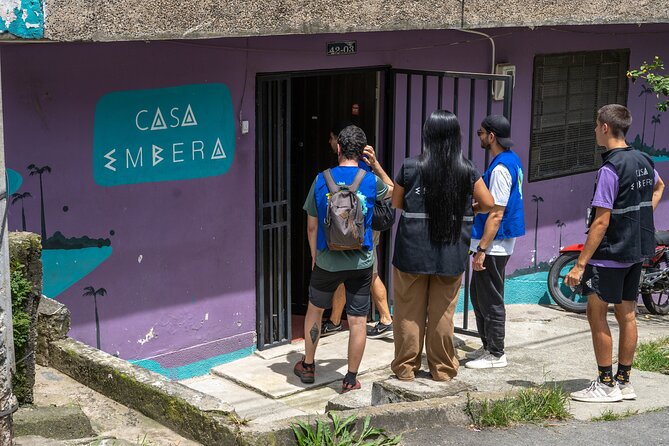
Look beyond the postcard Medellín. This small-group social tour takes you into Niquitao, an area most visitors never see, to meet Embera community members and learn about the pressures facing Indigenous families in the city. I like that the experience is built around direct contact and local context, not a quick photo stop. I also like that your visit supports Casa Embera, an NGO offering education, safety, and practical help to Embera families.
The main consideration is that this is not a polished sightseeing walk. The subject matter can be difficult, and the setting may feel uncomfortable at times. You will need a moderate level of physical fitness, an open mind, and a willingness to listen rather than simply observe.
In This Review
- Key Points Before You Book
- Why This Medellín Tour Matters
- Starting at I.E. Héctor Abad Gómez
- Entering Niquitao Inquilinatos
- An Hour at Casa Embera
- What the Social Focus Adds
- Group Size, Timing, and Physical Demands
- Is $26 a Fair Price?
- Who Will Get the Most From This Experience?
- Booking Details That Matter
- Should You Book the Medellín Indigenous Social Tour?
- FAQ
- How much does the Medellín Indigenous Social Tour cost?
- How long does the experience last?
- Is the tour offered in English?
- How many people can join the tour?
- Where does the tour begin?
- Where does the tour end?
- What places are included?
- Is the tour suitable for people with limited mobility?
- Can I cancel for a refund?
Key Points Before You Book
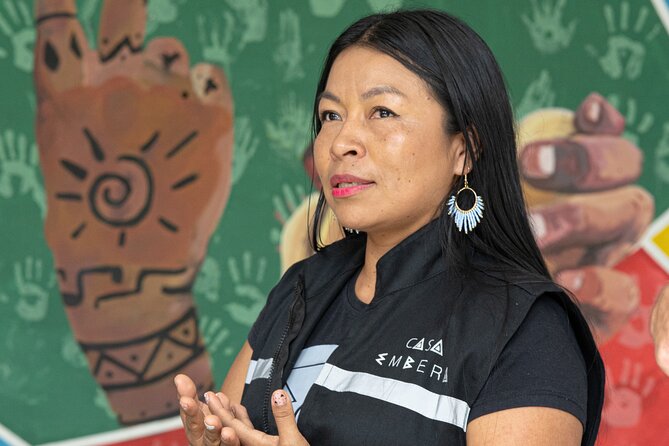
- Meet Embera community members at I.E. Héctor Abad Gómez: The tour begins with direct conversation and cultural exchange.
- Visit Niquitao Inquilinatos: You enter an area of Medellín that sits far outside the usual tourist route.
- Spend an hour at Casa Embera: This community space gives the visit a practical focus by supporting families living in the area.
- Small group of no more than 10: The size allows for a more personal experience and less crowding in local spaces.
- About three hours for $26: The price is modest for an experience that includes social context, local contact, and support for a community organization.
- Finish near San Diego: From the end point, you can order a car or walk about 15 minutes to Alpujarra Metro Station.
Why This Medellín Tour Matters
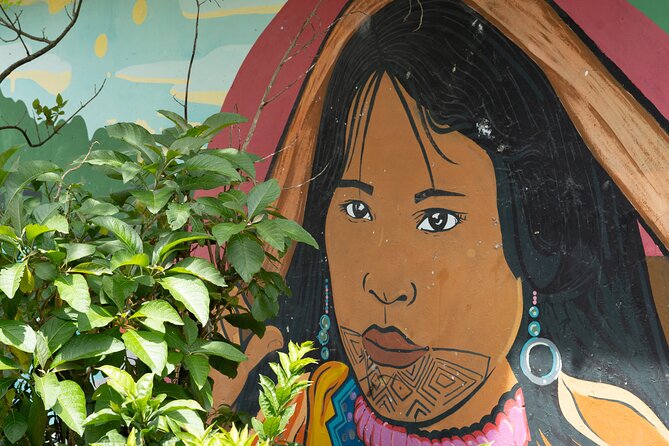
Medellín is often introduced through its public art, cable cars, pleasant climate, and dramatic transformation. Those are all valid parts of the city, but they do not tell the whole story. This experience asks you to look at another side of Medellín: the lives of Indigenous families who have arrived from different parts of Colombia.
Embera families may come to the city in search of work, medical care, or safety from violence and discrimination. Once there, they face new problems. Finding a secure home, earning money, accessing services, and maintaining cultural identity can all be difficult in an urban setting that does not always make room for difference.
That context gives the tour its value. You are not simply walking through an unfamiliar neighborhood. You are learning why people arrived, what challenges they face, and how local support groups are responding.
I appreciate the fact that the experience does not pretend every problem can be solved in an afternoon. Instead, it connects you with people and an organization already doing practical work. That makes the visit more useful than a tour based only on dramatic stories or quick observations.
The experience is offered in English and usually lasts between two and a half and three hours. With a maximum of 10 people, the group should remain small enough for conversation. Since the tour focuses on a community rather than a major attraction, the quality of the experience depends heavily on respectful behavior and careful listening.
More things to do in Medellin:
- Medellin: Comuna 13 Graffiti Tour, Cable Car & Street Food
★ 4.8 · 9,046 reviews - Comuna 13 Graffiti Tour with Street Food
★ 5.0 · 7,503 reviews - Museo Pablo Escobar
★ 5.0 · 7,242 reviews
Starting at I.E. Héctor Abad Gómez
The meeting point is I.E. Héctor Abad Gómez, Sección Darío Londoño Cardona, at Carrera 44 #43 in La Candelaria. This is the first place where you meet Embera community members and begin learning about their lives.
You spend about 30 minutes here. That may sound brief, but it gives the visit an important foundation. Before entering Niquitao and visiting Casa Embera, you get an introduction to the people and issues at the heart of the experience.
The school setting also signals that this is not a standard city tour. The focus is on people, community, and social conditions rather than monuments. You may hear about migration from other parts of Colombia, the reasons families come to Medellín, and the obstacles they encounter after arrival.
I like this opening because it places local voices first. It is easy for an outside visitor to arrive with assumptions about poverty, migration, or Indigenous life. Starting with conversation gives you a better chance to understand the situation in human terms.
The first stop is free of additional admission charges. Bring your attention and patience. This portion works best when you treat it as a conversation rather than a performance.
Entering Niquitao Inquilinatos
The next stop takes you into the Niquitao Inquilinatos, an area described as being far off the normal tourist route. The visit lasts about 15 minutes, so this is not a long neighborhood walk. Its purpose is to give you a direct sense of the setting where some Embera families live.
The phrase off the beaten path can sometimes be used loosely. Here, it points to an area that many Medellín residents do not know well and may not feel comfortable entering. That detail matters, but it should not turn the neighborhood into a spectacle. You are there to understand a living community, not to collect dramatic street scenes.
This part may be the most challenging section for some people. You might notice conditions that differ sharply from the parts of Medellín promoted in guidebooks. The short visit keeps the focus clear, but it also means you should pay close attention to what your guide explains.
Because the stop takes place in a local residential area, respectful conduct is especially important. Follow the group’s instructions, avoid treating people as photographic subjects, and remember that families live and work here. The value comes from context and contact, not from wandering off alone.
I see this stop as a bridge between the opening conversation and the longer visit to Casa Embera. You first hear about the community, then see the urban setting, and finally learn about an organization trying to help.
An Hour at Casa Embera
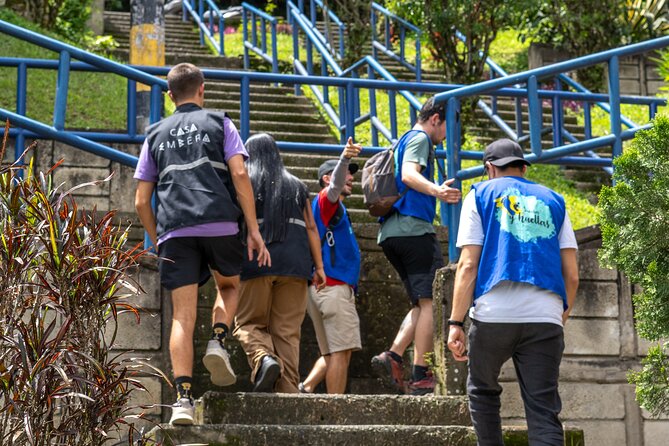
Casa Embera is the central stop and the longest part of the tour, with about one hour set aside for the visit. The space is run by an NGO that works with Indigenous families living in the area.
This is where the experience moves from awareness to action. You learn about a place providing a safe environment, educational opportunities, and essential resources. Those services matter because arriving in Medellín does not automatically solve the problems that pushed families to leave their original communities.
The hour gives you more room to ask questions and understand the organization’s role. You can consider how social support works in practice, especially for families trying to maintain their identity while adapting to life in a large city.
I like the balance here. The tour does not leave you with only a troubling picture of hardship. It also shows local people building support systems and creating useful opportunities. That makes the experience more constructive and less likely to reduce the community to a single story.
Casa Embera also gives the tour a clear connection to responsible tourism. Your fee is not presented as a donation, but the partnership directs attention toward an organization serving the families you are learning about. For many people, that connection will make the $26 price feel worthwhile.
Still, you should arrive with realistic expectations. This is not an entertainment venue, a museum, or a conventional cultural show. The experience may ask you to sit with difficult subjects and listen to accounts of displacement, discrimination, or economic struggle.
A completely different kind of day:
- Guatapé Tour: Piedra del Peñol with Boat Tour, Breakfast, Lunch
★ 5.0 · 7,035 reviews - Medellín: The Real Pablo Escobar Tour
★ 4.8 · 3,205 reviews - Day Trip To Guatapé with ,Breakfast, Lunch and Boat Ride
★ 5.0 · 2,996 reviews - Comuna 13 Graffitour knows the urban art district of Medellín
★ 5.0 · 2,856 reviews
What the Social Focus Adds
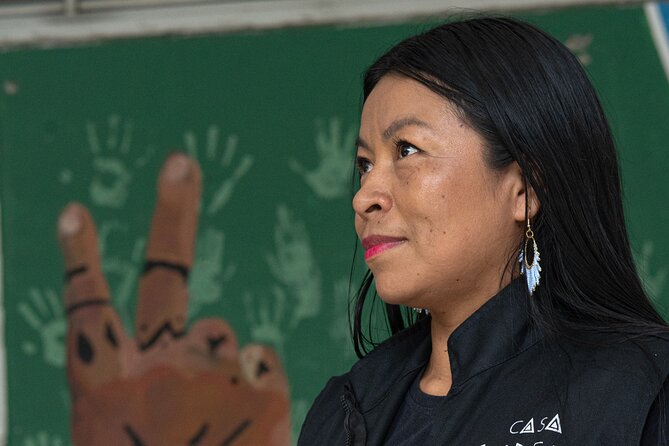
Many city tours explain what happened to buildings and streets. This one asks why people live where they do and how city life affects a particular community.
That social focus can change the way you see Medellín afterward. You may still enjoy the city’s famous attractions, but you will have a fuller picture of who is included in the city’s success and who remains on its margins.
The experience also challenges a common travel habit: looking only for comfortable, attractive, or easy-to-understand places. You are given a chance to confront the gap between Medellín’s international image and the daily reality facing some Indigenous families.
The strongest part is the direct human connection. You are not receiving an abstract lecture about Indigenous communities across Colombia. You are meeting people connected to the Embera community in Medellín and learning about their present circumstances.
That distinction is important. The tour does not claim to represent every Embera person or every Indigenous community in Colombia. Instead, it introduces one local situation and one organization responding to it.
Group Size, Timing, and Physical Demands
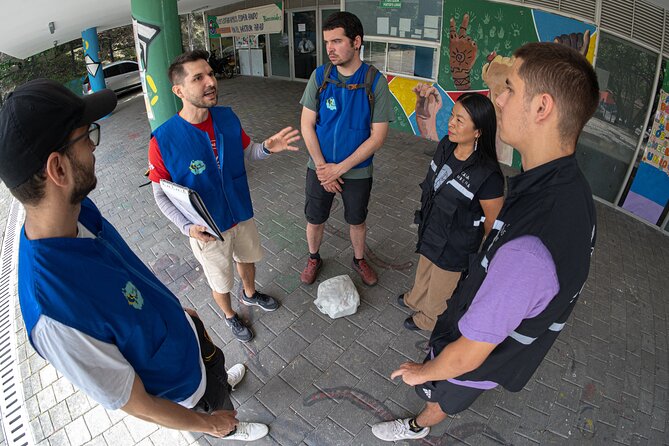
The maximum group size is 10 people. That is a useful limit for a visit involving conversation and community spaces. A smaller group can ask questions without turning the meeting into a crowded presentation, and it is easier to remain together while moving through unfamiliar surroundings.
The total duration is about two and a half to three hours. The scheduled sections add up to about one hour and 45 minutes, leaving time for walking, introductions, transport between stops, and discussion. You should keep the rest of your day flexible rather than scheduling a tight appointment immediately afterward.
The tour requires moderate physical fitness. The information provided does not specify the exact distance, number of stairs, or walking surface, so you should ask the operator if those details matter to you. Comfortable shoes are a sensible choice, but the tour’s physical demands are not described in greater detail.
The experience is near public transportation. It begins in La Candelaria and ends at Canchas de Futbol San Diego, at Carrera 42 #39a-60. From the end point, you can order a car easily, or walk about 15 minutes to Alpujarra Metro Station.
Since the route involves an area outside the regular sightseeing circuit, do not assume you can simply recreate it alone after reading about it. The value comes partly from going with people who know the community and can explain what you are seeing.
Is $26 a Fair Price?
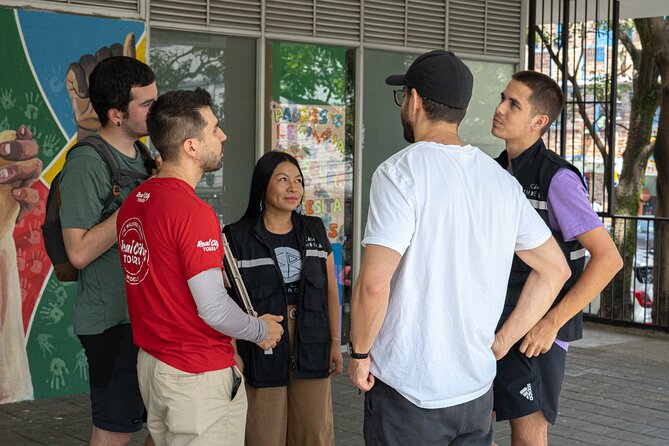
At $26 per person, this is an inexpensive half-day experience by Medellín tour standards. You are paying for roughly three hours, an English-language experience, a small group, several stops, and access to a community-focused program.
The price is especially fair if you want more than the usual city highlights. A standard sightseeing route may show you famous places, but it may not help you understand Indigenous migration, discrimination, or the support work taking place in Niquitao.
The value is less about the number of stops than the quality of the connection. Two of the stops are short, while Casa Embera receives the largest share of the time. That arrangement makes sense because the NGO visit is where you gain the most detail and where the tour’s community purpose becomes clearest.
You should not book this expecting a long list of attractions. If you prefer architecture, food tastings, or sweeping city views, another Medellín experience may be a better match. If you care about social issues and want to support a local organization indirectly through responsible tourism, the price is easy to justify.
The tour usually receives bookings about seven days in advance. That is a useful planning hint, especially because the group is limited to 10 people. Booking several days ahead gives you a better chance of finding a suitable date.
Who Will Get the Most From This Experience?
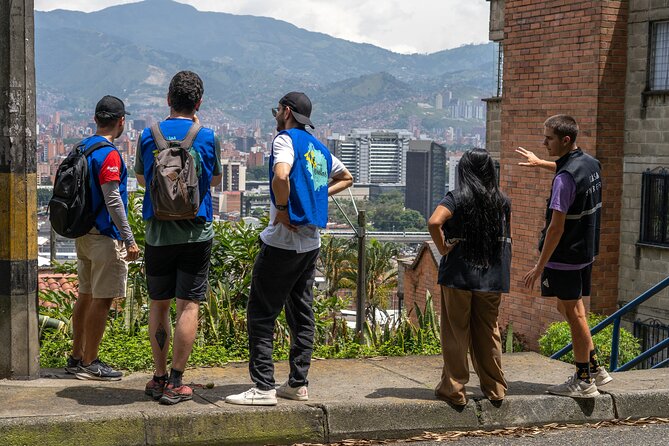
I would recommend this tour to people who want to understand Medellín beyond its popular success story. It suits you if you are interested in Indigenous rights, migration, social inequality, community work, or the everyday lives of people often left out of travel advertising.
It can also suit first-time visitors who want a serious counterpoint to the city’s more familiar attractions. Pairing this experience with museums, public spaces, or neighborhood tours can give you a broader view of Medellín.
You should think carefully before booking if you want a light, carefree activity. The subject matter may be emotionally demanding, and the neighborhood setting may feel unfamiliar. That is not a flaw, but it is part of the experience.
You also need to be comfortable entering a community space with humility. The best approach is to ask thoughtful questions, avoid assumptions, and accept that you may leave with more questions than answers.
Booking Details That Matter
Confirmation is provided at the time of booking, and the experience includes a mobile ticket. It is offered in English.
Free cancellation is available if you cancel at least 24 hours before the local start time. Cancellations made less than 24 hours in advance are not refunded, and last-minute changes are not accepted.
The tour requires good weather. If poor weather causes a cancellation, you can choose another date or receive a full refund. If the minimum number of participants is not reached, the operator offers another date or experience, or a full refund.
These rules are fairly standard, but remember that the tour takes place outdoors and involves moving between locations. The weather policy is more relevant here than it would be for an indoor museum visit.
Should You Book the Medellín Indigenous Social Tour?
Book it if you want a small, serious, community-focused experience that introduces you to Embera families and the support work at Casa Embera. The strongest reasons are the direct human contact, the visit to Niquitao Inquilinatos, and the hour spent learning how a local NGO helps families living in Medellín.
Skip it if your ideal tour is built around famous sights, food, shopping, or easy entertainment. This is a social experience, and it may leave you thoughtful rather than cheerful.
For $26, the tour offers strong value, especially for anyone willing to accept some discomfort and listen carefully. I would make it part of a wider Medellín itinerary, not as a replacement for the city’s major sights, but as a way to understand the people and problems that a polished city tour may leave out.
FAQ
How much does the Medellín Indigenous Social Tour cost?
The tour costs $26 per person.
How long does the experience last?
The experience lasts approximately two hours and 30 minutes to three hours.
Is the tour offered in English?
Yes. The experience is offered in English.
How many people can join the tour?
The maximum group size is 10 people.
Where does the tour begin?
The tour begins at I.E. Héctor Abad Gómez, Sección Darío Londoño Cardona, at Carrera 44 #43 in La Candelaria, Medellín.
Where does the tour end?
The tour ends at Canchas de Futbol San Diego, at Carrera 42 #39a-60 in La Candelaria, Medellín.
What places are included?
The experience includes I.E. Héctor Abad Gómez, the Niquitao Inquilinatos area, and Casa Embera.
Is the tour suitable for people with limited mobility?
The tour requires a moderate level of physical fitness. Specific accessibility details are not provided, so you should contact the operator if you have mobility concerns.
Can I cancel for a refund?
Yes. You can receive a full refund if you cancel at least 24 hours before the experience start time. Poor weather or failure to meet the minimum number of participants may also result in a choice of another date or a full refund.
Just added in Medellin
- Walking Tour, Cable Car & Fruit Tasting★ 5.0 · 1 review
- Pablo Escobar and Griselda Blanco Tour★ 5.0 · 1 review
- City tour, Commune 13, Metro Cable, Botero Park and more. Private★ 5.0 · 34 reviews
- comuna 13 tour★ 3.5 · 6 reviews
- 3 days private mountain tour, nature and culture near Medellin★ 5.0 · 22 reviews
- commune thirteen transformation story★ 4.5 · 14 reviews
- fruits tour★ 5.0 · 2 reviews
- Paragliding and hammocks zipline over waterfalls private tour★ 5.0 · 6 reviews
Medellín Tours, compared.
Comuna 13 Graffiti Tour, Cable Car & Street Food
Read our review →

Guatapé Tour: Piedra del Peñol with Boat Tour, Breakfast, Lunch
Read our review →
Day Trip To Guatapé with ,Breakfast, Lunch and Boat Ride
Read our review →
Comuna 13 Graffitour knows the urban art district of Medellín
Read our review →
Tour to Guatape, Piedra del Peñol, lunch, snacks boat trip
Read our review →
Half Day Bike Tour in Medellin – Local snack, Coffee or Beer
Read our review →