
REVIEW · PABLO ESCOBAR HISTORY TOURS
Historical Tour of Medellín and Pablo Escobar
Medellín’s past is impossible to ignore. This four-hour tour connects Pablo Escobar’s story with the people and places shaped by the cartel conflict, using visits to Barrio Pablo Escobar, the rooftop where Escobar died, Parque Memorial Inflexión, and Jardines Montesacro Cemetery. I like the small maximum of 10 people and the private air-conditioned vehicle, which should make the day easier and more personal. I also like that the tour focuses on direct information from people who lived through the violence, rather than treating Escobar as a glamorous outlaw.
The main consideration is the subject itself. This is not a light sightseeing trip, and some stops deal with murder, fear, loss, and the damage caused by the Medellín cartel. The four-hour schedule also gives you about one hour at each stop, so you should expect a focused introduction rather than a complete study of Medellín’s modern history.
In This Review
- Key points at a glance
- What this Medellín history tour is really about
- Barrio Pablo Escobar: charity with a difficult shadow
- The rooftop where Escobar died
- Parque Memorial Inflexión keeps victims in view
- Jardines Montesacro and the graves of famous figures
- David’s considerate guiding style
- Private transport makes the four-hour route easier
- Is $25 good value for this Medellín tour?
- Who should book this experience?
- Should you book the Historical Tour of Medellín and Pablo Escobar?
- FAQ
- How long does the Historical Tour of Medellín and Pablo Escobar last?
- Where does the tour start?
- What time does the tour begin?
- Is pickup available?
- What is included in the price?
- Is food included?
- Can I cancel for a full refund?
Key points at a glance
- Barrio Pablo Escobar puts the story in a real neighborhood, with donated homes, murals, graffiti, and photographs tied to Medellín’s violent past.
- The tour takes you to the rooftop where Pablo Escobar died, a stark location that helps connect the famous story to a specific place.
- Parque Memorial Inflexión honors people lost in the cartel conflict, keeping attention on victims rather than only on Escobar.
- Jardines Montesacro includes Escobar’s grave, along with the tombs of Griselda Blanco and Gustavo.
- Private transportation, air conditioning, and water make a busy four-hour route more comfortable.
- David has been praised for his considerate guiding and good English, including his habit of checking whether guests had questions or needed anything.
What this Medellín history tour is really about
Pablo Escobar tours can easily turn into crime-themed sightseeing. This one tries to place him inside a larger story. You see buildings, memorial spaces, and a cemetery, but the point is not simply to collect famous locations. The stated focus is on people who lived through the conflict and on the effects that remained after the violence.
That distinction matters. Escobar is a familiar figure from films and television, but those versions often center on money, escape stories, and dramatic confrontations. A useful tour should also show what his rise meant for ordinary people. The planned stops give the guide several ways to do that, from a neighborhood connected to Escobar’s charity projects to a memorial dedicated to those who died.
I would approach this experience as a history lesson held outdoors and on the road. You will not spend four hours in a museum with dates and displays. Instead, you move through places where the story happened, with explanations and interaction along the way.
The tour begins at 9:30 a.m. in El Poblado, at Cl 10 #36. It returns to the same meeting point at the end. Since pickup is offered, confirm the exact arrangement when you book, especially if you are staying away from the listed starting point. The vehicle has air conditioning and high-fidelity music, and a bottle of water is included.
More History Tours in Medellin
- Pablo Escobar Tour : Museum, History and Beer
★ 5.0 · 867 reviews - Shared Tour Historic Center of Medellin with Audio System
★ 5.0 · 523 reviews - Medellín Essential: history & local life on E-bike
★ 5.0 · 459 reviews
Barrio Pablo Escobar: charity with a difficult shadow
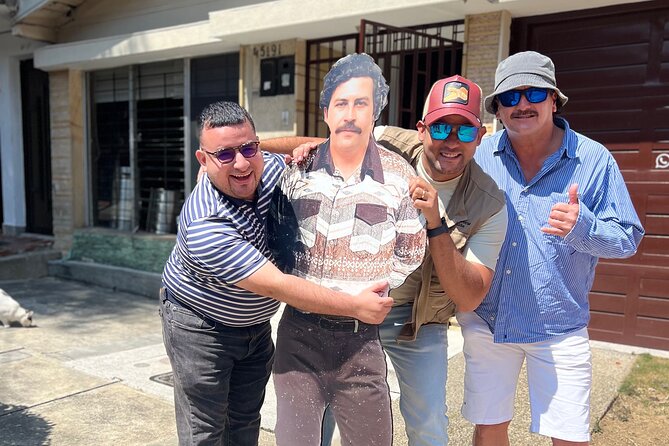
The first stop is Barrio Pablo Escobar, where you spend about an hour. The tour visits houses donated by Escobar in the 1980s, along with murals, graffiti, and photographs connected to the neighborhood and Medellín’s past.
This is the most useful place to discuss the contradiction at the heart of Escobar’s public image. A house donation may have helped a family or community, but it did not erase the violence linked to the cartel. The tour’s value comes from holding both facts in view. You can learn why some people remembered Escobar as a benefactor while also hearing about the fear and destruction attached to his organization.
The murals and photographs should help turn an abstract story into something you can see. You are not only hearing about a notorious name. You are looking at a neighborhood shaped by a period when political power, organized crime, poverty, and public loyalty became tangled together.
I would listen closely here for the guide’s explanation of who received the homes, how the neighborhood developed, and how local people view Escobar today. Those details are more important than the simple photo opportunity. If you are taking pictures, do so with care. This is a lived-in neighborhood, not a film set.
The hour-long stop should be enough for an introduction, but not for every side of Medellín’s social and political history. You may want to treat this tour as a starting point and spend more time later learning about the city beyond Escobar.
The rooftop where Escobar died
The second stop takes you to the rooftop in Medellín where Pablo Escobar died. Admission is included in the tour, with no separate ticket charge listed.
This location changes the scale of the story. The name Pablo Escobar can feel almost unreal because it has been repeated so often in popular culture. Standing at the place associated with his final moments gives the story a physical anchor. You can consider the pursuit, the rooftop escape, and the end of one of the city’s most notorious criminal careers from a specific spot rather than from a television screen.
The stop lasts about an hour, which suggests time for explanation and questions rather than a quick drive-by. I would ask the guide to separate confirmed history from legend. Escobar’s story has been retold many times, and dramatic stories can grow with every retelling.
There is also a moral point here. A rooftop connected to his death can attract attention because it is famous, but the tour is stronger when the location is used to explain what came before and what followed. Escobar’s death did not erase the people harmed by the cartel, nor did it instantly solve every problem tied to violence and corruption.
The itinerary calls this stop simply Medellín, with the rooftop as its focus. Because the supplied details do not specify the building’s current public facilities or exact access arrangements, ask the provider if you need information about stairs, walking distance, or weather conditions.
Parque Memorial Inflexión keeps victims in view
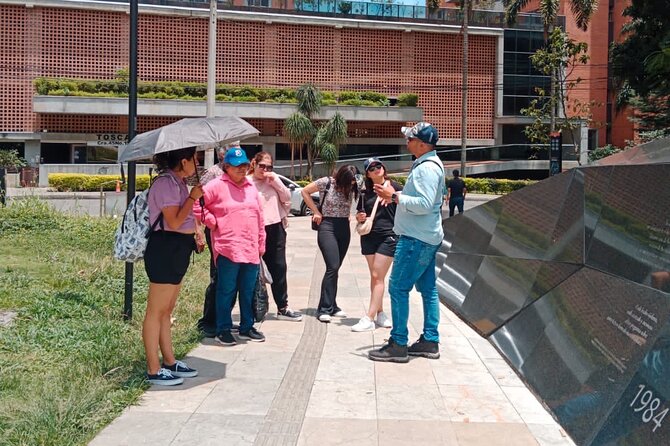
After the rooftop, the tour goes to Parque Memorial Inflexión for about an hour. This park or square honors people who fell during the conflict with the Medellín cartel. It is also described as a place where you can see the darker side of Escobar’s legacy.
For me, this is the emotional center of the route. The rooftop deals with the end of one man’s story. The memorial redirects your attention to the many people whose lives were affected or lost. That shift keeps the tour from becoming a parade of notorious locations.
A memorial park can also help you understand why the subject remains sensitive in Medellín. The violence was not distant or limited to criminals. It touched public life and the city’s sense of safety. The memorial gives the guide a natural place to discuss those consequences without turning suffering into entertainment.
You should allow yourself time to pause here. The stop is not only about collecting another photograph. Look at how the space presents memory, loss, and public responsibility. The description does not provide detailed information about the park’s design or displays, so the guide’s explanation will shape much of what you learn.
If you want a tour that treats Escobar only as a daring criminal figure, this stop may feel less sensational than expected. That is a strength. The point is to understand the human cost, not to celebrate the person who caused it.
More Pablo Escobar history tours:
- Museo Pablo Escobar
★ 5.0 · 7,242 reviews - Medellín: The Real Pablo Escobar Tour
★ 4.8 · 3,205 reviews - Pablo Escobar Shared Tour of Medellin
★ 5.0 · 1,560 reviews - Medellín: Pablo Escobar Tour with beer included
★ 4.7 · 612 reviews
Jardines Montesacro and the graves of famous figures
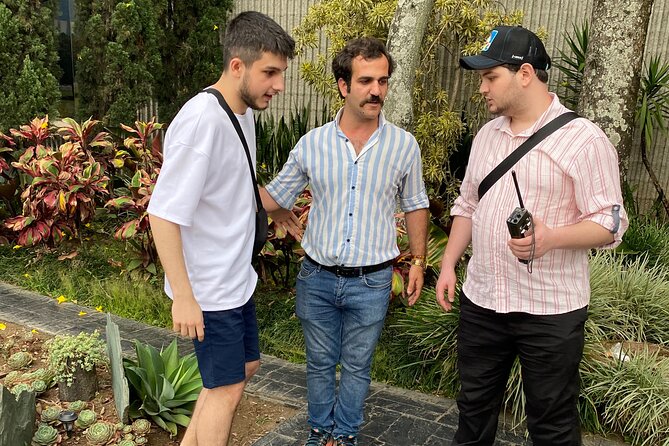
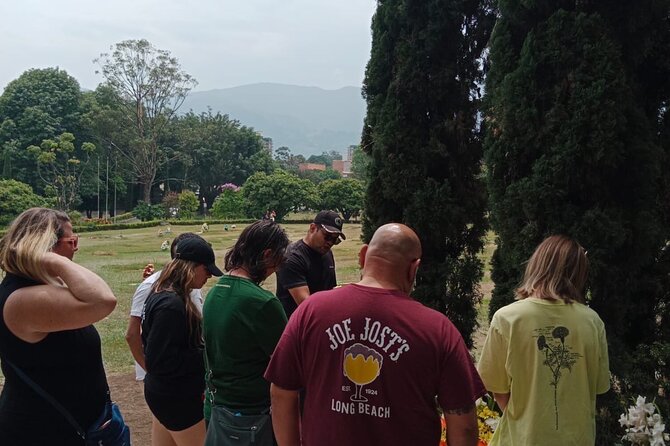
The final stop is Jardines Montesacro Cemetery, where you visit Pablo Escobar’s grave. The tour also includes the tombs of Griselda Blanco and Gustavo, two other names linked to Colombia’s underworld story.
Cemeteries often provide a quieter ending than a street or rooftop. Here, the famous names are reduced to graves and dates. That can be a useful correction to the larger-than-life image built around them. Escobar’s grave may attract the most attention, but seeing the other tombs places his story within a wider history of organized crime.
The cemetery visit lasts about an hour and admission is included. You may find the atmosphere more reflective than the earlier stops, though the details supplied do not describe the exact route through the cemetery or how much walking is involved. The tour asks for a moderate level of physical fitness, so wear comfortable shoes and be ready to walk between the vehicle and each site.
I would pay attention to the guide’s tone here. A responsible explanation should identify the people buried there without turning their graves into celebrity attractions. The cemetery is valuable because it shows how public notoriety ends in an ordinary physical fact: a name carved in stone.
This is also a good place to ask questions about how Medellín remembers its past. The tour description promises activities and interactions that help you understand the information, so do not hesitate to ask for clarification if a detail seems unclear or oversimplified.
David’s considerate guiding style
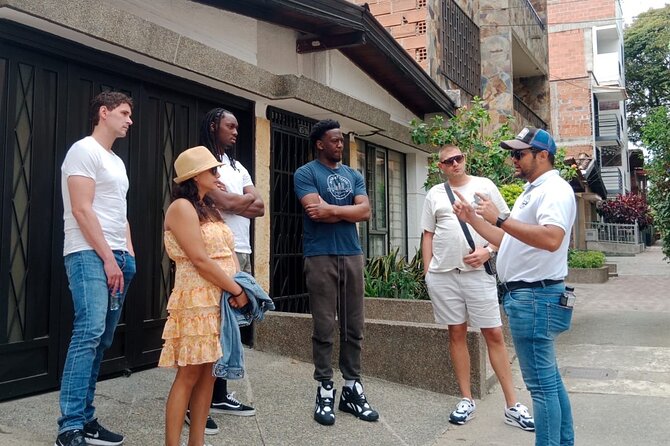
One guide connected with the experience is David. His English has been described as good, and his guiding style is considerate. He checks whether you have questions or need anything, which matters on a tour dealing with difficult material.
That kind of attention can make a major difference. A guide who pauses for questions gives you a chance to sort out fact from myth and to understand how each place fits the larger story. It is especially helpful if you are not familiar with Colombian history or if English is not your first language.
The tour promises direct information from people who lived through the conflict. That is a meaningful feature, but the available details do not explain exactly which interactions are included or who will speak with you. I would ask the provider what direct contact is planned before booking if that element is central to your decision.
The maximum group size of 10 should also help. It is small enough for questions without requiring a private booking, while still allowing the cost to remain low. Since only one written assessment is available, I would keep expectations sensible, but the specific praise for David’s patience and attention is encouraging.
Private transport makes the four-hour route easier
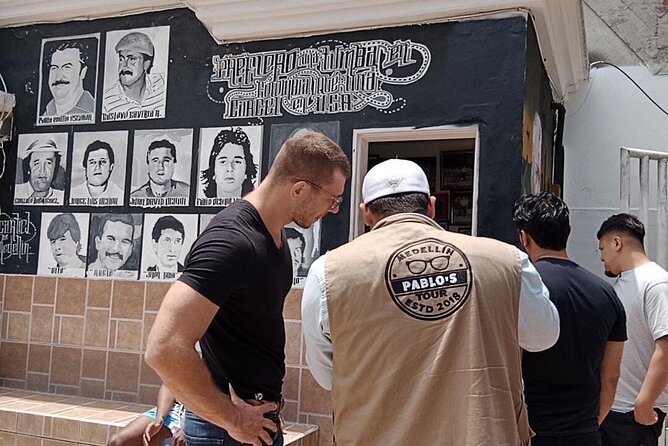
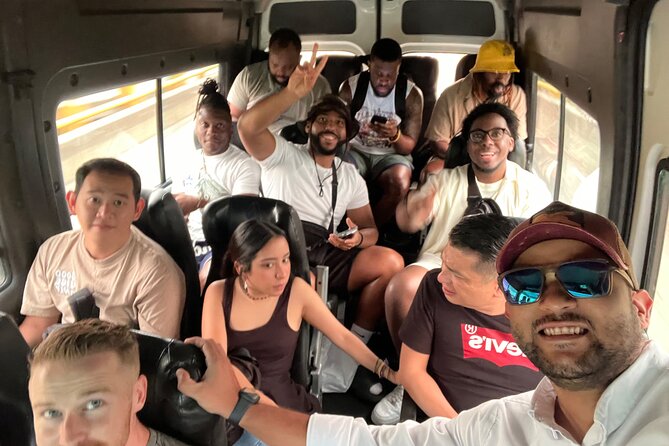
The tour includes private transportation in an air-conditioned vehicle, bottled water, and admission tickets for the listed paid stops. High-fidelity music is also mentioned, an unusual but pleasant touch for a road-based experience.
Medellín’s hills and spread-out neighborhoods make transport important. You do not need to work out a separate taxi route between Barrio Pablo Escobar, the rooftop, Parque Memorial Inflexión, and Jardines Montesacro. The vehicle keeps the group together and gives you a place to cool down between stops.
The air conditioning will be welcome, especially if the day is warm. Water is a small inclusion, but it means you do not need to begin the tour carrying a drink. Food and snacks are not included, so eat before the 9:30 a.m. departure and bring money if you expect to want something later.
The tour returns to the El Poblado meeting point. That makes planning easier if you have another activity afterward, but allow some flexibility because the duration is approximate. The route has four one-hour stops, yet traffic, questions, and conditions can affect the final return time.
Is $25 good value for this Medellín tour?

At $25 per person, this is priced as an accessible half-day experience. The value comes from combining private transportation, a small group limit, water, air conditioning, and included admission at a cost that is modest for a four-hour guided route.
You are not paying for an elaborate museum program or a full city tour. You are paying for transport between several significant locations and for a guide who can connect them. That is a fair deal if your main interest is Medellín’s cartel era and Escobar’s place in it.
The price is less compelling if you want a broad introduction to Medellín. The route gives little attention, based on the supplied details, to the city’s art, food, architecture, public transit, or present-day neighborhoods outside the Escobar story. You would need another tour or independent sightseeing for that.
The small group helps the value. A group of up to 10 people is more manageable than a large coach, especially at the memorial and cemetery, where questions and quiet attention matter. Private transportation also removes some of the friction from visiting several locations in one morning.
Who should book this experience?
I would recommend this tour to you if you want a focused look at Medellín’s violent past and prefer real locations to a lecture in a hotel room. It suits adults and older teens who can handle serious material about cartel violence, death, and loss.
It may also suit you if you are interested in how a criminal figure gained public support through donated housing while causing enormous harm. Barrio Pablo Escobar and Parque Memorial Inflexión create a useful contrast between public generosity, private power, and human cost.
You should think twice if you want a cheerful city introduction or if crime history makes you uncomfortable. This is not the best choice for a first and only Medellín activity, since the route does not promise a broad view of daily life in the city.
A moderate fitness level is recommended. Wear practical shoes, carry only what you need, and bring water beyond the included bottle if you prefer to drink often. Since the experience requires good weather, keep your schedule flexible. If poor weather cancels the tour, you can choose another date or receive a full refund.
The meeting point is near public transportation, and the listed start time is 9:30 a.m. Confirmation arrives when you book. Free cancellation is available up to 24 hours before the start time, but changes or cancellations inside that window are not accepted.
Should you book the Historical Tour of Medellín and Pablo Escobar?
Book it if you want a compact, serious look at the places connected to Pablo Escobar and the people affected by his cartel. The best parts are the victim-focused memorial, the neighborhood context, the small group size, and the chance to ask questions in an air-conditioned vehicle.
I would not book it as your only Medellín sightseeing activity. Pair it with time devoted to the city’s present-day culture and neighborhoods so Escobar’s era does not become your whole picture of Medellín.
At $25, the tour is a sensible choice for a focused half-day, especially if David is guiding and you value a considerate English-speaking guide. Go with an open mind, expect difficult subjects, and judge the experience by how well it explains the cost of the violence, not by how many famous names you can photograph.
FAQ
How long does the Historical Tour of Medellín and Pablo Escobar last?
The tour lasts approximately four hours. Each of the four planned stops is scheduled for about one hour.
Where does the tour start?
It starts at Cl 10 #36 in El Poblado, Medellín, Antioquia, Colombia. The activity ends back at the same meeting point.
What time does the tour begin?
The listed start time is 9:30 a.m.
Is pickup available?
Pickup is offered, but the provided details do not specify the exact pickup area or arrangement. Confirm this with the provider when booking.
What is included in the price?
The price includes private transportation, a bottle of water, air conditioning, and included admission tickets for the applicable stops.
Is food included?
No. Food and snacks are not included, so you should eat before departure or bring money for anything you want during the day.
Can I cancel for a full refund?
Yes. You can cancel at least 24 hours before the experience starts for a full refund. Cancellations or changes made less than 24 hours before the start time are not accepted for a refund. The tour also requires good weather, and a weather cancellation offers another date or a full refund.
Just added in Medellin
- Walking Tour, Cable Car & Fruit Tasting★ 5.0 · 1 review
- Pablo Escobar and Griselda Blanco Tour★ 5.0 · 1 review
- City tour, Commune 13, Metro Cable, Botero Park and more. Private★ 5.0 · 34 reviews
- comuna 13 tour★ 3.5 · 6 reviews
- 3 days private mountain tour, nature and culture near Medellin★ 5.0 · 22 reviews
- commune thirteen transformation story★ 4.5 · 14 reviews
- fruits tour★ 5.0 · 2 reviews
- Paragliding and hammocks zipline over waterfalls private tour★ 5.0 · 6 reviews