
REVIEW · HIKING & TREKKING
Hiking to the largest paramo on earth : Sumapaz
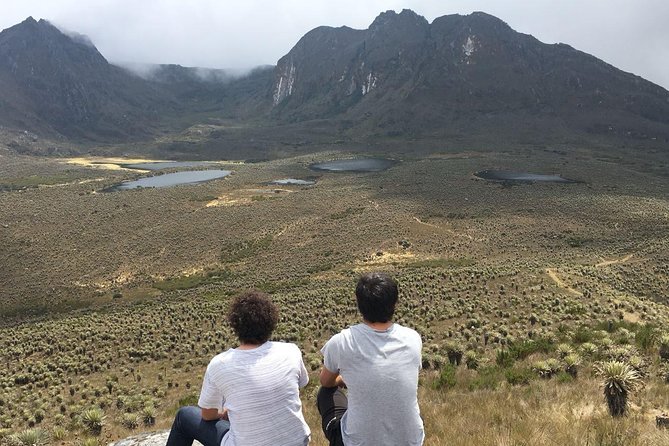
Clouds can turn mountains into another planet. From Bogotá, this small-group excursion takes you into Sumapaz, the largest páramo on earth, a cold, wet highland filled with unusual plants, wide views, and water sources that help supply the capital. The setting is wonderfully remote, yet the trip fits into a long day.
I like the tiny groups of up to four people, which allow the guide to set a more personal pace and explain the plants, people, and geography. I also like the simple local touches: breakfast at a rural restaurant, followed by arepa and hot agua de panela after the hike. The main caution is altitude. At roughly 3,500 to 4,000 meters, even fit hikers may feel short of breath.
In This Review
- Key points to know before booking
- Why Sumapaz is worth leaving Bogotá for
- A 7:30 am start and a rural Colombian breakfast
- The road into the páramo
- What the four-hour hike feels like
- Plants, water, and the strange beauty of Sumapaz
- The welcome after the climb
- Is $130 a fair price?
- Who should book this hike?
- What to pack for Sumapaz
- Cancellation and weather flexibility
- Should you book the Sumapaz páramo hike?
- FAQ
- Where does the Sumapaz tour start and end?
- What time does the tour start?
- How long does the experience last?
- How much does the tour cost?
- How many people can join the tour?
- What fitness level is required?
- Is admission to Sumapaz included?
- What happens if bad weather cancels the tour?
Key points to know before booking
- The climb begins near Bogotá but quickly feels remote, with roughly 45 minutes to an hour of driving before the mountain roads take over.
- Sumapaz is a water-rich páramo, known for rare high-altitude plants and a protected ecosystem that supplies water to Bogotá.
- Altitude is the main challenge, more than technical hiking. You may need frequent pauses, especially on the first uphill stretch.
- Rain, mud, wind, and cold are normal, even when the forecast looks manageable. Waterproof footwear matters.
- Breakfast and a post-hike snack add real value, with local soup, coffee, arepa, and hot panela drink mentioned as highlights.
- Guides such as Juan, Andrea, Alejandro, Gabi, Jacky, and others have received strong praise for their care, local insight, and patience.
Why Sumapaz is worth leaving Bogotá for
Bogotá sits high already, but Sumapaz takes you far higher. The road leads south from the city toward a broad páramo, a type of tropical highland found near the equator at great elevation. The air is cold and damp, and the plant life changes as you climb.
This is not a polished mountain park with easy paths and visitor centers at every turn. It is a rugged protected area where weather can shift quickly. Thick cloud may roll across the hills, then lift just enough to reveal huge views of ridges and valleys.
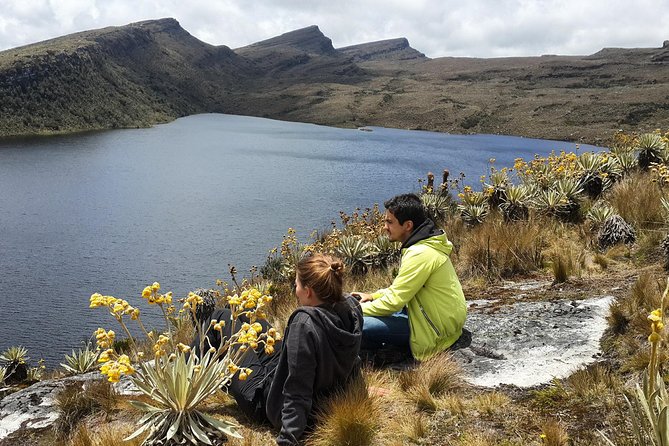
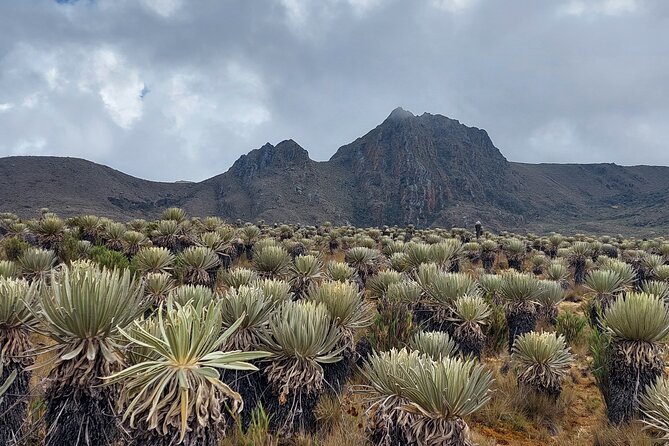
The plants are a major reason to come. Sumapaz is known for its distinctive high-altitude vegetation, including the large rosette plants that give páramo country much of its strange, spiky character. You will also see smaller plants adapted to cold, wet conditions. Guides point out how the vegetation changes as the elevation rises.
That change is what makes the walk interesting. You are not simply heading uphill toward a viewpoint. You are watching one ecosystem give way to another step by step.
Sumapaz also matters to Bogotá. The páramo stores and gathers water, making it an important source for the city. A walk here gives you more than mountain scenery. It shows you a working natural system that affects daily life far beyond the trail.
More Hiking Tours in Bogota
- Colombia’s Tallest Waterfalls: La Chorrera Hike
★ 5.0 · 287 reviews - La Chorrera and Chiflon Waterfalls Private Hike Tour
★ 5.0 · 125 reviews - Las Moyas Morning Hike: Bogotá’s Best Skyline View + Local Guide
★ 5.0 · 87 reviews
A 7:30 am start and a rural Colombian breakfast
The meeting point is Panadería Nicolf at Cra. 35a #35-99 in Bogotá. The scheduled start is 7:30 am, so plan to arrive ready for a full day. The trip lasts about six to eight hours, depending on road conditions, walking speed, weather, and stops.
The drive is part of the experience. The city gradually gives way to outer neighborhoods and rural scenery, and guides may explain parts of Bogotá along the way. Juan, Alejandro, and other guides have been praised for making the drive informative rather than treating it as dead time.
A rural restaurant stop usually comes before the main climb. Breakfast is included, and the available food has included costilla de res soup and tinto, the small, strong Colombian coffee often served with meals. This is a useful stop, not just a pleasant extra. Eating before a high-altitude hike gives you a better chance of handling the effort.
Dietary needs have been accommodated on some outings, but you should explain yours when booking rather than relying on last-minute arrangements. The exact breakfast choice may vary, so think of it as a local meal rather than a fixed restaurant menu.
After breakfast, the vehicle continues toward the trail area. The drive may take another hour, and the road can become rough. One outing included a bumpy stretch and a vehicle that was not in especially good condition, so you should not expect luxury transport.
The road into the páramo
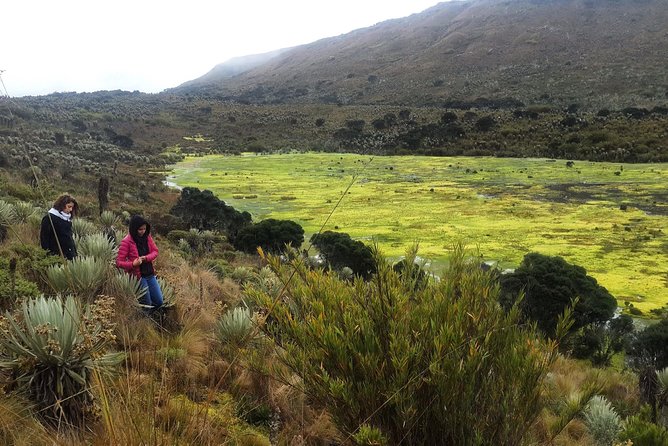
At some point, the vehicle stops on a rural dirt road and you begin walking. In one account, the van could not continue farther, so the group started the climb from there and later met a National Park guide near his home.
That detail tells you something important about the day. This is not a short stroll from a large parking lot. The access road is part of the challenge, and conditions may change with rain. The final approach can feel isolated, muddy, and exposed.
The small group size helps here. With a maximum of four people, you are not attached to a large crowd moving at one fixed speed. Guides such as Andrea have encouraged slower hikers and stopped for breathers, while one outing had a guide moving too fast for one participant. I would make your pace clear at the start, especially if you are unsure how altitude will affect you.
The climb has been described as short but steep, with the first hour and a half offering a serious uphill push. One person called it a short hike with a quick gain in altitude. Another rated the effort at about 6.5 out of 10 for someone used to outdoor activity.
Those descriptions fit together. The route may not be long by mountain standards, but the height makes every step count. You can be in good shape and still need half an hour to settle your breathing.
What the four-hour hike feels like
The walking portion is listed at about four hours, though the full outing includes transport and food. The trail may include hard steps, loose rocks, slippery mud, and sections where careful foot placement matters more than speed.
The uphill section is the main test. Stop when you need to. There is no prize for reaching the top quickly, and the scenery improves when you are not staring at your boots while trying to recover your breath.
At higher points, the páramo opens into wide views of surrounding mountains. Weather may hide those views completely, then offer a brief clear window. One group was lucky enough to have good visibility, while another walked through rain and wind from the start.
The weather is not a minor detail. Sumapaz is often cold and wet, and the top can be especially windy. Cloudy conditions do not protect you from the sun either. One hiker got sunburned despite overcast skies, so sunscreen and a hat belong in your day pack.
The descent deserves just as much care as the climb. Mud and loose stones can make downhill sections slippery, and tired legs are less reliable. Waterproof hiking boots or sturdy rain boots are strongly recommended. Regular sneakers may leave you cold, wet, and sliding around.
A completely different kind of day:
- Bogotá Bike Tour
★ 5.0 · 3,329 reviews - Bogota: Bicycle City Tour
★ 4.9 · 2,156 reviews - Zipaquirá: Salt Cathedral Group Tour with Pickup
★ 4.8 · 1,606 reviews - La Candelaria, Monserrate and Museums Bogotá Private City Tour
★ 5.0 · 1,567 reviews
Plants, water, and the strange beauty of Sumapaz
The páramo has a look that can be difficult to compare with anything else. Low cloud, open slopes, unusual plants, and sudden mountain views give it an almost unreal quality. Several people described the scenery as otherworldly, and that is a fair impression without overselling it.
The most rewarding part is often the detail close to the trail. Look at the plants rather than only waiting for the big viewpoint. Their shapes and textures show how life adapts to cold air, strong sun, constant moisture, and thin high-altitude conditions.
A good guide adds a great deal here. Juan has been praised for explaining the ecology and keeping the mood cheerful. Andrea has been noted for her patience and clear English. Alejandro has helped connect the setting to Colombian history, rural life, and the meaning of the páramo. Gabi’s enthusiasm for the place has also made a strong impression, while Jacky has been praised for explaining the ecosystem clearly.
The quality of guiding is one of the best reasons to book this as an organized trip rather than attempt to arrange the day alone. You receive context while walking, and the guide can help you understand why Sumapaz matters instead of reducing it to a photo stop.
The welcome after the climb
After the hike, the return may include a stop at a local farm or rural home for an arepa and hot agua de panela. The sweet panela drink is especially welcome in the cold, and the snack gives you something warm and familiar after the exertion.
I value this part because it keeps the day connected to local life. The experience is not only about reaching a viewpoint, taking pictures, and getting back into a vehicle. A simple meal and drink offer a closer look at how people live around the páramo.
The timing can vary. Depending on the route, weather, and walking speed, the whole day may run closer to six hours or closer to eight. Keep your evening flexible rather than scheduling a strict dinner reservation immediately after the expected return.
Is $130 a fair price?
At $130 per person, this is not the cheapest day trip from Bogotá. The value depends on what you want from the outing.
You are paying for transport from the city, a small group capped at four people, admission to Sumapaz, a guide, breakfast, and the post-hike food and drink described during the trip. You also avoid the work of arranging transport to a remote highland area where road conditions and access can be complicated.
For me, the small group is the strongest value point. A group of four gives you a better chance to ask questions, adjust the walking pace, and hear the guide without competing with a busload of people. That matters on a demanding trail where the group’s speed affects everyone.
The price is less attractive if you want a gentle sightseeing trip or a polished vehicle and predictable weather. The road can be rough, and the walk can become much harder in rain. You are buying access and guidance in a difficult environment, not comfort.
The experience receives a 4.9 rating, with 98 percent recommending it, and the praise is especially strong for the scenery, guides, food, and personal feel. The few reservations focus on the vehicle condition, bumpy road, fast hiking pace, and the physical effect of altitude.
Who should book this hike?
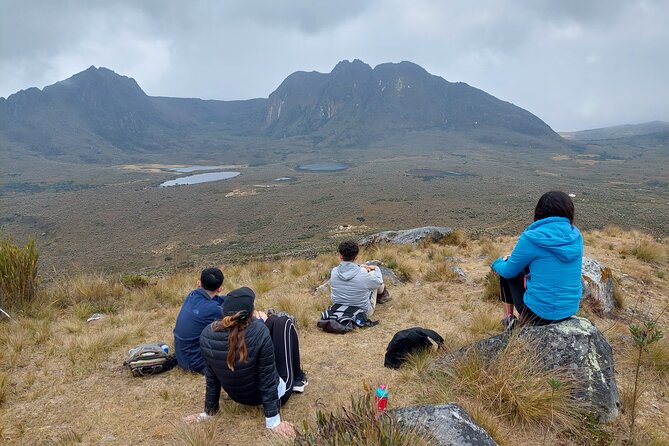
I would recommend Sumapaz to people who enjoy nature, mountain scenery, and unusual ecosystems more than easy sightseeing. You should have a moderate fitness level and be ready for sustained uphill walking at high altitude.
You do not need to be an elite hiker. Several outings were manageable when people moved at their own pace. Still, do not treat this as a casual walk. The combination of elevation, mud, wind, and steep sections can make it strenuous.
This is a good choice for:
- Hikers who want a distinctive day outside Bogotá
- People interested in plants, water systems, and conservation
- Small groups or solo visitors who value personal guiding
- Anyone willing to walk slowly and accept changing weather
- Visitors who want a local breakfast and rural food along with mountain views
I would think twice if you dislike cold rain, have no suitable footwear, or want a precise schedule. The route is weather-dependent, and the experience works best when you accept some uncertainty.
What to pack for Sumapaz
Bring waterproof hiking boots or rain boots, warm layers, a waterproof jacket, sunscreen, a hat, and plenty of water. Wear long pants that can handle mud, rocks, and prickly plants.
Pack carefully because wet weather can arrive even when Bogotá is dry. A small waterproof bag for your phone and spare layers would be sensible, though the supplied information does not specify what type of day pack is provided.
Altitude deserves preparation. At 3,500 to 4,000 meters, you may feel breathless, light-headed, or unusually tired. The tour requires moderate fitness, but fitness alone does not guarantee an easy time at elevation. Walk steadily, pause often, and tell the guide if you are struggling.
Some people have used coca leaves to cope with altitude, but this is not a formal feature of the tour and should not replace sensible pacing or medical advice. The safest practical plan is to bring water, eat breakfast, and avoid trying to race uphill.
Cancellation and weather flexibility
You can cancel for a full refund up to 24 hours before the local start time. Changes or cancellations made less than 24 hours ahead are not accepted for a refund.
The outing requires good weather. If poor conditions cause a cancellation, you will be offered another date or a full refund. That policy matters here because rain affects both safety and visibility, not just comfort.
Should you book the Sumapaz páramo hike?
Book it if you want one of Bogotá’s most unusual nature experiences and you are ready for a real mountain walk. The setting is rare, the small group format is valuable, and the guides have earned repeated praise for their warmth and local insight.
Skip it if you want dry paths, easy access, or a relaxed half-day outing. Sumapaz can be muddy, cold, windy, and breathless. But with waterproof footwear, warm clothing, sunscreen, water, and a willingness to walk slowly, the $130 price buys a memorable look at an ecosystem that feels far removed from the city.
FAQ
Where does the Sumapaz tour start and end?
The tour starts and ends at Panadería Nicolf, Cra. 35a #35-99, Bogotá, Colombia.
What time does the tour start?
The scheduled start time is 7:30 am.
How long does the experience last?
The full experience takes approximately six to eight hours. The walking portion at Sumapaz is listed at about four hours.
How much does the tour cost?
The listed price is $130 per person.
How many people can join the tour?
The tour has a maximum of four participants.
What fitness level is required?
A moderate level of physical fitness is recommended. The hike includes uphill walking at roughly 3,500 to 4,000 meters, where you may become short of breath.
Is admission to Sumapaz included?
Yes. Admission to Parque Nacional Natural Sumapaz is included.
What happens if bad weather cancels the tour?
If poor weather causes cancellation, you will be offered a different date or a full refund.
Just added in Bogota
- Tour of Zipaquirá: Visit the Salt Cathedral and the main squares★ 4.5 · 55 reviews
- Catedral de Sal desde Bogotá en Tren★ 5.0 · 5 reviews
- Zipaquirá and Salt Cathedral Muisca Heritage with Guide – Private★ 4.5 · 23 reviews
- Botanical Garden Bogotá Private Tour (4 Hrs.)★ 5.0 · 13 reviews
- Zipaquira Salt Cathedral★ 4.5 · 12 reviews
- LOCAL GUIDE Zipaquirá PRIVATE TOUR – Salt Cathedral and Salt Oven★ 5.0 · 24 reviews
- Private Zipaquira Salt Cathedral and Guatavita Lagoon Tour from Bogota★ 4.5 · 44 reviews
- Zipaquira Salt Cathedral★ 5.0 · 4 reviews
Hiking & Trekking, compared.
Hike for 4 days to the Lost City, Santa Marta
Read our review →
Colombia’s Tallest Waterfalls: La Chorrera Hike
Read our review →
Full-Day Hiking Tour in Minca with coffee & Cocoa Workshop
Read our review →
Eco-Hike in Minca: Coffee Tour, Waterfall & Chocolate Experience!
Read our review →
La Chorrera and Chiflon Waterfalls Private Hike Tour
Read our review →
The Jaguar´s Footprint: Hike and Music Day Trip from Cartagena
Read our review →Browse the lists this tour appears in