
REVIEW · COLOMBIAN COFFEE TOURS
Explore the Coffee Process_From Tree to Cup & Fun by Jeep
Coffee makes more sense on the farm. This four-hour outing takes you from Pereira into the Andean hills by traditional Jeep, then through Arvey and Elizabeth’s small coffee farm, where coffee, fruit, wildlife, and sustainable agriculture share the same ground. I like the small group of up to 10 and the fact that hotel pickup, transport, snacks, and coffee are included. The main consideration is simple: you are visiting a working farm, so expect insects, uneven outdoor paths, and weather that can change.
I also like that this is not just a quick bean-to-cup demonstration. You learn about planting, harvesting, fermentation, washing, drying, roasting, and brewing, then prepare coffee yourself. Arvey and Elizabeth also talk about life as neo-peasants, composting, vermiculture, clean agriculture, and the many crops that support their farm.
In This Review
- Key points to know before you go
- Leaving Pereira in a classic coffee-country Jeep
- Meeting Arvey and Elizabeth on their family farm
- Following coffee from seedling to harvested cherry
- Exploring fruit trees, birds, and the farm’s wider purpose
- Compost, vermiculture, and clean agriculture
- Learning the processing methods that shape the cup
- Roasting and preparing coffee with Elizabeth
- What the $115 price includes
- The practical side of a four-hour farm visit
- Who will get the most from this experience
- Should you book this Pereira coffee tour?
- FAQ
- Where does the coffee farm experience take place?
- How long does the tour last?
- Is hotel pickup included?
- What vehicle is used for transportation?
- What is included in the price?
- Is transportation from another city included?
- How many people can join the tour?
- Can I cancel for a full refund?
Key points to know before you go
- Traditional Jeep transport: Your ride from Pereira uses the classic vehicle associated with Colombia’s coffee region, taking the driving duties out of your hands.
- Coffee from tree to cup: You follow the full process, including harvesting, processing, roasting, and several brewing methods.
- A working ecological farm: Coffee grows alongside bananas, cocoa, avocados, citrus, guava, papaya, mango, guanabana, and other plants.
- Personal hosting by Arvey and Elizabeth: Their farm is also their home and long-term sustainability project, which gives the visit a personal feel.
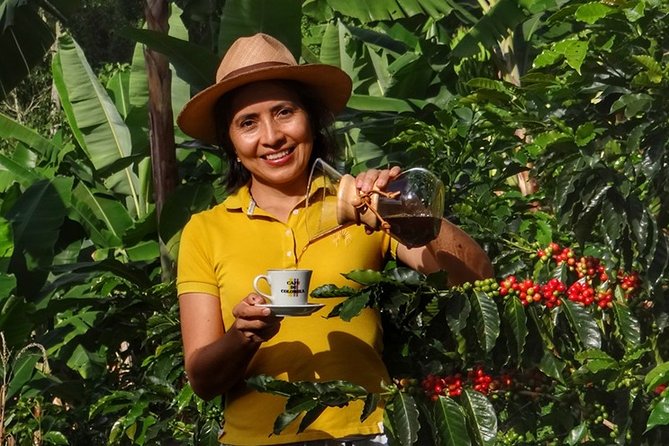
- Hands-on brewing: You prepare coffee with Elizabeth’s guidance and learn a method simple enough to repeat at home.
- Small, award-winning operation: The farm has received the 2022 National Tourism Awards and the 2023 WTM Latin American Responsible Tourism Awards in Brazil.
Leaving Pereira in a classic coffee-country Jeep
The experience begins with pickup at your Pereira hotel. Instead of arranging a taxi or trying to find a rural farm on your own, you climb into a traditional Jeep, a vehicle closely tied to the coffee culture of Colombia’s Andean region.
That ride matters more than it might seem. The farm is in the mountains above Pereira, and one detailed account describes roughly 40 minutes on winding mountain roads before arrival. You can watch the city give way to hills and rural properties while Arvey explains the region and the couple’s move from professional careers into farm life.
The ride is part introduction, part practical transport. You are not simply dropped at a plantation and handed to a guide. The story of the farm begins on the road, with the people behind it and the choices that shaped their project.
If winding roads make you uncomfortable, take that into account. The Jeep is a fun and fitting vehicle, but this is mountain travel, not a smooth city transfer. The reward is a quieter setting and a more direct connection with the coffee-growing country around Pereira.
More coffee tours in Pereira:
- Coffee Tour at the Finca del Café
★ 5.0 · 213 reviews - Full-Day Private Coffee Tour in Cocora Valley and Salento
★ 5.0 · 60 reviews - 2 Days Experience: Cocora, Salento, Filandia, Coffee & Hotsprings
★ 5.0 · 50 reviews
Meeting Arvey and Elizabeth on their family farm
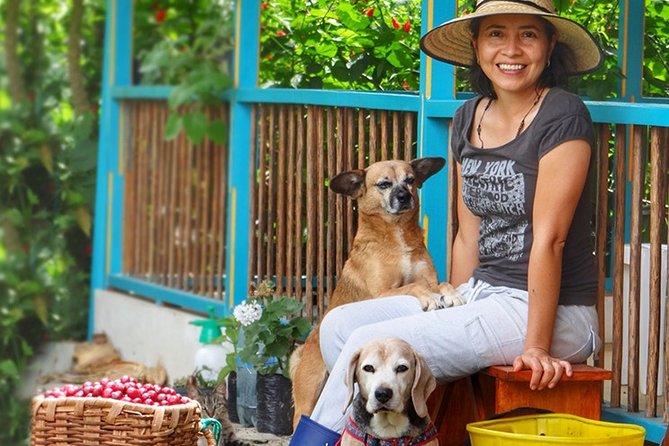
Arvey and Elizabeth lead the visit together. They treat the finca as a shared project, not as a commercial attraction built only for short tours. That attitude comes through in the way they describe the property, the crops, and their work.
Arvey guides you around the land and explains the coffee plants, harvest, and processing. Elizabeth takes a leading role in roasting and brewing. Their roles can vary, but the important point is that you spend time with the people who actually grow and prepare the coffee.
The small group limit of 10 helps here. A farm tour can become hard to follow when a large crowd gathers around one plant or machine. With fewer people, you have a better chance to ask questions, see demonstrations clearly, and talk with the hosts without feeling rushed.
The setting also includes the ordinary life of a rural home. You might meet dogs, chickens, ducks, cats, and roosters. These are not staged attractions. They are part of the farm’s daily rhythm, and they help explain how this place functions beyond coffee production.
Following coffee from seedling to harvested cherry
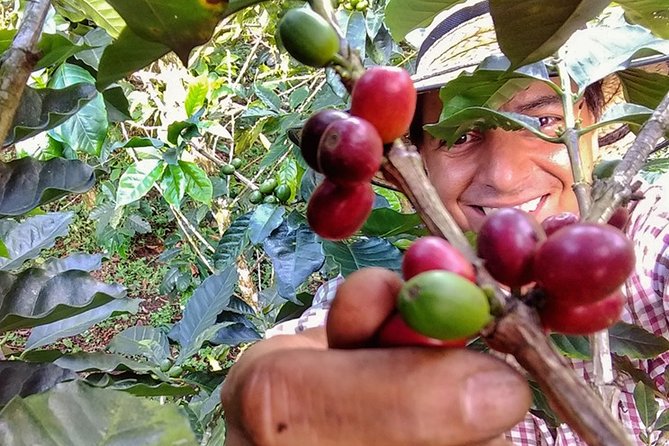
Coffee begins as a plant, not as a brown bean in a bag. On the plantation walk, you learn about the life cycle of the coffee tree and the work involved in growing it.
The exact condition of the crop can change with the season. At one time of year, you may see flowering plants. At another, fruit might be ready to pick. That variation is one reason the visit can feel different from one date to another.
The tour explains how coffee cherries are harvested and what happens after picking. You learn that processing is not one single method. The farm produces washed, honey, and natural coffees, each shaped by different approaches to removing or drying the fruit around the bean.
This is where the tour becomes useful for anyone who buys specialty coffee but has never understood the labels. Processing affects the final cup, and the hosts connect the technical steps with what you later taste.
You should not expect a factory-scale operation. This is a small farm, and that is the point. You see coffee as agricultural work, with decisions about water, fermentation, drying, labor, and quality made on a human scale.
Exploring fruit trees, birds, and the farm’s wider purpose
Coffee is only part of the property. As you walk, you may see bananas, plantains, cocoa, avocado, orange, lemon, tangerine, guava, papaya, mango, pineapple, and guanabana. The exact fruit available depends on the time of year, but the range shows how a diversified farm works.
Some plants provide food. Others have medicinal or practical uses. Cotton, for example, helps attract birds that use it for nests. Trees can provide shelter for iguanas, while flowering plants support other parts of the local ecosystem.
The hosts also describe how bird numbers on the property have grown over time. One account notes an increase from roughly 30 observed species to about 120 species since the farm began. That figure gives you a sense of the project’s wider aim: production and habitat can exist together when the farm is managed with care.
You may also see fresh fruit directly from the tree, depending on the season. This is a small pleasure, but it makes the farm visit more memorable than a standard tasting room. You are learning where food comes from in a very literal way.
The walk is designed to be friendly to different mobility needs, with much of the farm described as wheelchair and blind accessible. Still, this remains an outdoor property in the mountains. Ask about current conditions when booking if you have specific mobility requirements, since paths and weather can affect access.
More trips in the Coffee Region:
- Salento, Cocora and Filandia Private Tour from Pereira or Armenia
★ 5.0 · 90 reviews - Cocora Valley: Salento & Private Horseback Riding Tour
★ 4.8 · 56 reviews - Salento, Cocora+Filand PREMIUM PLAN. exit: Pereira/Armenia.
★ 5.0 · 47 reviews - Salento and Cócora Tour plus Coffee Farm from Pereira or Armenia
★ 5.0 · 40 reviews
Compost, vermiculture, and clean agriculture
The farm’s sustainability work is not limited to a few recycled signs. You visit the area used for composting organic waste, see the vermiculture setup, and learn about the nursery.
Vermiculture uses worms to help break down organic material into useful compost. On a coffee farm, this connects kitchen waste, plant material, soil care, and future crops. It is a practical system rather than an abstract environmental lecture.
The nursery also shows how the farm plans for the future. Growing plants from an early stage takes patience, attention, and a clear sense of what the land can support. These details help you understand the farm as a living system, not simply a place where coffee trees happen to grow.
Arvey and Elizabeth describe their life as neo-peasants, a useful term for people who moved from other professional paths into rural production. Their background gives the tour a different angle. You are not only hearing inherited farm traditions. You are hearing how two people built a new life around agriculture, sustainability, and hospitality.
This part may appeal most to you if you care about how food is produced. If you only want a quick coffee tasting, the compost and nursery discussion may feel like extra time. For me, it is one of the elements that gives the tour substance.
Learning the processing methods that shape the cup
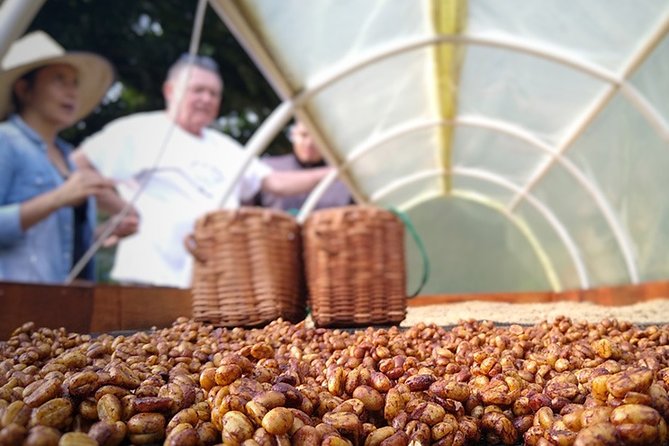
After the plantation walk, the coffee story continues with post-harvest work. You learn about fermentation, washing, drying, and quality control.
The farm produces three main styles:
- Washed coffee, where the fruit is removed and the beans are washed before drying.
- Honey coffee, where some of the sticky fruit layer remains during drying.
- Natural coffee, where the whole coffee cherry dries before the bean is removed.
The tour connects these methods with tasting. That is important because technical explanations can quickly become forgettable. When you compare cups prepared in different ways, you have a better chance of noticing how processing changes the drink.
The farm’s small scale also makes the explanation easier to follow. You are not watching an anonymous industrial process behind a barrier. You can ask how the beans are handled and why different methods are used.
Coffee lovers will find plenty to study here, but beginners are equally welcome. You do not need to know the difference between a cherry, parchment, and green bean before arriving. The sequence is explained step by step.
Roasting and preparing coffee with Elizabeth
The final part is hands-on. Elizabeth shows you how coffee is roasted and explains the roasting curve, the pattern that tracks how heat changes the beans over time.
You then prepare coffee yourself. The experience includes more than one cup, and the brewing may use two different coffee makers or methods. This lets you compare how preparation changes the final result, even when the beans come from the same farm.
The practical value is clear: the method is simple enough to repeat at home. You leave with more than a pleasant caffeine break. You have a basic understanding of how grind, heat, timing, and brewing choices affect the cup.
Coffee and tea are included, along with snacks. Depending on the day, refreshments may include lemonade made with lemons from the farm, patacones, or empanadas. The exact food can vary, but it adds a welcome pause after walking in the hills.
The tasting is not rushed. You can talk with Elizabeth about the coffee, compare the cups, and ask questions while the drink is still fresh. This is a better format for learning than a large tasting where you take one sip and move to the next station.
What the $115 price includes
At $115 per person, this is not the cheapest coffee stop in the Pereira area. The price makes more sense when you count what is bundled into the four-hour visit: hotel pickup and drop-off, private transportation, farm entrance, a guided experience, coffee or tea, and snacks.
You are also paying for a small group, with no more than 10 participants. That gives the hosts time to explain the work properly and lets you take part in brewing rather than simply watching.
The value is strongest if you want a full introduction to coffee and sustainable farming in one outing. You receive transport, education, food, scenery, and personal contact with the farm owners. It is less compelling if you only want to buy a bag of coffee or take a short plantation photo stop.
Transportation from another city costs an additional $25. The tour is based around Pereira, so check the pickup arrangement before booking if you are staying elsewhere.
The operation has received the 2022 National Tourism Awards and the 2023 WTM Latin American Responsible Tourism Awards in Brazil. Awards do not guarantee a perfect day, but here they support the idea that the farm’s environmental and community approach is central to the experience.
The practical side of a four-hour farm visit
Plan on about four hours from pickup through return. The schedule includes the mountain drive, farm walk, coffee education, tasting, brewing, and refreshments, so the time is well filled.
Wear practical clothing and shoes suitable for a farm path. Bring mosquito repellent or lotion, since insects are part of the setting. You should also be comfortable with outdoor conditions, including mud or damp ground if the weather has been wet.
Service animals are allowed. Much of the farm is described as accessible for wheelchair users and people who are blind, but contact the provider in advance if you need a particular route or assistance.
The experience requires a minimum number of participants. If that minimum is not reached and the tour is canceled, you can receive a full refund or choose another date or experience.
You can cancel for a full refund up to 24 hours before the start time. Changes made inside that 24-hour window are not accepted, and cancellations that late are not refunded. The cut-off follows local time in Colombia.
Who will get the most from this experience
I would choose this tour if you want to understand Colombian coffee rather than simply photograph a coffee field. The hosts explain the complete chain, and you take part in the last stage by preparing your own cups.
It also suits people who enjoy food systems, small farms, wildlife, and responsible tourism. The fruit trees, nursery, composting area, animals, and bird habitat give you plenty to notice even if you are not a serious coffee drinker.
Families and mixed-interest groups may appreciate the variety. One person can focus on roasting while another enjoys the plants, fruit, animals, or mountain setting. The small group format is also useful for anyone who prefers conversation over a scripted presentation.
Coffee experts may want more technical detail about measurements, roast profiles, or farm output than a four-hour visit provides. Still, the chance to compare washed, honey, and natural coffees gives experienced drinkers a useful practical reference.
The main mismatch would be for anyone seeking a polished attraction with paved paths and predictable indoor conditions. This is a working finca. You get authenticity, but you also get bugs, rural paths, and changing weather.
Should you book this Pereira coffee tour?
I would book it if you have a half day in Pereira and want a personal introduction to the Eje Cafetero. Arvey and Elizabeth bring the strongest part of the experience: they connect coffee farming with their own lives, their animals, their fruit trees, and their effort to work responsibly.
You should choose it especially if you value small groups and hands-on learning. The combination of Jeep transport, farm walking, coffee processing, sustainable agriculture, and home-style refreshments offers more than a standard plantation tour.
Skip it only if you dislike outdoor farm conditions or want a quick, highly polished tasting session. For everyone else, the $115 price is reasonable for four hours of transport, instruction, food, and direct time with the people growing and preparing the coffee.
FAQ
Where does the coffee farm experience take place?
The experience is based in Pereira, Colombia, with the farm located in the Andean mountain area above Pereira.
How long does the tour last?
The experience lasts approximately four hours, including transportation, the farm visit, coffee activities, and refreshments.
Is hotel pickup included?
Yes. Hotel pickup and drop-off in Pereira are included, along with private transportation.
What vehicle is used for transportation?
Pickup and transportation take place in a traditional Jeep, a vehicle strongly associated with Colombia’s coffee culture.
What is included in the price?
The price includes coffee or tea, snacks, private transportation, entrance to the farm, and a guide.
Is transportation from another city included?
No. Transportation from other cities costs an additional $25.
How many people can join the tour?
The tour has a maximum of 10 participants.
Can I cancel for a full refund?
Yes. You can cancel at least 24 hours before the experience begins for a full refund. Cancellations or changes made less than 24 hours before the start time are not accepted for a refund.
Just added in Pereira
- Trekking/Hiking in the Cocora Valley from Pereira or Armenia★ 5.0 · 1 review
- Trekking/Hiking Yarumo Blanco Waterfall from Pereira or Arme★ 5.0 · 1 review
- Tour to hot springs of Santa Rosa from Pereira, Armenia or Salento★ 5.0 · 4 reviews
- Tour to Santa Rosa de Cabal Coffee Farm and Hot Springs★ 5.0 · 8 reviews
- Tour to the Coffee Park★ 5.0 · 3 reviews
- Coffee Region Andes Mountains: Coffee Tour, Pijao & Buenavista★ 5.0 · 5 reviews
- PRIVATE transportation salento-cocora salento 1 day exi Pereira/Armen★ 5.0 · 5 reviews
- Cocora Valley, Salento and Filandia Full-Day Private Tour★ 4.5 · 5 reviews
Colombian Coffee Tours, compared.
Half Day Bike Tour in Medellin – Local snack, Coffee or Beer
Read our review →
Half-Day Coffee Tour: From the Seed to the Cup, Farm & roastery
Read our review →
Coffee Tour with Transport, Snacks and Tastings
Read our review →
Electric Bike City Tour Medellin With Colombian Coffee and Snack
Read our review →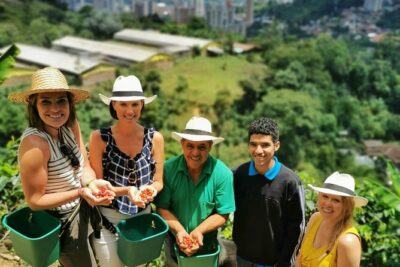
Private Coffee Farm Tour in Medellin: Real Authentic Experience
Read our review →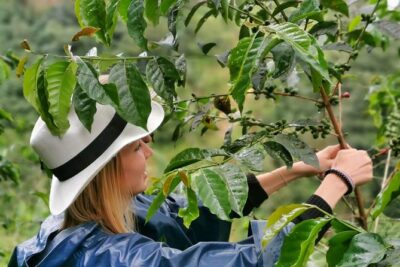
Guatape & Coffee Farm & El Peñol Rock & Quaint Town: Best Combo
Read our review →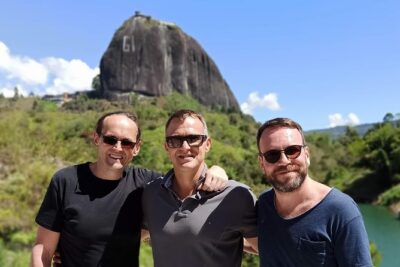
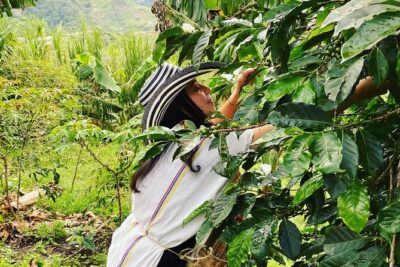
Coffee tour in Medellín with tastings and transportation
Read our review →Browse the lists this tour appears in